

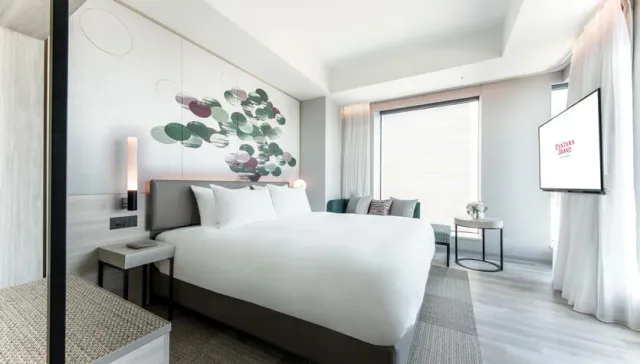
A family hotel search in Namba can go wrong before price appears on the screen. Centara Grand Hotel Osaka has a 40 m² Family room designed for two adults and two children, with a king bed and children’s bunks. Hotel Keihan Namba Grande has a 44 m² Family Room with four regular single beds and a fifth-place extra-bed option; its Connecting Rooms join two twin rooms and can take up to six with extra beds. Those are different legal and sleeping products. For four adults or older children, start with Keihan’s actual bed map instead of trying to force everyone into a Centara Family room.
For two parents and two eligible children, Centara can be the better fit when nights end around Namba and the bunk zone genuinely helps bedtime. The Keihan room becomes more persuasive as laundry, breakfast preparation and simultaneous morning routines repeat over several nights. A station-walk difference of roughly two minutes matters with cases or sleepy children, but a washer or second bathroom can matter every day. The comparison therefore begins with the party’s age and room rules, then counts recurring friction. Where Osaka families should stay helps confirm that Namba is the right district at all.
↔ Scroll table left or right
Party and stay | Room to test first | Reason |
Two adults, two under-11 children, Namba evenings | Centara Family – Rei or Miyabi | King-and-bunk layout fits the stated family product |
Four adults, three to five nights | Keihan Family or Connecting | Four regular beds or two bathrooms become more relevant |
Five guests | Keihan Family with extra bed or Connecting | Check who takes the added sleeping place |
Six guests | Keihan Connecting with extra beds | Two 20 m² rooms joined by internal door |
Late KIX arrival, only two nights | Centara if legal for the party | Shorter Nankai approach gets greater weight |
The occupancy rule can settle the decision before the rate
Centara’s Family – Rei and Family – Miyabi Club Floor categories are 40 m², with a published maximum of two adults and two children. The hotel’s accommodation guidance says there is no extra bed for a party larger than its room rules allow and that the family bunk beds are for children under 11. Bed-sharing for children has separate age and bed-width conditions. A four-adult party should not treat “sleeps four” on an intermediary screen as permission to book this family category. Verify the entered ages and the exact named room before comparing prices. Centara’s family-room decision covers its layout in more detail.
Keihan’s Family Room is 44 m² and starts with four 110 × 195 cm single beds. An added bed permits a fifth person. Connecting Rooms comprise two 20 m² twin rooms joined by an internal door, with four standard single beds and extra-bed capacity for up to six. Neither “five guests” nor “six guests” guarantees equal beds: find out who gets the additional sleeping surface and whether the group values a second bathroom more than a single common room. For a party of four or five, Keihan Family versus Connecting provides the narrower choice.
A family with older children may cross Centara’s bunk-age rule even when the children still travel with their parents. That change is more decisive than a marginal room-rate discount. Enter the ages on the booking page, confirm the formal bed layout and keep the same tax, breakfast and cancellation basis for both hotels. If one hotel’s displayed card quietly assumes children share adult bedding, the two amounts are not quotes for the same product. Osaka rooms for four to six friends explains when two rooms beat one.
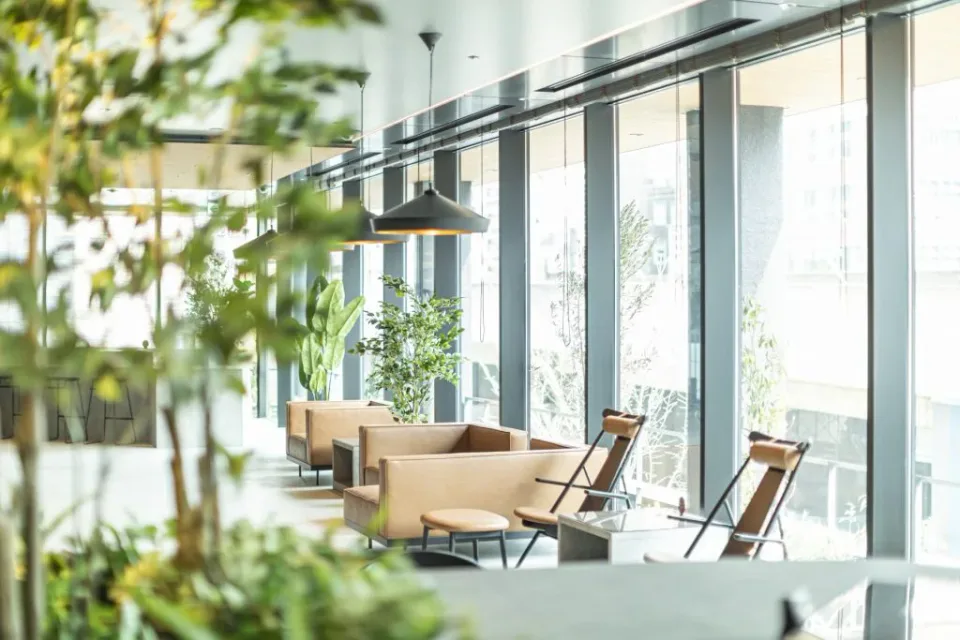
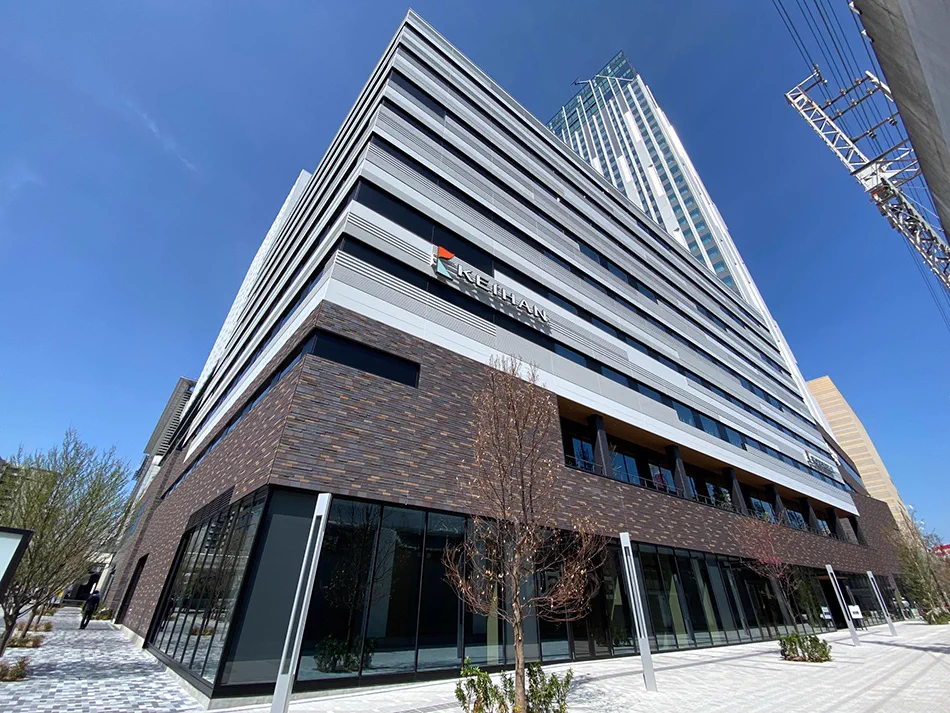
The station walk happens twice; room tasks happen every morning
Centara describes its position as about four minutes from the south side of Nankai Namba. Keihan quotes roughly six minutes from Nankai’s south gate. With bags in rain or a child who needs carrying, that two-minute difference is real. It is also only one component of the stay. A family leaving for a train early each morning may value the easier start; another party may wash clothing, make a simple breakfast and sort cases in the room every night. Count how often a feature is used instead of awarding permanent points for a map pin. Swissôtel Nankai Osaka station access is a useful alternative if station connection dominates the booking.
This distinction becomes sharp at Kansai International Airport. A late arrival and an early flight can make the final approach to the room unusually tiring, especially if the hotel is only used for two nights. Centara’s shorter Nankai-side walk deserves weight then, provided its child rules fit. On a four-night Osaka stay, Keihan’s in-room facilities can remove repeated errands even though the property is slightly farther from the station gate. Namba versus Umeda is worth settling before debating two hotels in the same district.
The USJ travel day introduces another kind of movement. Neither property is a Universal City hotel; plan the rail transfer, park opening and return after the last attraction. OMO7 Osaka versus Centara for USJ addresses that route and room trade-off. Where to stay for USJ Halloween is date-specific and should be treated as a past-season reference rather than a current event schedule.
Centara’s Family room earns its keep at bedtime
A king bed and a children’s bunk zone separate adult and child sleep without splitting the family into two bookings. That can help when children go to bed earlier or one parent wants to keep a light on without disturbing them. It is a 40 m² product rather than a suite with multiple bathrooms, so the usual single-room morning queue remains. Centara also places the family near Namba, Dotonbori and evening shopping. If dinner repeatedly ends in that part of town, the location and room arrangement reinforce each other. Namba hotel comparison brings another larger property into the price conversation.
The family label does not create a washer, kitchen or an extra bathroom. A four-night stay with swimming clothes, child spills and early departures may make those missing tools visible even when everyone sleeps comfortably. Centara’s appeal is stronger when the family eats out, can handle one bathroom and uses the Namba evenings. A party carrying several large cases should also inspect the real floor layout, not only the 40 m² figure. Citadines Namba room sizes offers a different long-stay comparison.
The Miyabi upgrade depends on three actual time windows
The Family – Miyabi Club Floor room remains 40 m². Its additional value is Club access, not more floor area. Centara publishes breakfast from 7:00 to 10:30, afternoon tea from 14:30 to 16:30 and evening cocktails from 17:30 to 19:30. Mark those windows against the family’s day. A USJ opening run may miss breakfast; a full-day Kyoto excursion may miss tea and cocktails; a child bedtime could make a late lounge visit irrelevant. The hotel also lists other Club services such as selected laundry benefits, but check the booked family category and exact inclusion before assigning a cash value.
For a two-night stay with one full park day, the family might only intersect a single meaningful lounge window. For four Namba-centred evenings, it might use breakfast and early evening service repeatedly. That is a utilisation test, not a financial break-even claim: the price difference changes by date, and Club availability or policy may change. If the upgrade does not improve any hour the party will actually spend in the hotel, pay for the room layout rather than for the benefit list. Centara versus OMO7 with children helps when park-day timing is the main question.
↔ Scroll table left or right
Club window | Works when | Loses value when |
Breakfast 7:00–10:30 | Morning begins in or near Namba | Family leaves early for USJ or an out-of-town train |
Afternoon tea 14:30–16:30 | Room return and child break fall in that period | Every day remains in the city or park until dinner |
Cocktails 17:30–19:30 | Adults and children can use the early-evening service | Dinner and bedtime clash with the lounge slot |
Keihan’s room equipment grows useful after night three
Keihan’s Family Room brings a washer-dryer, IH cooking hob, oven-microwave, refrigerator-freezer, twin washbasins and a bathing area separate from the toilet. The Twin Room with Japanese-style space has similar long-stay equipment but a different bed-and-futon plan. Four regular beds, a place to wash clothes and the ability for two people to use washbasins at once can remove recurring pressure over three to five nights. Check whether the specific room category shown in the booking offer includes all of those fixtures; ordinary Keihan rooms are not the same concept rooms. Tokyu Stay Osaka Hommachi long stay is another laundry-led hotel choice.
Keihan’s Family Room still has one bathroom. The second washbasin helps grooming, but two people cannot necessarily shower at once. Its Connecting Rooms solve a different bottleneck: two doors, two bathrooms and two spaces to sort belongings, with an internal door between them. That may matter more than a kitchenette for four adults leaving together at 7:00. The connecting pair uses roughly 40 m² gross across two 20 m² rooms; it is not one huge open suite. Ask whether the booking truly guarantees connecting inventory rather than two nearby rooms.
On one night, the washer, hob and larger refrigerator can go untouched. The Keihan advantage becomes convincing when someone will actually launder clothes, prepare child food, store breakfast items or reduce the same bathroom queue every day. If the family spends every waking hour outside, evaluate the room as beds and location first. Hotel Royal Classic Osaka station connection is a different way to buy convenience without apartment-style facilities.
↔ Scroll table left or right
Keihan choice | Sleeping setup | Recurring problem it can solve | Boundary |
Family Room, 44 m² | Four regular singles; fifth place via extra bed | Laundry, small food tasks, two washbasins | One bathroom; fifth bed differs |
Connecting Rooms, 20 m² + 20 m² | Four standard singles; up to six with extras | Two bathrooms and separate dressing routines | Not a single large common room |
Twin with Japanese-style space, 42 m² | Two singles plus futons as booked | Long-stay equipment with flexible floor sleeping | Confirm who will use each futon |
A score only helps when its weights match the party
↔ Scroll table left or right
Worksheet factor | Old illustrative weight | Question to ask |
Legal occupancy and beds | 25% | Can every guest legally stay and sleep as planned? |
Parallel morning and evening capacity | 20% | How many people can get ready at once? |
Arrival and luggage effort | 15% | How hard is the repeated station or airport approach? |
Long-stay self-sufficiency | 15% | Will laundry or food preparation actually recur? |
Itinerary fit | 15% | Where does the family return each evening? |
Paid facility use | 10% | Will Club or hotel facilities overlap the timetable? |
The older comparison used a six-part family logistics worksheet: legal occupancy and bed fit at 25%, parallel morning or evening capacity at 20%, arrival and luggage friction at 15%, long-stay self-sufficiency at 15%, itinerary fit at 15%, and likely use of premium facilities at 10%. Those weights can structure a conversation but are not property ratings. Room legality is a gate: a party that does not qualify for a category cannot rescue it with a higher overall score. Once both rooms are eligible, shift weight toward the bottleneck your family will face most often.
The published example scores of 8.5 or 7.5 were editorial thresholds rather than measured guest outcomes. A specific family may reasonably rank the same two rooms in reverse. A late KIX arrival with two nights gives the Nankai walk more weight; four adults with four mornings give separate bathrooms more. Two adults with two children who intend to return to Namba each evening may value Centara’s bunk separation above appliances. Two adults with children who need daily laundry may prefer Keihan despite Centara’s smoother arrival. The underlying comparison matters more than the old illustrative decimals.
A useful final test is to remove each hotel’s signature feature in your mind. If Centara loses Club access, does the legal family layout and location still work? If Keihan loses the washer, do its beds or connecting bathrooms still solve the main problem? If the answer is no, verify that the signature feature is included on the exact rate you intend to purchase. A cheaper offer without breakfast, Club use or connecting guarantee is not the same hotel product. Swissôtel versus Royal Classic presents another Namba premium comparison.
Compare one complete booking, then choose the recurring relief
Set the same dates, real ages, confirmed bed plan, breakfast basis, Club eligibility, local taxes, payment timing and cancellation deadline. Live room prices change too often for a single “typical” yen figure to settle this comparison. For two adults with two eligible children who mainly use Namba at night, Centara’s Family category is a sound starting point; upgrade to Miyabi only when the lounge windows match the actual itinerary. For four adults, older children, five or six travellers, or a stay where laundry and bathroom throughput repeat, start with the correct Keihan category.
Compare Centara rooms in Namba and Hotel Keihan Namba Grande rooms with identical guest ages and dates. The useful upgrade is the one that removes a problem your group would otherwise experience repeatedly, not the one with the longest amenity list.
More Osaka rooms for a different party shape
A group interested in a kitchen or more open space can compare MIMARU Osaka Namba Station with the conventional rooms here. Swissôtel versus MIMARU for four adults tests station connection against a group apartment. For nightlife and late returns, Namba last-stop planning and Osaka concert hotels may matter more than a washer.
Other useful comparisons include Haneda airport hotels, Osaka Station hotel choices, Namba hotel value, Zentis versus voco for longer stays, an Osaka viewing deck evening, Grand Nikko family rooms, and Shin-Osaka before an early train. They answer different travel edges rather than changing Centara’s child rule or Keihan’s bed map.
Room specification pages
Centara room categories · Centara occupancy rules · Centara Club schedule · Keihan room categories · Keihan Family specification · Keihan Connecting specification.