
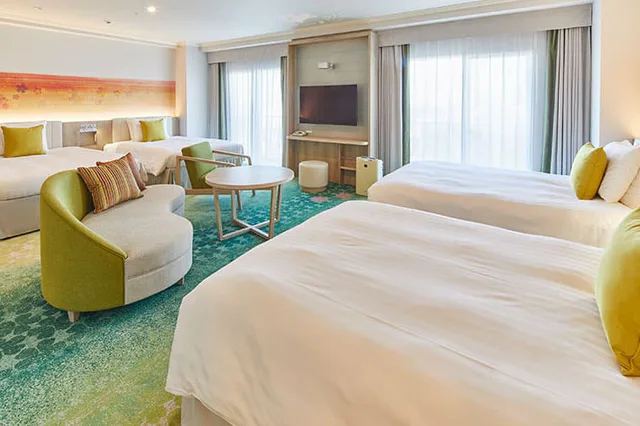
Four separate beds make Grand Nikko Tokyo Bay Maihama's Deluxe Family rooms appealing to a group of four. The expensive decision comes after that: whether Nikko Deluxe Family supplies enough extra value over Garden or Rainbow Deluxe Family. All three are genuine four-bed rooms. Garden and Rainbow measure 56 m² and use four 120 cm Simmons beds. Nikko's common Type A also measures 56 m², but its four beds are 140 cm wide and the room sits on the Nikko Floor with access to a guest lounge. Only the scarce Type B and C rooms increase the floor area to 64 m².
For four adults or older teenagers, wider beds are an everyday benefit even if they spend every waking hour at Tokyo Disney Resort. For two adults and younger children, the lower categories may already provide ample sleeping space. The premium is harder to recover on a one-night park visit than on a two-night stay with a planned hotel break. Compare the named room subtype, view, actual rate and cancellation terms before assigning a value to a floor label.
The room label conceals two different sizes
| Grand Nikko room | Area and beds | Floor and orientation | Published room count |
|---|---|---|---|
| Garden Deluxe Family | 56 m²; four permanent 120 cm Simmons beds | Floors 4–6; Tokyo Bay side | 6 |
| Rainbow Deluxe Family | 56 m²; four permanent 120 cm Simmons beds | Floors 7–10; Tokyo Bay side | 8 |
| Nikko Deluxe Family Type A | 56 m²; four permanent 140 cm Simmons beds | Floors 11–12; Disney Resort side | 9 |
| Nikko Deluxe Family Type B | 64 m²; four permanent 140 cm Simmons beds | Floors 11–12; Disney Resort side | 1 |
| Nikko Deluxe Family Type C | 64 m²; four permanent 140 cm Simmons beds | Floors 11–12; Tokyo Bay side | 1 |
Nine of the eleven Nikko Deluxe Family rooms are Type A. A reservation that merely says “Nikko Deluxe Family” should therefore never be interpreted as a guaranteed 64 m² room. The hotel describes the category as 56–64 m², accurately covering all three subtypes, but that range is not a promise of the upper endpoint. If another eight square metres is the reason for the upgrade, seek a confirmed B or C allocation. Otherwise compare Type A with the equally sized Garden and Rainbow rooms on its real advantages: bed width, floor, orientation and lounge access.
Type B and C also differ from one another. B faces the Disney Resort area; C faces Tokyo Bay. The larger subtype does not automatically buy the desired view. For a group prioritising fireworks or a particular park outlook, describe the desired orientation precisely when comparing offers, and remember that a resort-side room does not itself guarantee a particular event view. For a group whose children simply want room to spread out, the type and square metres may matter more than the window direction.
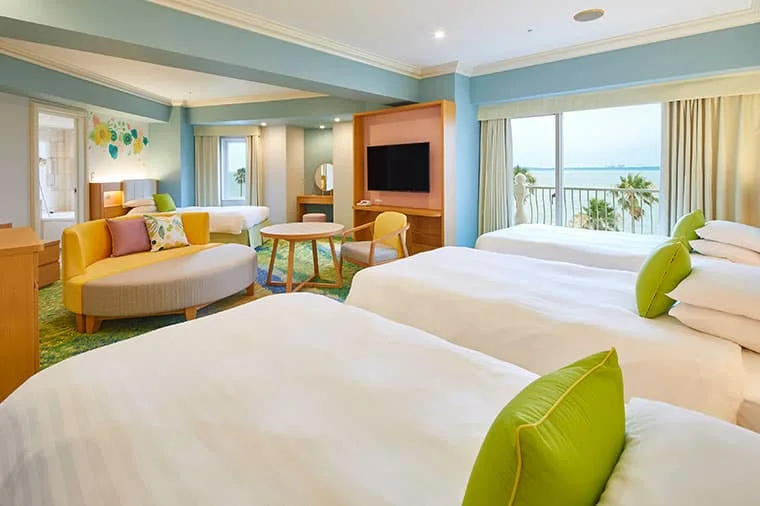
What twenty extra centimetres per bed changes
The difference between 120 cm and 140 cm sounds small when viewed as one number. It applies separately to each of four sleeping places, however: a simple sum gives 80 cm more total bed width across the room. That arithmetic describes the beds, not additional walking space. A wider bed occupies some of the same 56 m² footprint, so it would be misleading to call the common Nikko Type A a roomier layout solely on that basis.
Four adults who each want an independent, generous sleeping surface receive the benefit every night. Older children and teenagers can resemble adult sleepers in this respect. A party of two adults and two small children still gets four separate 120 cm beds downstairs. If the children are comfortable with those dimensions, a higher rate for bed width may bring little practical return. This is a preference decision rather than a rule about ages; check who actually sleeps in each bed and whether anyone needs unusually generous width.
All three categories use permanent beds. That matters when comparing them with a cheaper hotel room sold for four occupants by adding a sofa bed or extra bed. The cheaper headline rate may buy a different sleeping arrangement. The Grand Nikko and Hilton Tokyo Bay comparison is useful once the group is ready to compare hotels, while Hilton's Happy Magic room distinction addresses the named room within the other property. Keep occupancy permission and the actual bed layout separate when making that comparison.
Garden or Rainbow when Nikko is too expensive?
Garden and Rainbow are close alternatives rather than a clear good-versus-bad pair. Both provide 56 m², four 120 cm Simmons beds and a Tokyo Bay orientation. Garden is on floors 4–6 and has six rooms in the category; Rainbow is on floors 7–10 and has eight. The higher floor can matter to someone who expects to spend time looking out, but the published floor range alone cannot tell you the exact outlook from an individual room. A large gap in refundable rates should not be justified by floor number without another personal reason.
A one-night family park stay often reduces the room to arrival, sleep and departure. In that rhythm the difference between Garden and Rainbow may be less important than whether the chosen rate is cancellable, breakfast timing suits the first park entry, and the four-bed category is actually available for the booked party. If both sell at similar total prices and the group prefers the higher floors, Rainbow is a reasonable tiebreaker. If Garden is meaningfully cheaper for the same dates and terms, it still provides the room's essential four permanent beds.
Look carefully at other Grand Nikko categories displayed nearby in a booking result. A standard or superior room shown as able to take four people may rely on a different bed arrangement, and “Family” can refer to more than one floor or layout. Select the full category name before comparing prices. The family-of-four hotel comparison helps decide whether four-bed capacity at Grand Nikko is the right broader starting point.
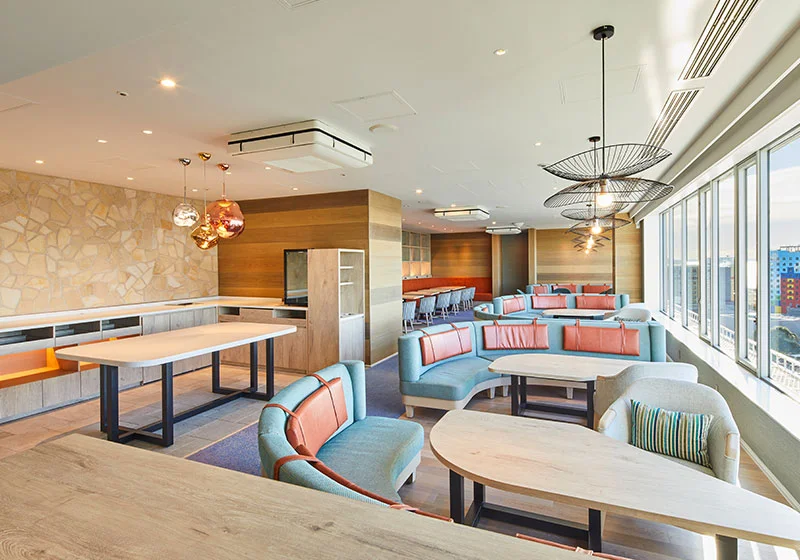
A lounge benefit must fit between check-in and check-out
Nikko Floor guests may use the Nikko Lounge on the twelfth floor. The hotel's current room information lists operation from 07:00 to 22:00, with soft drinks, snacks, newspapers and magazines; its detailed lounge notice divides the day into morning, tea, cocktail and late periods with different offerings. Access is restricted to guests staying on the eleventh and twelfth floors. The hotel explicitly excludes use before check-in and after check-out, and service or access can be restricted in busy periods. Treat the lounge as a feature to schedule, not an unlimited meal plan.
Consider a one-night itinerary in which the family arrives before its room is ready, goes directly to a park, stays through the evening and leaves the next morning for another park day. There may be almost no time to sit in the lounge, despite paying for the floor. A mid-afternoon return on a two-night stay gives it a plausible use; a slow morning or early evening break gives another. The benefit comes from those actual windows, not from a theoretical number of opening hours printed on a page.
Do not turn the lounge into a reason to surrender a park morning that the group values more. If arriving early for attractions is central to the trip, breakfast and transfer choices should support that objective. A comfort-led family may instead prefer an unhurried morning and a lounge pause. Splitting Disneyland and DisneySea over one or two days exposes the park-time trade-off before the room upgrade gets priced. The hotel choice should serve the chosen park plan.
The lounge offers a view across Tokyo Bay and, in clear conditions, possibly Mount Fuji. That description should not be turned into a promised sighting. The detailed hotel notice also lists changing food offerings across the day; confirm the current service on the dates of travel if cocktail-period food is central to the budget. The reliable distinction is eligibility for a place to pause during the stay, not a fixed cash equivalent for snacks.
The one-night and two-night tests produce different results
On one night, a four-adult party can still justify Nikko Type A if wider beds matter strongly. That benefit appears during the one hotel night without requiring another choice. Lounge visits, extended room time and a view are less certain when two park days border the same hotel night. A one-night premium needs to make sense even if the group enters the lounge briefly or not at all. Compare the full refundable cost of the exact room against Garden and Rainbow rather than setting an arbitrary yen ceiling for everyone.
Two nights create more possible hotel windows: an additional wake-up, another evening, time to unpack and perhaps a mid-trip return. They also double a per-night rate difference, so “more chances to use the facilities” does not automatically mean better value. Put the likely lounge and room-use periods on the itinerary first. If both days are park open-to-close, the second night mostly buys another sleep. If the group plans a pool or room break, the upgraded base starts doing more work.
For a family with a toddler, a break may be essential but the extra bed width may be immaterial. For four adults, the reverse can be true: all four may appreciate a wider bed even when none needs to return during the day. The strongest case combines adult-sized sleepers with real hotel time and a subtype whose view is desired. The weakest case pays for an assumed 64 m², never uses the lounge and leaves the room early on each park day.
Travellers considering a cheaper room farther from the resort should separate the room-tier decision from the location decision. Staying near Tokyo Disney or in central Tokyo asks how often the group will make the park journey. A strong answer to that question can make Grand Nikko worth considering before any Nikko Floor premium enters the calculation.
Four suitcases are a layout issue, not proof that Type A is larger
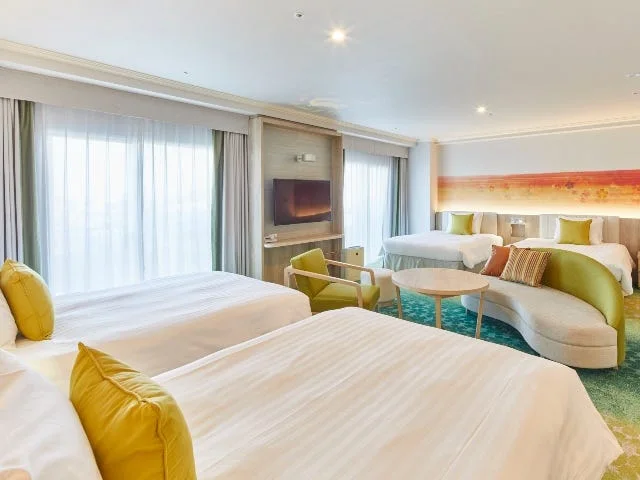
Four guests can arrive with four large cases, day packs and park purchases. A 56 m² room offers markedly more nominal area than many compact four-person hotel rooms, but square metres alone do not prove where four cases can lie open. The room photos show four beds, seating and circulation routes; they do not measure the remaining open floor. Ask where the cases will sit, whether anyone needs to work at a table and how long the group will remain unpacked. If the same 56 m² is comfortable in Garden, the Type A floor premium should not be credited with imaginary extra luggage space.
Type B or C adds eight square metres on paper. The exact layout, however, determines how much of that area helps four people move around. A confirmed 64 m² subtype is a legitimate different product from Type A; it is also extremely limited inventory. If the larger one is absent, consider whether the 56 m² four-bed categories already solve the problem. Forwarding or storing a suitcase can sometimes change the room-space requirement more than changing floors.
A reservation for four should be checked against the booking engine's occupancy details, not just a photo with four beds. Children can be counted differently according to age and meal arrangements. Before paying, enter every traveller's age, read the selected plan's cancellation conditions and confirm that the quoted total covers the actual party. The room facts above describe published layouts; they do not substitute for the sellable plan's terms.
Views are a subtype decision
Garden and Rainbow Deluxe Family rooms are listed on the Tokyo Bay side. Nikko Type A and B are on the Disney Resort side; Type C returns to the Tokyo Bay side. Someone paying for a resort-facing outlook therefore needs more than the word “Nikko” and more than the 64 m² figure. Type A offers the resort orientation within 56 m². Type B pairs that orientation with 64 m², but the hotel lists only one such room. Type C provides the larger area with a Bay orientation.
The park-side view can be appealing on a slower hotel day; it may be largely unseen during a visit that begins and ends in darkness. Ask how many daylight or evening room periods the group will actually have. A preference for bay scenery may instead support a lower-priced Garden or Rainbow room, or Type C if its area is wanted and available. The direction matters only when the travellers expect to use it.
For families deciding between this hotel and a more immersive Disney-property stay, Hilton Tokyo Bay versus Toy Story Hotel and Fantasy Château versus Grand Château address different ways of paying for location, theme and room experience. Do not assume a more expensive room at Grand Nikko resolves a hotel-level preference for an entirely different atmosphere.
Seven checks for this particular upgrade
The ratings below concern a confirmed four-person Deluxe Family. Four fixed beds are the main reason to pay; the 64 m² Nikko B/C subtype and lounge use need separate confirmation.
| Hotel dimension | Our score | Why |
|---|---|---|
| Location | Bayside Station shuttle access supports a Disney park base, but a one-night park schedule leaves little awake time inside the hotel. | |
| Room | Four permanent beds are the central strength: 120 cm in Garden/Rainbow and 140 cm in Nikko. Most named options are 56 m²; only confirmed Nikko B/C reaches 64 m². View orientation and luggage circulation differ by subtype. | |
| Cleanliness | Recent guest cleanliness feedback is strong; confirm the exact room subtype because the 56 m² and 64 m² layouts cannot be inferred from a shared category image. | |
| Service | Recent staff feedback is strong, and luggage handling is useful around park hours. Nikko Lounge benefits begin after check-in and end at check-out. | |
| Facilities | The Nikko Floor lounge runs 07:00–22:00, while pool access and charges need the booked season checked. A park-heavy day may leave little time for either. | |
| Food | On-site breakfast and dining give a family alternatives to park meals, although meal-plan inclusion and breakfast timing must be compared on the same room quote. | |
| Value | The four equal beds can justify an upgrade, especially for older children or adults. Pay for a named subtype and view only when the extra room time and refundable price difference warrant it. | |
| Overall | a strong four-equal-bed Disney-area room; the 64 m² and lounge premium is conditional on the confirmed subtype and hours the family can actually use. |
Price the named room rather than the category image
Search Garden Deluxe Family, Rainbow Deluxe Family and Nikko Deluxe Family for the same party and dates. Compare the complete stay total, taxes, meal inclusion and cancellation deadline. If Nikko appears, determine whether the offer guarantees A, B or C. An image of the larger layout is not a room allocation. For four adults, the baseline comparison is the price of four 120 cm beds against four 140 cm beds plus the floor benefits. For two adults with children, it is usually the price of four adequate beds against an optional comfort upgrade.
Use the Grand Nikko Maihama room options for your dates to compare sellable plans, then verify subtype and terms before booking. If the hotel itself remains uncertain, return to Grand Nikko versus Hilton for families rather than optimising an upgrade inside the wrong property. When the hotel is right, Garden or Rainbow remains a sound fallback: both retain the feature that originally made this comparison interesting, four permanent beds in a 56 m² room.
Related room and hotel comparisons
Toy Story Hotel vs Grand Nikko · Toy Story Hotel vs Grand Nikko · Centara Grand Hotel Osaka: Is the 40m² Family Room Worth It for Four? · Southwest Grand Hotel Okinawa Review: Is a 45 m² Room and Pool Worth the Urban-Resort Premium? · OMO7 Osaka vs Centara Grand Hotel Osaka: USJ Shuttle or 40m² Family Room? · voco Osaka Central: Is the Premium Room Worth Leaving Osaka Station? · voco Osaka Central: Is the Premium Room Worth Leaving Osaka Station? · lyf Shibuya Tokyo: Is the PARCO Location Worth a 12m² Room? · Hotel Sonia Otaru: Is a Canal-View Room and Rooftop Onsen Worth the 8-Minute Station Walk? · lyf Tenjin Fukuoka Review: Is a 12m² Room Worth the Shared Kitchen and 24-Hour Lounge? · HOTEL STRATA NAHA: For Two Nights, Is a Twin Room Worth More Than a Compact Room? · Lotte Hotel Busan vs Arban Hotel: Is the Five-Star Premium Worth It in Seomyeon? · Wait Until 40 Minutes Before Sunset: When Mojiko Retro Observation Room Is Actually Worth ¥600 · THE LIVELY FUKUOKA HAKATA: Is Nakasu-Kawabata Worth a 12 m² Room? · JR Inn Asahikawa: Is a Station-Connected Hotel Worth a Smaller Room? · MiraCosta Harbor Room: Harbor View vs Piazza View — Which Is Worth It?