
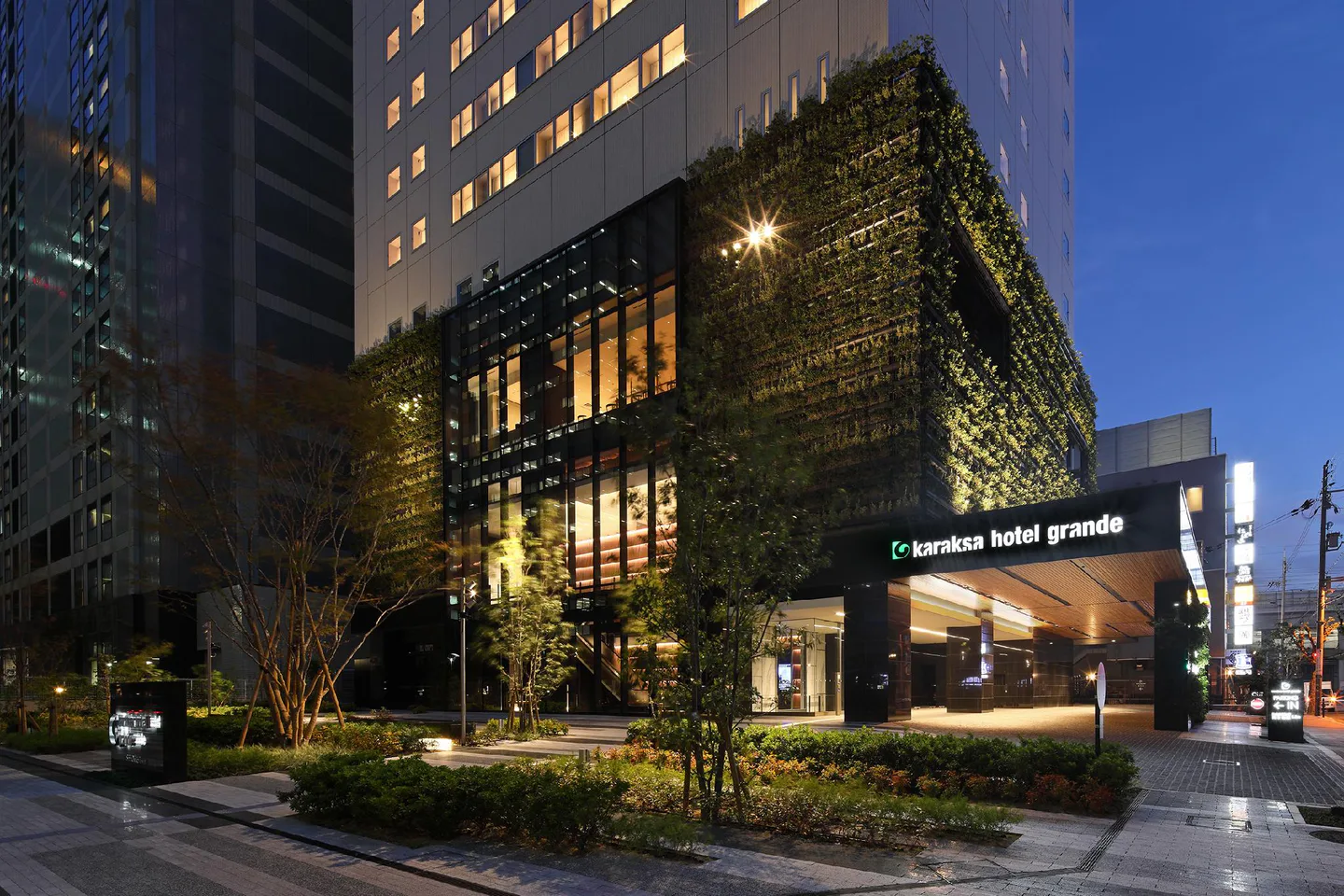
An early Shinkansen changes the value of a hotel near Shin-Osaka. A five-minute walk from the station’s Exit 4 is useful because it can move an Osaka local-train journey to the previous evening. The platform is still farther away than the hotel entrance, and a different Osaka base may be better when the departure is relaxed. Karaksa Hotel Grande Shin-Osaka Tower makes most sense when that morning transfer is the fragile part of your itinerary. For the wider move-or-stay choice, use the early Shinkansen from Osaka guide.
A night in Namba, Shinsaibashi or Umeda can put the last Osaka dinner close to the room. Moving to Shin-Osaka means giving some of that evening convenience away. The payoff is a simpler departure chain for a fixed train, particularly with luggage or several people sharing one deadline. Check the actual train and the previous night before booking a second hotel. For the whole Osaka stay rather than just its last night, compare Namba, Umeda, USJ and Shin-Osaka hotel bases.
Train times, hotel rates and facility hours vary. Use the selected departure and room terms when making the final booking.
Does a night-before move improve the departure?
Changing hotels consumes an evening: bags have to be packed, carried to Shin-Osaka and settled in another room. It becomes useful when that work replaces a rushed local transfer on train morning. If the first hotel already has a straightforward route and generous boarding margin, the move may add work without reducing much risk. A city-base alternative is Umeda versus Shin-Osaka for hotels.
↔ Scroll table left or right
Seven checks | Why Karaksa may score well | When the original base is stronger |
Departure deadline | A local-train dependency moves to the previous evening | The chosen train leaves a generous, simple morning transfer |
Luggage handling | Large bags are carried between hotels before the fixed train day | The existing route has familiar lifts and little baggage |
Group departure | Connecting rooms offer two bathroom zones for four to six people | An existing apartment already has enough bathrooms and packing space |
Room and cases | Twin rooms offer at least 21.0 m²; some large categories go higher | A cheap small Double would create its own bag problem |
Breakfast fit | Buffet begins at 06:30 when a later departure allows it | The train requires checkout before the meal can be used |
Bath and laundry | A 05:00 bath and fourth-floor machines may help a transfer night | A tight morning or occupied washer leaves no usable window |
Final Osaka evening | Shin-Osaka is ready for the next rail leg | A late Namba, Shinsaibashi or USJ night makes relocation onerous |
A one-night move becomes more persuasive when the Shinkansen is genuinely early, the group has large luggage, four to six people must leave together, or a missed connection would disrupt the next part of the trip. With a mid-morning train and little baggage, keeping the original Osaka room usually protects more holiday time.
Treat this as a route decision. The hotel cannot guarantee a boarding time; you still need to allow for station navigation and any ticket or luggage issue.
Which steps disappear on train morning?
From a hotel elsewhere in Osaka, the family may need to complete this entire chain before boarding:
room and checkout → local station → subway or local train → Shin-Osaka concourse → Shinkansen gates → platform.
From Karaksa, the chain is shorter:
room and checkout → walk from the Exit 4 side → Shin-Osaka concourse → Shinkansen gates → platform.
Both chains include the station interior and a boarding buffer. The difference is where the local train goes. A lift search, platform mistake or delay on the previous evening usually leaves time to recover; the same problem on the morning of a fixed Shinkansen may not. The five-minute hotel walk helps because one moving part is removed from the deadline.
This is the reason to pay for a last-night Shin-Osaka room: the transfer becomes simpler when the departure matters most.
Trips where the location earns its price
↔ Scroll table left or right
Trip shape | Likely fit | Reason to check the trade |
Early or connection-sensitive Shinkansen | Strong | Shortens the morning chain but requires a move the night before |
KIX arrival before a next-day intercity train | Strong | HARUKA takes about 50 minutes to Shin-Osaka, followed by the hotel walk |
Four to six people using a connected pair | Strong if confirmed | Two rooms and bathroom zones can ease one shared departure deadline |
Three or four Osaka sightseeing nights | Conditional | Midosuji Line is useful, but late city outings repeatedly end north of the centre |
Repeated late USJ or Namba evenings, no early train | Weak | The return journey repeats without a morning deadline benefit |
The advertised walk ends at the station, not the platform
The hotel lists roughly five minutes on foot from Shin-Osaka Station Exit 4. That is the outdoor final segment. Checkout, lifts, finding the Shinkansen area, ticket questions and the time you want on the platform all sit outside that five-minute figure. A 07:00 departure should never be planned as a 06:55 room exit. Station access in another major city is weighed in Tokyo Station hotel transfer guide.
JR Central publishes early departures in both directions under its 2026 timetable, though the train you choose still needs a date-specific check. Work backwards from departure: set a comfortable platform arrival, allow for the gates and station interior, then add the hotel walk and checkout. The train determines the room-leaving time, not the other way around.
Umeda is a closer alternative than Namba for many travellers. Compare the Osaka Station hotel options and Granvia Osaka if the rest of the stay repeatedly uses Osaka Station. One early Shin-Osaka departure alone may not outweigh several Umeda evenings. See Osaka Station hotel comparison. See Hotel Granvia Osaka.
The room choice can undo the station advantage
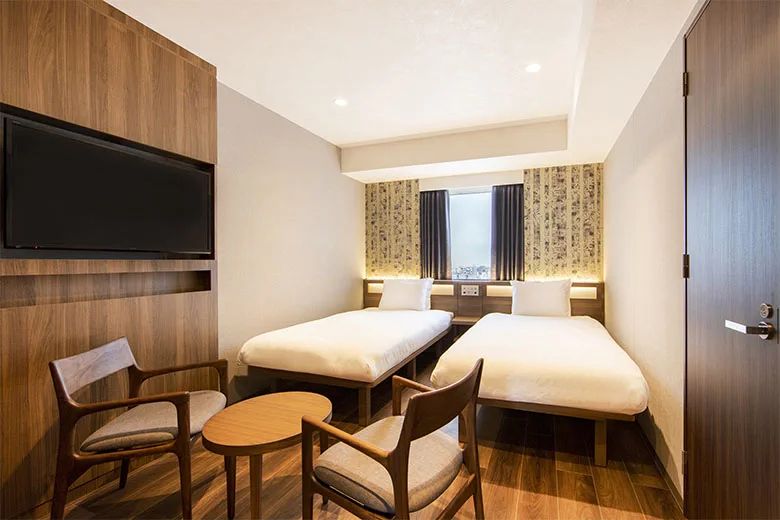
The Standard Double is 15.2–16.4 m²; the Standard Twin range starts at 21.0 m² and reaches 26.3 m² across its variants. Even the smallest of those Twins has at least 4.6 m² more floor area than the largest Double. The Twin also separates the shower, washbasin and toilet, which can help two people leave at once.
A solo traveller with one modest bag may be well served by the Double. Two travellers opening large cases and packing against a train deadline should compare the Twin rate first. Floor area and bathroom layout tell you more than a hotel-wide description of comfort. If the luggage is the main concern, compare Japan luggage forwarding and storage.
↔ Scroll table left or right
Room category | Hotel-listed area and beds | Practical use |
Standard Double | 15.2–16.4 m²; one 140 cm bed | A solo or light-bag overnight transfer |
Standard Twin | 21.0–26.3 m² across variants; two 110 cm beds | Two travellers preparing together with luggage |
King Double | 21.0–26.3 m²; 220 cm bed | One wide bed without returning to Double-class floor area |
High Floor Superior Twin | 23.2–25.2 m²; floor 15 or above | A different layout and height, rather than a generic luxury label |
High Floor Superior Twin with Sofa Bed | 25 m²; sleeps up to three | The third guest and their bags share the same floor area |
High Floor Grande with Tatami | 42.5 m²; up to four guests | A materially different family-room layout |
The published dimensions do not prove that two 28- or 29-inch cases can lie open in every room. Use them to compare likely working space, then ask the hotel about a specific layout if suitcase access is important.
An apartment can be a better answer for four or six people who need to gather in one space. Compare MIMARU Osaka Shinsaibashi Central before assuming that two hotel rooms are the cheapest or easiest family option. See MIMARU Osaka Shinsaibashi Central.
Connecting rooms help a group leave together
Karaksa lists 160 connecting rooms. Depending on the room pairing, two linked rooms can hold up to six guests. Their useful feature on departure morning is parallel space: people can use two bathroom zones and pack separately while remaining connected by an internal door.
For four to six travellers on one train, a single bathroom can become the bottleneck even when the bedroom seems large enough. Two linked rooms let one person shower while another finishes bags or gets children ready. The amount of time saved depends on the group; the layout simply offers more tasks in parallel. For a group room benchmark, see MIMARU Osaka Namba Station.
A connecting booking pays for two rooms. Compare the combined rate with an apartment or family room, and make sure the rate actually includes an internal connection for your dates. Hotel Keihan Namba Grande is another family-room reference when two bathroom zones are the real requirement. See Hotel Keihan Namba Grande family rooms.
Bath, buffet and the morning train
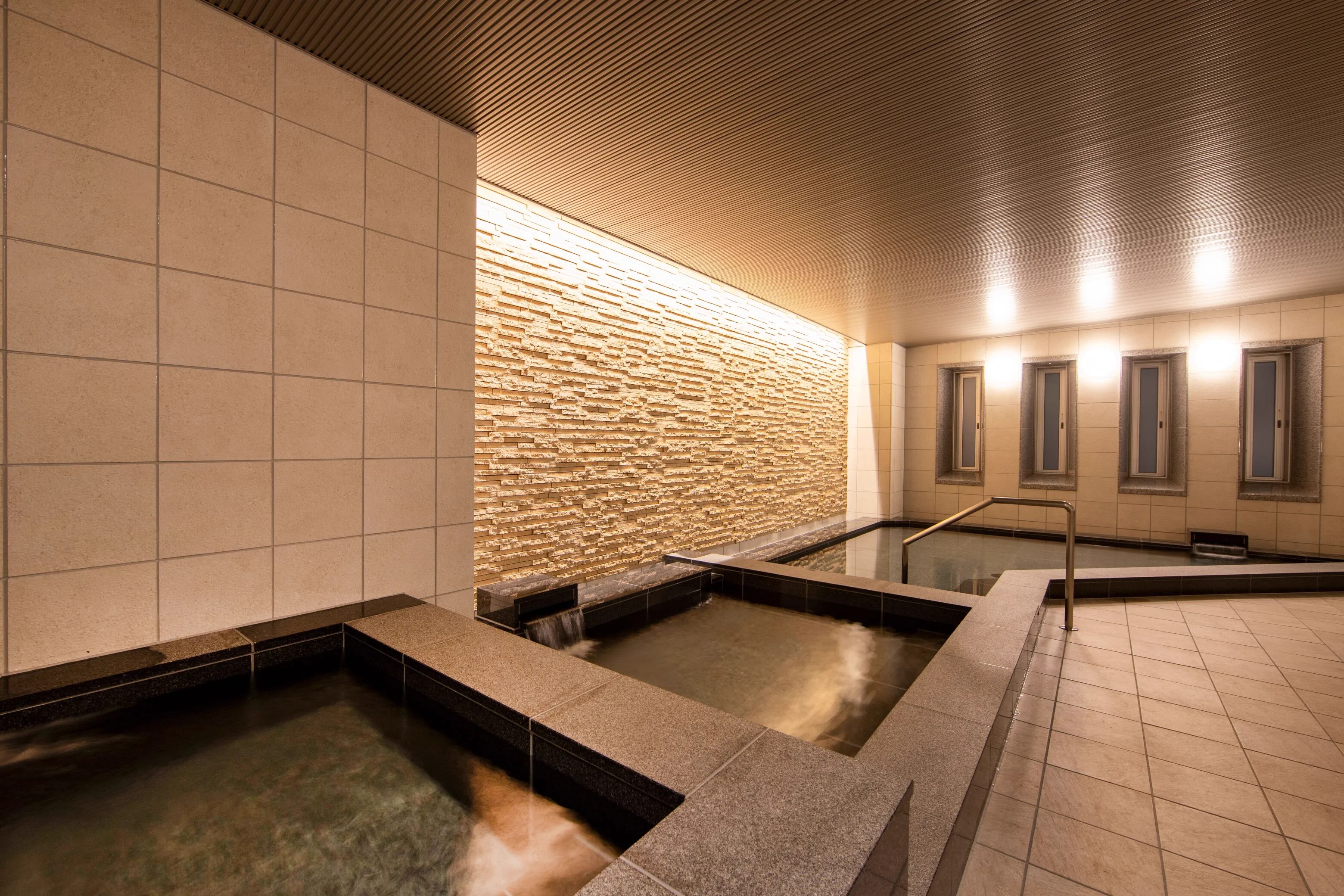
The fourth-floor public baths and saunas are for guests and run 15:00–25:00 and 05:00–10:00. Breakfast at Gochisou-SUN runs 06:30–10:30, with last entry at 10:00; the adult price is ¥2,750. The early openings make both possible in principle, but a very early train may leave time for neither.
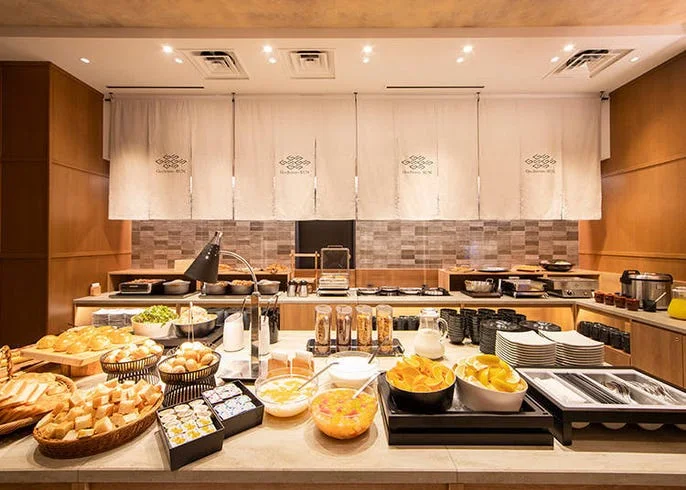
A 05:00 bath and 06:30 buffet can look attractive on paper. Once checkout, station walking and a platform buffer are added, trying to use both can spend the reliability that justified the move to Shin-Osaka. Choose the train first and only then decide whether either facility fits. An earlier breakfast elsewhere is discussed in Hakodate Kokusai Hotel.
Keep the boarding margin intact. Packing and checkout follow; the bath or breakfast belongs in the remaining time, not in the minutes reserved for the station. A quiet evening bath may be more practical than a rushed morning one.
Take towels from the guest room because the bath area does not supply them. The hotel restricts tattoos unless a tattoo can be fully covered with its sticker; ask the front desk about the current arrangement before relying on bath access.
Breakfast has a clear two-person price comparison
Two adult breakfasts at ¥2,750 each add to ¥5,500 when bought separately. That number is a reference for the same room on the same date, not a reason to buy breakfast before choosing a train.
For example, a breakfast-inclusive rate ¥4,000 above the matching room-only rate may make sense if both adults will eat. A ¥7,000 increase cannot be justified by two ¥2,750 breakfasts alone. If the train departs before the buffet is usable, breakfast has no practical value on that stay. Compare taxes and cancellation conditions as well as the meal label.
A buffet package should follow the morning schedule. The timetable, walking margin and the time needed to leave the room decide whether breakfast is a real purchase.
An amenity is useful only when you are at the hotel Another Osaka Station location trade-off is Hotel Hankyu RESPIRE Osaka.
Part of Gochisou-SUN offers free drinks from 14:00 to 22:00. There is also a self-service laundromat on the fourth floor; the hotel does not offer valet laundry. These facilities can help on a transfer night when the group returns early enough to use them.
Laundry before a series of train days may reduce what has to travel in the suitcase. A machine can be occupied, however, so do not build a fixed 23:30 wash cycle into a tight departure plan. Use the fourth-floor facility when there is enough slack to wait.
The drink window has the same limit. An evening spent in Namba until after 22:00 leaves no time to use it. Count the hours you will actually be on the property before paying extra for a hotel with amenities that close before you return.
When Shin-Osaka helps and when it creates another transfer For a multi-day city base, compare Osaka attraction neighbourhoods.
↔ Scroll table left or right
Evening before / next journey | Where the timetable pinches | Room decision |
KIX arrival → Shinkansen next day | HARUKA to Shin-Osaka is about 50 minutes, then the short hotel walk | Coherent one-night transfer |
Namba dinner → early rail departure | Late move versus fixed morning transfer | Move only if morning risk matters more |
Late USJ finish → early rail departure | Both ends of the night have deadlines | Protect the more fragile one rather than assuming a single room fixes both |
Umeda evening → mid-morning train | Morning usually has more room to recover | Keeping an Umeda hotel may be simpler |
Several intercity rail days | Shin-Osaka is needed repeatedly | The hotel becomes a useful base, not only a final-night buffer |
A late Universal Studios Japan finish is a different timing problem. Read the last-train plan and the USJ Halloween hotel-area comparison before assuming that a Shin-Osaka room solves both a late park night and an early next departure. See USJ Horror Night last-train plan. See USJ Halloween hotel areas.
The cost of changing base
Moving north the night before means packing early and possibly ending the final Osaka evening away from Namba or Shinsaibashi. A late dinner can turn the relocation into an awkward last task. The transfer has changed days; it has not vanished.
Room size is another trade. Booking the closest hotel and then taking its 15.2–16.4 m² Double may make two large suitcases and two people’s morning routine harder. Check the Twin or a larger category before paying a station-location premium.
Breakfast starts at 06:30, free drinks end at 22:00 and the bath reopens at 05:00. A very early train or late city return can make those amenities unusable. Buy this room for the transfer it solves, then treat facilities as benefits only if the itinerary has space for them.
Mistakes that can erase the morning advantage
1. Reading the five-minute walk as the whole journey to the Shinkansen platform. The station interior and boarding margin are still ahead.
2. Moving hotels for a relaxed mid-morning train without calculating the evening cost of the move.
3. Keeping a late Namba or USJ night, then adding an exhausting transfer to Shin-Osaka before sleep.
4. Buying two adult breakfasts before noticing that the family will leave before 06:30, making the ¥5,500 separate-purchase reference irrelevant.
5. Selecting the smallest Double for two people with large bags solely because the hotel is close to the station; the 21 m²-plus Twin may function better.
Confirm the product behind the price
Compare the same room category, guest count, bedding, breakfast inclusion, taxes and cancellation deadline. If the plan depends on connecting rooms, confirm that two rooms with an internal door are available and included in the rate. Adjoining or nearby rooms are not automatically a connected pair. For broader lodging geography, see where to stay in Osaka with kids.
Compare Karaksa Shin-Osaka rooms and dates
Compare other hotels near Shin-Osaka Station
View Karaksa and nearby stays on the hotel map
Seven site scores for an early Shin-Osaka departure
The scores are out of ten for a stay with a fixed Shinkansen departure. The station walk and morning facilities gain importance on that night; cleanliness and service reflect current anonymous guest category aggregates.
Dimension | Site score | Where Karaksa earns or loses it |
|---|---|---|
Location | Exit 4 is roughly five minutes away, removing an Osaka local-train leg from a tight departure morning. | |
Room | Standard Twins begin at 21.0 m², while the 15.2–16.4 m² Double is a leaner luggage choice. | |
Cleanliness | Current aggregated cleanliness categories are around 9.2–9.5/10. | |
Service | Aggregated staff and service categories are around 9.1–9.2/10. | |
Facilities | The public bath opens at 05:00; laundry and connecting-room options solve different transfer needs. | |
Food | The buffet begins at 06:30, useful only if the train allows breakfast and the station approach. | |
Value | Moving here for one night pays off when it removes a fragile morning transfer, less so for a relaxed train. | |
Overall | A strong last-night rail choice when room size and breakfast timing are matched to the actual departure. |
A final-night choice, not an all-trip default
Karaksa is strongest when an early or connection-sensitive Shinkansen makes a local train on departure morning undesirable. Connecting rooms add a second reason for groups of four to six who need two bathroom zones. The room rate has to be weighed against moving hotels the previous evening. For a contrasting one-minute station choice, see Hotel Gracery Sapporo.
For a mid-morning train, a favourite Osaka base may be more useful. Namba, Shinsaibashi, Umeda or Universal City can keep the evening close to the room; transfer to Shin-Osaka in the morning if the schedule leaves enough time.
One useful test is to imagine the train departing two hours later. If you would then keep the original hotel, you are paying to reduce deadline risk. If you would still book Shin-Osaka, it may be serving as the rail base for several intercity days.
Details to settle before the train day
How close is the station entrance?
Allow about five minutes between the hotel and the Exit 4 side of Shin-Osaka. Add checkout, gate finding and your own boarding margin; the platform is not five minutes from the room.
Which room gives two people space to leave?
The 15.2–16.4 m² Double can suit light luggage. A Standard Twin starts at 21.0 m²; compare its floor area and separated bathroom components when two travellers will pack at once.
Can the morning bath fit?
Guest bath hours are 15:00–25:00 and 05:00–10:00. Bring the room towels. An evening soak is often easier to fit before an early train.
Will breakfast be open before departure?
Breakfast runs 06:30–10:30, with admission ending at 10:00. At ¥2,750 per adult, two separate breakfasts cost ¥5,500; check whether the chosen train leaves enough time to eat.
Can a larger group use connecting rooms?
The hotel lists 160 connecting rooms, and some two-room combinations accommodate up to six people. Check the exact pairing and internal door when reserving.
More Osaka hotel comparisons
Osaka Station Hotel Comparison · Hotel Granvia Osaka · MIMARU Osaka Shinsaibashi Central
Trips after the Osaka stay
Where to Stay for USJ Halloween 2026 · Osaka to Beppu Ferry · Best Japan eSIM for Tokyo, Osaka and Kyoto
Hotel and train details
Karaksa connecting rooms and services
Room categories, available connecting pairs, meals, bath rules and departure times can vary. Check the selected date and rate before paying.
Related guides: Hotel WBF Grande Asahikawa: Is a 2-Minute Station Walk Worth It for a Northern Hokkaido Base? · Hotel Metropolitan Tokyo Marunouchi: Is Tokyo Station Access Worth It Before an Early Shinkansen? · Hotel Hankyu RESPIRE OSAKA: Is a 3-Minute Osaka Station Walk Worth the High-Rise Trade-Off? · Hotel Sosei Sapporo Review: Is a 39 m² Twin-Queen Room Worth a 15-Minute Walk from Sapporo Station? · La Vista Hakodate Bay: Is a 15-Minute Walk from Hakodate Station Worth It? · Hotel JAL City Fukuoka Tenjin: Is a 1-Minute Akasaka Walk Worth Choosing Over Tenjin Station? · Hotel Torifito Otaru Canal: Is a 7-Minute Walk from Otaru Station Worth It? · OMO5 Otaru: Is a 9-Minute Station Walk Worth Staying by the Canal? · Zentis Osaka: Is Room 001 Worth the Walk from Osaka Station? · The Naha Terrace: Are 35m² Rooms and 12:00 Check-Out Worth a 15–20 Minute Station Walk?
Rail and hotel alternatives
Early Shinkansen from Osaka: Should You Stay in Shin-Osaka or Move Only for the Last Night?
Hotel Gracery Sapporo: Is a 1-Minute Station Walk Worth a 15 m² Room?
Hotel Sonia Otaru: Is a Canal-View Room and Rooftop Onsen Worth the 8-Minute Station Walk?
Mitsui Garden Hotel Ueno: Is the 6-Minute Walk from the Skyliner Worth It?