
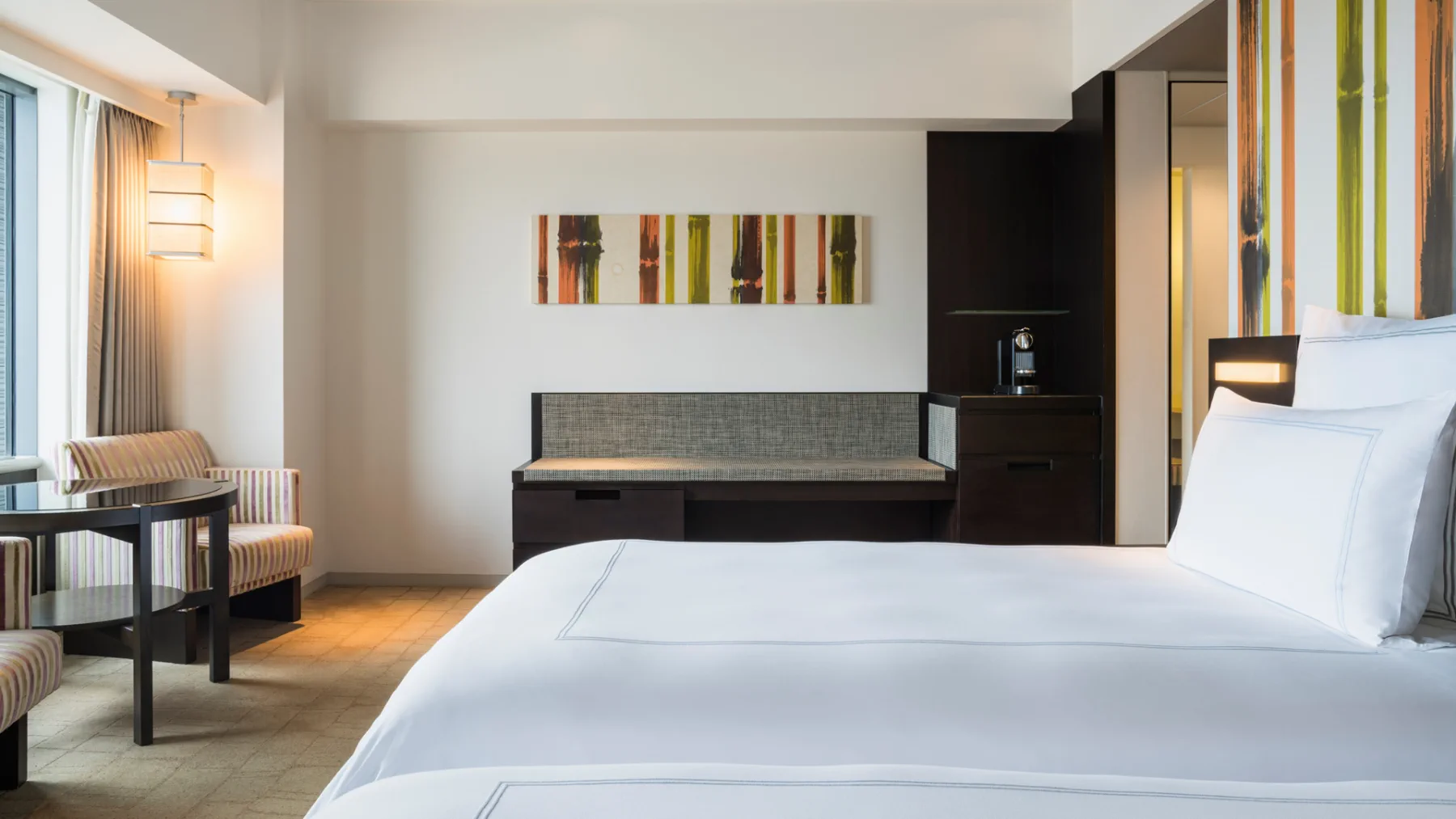
Swissôtel sits above Nankai Namba, the useful end of an airport train journey. Hotel Royal Classic joins Osaka Metro Namba through Exit Walkway No. 12. For a stay of several days, the better connection depends on how often you will carry bags and which rail network you will use after arrival.
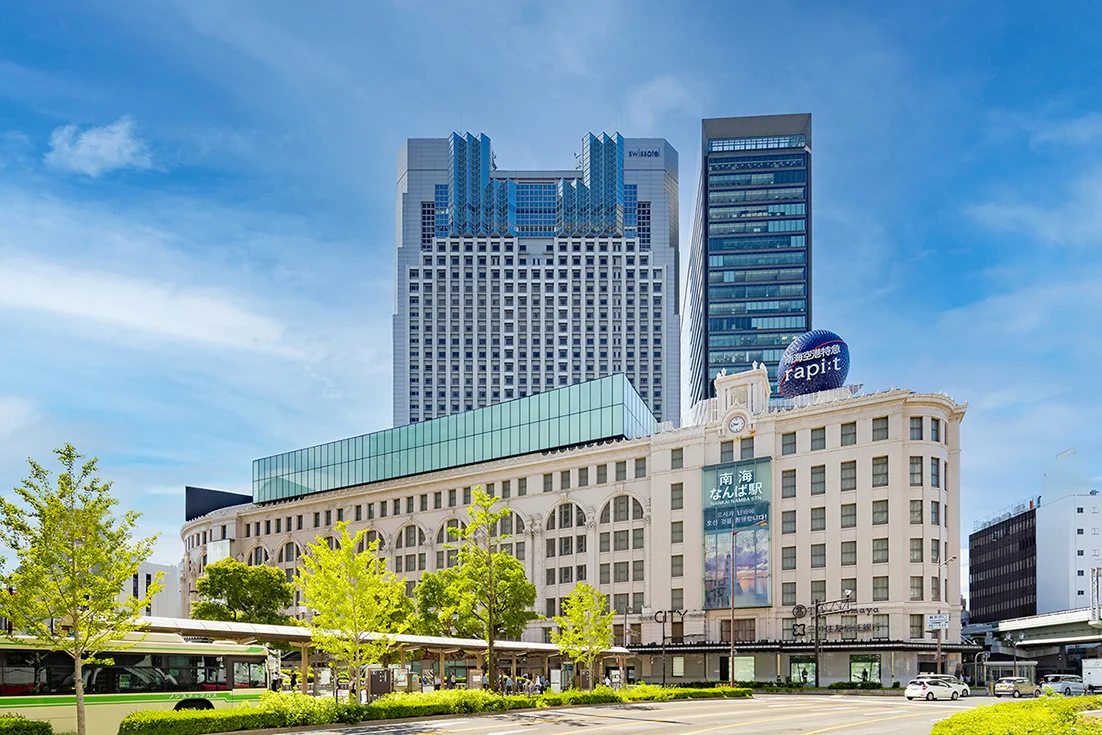
Swissôtel Nankai Osaka stands directly over the Nankai terminal in Namba.
The hotels are close enough that a generic “Namba location” score conceals the useful distinction. Swissôtel removes the final street transfer after a Nankai arrival from Kansai Airport. Royal Classic puts the Metro passage at the hotel and lists Nankai Namba about four minutes away on foot. Two people with large cases might feel that short distance sharply on a late arrival; the same pair might use Royal Classic’s Metro connection repeatedly over a four-night visit. Before booking either, check whether your actual trains use Nankai, Osaka Metro, JR or another line. Namba versus Umeda for an Osaka base is the prior decision if most days start elsewhere.
My choice would turn on the timetable. For a late Nankai arrival or an early Nankai departure, I would pay attention to Swissôtel first. For a normal-hour arrival followed by frequent Metro journeys, Royal Classic has a stronger everyday case, particularly if its noon checkout matches a late return flight. The price comparison comes after matching room type, breakfast and cancellation conditions.
The useful differences at a glance
↔ Scroll table left or right
| Trip condition | Likely better fit | What changes |
| Late Nankai arrival or early airport train | Swissôtel | The hotel joins the Nankai station complex, reducing the final suitcase transfer. |
| Repeated Osaka Metro trips | Royal Classic | Exit Walkway No. 12 serves daily Namba Metro movements. |
| Breakfast before 07:00 | Swissôtel | Table36 starts at 06:30; HAFU starts at 07:00. |
| Late flight after a final morning in the room | Royal Classic | Its listed checkout is noon; Swissôtel lists 11:00. |
Two station connections, two different doors
Swissôtel occupies the Nankai Namba station complex; its airport guidance puts the Rapi:t train journey from Kansai Airport at about 35 minutes before the final move to the room. Royal Classic describes a direct connection to Osaka Metro Namba through Exit Walkway No. 12. Its access directions put Nankai Namba roughly four minutes away on foot. Neither connection makes every Osaka line door-to-door. Check the platform and exit for the route you actually plan to take; a hotel beside Nankai is not automatically beside every Metro platform. The Nankai-versus-JR airport transfer choice is particularly useful if your first night is in Namba.
Imagine the last ten minutes of an airport arrival, after passport control, baggage reclaim and the rail journey. With two 28-inch cases and rain outside at 22:30, the walk to Royal Classic carries more weight than it would with cabin bags at 15:00. But a visitor taking the Midosuji Line several times each day may recover that small walk many times over at Royal Classic. The distinction is about repeated movements, not a claim that one building is universally closer to “the station.” How to handle large luggage on Japan trains is relevant when those final metres are the main concern.
If Swissôtel’s station position already settles the area choice, the Swissôtel Nankai Osaka room and spa guide goes deeper into room tiers. Travellers who will actually spend most days around Umeda should revisit the Namba–Umeda base comparison before paying for either Namba address.
Room size depends on the named Swissôtel category
Royal Classic’s Standard Twin spans 30–31 m². At Swissôtel, a Swiss Advantage Room is 22 m², a Swiss Select Room comes in 22, 26 or 32 m², and a Swiss Executive Twin spans 32–34 m². A 32 m² head-to-head therefore describes one Swissôtel twin category, not every available twin room. Compare the exact category shown in your booking, not the largest number in a range. Even where the rooms are 30–32 m², floor area alone says little about whether two cases can be left open without blocking the path to the bath. Check bed configuration, photographs and the desk or sofa placement. Four adults at Swissôtel or MIMARU explores how the room decision changes for a group.
Breakfast and wellness have separate price tags
Swissôtel’s Table36 lists breakfast from 06:30 to 10:30, with last entry at 10:00. Royal Classic’s HAFU starts at 07:00 and also shows a 10:00 last entry and 10:30 close. That half hour only matters if the day starts early enough to use it. Swissôtel has pool, gym and Japanese sauna/bath facilities, but access is not one blanket room benefit: the Swiss Advantage Room page includes gym and pool while placing an additional charge on the Japanese bath and sauna; its Executive Twin page includes all three. Check the named package. An eight-in-the-morning to ten-at-night sightseeing day makes even included facilities a weak reason for paying more. A seven-day solo Osaka route can show whether there is real hotel time in your plan.
Royal Classic’s Metro access pays back during the stay
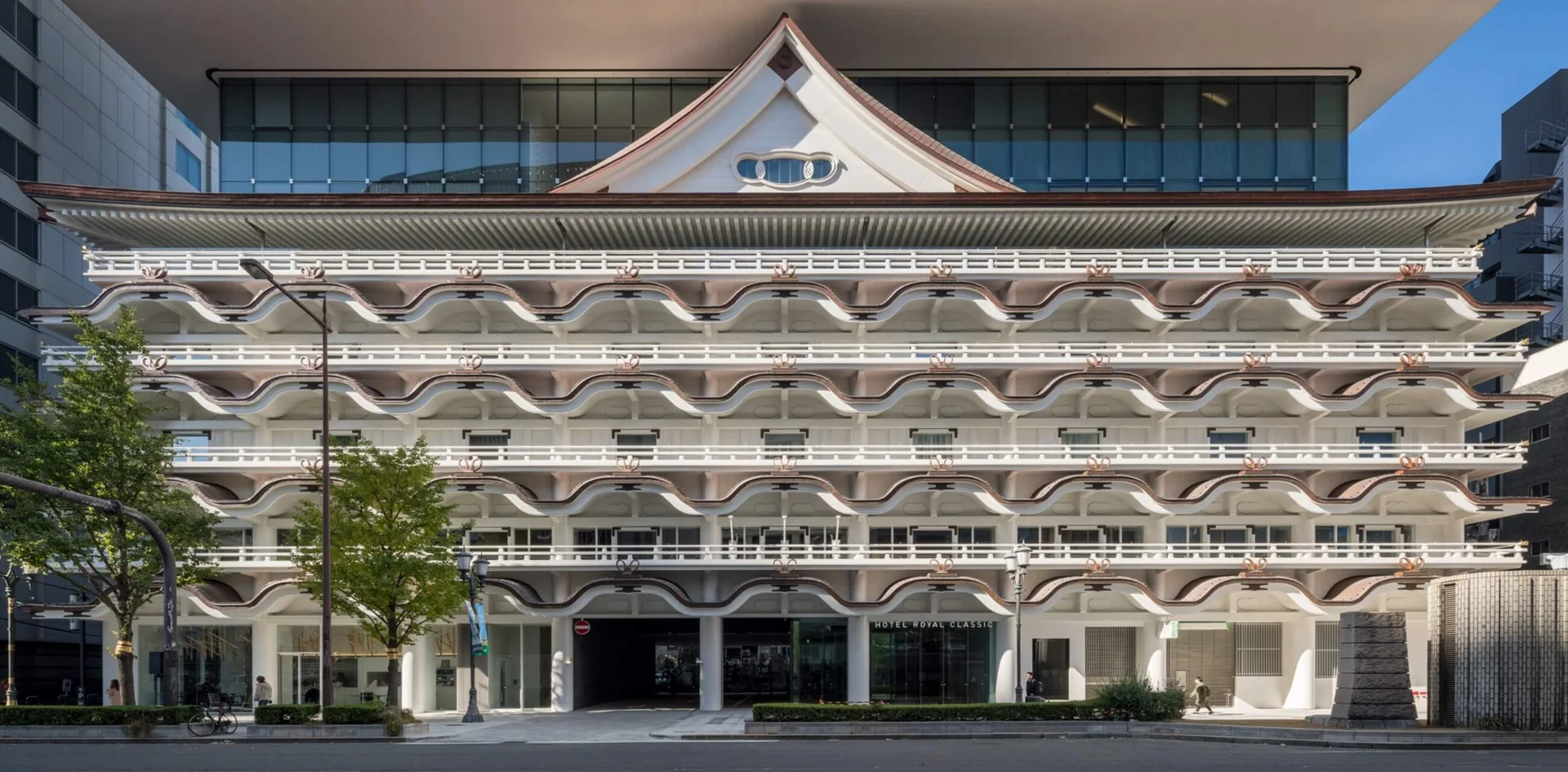
The Metro passage can matter after shopping, on a rainy evening or when returning to the room before dinner. A four-night booking makes those short movements repeat. Royal Classic’s noon checkout is a different, single-use advantage: the hotel overview lists 12:00, while Swissôtel’s FAQ lists 11:00. If your bags will be stored after checkout regardless, the extra hour may carry little value. If you have a late airport departure and want to remain in the room longer, it may be decisive. Royal Classic’s own Namba station connection and hotel decision merits a look if the walkway drives your choice.
Try the hotels against your actual four days
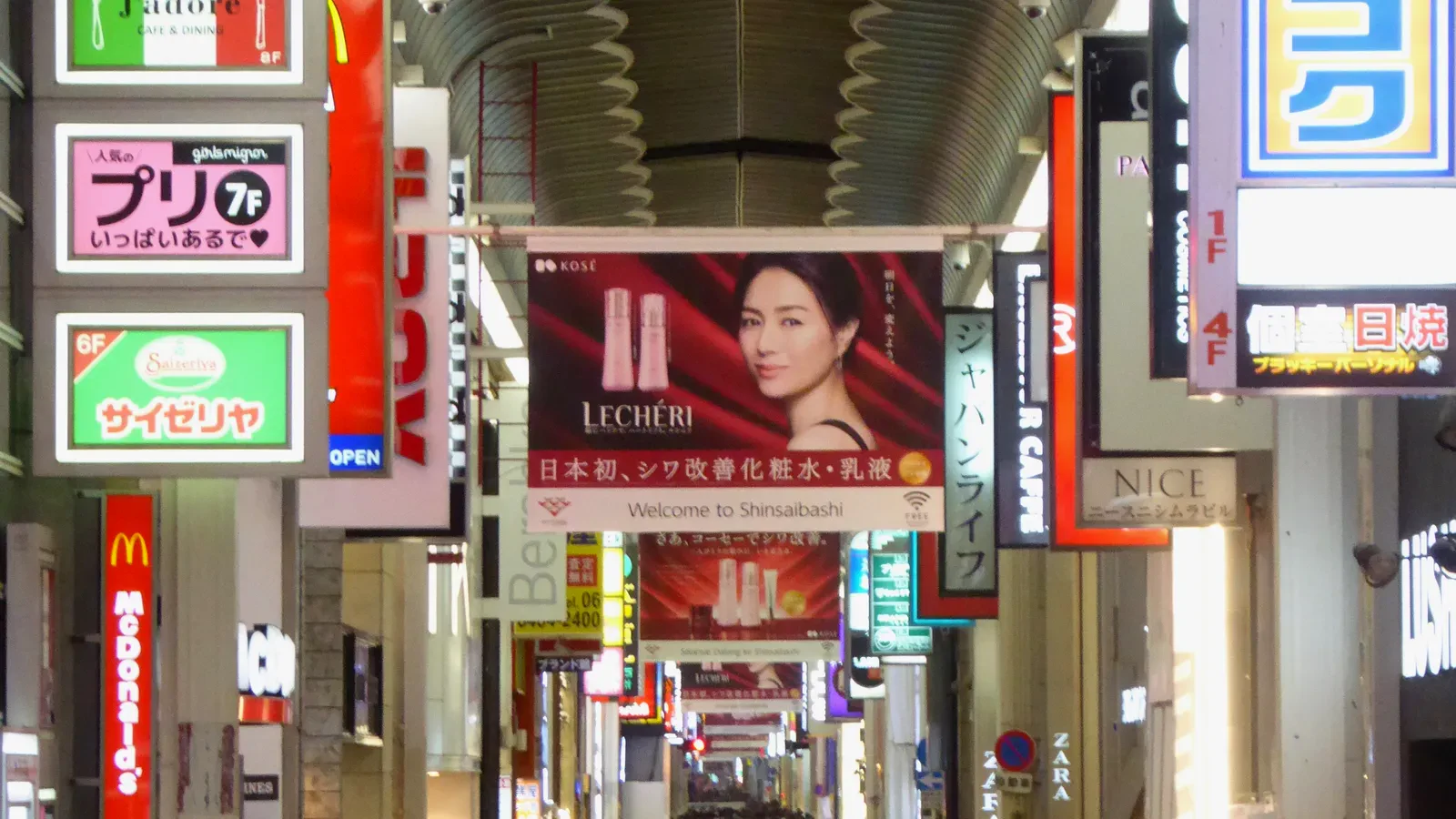
Take a four-day example: Nankai brings you into Namba at 20:30 on the first night; the second day has several central-Osaka Metro trips; the third is a full day at Universal Studios Japan; the fourth ends with an evening flight. Swissôtel makes the luggage leg on Day 1 and potentially the airport return easier. Royal Classic may save small amounts of effort during repeated Day 2 Metro trips and leaves the room available until noon on Day 4. The USJ day offers less to separate them because each hotel still needs an outbound and return rail journey. If USJ dominates the stay, compare the Park Front Hotel at Universal Studios Japan rather than assuming Namba is the only sensible base.
Give the difficult parts of that plan more weight than the number of calendar days. An early flight and large cases can justify prioritising Swissôtel even if Royal Classic has more small Metro wins. An easy afternoon arrival, frequent Midosuji use and a late flight can point the other way. Neither judgement needs an invented all-purpose score. Families who expect to separate during the day may also value a different room format; see MIMARU Osaka Namba Station for four.
Match room terms before comparing totals
Enter the same stay dates, two adults and the exact Twin type at each hotel. Then add breakfast, tax, cancellation deadline and access to any facility you expect to use. A flexible Royal Classic rate and a non-refundable Swissôtel rate are different purchases even if their headline yen figures look comparable. Inventory and totals shift by date; a static article cannot tell you today’s winner. If your itinerary includes Kyoto nights, Osaka and Kyoto in four days with USJ helps decide whether a continuous Namba booking is even appropriate.
Check Swissôtel for the same dates
Compare Swissôtel Nankai Osaka rooms. Confirm the named room size and whether breakfast, pool, gym or Japanese baths are included before using the total.
The Swissôtel room-category comparison distinguishes 22 m² Advantage Rooms from the 32 m² Select and 32–34 m² Executive Twin choices.
For a group, a station-linked hotel room is not always better than an apartment: compare Swissôtel against MIMARU Namba Station before dividing four adults between rooms.
Check Royal Classic for the same dates
Compare Hotel Royal Classic Osaka rooms. Select the Standard Twin deliberately if the 30–31 m² figure is part of your decision.
The Royal Classic Standard Room details show the Twin size range; its hotel overview gives the noon checkout.
If the 12:00 checkout is mainly about the final airport day, decide when you would actually leave for the Kansai Airport transfer from Osaka. An unused hour should not justify a larger room bill.
Two Namba doors, seven hotel scores
| Dimension | Swissôtel Nankai | Royal Classic |
|---|---|---|
| Location | 10/10 — The Nankai platform-to-hotel journey is shortest here, especially with airport luggage. | 9/10 — The Metro Namba Exit Walkway No. 12 serves repeat city journeys better than the Nankai platform. |
| Room | 8/10 — Advantage begins at 22 m²; a 26–34 m² Select or Executive room needs its own quote. | 9/10 — The Standard Twin is 30–31 m² with two 120 cm beds and a separate wash-area bathroom. |
| Cleanliness | 8/10 — Recent review sets differ on upkeep, so room condition needs more caution than location. | 9/10 — The room-upkeep record is especially strong for a relatively small central hotel. |
| Service | 9/10 — Full-service arrival and dining support are strong across a large stay record. | 9/10 — Recent staff scores are high and the 150-room scale is easier to navigate. |
| Facilities | 9/10 — Pool, gym and spa offer more hotel-time options, with tier-specific access and lobby works. | 8/10 — The room bath and Metro link are useful, though there is no comparable pool-and-spa complex. |
| Food | 9/10 — Five restaurants and the high-floor Table36 make meals a genuine in-house choice. | 9/10 — Breakfast, café, restaurant and 20F bar give four distinct in-house meal settings. |
| Value | 7/10 — The airport-rail premium makes less sense if Nankai is used only once and the room is 22 m². | 8/10 — The larger standard twin pays back over several Metro-led Namba days. |
JapanLayer overall scores for a two-person Namba stay: Swissôtel Nankai Osaka 8.6/10 and Hotel Royal Classic Osaka 8.7/10. Swissôtel's advantage is immediate Nankai airport-rail access and a broader wellness offer. Royal Classic pairs the Metro walkway with a larger standard twin and a strong everyday room; the preferred hotel changes with the rail network used after arrival.
Which booking fits?
Swissôtel is my first comparison for a late arrival on Nankai with two big cases, an early Nankai departure, or a room package whose spa access you will use. Royal Classic fits an easier arrival followed by frequent Metro journeys and a last-day noon checkout that genuinely helps. A one- or two-square-metre difference between selected rooms is a poor tiebreaker; some Swissôtel rooms are materially smaller, so identify the category first. If the daily route instead points north to Umeda, Shin-Osaka or Kyoto, move the hotel-area decision upstream. Osaka Station hotel choices, Hotel Vischio near Umeda and Namba versus Umeda cover that change.
Three booking questions that change the answer
Is Swissôtel easier from Kansai Airport?
The Nankai and Metro stations share the Namba name, but the hotel doors face different parts of that interchange. Trace the walking route from your actual arrival platform, especially if you need lifts rather than stairs. The Royal Classic access directions specify the Metro passage; the Swissôtel hotel location guide explains the Nankai advantage.
Yes, for a Nankai arrival the station-complex location makes the last luggage leg shorter. Royal Classic remains approximately four minutes’ walk from Nankai Namba, while its direct passage is to Osaka Metro Namba. The difference matters most with heavy cases, poor weather or a late train, and less with a light daytime bag. Where to stay before an early KIX flight deals with the more extreme timing case.
Will both Twin rooms take two large suitcases?
The Royal Classic Standard Twin spans 30–31 m², but Swissôtel Twin listings include multiple size bands; 32 m² is not guaranteed unless the chosen category says so. Neither published floor-area figure proves two 28-inch cases can remain open. Examine the room photographs for bed clearance, desk, wardrobe and bathroom door swing, and ask the hotel about the exact layout if luggage is central to the stay. The Royal Classic room guide adds the hotel-specific trade-offs.
How much is a noon checkout worth?
Royal Classic lists a standard 12:00 checkout against Swissôtel’s 11:00. The extra hour helps only when you plan to stay in the room near midday; a dawn departure or an afternoon already spent outside neutralises much of it. Ask about luggage storage or a paid extension if your flight is much later. KIX last-night hotel choice can help place the hotel hour against the airport transfer.
If Namba is the right base, narrow the room choice
A station-linked room at either property is useful only when Namba matches the rest of the trip. Compare Namba and Umeda as Osaka bases, then consider Centara Grand versus two Namba alternatives if you still want another Namba candidate.