

The 40 m² family room at Centara Grand Hotel Osaka has a narrow but useful purpose: two adults can sleep in a king bed while two younger children have a separate bunk area. That layout can make one room feel calmer at bedtime than an open-plan twin. It does not solve the needs of four adults, nor does it give four guests a second bathroom. Before comparing rates, make sure your party meets the property's two-adult/two-child limit and its bunk-bed age rule.
For a short Namba stay with young children, Family - Yu or Rei is the sensible first quote. For older children, adults travelling together or a family that gets ready at the same time every morning, put two rooms into the comparison. The decision is about sleeping arrangements and repeated daily routes as much as square metres. If the wider Osaka hotel choice is still unsettled, the Namba hotel comparison places Centara beside station-connected alternatives.
The bed rule is the first filter
Centara describes its Family - Yu, Family - Rei and Family - Miyabi as 40 m² rooms for at most two adults and two children. The design has a king-bed area and bunks set apart for children. It is important to enter each child's actual age rather than trusting a booking site's broad “sleeps four” label. Three adults and one child do not become eligible simply because the headcount is four.
The hotel's accommodation rules add two distinctions. Children aged 11 or below may share an adult bed, limited to one child per bed, subject to whether the child's height makes that comfortable. Bunk beds, however, are for children under 11. An exactly 11-year-old falls on different sides of those two sentences. Ask the property how it will allocate that child before paying for a non-refundable room. The FAQ also says extra beds are unavailable and a room may hold no more than two adults. Its general advice to reserve two rooms for more than three guests needs to be read alongside the explicitly listed family-room capacity, rather than used to override it.
Families with a child close to the age boundary should check the actual sleep plan, not only the booking engine's occupancy result. The king bed is listed as 180 cm wide; a child who is permitted to share it may still make the night uncomfortable for the adult beside them. A cot or bed guard is limited and must be requested. Centara accepts luggage before check-in and after check-out at its first-floor bell desk, which helps when a morning airport train and a 15:00 check-in leave a gap.
| Travelling party | Family-room implication | Better comparison |
|---|---|---|
| Two adults with two children below 11 | Within the listed capacity and bunk age rule, subject to the actual booking conditions | Price Yu, Rei and two standard rooms on equal rate terms |
| Two adults with a child exactly 11 | Bed sharing may be permitted; bunk eligibility is not established by the FAQ | Get a written sleep-arrangement answer first |
| Three or four adults | Beyond the two-adult room maximum | Two rooms or a different accommodation product |
| Children who need separate adult beds | A bunk layout may not match their sleeping needs | Two confirmed room categories, ideally connected if available |
This is also why a 40 m² family room should not be treated as a substitute for an apartment. It provides separate sleeping zones, a hotel bathroom and full-service facilities; it does not supply in-room laundry, a kitchen or separate bedrooms. If those functions matter on a longer stay, MIMARU Osaka Shinsaibashi Central offers a more relevant accommodation model. For an adult group, the Osaka four-to-six-friends room guide asks the right occupancy questions.
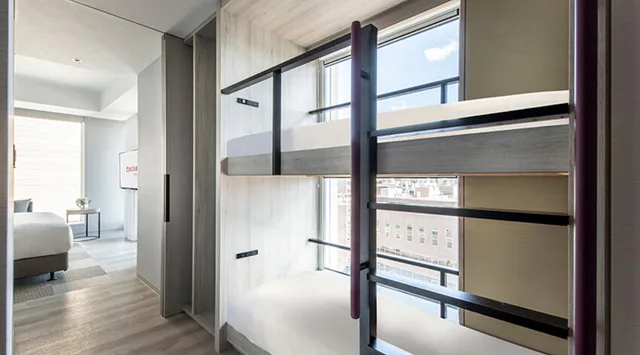
One family room against two Deluxes
A conventional Centara Deluxe room is published at roughly 27–30 m². Two of them therefore yield 54–60 m² across two doors, against 40 m² in one family room: 14–20 m² more total floor area, or about 35–50% more. The second bathroom may be the more useful gain. One parent can start a shower while the other child brushes teeth in another room; a single larger room still concentrates those activities in one bathroom setup.
The comparison is not universally in favour of the larger total. Two separate rooms can put a younger child behind another closed door, which some families do not want. Centara lists interconnecting rooms as available by request and recommends asking the hotel about arrangements for a family, but the words “on request” do not guarantee a connecting door for a particular date. Book the two-room plan only after confirming whether adjacency or an actual internal connection matters to you and whether it can be supplied. Two rooms on different floors would be a poor exchange for the family layout even if their combined floor area looks generous.
| Planning dimension | One 40 m² family room | Two 27–30 m² Deluxe rooms |
|---|---|---|
| Published area | 40 m² together | 54–60 m² combined |
| Sleep arrangement | King bed and separate children's bunks | Two complete room layouts; confirm the bed setup in each |
| Morning routine | One room's bathroom arrangement | Two separate bathrooms |
| Privacy | Children's zone within the same room | Doors between guests, if the rooms are suitably allocated |
| Booking risk | Children must fit the family-room rules | Connecting rooms are request-based until confirmed |
For a price illustration, a ¥10,000 nightly premium for two rooms becomes ¥40,000 over four nights. That calculation tells you what you would pay for another bathroom and 14–20 m² of additional combined space; it is not a claim about live Centara rates. The earlier US-dollar conversion used in this article is not a sound basis for a 2026 booking because exchange rates move. Compare current yen totals with the same tax treatment, breakfast, cancellation deadline and payment timing. A refundable family room should not be judged against two advance-purchase rooms as if the difference represented only space.
For two adults and two primary-school children who share a schedule, the family room often protects the simplest thing: keeping everybody in one booking while giving the children their own beds. If two teenagers need private changing space, two bathrooms and adult-sized sleeping surfaces, the second room earns its premium more clearly. A stroller, two large cases and purchases for several days also change how a nominal 40 m² room feels once it is occupied. That is a better test than accepting the floor figure in isolation.
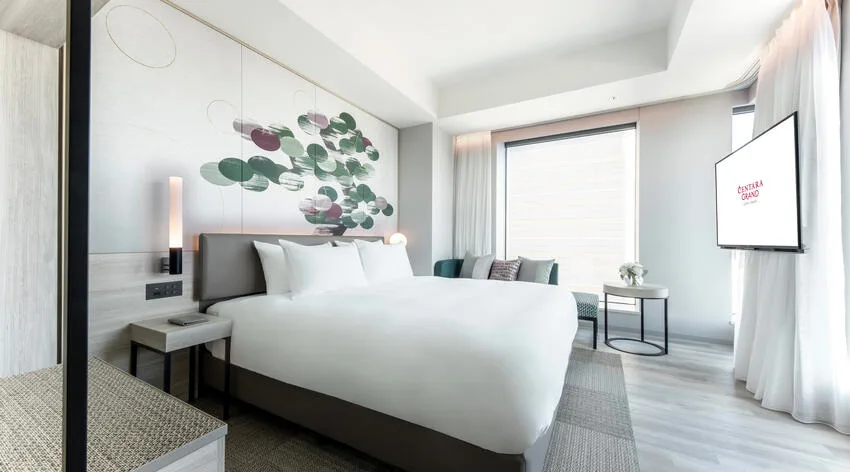
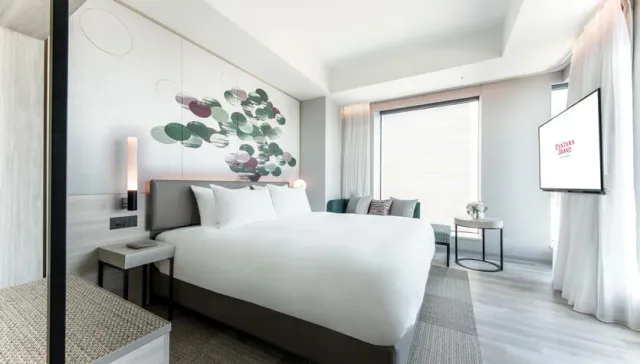
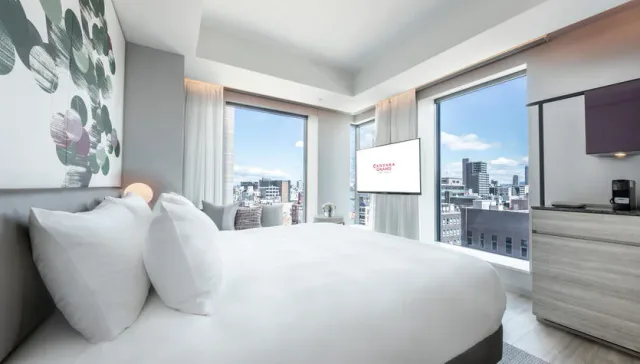
Yu, Rei and Miyabi are three service choices, not three room sizes
Family - Yu sits on the Standard Floor, Rei on the Premium Floor and Miyabi on the Club Floor. Each uses the 40 m² family-room headline and the same two-adult/two-child limit. Higher tier does not turn the bunk area into a second bedroom or add floor space. Quote Yu and Rei first if the family will be sightseeing from morning until evening. Pay attention to the actual view, floor preference and rate plan, but do not assign a space premium to a room whose published area remains 40 m².
Miyabi makes sense through the time you will actually spend at the hotel. Centara's Club Lounge schedule lists opening 07:00–22:00, breakfast 07:00–10:30, afternoon tea 14:30–16:30 and evening cocktails 17:30–19:30. The regular Suan Bua breakfast begins at 06:30 and finishes at 10:30, with the last entry listed at 10:00. Club access does not buy an earlier lounge breakfast. Families heading to a park at 07:00 may use little of the afternoon or evening service either.
The lounge can be valuable if the stay includes a genuine pause between outings. A parent taking children back at 15:00 could use tea while everybody rests. An evening spent nearby can make the 17:30–19:30 period practical. A Kyoto day trip or full Universal Studios Japan day will likely miss both windows. The useful rate comparison is the Miyabi uplift against the meals and lounge time your party would otherwise buy, not a vague expectation of “Club luxury.” The hotel's lounge page lists a complimentary Japanese breakfast option requiring reservation by 17:00 the previous day; do not arrive assuming it is an unreserved replacement for breakfast.
| Typical family day | Likely Club use | Rate question |
|---|---|---|
| Early departure, late return | Breakfast at most | Is breakfast elsewhere or in a non-Club rate cheaper? |
| Returns during children's afternoon rest | Tea and room downtime | How many days will this actually happen? |
| Two relaxed hotel evenings | Evening food and drink windows | Does the family use the offering, including children's options? |
| Park days on every full day | Several lounge windows missed | Could Yu or Rei buy the same sleep layout for less? |
For a park-focused stay, OMO7 Osaka versus Centara examines the route and shuttle decision. The Universal City, Umeda and Namba base comparison still explains the location trade, although its 2026 Halloween season is now past. A family should compare a future park date and current hotel rates rather than buy a room for an ended seasonal event.
Four minutes from Nankai Namba is not eight minutes from the Metro
Centara's access directions place the hotel about four minutes on foot from Nankai Namba's South Exit and eight minutes from Osaka Metro Midosuji Line Namba Exit 4. The second-floor entrance can also be approached through the Namba Parks deck. The Nankai Rapi:t journey from Kansai Airport to Namba is listed at about 40 minutes. That combination is attractive when an airport arrival is followed by Namba evenings and a family room that keeps everybody together.
Route frequency can reverse the judgement. A family riding the Midosuji Line toward Umeda or Shin-Osaka every day will repeat the longer Metro approach twice daily. Six station walks across a stay create roughly 24 additional minutes if you use the hotel's four-minute difference as a simple benchmark; eight walks create roughly 32. These are arithmetic planning examples, not measured door-to-platform times. Lifts, crowded pavements, traffic lights, a stroller and the precise exit can make the actual trip longer or shorter.
If you are arriving once by Nankai but taking several Kyoto or Kobe excursions, the day-trip station comparison may deserve more weight than the airport leg. The four-day Osaka, Kobe and Koyasan route helps count the outbound mornings before you choose a base. Swissôtel Nankai versus MIMARU puts direct station access against family or group space. A hotel can be excellent for one route and an unnecessary detour for another.
On a day mostly spent in southern Osaka, Centara's neighbourhood position may outweigh the extra Metro minutes. If you plan Namba shopping, the children can return to the room before dinner without travelling across the city. If a late train reaches Namba with tired children and luggage, identify whether you will use Nankai's South Exit or a Metro exit before expecting a four-minute walk. The hotel name does not tell you which Namba station entrance your itinerary uses.
Other Namba stays solve different problems. Citadines Namba puts a studio and a larger Premier room into a four-night decision. Fraser Residence Nankai Osaka tests serviced-apartment space close to the Nankai end of the district. Hotel Royal Classic Osaka is a more direct Namba-station location comparison. Hotel Keihan Namba Grande makes the family-room versus connecting-room question explicit. Check the actual room and guest mix in each case rather than treating all four as interchangeable “family hotels.”
A car adds a real nightly decision
The hotel's access page lists 15 spaces in its first-floor parking area, two of them barrier-free. Its detailed rate table gives overnight guests ¥3,500 on weekdays or ¥4,000 on weekends and holidays for up to 24 hours. An abbreviated FAQ currently describes first-floor parking as ¥4,000 for 24 hours; the detailed day-of-week table is the more specific statement, but confirm the rate for the exact arrival date. The affiliated Times Parks South Square is listed with 122 spaces and a discounted guest rate of ¥1,600–2,000 per night, varying by day. Its entrance and ticket-processing instructions differ from the hotel's small front lot.
A one-room quote ¥3,000 below a rival property can lose that advantage once car parking is counted. Do not assume one of the 15 front spaces will be free at arrival, nor treat the affiliated car park as the same door-to-lobby experience. Ask where the family will unload cases and how the 24-hour or per-night clock works for your schedule. If nearly all your Osaka days use trains, a rental car may add cost and handling without helping the stay. Families whose trip extends to car-dependent countryside should compare the combined room, parking and car-pickup plan rather than isolating the hotel rate.
Centara versus Hotel Keihan Namba Grande is a close family-room comparison; the wider Namba shortlist tests the station access against other products. If a longer stay creates a real laundry requirement, note that Centara's current FAQ points to a coin laundry roughly four minutes away rather than an in-house guest laundry. A family that needs several loads might prefer the apartment-hotel functions in the MIMARU room guide instead of paying for Club benefits it will not use.
Seven hotel ratings for a family of four
Our 8.0/10 overall judgement assumes two adults and two children under 11 using the bunks, with Nankai arrival and several Namba evenings. It is a site assessment of that trip, not a claim of a personal stay or a guest-review average.
| Hotel dimension | Our score | What supports it |
|---|---|---|
| Location | Four minutes from Nankai South Exit serves airport arrivals; eight minutes from Midosuji Namba makes repeated Metro days weaker. | |
| Room | 40 m², king bed and separated bunks suit the stated family; one bathroom and under-11 bunk limit narrow the fit. | |
| Cleanliness | A public guest-cleanliness category around 9.5/10 supports a strong upkeep assessment. | |
| Service | The property lists first-floor bag holding, limited cots/bed guards on request and 24-hour in-room dining; public staff feedback is also strong. | |
| Facilities | Club Lounge and 24-hour gym add use for some stays, but laundry is off-site and the small front car park is charged. | |
| Food | Suan Bua starts breakfast at 06:30 and the Club provides later timed food windows; an early park day can miss much of the premium. | |
| Value | One family room can avoid a second-room bill, yet Miyabi and two-room alternatives must be priced on the exact date. |
For older children or an adult group, the bunk rule can make the room unsuitable regardless of its overall number. A two-night family stop arriving at Kansai Airport and staying around Namba may use the room zoning and Nankai walk repeatedly. A four-night base with older children and daily Metro trips exposes the single bathroom and longer station approach more often. Work out the number of affected mornings and evenings before paying for a higher room tier.
For four adults, the group-room cost comparison is better suited than a child-bunk room. the Grand Nikko family-room assessment is another resort-side benchmark, while the OMO7 Shin-Imamiya base analysis tests a different Osaka location. If you are choosing a high-floor city-view room mainly for the outlook, the Osaka night-view guide asks whether a separate outing would satisfy that wish more cheaply.
The 40 m² room is a good fit when two adults travel with children young enough for the bunks, want one shared booking and will use Nankai Namba or the surrounding district often. Compare two rooms if the children have grown out of the sleeping layout, bathroom time is tight or an adult count breaks the room rule. Before paying, put the real ages into the reservation, verify the exact Yu, Rei or Miyabi tier, and compare like-for-like yen totals. Compare stays around Centara Grand Hotel Osaka and Namba for the same dates and guest mix.