
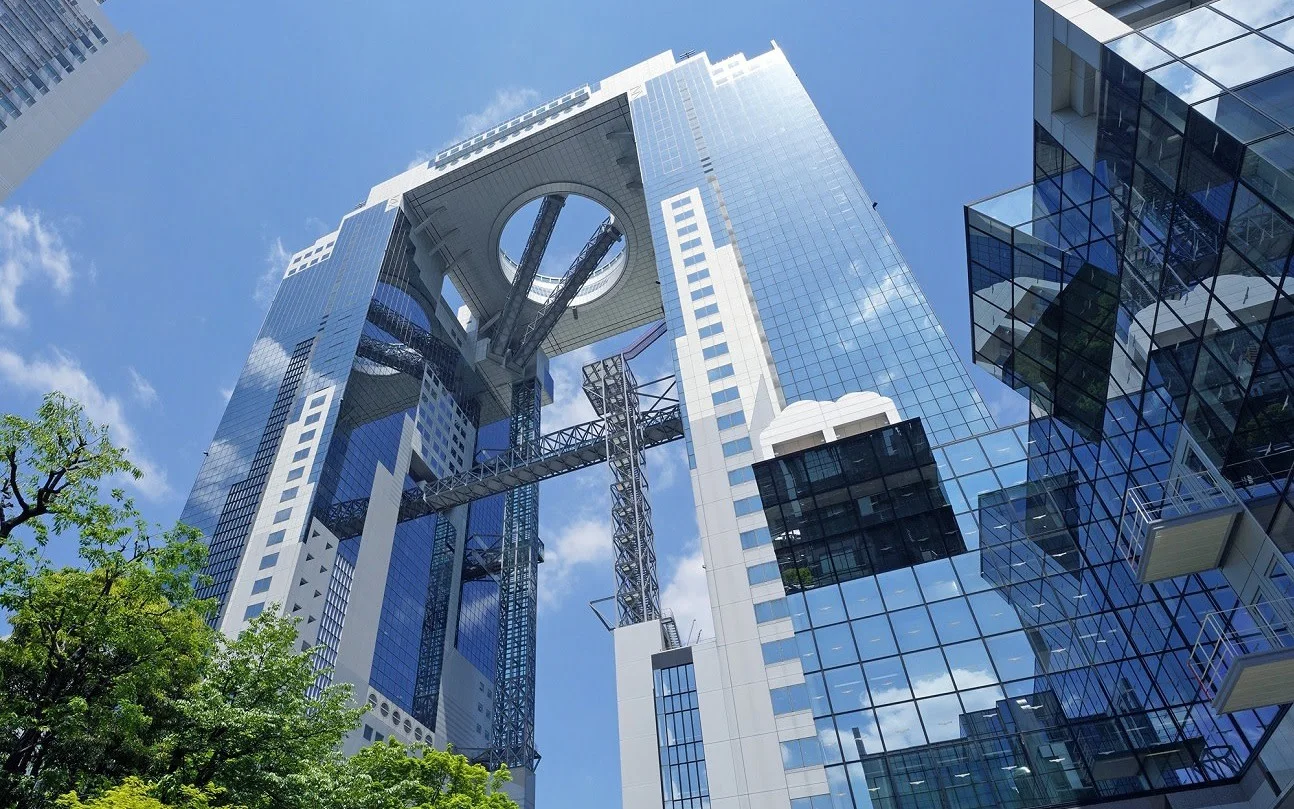
Three Osaka towers can fill the same square on an itinerary map while producing very different evenings. HARUKAS 300 takes you above the city from Tennoji and keeps the main panorama indoors. Umeda Sky Building makes the open rooftop part of the attraction, so a clear sunset matters more. Tsutenkaku belongs to the streets of Shinsekai; it makes most sense when dinner already brings you there. The right purchase depends on your route, the forecast and what you would give up during that hour, rather than on the height of the tower alone.
For a stay of three or four nights, one admission ticket is usually enough. A second can be worthwhile if you use the two decks differently, such as an afternoon spent reading Osaka's layout at HARUKAS followed by an outdoor evening at Umeda. Buying all three often consumes a disproportionate share of a short trip. Keep time for the neighbourhoods below the skyline, especially if you have a dinner booking or only one uncommitted night.
Which tower fits the evening you already have?
Begin with the place where you will be before and after the view. Then consider whether you need shelter, want an outdoor roof, have a pass to use, or are already eating in Shinsekai. The comparison below keeps these practical differences visible without treating a personal preference as a fixed score. A good choice for a visitor sleeping in Tennoji may be an unnecessary journey for someone spending the entire night around Umeda.
| Situation | Best fit | Reason to choose or avoid |
|---|---|---|
| First Osaka visit with only one paid deck | HARUKAS 300 | The enclosed high-level panorama helps you understand the city, and Tennoji can be part of the same route. |
| Clear sunset when staying near Umeda | Umeda Sky Building | An outdoor roof and changing light justify using a prime evening slot here. |
| Shinsekai dinner is already planned | Tsutenkaku | The tower adds a view without a separate district journey. |
| Umeda hotel, no Shinsekai stop | Usually skip Tsutenkaku | The lower ticket price does not erase the southbound detour for a shorter skyline view. |
| Persistent rain when the open roof is the draw | Reconsider Umeda Sky | The weather can take away the feature that made sunset admission attractive. |
The same tower can move from sensible to awkward as the weather or dinner location changes. An Umeda rooftop ticket is appealing when the sky is clear and your hotel is nearby; if rain takes away the outdoor portion you wanted, the indoor HARUKAS level may serve that evening better. Tsutenkaku has the reverse route problem: its lower admission is useful when Shinsekai is already in the plan, but less persuasive as a separate cross-city outing.
Price the whole outing, including the detour
An admission price captures only one part of the decision. Put the tower between the previous stop and the next one on your map, then allow for the walk from the station, ticket or entry queue, time upstairs and the trip onward. This matters most at sunset, when the desired window is short and dinner reservations limit your flexibility.
A useful comparison is: ticket price + travel away from your existing route + time waiting and viewing + the journey to dinner or back to your hotel. You do not need to put a yen value on every minute. Seeing that a supposedly cheaper tower requires an extra rail crossing is often enough to settle the choice.
For example, a ¥1,500 Tsutenkaku visit may use more of your evening than a ¥2,200 HARUKAS visit if Shinsekai was never on your route but Tennoji already was. The same reasoning can favour Tsutenkaku when kushikatsu and a walk through Shinsekai were planned anyway. Compare the actual sequence of stops before comparing ticket prices.
| Deck | Regular adult price | What the ticket price leaves out | When the route helps |
|---|---|---|---|
| HARUKAS 300 | ¥2,200 same-day, age 15+; ¥1,980 web advance by the preceding day | Travel to Tennoji if the rest of the night is in northern Osaka. | An existing Tennoji or south-Osaka stop. |
| Umeda Sky Building | ¥2,000 | The station walk and the possibility that poor weather spoils the roof. | An Umeda hotel or dinner nearby. |
| Tsutenkaku | ¥1,500 general observatory, age 15+; separate holiday tariff on specified dates | A reserved entry time and a long detour if Shinsekai was not planned. | Dinner and a walk through Shinsekai. |
The amounts in the table are yen prices for regular admission, not a guaranteed total for every date or ticket channel. Exchange-rate conversions would date quickly and add little to a decision made in Japan. Special operation, discounts and pass rules can change what you pay; the amount shown at checkout is the one that applies to your booking.
HARUKAS 300: the ticket change behind the ¥2,200 price
The current HARUKAS ticket schedule puts same-day adult admission at ¥2,200 for visitors aged 15 and above. The operator announced this structure from 23 July 2026, replacing older age bands and prices that can still appear on legacy information pages. It also lists a ¥1,980 adult web advance ticket when bought by the preceding day, and ¥900 for ages six to 14 at the counter. Children five and under who have not started school enter free. Use the ticket offer for your date, particularly if you encounter an older ¥2,000 table elsewhere on the site.
The 16th-floor counter sells same-day tickets, with sales normally running from ten minutes before opening until thirty minutes before closing. Crowds can slow purchases or cause sales to end early. Once you leave the observatory, a standard ticket does not allow another entry, so plan any dinner or shopping stop around the visit rather than assuming you can come back for nightfall.
HARUKAS makes Osaka's geography legible
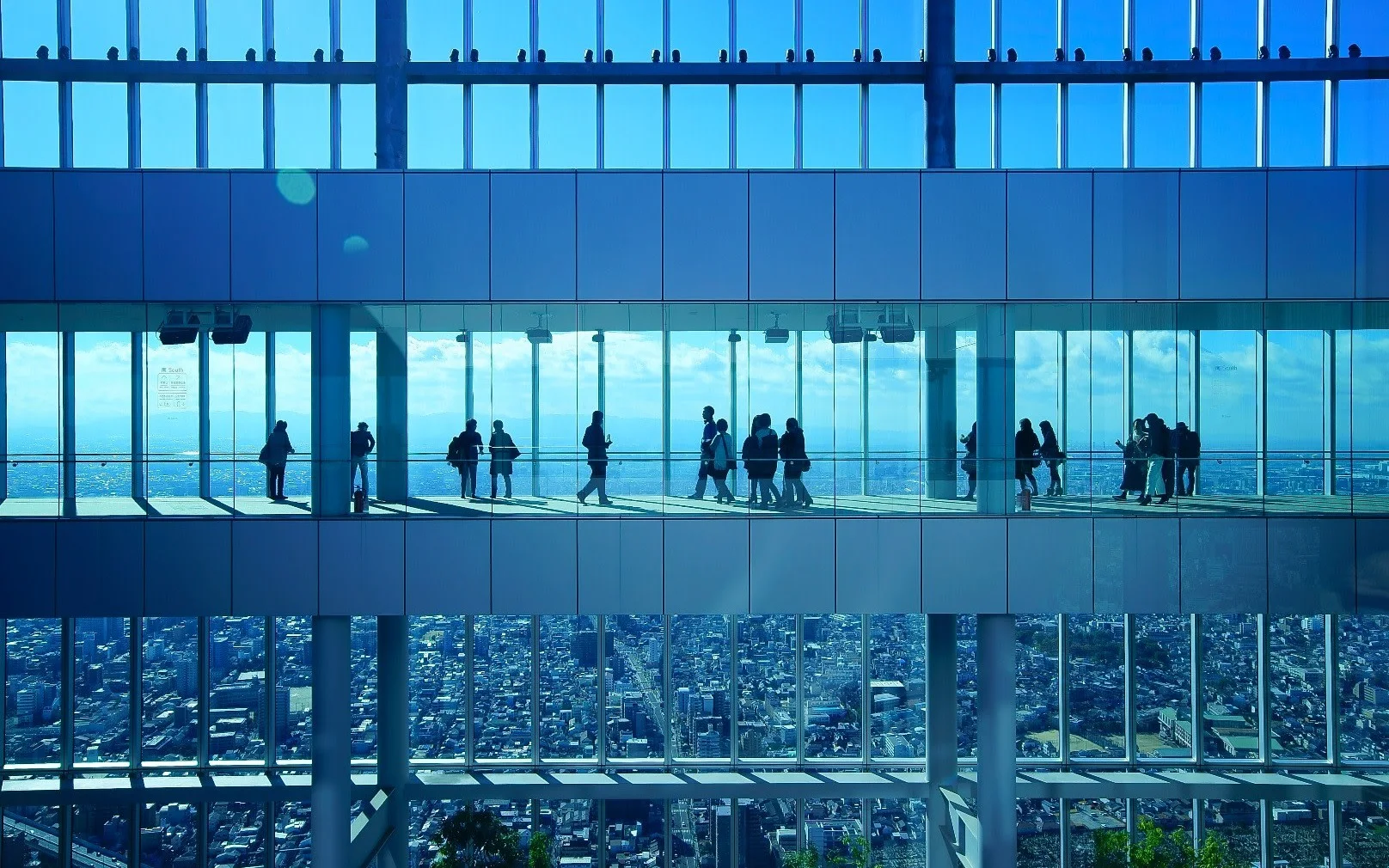
The observatory occupies floors 58 to 60 of Abeno Harukas, roughly 300 metres above the ground. On the enclosed 60th floor you can look across the city without depending on rooftop weather. The 58th-floor Sky Garden adds an outdoor element, though its usefulness still depends on conditions. This combination is particularly helpful for a mixed group when someone wants the panorama but does not want to spend the whole visit in cold wind or rain.
Normal opening is 09:00 to 22:00, with admission ending thirty minutes before closing. Visiting before dark lets you identify Osaka Castle, Tsutenkaku, the bay and the mountain edges; remaining through the blue-hour transition adds the lights without losing the shape of the city. If you arrive only after full darkness, the height is still impressive, but you lose much of the geographical orientation that distinguishes this deck.
HARUKAS is an easy fit after Tennoji or another south-Osaka stop. It can also be the single paid deck for a first visit when an enclosed main viewing floor matters to the group. If your night already centres on Umeda, however, travel to Tennoji and back needs a reason beyond collecting another panorama. Decide whether that extra journey leaves enough room for the meal and neighbourhood time you wanted.
Umeda Sky Building depends on the sky itself
The Kuchu Teien Observatory's standard hours are 09:30 to 22:30, with final entry at 22:00. Regular admission is ¥2,000 for adults and ¥500 for children from age four through elementary school. An open roof changes the experience: the moving light, wind and exposure are part of the appeal. Allow for the walk to the building from the main Osaka and Umeda station complex rather than counting only the train arrival time.
Reserve your best sunset slot here when the forecast supports it and you will already be in Umeda. If persistent rain or strong wind would spoil the rooftop aspect for your group, an indoor-led visit at HARUKAS is the steadier purchase. Check the ticket's change and cancellation conditions before committing to a tight time slot; a weather-sensitive plan should have an alternative evening use.
The Osaka Amazing Pass changes value at 15:00
For Umeda Sky Building, the Osaka Amazing Pass covers admission only before 15:00. From 15:00, presenting the pass gives a 10% discount on admission. The pass does not turn a sunset visit into free entry. The participating-attractions listing also gives the observatory's 09:30–22:30 hours and regular adult ¥2,000 price, making the time rule especially relevant when you are comparing a daytime stop with a dusk visit.
Use the included entry before 15:00 if a daytime panorama is what you want and the rest of the pass itinerary supports it. If the rooftop at sunset is the attraction's purpose for you, paying the discounted evening admission can still be the better use of the day. Do not shift a desired evening experience into the afternoon solely to make a pass calculation look more favourable.
Tsutenkaku belongs in a Shinsekai evening
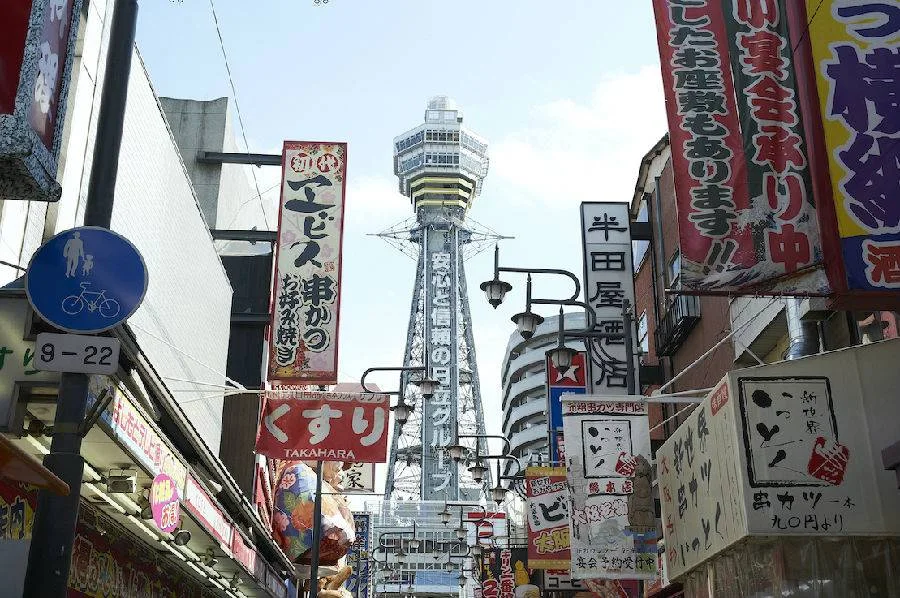
The general observatory normally opens from 09:00 to 21:45, with last entry at 21:15. Admission is ¥1,500 for ages 15 and above and ¥800 for ages five to 14. Entry requires a selected time. The operator recommends booking online ahead of arrival, while visitors using an Osaka pass or exchange voucher arrange a slot at the on-site counter; an evening can sell out. Check your date carefully: the tower lists a separate higher general-observatory tariff for 30 December 2026 through 3 January 2027.
Shinsekai gives the tower its context. The neon streets, retro shopfronts and kushikatsu restaurants turn a visit upstairs into one part of a compact walk and meal. If you are already arriving at Ebisucho, Dobutsuen-mae or Shin-Imamiya for that district, the detour is small. From an Umeda base with no Shinsekai plan, the ticket's lower price does not compensate automatically for travelling south only to collect a comparatively modest skyline.
Already going to Shinsekai? Put dinner and Tsutenkaku in the same district
Sunset is a scarce itinerary slot
A sunset view competes with early dinner seating, a hotel lounge, a Dotonbori walk and other ways to spend the same transition into night. HARUKAS can work before the sun goes down because daylight is valuable for reading the city. Umeda's outdoor roof gains more from changing light and a clear horizon. Tsutenkaku can be visited after dark alongside Shinsekai, so there is little reason to make it control the exact sunset hour.
| Viewpoint | Sunset priority | What the timing changes |
|---|---|---|
| HARUKAS 300 | Optional | Arrive in daylight to read the city; stay into evening if it fits. |
| Umeda Sky Building | High in clear weather | The outdoor roof gives changing light a central role. |
| Tsutenkaku | Low | Shinsekai's lit streets and dinner work well after dusk. |
How many admissions are worth an Osaka stay?
On a short visit, choose one deck that sits naturally between two things you already planned. If observation decks are a particular interest, a second admission makes sense when it changes the experience: HARUKAS by day and Umeda outdoors near dusk do different work. Three tickets demand a stronger reason, because the third visit is likely to replace a neighbourhood meal or another evening activity rather than add a new perspective of equal value.
Try removing each tower from the itinerary in turn. If the deletion gives back an unhurried dinner or avoids retracing the city while the remaining visit still delivers the view you wanted, leave that tower out. If losing it would remove the only chance for an outdoor roof or the Shinsekai stop itself, the admission may have a clearer purpose.
The choice by route and weather
A first-time visitor choosing one broad city panorama can begin with HARUKAS 300, especially when Tennoji is already on the day. Umeda Sky Building is the stronger pick for a clear-weather rooftop sunset from an Umeda base. Tsutenkaku completes a Shinsekai night when the district's food and streets were already the draw. These are itinerary choices; a different hotel or a poor forecast can change the order.
Your hotel location is worth deciding before you pay for an evening ticket. Compare Namba vs Umeda with Where to Stay in Osaka against where your day ends. A ¥500–¥700 difference in regular adult admission can matter less than travelling across Osaka for a second skyline.
Plan the surrounding hours
Namba vs Umeda: Which Osaka Area Should You Stay In?
Where to Stay in Osaka for First-Time Visitors
Osaka and Kyoto 4-Day Itinerary With USJ
Trip.com lists Osaka activities and sometimes attraction packages. Compare the date, admission category, entry conditions and cancellation policy with the tower's own ticket before paying. Browse Osaka tickets and activities.
Your evening viewpoint rarely needs its own hotel move. Compare Osaka bases by the full day route and the trip home after dark.
Tickets and access details
For prices, opening hours and dated ticket terms, see HARUKAS 300 tickets; HARUKAS 300 visitor information; Umeda Sky Building observatory; Osaka Amazing Pass attractions; and Tsutenkaku hours and admission.
Operating hours and rooftop access can shift for special events or weather. Tsutenkaku's reserved time and the Umeda pass cut-off are especially easy to miss when arranging an evening. Read the attraction's current date-specific ticket conditions before paying, then leave enough time for the station walk and last admission.
Related guides: Hotel Intergate Osaka Umeda: Do the Lounge Hours Fit Your Osaka Itinerary? · Where to Stay in Osaka for Couples: Choose Your Evening Before the Hotel · Osaka Night Views: When Free Beats the Observation Deck — and When HARUKAS 300 Is Worth Paying For · Where to Stay in Osaka: Start With Your Last Stop, Then Choose Namba, Umeda, USJ or Shin-Osaka · Hakone vs Kawaguchiko: Which Is Better for Your First Japan Trip? · Fujiya Hotel Hakone: Which Building and Room Should You Choose? · Okinawa Powered Paragliding vs Parasailing 2026: Which Short Flight Fits Your Trip? · Otsuka Museum of Art 2026: ¥3,300 Isn’t the Real Cost — Your Half-Day Is · Osaka Itinerary With Friends: 7 Days of USJ, Sumo, Food and Kobe — Without Moving as One Group · Tokyo Station vs Shinjuku: Which Base Fits Your Japan Itinerary?
More Osaka and Japan routes
Sapporo Station vs Susukino: Which Base Fits Your Hokkaido Trip?
Miyakojima Diving: One Dive, Two Dives or Three? Your Flight Home Matters More Than the Upgrade
Nokogiriyama Ropeway: Round Trip or One Way? The Route Choice That Changes Your Day
Miyako Hotel Hakata vs Solaria Nishitetsu Hotel Fukuoka: Which Base Fits Your Trip?