Before you book one room for the whole group
A room advertised for six can legally sleep six and still be uncomfortable for six adults. Picture the first morning: open cases on the floor, several alarms, people waiting to shower and someone trying to sleep through all of it. A large apartment may be excellent when four friends keep similar hours and want a table to gather around. With five or six people, or very different routines, a second door and bathroom often matter more than the idea of staying together.
When four friends keep similar hours, one apartment deserves a serious look. With different routines, compare a true two-bedroom unit; for five or six adults, price connecting or separate rooms at the outset. First settle which Osaka district works for the whole itinerary using where to stay in Osaka for first-time visitors. A perfect floor plan is little comfort if the group spends every evening crossing the city to reach it.
↔ Scroll table left or right
What the group needs | Room type to examine | Useful features | Question to resolve |
Four friends want a common evening space | MIMARU Osaka Namba Station | A dining area, kitchen and four fixed sleeping places | Can everyone manage with one bathroom and a shared bedtime space? |
Four people need to shower quickly | MIMARU Osaka Shinsaibashi Central | The Two-Bunkbed Apartment has two showers and two washbasins | All four still share one toilet; confirm the exact category |
Four to six adults need flexible separation | Hotel Keihan Namba Grande | Choose a 44㎡ family room or two connected 20㎡ twins | Check every extra bed and whether two bathrooms matter more |
Four adults want bedrooms with doors | Fraser Residence Nankai Osaka | A 77㎡ two-bedroom unit with living area, kitchen and laundry | Its adult capacity is four; price and privacy need to justify it |
Four travellers and six travellers face different constraints
At four, a thoughtfully laid-out apartment can give everyone a fixed bed and still leave space to eat, play cards or sort the day's plans. Add two more people and the weak points grow at once: extra luggage, another pair of showers, more separate wake-up times and fewer places to sit. Read the actual floor plan and bed list, because the occupancy number alone tells you almost nothing about how the group will move through the room.
A per-person price can hide those daily costs. Two ordinary rooms buy privacy and a second bathroom, though they may leave no shared lounge. One apartment offers a common space that may be genuinely valuable if evenings together are part of the holiday. Decide which experience you want before comparing rates; a slightly dearer layout can be better value if it avoids a queue every morning.
MIMARU Osaka Namba Station: one living space for four
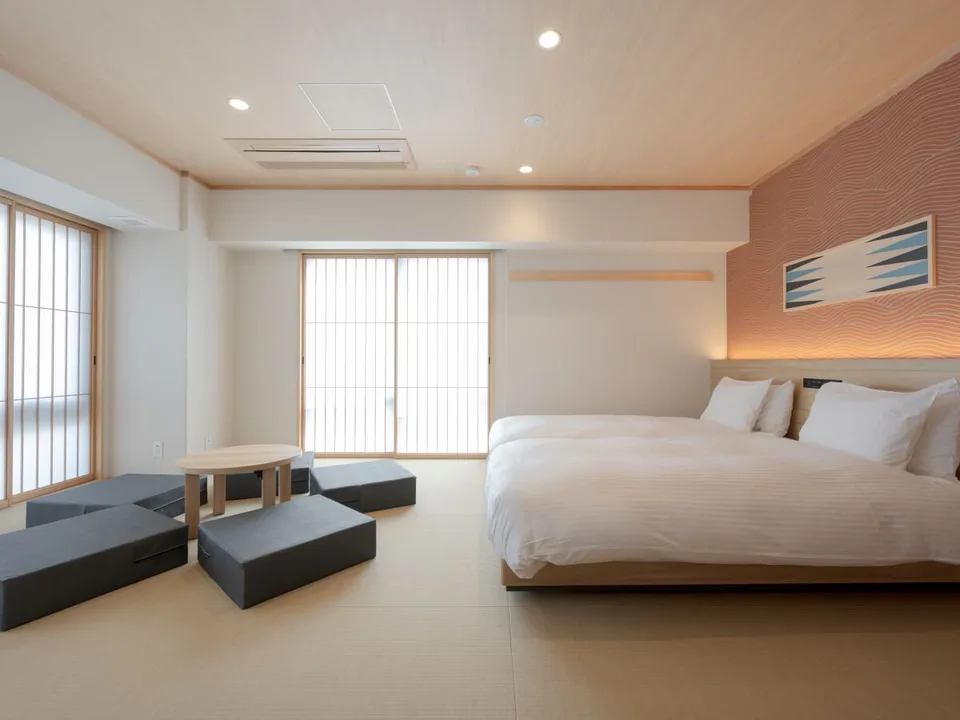
The Family Apartment at MIMARU Osaka Namba Station measures 35㎡ and places two single beds beside a bunk bed. Four adults are within its published capacity. A kitchen and dining table make the room useful beyond sleeping: friends can eat, sort tickets or talk without sitting on the beds. That shared area is the reason to choose it over two basic twins, provided you are content with one bathroom. For photographs and the complete room details, see the MIMARU Osaka Namba Station four-person apartment guide.
The trade-off is its single main bathroom. Four people leaving for a morning train at the same time still have to take turns. The open sleeping area also makes late arrivals and early bedtimes harder to combine. Choose this layout because your group likes sharing space, not because you expect it to support four entirely independent routines.
Check MIMARU Osaka Namba Station for the full group size.
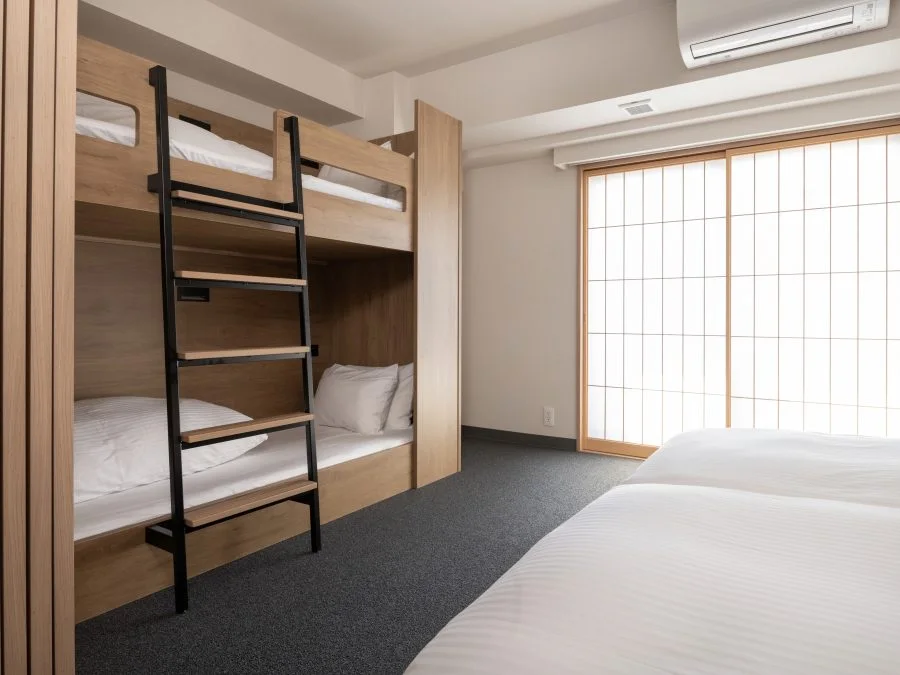
MIMARU Osaka Shinsaibashi Central opened on 1 September 2026. Its four-person Two-Bunkbed Apartment gives showering more capacity than many single-room group layouts.
MIMARU Osaka Shinsaibashi Central: two showers for four
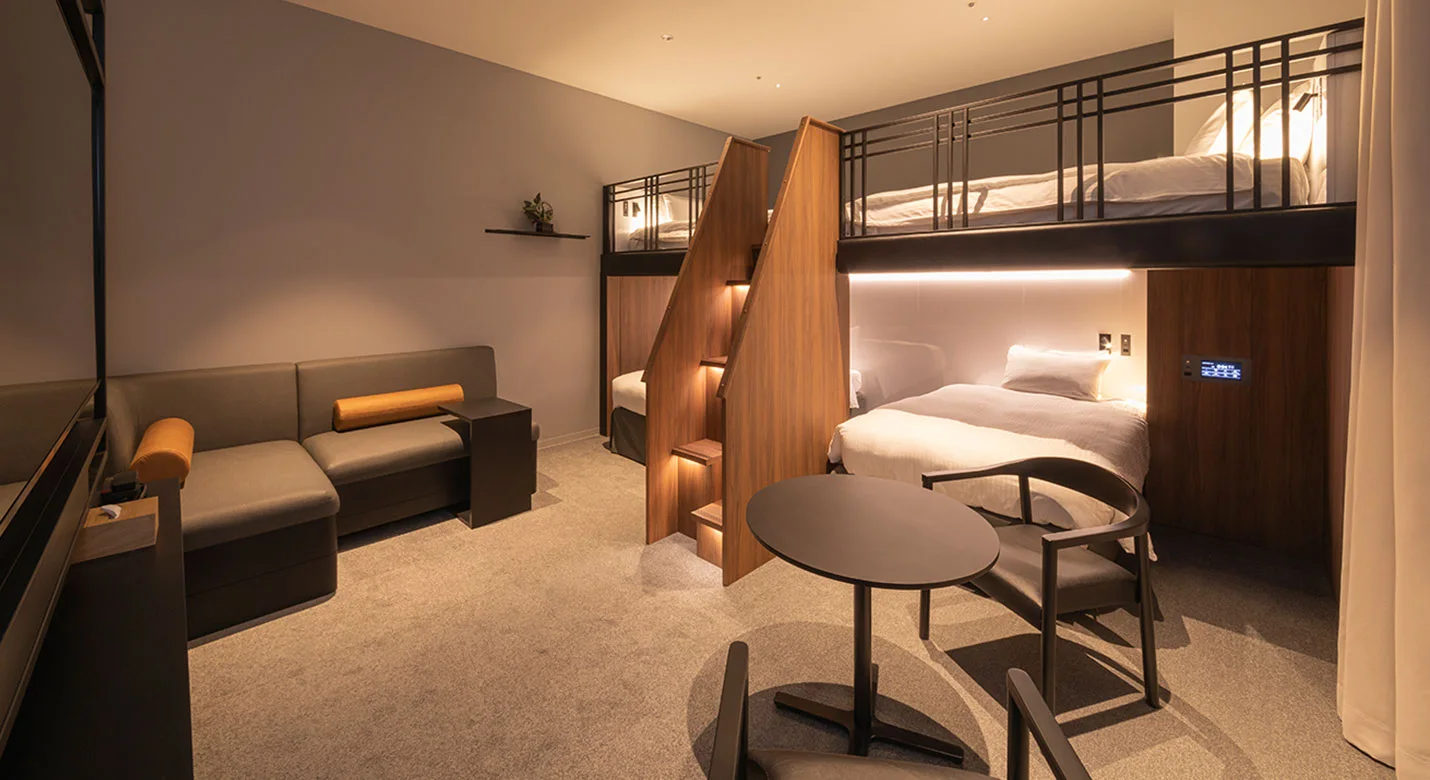
MIMARU Osaka Shinsaibashi Central opened on 1 September 2026. Its 40㎡ Two-Bunkbed Apartment has two bunk beds, two separate shower booths, two washbasins and an in-room washer-dryer. Four friends can wash in pairs after a long day, although they still share one toilet. That specific layout is the attraction, so check the booked category rather than assuming every room in the hotel has the same facilities. The MIMARU Osaka Shinsaibashi Central guide covers its other room options and position in Shinsaibashi.
The property is now open, so the choice should be made from the live room listing rather than old pre-opening renderings. Confirm that your reservation says Two-Bunkbed Apartment: the published 40㎡ layout has two bunk beds, two washbasins and two separate shower rooms, with one toilet and an in-room washer-dryer. Other apartments at the same hotel have different arrangements. Check the room name and amenities shown for your exact dates before paying.
Compare the two-bunkbed apartment at MIMARU Shinsaibashi Central.
Hotel Keihan Namba Grande can keep friends together in a family room or give them two connected spaces. The choice changes the bathroom schedule as much as the bed count.
Hotel Keihan Namba Grande: compare the family and connecting layouts
Hotel Keihan Namba Grande presents two distinct ways to house friends. The 44㎡ Family Room has four existing single beds and can take a fifth guest with an extra bed. Its Connecting Room joins two 20㎡ twin rooms through an internal door and can accommodate up to six with extra beds. Each side has a bathroom and washbasin, which changes the morning routine. See the Hotel Keihan Namba Grande family-vs-connecting-room guide for a closer look at those layouts and the bed trade-offs.
For four friends who want a single place to gather, the family room can keep the evening simple. At five or six, the connected twins may work better because each side has its own bathroom and washbasin. The extra beds used for the fifth or sixth guest still need scrutiny. Compare the exact bed plan and the ability to close the internal door, not just the combined square metres.
Check family or connecting rooms at Hotel Keihan Namba Grande.
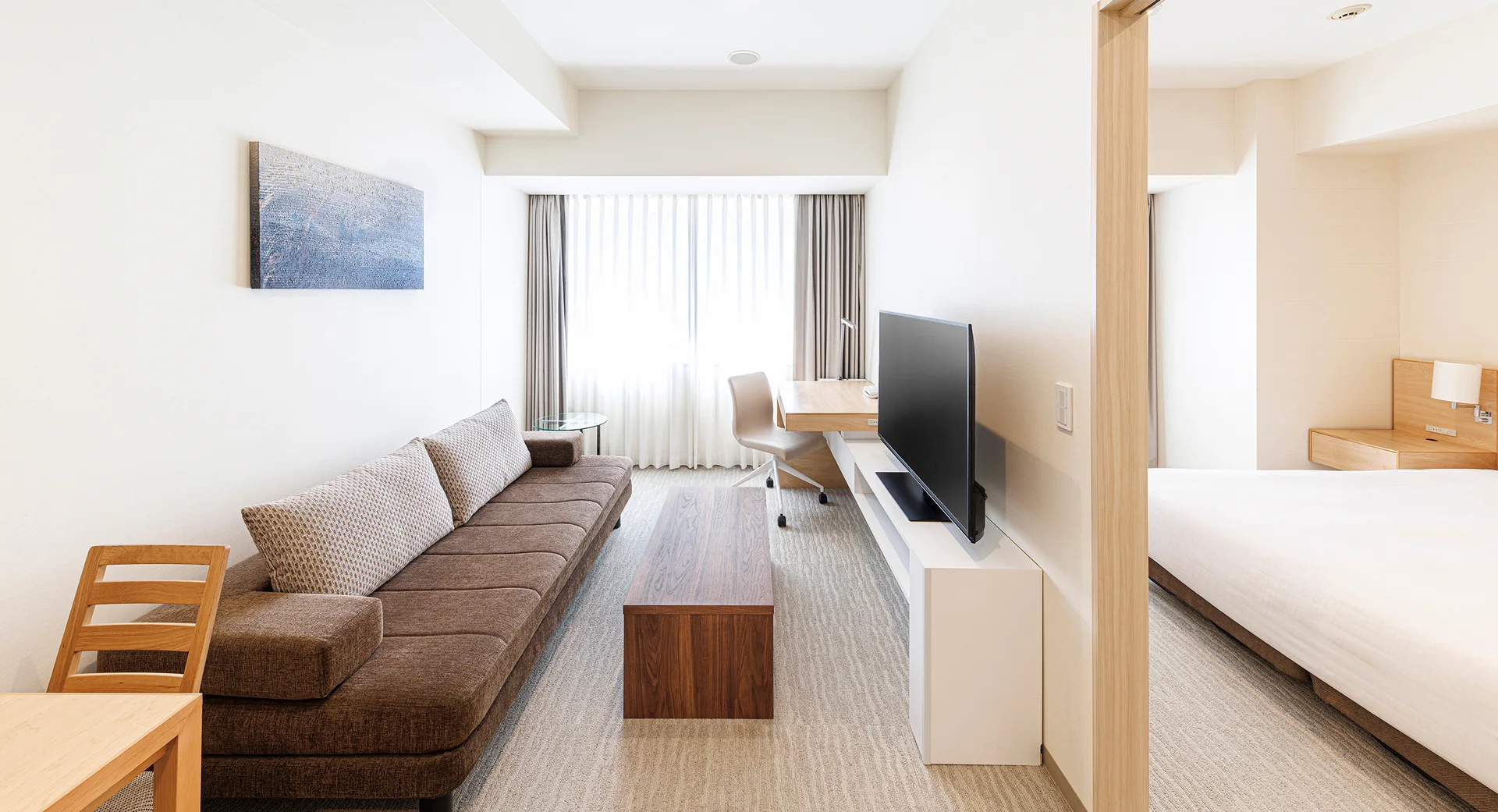
Fraser Residence Nankai Osaka uses separate bedrooms and a shared living room. It suits four adults who want to spend time together without sharing one sleeping space.
Fraser Residence Nankai Osaka: doors between the bedrooms
Fraser Residence Nankai Osaka's Two-Bedroom Deluxe apartment measures 77㎡. The bedrooms, living and dining spaces are separated, and the unit includes a kitchen and washer-dryer. The published arrangement suits four adults plus a child, so it is most relevant to two couples or friends who want common space without one shared bedroom. Its value is in the doors and daily living facilities, not merely the floor area. The Fraser Residence Nankai Osaka studio and apartment guide explains how it compares with the property's smaller units.
This apartment is not a route to fitting six adults into one booking; its published capacity is four adults and one child. It may also cost more than a simple family room. For two couples, colleagues or friends who keep different hours, the money buys something concrete: one person can sleep behind a door while another works or talks in the living area. On a longer stay, the kitchen and washer-dryer can become useful too.
See two-bedroom availability at Fraser Residence Nankai Osaka.
Read the beds, bathrooms and floor plan before the price
Check the actual sleeping places rather than the maximum occupancy. Four guests may receive singles, bunks, a sofa bed, futons or extra beds in very different combinations. Then count the facilities that everyone will use at the same time: showers, washbasins and toilets. Finally, imagine opening every suitcase. A room that looks generous in photographs can become hard to cross when large cases occupy its clear floor.
Walk mentally through a normal day in the room: waking, washing, unpacking and meeting at night. If one of those moments will cause a repeated bottleneck, a lower nightly rate may be poor value over several days.
Different bedtimes make a second door valuable
The first evening may feel sociable; the second morning reveals whether the room works. One friend may rise at 06:30, another sleep until 09:00, while someone else needs a hair dryer or returns late from Dotonbori. A large room does not create privacy for those different hours. It simply gives everyone more space in which to disturb one another.
When two or more travellers have clearly different sleep and shower routines, compare two rooms or a genuine two-bedroom apartment. The door between people is doing practical work every day, even if it looks like an expensive detail on the booking page.
Will everyone leave the hotel together?
A single room is easier when the whole party eats breakfast and sets off at one time. Groups often split: some leave early for USJ, others shop or take a slower morning. Separate alarms and a second bathroom then reduce negotiation. Ask each person what their likely mornings look like before assuming that six friends will move as one unit for the full trip.
A late-night friends' itinerary with USJ, sauna plans or an early Shinkansen puts extra pressure on sleep and bathroom space. The Osaka guys-trip hotel guide takes up those particular schedules; here, compare room structures for any group of four to six friends.
For six adults, two rooms can still be a group stay
Sharing a single room can feel like part of the fun, but a layout comfortable for four may become crowded with six adults. Two rooms need not split the holiday. Meet for snacks and tomorrow's plans in whichever room has space, then give everyone more room to shower, unpack and sleep. This arrangement is often easier to sustain across several nights.
Price a six-person room beside two twin or triple rooms and any guaranteed connecting pair available on the same dates. Check the beds and bathrooms in all three. Use the same guest count, included meals and cancellation deadline; otherwise a low non-refundable group rate may appear to beat two flexible rooms for reasons unrelated to the layout.
Who is travelling together matters too
Friends who have happily shared dorm rooms may be comfortable with bunks and an open living area. Two couples may want separate bedrooms, while colleagues may put bathroom privacy first. Discuss these expectations before booking. Four names on a reservation are not evidence that one sleeping space will suit every relationship in the group.
Compare the whole booking, not the headline rate
For one set of dates and the same adults, line up the full group totals for an apartment, two standard rooms, a connecting pair and a two-bedroom residence. Add breakfast only for people who will eat it. Give a washer-dryer value only when it is inside the chosen room, and count a location advantage only if the group will use it repeatedly. Then compare cancellation terms and extra-bed charges before deciding.
If you have not chosen between the city's main hotel areas, make that decision first with the Namba vs Umeda comparison. Room layout matters every day, but so does where the group returns after dinner and where it begins its rail trips. A good six-person room in the wrong district can make every outing harder.
A practical choice for four, five or six
For four people on similar schedules who want to spend evenings together, a well-arranged apartment is a strong option. Two showers or connecting rooms help when everyone leaves at the same hour. Separate bedrooms suit mixed bedtimes and couples. At five or six adults, bring two-room options into the search early, especially if the extra sleeping places are not equal to the first four beds.
Neither the largest room nor the cheapest per-person figure wins automatically. Choose the arrangement that will make ordinary mornings and nights easier for your particular group.
What to confirm before payment
Record the exact room name and maximum adult count. Check every bed, the number of showers, sinks and toilets, and whether the connecting pair is guaranteed rather than merely requested. Identify whether laundry is in the room or in a shared area. The photos shown by an agent may cover several categories, so match them to the room on the final booking screen. At Shinsaibashi Central, confirm the Two-Bunkbed listing if its two showers are your reason for choosing it.
Finally, compare rates with the same cancellation deadline. Group-sized rooms may be scarce, but scarcity alone is a poor reason to accept restrictive terms when two ordinary rooms could give you more flexibility and a second bathroom.
Enter the full party size when you compare Namba rooms and apartments; check the beds shown on the final offer.
Hotel room sources
For the specific bed layouts and capacities, use the current room listings from MIMARU, Hotel Keihan Namba Grande and Fraser Residence Nankai Osaka. Capacity, room names, availability and cancellation terms may vary by booking date; match the listing to the room you pay for.
Related guides: Osaka for Couples: A 7-Day Itinerary That Saves the Best Nights for Kyoto, Kobe and One Big View · Osaka Hotels for Kyoto and Kobe Day Trips: When 3–5 Minutes to the Station Matter Twice a Day · Kansai 7-Day Itinerary From Osaka: One Hotel for Kyoto, Nara, Kobe and USJ — When Not Moving Is Better · Centara Grand Hotel Osaka: Is the 40m² Family Room Worth It for Four? · USJ Hotels for One Day vs Two Days: When Is Universal City Worth Moving To? · Fukuoka Hotels for 3 or 4 Adults: One Room or Two Rooms? · Osaka Long-Stay Hotels for 5–7 Nights: Laundry, Kitchens and When Not to Change Areas · Osaka Night Views: When Free Beats the Observation Deck — and When HARUKAS 300 Is Worth Paying For · Sapporo Autumn Fest 2026: The One-Kilometre Food Route That Leaves Room for Dessert · THE LUIGANS Spa & Resort Fukuoka: Is a 33m² Sea-View Room Worth Leaving Hakata for One Night?
Other Osaka guides
Nada no Kenka Matsuri 2026: If You Only Go One Day, Choose Oct 15
Osaka Solo Travel Hotels: Pay for Less Friction, Not a Bigger Room
Early Flight or Late Arrival at KIX: Should You Move Hotels for the Last Night in Osaka?
Fukuoka Tower: Is the ¥1,000 Ticket Worth the Detour? Timing Changes the Answer