
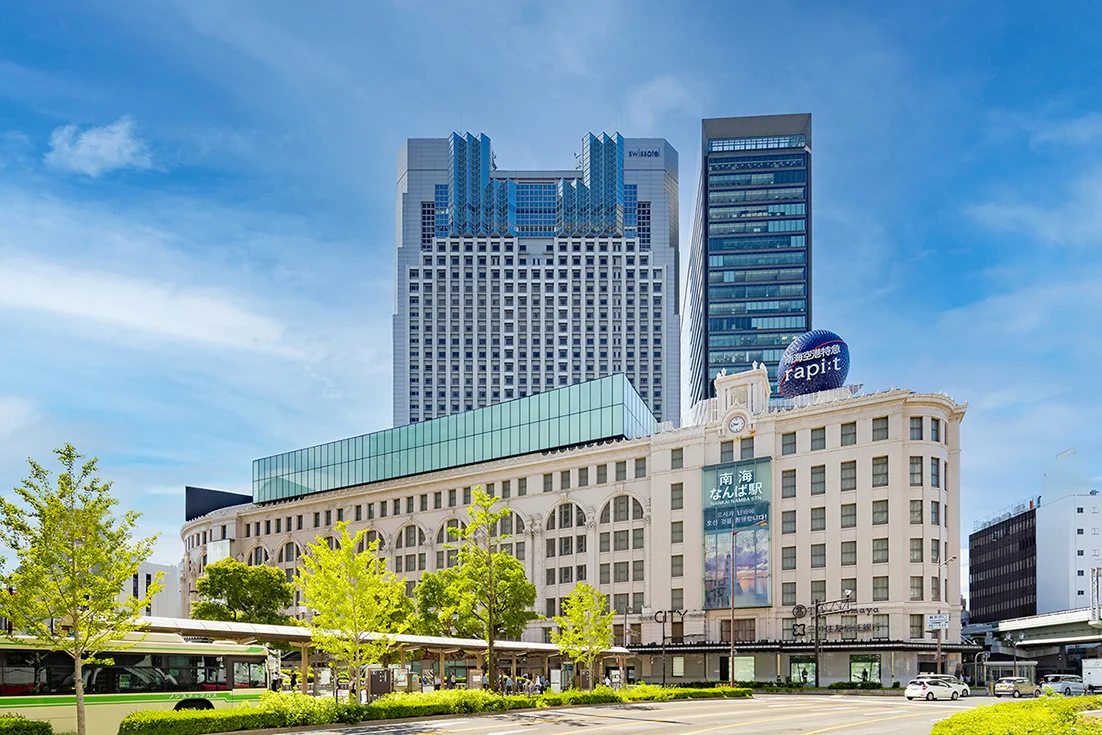
All three hotels have Namba addresses, but they attach your room to different parts of the transport network. Swissôtel sits above the Nankai terminal used by many Kansai Airport trains. Hotel Royal Classic connects to Osaka Metro Namba at Exit 12. Centara Grand stands on the Namba Parks side and makes most sense when a particular room, especially its family layout, earns the longer Metro approach. Decide which railway you will actually use and who must sleep in the room before treating any one property as the default.
For a late KIX arrival with two large cases, the Swissôtel handoff can be more valuable than a modest difference in nightly rate. Across five city-heavy nights, Royal Classic’s Metro connection may be used much more often. A family of two adults and two children may find that Centara’s king-and-bunk room settles the decision before either station walk does. These are different sources of value; no brand name or star count can substitute for the actual train, guest count and room category.
Three Namba addresses, three paths to the room
| Question | Swissôtel Nankai Osaka | Hotel Royal Classic Osaka | Centara Grand Hotel Osaka |
|---|---|---|---|
| After the Nankai train from KIX | Connected to Nankai Namba; hotel lift after station signs | About four minutes on foot from Nankai Namba | About four minutes from Nankai Namba South Exit |
| Osaka Metro Namba | Midosuji access under two minutes in the hotel access description | Direct connection at Exit 12 | About eight minutes from Midosuji Exit 4 |
| JR Namba / Osaka-Namba | JR about nine minutes; Hanshin/Kintetsu about five to six | JR about ten minutes through Namba Walk | Do not assume the Nankai distance applies to JR |
| Room most likely to change the answer | Swiss Advantage Twin: up to three adults, subject to booking | Standard Twin: 30–31 m²; three guests only in the 31 m² type | Family room: 40 m², king plus children’s bunks for two adults and two children |
| Four adults in those reference rooms | No | No | No |
Seven ratings for the Namba hotel decision
| Dimension | Swissôtel Nankai | Royal Classic | Centara Grand |
|---|---|---|---|
| Location | 10/10 — Direct access above Nankai Namba makes the airport-rail handoff exceptionally short. | 9/10 — Metro Exit 12 is the easier repeated city route, though Nankai requires a short walk. | 8/10 — Nankai South Exit is nearby; the longer Midosuji approach costs time on Metro-heavy days. |
| Room | 8/10 — Swiss Advantage starts at 22 m²; quote a larger Select or Executive category separately. | 9/10 — A 30–31 m² Standard Twin has two 120 cm beds and a separate wash-area bath. | 8/10 — The 40 m² Family category gives children under 11 a bunk zone, with one bathroom for everyone. |
| Cleanliness | 8/10 — Recent upkeep feedback is good, although less even than the two newer Namba properties. | 9/10 — Strong room-condition records support this central hotel. | 9/10 — The newer property also has a high cleanliness category in recent stays. |
| Service | 9/10 — Full-service arrival help is valuable when the Nankai train ends under the building. | 9/10 — Staff and baggage support suit a smaller, station-linked property. | 9/10 — Bag holding and around-the-clock room dining help families manage a late return. |
| Facilities | 9/10 — Pool, gym and spa offer genuine hotel time, subject to room-tier rules and lobby work. | 8/10 — The connected building is useful, but there is no equivalent pool-and-spa complex. | 7/10 — Club access and gym add choice; laundry is off-site and parking capacity is limited. |
| Food | 9/10 — Multiple restaurants and high-floor Table36 make an in-house evening plausible. | 9/10 — HAFU breakfast, café, restaurant and upper-floor bar cover several meal patterns. | 8/10 — Suan Bua starts early, while Club food windows help only when the booked tier includes them. |
| Value | 7/10 — A 22 m² room is a weaker deal if the airport train is only a small part of the stay. | 8/10 — The larger standard twin pays back on repeated Metro-led days. | 7/10 — The family room can avoid a second room for eligible children; check the exact party and rate. |
| Overall | 8.6/10 — Best when airport-rail arrival and departure frame the trip. | 8.7/10 — The more rounded base for repeated Metro journeys. | 8.0/10 — A good family-room choice when the bunk rule and south-side walk fit. |
The walk figures describe different exits, not a single interchange called “Namba”. Arriving on Nankai is not the same as arriving on JR, Hanshin, Kintetsu or the Metro. Before you pay a connected-station premium, write down the station printed on the ticket. The Swissôtel versus Royal Classic head-to-head goes deeper on that pair; this comparison adds Centara when room layout is part of the question.
Occupancy rules can remove a hotel before location matters
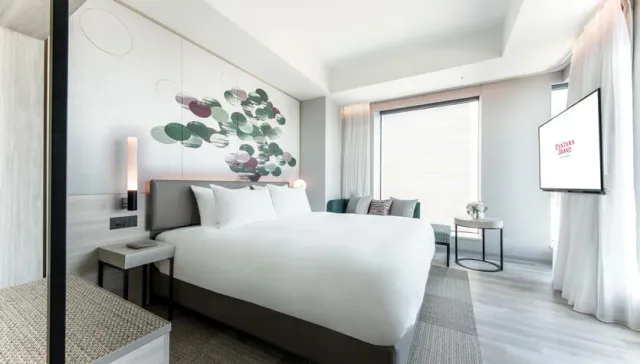
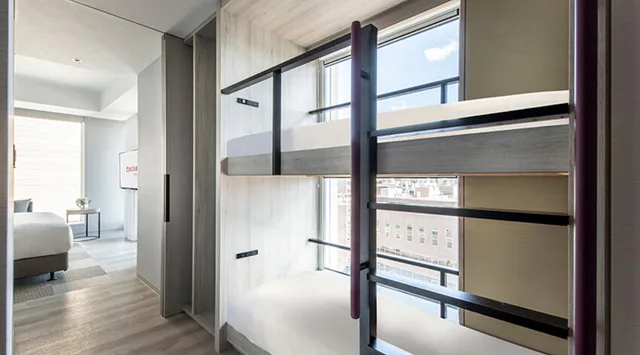
Centara’s 40 m² family category supplies a king bed and separate bunk beds for children. It is designed for up to two adults and two children; four adults do not qualify simply because there are four sleeping surfaces. The Centara family-room assessment explains the room trade-off. For a group of four adults, look at eligible larger categories, two rooms or an apartment-style property. The Swissôtel versus MIMARU four-adult comparison addresses exactly that different occupancy problem.
Swissôtel’s Swiss Advantage Twin can take up to three adults, while its Swiss Advantage Queen and King are not extra-bed choices. The hotel says many twin categories can accommodate an extra bed, but some rooms cannot because of fire rules; book for the real party size and check the exact category. Royal Classic lists a Standard Twin at 30 or 31 m² with two 120 cm beds. The 31 m² version can take a third guest, not a fourth. Its published standard-room bathrooms include a washing area. A “twin” label therefore does not settle either occupancy or bathing layout.
For a family with young children, sleeping arrangements are a nightly constraint. For a couple who spends the day outside, the extra 40 m² may have much less value. The Namba family hotel comparison offers another family alternative; the OMO7 versus Centara family choice is relevant when a Universal Studios day and hotel facilities pull in opposite directions. Do not transfer an occupancy rule from one named room to another.
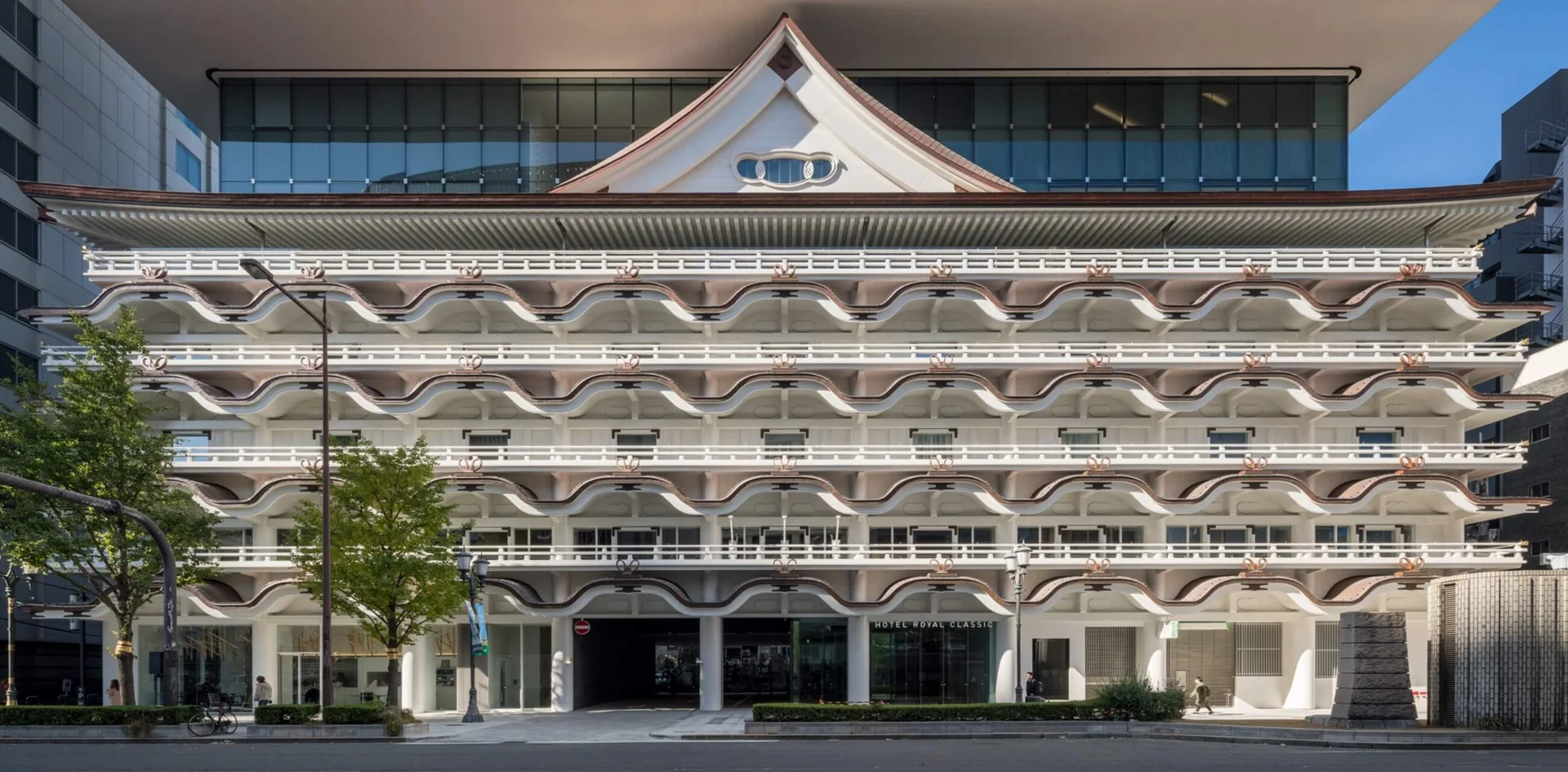
Swissôtel turns the KIX arrival into a short vertical transfer
The hotel access route from Nankai Namba is the clearest reason to pay more for Swissôtel. Its guidance places the hotel less than a minute from the station exit: after the train, follow hotel signs to the dedicated lift. With heavy cases, rain or a tired child, removing a further outdoor or underground walk is tangible. The Swissôtel Nankai room and airport-access guide is useful if you are deciding whether the exact room premium is proportionate to that arrival benefit.
This advantage narrows if you land with one small bag, arrive early enough to navigate easily, or depart Japan from somewhere other than KIX. It also does not turn every Namba-labelled railway into a direct hotel transfer. The Midosuji Metro approach is short, yet Hanshin/Kintetsu Osaka-Namba and JR Namba are farther. Read the location as “above Nankai” rather than “above all Namba stations”. For an early flight or late KIX arrival, first establish that an onward train actually fits the arrival; a station-connected hotel cannot recover a missed last train.
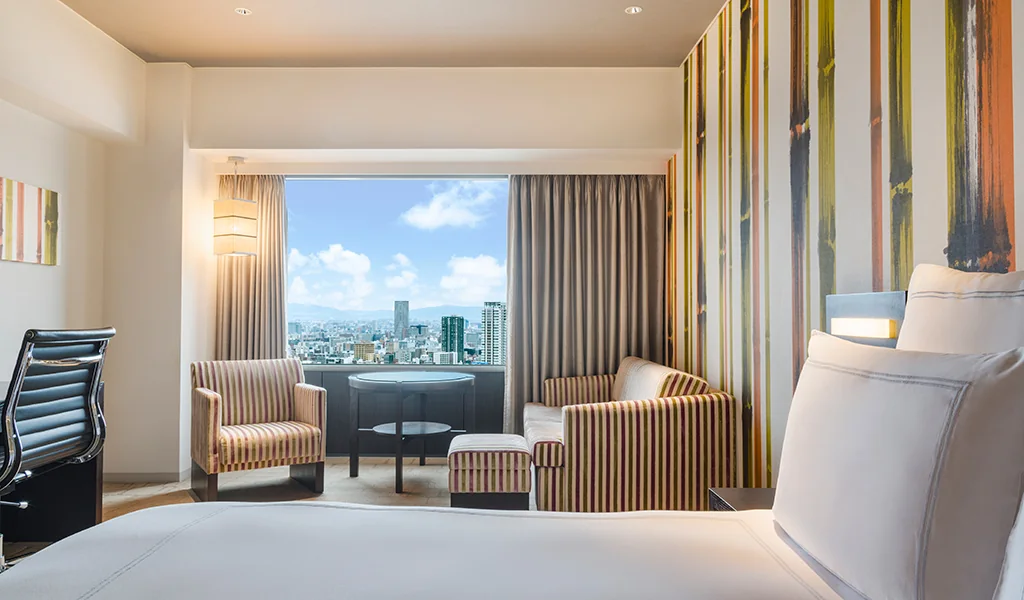
Royal Classic earns its keep on repeat Metro days
Royal Classic’s direct Exit 12 connection serves a different pattern: Shinsaibashi, Umeda, Tennoji and other city journeys built around Osaka Metro. Its Nankai walk of about four minutes is a compromise at arrival and departure, but a five-night stay may make the Metro relationship useful twice on several sightseeing days. The Royal Classic station-access assessment helps separate the Metro connection from an imagined connection to every Namba platform.
The Standard Twin’s stated 30–31 m² and two 120 cm beds give two adults a known room-space baseline. A bath with a washing area may matter if compact unit baths have been frustrating elsewhere, although photographs and square metres cannot prove how two open cases will fit around the furniture. Compare the exact 30 or 31 m² inventory and rate, including whether a third guest is part of the booking. A couple considering other central Osaka layouts can use the Namba versus Umeda base comparison before committing to this district.
On a longer stay, laundry can be a stronger room criterion than either station entrance. The Mercure Tokyu Stay Namba washer-room guide identifies why a room-specific appliance must be checked rather than assumed from a hotel name. Neither Royal Classic’s published twin floor area nor its Metro connection is a substitute for that facility if your plan depends on washing clothes mid-trip.
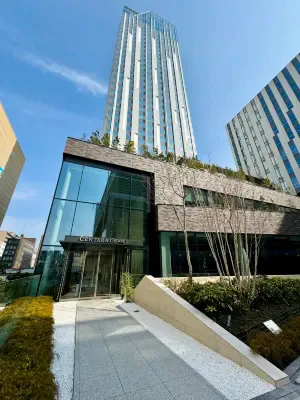
Centara is a room-led purchase on the south side of Namba
Centara’s published access is about four minutes from Nankai Namba South Exit and eight from Osaka Metro Midosuji Namba Exit 4. The Namba Parks deck can lead to a second-floor entrance. That makes its final approach different from both a lift above Nankai and an Exit 12 Metro connection. Travellers based around Namba Parks may like the position, but a family that repeatedly uses Midosuji should count the walk in both directions rather than calling all three hotels equally central.
The 40 m² family room is the distinctive argument. A king for the adults and bunk beds for the children give a 2+2 group defined beds without borrowing space from a standard twin. A party of four adults needs another room solution, and a couple outdoors all day may not use the area enough to justify a premium. If Universal Studios is a main reason for the stay, the USJ-oriented OMO7 versus Centara comparison provides a more relevant test than a generic Namba ranking.
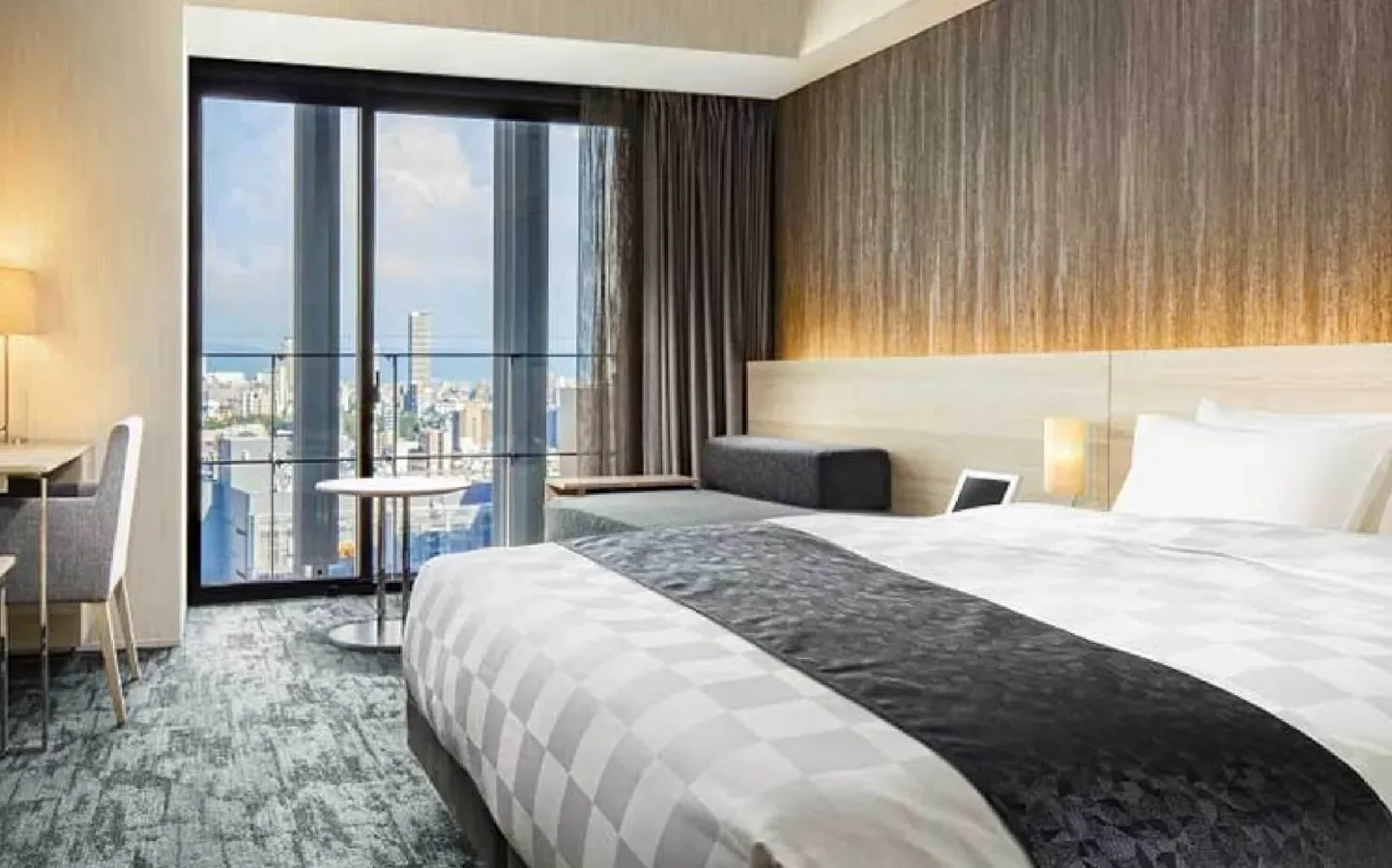
The two Centara images show the adult king-bed area and a separate two-level children’s bunk in the family category. Royal Classic and Swissôtel images also illustrate only one room presentation each. Check the selected bookable category, cancellation terms, bed setup and child-age rules before payment. Published floor area helps narrow the shortlist; the true shape of usable floor space depends on furniture and circulation.
Count journeys, then decide which walk deserves the premium
Consider five nights with a KIX arrival and a KIX departure. Nankai’s last hotel handoff matters twice. Metro access may matter on five mornings and five evenings, perhaps ten hotel-to-station trips. That is an illustrative count, not a promised itinerary or a hotel score. Swissôtel may still win if the arrival is late and baggage heavy; Royal Classic may win if every day points north or south on the Metro. Centara may win because four people sleep in a room whose layout suits them every night. Count real journeys rather than multiplying a marketing advantage by the length of stay.
| Trip shape | First property to price | What could reverse it |
|---|---|---|
| Two adults, late KIX arrival, four nights, two large cases | Swissôtel | Royal Classic offers a materially better room/rate and the days use Metro repeatedly |
| Two adults, five city-heavy nights, light luggage | Royal Classic | A KIX departure or room preference makes Swissôtel worth its premium |
| Two adults plus two eligible children needing four defined beds | Centara family category | Child/occupancy rules or live price make another eligible family room better |
| Four adults sharing one unit | None of these reference categories | Search larger legal occupancy or two rooms instead |
| One Namba night before early KIX flight | Swissôtel if Nankai service fits | An airport-area hotel or an existing base avoids a costly extra move |
Large luggage changes the character of a four- or eight-minute walk. Elevators, thresholds, crowds and rain can stretch the experience, especially after a flight. It does not follow that everyone should move to Swissôtel for the final night. Changing hotels means packing, checking out, shifting bags and checking in again. If you are already comfortable in Kyoto or Umeda and have an afternoon flight, that work may exceed the benefit of one short Nankai approach. The Kyoto-versus-Osaka first-trip base guide helps decide whether Namba belongs in the itinerary at all.
A last-night move for an early Shinkansen poses a different transport problem: the departure station may be Shin-Osaka rather than Namba. The Shin-Osaka last-night decision is relevant when rail departure, rather than KIX, sets the morning deadline. Do not pay for Swissôtel’s Nankai access on a morning when Nankai is not in the journey.
An early flight and an evening already planned in Namba make a last-night move more defensible, especially with several cases. Yet the train timetable is the outer constraint. Work backward from check-in time at KIX; a hotel above Nankai is only useful if the relevant service operates at the needed hour. For a long multi-city trip, the Japan luggage forwarding guide can help decide whether sending a case ahead would remove more friction than changing rooms. The Osaka base for Kyoto and Kobe day trips similarly shows how repeated station access can outrank one airport transfer.
Where each option loses
Swissôtel loses some of its location case if KIX and Nankai are absent, bags are light, or the trip repeatedly uses Metro. Royal Classic loses ground on a near-pure airport transition when its four-minute Nankai walk buys nothing else. Centara is difficult to justify on family-room grounds if the party does not fit the category or spends almost no waking time there. These are reasons to revisit the live room price, not automatic claims that one hotel is better in quality. For unusual transport days such as Kishiwada Danjiri from Namba, check the event journey rather than assuming a generic Osaka itinerary.
For two adults flying in and out of KIX with large bags, price Swissôtel and Royal Classic against the same dates and suitable room types. Swissôtel buys the clean Nankai transfer; Royal Classic buys repeated Metro convenience and a documented 30–31 m² Standard Twin. Add Centara when the family-room layout or south-Namba stay is doing a specific job. Four adults should stop comparing these three reference room types and choose a legal configuration first. The Namba area hotel comparison is the next question if the location advantages barely matter to your route.
Compare rooms around Namba Station for your travel dates. Select the room with the legal occupancy and the station approach you will actually use; a neighbourhood search alone does not establish either.
Hotel details and nearby comparisons
Hotel access and room details: Swissôtel from Nankai and other Namba stations, Swiss Advantage rooms, Swissôtel occupancy and extra beds, Royal Classic station connections, Royal Classic Standard rooms, Centara station approaches and Centara family room.
Further reading: Haneda Airport Hotel Comparison: Villa, Naha Hotel Comparison: RIHGA Royal, Sapporo Grand Hotel: Is the, Osaka Pass Comparison 2026: Amazing, Grand Nikko Tokyo Bay Maihama.
Further reading: Sapporo Station Hotel Comparison: JR, RIHGA Royal Gran Okinawa: Is, Sawara Grand Festival Autumn 2026:, ARK Hills Spicy Grand Prix.