
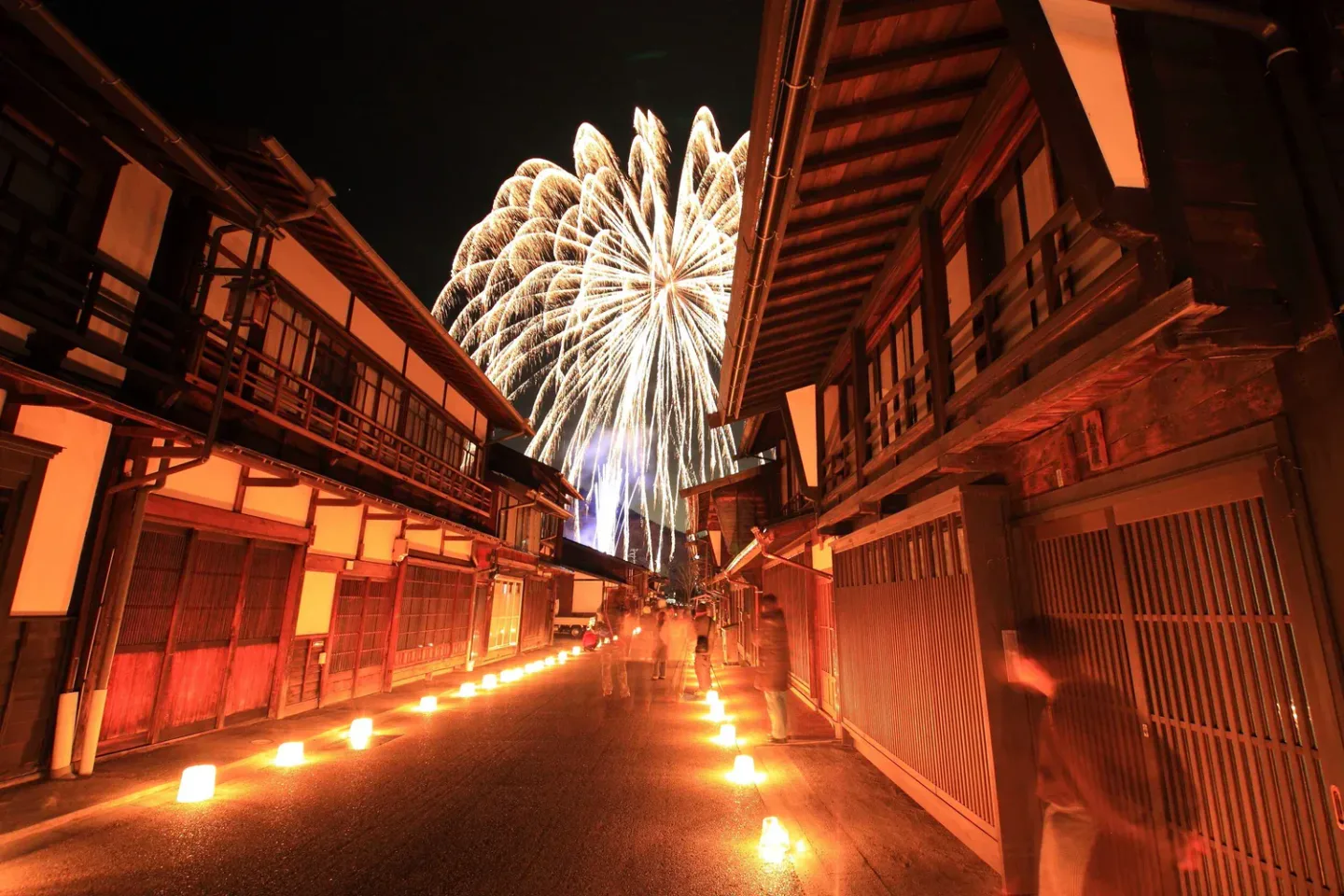
A Kiso Valley hotel does not solve the same problem in every town. Tsumago protects the evening and morning around a Nakasendo walk. Kiso-Fukushima gives you a railway base from which to change the next day's plan. Narai makes the preserved street itself the reason to stay after the day visitors leave. I would choose the overnight stop by the hour I most want to keep, not by which timber facade looks best in a search result.
That distinction matters for a short trip. A visitor coming from Nagoya, walking Magome–Tsumago and continuing to Matsumoto the next day has a different transport burden from somebody arriving by car for a relaxed Narai evening. One base can cover much of the valley without moving bags. Two bases make sense only when you intend to use two separate early or late windows. Our Magome versus Tsumago inn comparison goes further into the trail-side choice; this guide treats the broader valley.
| Base | The night is best used for | Main friction | Choose it when |
|---|---|---|---|
| Tsumago | A quiet evening after the Magome walk and an early stroll before visitors arrive | The post town is not beside Nagiso Station; buses and inn check-in need coordination | The trail is the principal event and you want to end the day in the historic settlement. |
| Kiso-Fukushima | Keeping train, food and onward-route choices open | Less of the preserved post-town atmosphere immediately outside the room | You want a practical rail base, may change plans with weather or have more than one Kiso outing. |
| Narai | A late walk through the long preserved street and an unhurried morning | Limited lodging inventory and little reason to add it to a rushed trail-only day | The town is a destination in its own right or your route continues toward Shiojiri and Matsumoto. |
| Nagiso station area | An easier railway departure after visiting Tsumago | You do not wake up inside Tsumago itself | An early train matters more than sleeping among the old houses. |
If the walk is the point, plan the finish before choosing the room
The best-known Nakasendo section joins Magome and Tsumago. Walking it changes where an overnight stay earns its value. If you start in Magome and finish in Tsumago, a room in or near Tsumago can remove the rush to a bus after the trail. You can check in, eat at the inn and see the street when shops have closed. A room in Kiso-Fukushima is still possible, but it adds a transfer at exactly the point when the day's walking is finished. A room in Narai requires a further northbound journey and belongs to a different itinerary.
Do not assume the trail is a uniform paved promenade. The Nagiso tourism association issued a 2026 walking notice specifically warning about injuries on the stone paving near Otsumago, where the surface becomes slippery after rain. Take the handrail and slower pace seriously. If anyone in the party finds the path difficult, a nearby Tsumago night has more practical value than a scenic-looking distant room. The older-traveller and family autumn guide is useful when the walking pace, rather than the map distance, should control the day.
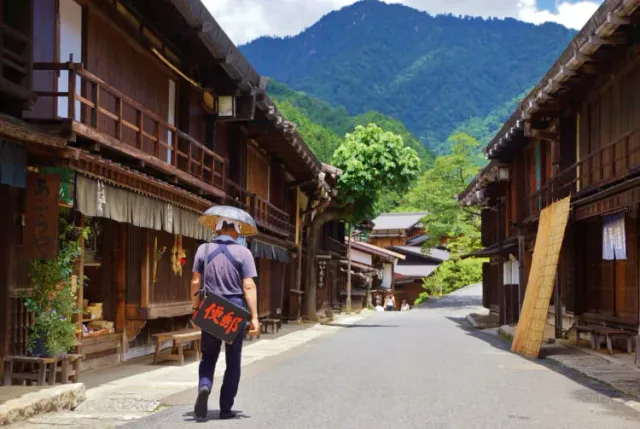
For a walk-first trip, reserve the inn before treating it as a casual add-on. Small historic lodgings may have limited room stock, set dinner times and a less flexible arrival procedure than a city hotel. Check the meal arrangement and latest check-in against your walking direction. A late train into Nagiso followed by a late arrival in Tsumago may be incompatible with the stay you imagined. The ten-day autumn route illustrates why an overnight is a route decision, not simply a postcard stop.
Luggage forwarding helps the trail, within a defined corridor and clock
The Magome–Tsumago luggage service is valuable, but it is narrower than a valley-wide hotel-to-hotel delivery network. In the Nagiso tourism association's 2026 notice, the regular service runs daily from 20 March through 30 November, costs ¥1,000 per item, accepts bags from 08:30 to 11:30 at the specified Magome and Tsumago/Otsumago points, and makes them available from 13:00 to 17:00 at the designated receiving point. Confirm the exact handover and pickup location before choosing which end of the walk to sleep at.
Outside the regular period, or after the regular acceptance window, the association describes an ad hoc service starting at ¥4,500 for up to three items, with an additional per-bag charge above that. That is a different product, not a late version of the ¥1,000 service. Otsumago inn guests have a specified arrangement for sending bags onward on the following day; do not presume that every Kiso-Fukushima or Narai hotel participates. Our broader Japan luggage-forwarding guide helps decide when to send a main suitcase ahead to a later city instead.
The service solves the physical load on the Magome–Tsumago path. It does not solve the train ride into the valley, a late arrival after the desk closes, or a change of hotel far beyond the two trail towns. If you have a large suitcase and only one Kiso night, a workable plan may be to forward that case between major-city hotels and bring a small overnight bag to the valley. A family with several bags should compare the ¥1,000-per-piece total with the cost and effort of carrying them by bus. The offline ticket and route setup is also relevant on a day when a late connection is inconvenient.
Kiso-Fukushima buys a more forgiving next morning
JR Central lists Kiso-Fukushima on the Chuo Main Line, with a staffed ticket window currently published at 07:00–20:00, subject to short closures, and local bus connections. That matters more than a claim that it is “central” on a map. A station-area hotel lets you decide in the morning whether to head south toward Nagiso, Tsumago or Atera Valley, go north to Narai, or wait out poor weather. It also gives a practical exit when the Nakasendo walk is only one stop in a longer rail journey.
There is a trade-off. A Kiso-Fukushima base does not deliver a Tsumago dawn simply because both are in the Kiso Valley; you must travel back to the southern post-town area. If quiet streets before shops open are your reason for staying, sleep in Tsumago instead. If the next morning belongs to the train, Kiso-Fukushima is often the safer default. The same base logic appears in our Kamikochi from Matsumoto route: the right overnight town is the one that protects the next leg you actually plan to take.
Choose the hotel by its walk from the platform, dinner availability and checkout process. An “easy rail base” loses its advantage if the room needs a taxi after the last local bus, or if your early departure falls before breakfast. If your stay depends on a particular Shinano train or later connection, verify the day's timetable rather than relying on a generic journey time. The five-day Chubu itinerary can help position a Kiso night among Matsumoto and other inland stops, while the autumn rail-pass comparison asks whether that inland movement actually makes a pass worthwhile. Neither replaces the local train check.
Nagiso Station is a transfer point, not the same place as Tsumago
Travellers sometimes see Nagiso on the railway map and book beside the station expecting to step straight into the Tsumago streets. The station is the rail gateway; Tsumago is a separate settlement reached by local bus, taxi or a longer walk. The tourism association's access page links current bus and train timetables. The Tsumago information centre sells bus tickets from 08:30 to 17:00 and accepts cards and electronic payment there; check the payment method on the bus itself separately. A station-area overnight can make an early train easier, but it does not provide the after-dark post-town experience that justifies a historic inn.
This distinction is particularly important after a trail walk. If you stay in Tsumago, find the inn, dinner and luggage collection first; the rail departure comes later. If you stay by Nagiso Station, calculate the return movement from the Tsumago finish before booking a tightly timed train. The current Nagiso storage list shows only a small number of larger station lockers, with one listed unit out of service. The Tsumago tourist information centre also has a per-bag storage service during opening hours. Neither arrangement should be treated as unlimited capacity for a group of large cases.
For a person transferring between Nagoya and Matsumoto, a Nagiso station hotel might be sensible for an early departure even if it is less atmospheric. Our central-Japan autumn route planner explains another reason to keep the rail movement flexible: mountain and town foliage need not peak together, so an exact day-by-day plan can benefit from optionality.
Narai deserves a night when you want the town after closing time
Narai is not a substitute for Tsumago at the end of the Magome walk. It is a separate preserved post town farther north. Shiojiri City describes a roughly one-kilometre historic streetscape along the Narai River, once called “Narai of a Thousand Houses.” The built environment is the main attraction. If you arrive, walk it in daylight and immediately leave, a day visit may be enough. A night becomes worthwhile when you plan to see the street in the evening and again before day traffic gathers.
Narai also fits a northbound rail progression toward Shiojiri or Matsumoto. It is weaker as an extra overnight on a southern walk itinerary that otherwise ends at Tsumago and exits toward Nagoya. In the latter case, the extra hotel change costs time that might be better spent on a slow Tsumago morning. If Narai is part of an autumn trip, compare it with Atera Valley's seasonal access rather than assuming every Kiso attraction lies on one simple bus loop.
Drivers should check the parking arrangement of the exact inn. Shiojiri City's September 2026 parking update lists several Narai visitor lots, with different positions at the north and south ends and some ¥500 paid options. It also notes a free circulation shuttle introduced in 2026 on selected busy dates. That does not mean every hotel guest can unload at its door or that the shuttle operates every day. Before paying, confirm where luggage can be set down and whether the property asks you to use a particular lot. This matters especially when you arrive with an older traveller or several bags.
Use the inn examples as room checks, not as a ranking of towns
Room photographs can make a post-town inn look interchangeable with a modern hotel. The actual purchase may include a tatami room, futon setup, shared or private bathing, a set dinner, and a fixed arrival time. The gallery below shows two Magome Chaya tatami rooms and Matsushiroya's walkway and exterior in the Tsumago area. They illustrate how much the room and circulation style can differ even within one Nakasendo walk. Confirm the exact room type and bathing arrangement in your booking, especially for a family of four or a guest who has difficulty getting up from the floor. If a bath is the main reason for the night, the autumn ryokan bath guide sets out a different shortlist from the Nakasendo walk-first options.
Do not infer that Magome Chaya is a Tsumago property because it appears in a valley-stay comparison: it is a Magome example. Matsushiroya is the Tsumago-side example. If the walk ends in Tsumago, a Magome night may make more sense before walking, while a Tsumago night makes more sense afterward. The side-by-side inn article addresses this direction choice in detail. The photographs here are a prompt to check bed, bath, meal and arrival terms, not a claim that one property wins every route.
Do not split two nights without two specific reasons
On a two-night visit, moving from Tsumago to Narai is appealing in theory: you see both post towns after closing. It can be worthwhile if that is the actual purpose of the trip. Otherwise, the change consumes a morning of packing, checking out, reaching a station, storing or carrying luggage, and waiting for the next check-in. Two nights in one base often produce more usable walking time.
Use a simple test: identify the off-hour window that each hotel unlocks. “Tsumago after the trail” is one. “Narai before the first day visitors” is another. If you cannot name both, choose one base and visit the other town in daylight. For a rail-led route with weather uncertainty, two nights in Kiso-Fukushima may be the cleanest plan. For a walk-led route, two nights in a Tsumago or Magome inn may let you walk without treating the valley as a transfer puzzle. The longer autumn itinerary is useful when you need to decide whether this extra hotel move fits the whole trip.
The direction of entry and exit can settle the choice. Arriving through Nagoya and leaving for Matsumoto naturally favours a south-to-north sequence: walk in the southern valley, then continue toward Narai or Shiojiri if the second night has a purpose. If the trip returns to Nagoya, do not assume a Narai night is free of backtracking. Coming from Matsumoto may reverse the order. Search each rail leg in the direction you will actually travel, including the bus between Nagiso and Tsumago.
Family and mobility costs are larger than the second room rate
For parents carrying a child's things, or an older traveller using a slower walking pace, the burden of a hotel move is not captured by the difference in nightly price. Check whether the room has a Western bed or futon, how stairs are handled, how far the property is from the transport stop, and whether dinner is available after your planned arrival. A picturesque room can be the wrong reservation if the household cannot comfortably use it. Our low-friction autumn guide applies the same principle to sightseeing.
Carrying an overnight bag rather than a full suitcase can make a Tsumago stay manageable. The tourist information centre's storage and the seasonal trail-forwarding service provide specific options, but they have hours, routes and capacity limits. If you arrive after the regular bag cutoff, do not build a family itinerary around a service that is no longer taking regular bags that day. The luggage strategy may justify sending the large cases directly to the next city instead.
Three complete ways to place the night
| Trip shape | Night choice | What to reserve or check first |
|---|---|---|
| First Kiso visit, two nights, with weather or onward route uncertain | Two nights in Kiso-Fukushima | Rail arrival and departure, a southern trail day, a northern Narai day, dinner and luggage arrangement. |
| Magome–Tsumago walk is the headline and Kiso gets one night | Tsumago after the walk, or Magome before it | Inn dinner/check-in, path condition, seasonal baggage handover and bus connection. |
| South-to-north heritage journey with two distinct evenings | Tsumago area, then Narai | Both inn nights, luggage plan and exact onward train timetable. |
These are starting configurations, not fixed routes. A walker with a very early train may prefer Nagiso Station after the trail. A driver who wants only Narai's architecture may stay there and skip the southern overnight. A post-town room also earns little of its premium if you arrive after dinner and leave before the quiet morning. Someone who wants a single scenic day may not need a Kiso hotel at all. If your autumn route also includes Kamikochi, compare the valley night against a Kamikochi access night; both need time, and one can displace the other on a short schedule. The regional foliage calendar and late-October central-Japan timing help decide whether this valley belongs in the same week as your other autumn stops.
Before paying, check the actual address, room layout, meal terms, arrival deadline and the first transport you need the next morning. For a Tsumago night, inspect the current trail and bag notice and the Nagiso transport links. For a Narai stay, the city parking guidance is useful if you drive. The Kiso Valley hotel map helps compare property locations, but the bus stop and station walk decide whether a pin is genuinely useful for your route.