
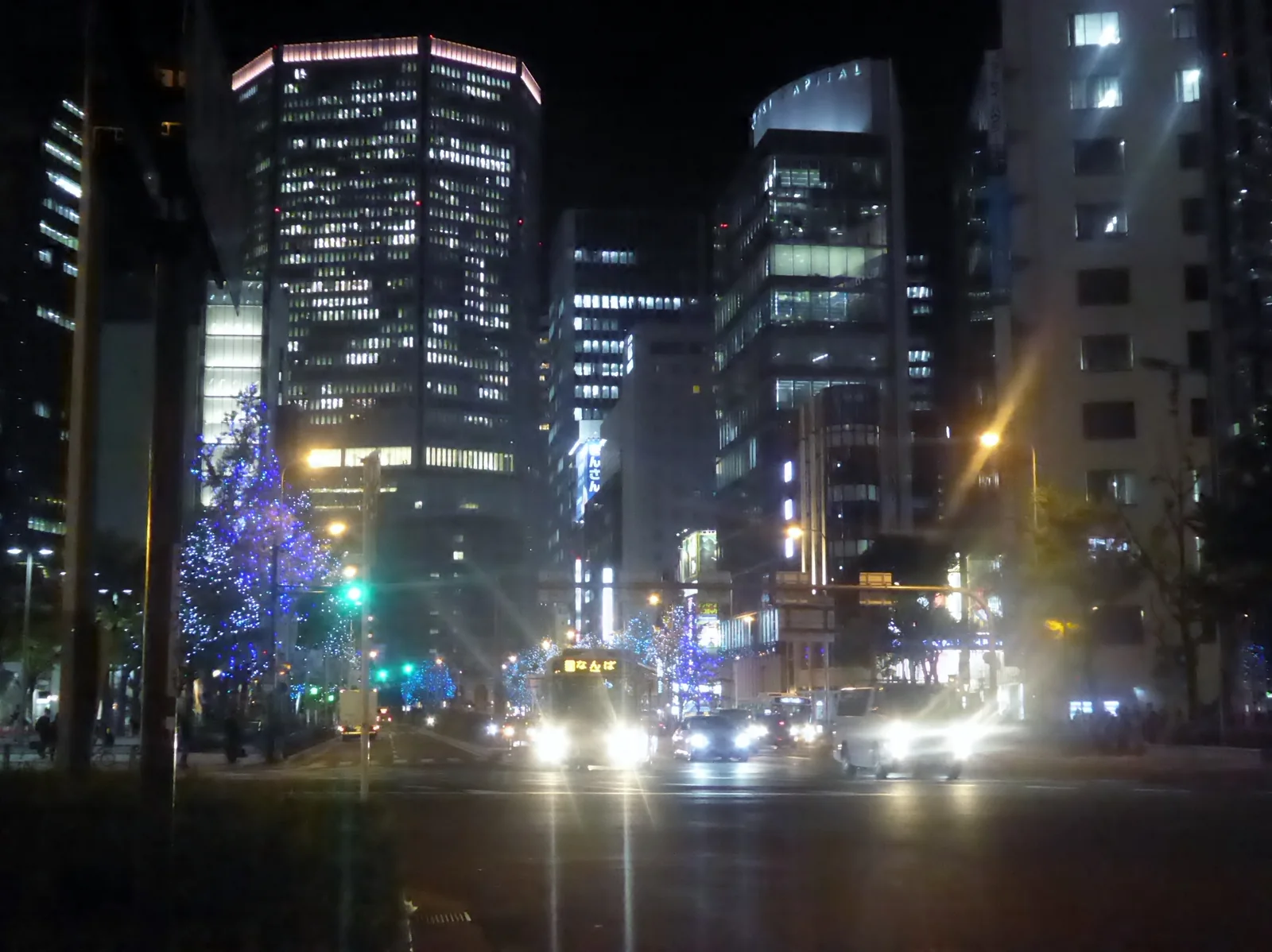
Midosuji Illumination 2026 turns a major Osaka boulevard into an evening route from 3 November through 31 December. Osaka Prefecture says lighting runs from about 17:00 until 25:00, along the corridor from the Hanshin-mae intersection in Kita Ward to Namba West Exit. A visitor who books “near Midosuji” without choosing which end of the walk matters may spend the night retracing the route by subway. For a November visit, the accommodation decision is straightforward: do you want to set out from the Yodoyabashi or Honmachi side, or finish near your Namba hotel?
The Royal Park Hotel Iconic Osaka Midosuji is a real north-central option. Its own access directions place it about three minutes from Yodoyabashi Exit 13 and four minutes from Honmachi Exit 2. That makes it a useful search anchor, not a claim of a room, a rate or a view from the window. The Namba versus Umeda hotel guide gives the wider city decision; this article follows the lit boulevard and asks where you will sleep after walking it.
Swipe through earlier event photographs
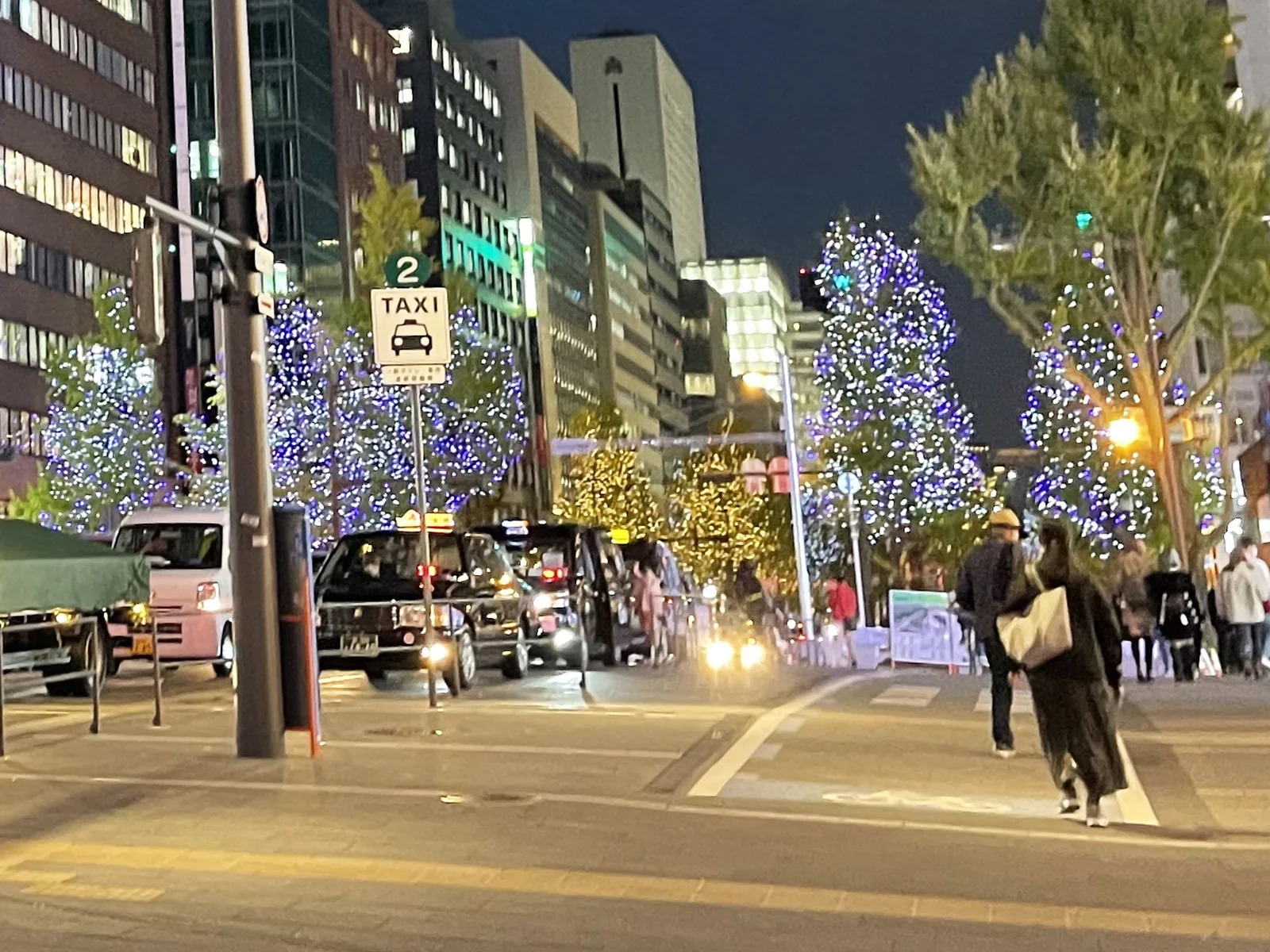
The 2026 route is longer than a photo stop
Osaka Prefecture's 2026 programme announcement provides the dates, approximate lighting window and endpoints. A later programme detail notice describes the wider Festival of Lights, including separate Nakanoshima features. The Midosuji corridor is a street-level walk, not a single ticketed hall. You can see a section without covering the whole route; you can also make it the spine of an evening between dinner districts. Decide which version you want before choosing a hotel.
The gallery images document previous illumination years. They do not establish the exact 2026 colour design, weather or traffic arrangements. A photograph taken at one intersection is particularly poor evidence for what the entire corridor will look like. The prefecture may publish more detailed block-by-block information and any opening-day traffic guidance. Check that update before making a precise walking plan. The Osaka night views guide is useful if you want a panorama as well; an observatory and this street walk answer different questions.
The 25:00 lighting end is later than many visitors need. It means the displays can still be on after dinner, not that transit, shops and restaurants will necessarily match that time. Public transport and business hours have their own schedules. If you intend to walk after 23:00, check the last convenient train to your hotel and whether the route remains comfortable for your group. A central hotel can remove that dependency. The Osaka transport and airport guide matters if your night follows a flight, because airport arrival timing can consume the early part of the lighting window.
| Aim for the evening | Where to begin | Hotel zone that reduces the final journey |
|---|---|---|
| See a long north-to-south stretch | Yodoyabashi or Honmachi | Namba or Shinsaibashi |
| Eat in Namba, then see lights | Namba, walking north as far as desired | Namba if you plan to double back by rail |
| Combine city hall and Nakanoshima lights | Yodoyabashi | Yodoyabashi or Umeda |
| Fit a short light walk after work | Nearest convenient Midosuji stop | Keep the hotel that serves your next day |
The last row is an important corrective to the idea that you must walk every block. An hour on the boulevard can be enough if you have another fixed commitment. The best hotel for a short visit may be the one already supporting your next train or attraction. The Osaka three-, four- or five-day itinerary can show whether this night is central or incidental to the larger plan.
Choose the northern start if you want a one-way evening
Yodoyabashi and Honmachi make sense as a starting base. You can leave your room lightly packed, walk a north-central section, continue south and end near Shinsaibashi or Namba food. If you sleep north, you will then need a return trip. That is fine when the subway is running and your group is not exhausted, but it should be acknowledged before you book dinner at the far end. A north-side hotel is strongest when the next morning also pulls you toward Umeda, Shin-Osaka or a day trip using those connections.
The Royal Park Hotel Iconic Osaka Midosuji is between Yodoyabashi and Honmachi, directly useful for a start on the boulevard. Its official access distances describe station exits, not the full journey from an intercity platform with luggage. Check the room type, the hotel's exact entrance and your arrival line. The Candeo Osaka The Tower review and Hankyu Respire versus Candeo comparison give other north-central room choices with different facilities; their value for illumination depends on your exact start and finish.
Yodoyabashi also sits near the Nakanoshima and city hall area, where a separate part of Osaka's Festival of Lights is planned. Some features begin on 3 November, while the main Osaka Hikari Renaissance period is 11–25 December. Do not assume every projection or seasonal stall is operating on a November date just because Midosuji's street lights have begun. The Osaka autumn attraction guide can help fill a November day without depending on a December-only installation.
If you are arriving at Shin-Osaka and leaving the following morning for Kyoto or Kobe, a north-central base can reduce your non-event travel. The Osaka hotels for Kyoto and Kobe day trips and early Shin-Osaka hotel guide help decide how much that departure matters. The light walk then becomes an evening extension rather than the sole reason for the hotel. Do not move to Namba for one night if it costs you a difficult baggage return the next morning.
Namba rewards a southbound finish
Namba is persuasive when the most enjoyable part of your evening is the finish. Walking south on Midosuji can lead naturally to Namba's restaurants and a hotel near the station. You avoid a return trip to the starting end after dinner. Hotel Royal Classic Osaka is a named Namba-side property in the existing Namba airport access guide; compare it with your actual arrival and departure route rather than treating every “Namba” room as identical. The Namba hotel comparison is helpful if room size and rail access matter.
Namba's district labels can conceal a lot of walking. A room near Nankai Namba Station has a different last leg from one near a Shinsaibashi exit, and an address across Dotonbori may involve crowds after dinner. The Cross Hotel Dotonbori location review is useful for that exact trade. If you are with children or older parents, check where your hotel door is relative to the end of the section you intend to walk. The Osaka family hotel guide and Osaka with parents guide focus on room and transport considerations beyond the lights.
A Namba hotel can also be a strong final-night choice before Kansai Airport because of direct rail options from the district. That does not make every Namba room equally convenient; station entrance, lift and luggage route still matter. The Swissotel Nankai airport guide and Royal Classic airport guide illustrate different door-to-platform arrangements. If you have a very early flight, calculate the first suitable service rather than relying on a generic “airport access” claim.
| Hotel base | Illumination plan it supports | Other travel benefit | Compromise |
|---|---|---|---|
| Yodoyabashi or Honmachi | Start on Midosuji, choose how far south to go | Better for north-city and some rail plans | Return after a Namba finish |
| Shinsaibashi | Join the central stretch and walk either way | Shopping and dining nearby | Less useful for a full north-to-south walk |
| Namba | Finish near dinner and bed | Useful for some KIX departures | North-end sights need an outbound trip |
| Umeda | Begin at the very northern side | JR Osaka and intercity links | More walking to a southern finish |
Umeda is not wrong merely because the plan mentions Yodoyabashi. It may be the better city base if you have repeated JR trips. The Osaka Station hotel comparison and Hotel Granvia Osaka station guide help with that calculation. The evening walk is one input; the next day's fixed journey may be the larger one.
Walk with an exit plan, not a completion target
Choose a start after checking the specific 2026 light-up notice. About 17:00 is an approximate official start, so allow for natural twilight, weather and any opening-day operational changes. You can begin near city hall, move along Midosuji, stop for dinner and resume later if you want more. The programme's late lighting window gives flexibility, but a food reservation or last train can still impose a hard stop. Keep those practical deadlines in the route.
For a family, pick a section with a clear subway exit at either end. A child who loses interest halfway should not have to finish the entire corridor. For a group with a wheelchair or stroller, check crossing points and current street works; an illuminated boulevard is still a working city street. Follow crossings rather than cutting across traffic for a photograph. The Osaka attractions with kids guide is a better source for daytime options than stretching this outdoor walk into an all-day plan.
If you want a photograph, remember that the gallery's older images represent earlier arrangements. Streetlight colours, medians and pedestrian density may differ in 2026. The best way to enjoy the route is to stop where the pavement permits, not in a crossing or a narrow line of people. Rain can make reflections attractive but also make surfaces slippery. A lightweight umbrella and shoes with grip are more useful than planning a particular camera angle months ahead.
The corridor can fit around other November plans. A daytime visit to the aquarium, Osaka Castle or a food district need not end on the same side of town as your light walk. The Osaka attractions map and things to do in Osaka help place the day's stops. If a concert or USJ visit ends late, do not assume you can add an ambitious full Midosuji walk without sacrificing sleep. The Osaka concert hotel guide shows how a fixed venue can dominate hotel geography.
There is a practical difference between using the subway to reach the start and using it to escape at the end. For the outbound trip, you are fresh and can tolerate an extra platform or a longer station exit. At the end of a cold walk, carrying shopping bags and finding the right entrance may be less pleasant. If you expect to finish in Namba, a Namba room removes that return; if you expect to stop near Honmachi, a north-central room does the same. This is why the planned stopping point, rather than the total route length, should drive the hotel choice.
Visitors with a late arrival should be more conservative. A hotel check-in after 20:00 still leaves time within the published lighting window, but the airport transfer, dinner and weather can narrow the comfortable part of the night. Book a room close to the segment you actually want to see and save a full corridor walk for another evening. If there is only one Osaka night, a shorter, enjoyable section is better than turning the event into a deadline after a travel day.
Compare the booking cost with the return cost
Search the actual November date, then compare the full rate for your room category, breakfast and cancellation terms. The illumination has no reason to make a prepaid hotel rate safe: flights, weather and your own plans may shift. A room in Namba may cost more but save a late return after the southbound walk. A Yodoyabashi room may serve two early departures better. The value of location is the route it removes, not a vague promise that one district is “central”.
Room size and length of stay also matter. A compact room may be acceptable for one night of lights but frustrating over five nights with open suitcases. The Osaka long-stay hotel guide and group room guide can help assess the non-event part of the booking. If you are visiting with friends, agree whether dinner in Namba or a prompt return to the hotel is the real plan; otherwise the group may pay for a supposedly convenient base nobody uses.
A decision you can make before the detailed map arrives
For an intentional long November light walk, start the hotel comparison in Yodoyabashi or Honmachi if you need northern rail connections, and in Namba if you want the walk to end at dinner and bed. For a short viewing, keep the hotel that best serves the rest of the trip and use a nearby Midosuji station to enter and leave. Osaka Prefecture has fixed the 2026 dates and broad corridor; exact evening access details should be checked close to travel.
Before booking, put three points on a map: the hotel door, the first illuminated intersection you plan to visit and the place you will stop. Then add the next morning's platform or airport route. That simple drawing reveals whether a north-side room avoids two journeys, or whether a Namba finish is the only location advantage you will really use. A broad “near the lights” search cannot make that choice for you.
If two travellers want different walking lengths, agree on a meeting point near a station before setting out. One person can stop for dinner while the other continues, but both need a route to the hotel that remains usable at the hour they separate. This is easier when the room is near the intended finish than when it is merely somewhere along the boulevard. The official corridor is long enough that a hotel at its midpoint can be convenient for a short visit yet awkward for a full one-way walk.