
The bath on CANDEO HOTELS Osaka The Tower’s 31st floor is its clearest reason to choose this property. It makes less sense to pay a tower premium for a late arrival and early departure that leave no time upstairs. The hotel also sits near Yodoyabashi rather than inside Osaka Station: that can be a strong base for days along the Midosuji corridor, but the final walk becomes more noticeable if you repeatedly return with luggage or between outings. Decide how the room, station and SkySpa will work together before comparing rates.
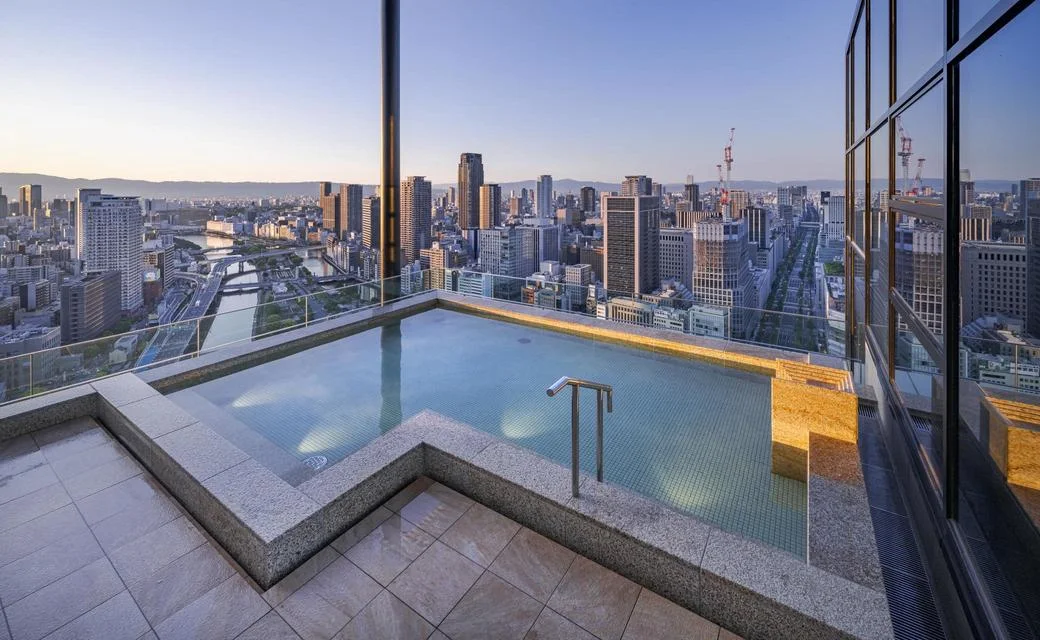
The hotel’s SkySpa is open to guests from 15:00 to 11:00 the next morning without a separate bath charge. Sauna use pauses from 02:00 to 06:00. That timetable makes a post-dinner bath or a departure-morning soak possible; neither helps a traveller who returns near midnight and must leave at dawn. One deliberate bath during a three-night booking is a modest return on the rate difference. Two or more visits make the facility a more substantial part of the stay.
Public bathing is useful only under its actual rules
This Osaka branch explicitly welcomes guests with tattoos in the SkySpa. The permission is property-specific, so it should not be assumed at another CANDEO hotel. Children who still wear diapers cannot enter the baths, and swimwear is prohibited. The rooftop outdoor pool also closes when wind speed exceeds eight metres per second. The indoor bath can still be available when that happens, but a skyline soak cannot be promised on a windy night.
Those distinctions change a family booking. Two adults travelling with a diapered child may need to take turns while one remains with the child; the SkySpa is then an adult benefit rather than shared family time. A guest who dislikes communal bathing should not count the bath at all merely because it comes with the room. Conversely, a guest comfortable with Japanese bath etiquette can use a shower-only room and let the public bath do the work a private tub might otherwise have done.
The roof also has separate women’s and men’s bathing areas with indoor water, outdoor water and saunas. Towels are not stocked inside the SkySpa; guests bring them from the room. That small operational detail matters after dinner when someone might otherwise make a second trip between floors. The free guest admission applies to the bath, not to visitors walking in from outside. The hotel’s spa page is the place to confirm any short-term operational change before a stay.
What changes between a Deluxe and an Executive room
Published room specifications put both Deluxe King and Deluxe Twin at 24 m². They have shower rooms. Executive King and Executive Twin are 26 m² and add a separate bathtub and washing area. The extra two square metres amount to roughly 8.3% more listed floor area; they are not a convincing cure for two large open suitcases. Executive’s useful difference is a private-bathroom arrangement, particularly when companions want to bathe at different times or one person avoids the shared spa.
For one or two adults who expect to use SkySpa, a 24 m² Deluxe may be the coherent choice. A couple that wants a private bath every evening can justify Executive on function, even though the room is only slightly larger. If a child needs an in-room bath, examine the bathroom rather than the square-metre headline. If several travellers need floor clearance, move beyond this two-square-metre comparison altogether.
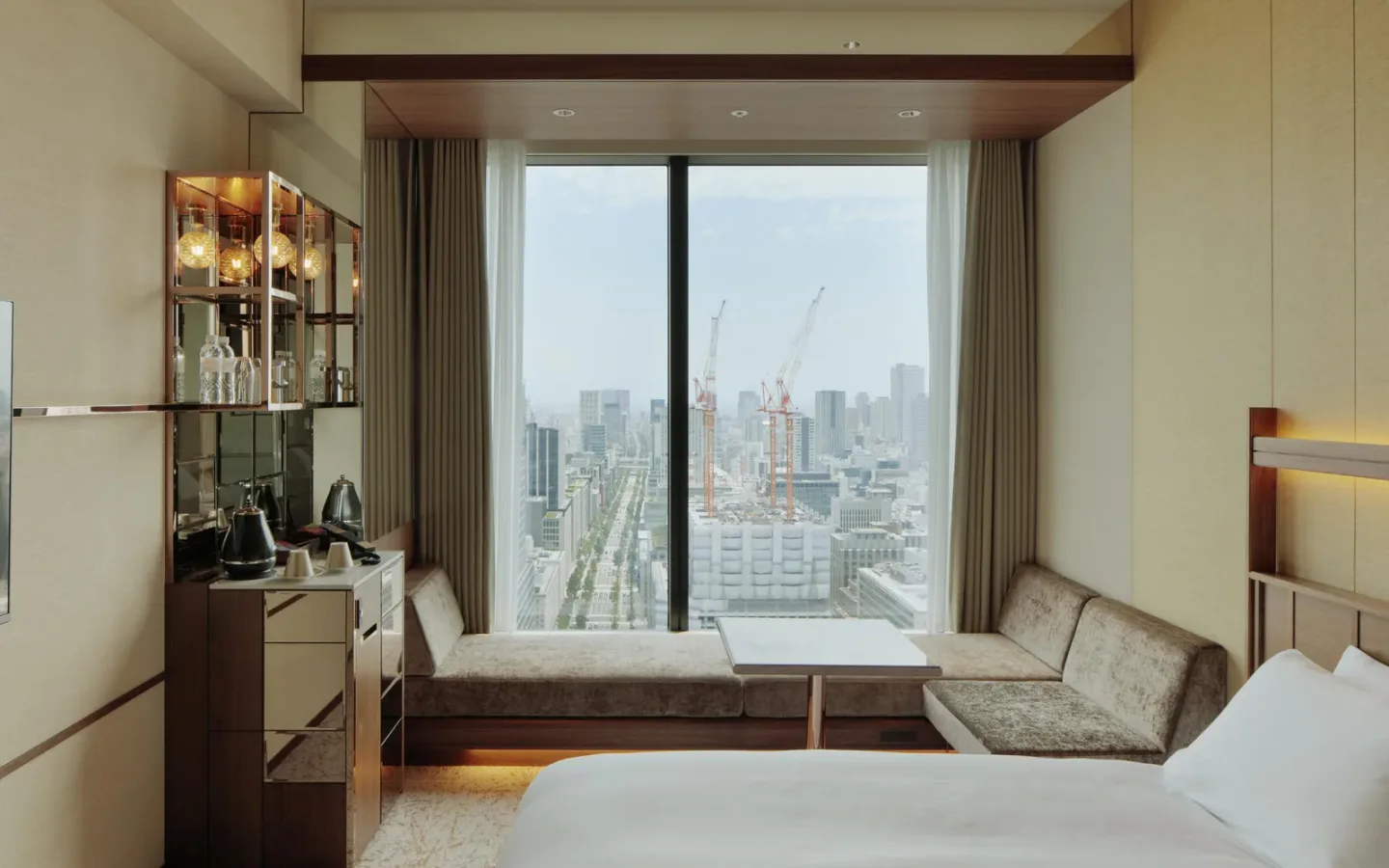
A room name also says little about how a group will share the space. The Deluxe Twin has two 1,100 mm beds, while the Deluxe King has one 1,800 mm bed; both may list a maximum adult capacity above two, but maximum capacity is not the same as three proper sleeping surfaces. For three adults, the Premium Triple’s three separate beds are the meaningful distinction. For one adult who works in the room, the photograph of a desk is more useful than a headline view, but check the booked category rather than expecting every room photograph to show the same furniture.
The Luxury Corner King is listed at 31 m², a more meaningful change in overall room size. The Premium Twin Universal is 41 m²; the Premium Triple is 43 m² with three 1,100 mm beds. A three-adult party should compare the real three-bed layout with other hotels, not rely on the nominal adult capacity of a standard king or twin. Hotel room area is still only a broad proxy for circulation: the published specifications do not establish exactly where two 28-inch cases will open around the furniture.
↔ Scroll table left or right
Room | Listed area | Feature that changes the decision |
Deluxe King or Twin | 24 m² | Shower room; lower-cost route to the rooftop bath |
Executive King or Twin | 26 m² | Private bathtub and separate washing area |
Luxury Corner King | 31 m² | More room for living and packing, not simply a different bathroom |
Premium Twin Universal | 41 m² | Substantially more space in a twin arrangement |
Premium Triple | 43 m² | Three 1,100 mm beds and a group-oriented layout |
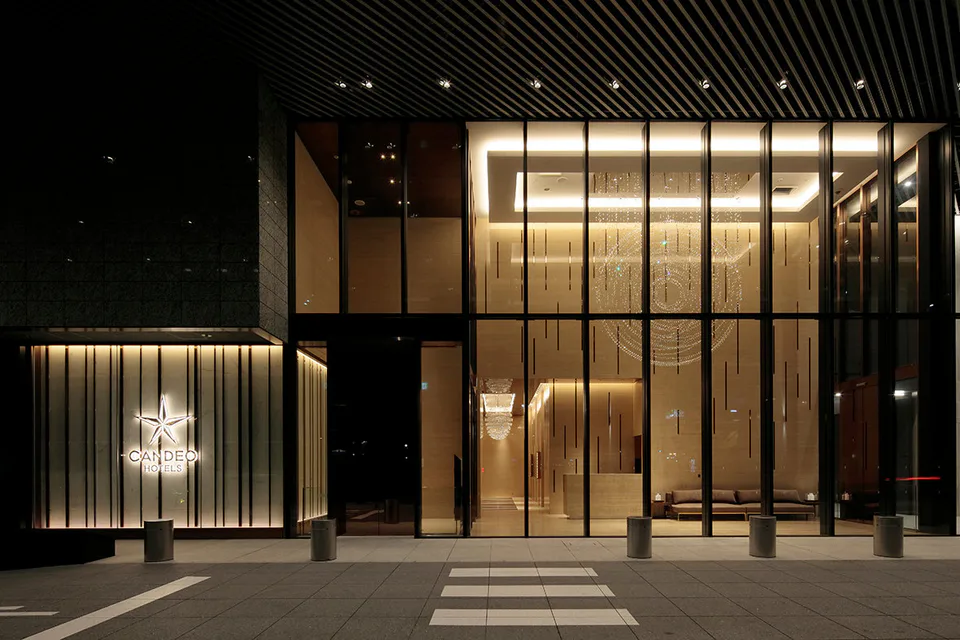
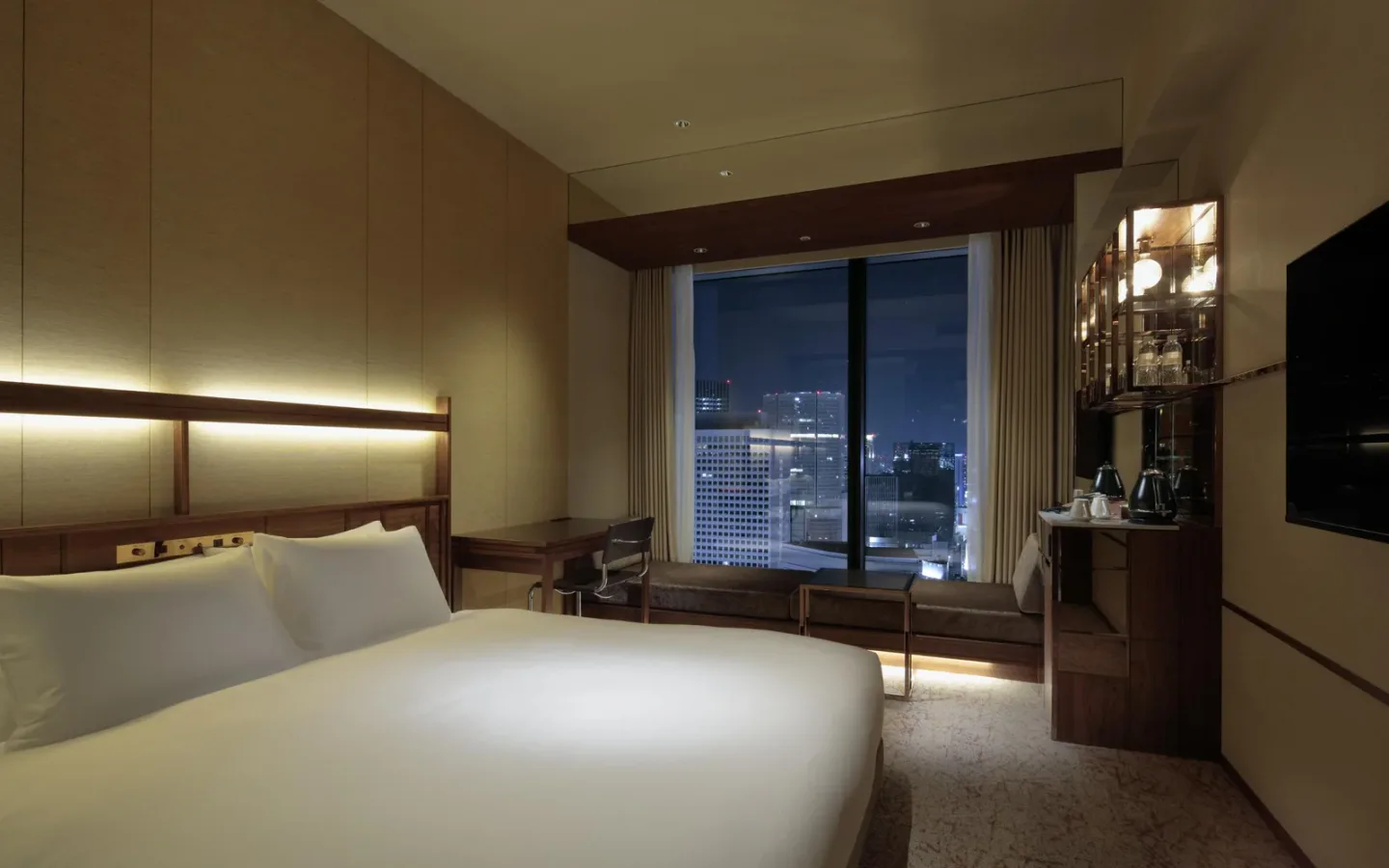
The photographs show different room arrangements and lighting, not a guarantee that every booked category has the same window orientation. Choose the named room category and its published facilities before assigning a value to a promotional view. The gallery shows the outdoor SkySpa, a king room at night and the hotel entrance; it helps explain the property without promising the same view in every booked room.
↔ Scroll table left or right
Stay pattern | Room or base to compare first | Why it fits |
One or two adults, short stay with two spa visits | Deluxe King or Twin | The shower-only room does not duplicate the bath you intend to use upstairs. |
One traveller wants a private bath each evening | Executive King or Twin | Its separate tub and washing area do the work; the extra 2 m² are secondary. |
Two large cases over several nights | 31 m² Corner or another hotel | Living and bag clearance matter on every day of the stay. |
Three adults sharing one room | 43 m² Premium Triple | Three separate beds answer the group’s sleeping requirement. |
Most days start and end at JR Osaka Station | Compare an Umeda hotel | A station-area base can remove repeated last-leg transfers and walks. |
For a one-night stop, the bath may be available only once and the room can be used mainly for sleep. By nights three and four, the bathroom layout, bag clearance and repeated walk from the station are daily features. Someone carrying two large cases and returning to the room in the middle of each day may get more value from a larger room or another base than from adding Executive solely for its tub. The luggage-forwarding guide is relevant if the real problem is the cases rather than the hotel.
Yodoyabashi access has a predictable final walk
The hotel’s access directions identify Yodoyabashi Station Exit 7 as roughly six minutes away on foot. They also quote about ten minutes from Shin-Osaka to the station area by Osaka Metro before the walk. That makes the Midosuji Line an asset for north-south Osaka travel, but it does not put the room above a platform. Count the six-minute street leg every time it would occur: once out and once back is different from midday returns followed by dinner departures.
Yodoyabashi works well when days alternate between Umeda to the north and Honmachi, Shinsaibashi or Namba to the south. If almost every morning begins with a JR regional trip, an Osaka Station hotel may save more repeated station movement. A Universal Studios Japan visit is possible from this base, but the late return still involves transfers and a walk; a Universal City hotel has a different advantage for a park-focused stay. Use the Osaka–Kobe–Koyasan itinerary to see which route recurs in a wider Kansai trip.
One hotel can also serve mixed days better than a hotel that is ideal for only one attraction. A party visiting Umeda once, Namba twice and central Osaka on another day may prefer Yodoyabashi’s position along the same subway line. A party taking three regional JR trips from Osaka Station has a different repeated movement. Count the actual daily departures and returns, including evenings when tired legs make the last street segment feel longer. The choice is about repeated route geometry rather than a blanket ranking of Osaka neighbourhoods.
Travellers who require a lift should not assume that the closest named subway exit gives the best step-free path. Find the accessible station route for the date and accept a longer ground-level approach if needed. The hotel’s six-minute measure is a station-exit-to-property figure, not the full time from platform to room. The distinction matters most with a wheelchair, stroller or several bags, and less to someone walking back once each night with a daypack.
Breakfast versus an early departure
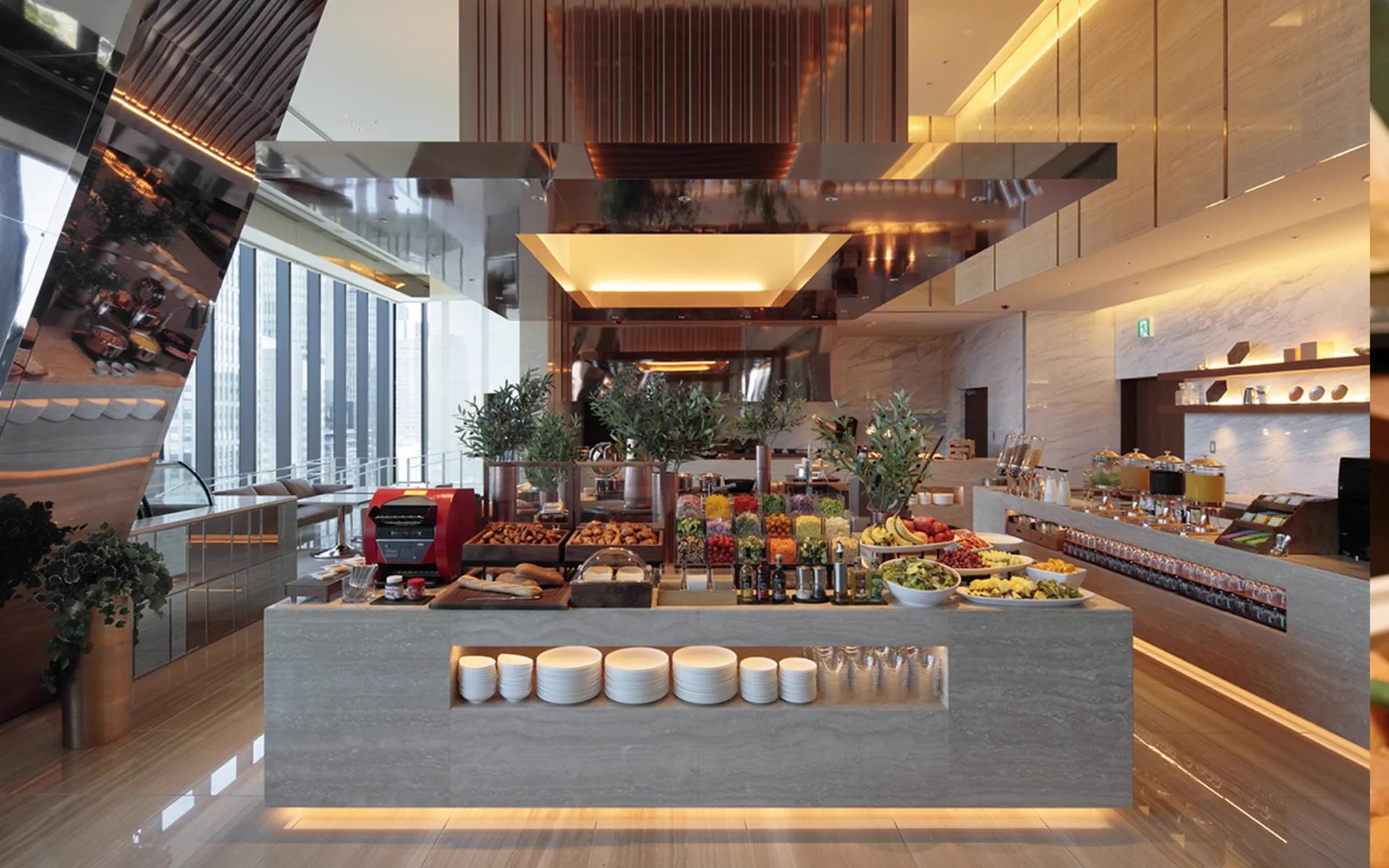
The 17th-floor breakfast restaurant runs from 07:00 to 10:00, with last entry at 09:30. The listed adult price is ¥3,800 before tax, ¥4,180 including tax. Children aged six to eleven are listed at ¥1,900 before tax or ¥2,090 including tax, while children under six eat free. These are posted dining prices, not a forecast of a room package or a guaranteed future rate.
On an unhurried Osaka city morning, breakfast can fit naturally before a subway ride. On a day planned around an early Shinkansen, Kyoto opening or USJ rope-drop strategy, it may consume the departure buffer you wanted. Decide the first hard commitment of the morning, then ask whether a 07:00 opening permits breakfast without moving that commitment. Paying for a buffet and then skipping most of it on every morning is a poor fit even if the room-and-breakfast package looked attractive at checkout.
The restaurant also serves non-guests, subject to hotel-guest priority at peak times. That is distinct from the SkySpa, which is for hotel guests. Someone staying nearby could potentially buy breakfast but cannot use it as a route into the rooftop bath. The menu may change with ingredient availability; its practical value here is the actual meal time and price, not a fixed promise of particular dishes.
Seven parts of the stay to weigh together
The rating below assumes a Yodoyabashi base and at least two SkySpa visits. Repeated JR Osaka or USJ days would put more weight on the final station leg.
| Hotel dimension | Our score | Why |
|---|---|---|
| Location | Yodoyabashi Exit 7 is around six minutes away. The Midosuji corridor works well for Honmachi, Shinsaibashi and Namba, but repeated JR Osaka or USJ returns add a last leg; a step-free route can take longer. | |
| Room | A 24 m² Deluxe has a shower, whereas the 26 m² Executive adds a private tub and washing area. The 31 m² Corner helps with bags; a 43 m² Premium Triple serves three separate sleepers. | |
| Cleanliness | Recent guest cleanliness feedback is strong. Room images cannot establish the presentation of a particular booked room. | |
| Service | Guest staff feedback is strong; confirm unusual requests and breakfast priority with the property rather than inferring them from a room tier. | |
| Facilities | The rooftop SkySpa runs roughly 15:00–11:00 for hotel guests and distinguishes this address; wind can close the outdoor bath. A private tub starts at Executive, not Deluxe. | |
| Food | Breakfast can suit a normal start but its value falls with an early train; the restaurant view does not make an unused meal plan worthwhile. | |
| Value | Compare the same room category, party, breakfast and cancellation terms. A SkySpa premium earns less when the hotel is only a place to sleep. | |
| Overall | strongest when the rooftop bath and Midosuji-side address will both be used; a JR Osaka-centred trip should price another base. |
Cleanliness and service should not receive invented marks from a floor plan or a single marketing photograph. If those dimensions are decisive, read a spread of recent stays with dates and room categories, and weigh any recurring issue against the operator’s actual response. The seven dimensions also interact: the SkySpa can offset a shower-only Deluxe for one couple, while the same setup is weak for a family whose youngest member cannot enter the bath.
Comparing a rate without changing the product
A booking comparison must hold dates, guest count, room category, breakfast, tax inclusion and cancellation deadline steady. A 24 m² Deluxe on one platform and a 26 m² Executive on another are different products, even if both say CANDEO Osaka The Tower. Check whether the price is refundable and when the free-cancellation period ends. A lower headline rate with a hard cancellation rule may not suit a route still depending on flight or rail dates.
For two adults whose Osaka days use the Midosuji corridor and who can name several realistic SkySpa visits, the Deluxe is a sensible starting point. Executive earns its premium through the private bathtub rather than the small area increase. A 31 m² or larger category, or another hotel, is the better comparison when luggage circulation or three beds is the deciding problem. If your stay centres on JR Osaka Station, a rooftop bath you will barely use cannot compensate for a repeated access mismatch.
The same choice changes by stay length. One late-arrival night may offer only a morning spa window. Two nights with an ordinary Osaka day create a natural evening and next-morning bath. Four nights amplify every annoyance in a tight room or awkward station route. Price the stay you will actually make, not the single most striking photograph on the room page.
For related decisions, see MIMARU’s larger group rooms, the late USJ return and Japanese bath etiquette. These address group layout, park transport and public-bath comfort separately; each can alter whether the tower is the right booking for your dates.
More hotel comparisons: THE SINGULARI HOTEL Review: USJ Access, Rooms and Skyspa · Hotel Hankyu RESPIRE OSAKA vs CANDEO HOTELS Osaka The Tower · JR Tower Hotel Nikko Sapporo Review · Fukuoka Budget Hotels · Hilton Okinawa Chatan Resort Review · HOTEL FORZA Hakata Station Chikushi-Guchi I Review · Lake Biwa Otsu Prince Hotel · Fukuoka Rainy-Day Hotels · Osaka Hotels for Kyoto and Kobe Day Trips · Lotte Hotel Busan vs Arban Hotel