
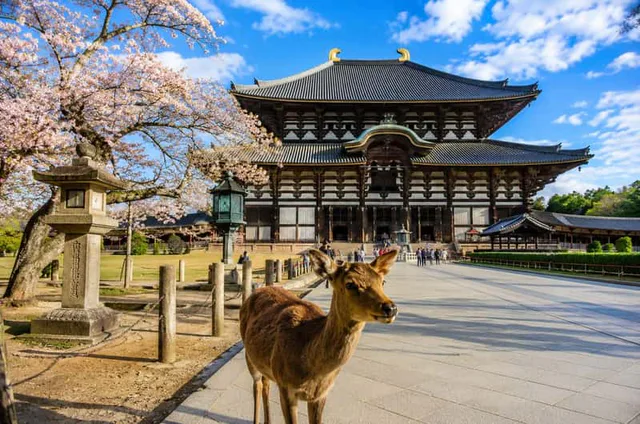
A first visit built around Nara Park, Tōdai-ji, Kasuga Taisha and Naramachi fits a day out from Kyoto or Osaka. An overnight becomes useful when you will actually spend the additional hours in Nara: a walk through the park before the trains bring in most visitors, an evening with a particular destination, or another day devoted to places well beyond the park. The hotel is a tool for those plans, not a requirement for seeing the deer and Great Buddha.
Before booking, sketch the hours that a return trip would make difficult. Can you use time before 09:00, after 17:00, or an unhurried second day in a different part of the prefecture? Two worthwhile windows usually make a stronger case than one short dawn stroll. Include check-out, baggage handling and the evening you would have spent at your Kyoto or Osaka base in the calculation.
↔ Scroll table left or right
Actual itinerary | Likely choice | Reason | When that changes |
Park, Tōdai-ji, Kasuga Taisha and Naramachi | Day excursion | One central sightseeing circuit fills a day | You intend to walk the park very early or attend a specific evening event |
Early park walk with shrine or hall at opening | One Nara night | The room puts you near sights before a typical arrival from elsewhere | The group expects to leave its room only after 09:00 |
Central sights followed by Hōryū-ji or another western stop | Consider a night | Separate districts no longer compete for one afternoon | The western destination matters less than another day in Kyoto or Osaka |
Kyoto through Nara to Osaka with light bags | Daytime transfer | Rail already allows an onward journey without backtracking | An early or late Nara plan makes the stop itself worthwhile |
Children, older companions or large cases | Usually keep one base | Packing and another check-in may take more effort than the rail return | Two relaxed half-days solve a real pacing problem |
Why the central sights fit a day
Nara Park begins about eight minutes on foot from Kintetsu-Nara Station; the walk from JR Nara is around twenty minutes. The park connects Tōdai-ji, the route toward Kasuga Taisha and the lanes leading back toward Naramachi. These places take time to enjoy, yet they do not demand separate hotel bases or a second sightseeing day merely because of their geography.
A room in Nara therefore needs a job. The usual reasons are an early or late visit unavailable on a standard day out, a second destination cluster, or a route onward that benefits from stopping here. A vague wish to spend more time in town does not say which experience the room would enable.
A useful early or late period in the park or at a named event.
A second destination area that would otherwise make the first day too long.
An onward route whose timing really improves with a Nara stop.
If the proposed extra time has no destination attached, keep your existing hotel and give Nara a full day instead.
The rail journey does not force a hotel change
For the classic circuit, arrive at Kintetsu-Nara or JR Nara, allow a substantial block for the park and temples, then return to the city where you are already sleeping. Tōdai-ji and Kasuga Taisha each deserve more attention than a photo stop; the argument for a day trip rests on their shared area, not on rushing through them.
Kintetsu services connect Nara and Osaka-Namba; an ordinary Express journey is often around forty minutes, depending on the departure. Kyoto is also linked by rail. Check the train for your date, especially if dinner will run late, but Nara is close enough that returning after sightseeing is a normal option.
A fixed Kyoto or Osaka room lets you leave the main suitcase unpacked. It also preserves a Gion, downtown Kyoto or Namba evening already in the itinerary. A new Nara check-in has to earn both the bag move and the opportunity cost.
For the central circuit, the one-day Nara itinerary shows how the sights fit together. If the starting city is undecided, compare Nara from Kyoto or Osaka before adding a third hotel to the booking list. one-day Nara itinerary Nara from Kyoto or Osaka
What an early Nara morning actually offers
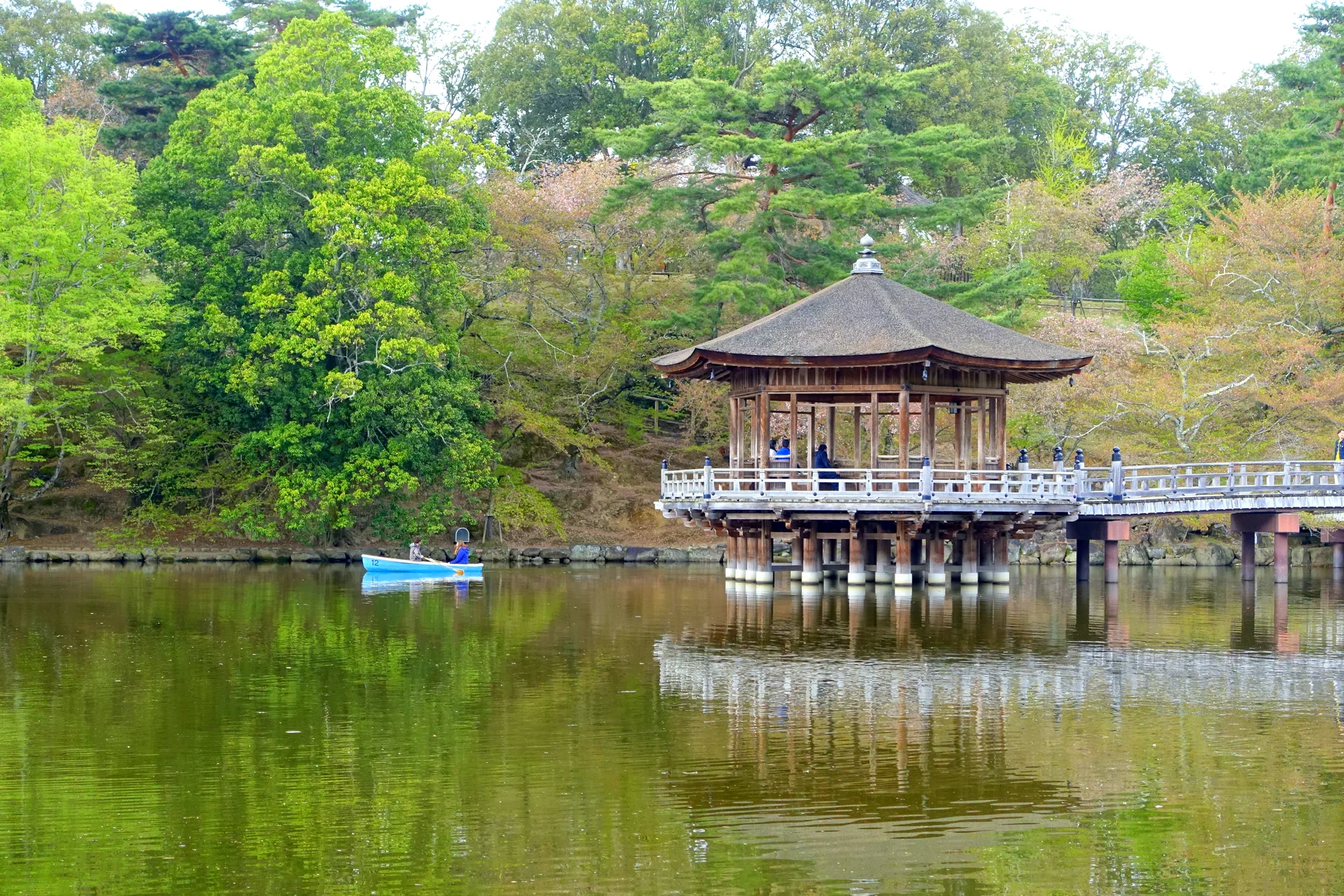
Nara Park itself has no closing time; it is open around the clock throughout the year. Kasuga Taisha opens its general worship area at 06:30 from March through October and 07:00 from November through February. Tōdai-ji’s Great Buddha Hall opens at 07:30 from April through October and 08:00 from November through March. Special worship areas and other buildings keep different hours, so the early opportunity applies to the specified areas.
Sleeping near the park can let you walk by Ukimido or toward the shrine before the main daytime flow. You could then enter the general worship area or Great Buddha Hall when it opens. That sequence is the clearest experience a night near eastern Nara can buy.
The itinerary still needs an alarm. If breakfast and departure from the hotel will push the park walk to 09:30, paying for a nearby room has not bought much that an early train could not. Decide who is willing to leave the room and at what time before judging the hotel price.
The departure time changes the answer:
Leaving before 07:00 creates a long stretch in the park before the main day-visitor flow.
Around 08:00 still works for an early temple or shrine visit, depending on season.
After 09:00, judge the hotel by its evening or second-day use instead.
A quiet evening needs a destination
Many temple interiors close before dinner. A calmer street afterward may be pleasant, but the absence of daytime visitors is too thin a reason on its own to move hotels.
A visit to Nigatsu-dō after the busiest hours, a circuit by Sarusawa Pond, a booked meal or an event such as Nara Tōkae gives the evening a shape. Event dates and access vary by year; build the night around the published programme for your travel date, not an assumed year-round illumination.
Put that plan beside the evening it displaces. Someone who wanted Gion after dark or a meal in Osaka-Namba may value the existing base more. A particular Nara restaurant or seasonal event can reverse the comparison, but simply being in Nara after sunset cannot settle it.
For a visit timed to Nara Tōkae, the arrival-time guide helps place the park walk and dinner around the event. The hotel decision then follows that schedule. Nara Tokae arrival-time guide
A second day should lead somewhere new
Two mornings covering the same stretch of Nara Park may be restful, but they do not automatically justify a hotel switch. A western-Nara day changes the trip much more.
Hōryū-ji in Ikaruga lies outside the central park circuit; its published route includes a train to JR Hōryūji and a further walk or bus ride. Hasedera and Tanzan Shrine belong to still different journeys in the prefecture. When one of those places is a real priority, dividing central Nara and the outward excursion across two days prevents the distant stop from being squeezed into the last afternoon.
Check the shape of Day 2 before reserving the room:
Both days follow the park and nearby streets: test whether one fuller day is enough.
Central Nara first, Hōryū-ji or a deeper prefectural site second: the room separates two travel areas.
Day 2 was added only after deciding to book: ask whether that attraction deserves time taken from Kyoto or Osaka.
A Kyoto–Nara–Osaka transfer can happen in one day
Travelling onward through Nara is possible without sleeping there. Kintetsu links Kyoto and Nara, then Nara and Osaka-Namba. With a small bag, you can check out in Kyoto, spend the day sightseeing and check in at Osaka that evening. The night in Nara has to add an experience beyond the straight-line travel.
Baggage changes the practical answer. Dragging a large case around the park is a poor trade for avoiding a return journey. A station locker is only useful if its size, availability and retrieval point suit the route.
For one light pack, the transfer day is fairly simple. Two large 29-inch suitcases need a planned hand-off: forwarding to the next hotel, a confirmed storage arrangement, or a decision to travel without the park detour that day. The luggage-forwarding guide explains the service choices and timing. Book the Nara hotel only if it also improves the visit, rather than treating it as an automatic fix for bags. Japan luggage-forwarding guide
An early Nara walk, a specific evening and a western excursion can make the stop productive. A hotel inserted solely because Nara appears between two cities often adds another check-in without removing the hard part of moving luggage.
Two useful windows make a clearer overnight case
Ask what the same room buys on both sides of sleep. The strongest one-night plans usually contain two gains that a straightforward day trip would handle poorly:
Park and Kasuga Taisha at opening.
A scheduled lantern or night programme followed by a dawn walk.
An afternoon in central Nara followed by western Nara the next day.
A gentle family arrival with the main temple visit after breakfast.
A park walk at 07:30 can be lovely; by itself it may not repay losing much of the preceding afternoon to packing and travel. Look at the full arrival-to-departure period, including how long the group needs at each hotel.
This is especially relevant in a Kansai trip with several bases. Every extra check-out takes time, so the second room should make the sightseeing schedule materially easier.
With children, compare pace with transitions
A family could reach Nara after lunch, give the park an easy afternoon, eat early and see a temple or shrine the next morning before continuing. That works when trying to fit the same stops into one day would exhaust a young child.
The opposite is possible too. A Kyoto check-out, luggage transfer, Nara check-in and another move to Osaka the following day can consume energy that one return train trip would have saved. Count the actual transitions the child experiences, not just the hours spent sightseeing.
These are different travel days:
Day out: leave the main bags in one room, take the train to Nara and return there.
Nara night: pack, check out, carry or forward bags, check in, then repeat the move onward.
If splitting the sights does not substantially reduce fatigue, the same room in Kyoto or Osaka is usually the gentler family plan.
For older visitors, plot the hotel door
A dawn visit only helps if the hotel is positioned for it. Around Kintetsu-Nara, Sarusawa Pond or the western side of the park, the first walk may begin at the hotel door. A cheaper room near JR Nara can be a sensible choice for other reasons, but it adds distance to that specific morning.
The tourism association gives about eight minutes from Kintetsu-Nara to the park and about twenty from JR Nara on foot. JR Nara can still suit travellers who prefer its rail and luggage arrangements. The shorter park approach and the easier bag transfer are different benefits; choose the one that will matter most to the person travelling.
Check the path from the actual property, including crossings and the first destination. A room advertised in “Nara” could leave an older visitor waiting for a bus before the early walk that justified the stay.
Autumn colour and events can extend the day
A late programme or a seasonal route gives an overnight more possible uses. Autumn alone does not require one: deer, Tōdai-ji and Kasuga Taisha still make a workable day outing.
Name the autumn viewpoint or evening programme, then check its date, opening hours and travel time. If it can be included without compressing the park circuit, retain the day trip. A dawn start, late finish or separate western stop is a more persuasive reason to stay.
The Nara autumn leaves route compares the park with Tanzan Shrine and Hasedera, so you can see whether the actual targets belong in one day or two. Nara autumn leaves route
A one-day Nara plan usually suits this traveller
Keep the excursion to one day when several of these conditions describe the trip:
This is a first Nara visit with the park, Tōdai-ji, Kasuga Taisha and Naramachi as the wish list.
A Kyoto or Osaka room already works well for the rest of the trip.
Large cases would need another move or storage arrangement.
No one is likely to start the park walk before 08:00.
There is no named meal, event or after-dark route in Nara.
The proposed next day would repeat the central circuit.
Those choices retain the easy rail return and avoid moving the room for a second look at the same area.
An overnight fits a different set of plans
The room is easier to justify when at least two of these are already in the itinerary:
The group will enter Nara Park before 08:00.
Kasuga Taisha or the Great Buddha Hall at its early opening is a real plan.
A dated evening event or particular night walk is important to the trip.
The following day visits another district, such as western Nara.
Children need two gentle half-days in place of one exhausting circuit.
Sleeping in Nara makes the onward journey easier and adds a Nara experience.
The difference is concrete time in Nara or a slower family schedule. It should be visible in the day-by-day plan before you compare hotel rates.
Book the night around its hours
For a first visit focused on the park, Great Buddha Hall, Kasuga Taisha and Naramachi, travel from Kyoto or Osaka for the day. Reserve a Nara room when you know which early visit, evening destination or separate second-day route will make use of it.
A workable overnight might pair the park before the inbound trains with Kasuga Taisha at opening, or an evening event with a western-Nara excursion the next day. In each case, the extra stay has a schedule that a standard return trip would crowd out.
Without that schedule, keep the original base and use the train. You can give central Nara a full, unhurried day while leaving your luggage and the rest of your Kansai evenings where they already belong.
Nara itineraries and transport
Nara from Kyoto or Osaka · Nara One-Day Itinerary · Nara Autumn Leaves Day Trip · Japan Luggage Forwarding Guide
Hours and routes
Park access and opening · Tōdai-ji venue details · Kasuga Taisha worship hours · Kintetsu train search · Great Buddha Hall hours
Related guides: Biei Day Trip or Overnight? When Staying One Night Is Worth It · Otaru Day Trip or Overnight? When Is One Night Worth It? · Mt Fuji Day Trip or Overnight: When an Extra Night Is Worth It · Itoshima Day Trip or Overnight? Is One Coastal Night Worth It? · Izu Oshima Day Trip or Overnight? Jetfoil vs Night Ferry From Tokyo · Kansai 7-Day Itinerary From Osaka: One Hotel for Kyoto, Nara, Kobe and USJ — When Not Moving Is Better · Fukuoka Tower: Is the ¥1,000 Ticket Worth the Detour? Timing Changes the Answer · USJ Hotels for One Day vs Two Days: When Is Universal City Worth Moving To? · Takayama Day Trip or Overnight from Nagoya: 4-Day Trip Guide · Best Day Trips from Osaka: Kyoto, Nara, Kobe or Himeji — When Does a Tour Actually Save Time?
More Kansai planning
La Vista Furano Hills: Is a Small Room Worth It for a One-Night Furano Stay?
seven x seven Itoshima: Is One Coastal Night Worth Leaving Fukuoka?
Tokyo Itinerary 2026: 4, 5 or 7 Days — What Changes When You Add Disney or a Day Trip?
Nokogiriyama Ropeway: Round Trip or One Way? The Route Choice That Changes Your Day
An overnight stay pays off only if you will use the quieter morning or evening hours. Compare rooms around Nara Station with the route to the sights you plan to visit before the day-trip crowds arrive.