
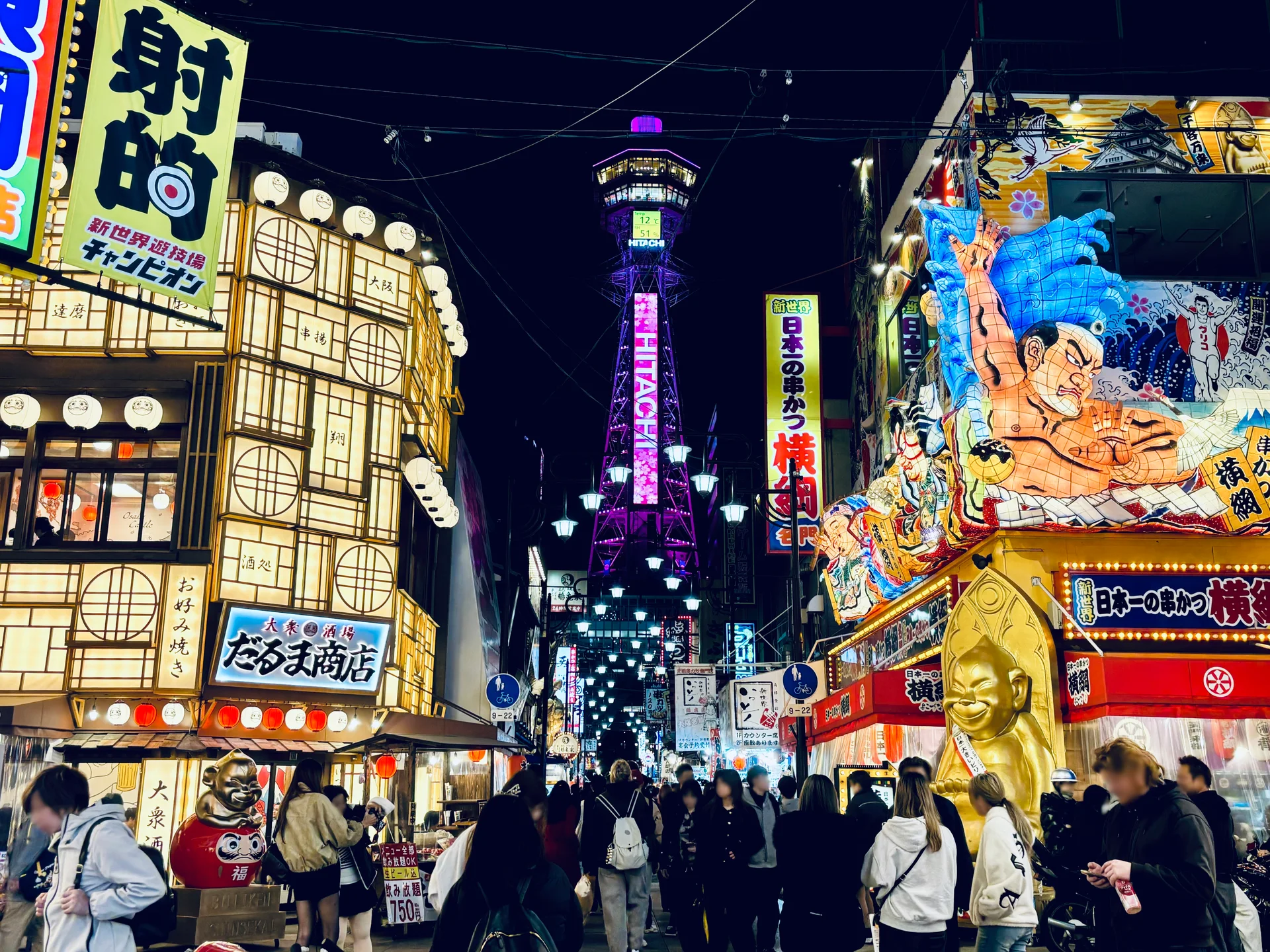
A Tokyo–Kyoto–Osaka holiday in April usually calls for a light jacket and layers you can put in a day bag. Add Sapporo and the morning can be cold enough for a separate warm layer; add Okinawa and breathable tops matter more. A Tateyama snow excursion is a different clothing problem altogether. Pack against the coldest outdoor part of your actual route, while keeping the rest of the bag usable on warm city afternoons.
Long-term climate figures explain why one “Japan in April” outfit fails. Japan Meteorological Agency 1991–2020 normals give Tokyo an April mean of 14.3°C, Sapporo 7.3°C and Naha 21.5°C. These are month-long averages, not a forecast for your week. They are enough to decide which clothing modules belong in the bag; the forecast nearer departure decides what you wear each day. If your dates can move, compare March's colder city and Hokkaido pattern with May's warmer one.
↔ Scroll table left or right
| Route | Start with | Extra question |
|---|---|---|
| Tokyo, Kyoto and Osaka | Removable city layers, a light rain/wind shell and shoes that tolerate wet pavement | Will you start before breakfast or stay outside at night? |
| Mainland plus Sapporo | City kit plus one compact insulating layer and stronger wind protection | Are any Hokkaido days rural, elevated or snowy? |
| Mainland plus Okinawa | City shell with breathable, quick-drying tops | Will a boat or exposed coast make wind and showers more relevant than warmth? |
| Tateyama or another alpine snow day | Separate cold, wind, grip and sun-protection kit | What does the high-elevation forecast say on the actual operating date? |
| Late-April city-only holiday | Fewer warm pieces than for an early-April route | Will Golden Week queues keep you outdoors and still? |
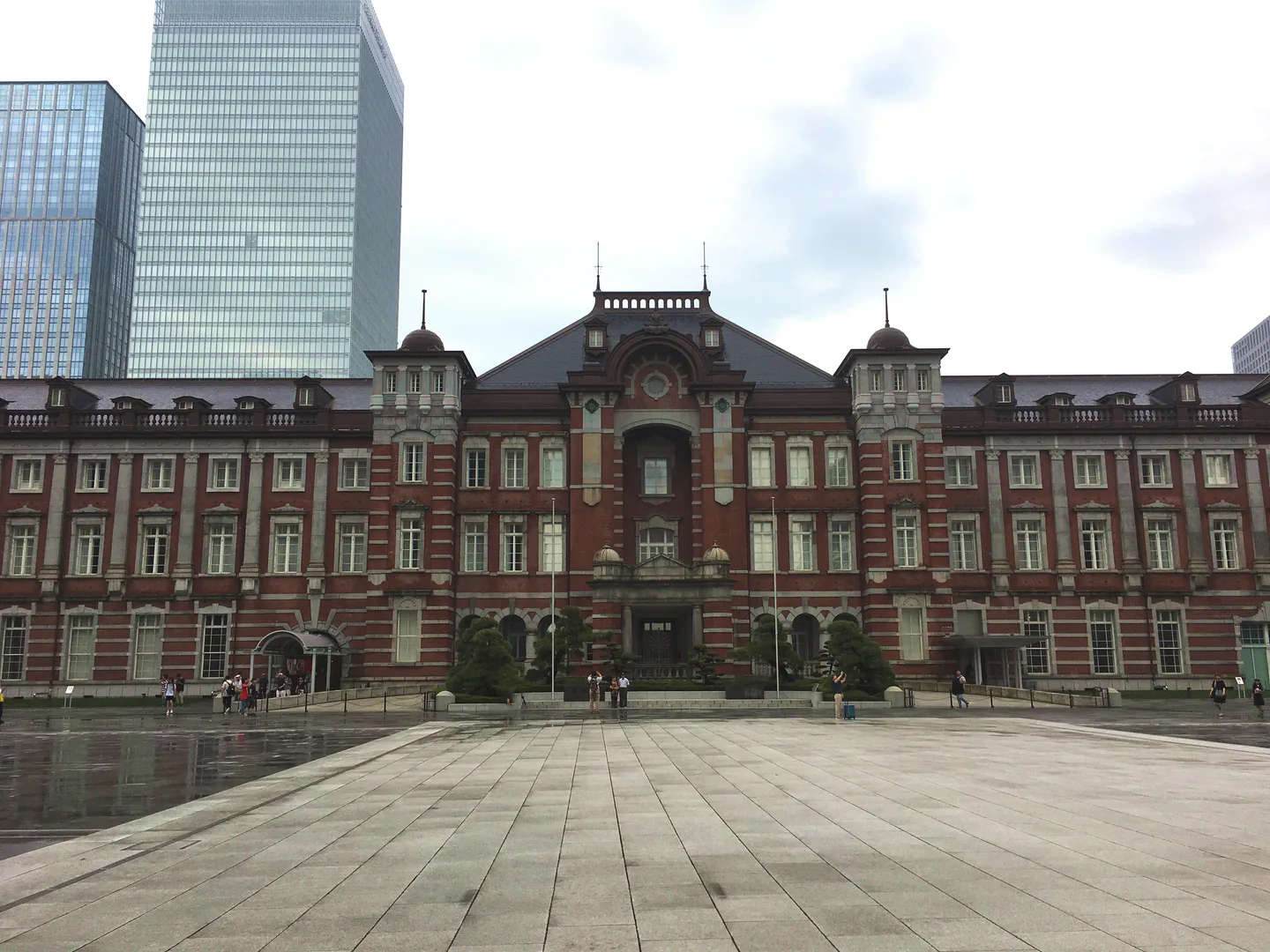
What goes in a normal mainland-city bag
For Tokyo, Kyoto and Osaka, a practical small wardrobe has two or three breathable base tops, both long- and short-sleeve choices, a light knit or overshirt, one packable wind- and rain-resistant outer layer, long trousers and comfortable walking shoes. A compact umbrella is useful for ordinary city showers. These pieces combine without requiring a winter coat; the warm layer can come off on trains, in shops or on an uphill temple street.
The hotel departure time is more useful than a photograph of cherry blossoms. Tokyo's normal April high is 19.4°C but its normal low is 9.8°C. Osaka's high/low pair is 19.9/10.9°C; Kyoto's is 20.1/9.2°C. A 06:30 temple start and a 10:00 café start therefore ask different things of the same bag. An outer layer that folds away comfortably solves more hours than a heavy coat you must carry after lunch. A Tokyo route with early outdoor days warrants the extra warmth more than a mostly indoor city schedule.
↔ Scroll table left or right
| City | April normal mean | Normal high / low | What the numbers suggest |
|---|---|---|---|
| Tokyo | 14.3°C | 19.4 / 9.8°C | Carry an evening layer even if midday feels mild. |
| Osaka | 15.2°C | 19.9 / 10.9°C | Choose a jacket that is easy to carry indoors. |
| Kyoto | 14.4°C | 20.1 / 9.2°C | Early temple walks can feel much colder than lunch. |
| Fukuoka | 15.4°C | 19.9 / 11.5°C | A light wind/rain layer is generally more useful than heavy insulation. |
| Sapporo | 7.3°C | 11.7 / 3.4°C | Add a dedicated compact warm layer and check the surface underfoot. |
| Naha | 21.5°C | 24.3 / 19.1°C | Prioritize breathable tops and light weather protection. |
Use the table to separate climates months before the trip. About a week before departure, compare actual destination forecasts. Two or three days before a boat trip, mountain route, dawn walk or night illumination, inspect the low, wind and rain rather than the headline daytime high alone. The June weather guide covers a very different humidity problem if the itinerary moves later.
Kyoto changes within the month
Kyoto's April average covers weeks that do not feel alike. A prebreakfast Gion or Higashiyama walk in early April benefits from a proper light jacket; a late-April afternoon may leave that same jacket in your bag. If your first outdoor activity begins around 11:00, you can lean lighter than someone entering a temple street at dawn. The key distinction is exposure at the beginning and end of the day, not whether cherry trees are in a photo. A night illumination or long outdoor queue brings the warmer layer back into use.
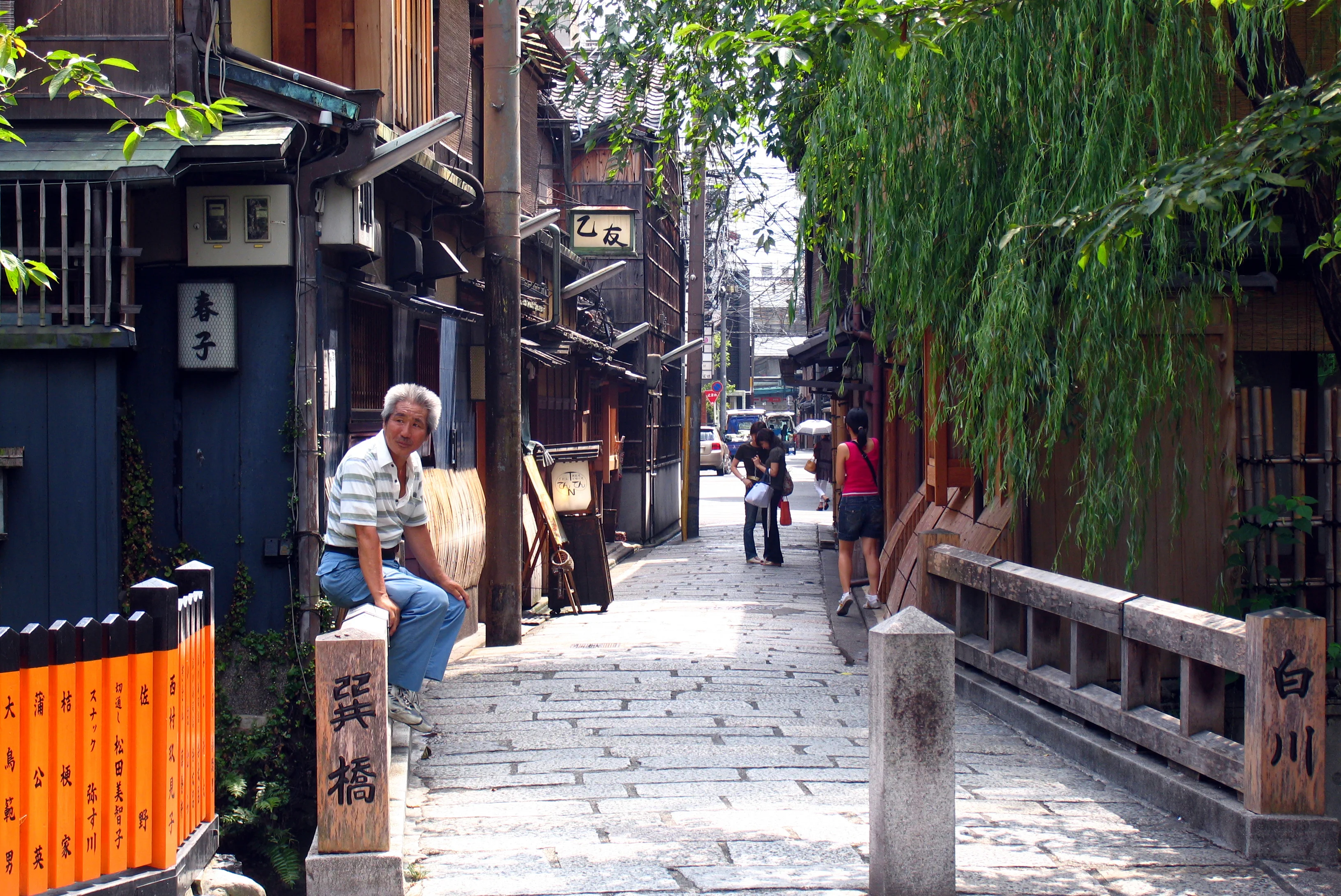
A multi-city Kansai trip adds a scheduling choice as well as a packing choice. Fewer back-and-forth transfers mean less time standing on platforms in changeable weather. Compare one Osaka base for Kansai with splitting nights between Osaka and Kyoto before treating the whole week as identical city conditions.
Osaka and Fukuoka: mild afternoons do not eliminate rain planning
In Osaka, the ordinary city layer works, but an evening in Shinsekai is a reminder that you may still be outside long after the warmest hour. Keep the jacket accessible rather than buried in a suitcase. If the schedule includes USJ and a Kyoto day, the four-day Kansai time trade-off may leave more standing and waiting than a relaxed city day. A warm layer earns space there even without winter temperatures.
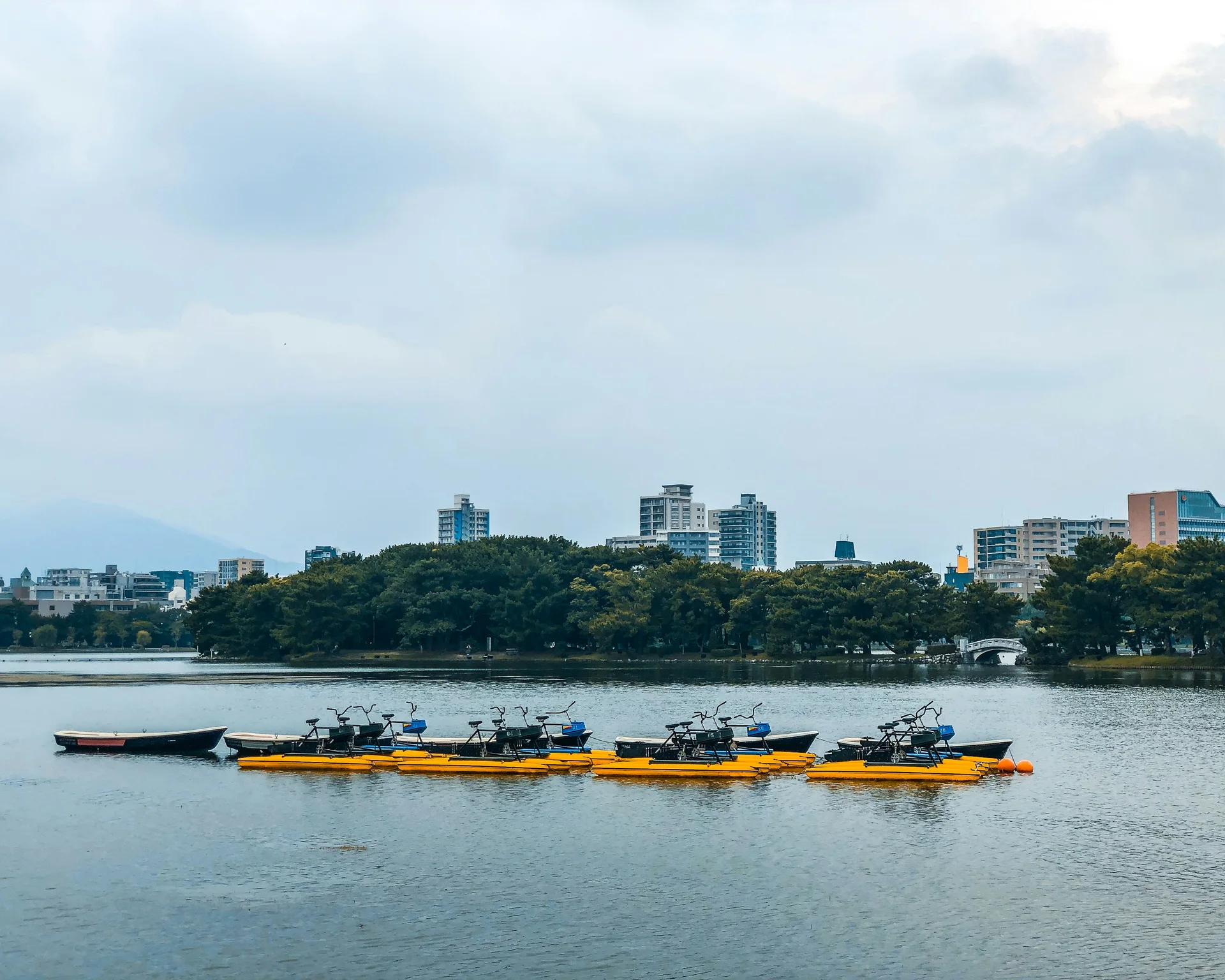
Fukuoka's 15.4°C normal mean and 11.5°C normal low sit in the same general spring range. For a short stay, a shell that blocks wind and handles a shower can work harder than a second thick sweater. Shoes are often the weak point on a wet walking day: a reliable pair that does not soak through easily and spare socks in the day bag can improve comfort more than another bulky top. The three-day city route shows how much of a Fukuoka visit can be walked; rain-access hotel choices matter when a wet last few hundred metres will recur.
Sapporo still needs a colder module
A Sapporo April mean of 7.3°C and low normal of 3.4°C do not support copying the Tokyo bag without adjustment. Add a compressible warm layer and a shell with useful wind resistance. Pay attention to footwear as well: snowmelt, damp pavement, slush and leftover ice are possible on different dates and routes. A central-Sapporo-only stay does not automatically require deep-winter boots or a large down coat. A rural, high or still-snowy Hokkaido excursion demands its own forecast and ground-condition check.
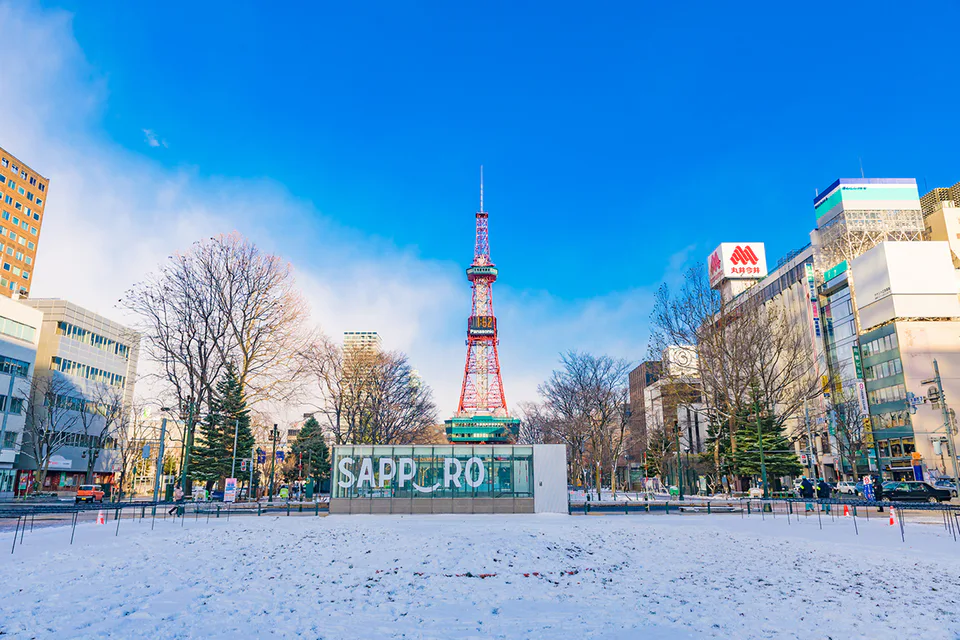
The pictured square is snowy, which illustrates one possible surface condition rather than a forecast for every April visit. Route choice matters. Two to four nights in Sapporo can be planned around city access, while the Hokkaido region and distance comparison shows why a city normal should not stand in for distant stops. If your stay starts at New Chitose after a late flight, the airport-to-city arrival choice changes how long you are outdoors with luggage. Treat the Hokkaido layer as one module attached to the city wardrobe, rather than packing a second complete suitcase.
Naha is warm, but an exposed coast has its own weather
Naha's April mean is 21.5°C, with a normal high of 24.3°C. Short sleeves and faster-drying fabrics make sense. A thin outer layer still has a job against showers, coastal wind and strong indoor cooling; it need not be a cold-city jacket. A warm air temperature alone cannot promise comfortable sea conditions. Boat, snorkeling and diving operations depend on wind, waves and the operator's decision on the day.
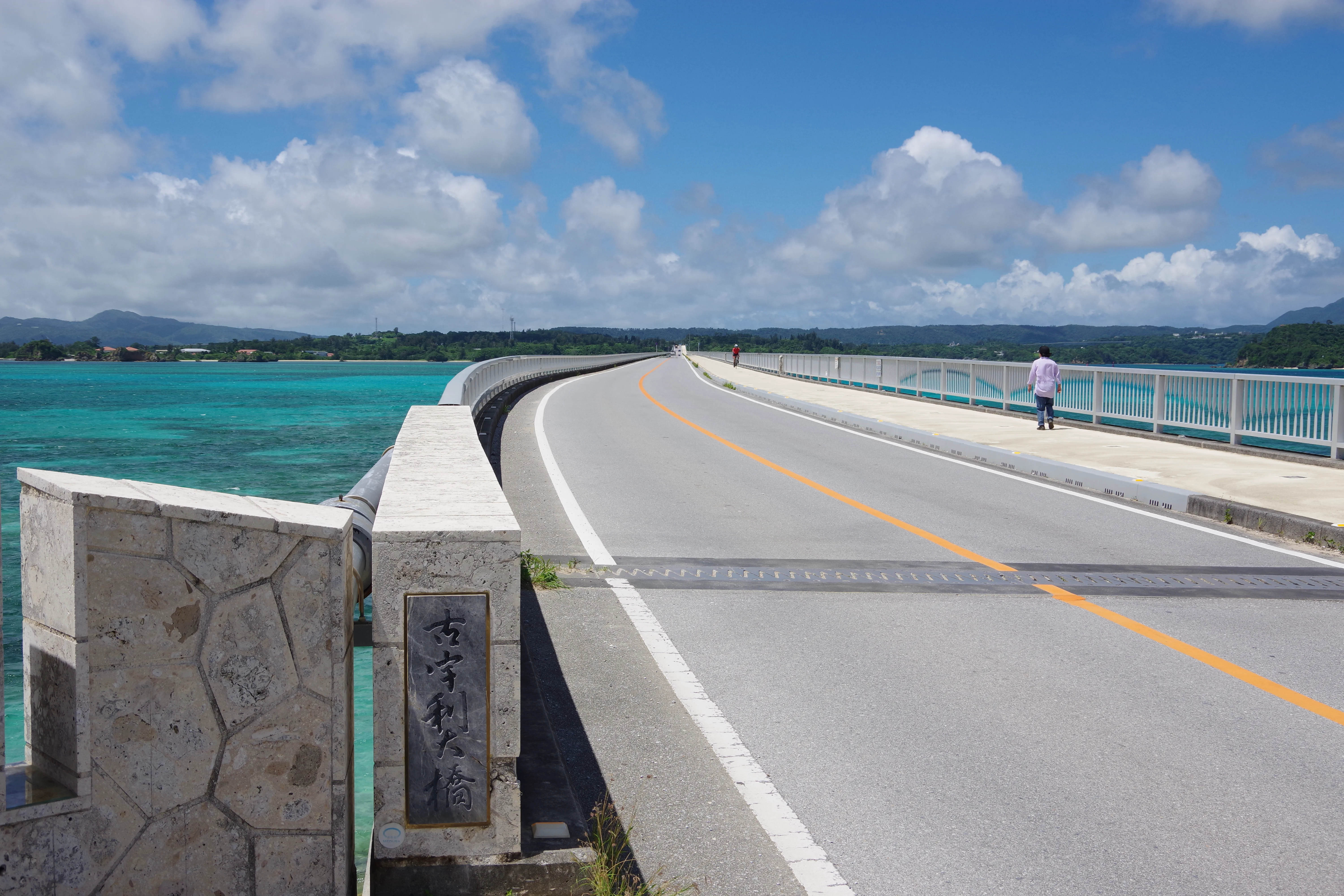
The image shows a road over clear water, not the sea state on your travel date. Use an Okinawa first-trip route to decide how much coastal time you actually have. If the islands are only one leg of a mainland trip, swap the thick mid-layer for breathable tops and keep the same light weather shell. That also makes a mixed Tokyo–Okinawa suitcase more manageable.
Snow walls are outside the city-temperature table
The Tateyama Kurobe Alpine Route's 2026 visitor season begins 15 April and runs to 30 November. A late-April traveller can leave a mild city and enter a high-elevation snow landscape on the same trip. Take insulating clothing beyond your city layer, wind resistance, gloves and head protection if conditions warrant, footwear with grip and water resistance, and sun protection for snow reflection. Toyama's city temperature is no substitute for the mountain forecast.
Selected early April–May Alpine Route services begin as early as 06:50, and connections at the other end of the route need attention. A very early departure also means colder exposure than a normal 10:00 city start. Confirm the service that matches your date before setting a hotel or onward train. The Toyama–Tateyama–Matsumoto itinerary helps place that alpine day among actual transfers. It is sensible to pack one compact snow kit for one mountain day, without hauling winter clothing through every Tokyo or Kyoto hotel.
Cherry-blossom queues and the last hour outside
Standing still can make a mild forecast feel cooler than it did while walking from the station. Sakura viewpoints, food queues, a picnic and an illumination can extend that exposure. Make the layer easy to remove and put back on; do not assume a midday high describes a dawn photograph or a night garden. A late-April Golden Week itinerary can have longer outdoor waits too, even though the monthly weather trend is warmer. If your trip shifts into early autumn or October, rebuild the clothing list from that season rather than reuse this spring one.
A useful packing check is to take the longest stationary period on the actual itinerary, then compare it with the hour of day. A traveller moving briskly between stations may need less insulation than someone waiting outdoors for a blossom photograph at dawn. The same jacket can be carried or tied around a bag during a mild afternoon and worn again after sunset. This is why a removable middle layer is more flexible than selecting one heavy coat for every Japanese city on the route.
The simplest April bag serves the mainland cities first: removable layers, a light shell and shoes you trust in rain. Sapporo adds insulation and a surface-condition check; Okinawa adds breathable pieces and a marine-weather check; Tateyama adds real snow gear. Inspect the outdoor hours on the calendar and the forecast close to each weather-sensitive day. That is a more reliable packing decision than treating the entire country as one spring temperature.
Other weather and route guides
Tokyo itinerary · Tokyo itinerary · Hokkaido Regions and Seasonal Itinerary Guide · Japan Meteorological Agency — Climatological Normals 1991–2020 · Tateyama Kurobe Alpine Route — 2026 opening period · Tateyama Kurobe Alpine Route — 2026 timetable · Japan November Weather: Tokyo Drops to 6°C by Month-End, Sapporo Turns Wintry, Okinawa Stays Warm · Japan December Weather: Tokyo Drops Near 2°C by Year-End, Sapporo Is Below Freezing, Okinawa Stays Mild · Japan January Weather: What to Wear in Tokyo, Sapporo and Okinawa · Japan July Weather: Kyoto Hits 32°C, Fukuoka Stays Rainy, and Hokkaido Is the Exception · SAPPORO HOTEL by GRANBELL: Is the 25th-Floor Hot Spring Worth It? · Sapporo Autumn Fest 2026: The One-Kilometre Food Route That Leaves Room for Dessert · Six People in Okinawa? One Big Room Is Often the Wrong Goal — Split Beds, Bathrooms and Bedtimes First · ONSEN RYOKAN YUEN SAPPORO: Is the Karurusu Hot Spring Worth a 13-Minute Walk? · Osaka for Couples: A 7-Day Itinerary That Saves the Best Nights for Kyoto, Kobe and One Big View
If Kyoto is the April base, compare Kyoto rooms for your spring dates and keep the colder northern legs as separate packing decisions.