
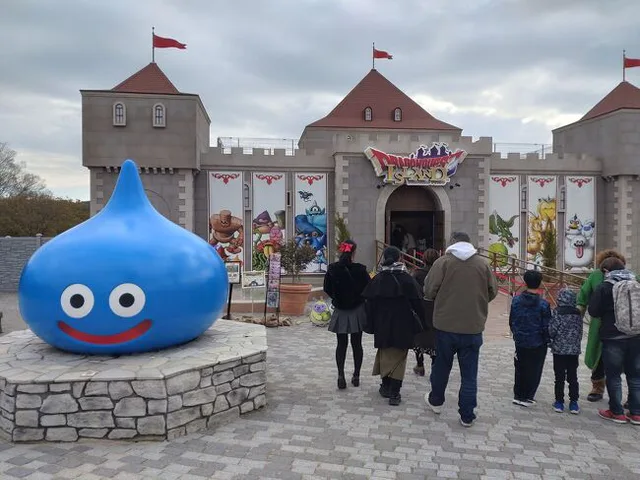
Nijigen no Mori sits inside Awajishima Park, and entering the grounds costs nothing. The paid decisions begin at the individual attractions: Naruto, Dragon Quest, Godzilla, Crayon Shin-chan and the time-limited Attack on Titan collaboration each have their own ticket and operating pattern. That makes a three-franchise shopping basket tempting, but it also creates the risk of paying for hours you cannot use. An Osaka or Kobe day trip has to absorb the highway bus or drive, walking between distant areas, food and the trip back. Choose one franchise that would justify the journey on its own, then test whether a second can fit.
The current admission and price schedule is date-sensitive. Adult Light tickets currently begin around ¥2,800–4,500 depending on the franchise and the day, while higher tiers buy specific missions, exhibits, ziplines or goods. These ranges are useful for choosing a category, not a final checkout quote. As of October 24, 2026 the Attack on Titan event still has a published December 13 end date; it should not be treated as a permanent park zone. The park's October operating notice also says a time slot showing no online stock will not reappear as a same-day ticket at the gate.
↔ Scroll table left or right
Attraction | Adult Light range shown by the park | What the basic ticket centers on | What needs a separate decision |
Naruto & Boruto Shinobi-Zato | ¥3,300–4,100 | Maze, mission rally and the main themed area | Gold adds a special mission; check the exact mission rather than buying the name |
Dragon Quest Island | ¥3,400–4,500 | Main outdoor quest | Gold adds a subquest; Premium chiefly adds named goods |
Godzilla Interception Operation | ¥2,800–3,600 | Pre-show, one zipline and cell-shooting activity | Gold adds the museum and special-effects content; zipline size rules still apply |
Crayon Shin-chan Adventure Park | ¥3,500–4,300 | Athletics-oriented access | Gold adds zipline and extra zones, subject to age and body-size limits |
Attack on Titan THE NIGHT WALK | ¥3,600–4,000 | A timed 1.2 km illuminated night route | The late slot and return journey can dominate the whole day |
The free gate turns ticket selection into a time budget
There is no general park pass that quietly covers all these worlds. The first question is which attraction you would regret missing, and the second is whether you can reach it with enough uncommitted time to enjoy it. Mission areas are not quick photo stops. They can involve briefings, puzzles, outdoor walking, waiting for an entry window and more walking inside the zone. A third major ticket competes with the work of moving through a large park, not merely with another line on the receipt. The Fuji-Q free-entry ticket comparison addresses a similar pricing illusion at a different park, while the Nagashima family-pass guide shows why identical tickets can fail a mixed-age group.
If your wider Kansai trip already contains USJ and Kyoto, the Awaji outing consumes a full day that has to come from somewhere. The four-day Osaka and Kyoto plan with USJ exposes that trade-off before you buy. The three-, four- and five-day Osaka comparison can help determine whether a separate island day is realistic. A seven-day stay gives more space, but the Osaka budget itinerary still shows why collecting admissions is not the same as getting value from each one.
The most robust first-visit structure has three blocks: a morning anchor IP, an unhurried food and movement interval, and one afternoon IP if conditions still fit. This is an editorial planning structure, not a timed park program. If the first experience runs longer than expected, the buffer protects it. If a child is tired or a shower changes the day, the second attraction can be reconsidered without having wasted a third prepaid ticket. Use the date's actual sales and cancellation conditions before making that flexibility assumption.
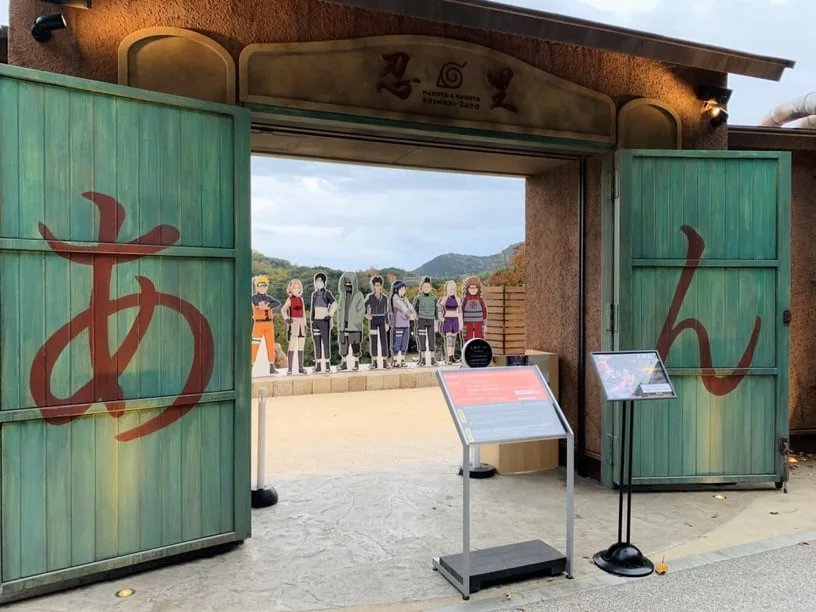
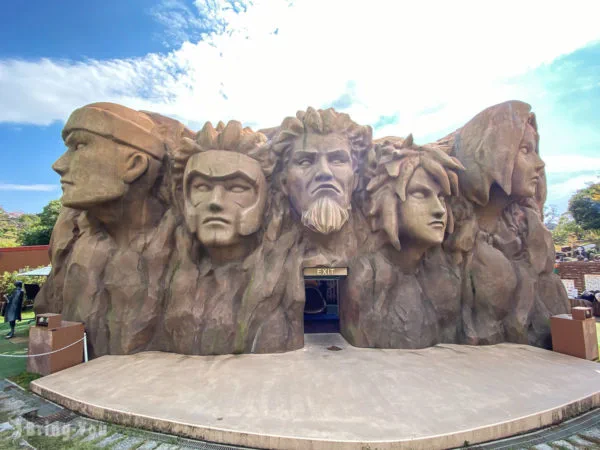
Naruto: the basic mission is already the point
The Naruto & Boruto Shinobi-Zato Light ticket covers the main entry, Heaven Scroll 3D maze, Earth Scroll mission rally and projection mapping after dark. The adult range on the Naruto attraction page is ¥3,300–4,100. Gold is ¥4,800–5,600 and adds one special mission; premium products rise sharply because they bundle more missions and merchandise. If you mainly want the world, character setting, maze and basic missions, Light has a clear job. If a particular special mission is why you came, check that content before paying for Gold.
“Fan” is not a ticket tier. A visitor who loves Naruto may value the base area more than an add-on mission, while a repeat visitor may come specifically for the extra content. The ticket's printed reception time also needs to fit the day. An after-dark projection feature does not mean a daytime visitor should budget as though every element can be completed before lunch. Decide whether evening time is part of your Naruto plan before adding a second large IP elsewhere in the park.
For families, a young child entering for less or under a special age rule does not erase the accompanying adult's admission. The park's published terms require an adult guardian for certain child ages and attractions. Match the child's age to the exact maze or mission conditions rather than treating the franchise as a universal easy choice. If your Kansai holiday is built around attractions for children, Osaka attractions by age and stroller needs gives a broader comparator for the day you are giving up.
Dragon Quest: Gold changes the play, Premium changes the goods
Dragon Quest Island Light presently covers entry and the main quest, with adult prices in the ¥3,400–4,500 range. Gold, ¥5,400–6,500, adds the subquest. Premium, ¥12,400–13,500, adds premium goods to the Gold contents. The Dragon Quest ticket description makes the nature of those upgrades unusually easy to separate. A traveller who wants the main story and outdoor quest can begin with Light. Someone who will genuinely pursue the subquest has a reason to consider Gold. Premium only makes sense if the named merchandise has value to you independently of the admission.
The full quest is an activity that asks for real time; it is not an entrance arch that can be photographed in ten minutes. That makes Dragon Quest a strong anchor and a poor third after two other time-consuming franchises. If the party starts at Dragon Quest, reserve space for walking, lunch and any puzzle that takes longer than expected before the next reception window. An add-on ticket cannot make the first story shorter. For a four-day Osaka trip, this is why the Osaka neighborhood grouping guide can be more useful than another attractions list: every cross-town or cross-island move has a cost.
The range also varies by date, so a screenshot of a low-price day is not a quote for your visit. Compare the actual date and tier before a partner sales page, hotel package or coupon. If the subquest is not likely to fit before your bus home, the cheaper Light ticket is an accurate purchase rather than a compromise.
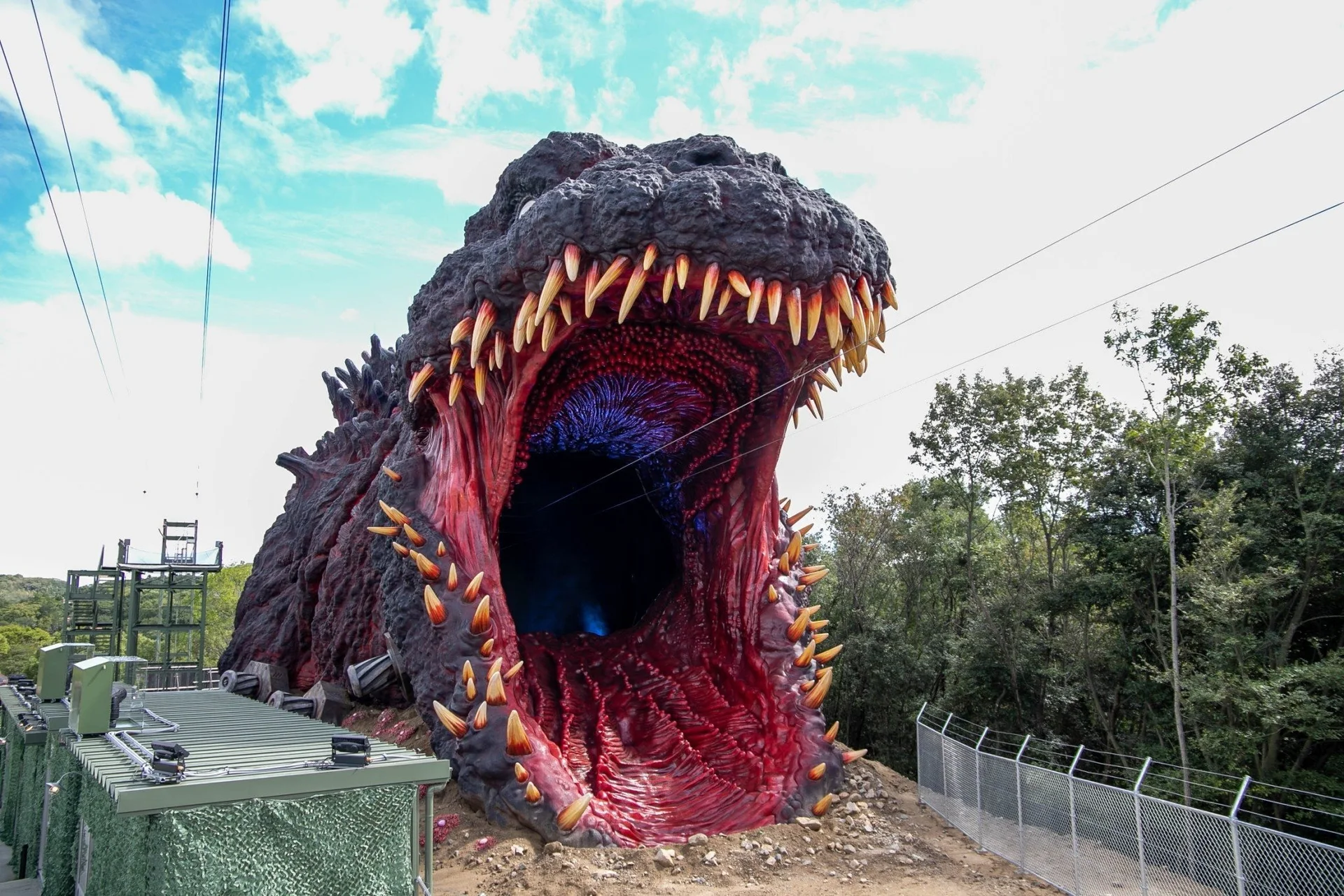
Godzilla: the zipline is not reserved for the expensive tier
Godzilla's Light ticket already lists a pre-theater segment, one zipline experience and Godzilla Cell Shooting. The adult range is ¥2,800–3,600. Gold, ¥4,800–5,600, adds the museum and special-effects studio. Film fans who came to see those exhibits should not assume the lowest ticket is complete; visitors who mainly want the enormous set piece and one physical ride may find Light sufficient. The Godzilla attraction details explain the content that actually changes between tiers.
The zipline has eligibility limits: at least 120 cm tall and 25 kg, and below 110 kg. Measure the child before building a family itinerary around that headline activity. The same group may need different ticket decisions if one person cannot use the zipline. Ask what child-specific options remain under the current ticket type rather than expecting staff to waive a physical limit. The park's September 2026 notice also changed pricing at manned on-site Godzilla counters, which gives another reason to distinguish the published online range from a walk-up purchase on your date.
Godzilla can be a useful second IP after a long mission area because the reason for going is more sharply defined: one large model, a ride if eligible and perhaps the museum. That is a planning judgment, not a promised duration. The pre-show, queues, weather and moving across the park still take time. If the group primarily wants a weather-safe animal or aquarium day instead, Kobe Animal Kingdom's half-day decision and Osaka Aquarium timing answer different, more sheltered activity questions.
Shin-chan: measure before you upgrade the family
Crayon Shin-chan Adventure Park's Light tier centers on athletics access and currently lists an adult range around ¥3,500–4,300. Gold rises to about ¥5,600–6,400 and adds a zipline and additional themed areas; Premium adds more puzzle content and access. The Shin-chan ticket page has separate child and smaller-child pathways. It is a mistake to buy identical higher tiers for every family member and assume everyone receives the same usable activities.
Height and weight thresholds around 120 cm and 25 kg affect several of the park's adventure experiences. They matter before the cash difference. If the child cannot use the headline Gold addition and the adults do not intend to do it separately, more expensive tickets may leave the family fragmented. If a child's own course is the primary attraction, compare that course and age eligibility directly. The Osaka family hotel comparison is relevant when an Awaji day is part of a stay whose morning and evening routines already stretch children's energy.
Attack on Titan changes the return, not just the admission
The Attack on Titan collaboration is scheduled through December 13, 2026. Its THE NIGHT WALK uses roughly 1.2 km of forest path with projection and sound. The park describes about 90 minutes of experience time, with changes possible when crowds or conditions require. Adult tickets currently range from ¥3,600 to ¥4,000, and the event page lists the limited run. The current event page shows evening hours and a last reception around 20:30; opening time can change with sunset or the operating date.
The walk is not a fourth quick stop after Naruto, Dragon Quest and Godzilla. It pushes the end of the visit into the night, after a full outdoor day, and it changes the last bus or drive calculation. Strollers and wheelchairs are not usable on the night route under the event rules. A family needs to decide whether a 1.2 km forest walk and a late journey back are realistic before adding it to a daytime basket. Check the operating notice for the exact visit date and use the facilities before the walk; the event information says there is no restroom inside the route.
If the night event is the reason for the trip, give it the main place in the schedule: one daytime IP, an actual dinner and rest interval, then the evening entry. That protects the experience from the fatigue caused by trying to justify every earlier ticket. The Kobe versus Osaka hotel-base comparison helps when the late return determines which city is a workable base. Do not project the 2026 end date into 2027 without a new announcement.
Timed reception is a real constraint, but not a one-hour ride limit
The park's October 2026 operating information clarifies two points that seem contradictory at first. Same-day tickets may exist, but if the online inventory for a particular time is gone, that slot is sold out and will not be sold at the on-site desk. The time printed on a ticket is a reception period, not an instruction to finish the attraction inside sixty minutes. A 10:00 entry, for example, gives a check-in window during that hour; the attraction itself may take longer.
That makes tightly stacked windows fragile. The first paid zone can use the time it actually requires, while the second still has a check-in window. Leave a substantial walk and meal interval between two major tickets. The park may be able to direct a delayed guest to another available slot during business hours, but that is not a promise of open-ended entry. If a particular attraction is essential, secure that one first; leave the secondary purchase until you can see availability and the day's transport constraints.
Weather and peak traffic add another layer. The outdoor experiences can change or close when conditions require; summer heat slows walking and can make a queue feel much longer. Awaji Island roads and parking can become busy on popular dates. The Osaka rainy-day attraction guide is not a direct substitute for every IP, but it can help avoid protecting a bad-weather island plan simply because multiple tickets were bought early.
Osaka and Kobe access is a door-to-door calculation
Nijigen no Mori is in Hyogo Prefectural Awajishima Park. The park access page gives attractive headline journeys of about an hour from Osaka and around half an hour from Kobe. There is no rail station at the attractions. A public-transport day starts at the hotel, continues to a highway bus boarding point such as Umeda, Namba, Sannomiya or Maiko, then ends with the walk from the correct park stop to the first IP. The return bus matters just as much, especially after Attack on Titan.
The Namba versus Umeda hotel comparison is useful because a nominally better hotel can add an unnecessary first transfer to the bus. The broader Osaka area choice becomes relevant if Awaji is only one day in a longer stay. The Kobe day-trip hotel guide similarly makes station access part of the day, rather than a footnote. If the trip is already based in Kobe, Sannomiya versus Shin-Kobe can determine whether Awaji is a simpler outing than a separate Osaka out-and-back, but the exact bus route and timetable still need a date-specific check.
Drivers should choose the first IP before parking. The park's access guide places F Parking Lot closest to Dragon Quest Island and Godzilla; E is closer to Naruto, Shin-chan and the Attack on Titan side. Parking near the first anchor can preserve more energy than saving a small amount on a ticket channel. The Osaka and Kobe route guide helps decide whether Awaji belongs after Kobe or on a separate day. Do not use the “one hour from Osaka” headline as the full hotel-to-gate estimate.
↔ Scroll table left or right
Start of day | Sensible first anchor | Transport detail to settle |
Osaka hotel, public transport | The IP you cannot miss | Hotel to highway bus boarding point, park stop and last return service |
Kobe or Sannomiya hotel | IP matched to the bus stop | Whether the Kobe-based journey actually saves a transfer for your date |
Rental car | IP nearest E or F parking | Chosen lot, cross-park walk and peak-day road conditions |
Night-walk visit | One daytime IP, then Attack on Titan | Dinner buffer and a realistic late departure from Awaji |
Payment comes after five checks
Before paying, settle the visit date's live price and reception window, each child's actual height and weight, the locations of the first and second IPs, the return bus or drive, and the end date of any limited event. Then compare sales channels on identical inclusions. A ticket displaying the same franchise logo can have different missions, merchandise, admission windows or cancellation terms. The cheapest visible option is only a saving if it buys the experience you have time and eligibility to use.
Three major paid IPs are possible for an unusually focused group, but they are a poor default for a first visit. A sensible visit has one clear reason to go and enough free time for the park around it. If Naruto or Dragon Quest is that reason, choose its tier based on the precise added mission. If Godzilla or Shin-chan is the attraction for a child, check physical criteria before the upgrade. If Attack on Titan is the primary draw, let its night finish shorten the daytime list. The Osaka attractions map can help compare what a Kansai city day would otherwise contain, while Kyoto versus Osaka as a base determines whether Awaji needs an additional transfer before the highway bus.
For an Awaji or Kobe night around the park, compare rooms near the Awaji Island and Kobe route. The lodging choice is useful when it shortens the return after an evening event; it does not solve a day overloaded with separate tickets. Keep one anchor IP, a transport plan and enough unsold time to enjoy the experience you paid for.