
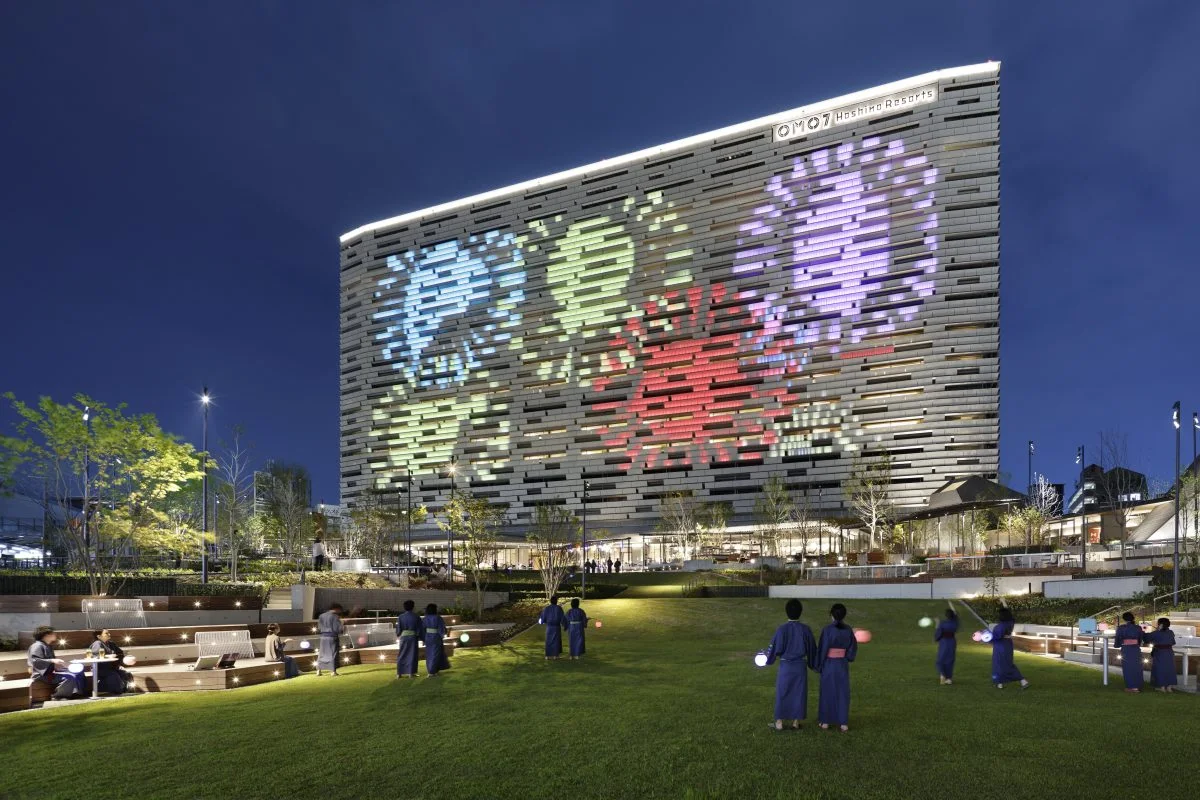
OMO7 Osaka works when several parts of a trip point toward Shin-Imamiya: a Kansai Airport arrival, time in Shinsekai or Tennoji, a USJ visit that ends early enough for the hotel bus, and an evening spent at the hotel. Its distinctive facilities are less useful to a guest commuting north each day and arriving back after the night event closes. The latest PIKAPIKA NIGHT programme runs 19:30–21:30, with last entry at 21:20; the USJ return buses leave at 17:30 and 18:50. Yuya bath costs ¥1,000 per person per night. Those clocks and charges belong in the booking decision.
Count uses rather than amenities. The direct airport train may help on the first and last day. A shuttle might help on one USJ day. Miya-green, neighbourhood walks, shared room space, the night festival and the bath could matter on several days, but only if the group returns at the right hour and wants them. A four-night rate premium needs repeated benefits to justify itself.
The trips for which Shin-Imamiya pays back
↔ Scroll table left or right
Travel pattern | Likely fit | Benefit | What weakens it |
KIX at both ends, southern Osaka time, USJ ending early | Strong | Several journeys and evening facilities align | Repeated Umeda or Kyoto days and late finishes |
One night after a late KIX arrival | Useful station stay | Rapi:t reaches Shin-Imamiya in about 37 minutes | A terminal-area room better suits an exceptionally early next departure |
Shinsekai food streets appeal to the party | Stronger | Neighbourhood walks and local dinner are close | A commercial Umeda or Namba doorstep is the actual preference |
USJ until closing | Shuttle has little return use | Rail remains available for the late journey | Do not price in a 17:30 or 18:50 bus you will miss |
Four to six in one shared room | Consider IDOBATA | A 59-square-metre lounge and four permanent beds serve a group | The fifth and sixth guests get sofa beds, not matching fixed beds |
Three or four nights mostly in Umeda, Kyoto or Shin-Osaka | Compare a northern base | Daily northbound travel repeats while the airport ride does not | Frequent Shinsekai time or hotel evenings could restore the value |
A station-front address helps only when the journeys point the right way
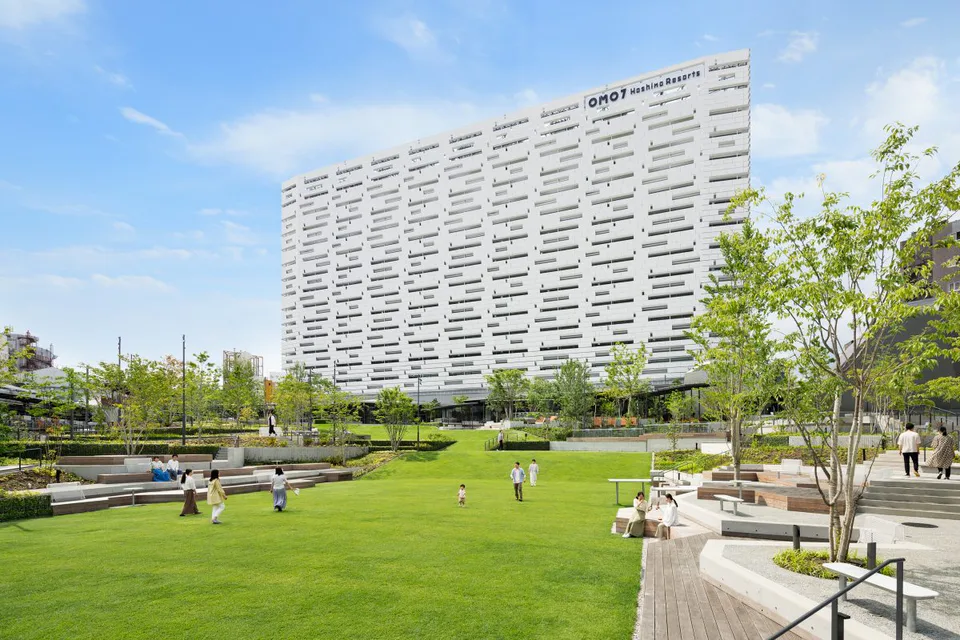
OMO7 stands beside JR Shin-Imamiya’s East Exit and Nankai Shin-Imamiya’s North Exit; Dobutsuen-mae on the Osaka Metro is another approach. That location makes three kinds of journey relatively simple, but it does not make all Osaka districts equally close: access.
KIX: the Rapi:t airport train takes around 37 minutes to Shin-Imamiya.
South Osaka: Shinsekai and Tennoji can become easy neighbourhood outings.
Osaka Loop Line: Umeda remains reachable, but repeated northbound journeys still cost time.
Nankai Rapi:t takes about 37 minutes between Kansai Airport and Shin-Imamiya. That is an attractive arrival, but it happens once or twice. If the next three complete days repeatedly start around Osaka Station or Kyoto, those journeys deserve more weight than the first train from KIX.
For evenings based around Dotonbori and Shinsaibashi, compare a Namba hotel with this Shin-Imamiya address. A Umeda room may make more sense for repeated Kyoto, Kobe or Himeji departures. Use the full daily pattern rather than the phrase “near Namba.”
Shinsekai is part of the hotel choice
Tsutenkaku, Janjan Yokocho and kushikatsu shops shape the streets around nearby Shinsekai. OMO7 offers a guided neighbourhood walk and builds its hotel activities around this south-Osaka setting. Guests who want those food streets and the retro district close at hand can treat the location as an experience they may use repeatedly. OSAKA-INFO — Shinsekai tourism guide.
That works particularly well when sightseeing ends nearby. Dinner can remain local before a short return to the lawn or the event space. The group does not need to make a separate Namba trip solely to find an interesting evening. A traveller drawn to Tsutenkaku and the local restaurants may therefore get more from Shin-Imamiya than a hotel in a conventional commercial centre.
Someone who would rather step out into department stores, an office district or the busiest central shopping streets is making a different neighbourhood choice. Shin-Imamiya does not reproduce Umeda outside the hotel gate. The rate should reflect whether the actual surroundings appeal to the party, not a generic claim that an “Osaka base” works everywhere.
This is an itinerary fit question, not a warning about visiting Shinsekai. Its food lanes and landmarks are established sightseeing stops, and the hotel actively introduces guests to the district. If your plans bypass it from breakfast until bedtime, give the neighbourhood little value in the room comparison.
For a multi-night reservation, let daily geography and the desired street atmosphere choose the base. Let the airport ride act as a useful supporting benefit.
What keeps earning value after the arrival day?
Place each proposed hotel advantage beside the number of times it will actually be used. This simple tally prevents a one-off transfer from dominating a longer stay.
↔ Scroll table left or right
Feature | How often it might help | When to reduce its value |
KIX / Nankai approach | Arrival and possibly departure | Flight uses Itami or another final hotel |
Shinsekai and Tennoji setting | Several days or evenings | Every meal and activity is elsewhere |
Reserved USJ bus | One park day | You intend to remain in the park late |
PIKAPIKA NIGHT FESTIVAL | Evenings ending before 21:20 | The group comes back after admission closes |
Paid Yuya bath | Each night a guest elects to use it | Late returns or no interest in public bathing |
Group room and common table | Every time the party gathers indoors | Only two guests need a place to sleep |
OMO-to-OMO luggage delivery | A justified airport-hotel move | No hotel change or bag size makes delivery poor value |
On a single overnight, the station might do almost all the work. Over three or four nights, the room arrangement, direction of day trips and feasible return time take over. A facility listed on the website has no value to a party that is out whenever it operates. a four-day Osaka itinerary with USJ.
PIKAPIKA NIGHT now ends at 21:30
The refreshed PIKAPIKA NIGHT FESTIVAL began on 25 September 2026. Its current daily schedule is 19:30–21:30 on the second-floor OMO Base, with the interactive Bon Dance around 20:30–20:50 and last admission at 21:20. Entry is free and needs no reservation; food and games carry separate charges. Plan against those hours, rather than an earlier version of the programme that ended at 22:00. OSAKA PIKAPIKA NIGHT.
An earlier summer-festival overlay ended in August 2026. The newer festival has food, games and a dance around a large Billiken figure, and it is presented as the current year-round evening format. The exact activity details can change, so the useful fixed question for your trip is whether you will be inside the hotel before its last admission.
A family returning at 19:30 might still eat, join the dance and use the hotel lawn. A group that regularly comes back after 21:20 cannot enter the event. If three itinerary nights fall into that latter pattern, remove the programme from the value you assign to OMO7 before comparing room rates. Osaka evenings by base.
USJ’s free bus is built for an earlier park finish
The guest-only shuttle is free, reserved and normally takes around 30 minutes. The current published departures are:
OMO7 to USJ: 08:00–08:30 or 09:20–09:50.
USJ to OMO7: 17:30–18:00 or 18:50–19:20.
The return pickup is at the first-floor bus depot of Hotel Kintetsu Universal City, roughly a three-minute walk from the park. Bookings can be made until boarding while seats remain. The vehicle leaves at its scheduled time; traffic or weather may delay or cancel service, so a fixed onward plan needs margin.
A free ride home has no return value if the family intends to stay until closing, eat inside the park or attend a late seasonal event. In that case, plan the rail journey back from Universal City. The hotel bus is useful for a particular sort of USJ day, not evidence that Shin-Imamiya is equivalent to sleeping at the park gate.
An intentional 17:30 or 18:50 park exit can work well: a seated ride, arrival at OMO7 around 18:00 or 19:20, then a chance to join the 19:30–21:30 hotel programme and perhaps use the bath. The later bus leaves a tight margin for the event, so a delayed journey could erase that portion of the plan. an Osaka trip with children.
Yuya is a paid bath, with a midnight closing time
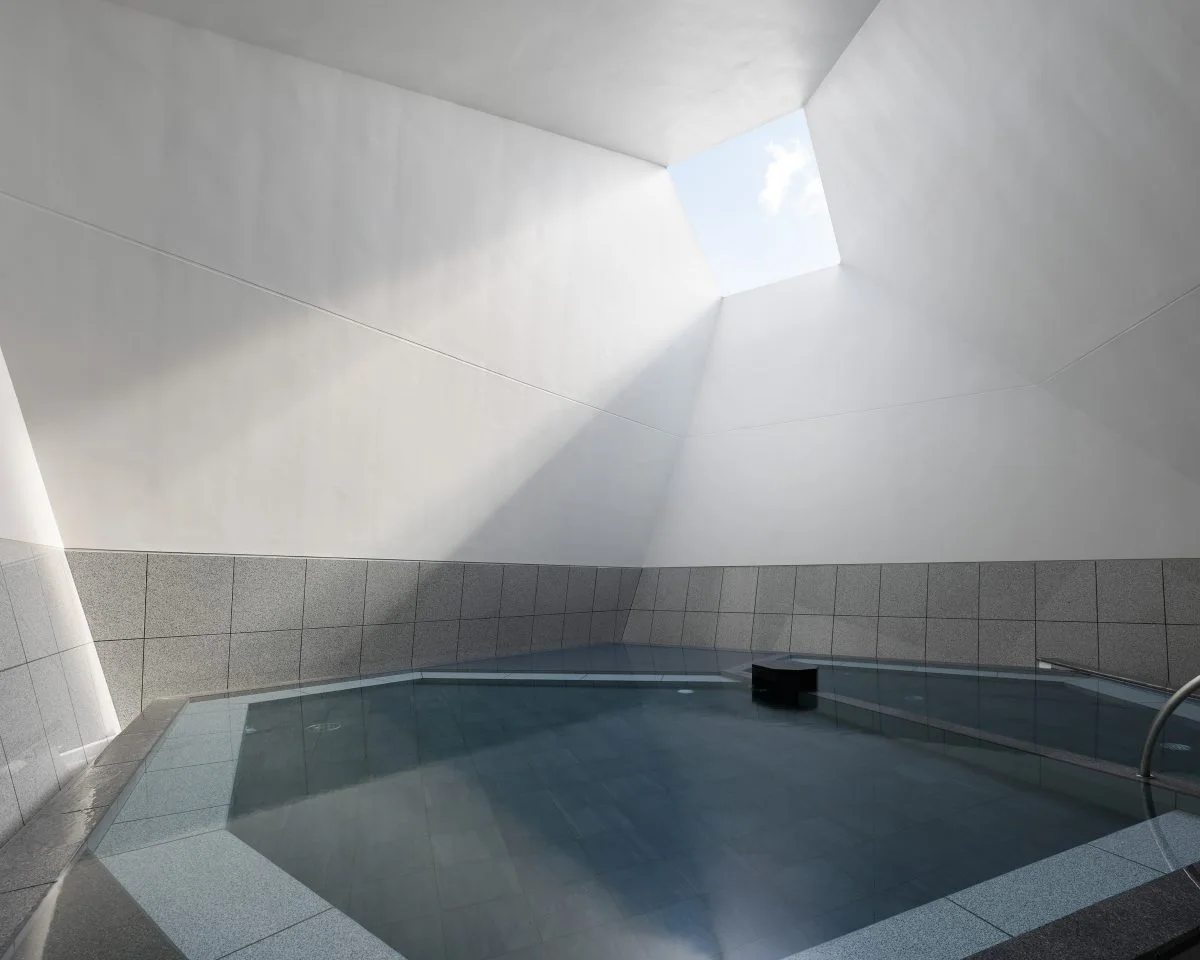
Yuya operates 06:00–10:00 and 15:00–00:00. The guest charge is ¥1,000 per person for each night of use; children under six enter without charge. This is a public bath, not a natural hot spring. Children in nappies cannot enter the main tub and must use the baby bath. Those conditions matter more than the label “bath hotel” for a family booking. Yuya public bath.
Two adults paying on all three nights would spend ¥6,000. If they would go once, the cost is ¥2,000 for that one couple visit. Treat it as an optional expense in the total, and count who in the party will actually use the bathing facility.
A return before 21:00 after a long walking day leaves room for a leisurely bath. A late USJ return may still precede midnight, but changing, eating and reaching the bath can make the remaining window short. The facility has most value for travellers whose evenings finish relatively early.
DANDAN and IDOBATA solve different room problems
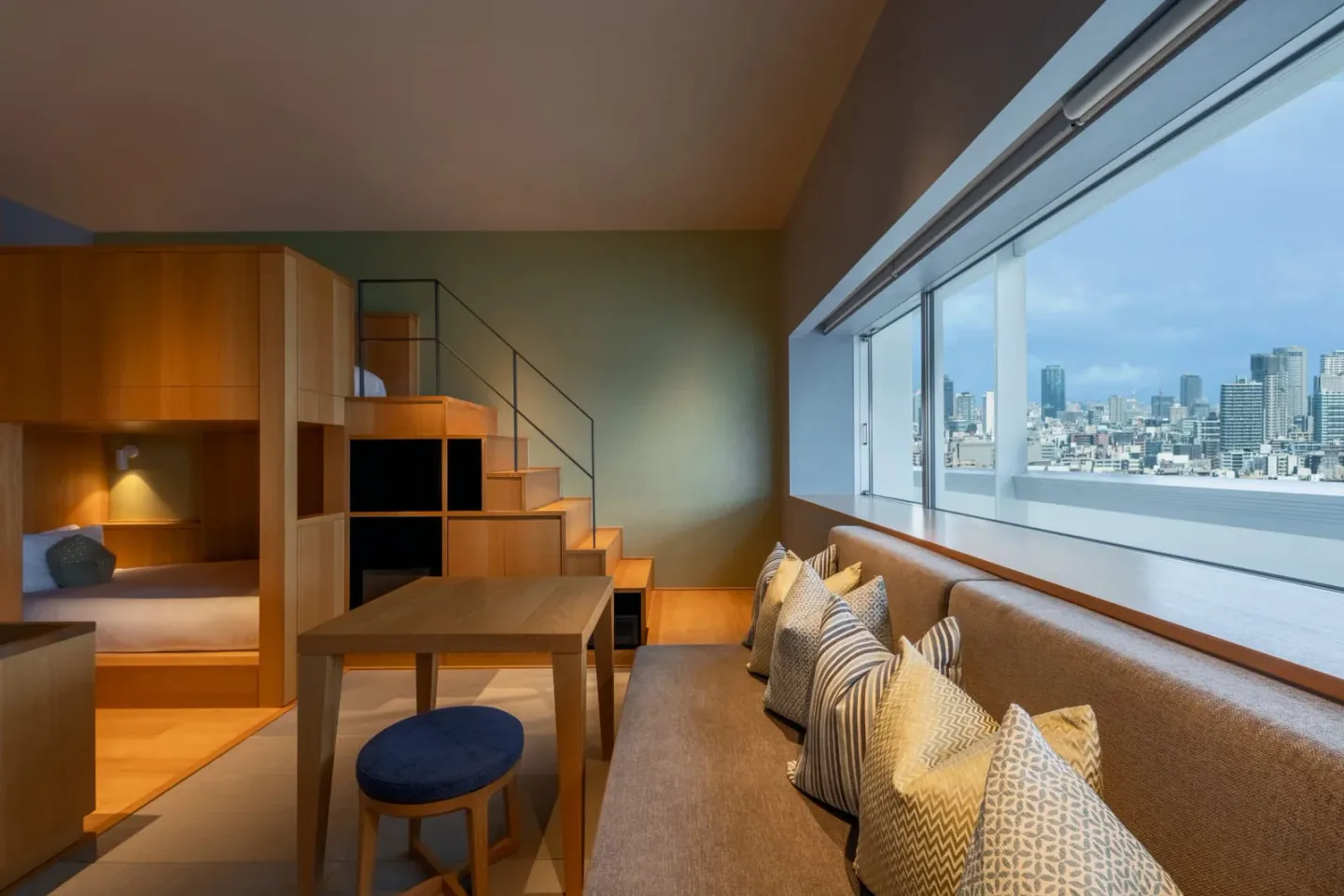
The DANDAN Room is 29.6 square metres for one to three guests. Its two main sleeping places are 105 × 200 cm beds in a tiered arrangement, and the third is a 90 × 200 cm sofa bed; guests set up the additional bedding themselves for three-person occupancy. A third guest therefore does not receive a bed identical to the other two. OMO7 Osaka hotel page. OMO7 Osaka neighbourhood activities. USJ shuttle. beds for a small group.
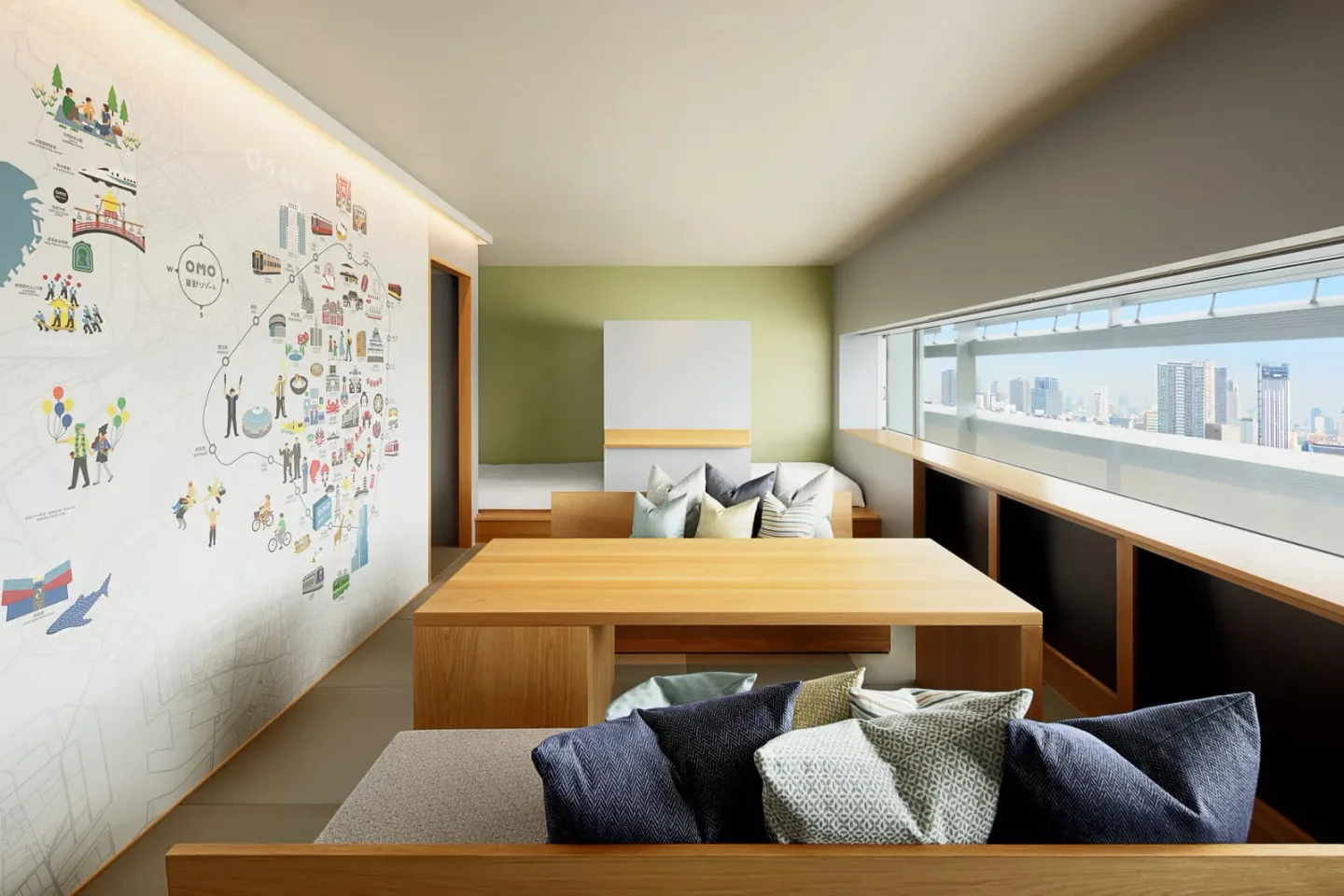
IDOBATA Suite has 59 square metres, a shared table and lounge, four fixed 120 × 200 cm beds placed around the space, and a maximum occupancy of six. Its partitions give the four bed spaces some privacy. That is a clear option for four travellers who want to meet, plan and eat in one room instead of buying two separate compact rooms.
The fifth and sixth IDOBATA sleeping places are 90 × 260 cm sofa beds, which guests set up themselves. A six-person occupancy limit should not be presented as six equivalent conventional beds. Price the suite only after every traveller agrees on who will use the sofas and how they will share the one room’s bathing space.
For a couple, much of the 59-square-metre layout may be unused. Its strength is circulation and a communal base for a group; two people who will spend most of their time outside might prefer the smaller room or a different neighbourhood. Judge the suite against the actual group and the premium quoted for your dates.
Length of stay changes the recommendation
One night: airport and station access do most of the work
After a late KIX landing or before an early south-Osaka start, the station-front address can be the main reason to stay. If you will go straight to bed and leave after breakfast, do not pay much extra for an event, lawn or bath that the schedule excludes.
Two nights: an early-return USJ plan can connect the facilities
One coherent sequence is a Shinsekai evening after arrival, then the USJ shuttle the following day, an early return, and time at OMO Base before bed. This uses the bus and the hotel programme while respecting their actual hours. Check the park’s dated closing time first; a family determined to stay later should not force the hotel bus into the plan.
Three or four nights: repeated routes matter more than KIX
Plot each complete day and where dinner ends. Two or three evenings in Shinsekai, Tennoji or nearby Namba can make OMO7 a useful base, especially if the party spends time on Miya-green. Several Umeda, Shin-Osaka or Kyoto days followed by returns after 21:20 make the airport arrival a comparatively small part of the stay.
An OMO-to-OMO luggage transfer can ease a justified airport night
OMO7 Osaka and OMO Kansai Airport offer a baggage-delivery service between the two properties. Web booking closes at 23:00 the previous day and the bags must reach the sending hotel desk by 09:00. Prices begin at ¥500 before tax for a handbag; a cabin-sized bag is listed at ¥1,500 and a checked-size case at ¥2,000 before tax. The size and price of each piece should be checked before assuming every suitcase qualifies for the starting rate. OMO7 Osaka–OMO Kansai Airport luggage delivery.
Without that service, a split stay can mean carrying cases through the train and another check-in before seeing more of Osaka. Sending the main luggage lets the party keep a day bag and collect the larger bags at the next hotel after the stated delivery time. It reduces the effort of a move that already makes sense.
An airport night still needs a reason such as an especially early flight or a strong preference for a short departure morning. Delivery cannot make an unnecessary hotel change worthwhile. Compare the additional room rate and the bag fees with simply taking the train from Shin-Imamiya on flight day.
When another Osaka district is a better purchase
Move OMO7 down the shortlist if several of these apply at once:
Most whole days point to Osaka Station, Shin-Osaka or Kyoto.
Evenings usually end after PIKAPIKA admission closes at 21:20.
The park day ends later than the return buses.
The group does not want Yuya or the shared hotel spaces.
The party prefers a central commercial district over nearby Shinsekai.
Two guests can buy a better-placed, smaller room for materially less.
KIX is only one journey while another hotel shortens several daily trips.
For JR day trips to Kyoto or Kobe, inspect Osaka Station hotels. For evenings in Dotonbori and Shinsaibashi, compare Namba and Umeda. If USJ itself takes two long days, a Universal City base may remove more travel than the OMO shuttle.
Three room-and-itinerary examples
Four relatives arriving at KIX, then visiting USJ
The train arrival, four permanent IDOBATA beds and a USJ day ending in time for the hotel bus can reinforce one another. Compare the 59-square-metre suite’s full price with two rooms elsewhere, including who would sleep on sofa beds if the family exceeds four. Keeping everyone behind one door helps only if the sleeping assignments are acceptable. Osaka hotels for four to six.
A couple spending four evenings out late
Namba may be a better first comparison. A good airport arrival does little to offset four journeys home after PIKAPIKA has closed. If neither guest wants the paid bath or neighbourhood walk, the distinctive OMO7 facilities are largely absent from the trip. Osaka for couples.
Two adults staying one night before a KIX flight
Shin-Imamiya works when the flight leaves late enough for a calm direct train journey. For a very early departure, compare an OMO Kansai Airport night and the actual luggage-transfer charge. Rapi:t access alone does not settle the final-night question.
Seven site scores for OMO7 Osaka
Dimension | Site score | Why this mark fits OMO7 Osaka |
|---|---|---|
Location | JR and Nankai Shin-Imamiya are close and KIX access is direct; repeated northbound Osaka days reduce the advantage. | |
Room | DANDAN uses a tiered bed layout, while the 59 m² IDOBATA has four permanent beds; check sofa-bed assignment for larger groups. | |
Cleanliness | The current aggregated guest cleanliness category is about 9.1/10. | |
Service | The aggregated staff category is about 9.0/10; local guides also run the timed evening programme. | |
Facilities | Miyagreen, the night festival and optional Yuya bath offer several distinct uses, although Yuya adds a fee. | |
Food | On-site meals and festival snacks add convenience, but a guest spending evenings in Osaka restaurants may scarcely use them. | |
Value | The rate works best when station access, group bedding and hotel evenings pay back across several days. | |
Overall | A strong south-Osaka base when its routes and evening timetable actually match the trip. |
The /10 scores use this hotel’s Shin-Imamiya routes, published bed layouts, paid bath and current night-event schedule. Cleanliness and Service reflect aggregated guest categories; the other marks are site judgments for a stay that includes both city travel and time at the hotel.
Choose the base by the days you repeat
OMO7 can bring together KIX access, Shinsekai or Tennoji time, an early-return USJ day and evenings inside before the 21:20 event cutoff. In that pattern, Shin-Imamiya is a deliberate route choice rather than a fallback.
The surrounding district must also fit. Guests who want kushikatsu streets, Tsutenkaku and south-Osaka nightlife may enjoy those surroundings each evening. Guests who intend to bypass Shinsekai and prefer a shopping-district doorstep should give this part of the hotel offer little weight.
If the airport is the only journey pointing south, repeated northbound commutes can overwhelm that first easy arrival. Remove the shuttle, festival and bath from the comparison whenever the group’s actual hours make them unusable or undesirable. A free service that misses your schedule is worth nothing to your booking.
DANDAN suits up to three when its tiered beds and sofa assignment fit. IDOBATA gives four people a shared 59-square-metre room with four permanent beds; five or six guests add sofa beds. For a valid final-night airport move, the inter-hotel bag delivery may remove some of the usual luggage work. Choose among those benefits by repeated use and exact total price. Namba vs Umeda. Osaka Station hotels for Kyoto and Kobe day trips. Universal City, Umeda and Namba for USJ. 35 Best Things to Do in Osaka 2026: What’s Worth Your Time by Area, Budget and Trip Style. Osaka Kuromon Market Food Tour 2026: You’re Paying for a Guide, Not the Food. 10 Days in Japan: Tokyo, Kyoto and Osaka Without Turning the Trip Into a Transfer Marathon. Niseko vs Rusutsu: Which Ski Resort Is Better for Your Hokkaido Trip?. Osaka five-day itinerary.
Compare OMO7 Osaka and nearby Shin-Imamiya rooms
Compare the exact room category, bedding and cancellation conditions for your dates.
Use the same guest count and breakfast choice when comparing another Osaka base.
Hotel, neighbourhood and transport details
Room layouts, station access, neighbourhood activities, the bus, bath, evening programme and luggage transfer are linked here so you can inspect the service that matters to your dates. The current event closes at 21:30 and its last admission is 21:20.
More Osaka and lodging guides
More routes and stays: Tokyu Stay Osaka Hommachi: Is It the Right Base for Five Nights? · Niseko vs Furano: Which Ski Base Is Better for Your Hokkaido Trip? · Where to Stay in Osaka for a Guys Trip: Beds, Two Bathrooms and the Late Ride Home Matter More Than Price Per Head · Where to Stay in Osaka for Couples: Choose Your Evening Before the Hotel · Early Shinkansen from Osaka: Should You Stay in Shin-Osaka or Move Only for the Last Night? · Fukuoka Concert Hotels: Pick Your Base by the Trip Home After PayPay Dome or Marine Messe · Sapporo Station vs Susukino: Which Base Fits Your Hokkaido Trip? · Osaka for Couples: A 7-Day Itinerary That Saves the Best Nights for Kyoto, Kobe and One Big View · Where to Stay in Osaka: Start With Your Last Stop, Then Choose Namba, Umeda, USJ or Shin-Osaka · Centara Grand Hotel Osaka: Is the 40m² Family Room Worth It for Four?
Osaka sights by neighbourhood and available time
A first-time Fukuoka hotel-base decision
A Kuromon Market tour and its guide premium
Ten days across Tokyo, Kyoto and Osaka
Niseko versus Rusutsu for a Hokkaido ski trip