
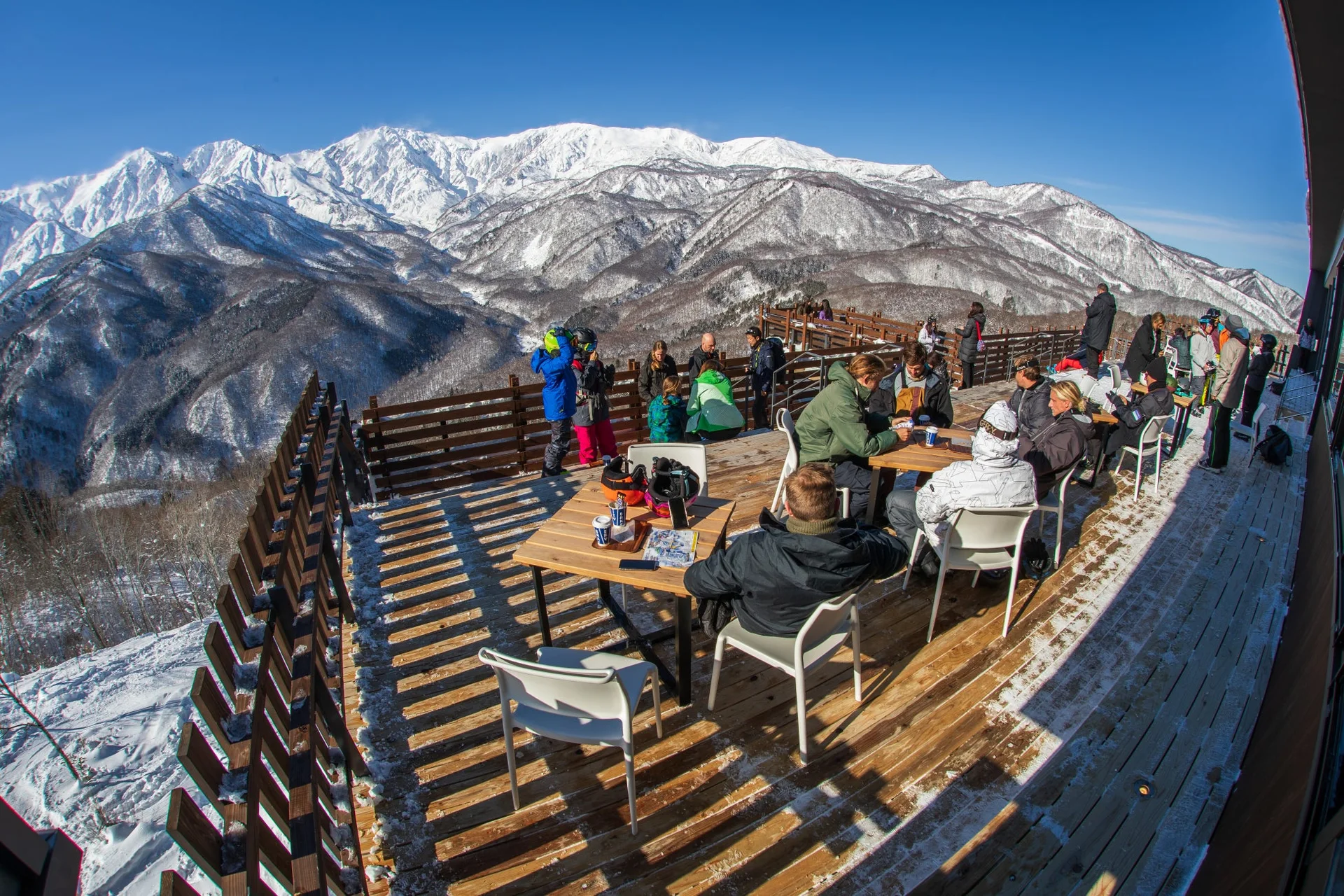
If your flight lands at Haneda or Narita and you travel straight to Hakuba to ski the following morning, take the ski or snowboard bag with you unless a checked delivery estimate proves it can arrive in time. Ski-specific forwarding has a longer hand-off rule than a casual “next-day luggage” recommendation. Removing the bag from the train is convenient only when it does not remove the equipment from your first paid ski day.
Forwarding becomes attractive when there is a genuine non-ski buffer, a counter that can accept your bag before its sending deadline and a resort or hotel that agrees to receive it. Some travellers can split the load: carry boots and first-day clothing, then send the long case. The decision is about the complete journey from flight arrival to first lift, including the return flight, not the shipping receipt alone.
Choose the gear plan from the first ski morning
| Your itinerary | Starting choice | What would change it |
|---|---|---|
| Airport to Hakuba today; ski with your own equipment tomorrow | Carry the long bag and boots | A live carrier estimate and confirmed receiver put the equipment there before the ski session |
| Tokyo or Nagano overnight, then a non-ski buffer before Hakuba | Test forwarding | A late landing still misses the counter’s sending deadline |
| Custom boots are essential but skis or board can be rented | Carry boots and first-day kit; test forwarding the long bag | The long bag cannot meet size, packaging or timing rules |
| You willingly rent on Day 1 | Forwarding can work with a booked rental fallback | Rental fitting or stock makes the intended first morning unrealistic |
| Last ski day ends shortly before the flight home | Carry gear on the return | There is enough lead time to send it before that final session |
This table replaces a score with conditions you can verify. The hard constraint is whether the equipment will be ready when you need it. Handling a long bag through several stations is unpleasant but predictable; a package still moving through the network when the first chair opens is a different kind of loss. If you need to decide between ski areas before planning the transfer, compare Happo and Goryu and Happo and Echoland lodging first. The final receiving address may be different depending on the base.
Why the ski forwarding deadline is stricter than the usual luggage advice
Yamato’s Ski TA-Q-BIN process asks you to hand over ski equipment by the sending deadline at least two days before arriving at the snow resort, or three days in some areas. Its illustrated process puts the parcel at the resort at least a day before the traveller arrives. The exact cut-off depends on the sending counter and route. A traveller who lands on Monday and expects to ski Tuesday should not convert a general next-day TA-Q-BIN claim into a promise for the ski bag.
Before you leave the airport, enter the sending location, Hakuba receiver and required delivery date into the carrier’s current estimator. Confirm the counter’s actual cut-off, not just its opening hours. Compare it with the time you will realistically reach the counter after immigration, baggage reclaim and any delayed flight. If the hand-off is after the deadline, carry the case or revise the first ski day. A hotel night does not create a delivery day by itself.
There is a useful distinction between “arrives at Hakuba” and “ready for skiing.” The address may be the hotel, resort reception or another eligible receiving point. Ask when the receiver will accept and hold oversized sports gear and when you can collect it. If you reach Hakuba late and the bag is held at a counter that has closed, the nominal delivery date may still fail your morning. The Japan luggage-forwarding guide covers ordinary luggage, but ski equipment needs this separate deadline check.
Five checks before paying for the delivery
| Check | What to confirm | If it fails |
|---|---|---|
| Sending deadline | Carrier cut-off for the exact drop-off point and required arrival date | Carry, move the first ski day or arrange rental |
| Weight and case | Bag at or below 30 kg and compliant protective cover | Repack or carry with your transport operator’s rules |
| Hand-off method | A sales office, eligible agency or supported pickup, rather than an assumed convenience store | Choose a valid counter before leaving the airport |
| Receiver | Hotel or resort accepts the parcel under your booking name | Use an agreed receiving point or keep the bag |
| First-day fallback | Rental, spare boots or ability to move the ski session | Do not put the first ski day at the mercy of one delivery |
The 30 kg limit matters even if an international airline accepted the bag. Ski and snowboard cases in the ski service use a Size 180 fare category; the actual one-way charge still varies by origin and destination. Protective covers are required. The carrier currently lists a ski cover at ¥400 and a snowboard cover at ¥600. These yen amounts are more useful than a converted dollar figure, which would change with exchange rates. Weigh the complete case, including boots and accessories, before the international flight rather than finding out at the sending counter.
The service does not accept skis or snowboards through convenience stores, and some agencies cannot take them either. A general parcel sign outside a shop is not enough evidence for a ski hand-off. Identify the eligible counter and the route to it while you are planning the airport transfer. If the drop-off creates a separate detour across Tokyo, add that time to the forwarding cost. Compare the Narita and Haneda last-transfer problem before assuming the airport-to-city portion will be easy with or without the bag.
Calculate the deadline margin in hours, not hope
Use the carrier’s cut-off for the delivery date you require, then subtract the time at which the bag can actually be handed over. That gives the deadline margin. Positive margin means the plan may be possible if the receiver is confirmed. Zero or negative margin means the plan cannot be rescued by describing Japanese luggage delivery as efficient. If the margin is only a few minutes after an international arrival, the plan is brittle even though it is technically positive.
Also measure the gap between the promised delivery and the first ski session. A bag arriving the evening before at a hotel reception that is staffed all night is different from a bag scheduled for a resort desk after you have already travelled to the lifts. Check collection hours and any transfer from your Hakuba room to the receiving point. The Hakuba Tokyu versus Green Plaza hotel comparison shows why the lodging base and ski area change the final leg; one address cannot stand in for every Hakuba stay.
Suppose you land after a long-haul flight, transfer to a Tokyo hotel and leave for Hakuba the following day. A single Tokyo night gives you rest, but it may not create the two- or three-day ski-service lead required for the bag. If the case cannot be sent in time, carrying remains the more reliable option. Adding a genuine non-ski day between the drop-off and the first ski session can reverse that answer. Use the late Haneda arrival decision or late Narita arrival decision to see where that first night can realistically go. If you land at Haneda too late for a long transfer, compare an airport-area hotel with a city room before locking the bag plan.
What the delivery quote leaves out
The shipping rate is only one part of the cost. Add the cover, the time and fare to an eligible hand-off point, the effort of carrying the bag as far as that point, and any rental you need if the bag is late. The value of a missed ski session is personal, but it is real. If two people would rent skis and boots after bringing their own, the cheapest shipping quote may no longer be the cheaper gear plan. Conversely, carrying an oversized case through airport rail, Shinkansen platforms and the last Hakuba transfer has physical and time costs that do not appear on a carrier receipt.
Do not assign a made-up score to those trade-offs. Rank them for your trip. A solo traveller with one compact case and direct transport may tolerate carrying. A family moving several bags through stations can gain far more from forwarding once the deadline is safe. A skier with custom boots may be willing to rent skis but not footwear. These are different constraints, not variants of one universal score.
The final transfer matters. If you have chosen Happo, Goryu, Echoland or another part of the valley, a bag that reaches Hakuba Station is not necessarily at the room. Check the Happo–Goryu base decision and the Happo–Echoland comparison alongside the receiver’s address. A mountain lodge with a limited reception window may need a more precise delivery instruction than a large hotel.

Carry boots, send the long case?
The split plan works when boot fit matters more than the exact skis or board. Pack the boots, goggles, gloves, base layers and one full ski-day outfit in luggage that travels with you. Send the long case only after its deadline and receiver are confirmed. If the case is delayed, a rental set of skis or a board may let you use the boots you trust. This is not always the lightest airport day, but it protects the hardest equipment to substitute.
It is less useful when the complete personal setup is non-negotiable or when the boots themselves make normal luggage unmanageable. A beginner who planned to rent everything on the first day may be comfortable forwarding the whole case. An experienced skier who has brought a tuned setup for specific terrain may prefer to carry the entire kit. The ski-base comparison can help decide whether the intended first mountain makes a rental fallback acceptable.
If you will rent, arrange the shop and fitting time rather than treating “rent on arrival” as a magic fallback. The first morning may already have a lesson, shuttle or limited lift window. Check whether the rental location sits near the hotel or ski area, what sizes it carries and whether boots are included. A backup that requires an hour of cross-valley transport can protect the day less than expected.
Receiving details can defeat an otherwise valid shipment
Before writing the waybill, ask the hotel or resort whether it will accept ski equipment in advance for your booking. Use the exact property name and guest name it requests. A small lodge or vacation rental may not hold an oversized case, and a building with no staffed reception may not be a usable destination. If the accommodation cannot receive the bag, ask the carrier about an eligible pickup point or carry the case instead. Do not ship first and assume someone will solve the final hand-off later.
A confirmation also tells you when the gear can be collected. If you intend to ski immediately after arrival, a hotel that stores the case only after check-in may change the order of the day. If you intend to ski the next morning, the reception opening time may matter. This is one reason a Cortina-facing hotel and a Happo-side hotel cannot be treated as interchangeable labels on the same Hakuba parcel.
Work backward from the flight home
Airport TA-Q-BIN has its own lead time. The current procedure asks for a parcel to be sent at least two days before departure, or three days in some areas, and to reach the airport by the day before the flight. Its weight ceiling is also 30 kg. A plan to ski until the final evening, send the case after the last run and fly out of Haneda or Narita the following morning does not fit that ordinary timetable.
Decide which part matters more: using your personal gear on the last ski day or travelling hands-free to the airport. If the last session is essential, carrying the case on the homeward transfer may be the only robust plan. If hands-free travel is more important, send the equipment before that final ski session and rent or skip the last day. A traveller who returns to Tokyo for another night or two has a different window; calculate it from the actual flight and sending point rather than assuming the outbound decision also covers the return. If you continue to Hakone or Kawaguchiko after skiing, check that leg's receiving arrangement separately; a ski-resort delivery estimate does not cover it.
For a trip that combines several resorts, the equipment plan may change between destinations. Niseko versus Rusutsu and a Furano ski stay involve different long-distance transfers and receiving hotels. For Niseko, check whether the hotel really meets the slope before sending equipment to its reception. In Furano, the station-to-slope gap at Shin Furano Prince changes how much of the long-bag journey remains after a rail arrival. Do not carry a Hakuba deadline over to Hokkaido without checking the new origin, destination and service.
Make the decision before leaving the airport
For an airport-to-Hakuba transfer followed by next-morning skiing, carry the gear unless the live ski-service deadline confirms a delivery and the receiver confirms collection before the first session. If you have a true buffer day, test forwarding and compare the full cost with the physical burden of carrying. Keep essential boots and first-day clothing with you when those are hard to replace. On the return, work backward from the flight, not forward from the final ski evening. If the return includes a short Tokyo stop, map the usable hours around luggage collection before choosing a flight-day transfer.
When choosing a room that will accept the case, compare stays around Hakuba by your selected ski base and confirm the receiving instructions with the property before paying for delivery. A good gear plan makes the first lift and the airport flight both possible without asking the parcel to outrun its own deadline.