
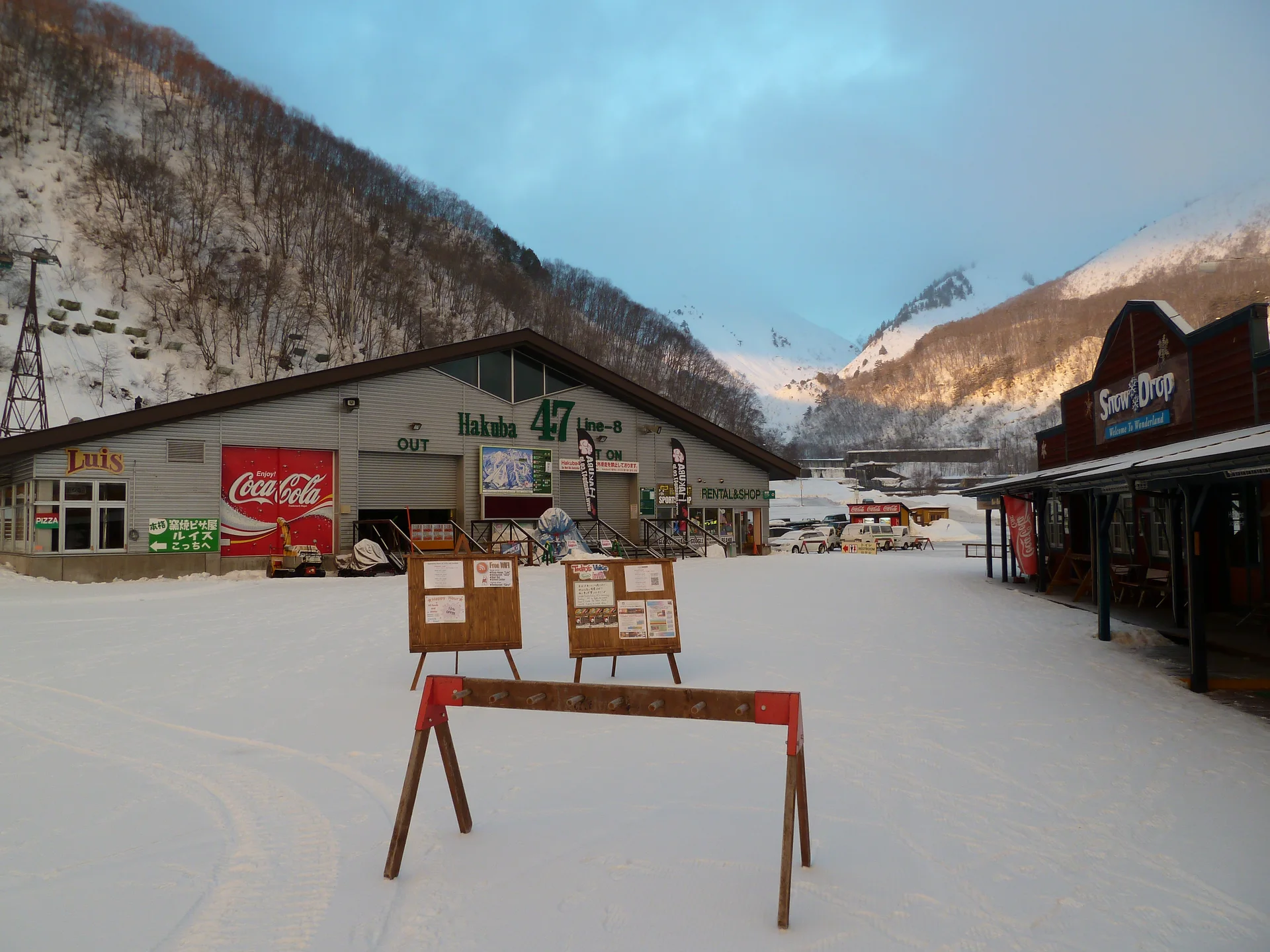
Happo and Goryu are both workable Hakuba ski bases, but they save time on different days. Happo makes sense when Happo-One is your anchor and you expect to sample other valley resorts or spend evenings near the main visitor hub. Goryu makes sense when most turns will be at ABLE Hakuba Goryu and Hakuba47, or when children's lessons around Toomi and Iimori are the immovable part of the week. The hotel should shorten the trips you will repeat, not simply look central on a valley map.
Before comparing room rates, sketch five ski days with the weather still unknown. If three are likely to be at Goryu or 47, repeated mornings and returns to a Goryu hotel may outweigh Happo's dining choice. If Happo-One is the only certain mountain and the rest remain open, Happo buys flexibility. This is a planning test, not a ski-area rule. The wider Hakuba lodging map is the better starting point if most intended skiing is actually at Tsugaike, Iwatake or Cortina.
The ski week, before the village name
A five-night booking decides where ski boots are carried each morning and where tired people land every afternoon. One extra shuttle is manageable; the same connection on most days becomes a significant part of the trip. Mark the lesson meeting point, the mountain most likely to be repeated, and the evening food needs of non-skiers before opening hotel listings. A cheap rate two snowy walks from the relevant stop can lose much of its appeal once a child, skis and a final bus are involved.
↔ Scroll table left or right
| Ski-week pattern | Base to test first | What the base saves | When the answer changes |
|---|---|---|---|
| First Hakuba trip with undecided resort mix | Happo | Happo-One can carry several days; valley changes remain possible | Goryu/47 becomes the real majority of the plan |
| Three or more of five ski days at Goryu/47 | Goryu | Fewer repeated first and last shuttles | Hotel itself still needs a difficult slope transfer |
| Beginner-heavy family or repeated children's lessons | Goryu if lesson meeting points fit | Toomi/Iimori proximity can simplify drop-off and lunch | A Happo school and closer hotel solve the same constraint |
| Mixed intermediate/advanced group prioritising Happo-One | Happo | A large home mountain without daily valley travel | Group's actual school or preferred runs are at Goryu |
| English-language instruction is essential | Compare school before neighbourhood | Goryu's Hakuba Snow Sports and Happo-area options both exist | Age, discipline or lesson time is unavailable at one school |
| Restaurants and rest-day movement matter often | Happo | More evenings can be spent near the main hub | Group wants quiet ski-first nights in Goryu |
The difference between a two-night introduction and a seven-night ski week is repetition. For a short first visit, a robust default mountain and nearby evening options are valuable. Over a longer week, removing four or five transfers to the same lesson or lift can dominate. Happo versus Echoland is another useful local comparison if dining rather than Goryu terrain is the real tie-breaker.
Happo-One can carry a stay by itself
Hakuba Valley lists Happo-One as a large resort: 220 hectares, 16 courses, an 8 km longest run and 1,071 metres of vertical. Its published terrain division is 30% beginner, 50% intermediate and 20% advanced. Those numbers are useful for a base choice because Happo can supply more than a token home-mountain day. You can remain nearby when conditions or energy do not justify travel and still have varied skiing to explore.
Happo's advantage is not that every lodging door is equally close to every lift or shuttle. Check the exact walk in boots to the entrance you intend to use. A hotel described as “Happo area” can be much easier for restaurants than for a particular gondola. The advantage is strongest when your default days are Happo-One and other resorts are optional switches. The Happo-One terrain guide helps decide whether its steeper profile suits every skier in the party.
If a family has beginners or lessons at Goryu on four mornings, Happo's mountain size does not cancel the morning transfer. Likewise, if a week is already mapped around Iwatake and Tsugaike, Happo should not win by habit. Choose the hotel where the most demanding repeated day remains feasible without needing a perfect shuttle. Hakuba Tokyu and Green Plaza ski bases may be the more revealing question for a beginner-led group.
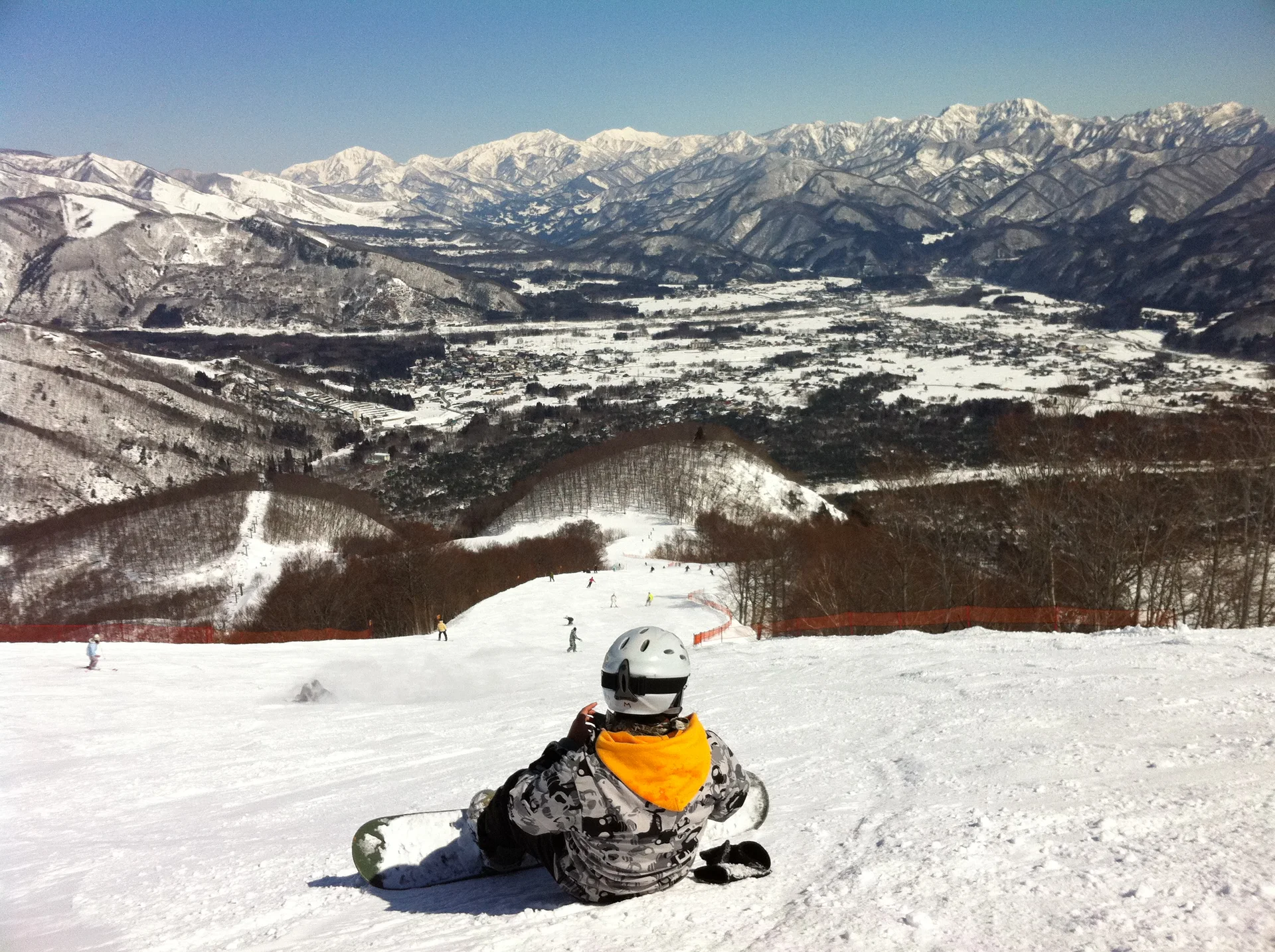
The snowboarding photograph illustrates the scale of a mountain day; it does not identify a specific run or guarantee the snow and visibility you will have. If a mixed-ability party separates on the mountain, agree where to regroup and how a lower-slope skier will return to the hotel. A technically impressive vertical figure is less relevant than whether everyone has an appropriate ski day.
Goryu's advantage becomes clear at lesson time
ABLE Hakuba Goryu describes 15 courses across Alps-daira, Toomi and Iimori. Hakuba Valley's published mix is 35% beginner, 40% intermediate and 25% advanced; its area information identifies Toomi and Iimori as suitable for beginners and families. That does not make Goryu a universal easy mountain, but it gives a child-led itinerary a more specific centre. If meeting a coach, dropping off small skis and reuniting for lunch all happen here, nearby lodging can remove the week's most repetitive strain.
English-language lessons require a more precise check than “Goryu has English.” Hakuba Valley lists Hakuba Snow Sports at Goryu with English and other-language ski and snowboard private or group options, but the minimum ages differ by discipline and lesson format. Happo has English-language providers, including Evergreen. Select the actual programme, age eligibility and meeting point first. Then compare the hotel-to-meeting-point journey in winter clothing. Hakuba children's lesson planning is more useful than a generic village ranking if the family has fixed drop-offs.
A Goryu-labelled property is not automatically convenient. Look for a road crossing, an uphill walk, a shuttle dependence or a separate transfer from the building to Toomi or Iimori. An advertised slope distance measured on a map may feel very different carrying a child and equipment on compacted snow. A room near the correct entrance can be worth more than one with prettier photography but a daily bus. Hakuba hotel base comparison sets out that door-to-slope distinction.
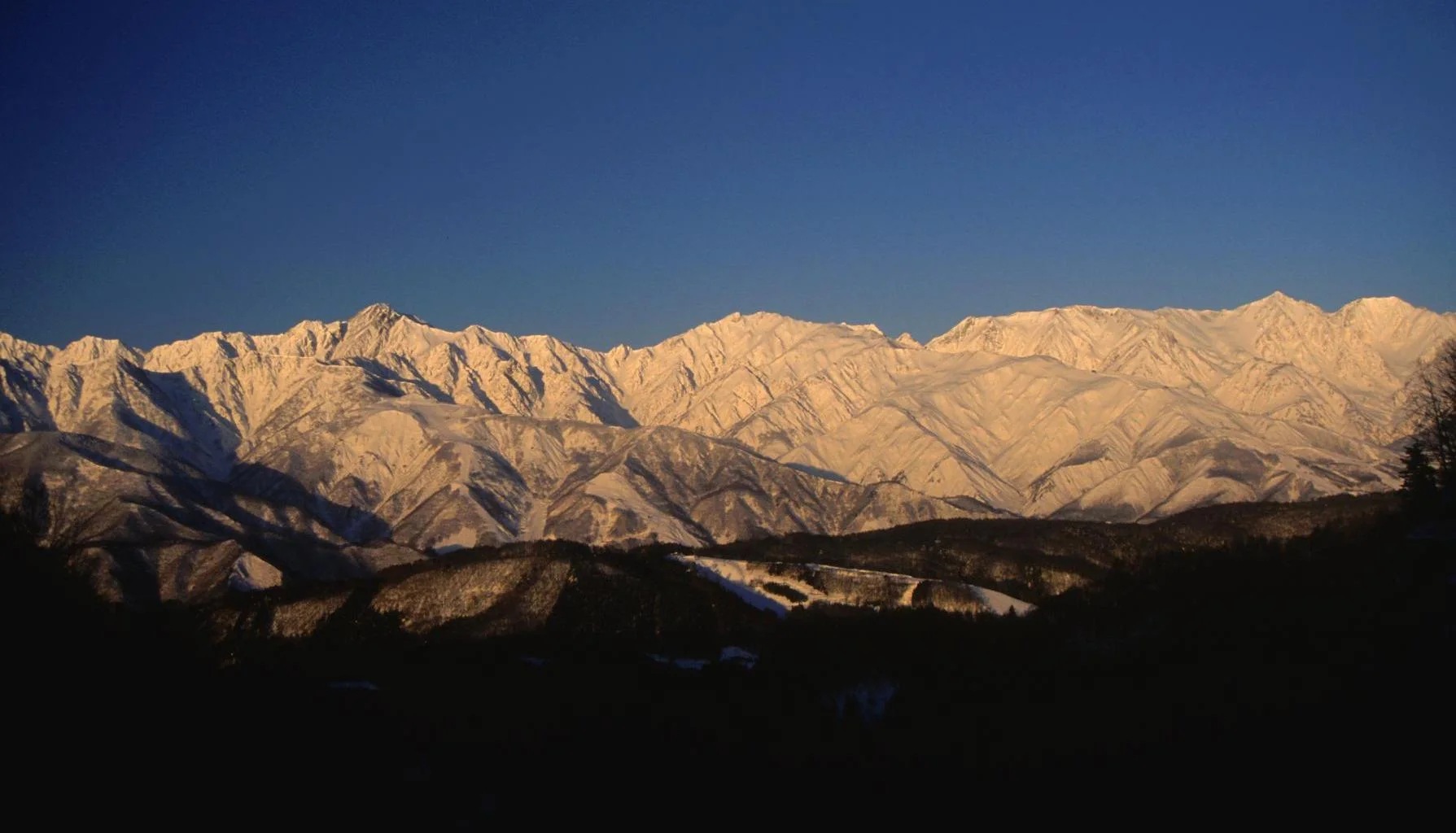
The mountain photograph is a setting image, not evidence that a particular condominium has ski-in access. Check the entrance you will actually use and the road conditions between it and the booked room. Families often need the simplest return more than they need the theoretically shortest path to the first chairlift.
Hakuba47 belongs in the Goryu calculation, with a condition
Goryu and Hakuba47 can be connected on the upper mountain, and many skiers reasonably treat them as one skiing cluster. That makes a Goryu base more versatile than the name alone suggests. The connection still depends on lift operation and safe mountain conditions. Hakuba Valley asks visitors to check lift and gondola status before travelling; wind, visibility and snow can change what is open. A Goryu hotel should make sense even if the ideal same-day link to 47 is unavailable.
For a skier whose favourite terrain is specifically at 47, inspect whether lodging nearer its own base would reduce travel better than a generic Goryu address. For a family content with the Toomi or Iimori side, the upper link is optional enrichment, not the reason to book. The 47 and Goryu starting-side comparison helps translate a shared lift network into a morning route.
Resort conditions also create a useful restraint on ambitious multi-mountain plans. A day with delayed high lifts is not automatically saved by racing to another base: shuttle seats, start times and the new mountain's conditions can make that change costly. The hotel that supports an acceptable low-friction day remains valuable when the forecast's ideal plan fails.
A valley shuttle expands choices but can fill up
Hakuba Valley's shuttle information explicitly says passengers cannot board once a vehicle reaches capacity. It warns of crowding on powder mornings and late afternoons, especially on the final service. That makes the bus a useful network rather than a guarantee that any hotel can serve every mountain equally well. The current public page still displays service details tied to the previous winter; confirm the final 2026–27 route and timetable before deciding that one particular 08:00 or 16:00 connection makes a property convenient.
For each candidate hotel, trace four legs: door to stop in snow, stop to chosen resort, resort back to the stop, and the final walk after skiing. Ask what happens if the homeward bus is full. Some resort-specific shuttles are separate from the valley-wide service, and a pass may change the fare treatment; neither fact shortens the physical journey. A cheaper room that requires that connection every ski day may not be cheaper in time and fatigue. Happo and Echoland base comparison should be revisited once the new season's timetable is released.
For the prior 2025–26 season, the valley-wide paid service was listed at ¥800 for an adult and ¥400 for a child where a qualifying pass did not cover it. Those fares belong to the previous winter, not a quoted 2026–27 fare. The night bus also operated between Kamishiro/Goryu and the wider Hakuba area last winter. It indicates an evening connection can exist, but a dinner booking in the coming season should rely on its actual published dates and last service. Happo and Echoland at night matters more for a group with rest days or non-skiers.
A shared lift ticket does not erase the hotel transfer
Hakuba Valley has published 2026–27 All-Mountain Day Pass pricing and says the product is scheduled for sale around November. The current adult prices are ¥11,100 for one day, ¥21,800 for two and ¥32,200 for three. The pass can be used across Happo-One, Goryu/47 and other participating resorts under its terms. This makes lift-ticket compatibility a weaker reason to choose one village over the other. It does not reserve a bus seat, flatten an icy hotel walk or carry a tired child's skis.
If you plan to switch resorts often, a pass can reduce ticket decisions. Choose a base with robust access to those switches and an acceptable home-mountain day when the shuttle is crowded. That often favours Happo for a first-timer who genuinely wants multiple mountains, but not a skier who will spend most days at Goryu/47. Compare the exact number of skiing days and pass terms before deciding that a multi-day product is cheaper than individual mountain tickets. The lift-ticket comparison is separate from the accommodation decision.
Do not build an October booking around a previous season's bus minute even if lift prices for the coming winter are already posted. The two releases follow different schedules. A hotel with a reliable walk to your main mountain is less sensitive to a timetable that has not yet been finalised.
Arrival bags and evenings can break a close tie
The Hakuba Goryu Tourism Association says the Nagano Station express bus reaches the Hakuba Goryu stop in about one hour, and Kamishiro Station provides JR Oito Line access to the area. The Shinjuku–Hakuba highway bus also serves Hakuba Goryu. Happo has a major bus-terminal function in the valley. When two hotels are equally suitable for skiing, the one that removes a luggage transfer on arrival and departure may win. Getting from Tokyo airports to Hakuba with ski bags can reveal a tie-breaker missed in a resort map.
That arrival advantage happens twice, while the ski commute can happen five times. Do not place a week in the wrong area simply to save one arrival taxi. Conversely, on a two-night stay, easy luggage handling has more weight because there are fewer ski mornings over which to recover the cost. Luggage forwarding can help when equipment or suitcases otherwise dictate the local move.
Happo's restaurant and visitor infrastructure is useful on rest days and for companions who do not ski. A serious skier who eats near the hotel and sleeps after full days may value Goryu's slope proximity more. The practical test is how many evenings the group expects to leave its immediate area. If that is most nights, make an actual restaurant and return plan before accepting “quiet base” as a benefit. Happo and Echoland may be a better comparison if the concern is dining rather than slope choice.
One hotel is usually enough for the week
Splitting a five- or seven-night Hakuba stay between Happo and Goryu creates checkout, packing and another check-in within the same valley. It can be justified when the trip itself changes job: several family lesson days centred on Goryu followed by a distinct northern-resort or Happo phase, with a simple luggage move. For most groups, one base and deliberate visits to the other mountains are less disruptive. A shuttle or occasional taxi is often the smaller compromise than moving every bag midway through a ski holiday.
For two or three nights and an undecided first visit, Happo is usually the safer starting comparison because Happo-One can fill the short stay. For five to seven nights, the home-mountain share deserves more weight. For a family lesson week, the coach meeting point can override the generic stay-length rule. For a powder-led valley tour, check the exact shuttle access rather than assuming every address in Happo is equally central.
Choose the hotel only after writing down the repeating journey. Happo suits skiers who want Happo-One as the home mountain and the freedom to change resorts. Goryu suits a week actually centred on Goryu/47 or the beginner and school arrangements around Toomi and Iimori. Both can fail if the property forces a difficult icy walk or a bus you have not verified. For accommodation in either area, compare rooms around Happo and Goryu on your exact dates, then check the walk to the relevant lift or stop on the property map.
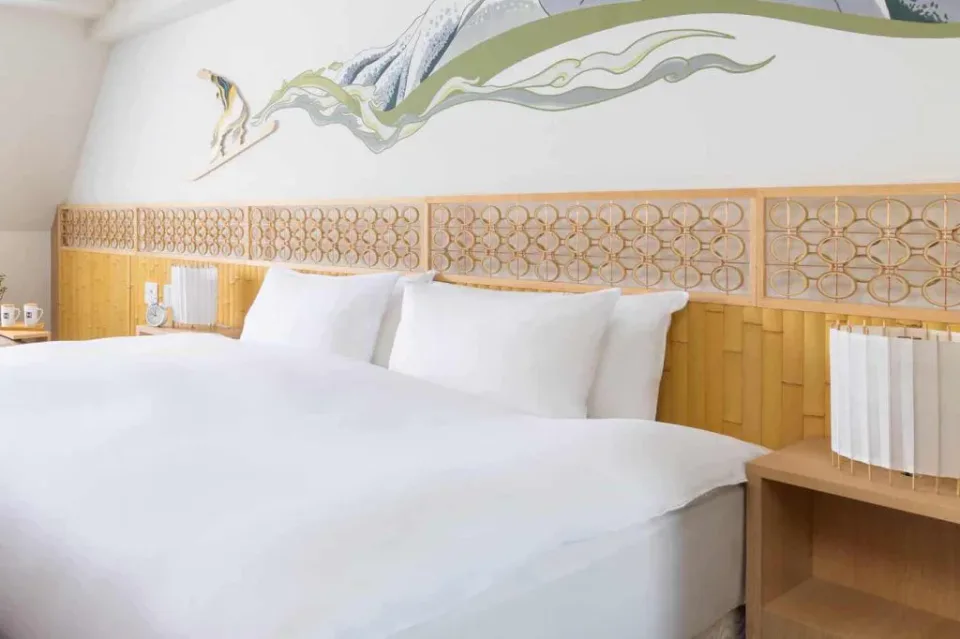
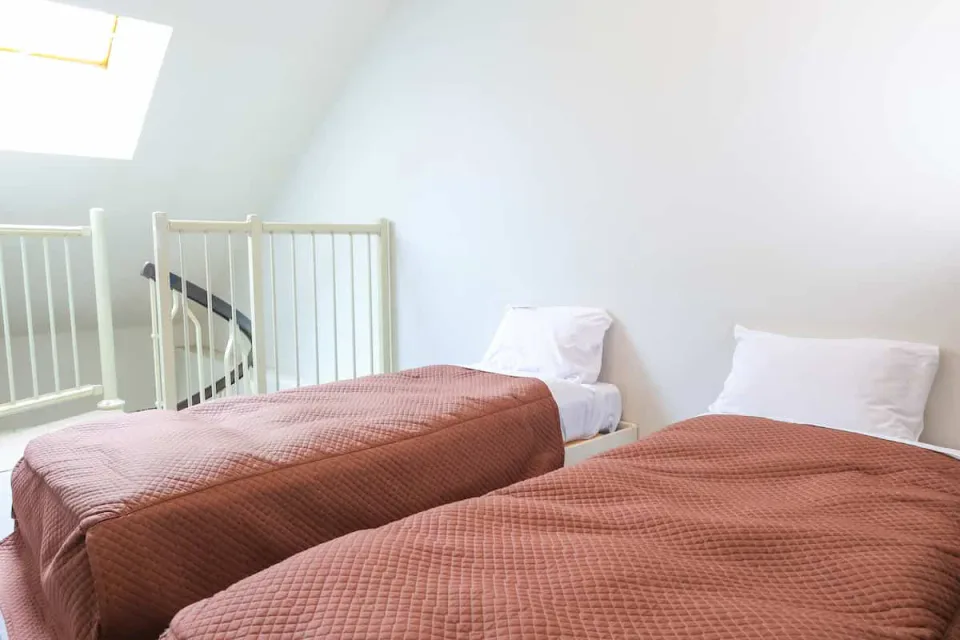
The two rooms show different lodging shapes, not equivalent access to lessons: a double hotel room and a two-bed loft accommodation. Compare room layout, ski storage and winter arrival route separately from the mountain photograph in a listing. A room that sleeps the group is only the first requirement; the daily movement decides how well the ski week works.