
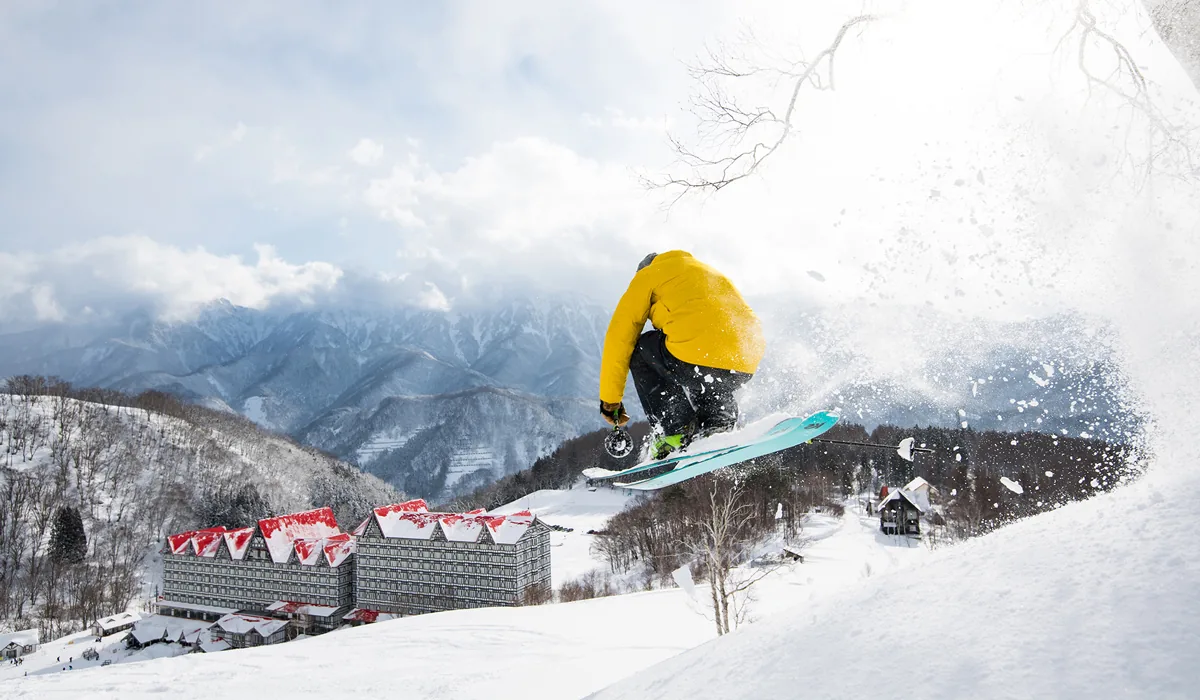
Hotel Green Plaza Hakuba places its front door at the foot of Hakuba Cortina's slopes. Hakuba Tokyu Hotel sits in the Happo part of the valley and uses the local ski-bus network for lift access. That contrast matters more than the superficial fact that both addresses say Hakuba. A skier who wants to spend every day at Cortina can recover several transfers by sleeping at Green Plaza. A group that wants to try Happo-one and other central valley areas can use Tokyu as a more flexible base, provided it checks the seasonal bus timetable. The correct comparison starts with the lifts you will actually use, not with a promise that either hotel serves every Hakuba mountain equally.
JapanLayer hotel assessment by dimension
↔ Scroll table left or right
| Hotel | Access | Space | Comfort | Cleanliness | Neighbourhood | Service | Value |
|---|---|---|---|---|---|---|---|
| Hotel Green Plaza Hakuba | 8.6/10 | Insufficient evidence | Insufficient evidence | 8.3/10 | Insufficient evidence | 8.3/10 | Insufficient evidence |
| Hakuba Tokyu Hotel | 8.8/10 | Insufficient evidence | Insufficient evidence | 9.2/10 | Insufficient evidence | 9.1/10 | Insufficient evidence |
What each hotel solves on a ski day
↔ Scroll table left or right
| Decision | Hotel Green Plaza Hakuba | Hakuba Tokyu Hotel |
|---|---|---|
| Most useful ski area | Cortina; slope is directly at the hotel | Happo-side base with seasonal buses to several areas |
| Return to room | Practical during Cortina sessions | Requires local transport or walking from lifts |
| Arrival | Confirm transfer to Otari/Cortina | Advance-reserved pickup from Hakuba Station or Happo Terminal, 8:00–20:00 |
| Bath | Cortina hot spring at property | Happo hot spring at property |
| Best three-night pattern | Mostly Cortina and resort meals | Mixed mountains and more evening choices |
Swipe to compare the hotels
The two hotels also lead to different evenings. Green Plaza is a self-contained resort stay in Otari, with a hot spring and a slope-side routine. Tokyu offers a hotel setting nearer the Happo village area and its dining choices, though its location is not the same as a door opening onto the Happo gondola. Our trip-fit scores assume two adults, three nights and two ski days, with one day at Cortina and one elsewhere. A family planning only Cortina will reasonably reverse parts of the recommendation. The Happo versus Echoland area guide is a useful geographic companion; this page compares two named hotels and their ski-day consequences.
Cortina's ten-second slope edge has a narrow but powerful use
Cortina describes Green Plaza's slope access as a roughly ten-second walk to the piste. The hotel sits where many of the ski area's courses finish, so going back for a rest can be genuinely practical. A parent who needs to warm up a child, replace gloves or stop for lunch can use the room as a nearby base after check-in. That is a different advantage from a generic valley shuttle stop. The property's guest lockers also support the repeated ski-to-room movement. The Green Plaza Cortina hotel decision explores that particular stay more closely.
The benefit is concentrated on Cortina ski days. If your lesson meets at Happo-one, Iwatake or Goryu, you need another journey across the valley. Do not treat the existence of a valley bus as a guarantee that the first lesson meeting time will be easy from Otari. The service frequency, transfer point, lift opening and road weather vary; read the timetable for the actual week. A car can create flexibility, but winter driving and parking become part of the price. If several people have their own boards and boots, count the effort of each inter-area day. The Hakuba airport ski-bag forwarding guide helps with the luggage leg before you even reach the hotel.
Slope-front is also a more precise claim than ski-in/ski-out across an entire regional pass: it tells you where this particular hotel's easy return works. The Niseko ski-in/ski-out hotel guide uses the same test on another mountain, distinguishing a door by a run from a hotel that still requires transport. Apply that test to Cortina first, then check every other ski area on your itinerary separately.
Tokyu's advantage is not that it has an exclusive fast chairlift. During ski season, regular buses serve Happo-one, Goryu/HAKUBA47, Iwatake and Tsugaike; many are operated by ski areas rather than by the hotel. Their annual schedules can change. Tokyu also offers a separate, advance-reservation pickup from JR Hakuba Station or Happo Bus Terminal between 8 a.m. and 8 p.m. That arrival pickup is not an all-day private ski shuttle. Keep the two services separate when planning. If you arrive from Nagano by bus, reserve the hotel collection rather than assuming the winter lift bus can handle your arrival baggage. The Happo versus Goryu stay comparison helps decide which lift network should lead the hotel choice.
↔ Scroll table left or right
| Ski-day question | Hotel Green Plaza Hakuba | Hakuba Tokyu Hotel | Booking action |
|---|---|---|---|
| First lift is at Cortina | Slope-front position is the decisive convenience | Cross-valley travel required | Check the exact Cortina opening and any package pass |
| First lift is at Happo-one | Travel out from the Cortina end of the valley | Happo-side base, then current local bus/walk route | Confirm winter stop and lesson meeting point |
| Mixed Hakuba ski areas | Several long journeys can erode the slope benefit | Multiple resort buses may serve the hotel area | List each area and departure before choosing |
| Child needs a room break | A room return is realistic on Cortina days | A bus-linked return can consume the break | Decide which day needs the most flexibility |
| Gear is delivered ahead | Confirm hotel acceptance and locker rules | Confirm hotel acceptance and ski storage | Arrange carrier dates before dispatch |
A Cortina ticket or accommodation package may be useful for the dedicated Cortina guest. Compare what the rate actually includes: lift duration, child price, rental and meals can be separate. A valley-wide pass is not automatically the best purchase when every day is spent on one mountain. Conversely, a low Cortina room-plus-lift price may be poor value if your group later pays for several long transfers elsewhere. The Niseko lift pass, rental and lessons guide covers a different resort, but its method of separating pass, gear and instruction costs applies here too.
Getting in is part of the three-night total
Tokyu publishes a collection service from JR Hakuba Station and Happo Bus Terminal, with prior reservation requested and an 8 a.m.–8 p.m. service window. A Tokyo-to-Nagano rail journey followed by the Hakuba bus can end at Happo Terminal, making that last short transfer manageable if arranged. A late arrival outside the pickup window needs a different plan. The hotel says guests should call ahead; contacting it early is better than standing at the terminal with two ski bags and discovering the vehicle is unavailable. The timing of your last bus into Hakuba belongs in the booking check, especially when flight delays are possible.
Green Plaza is at Cortina rather than in the central Hakuba village area. The extra ground leg may be simple with a booked transfer or awkward without one. Identify the terminal where your intercity bus, train or private transfer actually ends. Then confirm the property's current pickup arrangement, reservation requirement and operating hours for that season. Do not assume the distance from a map is walkable in snow with luggage. If a car is under consideration, compare parking and the actual driving route, not just kilometres. The Hokkaido winter driving guide is for a different region, yet its advice about treating snow roads as a trip decision is relevant; local Hakuba conditions and road rules still need their own check.
If the group will leave for Tokyo early on the final morning, Tokyu's Happo-side position may simplify the return to Happo Terminal. Green Plaza's slope-side advantage ends once you are carrying cases to a long-distance bus. A final Cortina ski day followed by an early departure can also create a gear-drying and packing problem. Ask for the hotel's luggage hold and shower arrangements if you intend to ski after checkout; neither is included simply because the building is next to the piste. The Nagano snow monkey day-trip guide is worth reviewing only if you genuinely plan a non-ski day via Nagano, because that excursion changes the value of a central valley base.
The same calculation appears in the Sapporo city hotel versus ski resort guide: a hotel that is excellent for one departure can be poorly placed for the remaining days. Here the cost is a cross-valley transfer rather than a city-to-mountain bus, but the booking question is identical. Count the number of times you actually use the special access each property provides.
The room photo is only the start of the family calculation
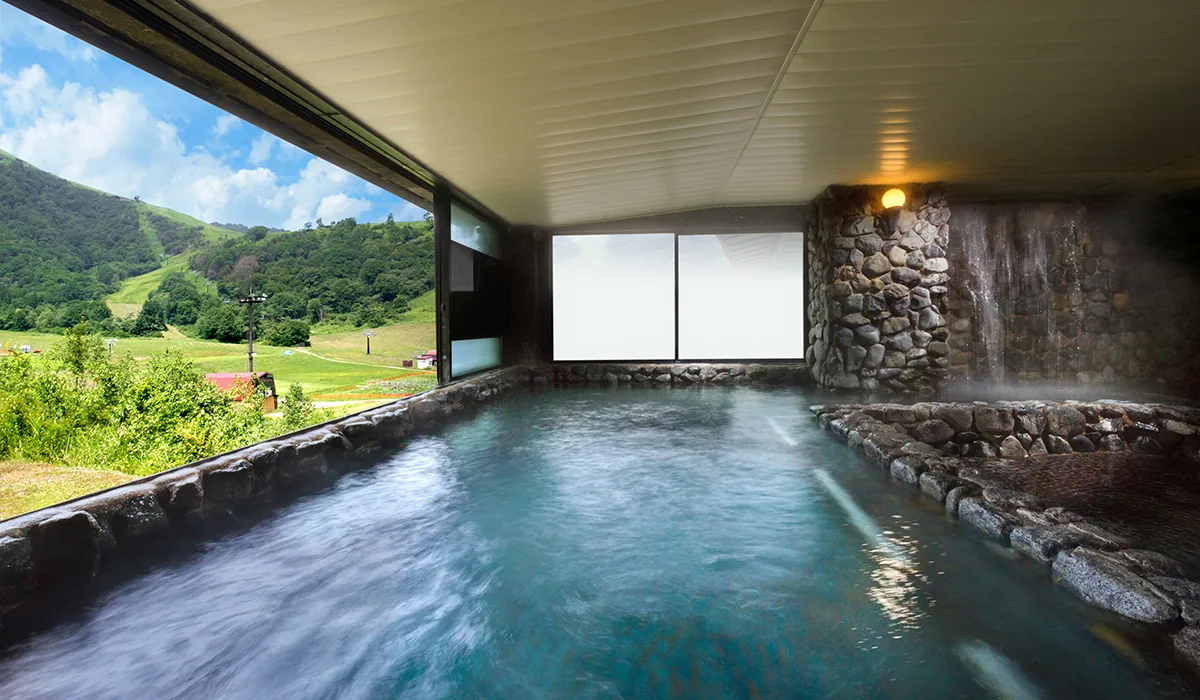
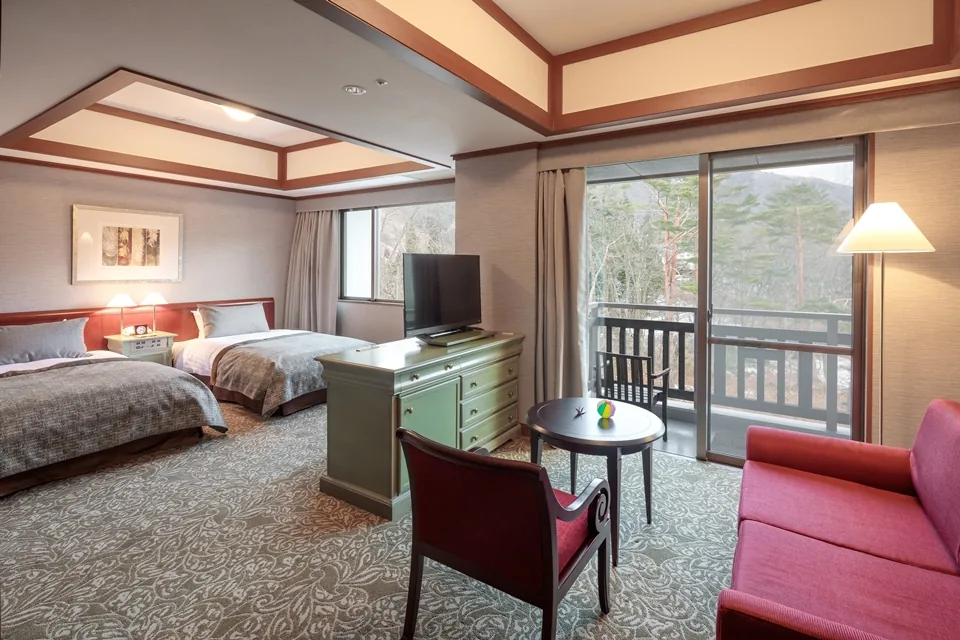
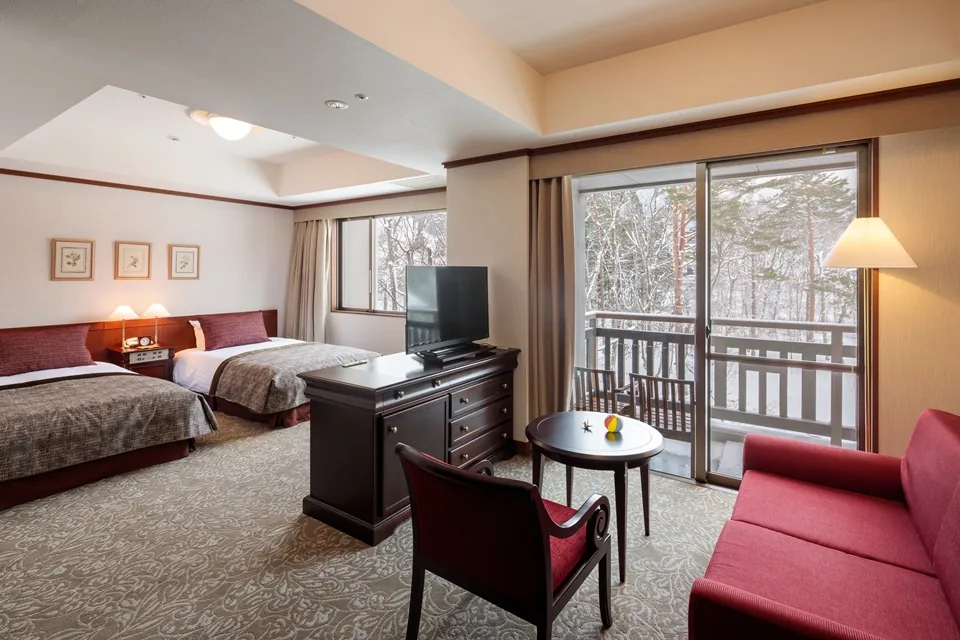
Green Plaza's resort building has an unmistakable slope-side exterior and a substantial communal bath. Those images show the property's setting; they do not prove that the least expensive room has enough beds for your party. When comparing packages, open the named room and occupancy details. A family room or Japanese-Western layout can work differently from a standard twin with an extra bed. Count the actual sleeping surfaces, their widths and the children's ages allowed under that rate. A room that sleeps four on paper may use two small additional beds, and floor space left for gear may shrink. Ask whether a child without a separate bed receives meals or a lift ticket in a bundle.
Tokyu's twin categories include a top-floor Deluxe Alps Twin and other twins. The mountain-view photograph is useful for judging atmosphere, but pay for the named category that supplies the layout you need. Some rooms and balconies differ, so a sample image is not a promise about the exact view from the room assigned on arrival. Compare a suitable Tokyu twin plus breakfast and local lift travel against a suitable Green Plaza room plus its Cortina package. If one quote is refundable and the other is not, the cheaper number is not an even comparison. The hotel selection guide for Japanese ryokan and onsen explains how meal and occupancy terms can change what appears to be a simple nightly rate.
Ski clothing gives a room more work than an autumn hiking stay. Separate dry layers from wet gloves, let boots dry without damaging furniture, and keep helmets where they will not block the exit. Ask how each hotel handles equipment storage and whether boots or skis can be left in a locker overnight. Green Plaza advertises guest lockers, but their operation and size should be checked for your equipment. Tokyu may have a storage arrangement; verify it directly rather than inventing a heated drying room. If you carry your own skis, write the storage answer next to the bed configuration before booking. The Shiga Kogen Prince Hotel wing comparison illustrates another case where hotel layout changes a ski morning, though the mountain itself differs.
If some travellers will not ski, their day route deserves equal weight. A non-skier at Green Plaza is staying at a mountain resort with a bath and seasonal facilities; the available programme needs to be checked for the exact week. At Tokyu, local buses and village access may offer more independent movement, but winter frequencies still set limits. The Hokkaido winter activities without skiing guide is regional rather than a Hakuba activity list; it helps identify the kind of non-ski day your group wants before you test whether either hotel can support it.
Hot spring access does not fix an unsuitable ski route
Green Plaza's Hakuba Cortina hot spring is one of its clear resort benefits. Its slope-side building allows a skier to leave the hill, store gear and bathe without a valley transfer. The bath can have separate operating hours or access conditions for hotel guests and day visitors; check the schedule against your lift day and the booked rate. A hotel bath is also useful for a non-skier spending time at the property, but it does not substitute for a diverse set of nearby restaurants. If your group wants a different dinner venue every night, investigate travel back from the village before choosing a remote resort evening. The Japan autumn leaves and onsen stay guide addresses a different season but shows why an onsen should be evaluated with the actual night's plan.
Tokyu presents a Happo hot spring experience, plus restaurant choices within the property and in the wider area. Check the hours and whether every bath feature is open for your dates. Its setting can suit a mixed group whose non-skiers want a hotel day or a village outing, although distances and winter sidewalks still matter. A restaurant in the wider Happo area may require a reservation and a cold walk or taxi. The advantage is choice, not guaranteed convenience at every hour. If everyone will eat at the hotel and ski Cortina daily, Tokyu's broader location offers little practical return for the additional ski commute.
↔ Scroll table left or right
| Three-night cost line | Why it changes the apparent winner |
|---|---|
| Named room and actual beds | A package for two does not settle four-person occupancy or child meals |
| Lift tickets | Cortina-only and multi-area plans are different purchases |
| Ski transport | Count every off-mountain transfer, not only arrival day |
| Breakfast and dinner | A resort rate may bundle meals; a village stay may let you choose outside |
| Equipment | Lockers, rental pickup and ski-bag delivery need separate confirmation |
| Cancellation | Snow conditions and flight changes can make a rigid rate costly |
The distinction becomes strongest with children. A young beginner taking a short Cortina lesson can return to Green Plaza for a real break. A teenager planning to explore multiple mountains may prefer a flexible Happo-side base. Two adults who want first tracks at Cortina should value the door-to-slope position; two adults following friends across the valley should not pay for a doorstep they use once. The Niseko versus Rusutsu resort comparison is a reminder that a resort name and a hotel address solve different parts of a ski holiday.
Book around the mountain, then test the hotel rate
Write each ski day as a mountain and meeting point. If Cortina owns most of the days, Green Plaza has a transport benefit that Tokyu cannot reproduce. If Happo-one and other central areas dominate, Tokyu is the more coherent starting place, subject to the winter bus schedule. If the plan remains undecided, a flexible cancellation rate buys time; it should not be used to postpone checking lift passes and lessons until the busy week begins. The Niseko ski-trip booking timeline is written for Hokkaido, but its sequencing of room, lesson and equipment choices is useful for a Hakuba planning spreadsheet.
For a slope-front Cortina stay, compare the named room, meals and lift package.
For a Happo-side base serving several ski areas, compare the room category and current shuttle plan.
Use identical dates, guest ages and cancellation terms. A lower headline rate does not settle the decision until lift access, ground transfers and meals are included.