A slope-side Niseko hotel pays off when it changes several parts of each ski day, rather than just shortening one morning walk. Ki Niseko puts lessons, a lift and equipment storage close together for families beginning at the King area. Skye Niseko works especially well when a mixed group returns for lunch or a gear change. AYA Niseko gives direct lower-Hirafu access but may impose a minimum stay. MUWA combines a Grand Hirafu ski door with a residence and wellness purchase; Park Hyatt makes most sense when HANAZONO itself is the holiday. The best choice depends on which route the least confident person can use in both directions.
Start with your dates. Niseko United’s scheduled 2026–27 operating span ends on 4 April at Niseko Village, 11 April at HANAZONO, and 5 May at Grand Hirafu and Annupuri. Snow, wind and lift operation can change an individual day. A hotel may still take reservations after the ski terrain at its door has closed. That makes “ski-in/ski-out” a conditional description, particularly after early April. The 2026–27 Niseko trip guide puts dates and transport together before you choose a room.
Which ski door solves your group’s actual problem?
↔ Scroll table left or right
Trip shape | Most useful first comparison | Reason to question it |
Children or first lessons at King Gondola | Ki Niseko | Confirm the lesson meeting point and the child’s ski-back route |
Different abilities with midday returns | Skye Niseko | The residence premium fades if nobody returns during the day |
Several nights near Ace Family | AYA Niseko | Some 2026–27 dates require a three- or five-night booking |
Hirafu plus residence and onsen time | MUWA Niseko | Those room and wellness benefits must be used |
HANAZONO lessons with non-skiers | Park Hyatt Niseko | Hirafu evenings and late-April skiing require a different plan |
↔ Scroll table left or right
Decision dimension | Evidence to compare before choosing |
Ski-out | The guest equipment exit and route to the chosen first lift |
Ski-back | The marked return run and its suitability for the least confident skier |
Lessons | Meeting point for the booked lesson, not merely the nearest ski school |
Gear | Rental fitting, overnight storage, drying and any equipment-swap rule |
Midday use | Whether anyone will actually return for food, rest or a change of clothes |
Room and evening | Space, kitchen, bath, non-skiers and transport after dinner |
Dates and fallback | Minimum nights, connected ski-area season, night-ski window and bad-weather route |
This table is a first filter, not a ranking by luxury. A family can stay beside a piste and still need a shuttle if a child cannot use the return run. A confident adult might ski to a valet while the beginner follows a road to the lobby. Ask for the specific guest exit, piste and return route in the conditions expected for your dates. Niseko lift passes, rentals and lessons helps establish where the booked instruction and equipment actually begin.
Count useful slope crossings across the stay
A standard ski day uses two transitions: out to a lift in the morning and back to the hotel at the end. Direct access can also let a tired child stop at midday, one partner change layers, or an adult return without moving everyone’s gear through the village. Count those expected crossings before paying a premium. Two ski days with no breaks create perhaps four valuable transitions; four days with lessons, lunches and separate finish times can create many more. This is an itinerary calculation, not a published threshold for hotel quality.
For a family that breaks for lunch, restarts in the afternoon and comes back again, four transitions in a single day are plausible. Over four days that can amount to 12–16 useful crossings once weather-driven gear changes or night skiing are added. That example describes a busy family rhythm, not what every room guest will do. A couple skiing from first lift to late afternoon may use the same hotel door only twice daily, so paying the same room premium buys much less friction relief.
As a personal price test, an eight-transition trip usually makes slope-door convenience easier to defend, especially if some crossings would otherwise require a booted walk or shuttle with children. That number is a heuristic, not a hotel fact. A single difficult lesson check-in may be worth more to one family than several effortless adult ski-outs. Conversely, experienced skiers on a one-night stop can often walk a little and spend the room premium elsewhere. The Niseko ski trip cost timeline helps keep the hotel premium beside passes and instruction, instead of burying it in an all-in rate.
Examine the return separately from the departure. A door that opens onto snow may support ski-out, yet the normal run home might be flat for a snowboarder, too steep for a novice or inaccessible when a connecting lift closes. A 80-metre walk across a public road is short access, but it is not the same experience as gliding to the ski room. A piste that ends at a nearby lift rather than the hotel is one-way access. The group buys the weaker of the two routes, because the least confident skier still has to get home.
Equipment storage changes the calculation. A guest-only valet and boot-drying area remove daily carrying; an off-site rental fitting can put one extra trip back into the first morning. Ask whether skis and boards can be left overnight, where a beginner retrieves them, and how an early lesson meets the instructor. Private Niseko lessons for three or six hours is a useful companion when the lesson schedule, rather than the room, governs the start of each day.
Ki Niseko: the compact King-area lesson arrangement
Ki Niseko’s second-floor ski entrance opens to snow beside the King Holiday Pair, King Gondola and GoSnow meeting areas. For a family beginning lessons, that places equipment collection, instructor meeting and the first lift in one small zone. The guest ski valet stores skis, snowboards and boots; YamaSport fitting is nearby and its rental equipment can be delivered to the valet. This is stronger than a generic “near slopes” description because it identifies the steps the group actually performs.
Ki has described its ski door as zero metres from the slopes, roughly 50 metres from GoSnow and about 100 metres from the high-speed gondola. Treat those as orientation figures, not a promise about the route for every lesson or lift on your dates. The meaningful point is that the second-floor exit, gear storage and King-side meeting places sit together. Families should still read the specific ski-school booking: a lesson elsewhere in the Niseko area would create a separate transfer regardless of Ki’s short local distances.
The clearest buyer is a group with children or first-time skiers who need predictable morning assembly. A parent can help a child with boots without planning a village transfer, and someone finishing early can head towards the same hotel area. The access still depends on the operating lifts and on each person’s ability to use the return route. Before booking, match the exact GoSnow course and meeting point to the family’s lesson plan; not every Niseko lesson or ski school begins beside Ki. Niseko apartments for families and groups may be a better comparison if multi-bedroom living space matters more than this compact arrangement.
Ki becomes a weaker value if the group’s main skiing or lessons are across another part of Niseko, or if adults want a large residence for evenings. It can remain a good hotel for other reasons, but the King-side advantage should be priced only for days when the group uses it. Hirafu, HANAZONO, Annupuri and Niseko Village bases helps check whether King is the right side of the mountain at all.
If the party is deliberately skiing Niseko Village instead, Green Leaf versus Hilton lift access is a more useful hotel pair than another King-area room. The first lift and the final return belong to the resort area the group will actually use; a famous Hirafu address does not improve a Village-based lesson day.
Skye Niseko: a base for days with different finish times
Skye’s guest ski valet opens onto Grand Hirafu terrain, with ski-out towards King Gondola and the King Holiday Pair. YamaSport fittings and storage are inside the hotel. The Ace Gondola side is also close, though the route from the main entrance is described as a short walk rather than the same door-to-slope movement. GoSnow full-day private lessons can meet at the ski-valet exit; other programmes may use a different check-in. Match the lesson product to the actual location instead of treating “Skye access” as one identical route for every skier.
Skye’s YamaSport rental programme permits eligible equipment swaps within the same rental range without an additional charge, including between skis and snowboards. That is a concrete benefit for someone refining the setup across several ski days, provided the selected rental qualifies. Its larger apartments, kitchens and shared living areas can also matter for a four-to-eight-person party staying multiple nights. A two-person pair who returns only to sleep may never use enough of those features to justify a residence rate.
A mixed group can make more use of Skye than a pair who ski together without breaks. One guest may return for lunch, a child may finish early, and another can stay out. Repeated access makes the residence-style room useful during daylight, not just at bedtime. For first-timers who cannot ski down from the valet to King Gondola, Skye describes a shuttle option; its winter 2026–27 operating details still need checking before departure. That qualification matters: the group should not count a direct ski-out it cannot yet perform.
Skye may be hard to justify on a short stay if nobody needs the larger living space, in-house rental fitting or repeated room returns. Count actual days and midday use. The alternative Setsu versus Skye first ski morning examines the arrival and first lesson workflow more closely. A hotel can be physically ski-in/ski-out and still place the correct school a few minutes away; the chosen lesson is more important than the badge.
AYA Niseko: strong lower-Hirafu access, with date restrictions
AYA sits by Grand Hirafu’s Ace Family area, and its ski-valet page describes skiing down to the hotel doors. The valet has checked equipment storage and drying racks. That gives a practical lower-Hirafu route for guests whose skiing and evenings revolve around that side of the village. AYA’s apartment layout can also matter for families who want separate living space. A lesson or rental based around King Gondola, however, may erase some of the neatness of that lower-Hirafu position.
For winter 2026–27, reservation length can decide the booking before room style does. AYA’s published policy lists three-night minimums for several periods, five-night minimums over 19 December–3 January and 5–14 February, and shorter one-night periods at the early and late edges. The hotel states that the longer rule applies when a stay overlaps two minimum-stay periods. Check the exact dates and room category; two nights at an attractive rate do not help if the property cannot sell that stay.
There is a second operational difference for night skiing. AYA gives standard winter ski-valet hours of 07:00–20:00 but says the valet does not operate during night skiing, with 07:00–18:00 shown for that case. The piste can still reach the property while the service desk is closed. If the group plans evening laps, ask how equipment should be returned and stored. Niseko night-ski decisions and the current resort schedule together are more useful than a hotel photo of an illuminated run.
MUWA Niseko: ski access alongside a room and wellness purchase
MUWA is at the foot of Grand Hirafu and advertises direct slope access. It also sells a materially different stay from a simple bed near the lift: residence-style rooms, onsen facilities, spa and restaurants are part of its appeal. The strongest case is a couple or family intending to use that indoor space and recovery time after skiing. If everyone leaves early, eats elsewhere and returns only to sleep, a large room and wellness premium may be mostly unused even when the ski entrance is excellent.
MUWA describes skiing from the property toward King Gondola and offers equipment-related services. Some categories add private room features, so compare the exact unit rather than assuming every rate includes the same bath or living area. The guest paying for a residence and onsen time should be able to name when those features will be used. Direct skiing is one part of the product, not a reason to pay twice for benefits that are already in a more expensive room category.
Evaluate the parts separately. Direct access saves a gear transition; a residence may solve privacy or meal logistics; an onsen can change the evening. Do not assign each an assumed cash value just because a booking card lists them together. Compare MUWA with Ki if a King-area lesson is the dominant requirement, or with Skye if repeated midday visits and rental fitting matter more. The MUWA Niseko stay analysis examines the room side in more detail.
A nearby alternative can change the arithmetic without changing the ski area. MUWA or Setsu in Hirafu separates direct slope access from a more general Hirafu hotel routine. The route, wellness facilities and room layout each need their own price comparison. A group willing to make a daily short transfer may rationally choose a room that better serves non-ski hours.
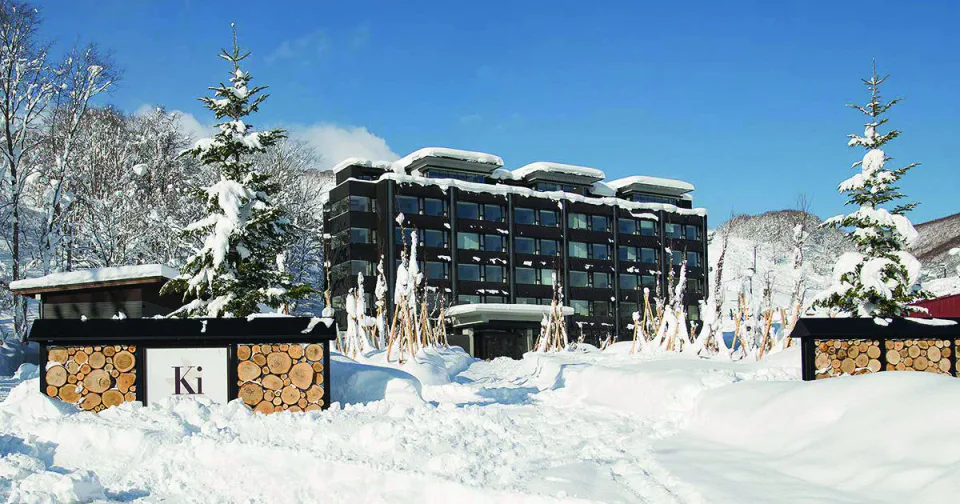
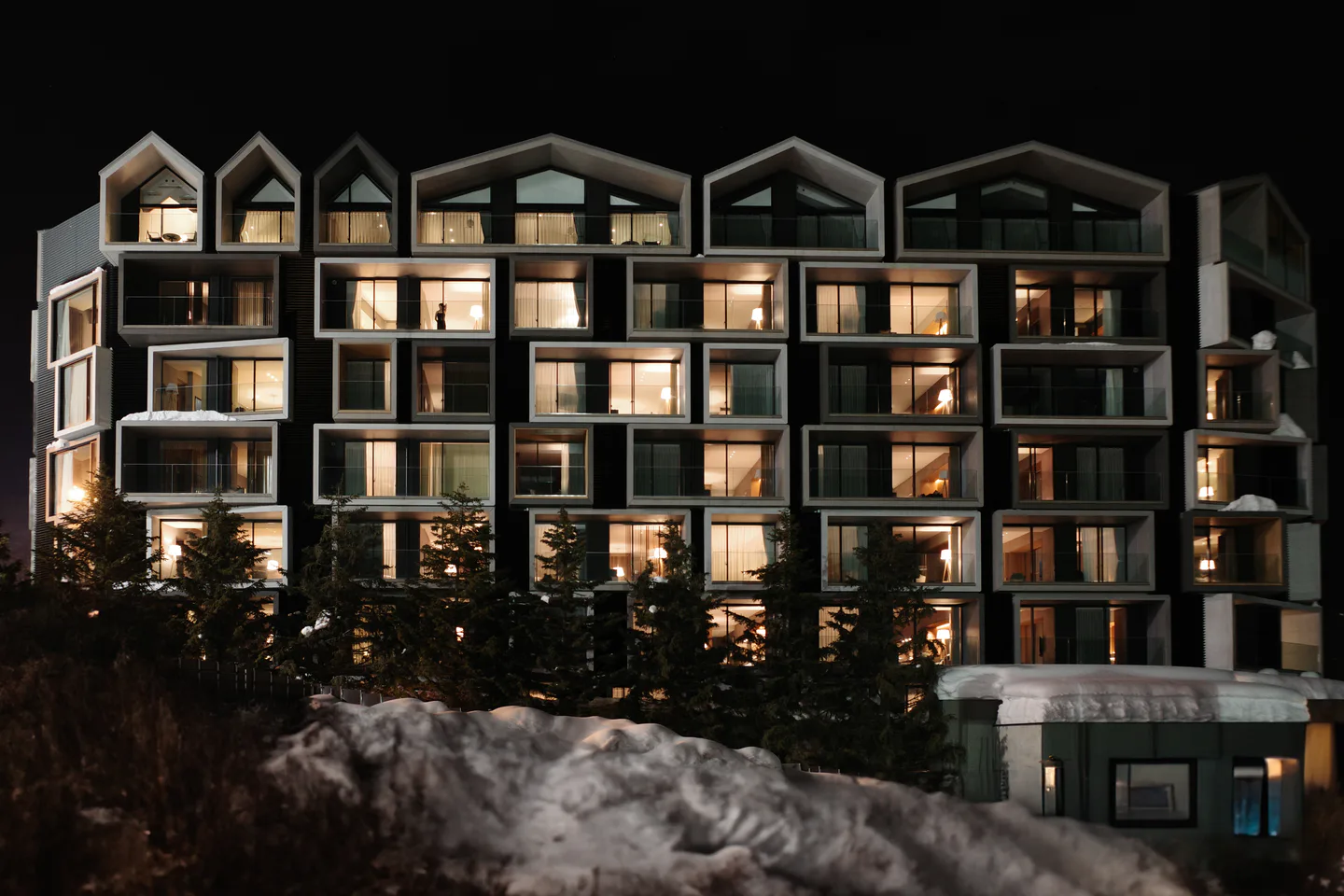
The hotel image above shows Ki Niseko, while the earlier night exterior shows MUWA. They are different Hirafu properties with different reasons to pay more. Visual proximity to snow in a photograph does not establish the group’s lesson route, lift status or ski-back difficulty; those are the booking checks.
Park Hyatt: a HANAZONO holiday, not a Hirafu address
Park Hyatt Niseko Hanazono is a slope-side hotel tied to the HANAZONO area. Its fact sheet lists ski-in/ski-out, ski valet, an onsen, a 25 m indoor pool and standard guestrooms from 65 m². Those facilities can make a coherent stay for several generations: skiers take lessons or explore HANAZONO while a non-skier has space and indoor options without following the village circuit. It is a stronger answer when the group wants the hotel and resort together than when it expects Hirafu restaurants every evening.
The location has a cost in flexibility. Someone who wants the Hirafu bar and dining scene nightly needs a transport plan back to HANAZONO, and someone whose lessons begin in Hirafu may spend the hotel’s supposed ski-door saving on a cross-area transfer. Niseko versus Rusutsu considers the appeal of a self-contained mountain trip, while the Niseko area guide locates the four main bases.
Dates can veto Park Hyatt as a slope-access purchase. Niseko United currently schedules HANAZONO through 11 April 2027, earlier than Grand Hirafu and Annupuri, both scheduled through 5 May. A hotel room does not move when a connected ski operation closes. A late-April guest may enjoy the property and its pool but should not pay for HANAZONO ski-in/ski-out that is no longer operating. The same date check applies to a Niseko Village hotel after 4 April.
Night skiing and late spring change the value of the same door
Niseko United schedules night skiing for 12 December 2026 through 22 March 2027. In that window, a guest can ski, return for food or rest, then use a nearby lift again. This can create additional valuable hotel crossings for a family or group with different energy levels. Outside that window, the physical hotel is unchanged, but those evening transitions vanish. Put the booking dates beside the lift schedule before valuing night access.
The larger late-season mismatch is among ski areas. Niseko Village is scheduled to finish 4 April, HANAZONO 11 April, and Grand Hirafu and Annupuri 5 May. Between 12 April and 5 May, a Hirafu or Annupuri property may still be connected to operating terrain while a HANAZONO slope-side property is not. All dates are subject to conditions and operational changes. The correct test is the status of the lift and run next to the specific hotel, not whether “Niseko” appears open somewhere on a general map.
Wind and poor visibility can also close a lift or interrupt the route during the normal season. Direct access is a convenience linked to mountain operations, not independent transport infrastructure. Before paying heavily for it, ask whether the hotel still suits the group on a no-ski day: is there a practical return from another base, enough room, meals, laundry or non-ski activities? Niseko versus Furano gives a broader resort decision, while the Hokkaido eSIM guide covers connectivity for checking live status away from the hotel.
A mixed party should also decide what non-ski days actually look like. Hokkaido winter activities without skiing shows that a break can be an outing rather than a hotel day, while Niseko snowmobile booking requires its own time and energy. If the group plans to leave the resort for those activities, slope-door access matters on fewer days than the room-night count suggests.
What to ask before paying the premium
Ask the property which exit fully equipped guests use, which marked run carries the normal ski-back, and whether the weakest skier can descend it safely. Ask whether the route crosses a public road, car park or stairs. Snowboarders should ask about flat sections. Confirm the actual lift and lesson meeting point for your dates, not only the distance to the nearest gondola. A school based elsewhere can impose a daily transfer even on guests who sleep at a piste.
Also confirm where rented skis and boards are fitted, stored, dried and serviced. A ski room in another building can convert a direct-looking map into a gear-carrying chore. Ask about an early finish, a closed return run and night-ski equipment collection. If a booking page mentions only “ski access”, shows the summer landscape, proves only ski-out, or gives a lift distance without the guest exit, request a winter route map or clear written explanation before purchasing a non-refundable rate.
The number of ski days provides a price frame. One day rarely supports a large slope-door premium unless children or lessons make the logistics unusually demanding. Two days can benefit a family but require a real group-specific saving. Over three to five ski days, repeated mornings, returns and valet use accumulate; after that, room and evening comfort also have time to matter. None of these patterns guarantees that the most expensive hotel is best. Use New Chitose to Niseko transport choices to include the airport leg in the full hotel decision.
At six ski days or more, give laundry, a kitchen, drying arrangements, recovery space and evening food the same scrutiny as the snow exit. A feature used for a week can become either a pleasure or a daily irritation. For a one-day stay, by contrast, a good village room with easy rental pickup may solve the trip at lower total cost. This is why a ski-day count is a way to test a premium, not a recommendation to automatically book the priciest slope property for the longest holiday.
Seven site scores across five ski doors
Dimension | Ki /10 | Skye /10 | AYA /10 | MUWA /10 | Park Hyatt /10 | Reason to check the exact stay |
|---|---|---|---|---|---|---|
Location | The first four serve different Grand Hirafu lift routes; Park Hyatt is a HANAZONO ski base, so a Hirafu lesson changes the journey. | |||||
Room | Ki suits a compact King-area plan; Skye, AYA, MUWA and Park Hyatt offer larger multi-room or residence categories, subject to exact beds. | |||||
Cleanliness | Current aggregated cleanliness categories are roughly 9.2–9.6/10 across the five, with review counts unequal. | |||||
Service | Current aggregated staff categories range around 9.2–9.6/10; Skye's 9.6 is highest in this snapshot. | |||||
Facilities | Onsen options appear across the group; Skye's laundry, MUWA's residence kitchen and Park Hyatt's pool and dining breadth suit different routines. | |||||
Food | Ki and Skye have hotel meal options, AYA is more apartment-led, MUWA has on-site dining, and Park Hyatt has multiple restaurants. | |||||
Value | A ski-door premium pays back only when the group repeats that lift route; larger or more elaborate properties need their rooms and extras used. | |||||
Overall | Skye has a broad multi-day Hirafu package, but the best reservation still depends on lesson meeting point, room inventory and open runs. |
The /10 marks compare the published 2026–27 ski access, room types and hotel facilities for a multi-day stay. Cleanliness and Service are informed by aggregated guest categories, with different sample sizes. A true ski door only helps when the adjoining run and lift serve the party's lesson and finish times.
The final choice by skier and date
Beginner lessons around King favour Ki. A mixed group planning multiple midday returns can use Skye’s valet and residence layout more fully. AYA can suit a longer Ace Family stay once its date-specific minimum night rule is acceptable. MUWA is compelling when direct Grand Hirafu skiing and onsen or residence time both belong to the trip. Park Hyatt is a HANAZONO-centred holiday, especially with non-skiers, provided the area is operating on your dates. These are conditional matches, not permanent hotel rankings.
A last check should be able to overturn your first choice: if the weakest skier cannot use the usual return, if the booked school starts elsewhere, or if the connected lift is scheduled closed, the ski-door premium has changed. Compare the remaining hotel merits and complete rate, including cancellation terms. Explore stays around the actual Niseko ski area once the area, room and dates are fixed.