
Hotel Green Plaza Hakuba makes a persuasive first impression: Cortina's slopes are outside, dinner and a large bath are in the building, and a family can leave its ski gear in a guest locker. The awkward part of the booking decision lies off the photograph. Cortina is one area in Hakuba Valley, toward the north. A room beside Cortina does not put a Happo-one lesson, a Goryu lift or an Echoland dinner at your door. This hotel is strongest as a deliberate Cortina stay; it is a less obvious base for a first Hakuba trip built around trying a different area each day.
JapanLayer hotel assessment by dimension
| Hotel | Dimension | JapanLayer score |
|---|---|---|
| Hotel Green Plaza Hakuba | Access | |
| Hotel Green Plaza Hakuba | Cleanliness | |
| Hotel Green Plaza Hakuba | Service |
Swipe to compare the hotel rooms
The resort has posted a tentative 2026–27 ski season of 12 December 2026 to 29 March 2027, subject to snow and operating changes. The hotel has begun selling winter plans, yet the detailed transport schedule visible on its access page at this update covers the green season. That distinction matters if you are arriving by rail with skis. Book the room only after you know how to reach it on your actual winter date, especially if the last train connection is late. The Tokyo airport to Hakuba ski-bag plan is useful at the start of this decision: a bag-forwarding choice changes how much weight you take through the final station transfer.
Count the days when the hotel-front slope is the one you will use
For two or three nights centred on Cortina, the hotel frontage is a substantial convenience. You can collect equipment, ski, return for a child's break and end the day at the bath without committing to a cross-valley vehicle journey. The property describes the slope as roughly ten seconds from the entrance. That is unusually close, but the benefit still depends on the runs and lessons your group will actually use. If a child has a class in another Hakuba area, the visible slope does not move the class here.
Hakuba Valley is a collection of ski areas, not one continuously skiable courtyard. A valley pass can cover participating areas and may entitle its holder to use the valley shuttle on valid ski days, but that is a transport right governed by the current timetable. It does not erase waiting, transfer or last-bus decisions. A three-day programme with two Cortina days and one other area can work from Green Plaza. Three separate lesson starts at Happo, Goryu and Tsugaike should prompt a new base comparison. The Happo versus Goryu accommodation guide makes that geographical difference concrete; the Happo versus Echoland stay decision adds the evening restaurant dimension.
↔ Scroll table left or right
| Your planned skiing | What Green Plaza gives you | What still needs a plan |
|---|---|---|
| Cortina on most days | Direct slope access, gear locker and quick room breaks | Lesson meeting point, lift operation and exact room plan |
| Cortina plus a neighbouring northern area | Strong first-day base; possible area-to-area movement | Current shuttle and return schedule |
| Happo or Goryu every morning | Hotel bath and room, but little use of Cortina frontage | Repeated valley transport and lesson arrival |
| One snow-play day with no serious skiing | Snow setting, meals and bath can be the trip | Activity opening dates and whether a lift pass is needed |
Before accepting “ski-in/ski-out,” check both directions. A slope may be skiable outward on a given day while the preferred return route is closed or unsuitable for a beginner. The Niseko slope-access hotel guide uses the same test even though the mountain is different. The Shin Furano Prince versus Nozo comparison illustrates a similar zone problem: a hotel can touch one part of a resort while a guest's lesson uses another. The Furano Zone versus Kitanomine breakdown makes the daily-transport method explicit. These cross-resort examples are methods for checking the claim, not reasons to treat the snow regions as interchangeable.
The five-person room and the seven-person maisonette solve different problems
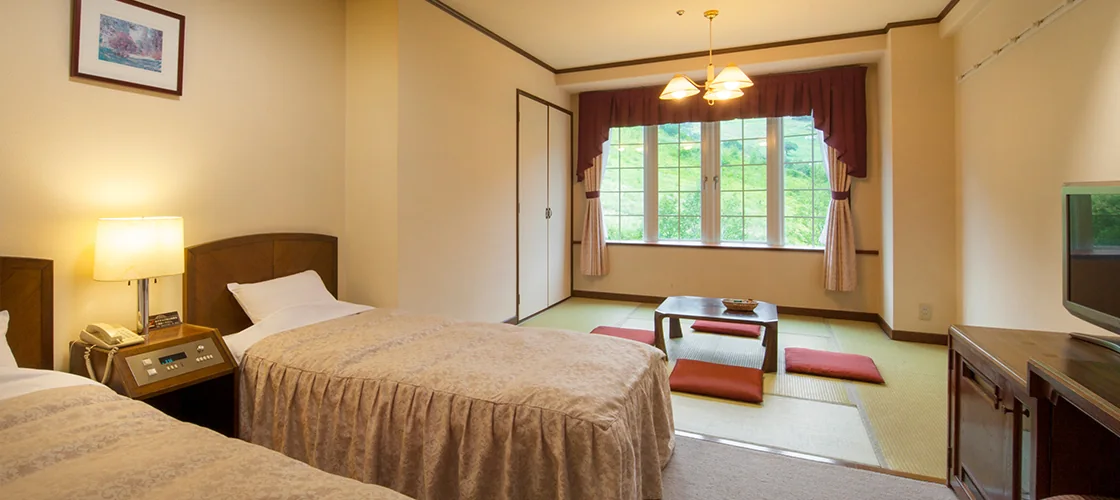
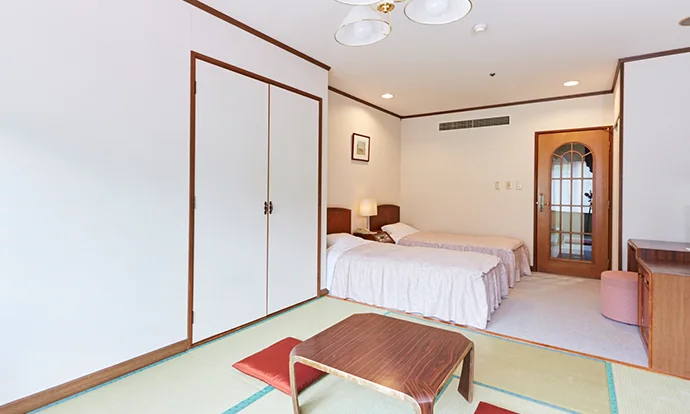
The standard Japanese-western room is around 29.8 m², with two single beds and a tatami section that can take futons; the published maximum is five guests. It is not a five-standard-bed room. Five adults with suitcases, boots and drying ski clothes may find that nominal capacity much less comfortable than the listing suggests. A family with children happy to sleep on futons may use the same configuration well. The hotel notes that guests lay out their own futons. If a member of the party cannot comfortably use floor bedding, eliminate the room before price comparison. Also check the selected view: the hotel's snowy exterior photograph does not make every room mountain-facing.
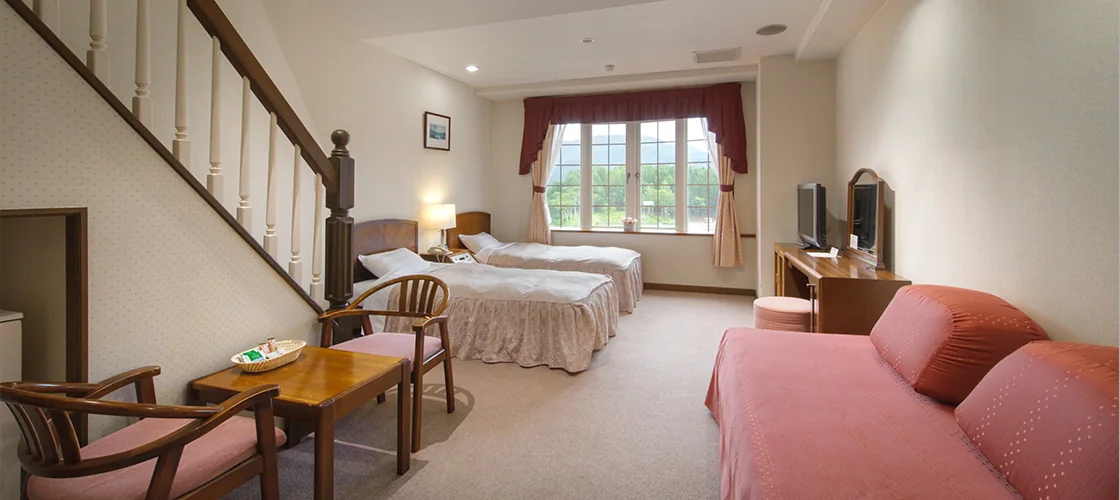
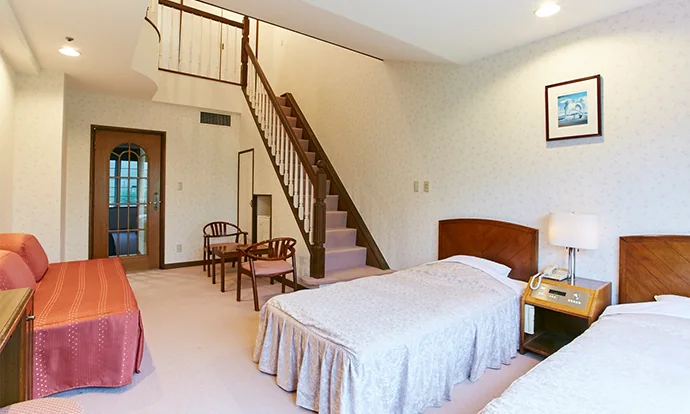
The larger standard maisonette is about 55.61 m² and can accommodate up to seven. Its downstairs beds and upstairs tatami area create useful separation for a group, but the entrance and internal plan involve stairs. A grandparent with limited mobility, an adult recovering from a knee injury or a parent repeatedly visiting a young child at night may prefer a smaller single-level arrangement. An “upgrade” by area can introduce precisely the movement a winter stay was meant to reduce. Ask who sleeps upstairs, where the bags can remain without blocking the stair, and how many bathrooms the configuration actually offers.
For five travellers, compare two standard rooms with one larger maisonette. Two rooms might provide more bathrooms and less conflict around bedtime even if their combined floor area is lower. The number on a booking card often hides meal-plan differences, so keep dinner, breakfast, lift benefits and cancellation terms aligned. The Niseko family apartment checklist is helpful for identifying real sleeping spaces and bathrooms, although a Hakuba hotel room is not a self-catering Niseko apartment. If your family genuinely needs an apartment and restaurant flexibility, the problem may be with the accommodation type rather than which Green Plaza room to pick.
The guest ski lockers are useful from check-in through check-out according to the published guest conditions. Do not assume that room access or a locker entitlement automatically extends through a full final ski day after the room has been vacated. If your train leaves late, ask exactly where gear and luggage can be stored, whether there is a place to change and when rental returns close. These conditions can determine whether the departure morning is a ski day or only a breakfast-and-transfer morning.
Bathing and dinner are part of a two-night calculation
The Cortina hot-spring bath is a real attraction after a cold day. The hotel's current guest schedule lists morning use from 05:00 to 10:00 and afternoon/evening use from 13:00 to midnight. Sauna hours are more limited; a 05:30 morning soak does not imply the sauna is available then. The bath complex includes several tubs, but some use heated ordinary water. If mineral spring water is the reason for your choice, distinguish the source-fed bath from the surrounding bathing facilities rather than counting “eight baths” as eight separate springs. A guest who mainly wants a warm shower and rest may care more about opening hours than water classification.
Work through a real arrival. If the rail and hotel transfer bring you to the room at 19:30, and dinner is at 20:00, much of the evening has already been allocated. You can still bathe later, but you have bought fewer hours of the resort than a guest arriving at 15:00. With a second night, the middle day is transfer-free: ski from the entrance, come back before dinner and use the bath without packing. That can be a better use of this hotel than a one-night stop between widely separated Hakuba areas. The one-night versus two-night Kinosaki onsen guide concerns another destination, yet its method of counting usable bath and travel hours is applicable here. If this is your first Japanese bath stay, the bathing etiquette guide is useful preparation before you arrive tired from the slopes.
If tattoo policy affects your party, check the hotel's current bathing conditions before paying. If dinner is central to the plan, confirm the exact meal sitting and whether the rate includes it. A room-only rate at a slope-side property can look cheaper until you account for the meal you will need after the last shuttle or after a tiring snow day. For a group that wants different restaurants each night, the isolated setting becomes a cost in travel and coordination. The Happo versus Echoland guide is a more relevant alternative than assuming an on-site dinner can substitute for village dining preferences.
Snow play and children's facilities also run on specific dates and times. A parent booking a trip because a photograph shows a particular activity should verify it for the travel days; weekend or school-holiday operation may differ from ordinary weekdays. A play facility does not mean supervised childcare is included. If both adults intend to ski, budget for the child's lesson or a confirmed care arrangement instead of treating the hotel as a substitute. The Rusutsu Resort Hotel versus Westin decision shows another family-resort case where the morning route and child's programme matter more than an abstract “family-friendly” label.
Minami-Otari is still a transfer away
The hotel's access information places the journey from Minami-Otari Station to the property at about twenty minutes by shuttle, with another possible route from Hakuba-Norikura in around ten to fifteen minutes. The detailed public timetable visible at this update is dated for spring to autumn 2026, with advance reservation conditions. It is not a 2026–27 winter schedule. Ask the hotel for the actual winter pickup, reservation deadline, luggage rule and last usable departure matched to your train. A map pin near “Hakuba” is not a walking route from the main Hakuba Station with skis.
If you arrive via Nagano Station and a bus into Hakuba Valley, identify the bus stop closest to the hotel's winter transfer. If you arrive by rail, protect the connection before the final shuttle. Booking a late train with a perfectly matched last bus can be fragile in snow. The Tokyo Station early-train hotel guide addresses a different end of the journey but the same practical problem: moving people and winter luggage before a time-critical rail service. For travellers adding a Nagano snow-monkey excursion, put the side trip on a day that does not destroy the full Cortina morning you paid to have outside the hotel.
Driving brings bags directly to the hotel but is not automatically the cheaper or safer solution. A three-night Cortina stay may leave a rental car parked almost the entire time. On the other hand, a group that plans independent dinners or visits outside the northern ski areas might use the car more. Price rental days, winter equipment and fuel, then consider road conditions and whether anyone will want to drive after dinner. The Hokkaido winter driving guide is region-specific; use its risk questions rather than copying Hokkaido road timings into Nagano. If you want the freedom to move across Hakuba Valley, the actual shuttle and parking plan should decide whether this particular hotel still suits you.
The final transfer deserves extra slack before an international flight. Checkout, gear collection, hotel shuttle, bus or rail, and airport train form a chain in which a late first vehicle can cause a costly missed connection. A one-night Tokyo or Nagano buffer may be more sensible than treating the last hotel-to-airport day as an ordinary morning. The Tokyo airport ski-bag guide can help decide whether boards should travel with you or be sent ahead, subject to delivery lead time and the hotel's acceptance rules.
When I would book it, and when I would redraw the trip
I would book Green Plaza for a family that wants two or three Cortina-centred days, can use its room bedding, plans to dine there and will actually use the bath. It converts the ski day into a short loop between room, slope and evening facilities. A non-skier can also enjoy a slow hotel day if the property itself is part of the purpose. I would confirm the precise child activity or lesson schedule rather than relying on a family-resort image.
I would redraw the plan if every ski day begins at Happo, Goryu or another area far from Cortina; if the group wants a different village restaurant each night; or if the winter station transfer remains too uncertain for the booked arrival. In those cases, the slope outside the window is an amenity you are paying for while travelling elsewhere. The Sapporo city versus ski-resort hotel choice is a different regional example of the same time calculation: every early morning shuttle should appear in the accommodation budget, even when the room itself is less expensive.
At payment, align four details: the exact bedding for every guest, the included dinner and lift benefits, the current winter transfer, and the dates when Cortina's facilities operate. The Niseko lift-pass and rental cost breakdown is a useful reminder to price those items separately, but Hakuba ticket terms must be checked on their own. If the four details fit, the hotel's location is a clear strength. If any one fails, a wider Hakuba base may give you more usable skiing despite a longer walk to a slope on the hotel photograph.
Updated 3 October 2026. Confirm winter transport and the exact room, meal and ski-area conditions for your travel dates.