
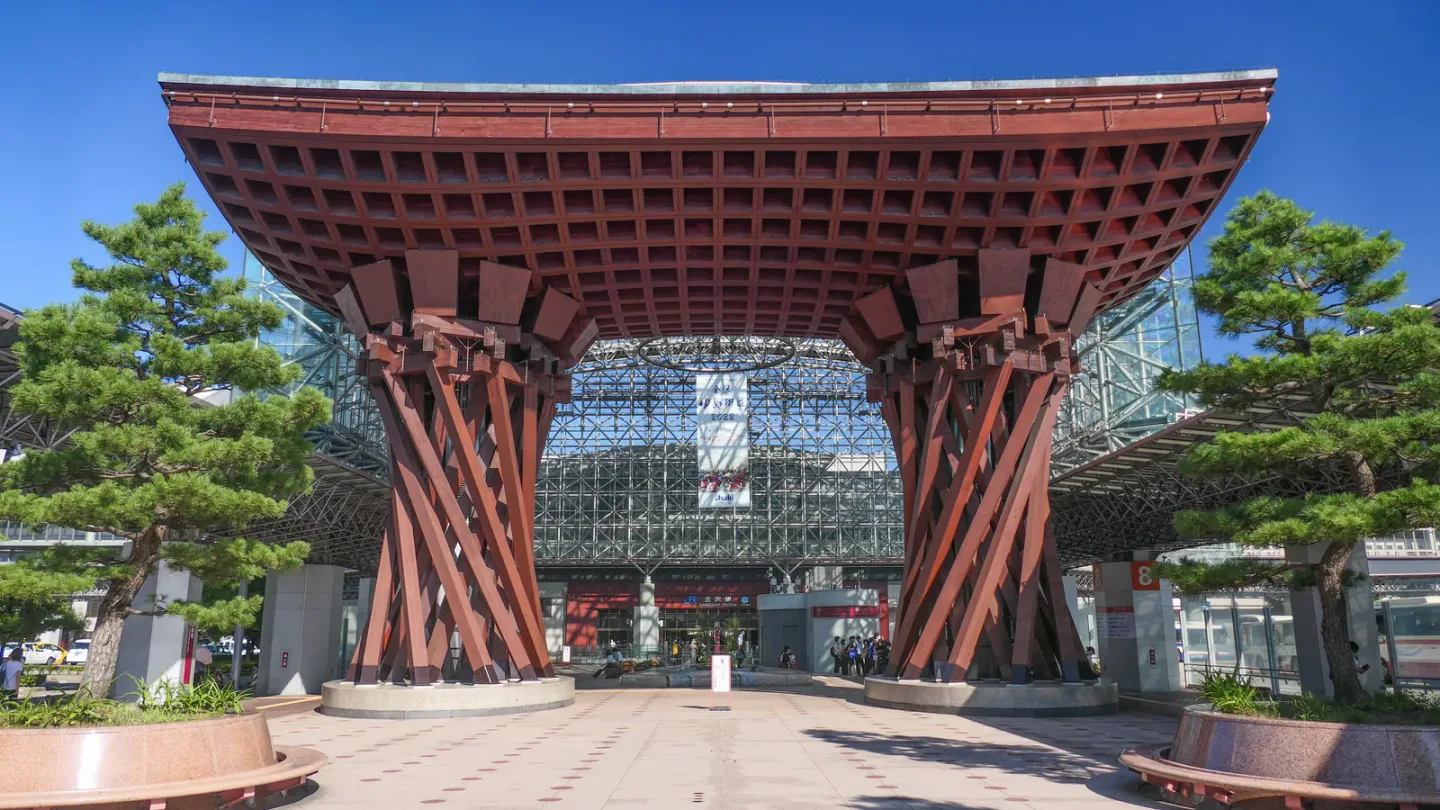
Five days in Hokuriku can be satisfying when you choose one branch beyond Kanazawa. Seven days is a better frame when Toyama’s alpine route and a Fukui excursion both matter. The Hokuriku Shinkansen connects the main cities; it does not shorten the hours on Tateyama Kurobe or remove the train-and-bus journey to Katsuyama’s Dinosaur Museum. Count those long destination days before counting prefectures.
The direction should match where you enter and leave Japan’s central coast. From Tokyo or eastern Japan, Toyama → Kanazawa → Fukui can lead naturally toward Kansai. Coming from Kyoto or Osaka, reverse it. Kanazawa often sits in the middle with at least one morning free of checkout. If you enter from Takayama or Shirakawa-go, start with the Takayama–Shirakawa-go–Kanazawa route before attaching another region. The entry journey changes what is realistic on Day 1.
↔ Scroll table left or right
| What must happen | Days to allow | Reason |
|---|---|---|
| Kanazawa and an Alpine Route day | Five can work | Two bases; keep one complete mountain day. |
| Kanazawa and the Dinosaur Museum | Five can work | Stay in Fukui before the Katsuyama excursion. |
| Toyama, Kanazawa and Fukui city sampling | Five only if deliberately light | The fast rail corridor helps when neither mountain nor museum needs a full day. |
| Both Tateyama and a Fukui anchor | Seven | Give each its own day rather than attaching it to a move. |
| Family mountain trip with weather risk | Prefer seven | A movable mountain day has practical value. |
Where a five-day schedule first becomes fragile
A major experience deserves its own date when it degrades sharply if attached to packing, luggage storage and a transfer. A complete first Kanazawa day can be one such experience. Tateyama Kurobe is the clearest other example: the operator puts a crossing from Tateyama Station to Ogizawa at roughly six to eight hours including sightseeing and transfers. The Fukui Prefectural Dinosaur Museum becomes another for a family whose children have made it the reason for coming. These are not short stationside stops. A five-day trip handles Kanazawa plus one of them well; putting both in the same five dates raises the number of failure points.
The pressure comes from more than scheduled train minutes. Before and after every intercity ride come checkout, the walk to the station, platform margin, luggage decisions and arrival at the next room. A fast Shinkansen can tempt you to change hotels every night, but the city day lost to repeated moves is real even when no single train takes long. Rather than claiming a universal 45–90 minute “tax,” write each actual move as a chain. A station hotel and backpacks differ from a family packing several cases after breakfast. The central Japan route by elevation shows why a rail map is also a poor substitute for daylight and terrain when foliage is the goal.
↔ Scroll table left or right
| Pressure | Lower-risk version | Higher-risk version |
|---|---|---|
| Main experiences | One major outing outside Kanazawa | Alpine Route, museum and a rural Fukui branch |
| Hotels | One change in a five-day trip | Toyama to Kanazawa to Fukui in five days |
| Last-mile travel | City sights near a station | Katsuyama, Eiheiji and Tojinbo on separate branches |
| Disruptions | Flexible urban visits | Weather-sensitive mountain and timed museum booked around checkouts |
Kanazawa is a useful stabiliser because Kenrokuen, Kanazawa Castle, Omicho Market and the historic districts can fill a city day without a new hotel. One night often means arriving one afternoon and checking out the next morning; the calendar shows two dates but the unbroken sightseeing time may be slight. Two nights allow one morning to begin without packing. That can be more useful in a short trip than a third prefecture name. If the route is mainly temples, markets and streets, Kanazawa’s compact city core also makes a poor-weather day easier to reorder than a booked mountain crossing.
Toyama earns a base when the Alpine Route is the point
The 2026 Tateyama Kurobe Alpine Route season runs April 15–November 30. As of October 24, the current season remains open, but November departures have their own timetable and mountain conditions can alter operations. Do not sell a summer itinerary as a winter one: outside the operating season, the reason to reserve a full Toyama mountain day disappears. A winter visit can still include Toyama city and the Shinkansen corridor, but the five-versus-seven-day calculation changes. Use the Alpine Route transport and timing guide for the actual direction of travel.
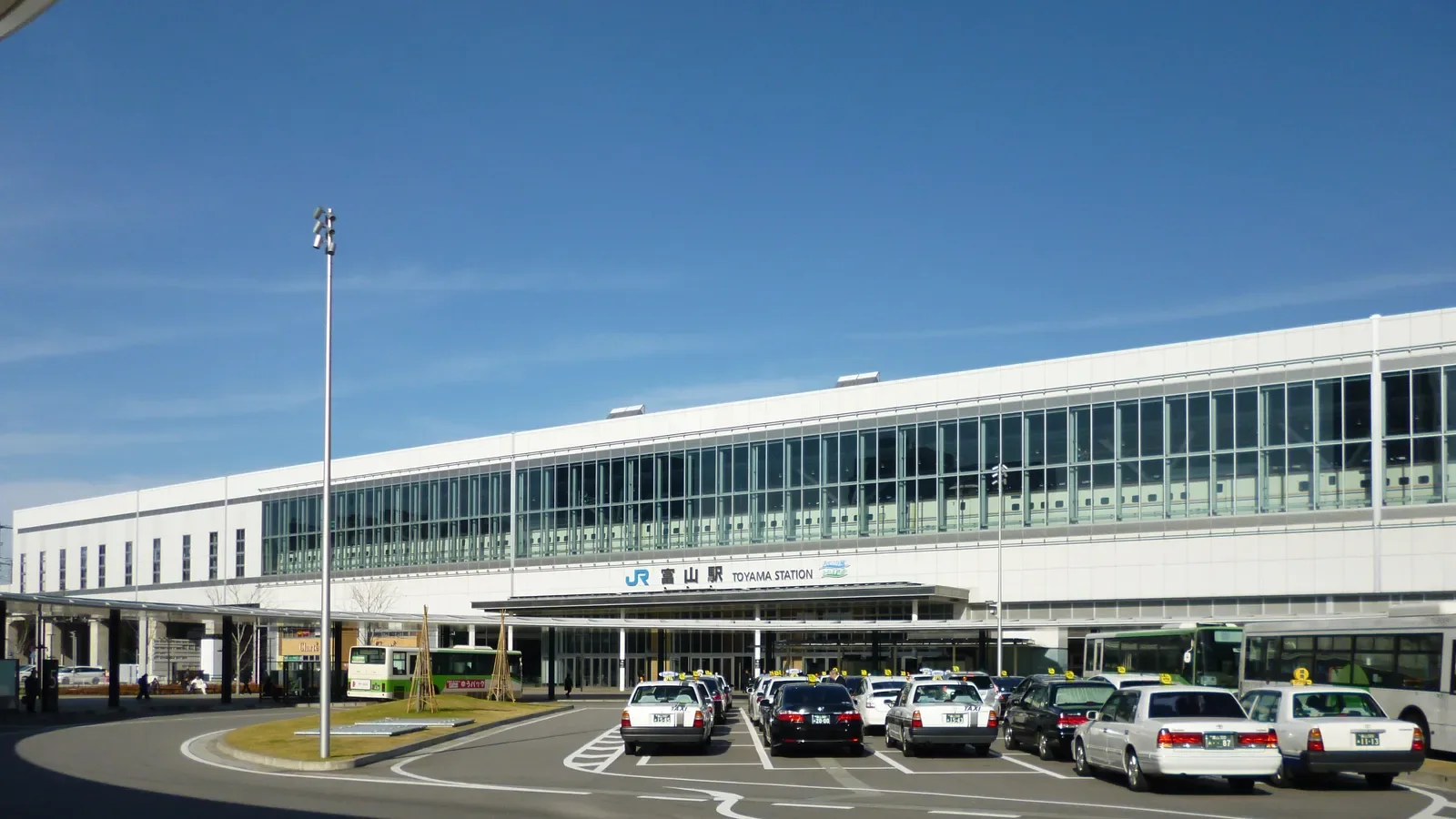
The operator’s same-day fare examples show how large the commitment is: Dentetsu Toyama to Ogizawa costs ¥12,360 one way and is listed as a seven-to-eight-hour trip; Dentetsu Toyama to Murodo and back is ¥10,220 and also occupies much of a day. These are 2026 route-specific prices, not universal sightseeing budgets or figures to assume next year. The one-way path makes sense when the trip will continue east toward Shinano Omachi, Nagano or Matsumoto. The round trip is simpler when the same Toyama room will hold your bags and the next rail move heads back west.
↔ Scroll table left or right
| Alpine plan | When it fits | Luggage and day cost |
|---|---|---|
| Toyama to Murodo and back | The trip continues west and Toyama remains the base. | Most of a day on transport and mountain; no hotel change. |
| Toyama to Ogizawa | The next destination lies toward Shinano Omachi, Nagano or Matsumoto. | Through-route avoids backtracking; bags need carrying or a forwarding arrangement. |
| Toyama city without the route | Winter closure or a weather-driven change removes the mountain anchor. | City time is easier to compress, making a short three-region sampler possible. |
A through-crossing raises a luggage decision that a map does not show. The 2026 same-day forwarding service between Dentetsu Toyama and Shinano Omachi or nearby Omachi Onsen is scheduled through November 8 and lists ¥4,000 per item. After that date, do not assume the service remains available merely because the Alpine Route itself continues to November 30. Carrying bags through a series of mountain vehicles is another option, subject to each transport rule and your own capacity. Book the route direction and baggage method together. The Toyama–Tateyama–Matsumoto itinerary becomes relevant if the mountain is a through-route rather than a Toyama day trip.
Autumn colour moves by elevation, so the mountain’s useful dates are not the same as Kanazawa’s urban foliage dates. A lowland calendar cannot determine what you will see at Murodo or Kurobe Dam. The Tateyama elevation-specific foliage guide helps set the season, but weather and the day’s operational notices still govern a crossing. A second possible date in a seven-day plan provides resilience if the mountain is the trip’s main goal. It is not a guarantee that the weather will cooperate.
Fukui’s attractions point away from its Shinkansen station
The rail corridor brings you quickly to Fukui, yet the reasons to visit disperse. The Dinosaur Museum is at Katsuyama; Eiheiji, Tojinbo and Awara Onsen each require a separate local journey. Treating “Fukui” as one compact sightseeing square leads to impossible half-days. Current Echizen Railway information gives around 55 minutes from Fukui to Katsuyama by local train, followed by a bus or taxi to the museum. A child’s long-awaited dinosaur visit should not be placed after checking out in Kanazawa, riding the Shinkansen, dropping bags and finding the local rail platform.
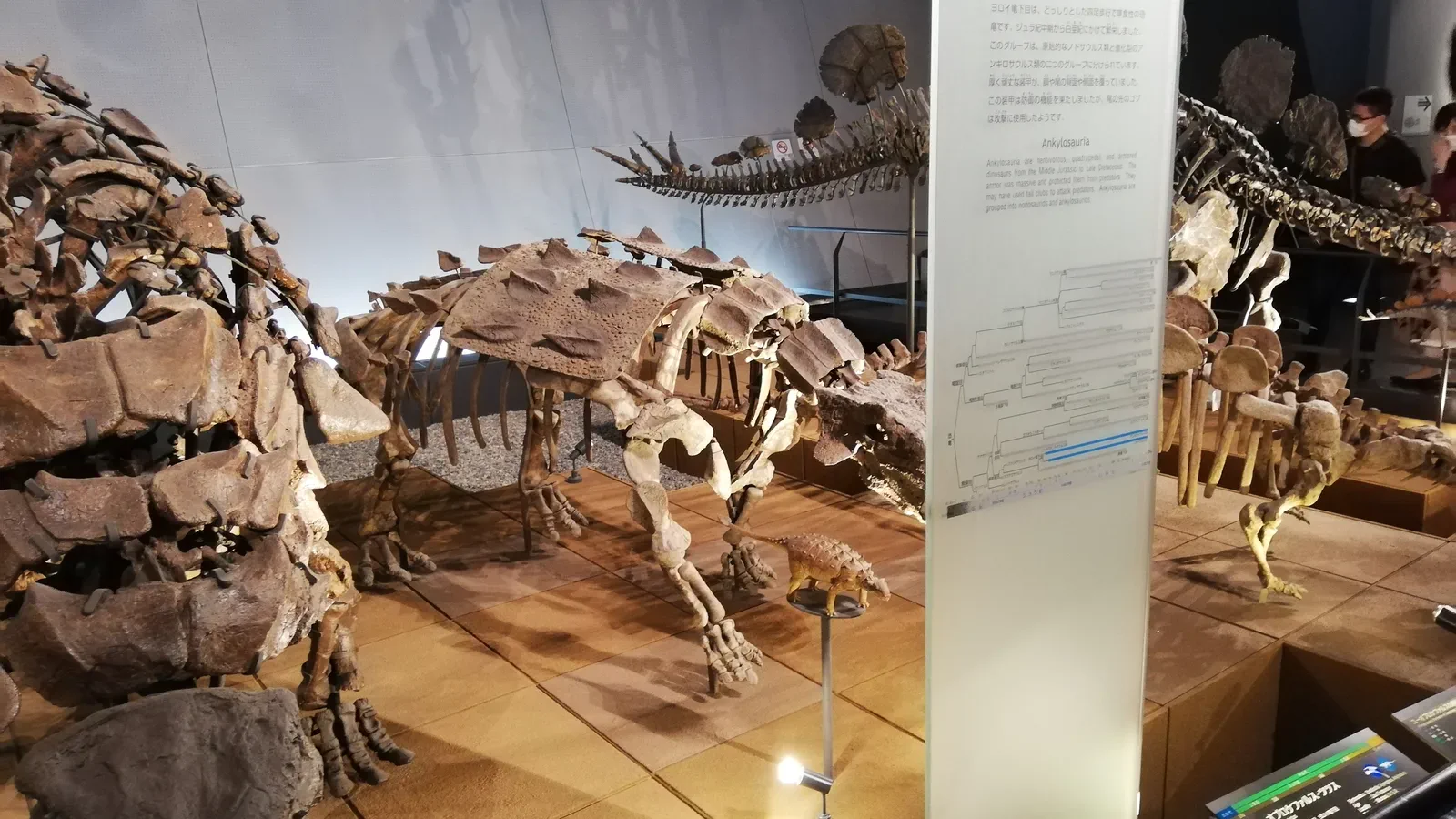
The museum sells dated admission from 60 days before the visit. Advance time-specific tickets are the dependable route; same-day purchase can disappear when capacity is used. Its current permanent-exhibition admission is ¥1,000 for an adult, ¥800 for a high-school or university student and ¥500 for a primary or secondary pupil. Extra exhibits or experiences can cost more. If this is the family anchor, decide the museum day before finalising the Fukui hotel and local transport. The Fukui Station versus Awara Onsen guide tests which side should hold the night.
Echizen Railway’s Dinosaur Museum transport set currently costs ¥1,700 per adult and ¥900 per child. It combines the railway day pass with applicable Katsuyama city buses; museum admission is separate. That means one adult paying for the transport set and permanent exhibition would spend ¥2,700 before the intercity journey, food or additional attractions. Two adults would spend ¥5,400 on those components. Add a primary or secondary-school child at ¥900 for the set and ¥500 museum entry, and the comparable three-person subtotal is ¥6,800. These calculations are in yen because an invented fixed dollar conversion would age faster than the route choice.
↔ Scroll table left or right
| Museum party | Rail/bus set plus permanent entry | What is not included |
|---|---|---|
| One adult | ¥1,700 + ¥1,000 = ¥2,700 | Intercity train, meals and special exhibits |
| Two adults | ¥5,400 | Intercity train, meals and special exhibits |
| Two adults and one primary/secondary student | ¥5,400 + ¥900 + ¥500 = ¥6,800 | Intercity train, meals and special exhibits |
That subtotal exposes why a fast train into Fukui does not make the museum a cheap, effortless add-on. The local train, final bus, timed admission and family energy all begin after the Shinkansen journey. A pre-booked museum slot also reduces the ability to improvise after a delayed morning. Plan a Fukui night ahead of the visit or another base with a clearly easier Katsuyama connection. If dinosaurs are absent from your interests, do not reserve the same day out of habit; Eiheiji or a coast-and-onsen pairing can become the main reason for Fukui instead.
The two coherent five-day versions
Kanazawa plus Toyama suits a mountain-led visit. Day 1 can absorb arrival uncertainty in Kanazawa; Day 2 is a complete city day. Move to Toyama on Day 3 without trying to append the Alpine Route. Day 4 is the protected mountain day, and Day 5 follows the chosen exit. If Day 4 crosses to Ogizawa, the final night or Day 5 departure may be east of Toyama. That is a directional route rather than a Toyama round trip, and it needs a different baggage plan. The same dates in winter should use a different Day 4 because the 2026 route closes after November 30.
↔ Scroll table left or right
| Day | Kanazawa and Toyama | Purpose |
|---|---|---|
| 1 | Arrive Kanazawa; use the remaining hours locally. | Avoid a booked long excursion on arrival. |
| 2 | Full Kanazawa city day. | Kenrokuen, castle, market and districts without checkout. |
| 3 | Travel to Toyama; leave the afternoon light. | Keep the hotel move off the mountain day. |
| 4 | Alpine Route, with Murodo round trip or eastbound crossing. | Protect the long, weather-sensitive experience. |
| 5 | Depart Toyama, or continue from the east-side endpoint. | Match the exit to the mountain route chosen. |
Kanazawa plus Fukui suits a dinosaur-led family trip or a temple/coast alternative. Use the second day in Kanazawa without checkout, then move to Fukui on Day 3. Place the museum or another principal Fukui sight on Day 4 after sleeping near the correct departure. Day 5 can continue toward Kansai. A westbound route is natural when the next stop is Kyoto or Osaka; reverse the sequence if the trip enters from Kansai and exits east. This plan sacrifices Toyama’s mountain day deliberately, rather than claiming all three regions fit because a train schedule connects their stations.
↔ Scroll table left or right
| Day | Kanazawa and Fukui | Purpose |
|---|---|---|
| 1 | Arrive Kanazawa with no timed attraction. | Travel disruption does not consume a reserved visit. |
| 2 | Full Kanazawa day. | One uninterrupted city day. |
| 3 | Move to Fukui; add one manageable city or local sight. | Do not put Katsuyama after checkout. |
| 4 | Dinosaur Museum, Eiheiji, or a chosen coast/onsen branch. | Give the principal Fukui outing room. |
| 5 | Leave toward Kansai or the next destination. | Keep the route moving toward its exit. |
Can Toyama, Kanazawa and Fukui all appear within five days? Yes, as a light linear city sampler, with little luggage, an entry at one end and an exit at the other. It works when Tateyama and the Dinosaur Museum are optional, not when both have been quietly inserted as full-day promises. Two hotel changes and two long anchors would leave little space for a missed bus, a late arrival or a simple slow morning. If you want a broader central-Japan route through Shirakawa-go or Takayama, use the dedicated four-day corridor itinerary as the core, then add days rather than assuming the five-day Hokuriku version has spare room.
The seventh day buys separation between commitments
With seven days, Toyama, Kanazawa and Fukui can form a continuous east-to-west sequence. The two extra dates separate a long alpine outing from the Toyama-to-Kanazawa move and give Fukui a day that is not consumed by the Kanazawa checkout. They do not magically create enough time for every branch of Fukui. A typical westbound plan arrives Toyama, spends a complete day on Tateyama, moves to Kanazawa, explores Kanazawa without checkout, moves to Fukui, protects one Fukui anchor, then leaves toward Tsuruga and Kansai. Reverse it for a Kansai-to-Tokyo journey.
↔ Scroll table left or right
| Day | East-to-west example | Why that day exists |
|---|---|---|
| 1 | Reach Toyama. | Get into position for the mountain. |
| 2 | Tateyama Kurobe. | No checkout attached to the longest outing. |
| 3 | Travel to Kanazawa; use the afternoon and evening. | Move once and retain useful city time. |
| 4 | Full Kanazawa city day. | No luggage task interrupts the city sights. |
| 5 | Continue to Fukui; choose Eiheiji or lighter city time. | Keep the move away from Katsuyama. |
| 6 | Dinosaur Museum or a coast/onsen anchor. | Protect the Fukui-specific reason to come. |
| 7 | Leave via Fukui and Tsuruga toward Kansai. | The final base already points toward departure. |
The flexibility matters when the mountain weather is uncertain. The Alpine Route can suspend transport when conditions require it. A city afternoon in Kanazawa is easier to trade with another city period than a reserved mountain crossing. The museum has a different constraint: its admission is tied to a selected date and time, and popular days can sell out. Neither is fully flexible, but a seven-day trip can keep a move day from serving simultaneously as a hard-booked attraction day. A lighter city session can take the place of a disrupted outing without triggering a chain of missed check-ins.
Seven days still fails if the wish list includes Tateyama crossing, a full Kanazawa day, Dinosaur Museum, Eiheiji, Tojinbo, Awara Onsen, a second mountain excursion and Shirakawa-go. Those are separate journeys with separate departure points. Add days or remove a branch. A focused five days can be stronger than seven days that expand until each place gets only a station photograph. The one-base Kansai itinerary is a useful counterexample when the temptation is to move hotels solely because the region list grew.
Fukui works best when one local branch sets the hotel
For a car-free visit, choose the Fukui outing before booking a ryokan. Katsuyama is roughly 55 minutes by Echizen Railway from Fukui Station before the museum bus. Eiheiji-guchi, the rail approach to Eiheiji, is a different branch; the temple still needs onward travel. Mikuni Minato serves the coast direction for Tojinbo; Awara-Yunomachi serves the onsen town. Old timetable examples put these at about 25, 55 and 45 minutes respectively from Fukui, but the specific train and onward bus should be checked for the date. Their shared prefecture label does not mean they fit into one compact circuit.
↔ Scroll table left or right
| Fukui priority | Base logic | Mistake to avoid |
|---|---|---|
| Dinosaur Museum | Stay where the Fukui–Katsuyama train and onward bus are easy to start. | Putting timed admission behind an intercity move. |
| Eiheiji | Make the temple and its last-mile route the principal outing. | Treating it as a brief detour between opposing branches. |
| Tojinbo and Awara | Use coast and onsen as one linked theme. | Adding an extra hotel solely to collect an onsen-town name. |
An Awara Onsen night can improve the journey when dinner, bathing and the following morning are part of the stay. It can damage a tight plan when it becomes a fourth check-in without removing another night. If Tojinbo is the afternoon focus, coast and onsen can make a coherent pair. If a timed museum entry requires an early Fukui-to-Katsuyama departure next morning, sleeping by Fukui Station may be easier. Substitute Awara for a city night when it serves the actual route; do not append it to a full list. The Fukui rail-versus-onsen base comparison spells out that trade.
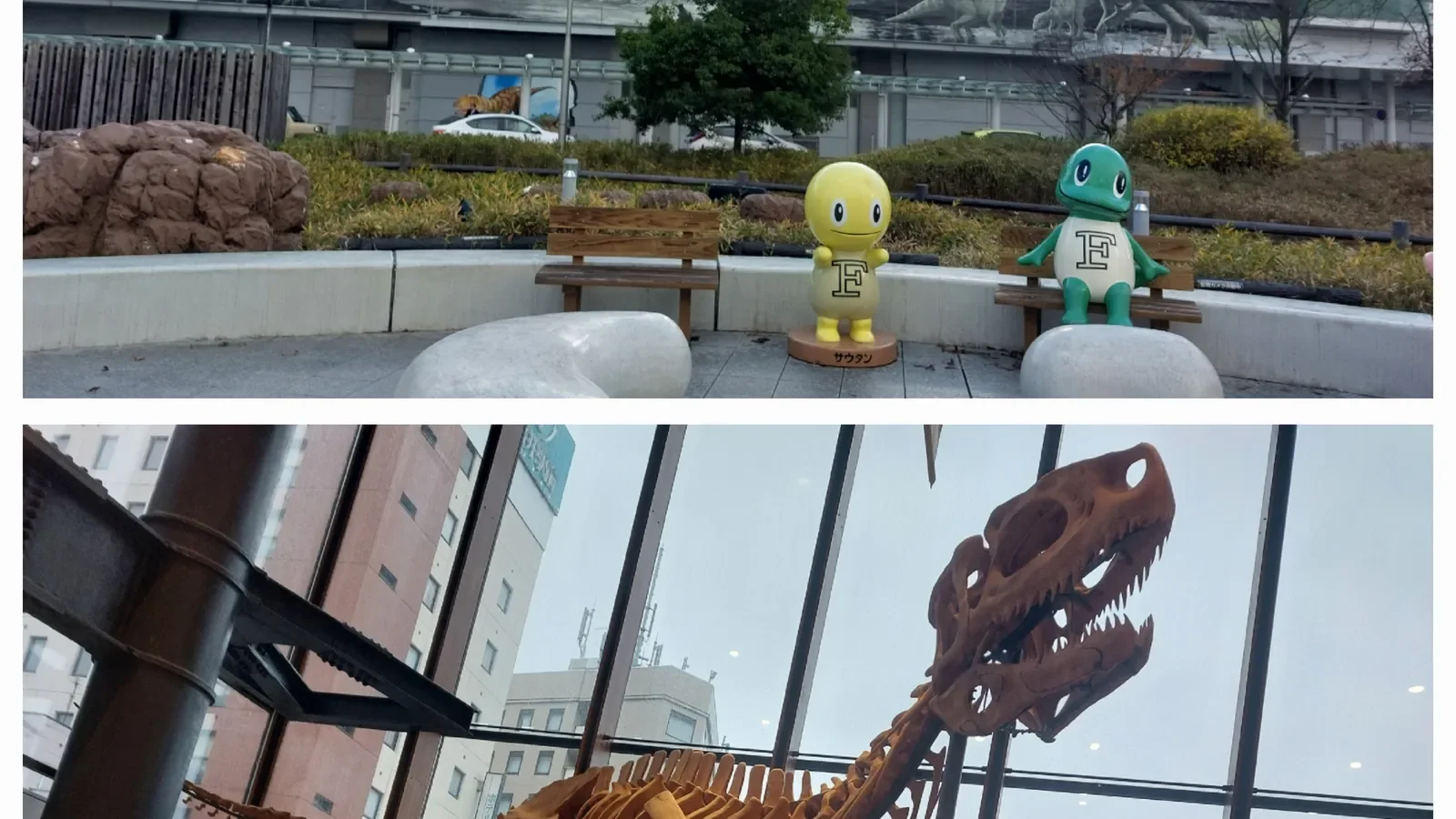
A family with a child who cares mainly about dinosaurs should protect the museum and use Fukui city as the sleeping base unless another place materially improves the Katsuyama approach. A couple interested in Eiheiji and an onsen dinner may reasonably make a different choice. A coast-focused traveller might pair Tojinbo with Awara and never visit the museum at all. There is no single “best Fukui two days” until the anchor is named.
Book the route in the right order
First, select the one or two experiences that would make the Hokuriku trip feel incomplete if missed. Second, verify whether the Alpine Route is operating on your dates and which side you should leave from. Third, choose the museum admission day if Katsuyama is a must. Only then place the hotel nights in Toyama, Kanazawa and Fukui. This order prevents a cheap room from forcing a long mountain backtrack or a museum visit immediately after a cross-region move. The Hokkaido five-day foliage itinerary uses a different geography but illustrates why peak-season outdoor days also need protection.
For a five-day trip, keep Kanazawa and one second base unless the visit is intentionally a city sampler. Use Toyama for the Alpine Route, with a full mountain day; use Fukui for dinosaurs, temple or coast, with a full local day. With seven days, a Toyama–Kanazawa–Fukui spine can carry one serious attraction at each end while keeping a no-checkout Kanazawa day. Choose the departure direction that advances toward your next stop. A fast Shinkansen links the bases; the real budget is the time after you leave each station.
If accommodation is the next decision, compare Kanazawa stays near your arrival route for the dates of the unhurried city day. A mountain-led trip can then compare Toyama Station-area rooms; a dinosaur-led trip can compare Fukui Station-area rooms. Use the exact entry, exit and attraction date before committing to any of those bases.
Other journeys to compare
Toyama–Tateyama–Kamikochi–Matsumoto five-day itinerary · Toyama–Tateyama–Kamikochi–Matsumoto five-day itinerary · Fukui Station vs Awara Onsen · Fukui Station vs Awara Onsen · Nagasaki 2-Day Itinerary: History, Food and Night Views · Tokyo, Kawaguchiko and Hakone: 3-Day Itinerary · Miyakojima 4-Day Itinerary: Turtle Snorkeling, SUP, Pumpkin Cave and Bri · Osaka for Couples: A 7-Day Itinerary That Saves the Best Nights for Kyot · Lake Chuzenji 2 Day Itinerary: Kegon Falls, Irohazaka and Hotels · Beppu Hells 2-Day Itinerary: Route, Transport and Onsen Tips · Hiroshima One-Day Itinerary: Peace Park, Castle and Shukkeien · Lake Towada Oirase 2 Day Itinerary: Buses, Walks, Cruise and Hotels · Naruko Gorge 2 Day Itinerary: 2026 Trains, Trails, Onsen and Hotels · Osaka 5-Day Itinerary: Give USJ a Full Day — Namba, Umeda, Kaiyukan and · 5- or 7-Day Kyushu Autumn Leaves Itinerary: Fukuoka, Yufuin, Beppu and M · Osaka and Kyoto 4-Day Itinerary With USJ: Does Kyoto Still Fit? · Ishigaki, Taketomi and Iriomote: A Flexible 4-Day Island Itinerary