
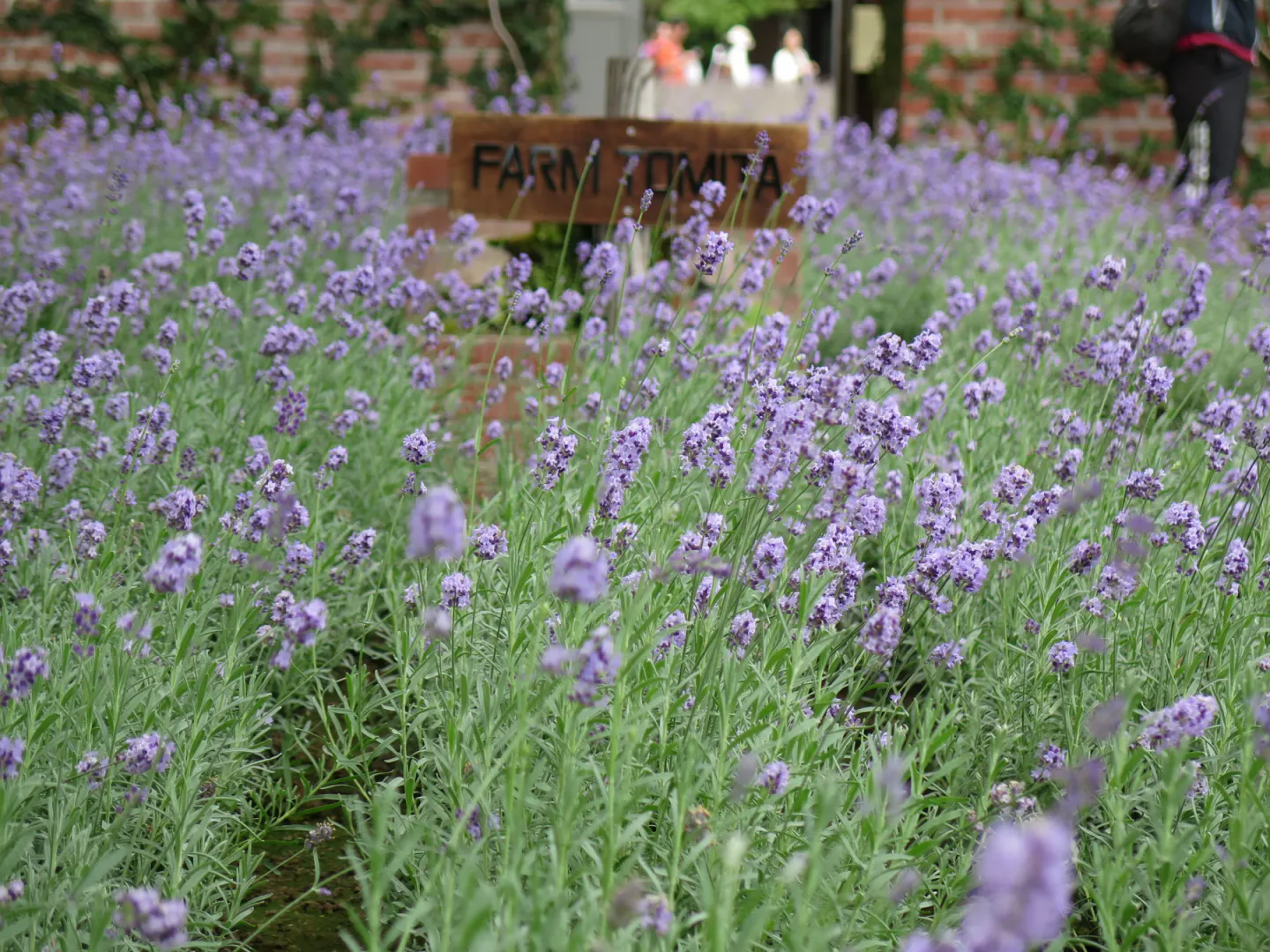
Plan a lavender-centered Furano day for the first half of July, then check the specific fields shortly before leaving. Farm Tomita's lavender areas bloom on different schedules; its Lavender East site had a particularly short 2026 operating season, June 20 to July 20. By late August, the main purple-field window is normally behind you even if the main farm remains open. A late-summer journey can still be a good Furano and Biei day, but it needs a different reason to go.
Without a car, start at Farm Tomita. Its fields, food counters and shops are close enough to make one substantial stop. A car becomes worthwhile if you will use it for a second landscape around Kamifurano or for a wider Furano–Biei route. Booking an overnight is a separate decision: the hotel should give you another useful morning, evening or regional day, not simply remove the train ride from Sapporo.
Bloom timing at Farm Tomita
↔ Scroll table left or right
When you travel | What to plan around | What can change the plan |
Late June | Early lavender color and the start of the seasonal access period | Some fields may not yet be at their strongest |
Early to mid-July | The best overlap of Farm Tomita fields and Lavender East's published peak window | Weather and actual flowering still vary by year |
Late July | Check individual Farm Tomita fields and live images | Lavender East closed July 20 in 2026 |
August or later | Build a broader flower, scenery and food day | Do not assume the main lavender landscape remains in bloom |
One day without a car | Farm Tomita as the anchor | Seasonal rail dates and final return service |
One day with a car | Farm Tomita plus one other area | Driving time, parking and how long you want at each field |
The date ranges are guides to where to look, not a flowering forecast for an unannounced future season. Farm Tomita describes Sakiwai Field and Lavender Forest Field as strongest around early to mid-July, while Irodori Field is concentrated in July. Lavender East publishes its own shorter window. Check the farm's current field updates or live cameras during the final planning week, especially when traveling near either edge of July.
Lavender East and the main farm are different visits
Lavender East lies about 4 km east of Farm Tomita in Kamifurano. The farm's Japanese page states that its 2026 operation has ended; it ran June 20–July 20, with hours of 09:30–16:30. The page places flowering from late June to mid-July and its best viewing in early to mid-July. The main Farm Tomita site's late-August 2026 hours were 08:30–17:30 and it remained open beyond that period, so seeing the main farm listed as open does not imply Lavender East is available.
That distinction matters for an itinerary built around a single view. If Lavender East's broad field is the photo you want, verify its next published dates before planning transport or a hotel. If your interest is a mix of flowers, food and the Furano landscape, the main farm gives a more flexible day. The season for one field should not be used as the calendar for every area in the valley.
A useful Sapporo day trip has one anchor
JR Hokkaido published 2026 one-day models from Sapporo that gave travelers enough time for Farm Tomita and Hokuseiyama Lavender Field on selected dates. That makes a day trip possible without pretending Furano is close. The plan is strongest when Farm Tomita is the anchor and every other stop must fit around the return train. Decide in advance which field or activity you would drop if the outward journey runs late.
The Furano Lavender Express linked Sapporo and Furano without a transfer on its 2026 operating dates, but its name outlasted the core bloom window. Its published late-season dates included August 29–30 and selected September days. Those trains were useful access to Furano and Biei; they were not evidence that lavender remained at peak. JR also notes that the section between Takikawa and Furano does not accept IC cards for ordinary fare settlement, so buy the correct ticket before boarding rather than assuming a tap card will cover the whole journey.
JR Hokkaido says the Furano–Biei Norokko train's regular operation ended in 2026, with its final day listed as September 23. That is a railway-history detail for 2026 visitors, not a reason to shape a later lavender trip around a train that may no longer run. For a future season, use the new timetable once published and distinguish the flower goal from the train goal.
What to do at Farm Tomita without rushing the fields
Give the main farm a real block of time. Walk the fields you came to see before a café or shop stop, then use food and shopping as a break. Field conditions may differ within the site: one lavender patch can be further along than another, while non-lavender flower bands create color outside the narrow lavender peak. Current farm images help choose what is worth prioritizing on the day.
If fresh fruit is part of the stop, the Furano melon guide separates eating a slice at the farm from carrying or shipping a whole fruit. Food counters have their own hours and seasonal availability. A flower visit late in the day can be valid even if the counter you wanted has closed, so place the meal before the final field circuit when necessary.
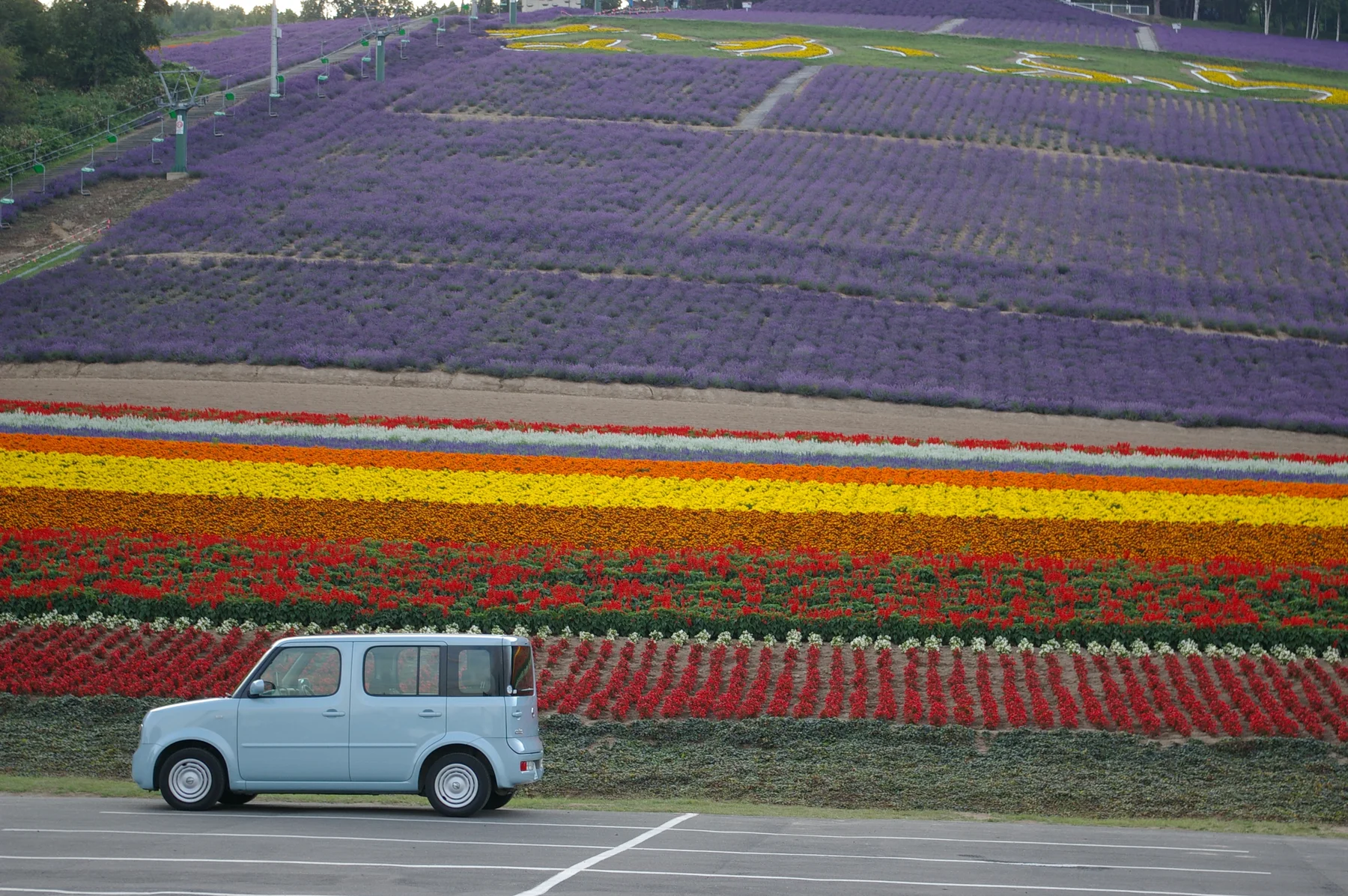
With a car, choose one second landscape
A car removes the need to coordinate every field with a sparse train or bus connection. It can make Lavender East during its operating period, a Kamifurano viewpoint or a Biei area practical on the same day. But the vehicle does not shorten time spent walking, taking photographs, parking or eating. Farm Tomita plus one distinct second area usually gives a clearer day than a list of five fields visited for a few minutes each.
Pick the second stop for something Farm Tomita cannot give you: a more open mountain backdrop, a different angle on the valley, or an onward route toward the next hotel. Hinode Park can serve the Kamifurano side of that choice. Biei is a larger extension with its own sights and driving time; add it because Biei itself matters, not because it appears close on a map. If the whole holiday is short, the five-day Hokkaido summer route shows what adding Furano and Biei displaces.
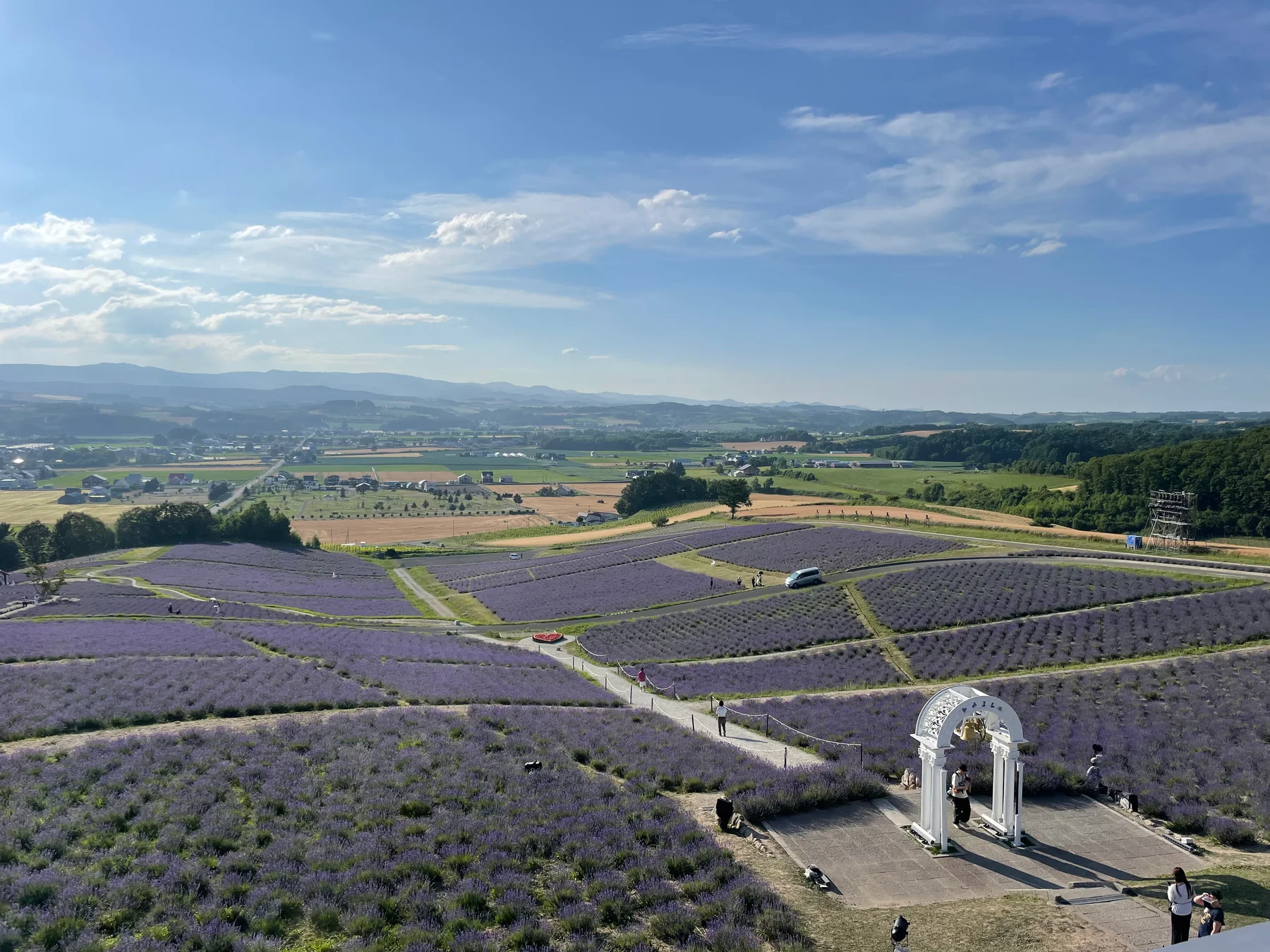
When sleeping in Furano changes the day
An overnight can put you at a field early, give a photographer another light window, or split Furano and Biei across two days. It can also make sense when your route continues away from Sapporo the next morning. Those are concrete benefits; avoiding one long rail journey is less persuasive if the hotel move uses up the saved time.
For a one-night stay, decide whether the second morning belongs to Furano's fields, Biei's hills or onward travel. The Furano versus Biei overnight comparison helps place the bed where that morning starts. A stay can improve the experience even without a car, but only if the final transport from the station to the accommodation and the next day's first stop is workable.
The car-free morning after a field visit
A station-area bed and a countryside bed solve different problems. The former makes an onward rail departure easier; the latter may put early field light nearer the door but leave the visitor dependent on a hotel transfer, taxi or limited local service. Before paying for either, trace the route from the last field back to the room and from the room to the next morning's first stop. A train into Furano does not by itself deliver a traveler to every flower field in the valley. That last leg is especially important if dinner, check-in or the final bus constrains the evening.
For a Sapporo-based day trip, the return departure determines how much of the afternoon can be spent at Farm Tomita. Leave a realistic walk from the field to the departure point and avoid adding Biei merely because it appears on the same rail corridor. If Biei is a central goal, an overnight can divide the visits into two days, but the luggage move should buy enough unhurried time to justify itself. A photographer may reasonably spend two lighting windows at one location; a family may be happier with a shorter flower stop and a meal before the return journey.
Late-season travel needs a different promise. The main farm may still have colour from other flowers and food counters, while Lavender East may already be shut and lavender itself past its best. Describe those as a Furano scenery and farm day rather than a lavender-peak substitute. A traveller with fixed late-August dates can still use the rail connection and the valley setting, but should choose the day for what is actually open, not for a July photograph.
After the 2026 flower season
As of late October 2026, Lavender East's season and the 2026 Norokko operation are over. A traveler planning the next lavender season should use the farm's newly published field and opening dates and JR Hokkaido's next timetable when they appear. The historical 2026 dates show how narrow Lavender East can be; they do not establish its future opening day.
For a lavender-first trip, hold the first half of July as a planning target and check live field conditions before committing a distant day trip. For a later Furano visit, let flowers, scenery and food stand on their own merits. The main farm can remain useful after lavender, but it should be described to travelers as the broader place it is.