
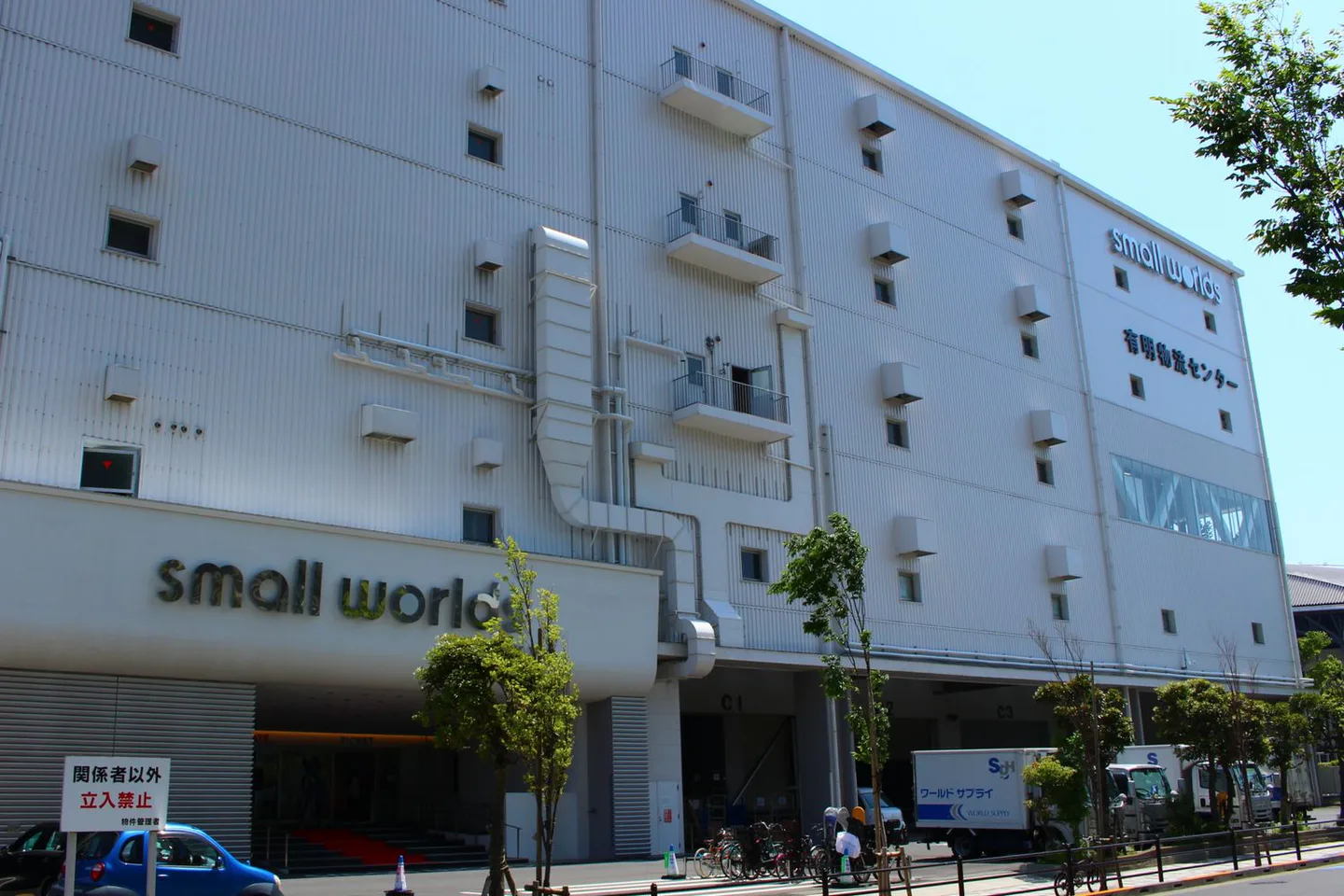
SMALL WORLDS in Ariake rewards looking slowly. Model aircraft move across a miniature airport, the Evangelion settings have working machinery, and a small change of camera height can turn a room-sized scene into a convincing street. The adult admission is currently ¥3,200. That makes the museum a credible two-to-three-hour choice for an aviation, miniatures or Evangelion enthusiast, especially on an Ariake or Odaiba day. Someone on a brief first Tokyo visit who takes one photograph and moves on will pay the same price for much less of what the place offers.
One prominent animation is unavailable at present: the museum still says its Space Shuttle and Saturn rocket launches are suspended for maintenance. The Space Center remains an elaborate model, but do not buy entry on the assumption that either rocket will launch during your visit. This condition is especially important because promotional footage can outlive an operating change. If a specific launch is the reason for the trip, postpone that plan until the venue announces its return. Other moving areas are independent of the rocket display and can still make the visit worthwhile.
↔ Scroll table left or right
| Visitor and trip | Likely value | Reason |
| Three-day first visit, little interest in models | Usually leave it out | The fare and Ariake travel compete with wider Tokyo priorities |
| Four-to-five-day Tokyo stay with an Ariake or Odaiba day | Consider a two-hour stop | The bay journey is already in the plan |
| Evangelion or airport miniature enthusiast | Strong reason to enter | Multiple zones reward patient viewing |
| Photographer who enjoys tiny details | Allow two or three hours | Changing angle and waiting matter more than floor area |
| Family seeking a rain-resistant attraction | Good when children will search and observe | Indoor setting and moving scenes support a slower visit |
| Rocket-launch enthusiast only | Postpone while the launch animation is suspended | The specific mechanism is currently under maintenance |
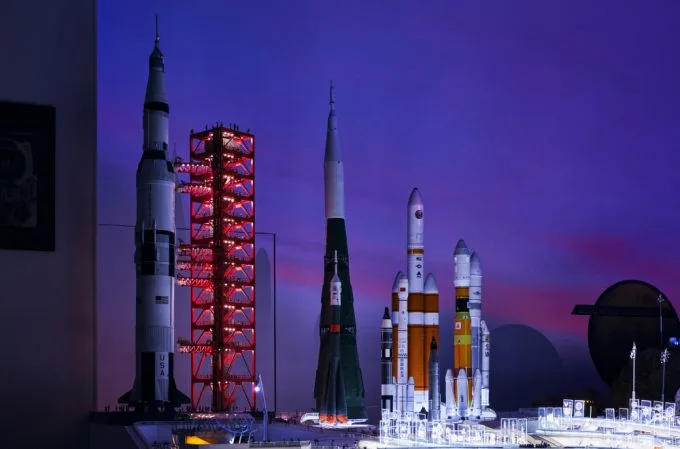
The Space Center can be viewed even without a launch
The space area joins an Apollo-era launch setting with an imagined future port. Control rooms, support vehicles, spectators and hangars fill the scene around the rockets. Without a working launch, the pleasure is in spotting how these smaller elements create an operating world. Look along the ground rather than only at the tall models: crews and vehicles show what the larger structures are meant to do. A traveller interested only in the launch sequence should keep this limitation decisive; a model-maker can still spend time examining the construction and staging.
The suspended launches are also a reminder that a miniature museum is partly mechanical. Aircraft and city effects run in cycles, and maintenance can interrupt an individual sequence. Do not judge the whole admission by one motion you saw in a short video. If moving aircraft, city transformations and detailed static scenes are all appealing, one unavailable launch is less disruptive. For a trip where a particular effect is non-negotiable, use the current museum notice as the deciding information before buying a date-specific partner ticket.
The best areas invite a second look
Walking quickly past each themed zone is possible, but several of the scenes change with time, sound or viewing angle. Give the airport one full light cycle; crouch to the height of a miniature figure in the Evangelion Hangar; examine how the Tokyo-III streets disappear; and look above and below the crossing in the Shibuya area. The museum’s scale becomes clearer when you stop long enough to notice how people, vehicles and structures relate. This is a different kind of Tokyo attraction from a single large landmark photograph.
At the airport, wait for the light to change
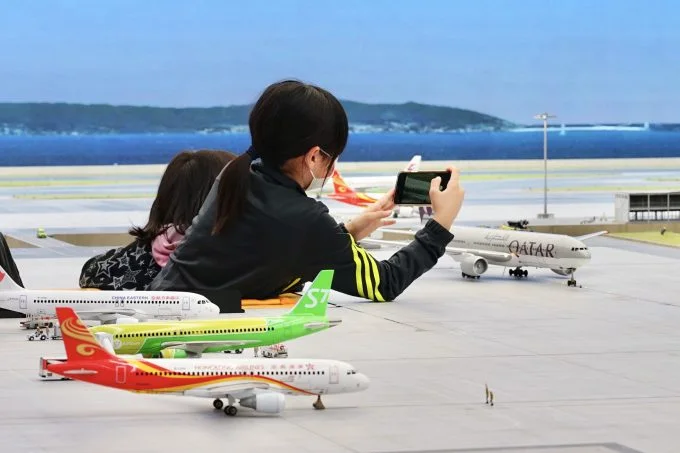
The Kansai International Airport model has planes moving between gates, taxiways and runways, with ground staff, announcements and support vehicles adding airport work around them. The scene shifts from day to evening in about ten minutes. Watching one cycle makes the scale and choreography easier to appreciate than a quick photo from the first railing. A traveller who enjoys the logistics of flight may find this the strongest part of the museum even without any interest in anime. If ten minutes watching a small airport sounds tedious, that is a useful signal about the rest of the visit.
For a family, the airport scene also offers a low-pressure way to slow the visit. Let one child identify aircraft while another notices ground movement, then move when the light has changed. You need not stand through every cycle in the building. A Tokyo itinerary with several theme-park or museum days should leave space for different attention spans; the Tokyo four-, five- and seven-day comparison can help place a more specialised indoor attraction among broader neighbourhood days.
The Evangelion Hangar is about scale and machinery
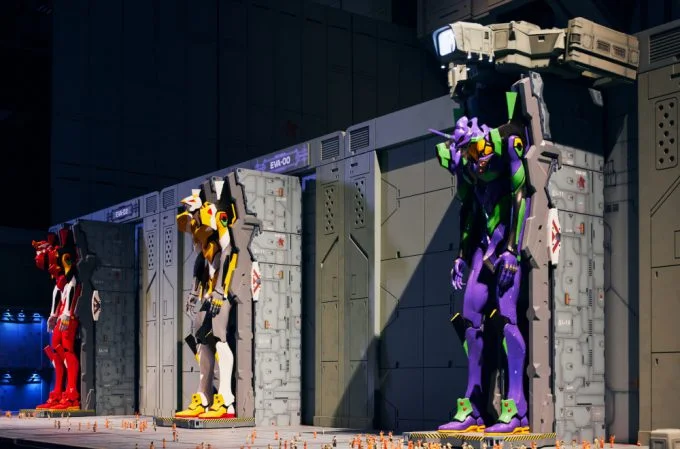
Units 01, 00 and 02 appear in their Cage setting, framed by platforms and launch equipment. The venue suggests lowering a camera toward the tiny NERV workers’ eye level. That produces a more convincing sense of height than photographing everything from the adult visitor rail. It also makes the human figures part of the scene rather than decorative specks around the EVAs. The effect does not require an expensive lens or a tripod; handheld patience and a stable low angle do more for this particular model.
Evangelion fans can look beyond the characters to the infrastructure that supports them: personnel, access platforms and the mechanical space around the units. The Hangar becomes more rewarding when the viewer notices those relationships. A non-fan may still admire the engineering, but the franchise connection is a substantial part of its appeal. If anime is the main purpose of a Tokyo visit, compare the time with a Warner Bros. Studio Tour ticket slot; its production-setting experience is different and can take a larger block of the day.
TOKYO-III changes in front of you
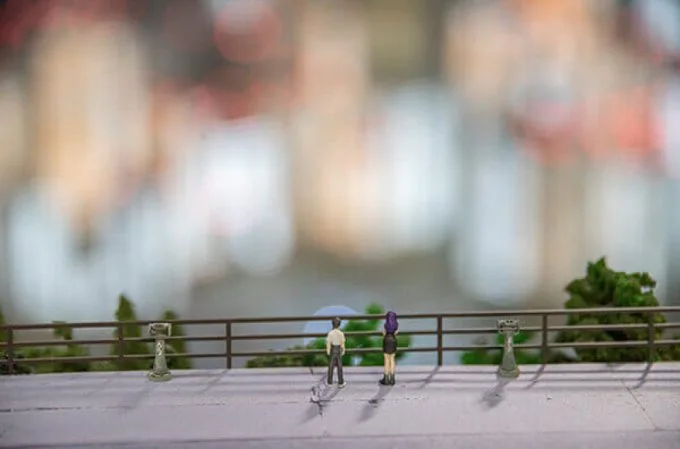
In the second Evangelion zone, sirens sound, vehicles evacuate and parts of the miniature city retract below ground. Waiting for the transition matters more than finding the set and immediately moving on. Fans can search for Misato’s apartment, Rei’s room, EVA-YA, the school and Mt. Kintoki as smaller details. The transformation is the central feature because it ties the familiar locations to the fictional city’s defence system. Photograph the ordinary city first if you want a clear before-and-after comparison when it moves.
The Shibuya model is more than a crossing
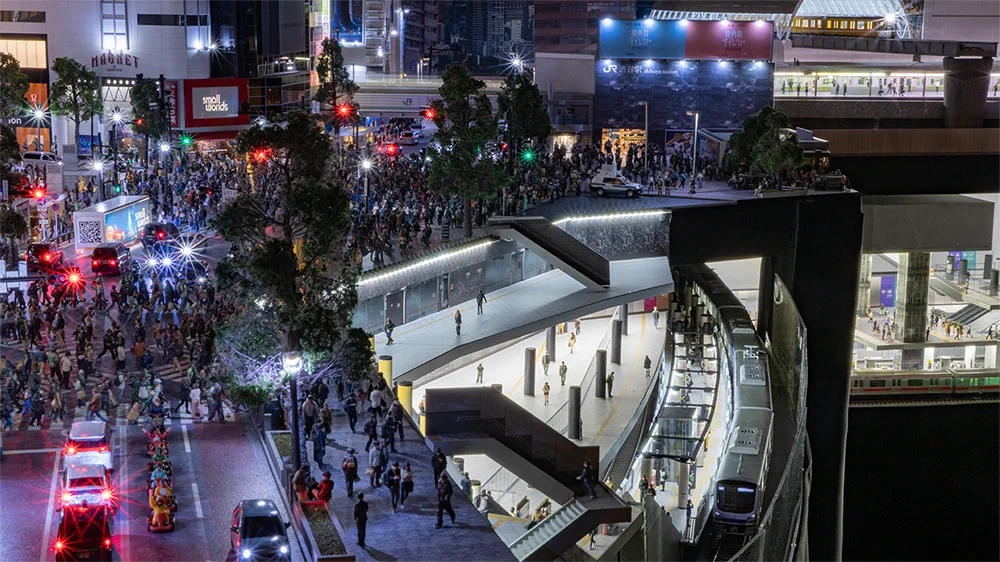
The Shibuya area includes the Scramble Crossing, Center Street, Hachiko and station layers that are difficult to see together on a real street walk. SMALL WORLDS describes roughly 3,000 LEDs at its Scramble Square and about 5,000 miniature people across the setting. Those counts suggest density, but the useful thing to notice is the city stacked vertically: rail lines, roads, buildings and crowds occupying different levels. A SHIBUYA SKY view shows the real skyline; the model reveals patterns too small or hidden to pick out from above.
A family can use the scene to talk about how a station area moves, while a photographer can find a street-height view through the miniature crowd. It is not meant to replace an evening in actual Shibuya. If the trip is short, decide whether the Shinjuku versus Shibuya hotel and neighbourhood comparison gives more value to real-city time. A traveller already staying near Ariake has a different cost: SMALL WORLDS can be a focused indoor stop before the rest of the bay day.
The ticket pays off when more than one zone interests you
The venue currently charges ¥3,200 for adults, ¥2,100 for ages twelve to seventeen and ¥1,700 for ages four to eleven; children three and under enter free. A full-price adult ticket deserves an honest interest check. If you want to watch airport operations, photograph Evangelion from unusual angles, look for hidden tiny stories or see a city transform, two hours can feel well used. If only one picture appeals and you expect to leave after 45 minutes, the same yen cost is hard to justify.
An adult should expect a satisfying visit when at least two of these apply:
- You enjoy searching for miniature figures and background stories rather than walking past the main landmarks.
- You are willing to wait for a lighting change, moving vehicle or city transformation.
- You care about Evangelion, airport operations or detailed urban models.
- You want handheld photography from low, scene-level viewpoints.
- You already have a rainy Ariake, Toyosu or Odaiba day that needs a substantial indoor stop.
The building’s large area and technical craft are not in themselves reasons every Tokyo visitor must enter. Compare the ¥3,200 with attractions you would actually enjoy. The National Museum of Nature and Science visit-time decision offers a different indoor depth in Ueno; the Artizon Museum exhibition choice is better for art-led time near Tokyo Station. SMALL WORLDS is strongest for people willing to search through a scene, not for those measuring value by square metres alone.
The Yurikamome bundle adds ¥250 to adult admission
The museum lists a combined adult admission and Yurikamome one-day pass at ¥3,450. Against the ¥3,200 standalone admission, the line pass costs an incremental ¥250. Junior and child bundles are listed at ¥2,870 and ¥2,120. Those are useful choices only if the pass will be collected and ridden; the bundle is not automatically the best ticket for someone arriving by the Rinkai Line and leaving the same way. A bay-area plan that uses several Yurikamome trips makes it easier to justify.
Before buying the set, map the actual day. Ariake, Toyosu and Odaiba are connected by transit, but not every pair is a pleasant quick walk. A teamLab Planets visit in Toyosu could add a second substantial attraction; the Miraikan Odaiba plan is more science-focused. If both are already on the calendar, check whether there is enough attention and time for another two-hour museum. The ¥250 increment makes sense only after the day’s rail route is real.
The package requires the buyer to show its QR code at a Yurikamome ticket office in Shimbashi or Toyosu to collect the one-day pass. That redemption point can add a detour if you enter the museum from the Rinkai Line at Kokusai-Tenjijo. Read the ticket instructions before selecting a first station. A saving that requires crossing the bay merely to collect it can disappear in time and fare. Ordinary admission may be the simpler purchase for an Ariake-only visit, while the set suits a day already starting at one of the collection stations.
The museum’s own average is two hours
The venue suggests about one hour for a short look at preferred areas, around two hours for an average visit and three or more for a relaxed visit with a café, workshop or personal figure activity. Protect two to three hours if this is your first time and you have several interests. It is possible to leave sooner, but the changing scenes become less valuable when each one is crossed off before its cycle runs. A family may need a slower pace or a break; a dedicated miniature photographer may spend longer at fewer zones.
A short visit can still be worthwhile for someone who wants only the Hangar or the airport, provided they accept the high cost per hour. A first-time visitor sampling all zones should not place the museum between two tight reservations. Use one area as a test: if the airport’s light change or the miniature city’s motion keeps your attention, stay longer. If not, you can leave without forcing every display into a checklist. The teamLab Borderless time comparison asks a similar time-versus-interest question for a completely different visual experience.
If the Tokyo schedule is already crowded, decide where the bay day belongs before buying entry. The first-visit Tokyo route length comparison helps separate a four-day city stay from one with Disney and a day trip. SMALL WORLDS can be a pleasant rain-resistant choice, but it should not silently replace the one Tokyo neighbourhood or museum the group cares about more. On a seven-day itinerary, a specialised Ariake afternoon has less competition.
Ariake is straightforward to reach, but the bay is spread out
The museum lists Ariake-Tennis-no-Mori on Yurikamome as a three-minute walk and Kokusai-Tenjijo on the Rinkai Line as nine minutes away. Those are the relevant station walks; “Odaiba area” does not mean every bay attraction is beside the entrance. The museum also names nearby bus and BRT stops, with the Haneda airport limousine stop at Ariake Garden about ten minutes away on foot. A stroller or large bag can make the difference between three and nine minutes more significant than it looks on a map.
The venue mentions teamLab Planets in Toyosu and Miraikan in Odaiba as potential neighbours. They are transit combinations, not three exhibits in one hall. Allow SMALL WORLDS its own two-hour block, then decide which second stop suits the group. A Miraikan day favours science; UNKO Museum Tokyo is a shorter photo-led choice. Do not collect attractions merely because each has “bay” in its address.
If a barefoot and water-based art installation is the main event, the teamLab Planets decision asks a different question from a miniature museum. If the day is about interactive science, the Miraikan exhibition guide may take more of your energy. Reserve any timed second attraction with a travel and meal buffer. SMALL WORLDS can fill a rainy morning or afternoon without needing every nearby venue attached to it.
The operating rules matter to families and photographers
Wheelchairs and strollers are welcome, with elevators and accessible facilities described by the venue. Lockers are near the first-floor exit hall. A large case that cannot fit can be left at the ticket counter for a fee, making a check-out-day visit possible if the rest of the route works. Confirm storage before treating the museum as an airport-luggage solution. The Tokyo luggage-storage guide is useful when the bag needs to reappear later in the city.
Photos and video are allowed, but tripods, selfie sticks and lighting tools such as reflectors or softboxes are barred. In busy periods the venue asks photographers to limit time at a spot to about three minutes, and filming while walking is not permitted. This matters for anyone imagining a tripod-based miniature shoot. Use a handheld camera or phone, choose a low angle, wait for a motion cycle and then let the next visitor have space. The rules protect both fragile models and the crowd gathered around them.
A photographer who wants sharp scenes can brace a camera carefully without touching the display or blocking a railing. Avoid flash-like lighting that violates the venue’s equipment limits. For children, make “find the smallest detail” a game without leaning over barriers or handling a miniature. A lighter camera setup also helps when the day continues onto transit. If photography is the only appeal, the Tokyo observation-deck comparison offers a larger-scale city alternative with very different weather and ticket constraints.
When the museum can be left off the itinerary
A first Tokyo visit of only three days is an easy place to cut SMALL WORLDS if the group still wants major neighbourhoods, temples or markets. A seven-day Tokyo plan has more room for an Ariake special-interest stop. One person’s love of Evangelion can still justify it on a shorter trip, but that should be an explicit group choice, not an assumption that a detailed museum pleases everyone equally.
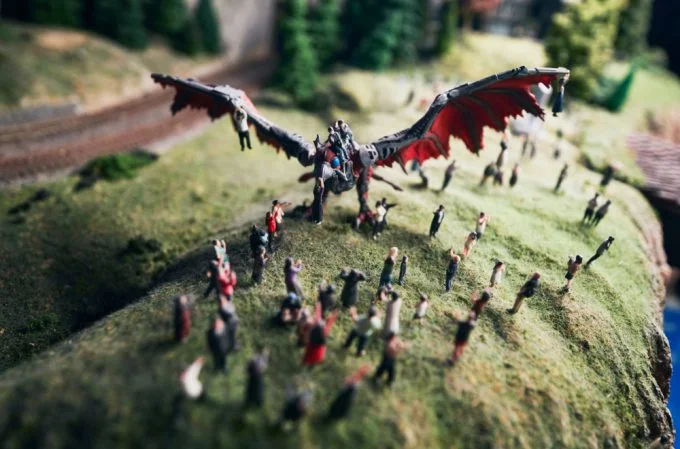
Postpone a visit built entirely around the Space Shuttle or Saturn rocket taking off while the maintenance notice remains. The models can still be inspected, but the particular animation is suspended. If launch motion is a minor part of your interest and the airport or Evangelion zones also appeal, the notice need not cancel the day. This is a reason to distinguish one unavailable mechanism from a closed museum. The venue continues to sell normal admission and show the other areas.
A rapid “one photo per zone” style extracts little from ten-minute lighting changes and tiny hidden narratives. If that is the group’s normal museum pace, choose a shorter stop that fits it. The UNKO Museum Odaiba decision deliberately weighs a more photo-first attraction. Its value still depends on route fit, but it asks less patience for miniature mechanisms. Let actual interests choose between the two rather than buying both because they are in the bay.
The indoor setting makes SMALL WORLDS comparatively resilient in rain and summer heat. That can help when an Ariake or Odaiba day is already planned, although a poor-weather backup still needs to be worth its admission. SHIBUYA SKY is much more exposed to roof closure, while teamLab Borderless is another indoor option on a different side of Tokyo. Weather is one reason to choose, but it should not replace the question of whether the exhibits interest you.
The useful question is whether you want to watch the details unfold
For someone interested in aviation models, Evangelion machinery or carefully built city scenes, ¥3,200 can buy a satisfying two or three hours. For a short first-time itinerary with no such interest, the same money and travel time can be spent on Tokyo’s neighbourhoods or a more relevant museum. Families gain more when children are willing to search and wait through a light cycle; photographers gain more by changing viewpoint rather than collecting every scene. The ticket price is unchanged by your pace, so pace is the real value variable.
Choose one or two zones you genuinely want to examine, then see whether the rest of the museum supports a longer visit. If one suspended mechanism is the only draw, wait for a venue update instead of hoping it restarts by your booking date. Compare standalone admission with the Yurikamome set only after mapping your bay travel and its Shimbashi or Toyosu collection point. Give the route a two-to-three-hour museum block and avoid a tight second reservation. That sequence turns the purchase into a real day plan rather than a reaction to a promotional image.
Compare admission for your visit date and Ariake-area rooms if this is part of a longer bay stay.
Other Tokyo plans
UNKO Museum and bay-area timing
Tokyo trip length for first-time visitors
SMALL WORLDS visitor details
Current admission, bundle, launch notice and visit guidance. The museum currently lists the rocket launches as suspended for maintenance. Read the day’s operating hours and any area notice on your own visit date; workshops and figure production are separate commitments.
Related guides: Tokyo Pingu Exhibition 2026: Is ¥2,200 Worth It? Tickets, Hours & Must-Sees · teamLab Borderless Tokyo Review: Is It Worth 2–3 Hours of Your Tokyo Trip? · OMO5 Tokyo Gotanda Review: Is This South-Tokyo Base Worth It? · Tokyo Disney Hotels vs Disney-operated and Partner Hotels: Which Is Worth It? · lyf Tenjin Fukuoka Review: Is a 12m² Room Worth the Shared Kitchen and 24-Hour Lounge? · Kyoto International Manga Museum 2026: The ¥1,200 Ticket Is Cheap — Is It Worth 2–4 Hours? · teamLab Planets Tokyo Review: Is the Barefoot Water Experience Worth It? · Southwest Grand Hotel Okinawa Review: Is a 45 m² Room and Pool Worth the Urban-Resort Premium? · Hotel Torifito Hakata Gion Review: Is a 23 m² Twin and Public Bath Worth Leaving Hakata Station? · Sakura Castle: The Stamp Is Open 24/7 — The Castle Is in the Moats, Not a Keep