
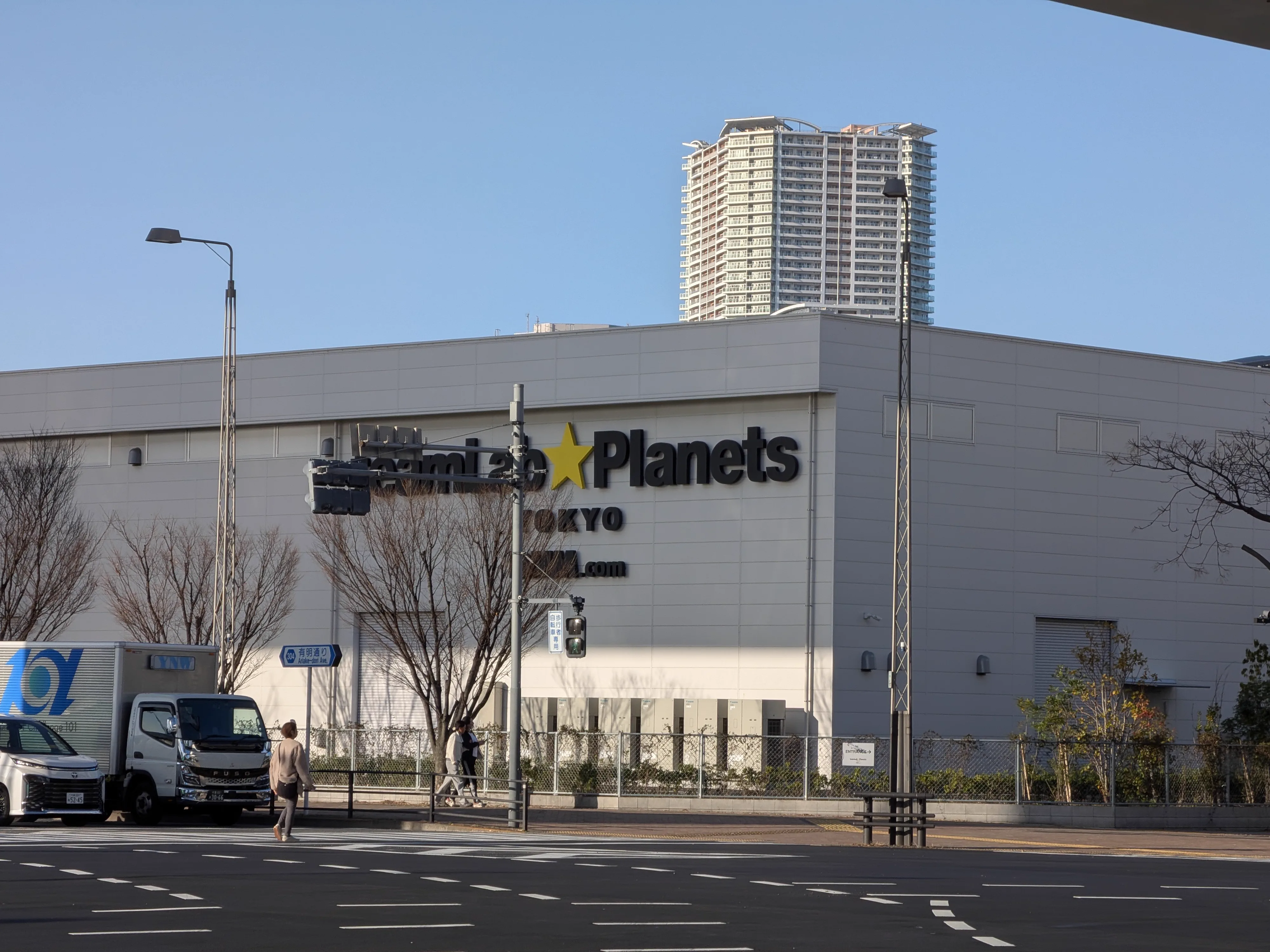
teamLab Planets asks you to remove your shoes, walk into water and respond to floors and surfaces that do not always behave like a conventional gallery. That physical format is the reason to choose it. If wet feet or unstable footing would make a member of the group miserable, the digital images alone may not justify the visit. The adult Entrance Pass now starts at ¥3,800, but the larger commitment is a Toyosu outing: the venue estimates two to two and a half hours inside, before travel, admission and collecting your belongings afterward.
For most visitors, a standard timed ticket is the starting point. The ¥12,000 Premium Pass can be useful when arriving at an exact minute would be costly or uncertain: it allows admission at a flexible time on the chosen date and bypasses the entry queue. It does not move you past queues inside the artworks. Compared with the current ¥3,800 adult starting price, the minimum upgrade is ¥8,200. Buy it for a specific scheduling problem rather than treating it as a general way to shorten every part of the visit.
Make Toyosu part of the same half-day if you can. The museum is near Shin-Toyosu and a walk from Toyosu Station, but it is not on every first-time Tokyo sightseeing route. A market or bay-area stop can make the journey more coherent. If you have a hard reservation elsewhere immediately afterward, leave room for queues, drying off and the trip across the city; the time printed on the ticket is an entry window, not an exit promise.
The traveller who will enjoy this format
| What your group wants | Planets fit | Why | Reason to reconsider |
|---|---|---|---|
| Water, textures and changing surfaces are the main attraction | Strong | Its physical sequence is difficult to replace with a conventional gallery. | A group member would find wet feet or unstable footing distressing. |
| Mainly dramatic digital-art photographs | Compare Borderless too | Pictures alone do not require enjoying Planets’ barefoot water format. | The water sequence itself is the image and experience you most want. |
| Toyosu Market or the Tokyo Bay area is already in the day | Stronger route fit | Travel to the venue can serve more than one purpose. | A fixed onward appointment leaves no exit buffer. |
| A rainy or very hot afternoon needs an indoor anchor | Useful with preparation | Most of the visit is indoors. | The trip to Toyosu and the museum water still require suitable clothing. |
| A flight or long train makes arrival time uncertain | Consider Premium | Flexible admission can protect an expensive schedule conflict. | A comfortable standard slot and change rules already solve the risk. |
| Young children or sensory-sensitive travellers are involved | Decide individually | Water, darkness and unusual floors can be exciting. | The same features may make the visit unsuitable for that person. |
The experience is physical before it is photographic
Evaluate the appeal of water, darkness, reflections, flowers and a yielding floor separately from the appeal of taking pictures. A guest who likes immersive movement may find Planets unusually memorable; someone who needs predictable ground or does not want wet clothing may spend the same admission managing discomfort. Rain can make an indoor attraction attractive, but it does not remove the wet sections inside. Route fit, sensory comfort, time and the chance of crowds belong in the decision together.
| Decision factor | What Planets offers | Limitation |
|---|---|---|
| Admission cost | Adult standard ticket currently starts at ¥3,800. | Premium is ¥12,000; price varies by chosen date for standard entry. |
| Time | Operator estimates two to two and a half hours inside. | Travel, entry, lockers and onward journey enlarge the block. |
| Booking flexibility | Eligible store tickets can be changed up to three times. | A change depends on deadline and available new slots. |
| Weather | Mostly indoor visit works on wet or hot days. | You still travel to Toyosu and enter water inside. |
| Crowds | Core spaces remain open to visitors. | Queues and shared rooms can reduce flow and photo opportunities. |
| Route | Easy to pair with Toyosu or bay-area plans. | A cross-city round trip consumes time. |
| Physical format | Water, flowers and unusual floors create the distinction. | Some guests may find those features stressful. |
The museum visit is only part of the time cost
For the full venue, the ticket operator estimates roughly two to two and a half hours between entry and exit. It does not impose a strict stay limit, although staff may ask lingering visitors to move along during busy periods. Add travel to Toyosu, an arrival margin for your timed slot, the shoe and locker routine and the onward journey. A nominal two-hour attraction can readily occupy a three- to four-hour part of a Tokyo day.
| Part of the outing | Planning allowance | What to include |
|---|---|---|
| Reaching Toyosu | Often 30–60 minutes or more from another Tokyo district | Check your actual origin and line changes. |
| Entry and belongings | Allow around 20–30 minutes | Arrival buffer, shoes, bags and lockers. |
| Inside the venue | Roughly 2–2.5 hours | Operator estimate for the full sequence. |
| Leaving and regrouping | Allow around 15–30 minutes | Drying, recovering shoes and bags, and meeting your group. |
| Whole itinerary block | Often 3–4 hours or more | The time that competes with another half-day plan. |
The allowances in the table are planning estimates, not guaranteed service times. A hotel near Toyosu makes the first line shorter; an itinerary coming from western Tokyo can make it longer. If adding Planets pushes another major activity out of the day, compare it with that displaced activity rather than with an imaginary empty afternoon. Give a timed dinner or train extra protection after the visit.
Dress for water that can reach an adult knee
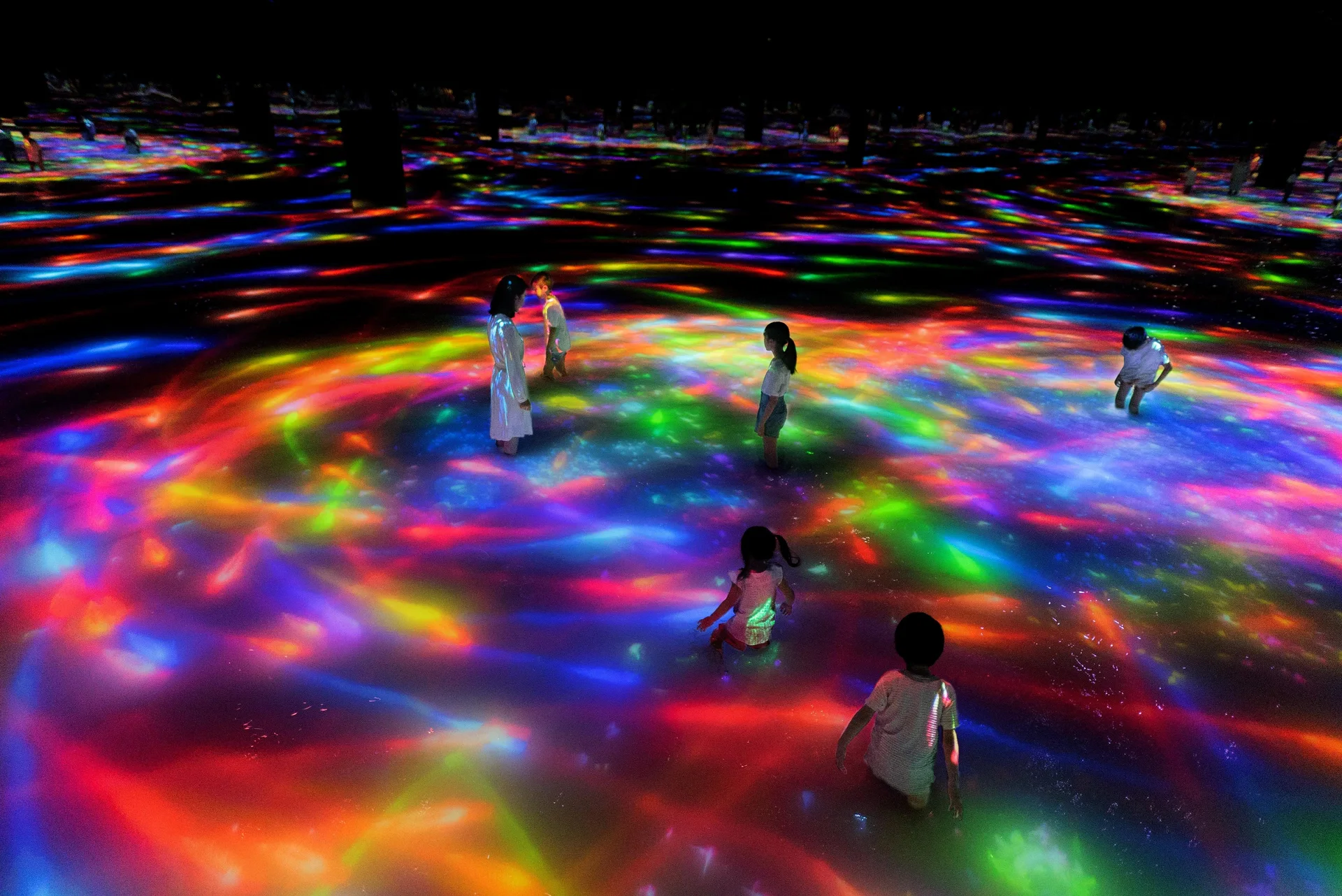
The venue requires bare feet in its water area, and it warns that some water can reach adult knee height. Clothing needs to stay comfortably above that level, or be something you are willing to get wet. Shoes that come off easily help at the lockers. Children may need a change of clothes, and anyone who strongly dislikes wet feet should consider the format itself before buying rather than hoping the water is a minor room that can be ignored.
Mirrored floors can reflect up under skirts or wide trouser legs. The venue offers wraps or shorts where needed, yet dressing for the environment before arrival saves time and worry. Darkness and strong light effects are additional considerations. A person with mobility or sensory needs should read the current access guidance, including any detour routes, because the same work can feel very different according to balance and sensitivity.
Four works reveal whether Planets suits you
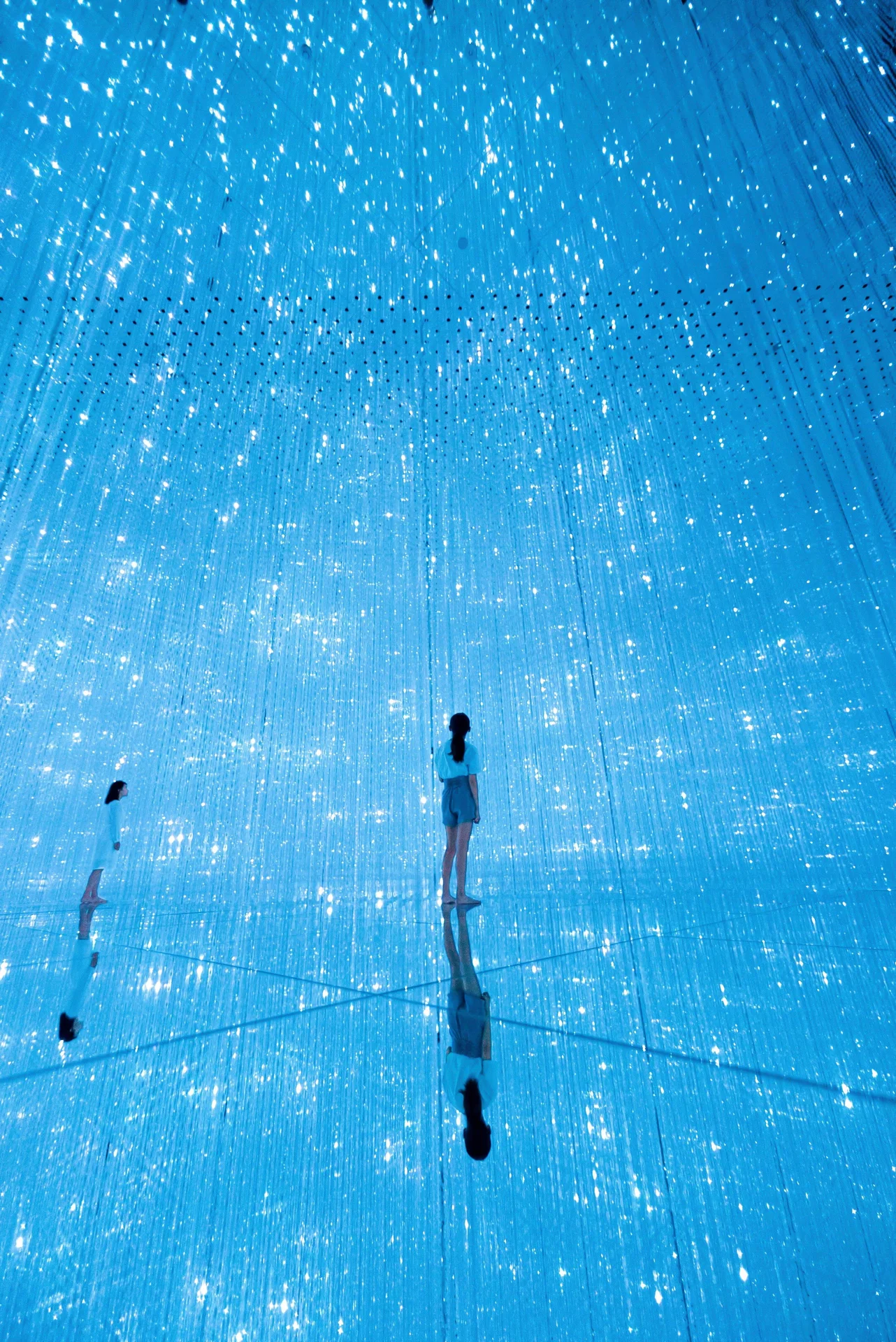
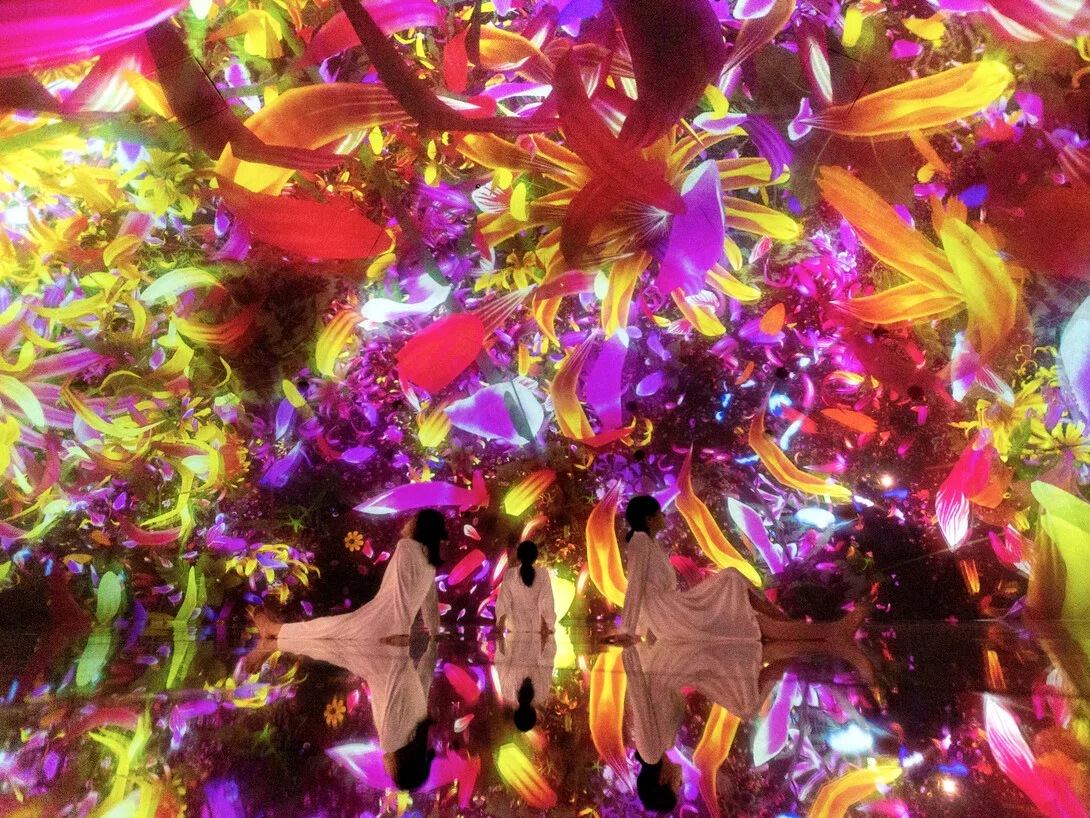
Soft Black Hole tests your response to a soft, shifting floor more than your ability to get a perfect photograph. Drawing on the Water Surface asks you to enter the medium that defines the museum. The Infinite Crystal Universe offers a striking visual environment, but crowded rooms cannot promise solitary images. If the first two situations sound engaging, the visit has a stronger reason than a photograph from a single mirrored space.
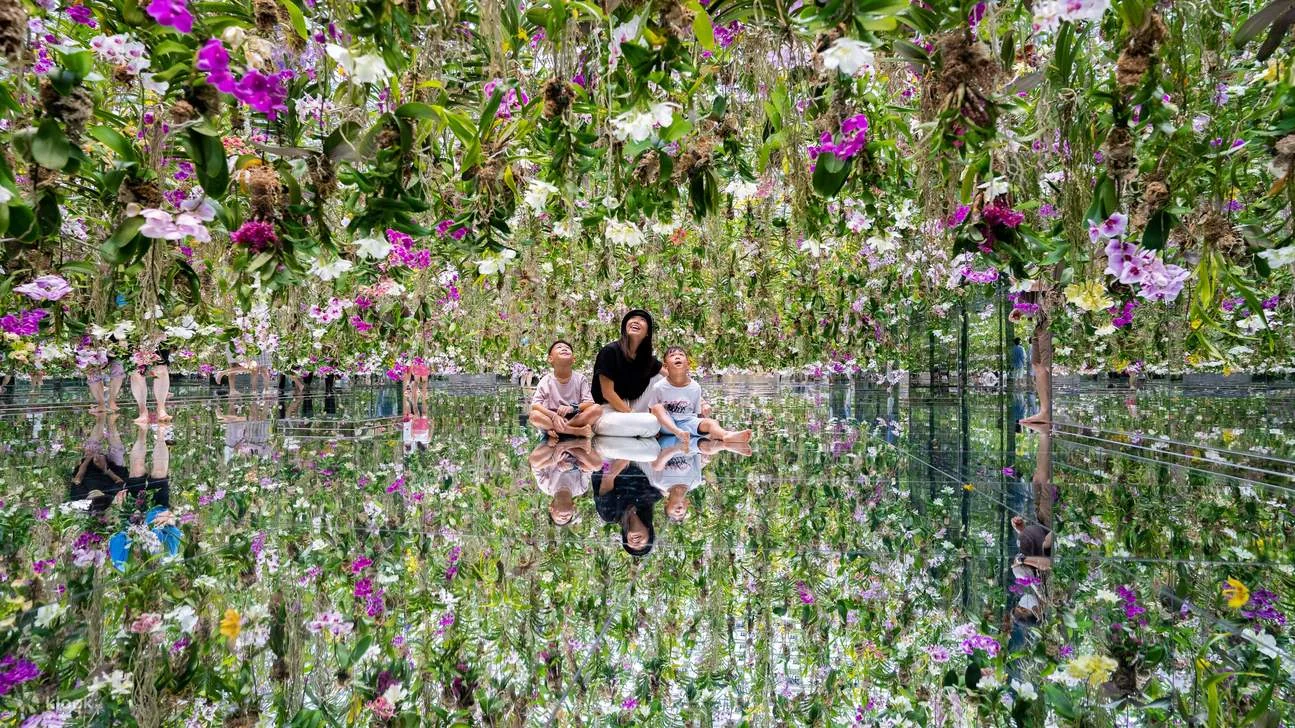
Floating Flower Garden adds suspended living orchids to the sensory mix. Together these works show why Planets is not merely another screen-led projection venue. Materials, balance and the presence of other visitors shape the result. Crowds can change the flow and the photographs, so treat images as something you may take along the way, not the measure of whether the admission succeeded.
Premium buys entry flexibility, not an empty museum
The ticket store currently lists the adult Entrance Pass from ¥3,800 and Premium at ¥12,000 for visitors aged four and above. On a date with the lowest standard adult fare, Premium costs at least ¥8,200 more. Standard prices can vary by date, so the actual difference at checkout may be smaller. Price both options for your selected day before assigning a fixed value to the upgrade.
Premium permits admission at a flexible time on the specified date and sends you to the information centre without the main admission queue. Once inside, it does not bypass lines for particular works. This is most useful when a flight, intercity train, business appointment or other unpredictable end time makes a standard slot risky. If your previous activity can end with a comfortable buffer, the price premium may buy flexibility you will never use.
A timed ticket from the venue's own ticket store can be changed up to three times, subject to stock and eligibility. For the Entrance Pass, the change must be made no later than two hours before the original entry start. Premium changes close at 08:30 on the visit date. Tickets purchased through agents or with coupons can follow different rules, and a sold-out replacement slot is not available just because your original ticket is changeable. Read the rules for the exact purchase channel before paying.
For a family, sensory fit comes before the child fare
Children three and under enter free; ages four to twelve have a separate child price on the standard ticket. Yet the budget is only one part of the decision. Bare feet, darkness, knee-deep water, mirrored floors and soft surfaces can delight a child who likes tactile play and unsettle one who needs predictable footing. The most sensitive family member should have a real say in whether this is the right afternoon.
Strollers stay outside the exhibition area. Plan how younger children will move through the venue and keep them close near water and dark sections. A change of clothes is more useful than a promise that nobody will get wet. If a child refuses the water portion, the family may have to use a detour or leave a key part of the visit; price and prepare for the actual child, not a generic claim that the museum is family-friendly.
Five checks before leaving for Toyosu
| Situation | What to do and why |
|---|---|
| Rain on the visit day | Keep the booking if indoor art is still wanted, but dress for Toyosu travel. Rain outside does not remove water inside. |
| Trousers cannot stay above the knee | Change clothes or use venue-provided covering before the water area, which can reach adult knee height. |
| Large suitcase between hotels | Leave it at a hotel or station storage first; the exhibition is a poor transfer-day luggage stop. |
| Running late for standard entry | Check your ticket change deadline and available slots immediately. A missed slot does not guarantee rebooking. |
| Another fixed appointment follows | Add exit and transport buffer after the estimated inside visit. Entry time is not exit time. |
| Someone dislikes dark or unstable spaces | Read access and detour information before paying; the physical format may decide the purchase. |
A recommendation with conditions
Buy the standard timed ticket when the barefoot water sequence and physical artworks are the draw. Allow roughly two to two and a half hours inside and a wider three- to four-hour block once you include Toyosu transport and entry or exit routines. Dress for knee-height water, then pair the museum with another nearby stop if that makes the travel more efficient.
The ¥12,000 Premium Pass is most useful when an uncertain arrival time would threaten the day; it does not clear queues inside the works. If wet feet, changing clothes and unusual floors hold little appeal, compare teamLab Borderless with Planets before buying. The choice is between physical formats, not simply between two sets of projection photographs.
A Toyosu visit usually fits into a broader Tokyo base. Compare rooms near your wider route before paying extra to sleep beside a single timed-entry attraction.
Tickets, access and visitor conditions
Current dates and yen admission prices appear in the Planets ticket store. The venue visit guide describes the full-circuit time and clothing conditions, while the ticket-change and Premium rules sets the rules for changing a booking or entering with Premium. If you budget in another currency, ECB exchange rates provides a reference rate; your card conversion can differ.
Related guides: OMO7 Kochi Review: Is the Nightly Yosakoi Experience Worth It? · KOKO HOTEL Residence Tokyo Oshiage Review: Is 42 m²+ Space Worth the East Tokyo Base? · Oriental Hotel Okinawa Resort & Spa Review: Is the 170m Pool Worth a 7-Minute Beach Walk? · lyf Tenjin Fukuoka Review: Is a 12m² Room Worth the Shared Kitchen and 24-Hour Lounge? · lyf Shibuya Tokyo: Is the PARCO Location Worth a 12m² Room? · Mitsui Garden Hotel Osaka Premier Review: Is Nakanoshima Worth the Trade-off? · MUWA Niseko Review: When Is Ski-in/Ski-out Worth the Premium? · SMALL WORLDS Tokyo Review: Is It Worth ¥3,200 and 2–3 Hours? · JR East Hotel Mets Premier Akihabara Review: Is a 17 m² Room Worth the 1-Minute Location? · Tokyo Dome Hotel: Is Walking Back After a Concert Worth the Premium?