
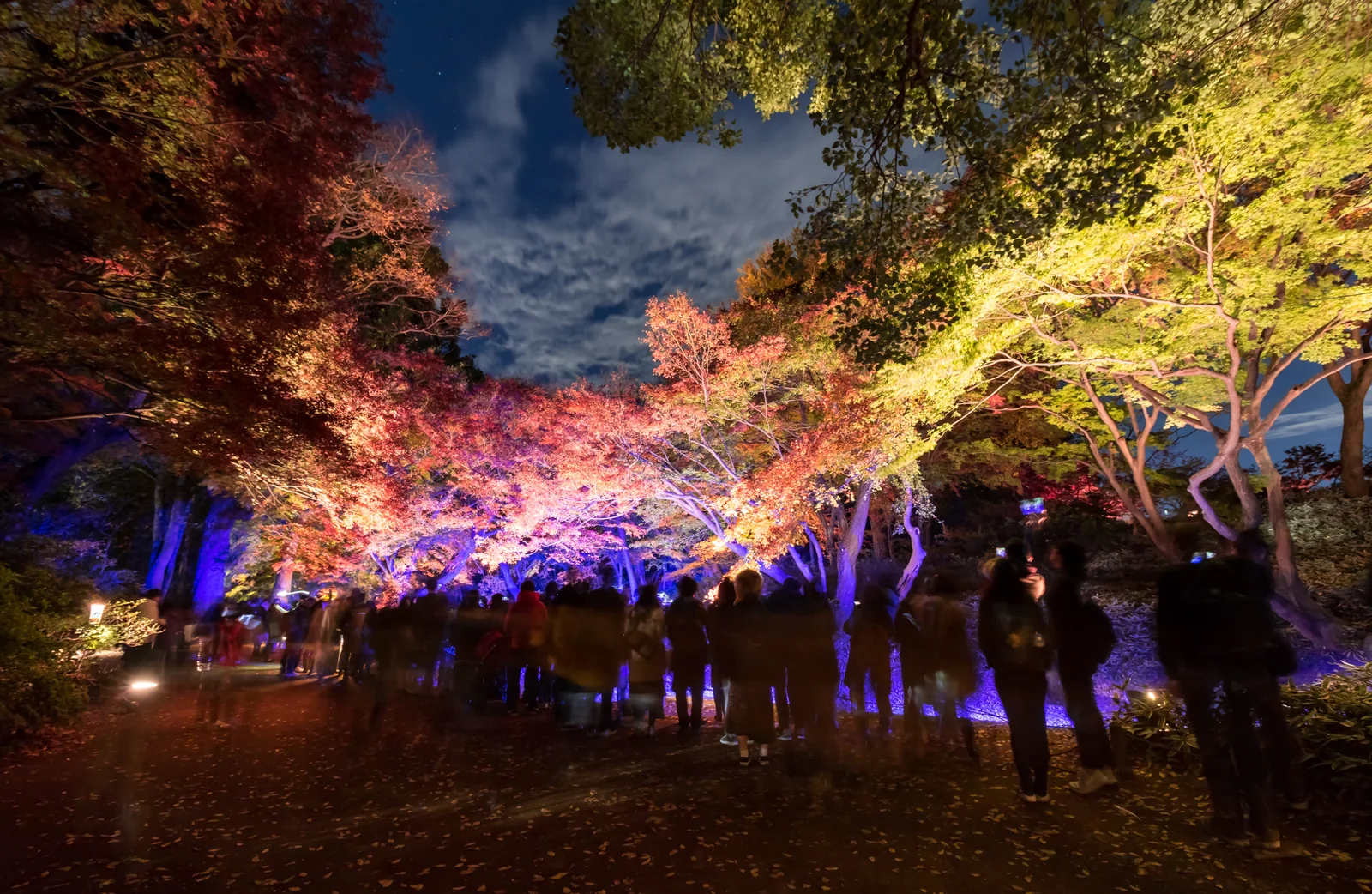
Rikugien's 2026 autumn night programme is scheduled from 25 November through 6 December. The garden is in Komagome, a useful fact that gets lost when a Tokyo hotel search offers you hundreds of rooms under the same city label. A hotel near Komagome lets you walk back after the illuminated garden; Ikebukuro provides a far wider evening and hotel choice but adds a rail leg. Which matters more depends on whether the garden is the centre of the stay or one stop in a longer Tokyo trip.
JR-East Hotel Mets Komagome is a real station-area hotel to use as a location anchor. It is not a claim of availability, price or sightline into Rikugien. Compare its actual door with a property around Ikebukuro Station using your travel dates. The Tokyo autumn leaves guide gives seasonal context; this page is about the lodging and timing decision for one announced night event.
Swipe through earlier event photographs
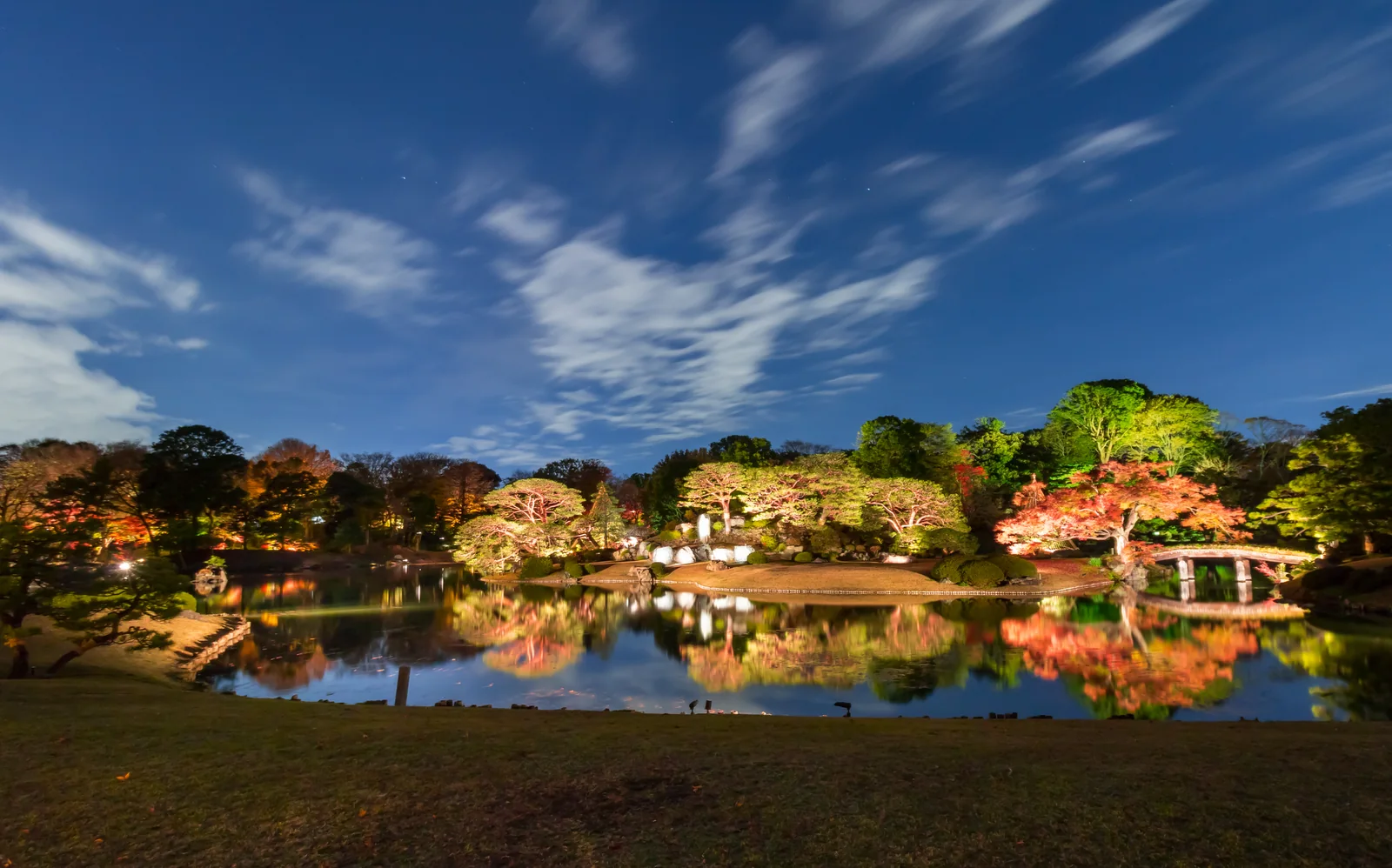
The garden is an evening appointment, not a park that stays open indefinitely
Tokyo Metropolitan Park Association's Rikugien page lists the 25 November–6 December 2026 special night period. Opening hours, ticket procedure and the permitted entrance route should be checked there again close to the visit. Do not import a last-entry time from a previous autumn or assume the normal daytime closing time is the night-event closing time. Special illumination often changes how visitors enter and move through a garden. The uncertainty is not a reason to avoid the event; it is a reason to leave margin between hotel check-in, dinner and admission.
The two photographs in this article are historical images of Rikugien at night. They identify the setting and the kind of evening walk, but they do not promise the exact 2026 lighting treatment or leaf colour. Temperature and rain affect both the leaves and the comfort of standing outside. The comparison of Rikugien, Shinjuku Gyoen and Meiji Jingu Gaien helps choose a different autumn experience if a quiet landscape garden is not what you want.
Rikugien has paths, ponds and carefully arranged viewpoints, so plan to move slowly and follow the announced route. It is not a stage show that starts at one minute and ends ten minutes later. If you are travelling with someone who needs frequent rests, check the operator's access information and current route before committing. An event with night access may use different gates or paths from a daytime visit. That detail can change the walk from a hotel more than a few minutes on a map.
| What you want from the evening | Better hotel search area | Detail to check |
|---|---|---|
| Walk home after the garden | Komagome Station area | Actual hotel entrance and garden gate in use |
| Dinner and shops after viewing | Ikebukuro Station area | Last convenient train and station exit |
| Early departure from Tokyo Station | Tokyo Station area | Total garden-to-hotel and next-morning travel |
| Several northern Tokyo sights | Ueno or Komagome | Whether your arrival airport favours the chosen side |
The table is deliberately about journeys rather than a generic “best hotel”. A one-night autumn garden trip and a week in Tokyo need different bases. Booking a Komagome room for one short walk is attractive only if it does not make the rest of your itinerary clumsy. Conversely, a cheaper hotel in a distant district can turn a calm garden evening into two transfers and a late check-in.
Komagome removes the night transfer
Komagome's strongest argument is simple: it puts a station-area room and the garden within a local walk. After viewing, you can return on foot instead of navigating a crowded platform or comparing late transport options in the cold. That benefit is real for a solo visitor, for a couple who want an unhurried dinner nearby or for a family whose children tire after dusk. The garden still has a distinct entrance; calculate the route from that entrance to the exact hotel, not from the centre of a large green map shape.
JR-East Hotel Mets Komagome is connected to the station area and makes a useful named hotel search. Check the hotel's own current room types and cancellation terms; “station hotel” does not describe every room's size or noise exposure. Other Komagome properties may be farther along quieter streets. If the evening walk is the primary purpose, an extra few minutes' walk may be acceptable for a room that suits the group better. The Tokyo budget hotels guide can help frame cost, although its citywide prices cannot predict a particular late-November date.
Komagome is not isolated. The Yamanote Line connects it to larger hubs, so a stay here need not mean giving up the rest of Tokyo. Still, a hotel beside the garden is less useful if you intend to spend every other night in Shibuya or Shinjuku. Count the repeated evening journeys rather than looking only at the one Rikugien return. The Shinjuku versus Shibuya base guide gives context for a trip focused farther west; the Tokyo split-stay hotel guide helps decide whether changing rooms is worth it.
Komagome also works for an early garden visit the following day if the regular opening suits your plan, but do not assume a night-event ticket includes daytime admission. Check the operator's current ticket terms. If you want a garden-focused day, the Tokyo autumn day-trip comparison can help you decide whether to leave the city instead. Spending a second hotel night in Komagome is more convincing when you will use its north-central geography again, not only when a booking result appears discounted.
The quiet evening is also a reason to look carefully at the hotel's own facilities. If you expect to return after restaurants near the station have stopped serving, check whether the property has a usable late meal option or whether you should eat before entering Rikugien. A breakfast package has separate value: a late breakfast may suit a slow garden morning, but it is wasted if your train departs before service. Room size matters more when you plan to dry damp coats or keep luggage open for a multi-night stay. These details belong in the booking comparison alongside the short walk.
Ikebukuro trades the walk for choice
Ikebukuro has a much larger hotel and restaurant market. It can be an efficient base if your other plans are in western Tokyo, if you arrive through a route that already passes the station, or if your preferred room size is unavailable around Komagome. The garden is then a short separate outing rather than the reason you chose the district. The Ikebukuro Fukuro festival guide is for a different season, but it illustrates how Ikebukuro operates as a destination in its own right; do not mistake that festival's schedule for a November attraction.
The disadvantage appears after the garden. You need to leave enough time for the station walk, ticket gates and the train back. A daytime routing estimate does not include a pause at the exit or a wrong station entrance. Check the timetable and transfer pattern on your specific night. If you intend to eat late in Ikebukuro, verify the chosen restaurant's kitchen hours, particularly on a weekday. A hotel just outside a distant Ikebukuro exit can add as much walking as the rail ride itself. The Tokyo hotel locations guide explains why a familiar station name is only the beginning of a location check.
Ikebukuro is more compelling for a group that wants a larger apartment-style room or has multiple bags. A Komagome station hotel may be compact; a broader search can reveal layouts that make several nights workable. The Tokyo hotels for five to seven nights guide focuses on the practical details that matter over a longer stay. For an autumn evening, the right question is whether those room benefits outweigh a single extra rail trip.
| Booking pattern | Garden-night benefit | Cost elsewhere in the trip |
|---|---|---|
| Komagome for one event night | Simple walk after viewing | Possible hotel change or smaller inventory |
| Ikebukuro for the whole Tokyo stay | More room and dinner choice | Rail return on Rikugien night |
| Ueno for arrival from Narita | Convenient luggage route for some arrivals | Another local transfer to the garden |
| Tokyo Station for early Shinkansen | Easier next morning | Longer evening return |
The Ueno and Tokyo Station rows matter because a third district can sometimes beat both headline choices. The Ueno versus Shinjuku guide and Tokyo Station versus Shinjuku guide help place those bases within a larger trip. Do not make a hotel move just because Rikugien is one evening on a six-night itinerary.
If your arrival is by air, trace the bag route first
A traveller arriving at Narita or Haneda on the same day has a different problem from someone already in Tokyo. Immigration, the airport transfer and hotel check-in all precede the garden. If the flight is scheduled late, the night event may be a poor arrival-day plan regardless of district. The Narita and Haneda to Tokyo guide compares the gateways, while the Narita late-arrival guide and Haneda late-arrival guide address the hotel decision when evening hours are scarce.
If you can leave luggage at your hotel before check-in, that can make an afternoon garden visit or a local meal easier. Ask the property directly about storage hours and restrictions. Do not plan to drag a suitcase through a night-viewing route. If you need to use station lockers, check their size and whether you will return to that station before closing. The Tokyo luggage storage guide helps think through alternatives, but live locker availability is never guaranteed.
An early departure the following morning may argue against Komagome even when its night walk is ideal. A Tokyo Station hotel can eliminate a rushed morning transfer to the Shinkansen. The Marunouchi early train hotel comparison addresses that trade. Weigh one relaxed garden exit against the consequences of missing a fixed departure. If the train is flexible and you have no baggage rush, Komagome becomes more attractive.
It is possible to split those needs without changing hotels: choose the station base and visit Rikugien with a deliberately early start. That plan trades the after-garden walk for a simpler morning. It is especially sensible when a fixed Shinkansen reservation, several large bags or a travelling companion who dislikes morning transfers make departure reliability the dominant concern. The alternative, a one-night Komagome room followed by a station room, costs check-out, baggage storage and another check-in. On a short trip, the move is rarely justified by the difference between one local evening journey and none.
Make a garden evening rather than a race across Tokyo
On the day, avoid stacking several distant attractions before Rikugien. A short museum or neighbourhood walk can leave enough energy to enjoy the garden. The Tokyo first and last day itinerary helps calibrate an arrival day, and the early morning Tokyo guide offers ways to use the next day without making the evening overloaded. Check the garden's current entry procedure before dinner and set an arrival time that includes a queue buffer.
Wear shoes suitable for outdoor paths and bring a layer for standing still. If it rains, verify whether the event operates normally and whether any paths are closed. Do not presume that an umbrella will be comfortable in a crowded viewing area. Follow the operator's rules for tripods, photography and food. Historical photographs can suggest compositions, but a garden's protected route and other visitors' space take priority over reproducing an image.
If you are with children, a short visit can be better than trying to see every lit corner. Put the return journey in the plan before you enter. Komagome reduces the final leg; Ikebukuro offers more late food options but requires a train. The Tokyo family attractions guide helps select daytime activities that do not exhaust the group before dusk. If someone uses mobility equipment, contact the garden for current route access and the hotel for its exact accessible entrance.
The garden can be one autumn evening among several. If your main aim is dramatic foliage rather than a planned night stroll, compare Tokyo autumn leaves destinations and the Tokyo autumn leaves day-trip guide before booking around Rikugien alone. Those articles describe different landscapes and travel commitments. The announced programme tells you when night viewing is planned; it cannot guarantee the precise colour on one chosen day.
The room decision at checkout
For a one-night visit built around Rikugien, I would start with Komagome. Confirm the garden gate in use, the walk to the hotel's exact door and the cancellation terms. If the room is too small, sold out or priced far above alternatives, broaden to Ikebukuro and calculate the rail return. For a longer Tokyo stay, begin with your other five days, then fit Rikugien into that base. The Tokyo itinerary guide can help see whether the garden is geographically central or an isolated outing.
Before committing to a prepaid room, verify the 2026 night-viewing details and any ticket requirements on the park operator's current page. Check a real train itinerary for the evening and the next morning, using the hotel entrance rather than its nearest station as the endpoint. The valuable location premium is the journey it removes. When that journey is small or occurs only once in a week, a better room elsewhere may be the more rational booking.