
Fukuro Matsuri's 2026 edition has finished. The mikoshi weekend took place on 26–27 September and the Tokyo Yosakoi weekend on 10–11 October around Ikebukuro. These dates are useful as a record of how the festival divided its two programmes, but they are no longer tickets to an upcoming Tokyo event. Dates for a future edition need a fresh announcement from the organisers before any hotel or flight is built around them.
The two weekends were different experiences. The 27 September main day centred on portable shrines moving through the west-side streets; the 11 October main day centred on dance teams and the 27th Tokyo Yosakoi competition. The preceding Saturdays offered opening or eve programmes. If you are studying a future visit, decide whether the close-packed motion of mikoshi or a schedule of choreographed performances is what you would actually travel to see. A person interested in both should treat them as separate festival days rather than two interchangeable dates.
↔ Scroll table left or right
| 2026 date, now past | Main character | What it teaches for a later visit |
|---|---|---|
| Saturday 26 September | Opening ceremony and mikoshi eve atmosphere | Useful for someone already nearby, not a replacement for the main shrine procession |
| Sunday 27 September | Mikoshi Festival main day | Protect the main day if portable shrines and street energy are the reason to attend |
| Saturday 10 October | Dance-festival eve programme | A lighter sample if the competition day conflicts with travel |
| Sunday 11 October | 27th Tokyo Yosakoi main contest | Choose a priority stage rather than racing between every venue |
What the September mikoshi day offered
Toshima City's 2026 description planned an evening parade involving 15 portable shrines. That was the figure published for that edition; older English captions and festival pages may cite previous-year counts. The visual appeal was not simply a number of shrines. Bearers carried them through an urban crowd with chants, changing pace and very little empty space between the event and spectators. If that is the scene you want, the eve ceremony on the preceding Saturday is a different commitment.
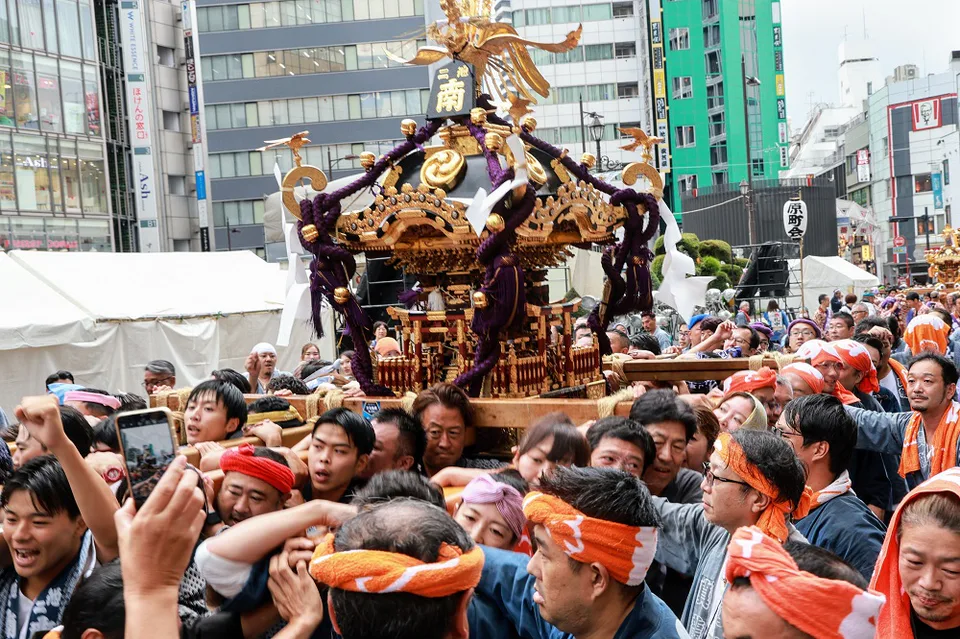
The retained lead image shows a shrine overhead among bearers and spectators in Ikebukuro. It captures the close crowd that makes this day vivid and also makes movement slow. Someone arriving to photograph a shrine may need to choose a position and stay there rather than repeatedly crossing the procession route. The Nezu Shrine procession fell on the same 2026 Sunday, so a visitor comparing the two could not assume an unhurried full experience of both. The broader Kawagoe Festival later in autumn uses a different float and evening rhythm.
For a future Fukuro Matsuri, the lesson is to protect the main mikoshi day if shrines are the purpose, then obtain the year's actual procession order and road restrictions. A main-day date by itself does not tell you where to stand at 16:00 or which streets will be passable. A family with a child or a traveller with limited standing tolerance may prefer a less dense viewing edge and a shorter visit over trying to follow the shrine through every turn. Tokyo travel with parents shows why repeated station crossings and long standing periods matter more than a hotel name on a map.
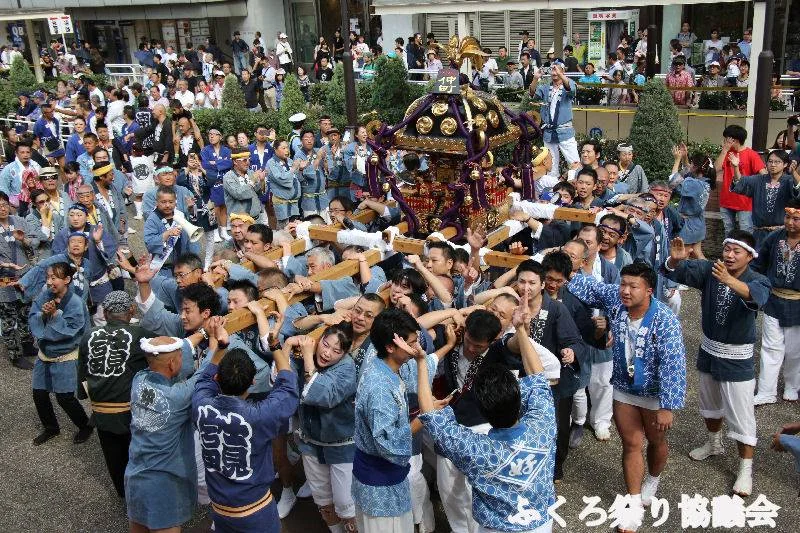
The second mikoshi photograph shows bearers in blue coats and a spectator line. It should not be used to infer the exact 2026 street layout: photographs can be from a different year or vantage point even when the festival form is the same. Use such images to judge whether close processions appeal to the group, then rely on the edition's route map for actual navigation.
The October programme rewards a stage choice
The October half combined several dance traditions—among them kappore, Sado Okesa and Ikebukuro Yassa—with the Tokyo Yosakoi competition. The 2026 organiser listed 10 October as the dance eve and 11 October as the main contest; competition results were posted the next day. Unlike a single procession, the programme spread attention across several performance places around Ikebukuro and, for the 2026 edition, included sites by Sugamo and Otsuka. A first-time visitor could easily spend more time changing venues than watching dance.
Choose one stage as the anchor, then a second only when the schedule and walking route make it easy. The Ikebukuro West Exit station square was the main orientation point in 2026. Other listed places included West Exit Park, streets on the west side and a Tobu department-store rooftop area. No visitor can see every team from every angle. The 2026 Tokyo Yosakoi schedule guide is a record of that year's venue choices; use a future organiser timetable rather than carrying those hours forward.
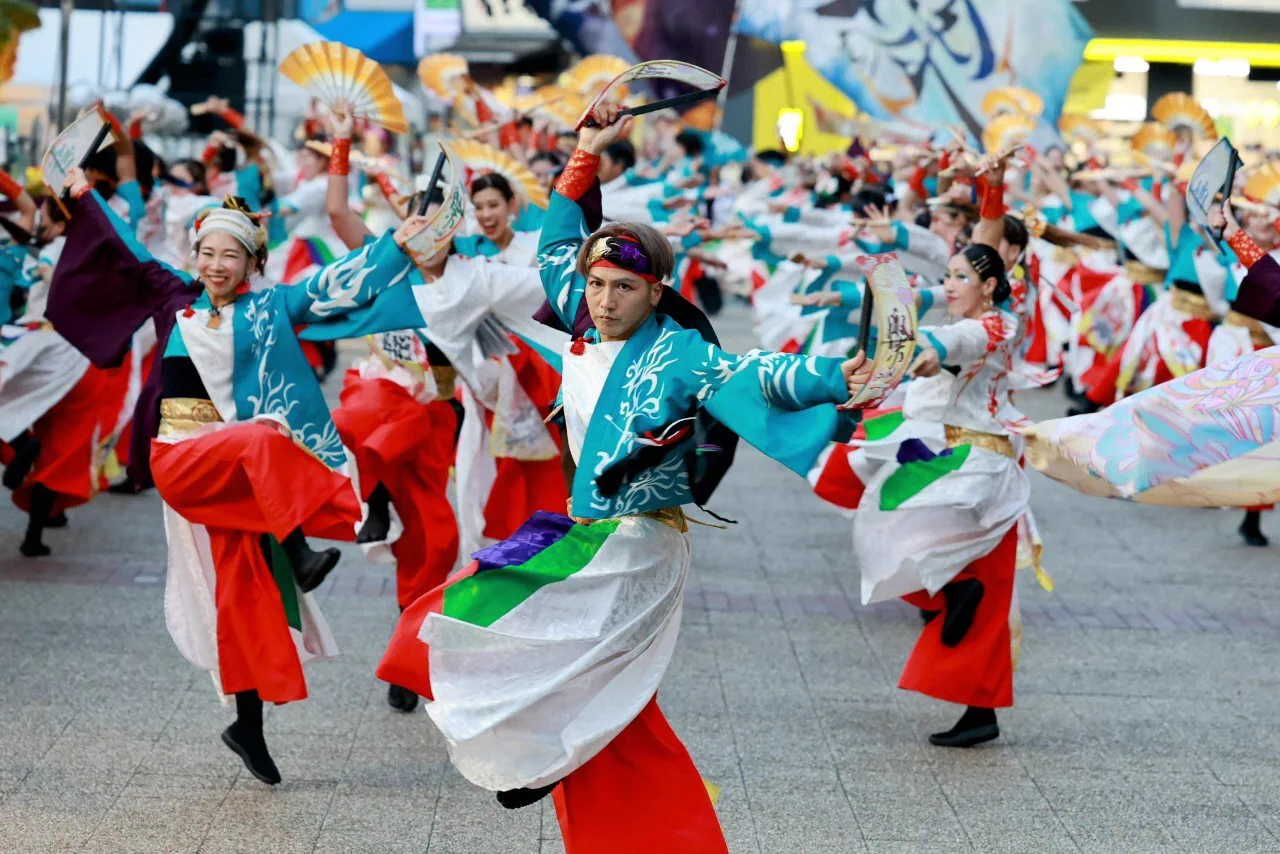
The retained dance photograph shows performers with fans and bright layered costumes. It conveys the group choreography that separates Tokyo Yosakoi from the September shrine-carrying day. Anyone who wants this style in a different region should compare Kochi Yosakoi's multi-venue scale. A Tokyo visitor considering another street-dance event might also examine Koenji Awa Odori's route and exit logistics; the rhythms and viewing arrangements differ.
West Exit is a better first instruction than “Ikebukuro Station”
Ikebukuro is a major rail interchange served by JR, Tokyo Metro, Tobu and Seibu. It is convenient to reach from much of Tokyo and easy to leave from the wrong side of the station. For the festival core, head toward the west side first, then follow the edition's venue map. A map pin for “Ikebukuro Station” is too broad when a crowded event occupies streets outside one set of exits. The district's transport strength reduces the need for a special hotel move; it does not remove the time spent moving through the station once you arrive.
Plan food around the side of the station where you will watch. One avoidable loop is entering the west-side crowd, crossing back through the station for a restaurant, then crossing again for the next performance. A meal near the first venue or a flexible dinner after the programme can remove two crowded crossings. This matters for families, older travellers and anyone carrying shopping bags. It also leaves a buffer when a performance starts later than expected or a procession briefly changes how pedestrians move.
The best Tokyo base still depends on the full trip. The six-area Tokyo hotel comparison puts Ikebukuro beside the other main choices; Shinjuku versus Shibuya and Ueno versus Shinjuku are larger decisions than one street festival. Moving hotels adds luggage handling, check-out and check-in for a rail-connected event. An Ikebukuro room is sensible when western Tokyo, Saitama, shopping or the rest of the route also support it.
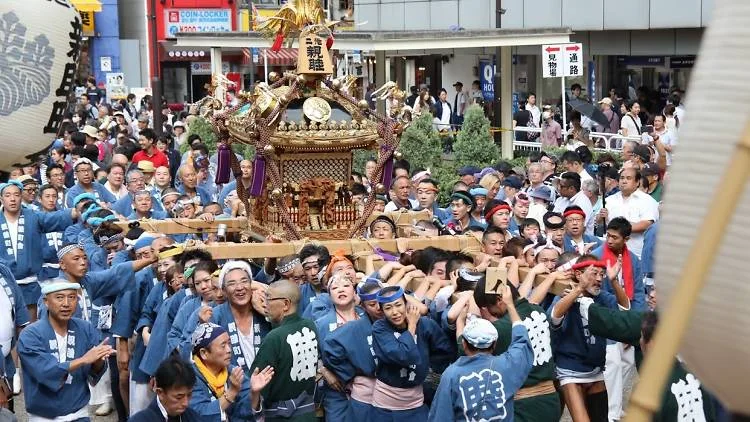
This close photograph makes the physical density clear: shoulders under the shrine beams, people guiding the movement and spectators very near the route. A future visit should allow an exit from the crowd if standing becomes uncomfortable. The image retains its existing rights and credit; its description does not claim it depicts a particular minute of the 2026 edition.
What changed between the early 2026 plan and the final organiser material
Before the event, the organiser's schedule linked to a traffic-control map labelled for 2025. A visitor planning in that earlier window could identify the 2026 festival dates but should not have treated those older road closures as the new plan. By September, the festival schedule carried 2026 traffic information. That distinction is an important lesson for later years: a confirmed festival date, a confirmed performance schedule and a confirmed road map are separate pieces of information released at different times. Do not assume one proves the others.
The organiser described the 2026 programme as subject to later change and the festival as proceeding in rain. “Held in rain” is useful for deciding whether ordinary showers cancel a trip; it is not a guarantee that every stage order, street arrangement or transport service remains unchanged in severe weather. On the day, a compact umbrella or rainwear is more considerate in a crowd than equipment that blocks neighbouring spectators. If conditions deteriorate, the return rail route matters more than catching one final team.
There was no general spectator admission ticket promoted for the street festival. A paid activity or reserved vantage point, if offered in a future edition, should be checked as its own product. The larger cost for most visitors is time: reaching the right side, standing long enough to see the programme and leaving without treating the nearest station gate as instantly accessible. Tokyo attraction pass comparisons cannot improve a free street-festival itinerary unless the other activities already justify the pass.
How the 2026 dates fit a wider Tokyo trip
The main days worked best as protected blocks, not minute-by-minute promises made months ahead. A traveller coming chiefly for mikoshi would protect Sunday 27 September, leaving the Saturday eve as an optional extra. For dance, Sunday 11 October was the more consequential choice, while Saturday 10 October offered a preview for someone already in Ikebukuro. A flight, Shinkansen move or timed attraction on the same afternoon could make an eve day more realistic, but it could not reproduce the main programme. This principle carries into a future edition even though its dates must be newly published.
Street festivals combine poorly with another event whose admission closes at a hard hour across the city. A four-, five- or seven-day Tokyo route has to leave room for travel between districts; a slower seven-day version illustrates why one open-ended festival block need not share a day with every headline attraction. A long day trip should usually occupy its own daylight. A controlled-entry autumn garden visit has another timing profile altogether; Rikugien's illuminated garden turns on gate conditions rather than street crowd flow.
The two Fukuro Matsuri formats also sit within a wider festival choice. The Japanese festival-style comparison distinguishes shrine processions, float events and coordinated dance. Nada's shrine-borne October festival demands much more travel and endurance than a Tokyo station-side visit. Sawara's autumn floats need a different day-trip or overnight decision. Fukuro Matsuri's easy rail access is a strength precisely when the itinerary wants festival atmosphere without another hotel base.
For the next edition, watch the map after the dates
The 2026 edition showed a clear order of planning: choose which kind of festival you want, confirm the main date for that edition, identify the west-side venue, then read the current stage schedule and traffic map. The old 2025 road map that appeared during early planning was eventually replaced by 2026-specific information. A future traveller should repeat the process with that year's materials rather than reusing this page's September and October calendar as though it were permanent.
The 2026 festival has already happened, so this page is an archive and a framework for comparing mikoshi with Tokyo Yosakoi. For current announcements, use Toshima City's 2026 record, the Fukuro Matsuri programme and Tokyo Yosakoi's event site. A later edition should be judged by its newly published dates, venue map and road restrictions. An Ikebukuro hotel or special rail journey should wait until those details fit the whole Tokyo trip.
For a future Ikebukuro festival visit, compare rooms around the station and viewing streets after confirming the new event dates.