
MIMARU Tokyo Ueno East and MIMARU Tokyo Shinjuku West solve the same basic room problem: a family can share an apartment with a kitchen, dining table and real sleeping places. They do not solve the same transport problem. Ueno East is a short walk from Ueno Station and suits a trip with east-Tokyo mornings, a northern-Japan rail leg or repeated Ueno and Asakusa visits. Shinjuku West places the family west of Shinjuku Station, useful for that side of Tokyo and some outward day trips, but the hotel's published walk from JR Shinjuku South Exit is ten minutes. A family with tired children should compare those final walks before arguing over which district has more attractions.
JapanLayer hotel assessment by dimension
↔ Scroll table left or right
| Hotel | Access | Space | Comfort | Cleanliness | Neighbourhood | Service | Value |
|---|---|---|---|---|---|---|---|
| MIMARU Ueno East | Insufficient evidence | Insufficient evidence | Insufficient evidence | 9.1/10 | Insufficient evidence | 9.3/10 | Insufficient evidence |
| MIMARU Shinjuku West | Insufficient evidence | Insufficient evidence | Insufficient evidence | 9.4/10 | Insufficient evidence | 9.4/10 | Insufficient evidence |
Choose the room before the district
↔ Scroll table left or right
| Room or route | Ueno East | Shinjuku West |
|---|---|---|
| Four separate beds | 38 m² apartment | 40 m² apartment |
| Family bunk room | 39 m², two singles plus bunk | 40 m², two singles plus bunk |
| Published JR walk | About 3 minutes from Ueno | About 10 minutes from Shinjuku South Exit |
| Laundry | Coin laundry; no standard in-room machine | Coin laundry; no standard in-room machine |
Swipe to compare the hotels
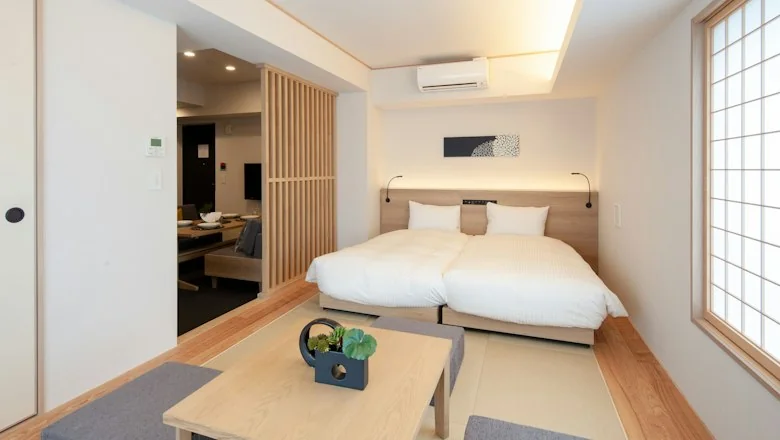
Choose the room category before the neighbourhood. A four-person family in Ueno East's 38-square-metre four-single-bed apartment is buying a different sleep arrangement from a family in Shinjuku West's 40-square-metre Family Apartment with a bunk bed. Both properties also offer Japanese-style rooms with futons and larger configurations. The room layout and whether the children can safely and happily use the assigned beds may outweigh a few minutes of train time. This article assumes a first five-night Tokyo stay; the Tokyo family hotel guide covers a wider range of hotels and budgets.
The final walk is not the same at these two properties
MIMARU describes Ueno East as about three minutes from Ueno Station on the JR Yamanote Line. This is an excellent starting point for a family arriving with cases, but a station walk starts at the relevant exit, not the arriving train door. Ueno has multiple lines and a large station area. Check which service brings you in, where its lifts are, and whether the route to 4-26-3 Higashiueno is practical with your luggage. A stroller-friendly path can be longer than the shortest stairs on a map. The Narita and Haneda to Tokyo route guide helps choose the inbound service before you judge either hotel.
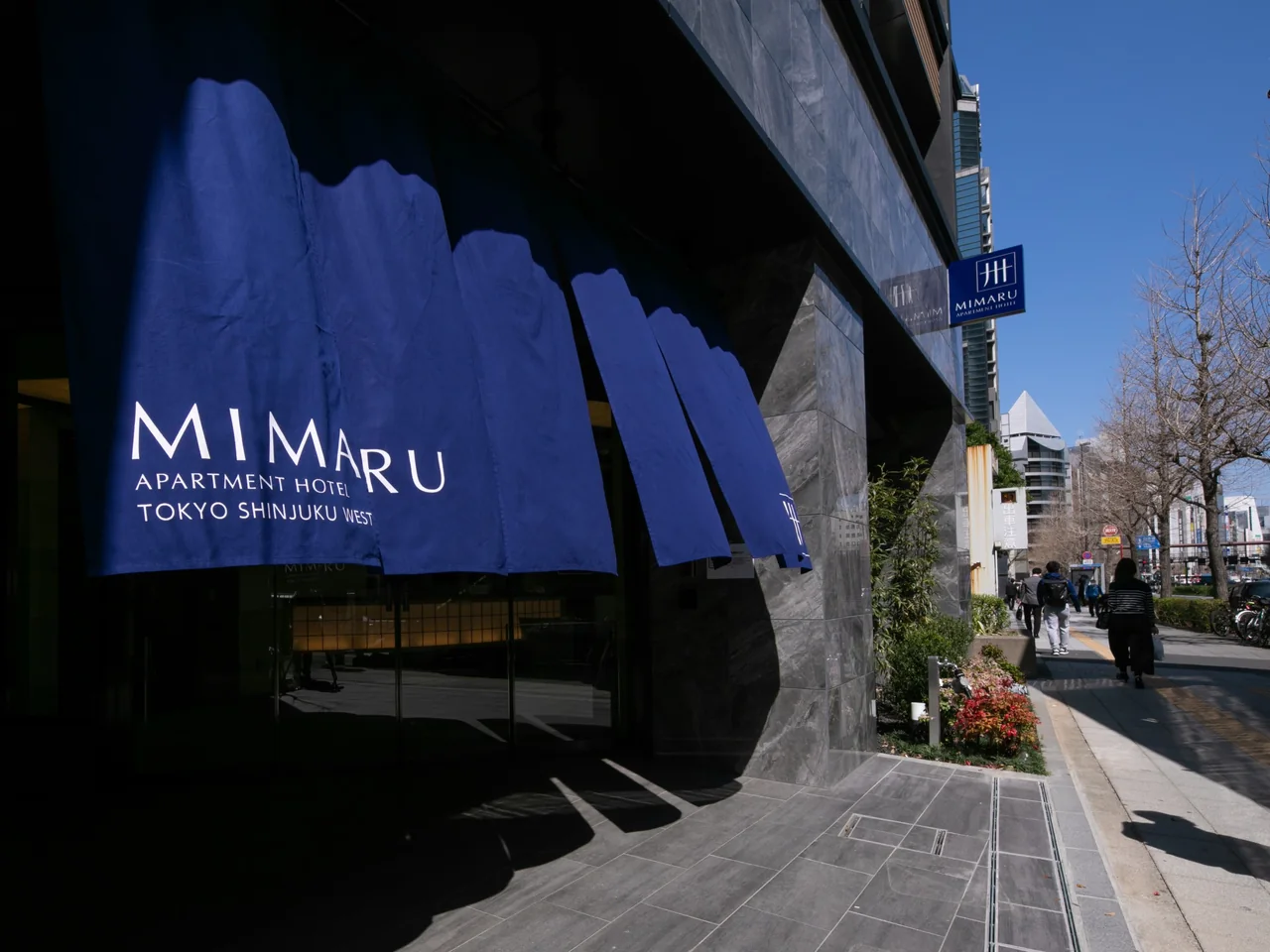
Shinjuku West's property page lists a ten-minute walk from JR Shinjuku South Exit and an eight-minute walk from Tochomae Station's A2 exit on the Toei Oedo Line. That is not a station-front hotel in the same sense as Ueno East's published JR walk. Ten minutes can be easy for two adults with light bags and surprisingly long with a sleeping child, wet weather or a group that must wait for lifts. It can also feel different after a late Disney day compared with a relaxed midmorning departure. The hotel's own universal-design access map is useful if stairs are a problem; follow it from your actual arrival line.
The location difference should not be reduced to “Ueno for Narita, Shinjuku for everything else.” Your airport terminal, arrival hour and chosen service determine the transfer. The Ueno versus Shinjuku base guide makes the broader airport and sightseeing comparison. If you land late, the Narita late-arrival hotel decision or Haneda late-arrival decision may show why an airport-area night is easier than forcing children through a major station after bedtime. Neither MIMARU apartment is improved by an exhausted check-in.
Four separate beds, bunks and futons are different purchases
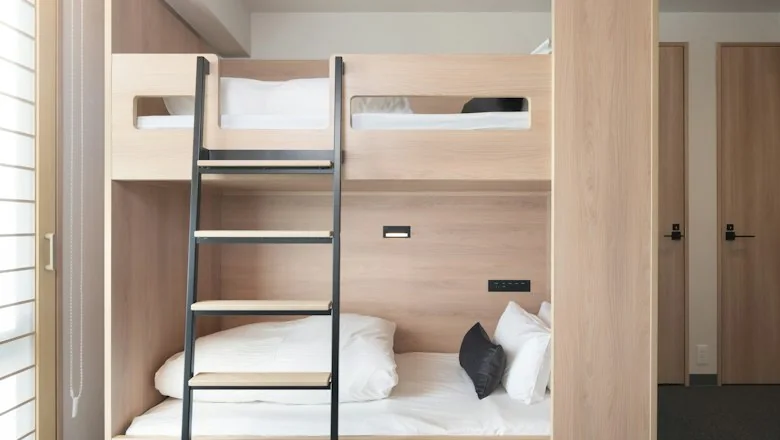
At Ueno East, the Apartment (4 Single-Beds) is listed at 38 square metres with four single beds. The Family Apartment is 39 square metres with two singles and one bunk bed. Its Japanese Apartment is 40 square metres with two singles and two futons. All three are shown with one washbasin, one restroom and one bathroom, and no in-room washer-dryer. The published capacity is four adults plus up to two young children using existing bedding under the hotel's age rules. That is a capacity statement, not a promise that six people will find the floor space comfortable or that every child gets a separate mattress.
Shinjuku West lists a 40-square-metre Family Apartment with two singles and a bunk bed, a 40-square-metre four-single-bed apartment, and a 42-square-metre Japanese Apartment with two singles and two futons. It also lists larger apartments for six adults. These figures make the properties similar on paper but not identical for a particular family. A teenager may prefer a single bed to the top bunk; a child may enjoy the bunk but need supervision. Adults who dislike sleeping low to the floor should not book a futon room simply because it is marketed as Japanese. The choice should reflect the people sleeping there, not the most charming photograph.
For three adults and a child, count actual beds, not the site's total capacity. If the child is old enough to be counted as an adult by MIMARU's booking rules, enter the correct age so that the search returns a valid room. The MIMARU search interface defines guests aged seven or older as adults, while the property pages define children aged six and under as young children who may share bedding. If your party includes a six-year-old who needs a dedicated bed, book the room and occupancy accordingly rather than relying on a free co-sleeping allowance. The Tokyo hotels with parents guide adds another layer if grandparents are travelling with you and a single bathroom may become a morning bottleneck.
The larger rooms are not automatically better for a small family. Ueno East's Connecting Japanese Apartment is a pair of connected rooms with two bathrooms and a larger combined area. That can be worth the extra cost for two households or eight adults who need privacy. For two adults and two children, the extra room may provide little value unless someone needs a separate sleep space. Shinjuku West's six-person categories similarly deserve a comparison with two standard apartments, including the number of bathrooms and the guarantee that rooms will be together. The Tokyo room-size and laundry guide for five to seven nights helps put that price difference against actual daily use.
Ask one more question before selecting a themed room: will the children still want it on night five? Ueno East advertises a Pokémon Room, but its room page lists four single beds in 40 square metres. If that arrangement suits your group and the price is close, the theme may be a pleasant extra. If a bunk bed, a different number of washbasins or a quieter layout matters more, choose the room that solves the daily routine. A themed photograph cannot tell you how a child will manage a late shower, where four open suitcases will go, or whether everyone can reach the table at breakfast. Those are reasons to inspect the named room layout before treating décor as a booking criterion.
The kitchen matters if it changes your mornings
Both property pages describe furnished kitchens and dining tables, with an IH stove, microwave, refrigerator, cookware and tableware. For a family, the advantage is specific: you can prepare a simple breakfast on a slow morning, accommodate a child who wakes early, or eat takeaway without balancing containers on beds. It is not an obligation to cook on holiday. If you plan every morning around a café and spend each night out, the kitchen may be unused floor area. If a child has a narrow food routine or the group needs an early breakfast before a day trip, it can be the feature that makes a five-night stay manageable.
Neither of the standard room categories described above has an in-room washer-dryer. Both hotels list coin laundry in the property. That distinction is important because “apartment hotel” can cause a family to assume laundry is inside the room. If you expect to wash clothes during the stay, check machine availability, hours, cost and whether you can leave the load while children sleep. The hotel may not guarantee an empty machine when every family returns at night. For a longer Tokyo stay, the Tokyo five-to-seven-night hotel comparison discusses when a different property's in-room machine is worth paying for.
The bathroom arrangement also deserves a practical look. MIMARU lists a separate washstand and bath at both properties. This helps one person brush teeth while another uses the bath, but a standard four-person apartment still has one toilet and one bathroom. A family can make that work by staggering showers, especially when children bathe together. Two households with different wake times may prefer the connected Ueno configuration or separate rooms. Do not equate 40 square metres with two-bathroom convenience. The booking category, not the brand, determines that detail.
Place the five days on a map before choosing east or west
Ueno East makes sense when your plan includes Ueno Park, Asakusa and other east-side stops, especially if the first or last long-distance rail leg also uses Ueno. A family can return for a mid-afternoon rest without committing to a long cross-city trip. The Tokyo first-time location guide and Tokyo seven-day itinerary can help turn a list of attractions into coherent days. If the entire plan is Shibuya, Shinjuku and western Tokyo, a Ueno apartment may save little despite its shorter station walk.
Shinjuku West is stronger when several days start or end around Shinjuku and the family values access to its outward routes. A Hakone excursion, for example, may align with a Shinjuku departure, but the transport mode and exact starting point should be set first. The Tokyo-to-Hakone transport guide and Hakone overnight decision may show that an overnight in Hakone is better than a tiring family day trip. The MIMARU apartment's ten-minute final walk still applies on the return. A convenient outbound route can be offset by carrying a sleepy child through Shinjuku after dark.
Disney is a separate planning problem. If the family wants one park day, either apartment can be a city base with a commute. If the plan includes two early park days, compare a Disney-area night and luggage move. The stay near Disney or in Tokyo guide and Disney split-stay decision will be more useful than forcing this Ueno-versus-Shinjuku choice to answer every park question. A Disney hotel may bring booking privileges or proximity, but those benefits vary by hotel category and date; check them before paying for a move.
The same applies to a Kamakura or Yokohama side trip. One day outside Tokyo should not decide five apartment nights by itself. The Tokyo with a Kamakura day guide and Yokohama or Tokyo base guide help determine when the side trip needs its own room. If you are moving to Kyoto or Osaka after Tokyo, the Tokyo–Kyoto–Osaka luggage delivery guide and Tokyo luggage storage guide address bag movement. MIMARU says its staff can arrange luggage shipping through different providers, but charges depend on bag size and service; discuss the receiving hotel and timing before treating it as automatic.
Compare the five-night totals with the family in the search form
Enter every adult and child at the age they will be at check-in, select the same five dates and compare named bed arrangements. A four-single apartment and a two-single-plus-bunk apartment can have similar area while producing very different sleep. Record the full stay price, cancellation cutoff, tax and any amenity or extra-bed charge. Then add the cost of breakfast if you expect to buy it, and the laundry cost if you expect to use machines. A price difference that looks small per night becomes material over five nights, but it should be weighed against the number of daily journeys the location changes.
Choose Ueno East when east-Tokyo days or a Ueno-area rail arrival repeat, and its exact room beds fit everyone. Choose Shinjuku West when western days or Shinjuku departures dominate enough to justify its longer final walk. If the family splits time evenly and both rates are close, bed layout, cancellation flexibility and the easiest airport arrival should break the tie. The Tokyo first and last day plan is useful for those boundary days, when children and luggage make a good transfer more valuable than a theoretical central location. Before paying, verify the hotel address, room name, adult/child count, bed arrangement and the route from your actual train platform.
Updated 3 October 2026. Check room inventory, children's ages, lift route and luggage handling for your dates.