
An early Kansai Airport departure does not automatically justify changing hotels. The useful question is whether your present Osaka room can get you to the correct terminal by the airline’s required time with a buffer you are comfortable using. If it can, moving luggage and checking in again buys little. If it cannot, move only far enough toward KIX to remove the actual gap: Namba or Shin-Imamiya for a direct rail start, Rinku Town for an earlier airport bus, or the airport island when the city journey itself is too exposed.
A late arrival runs the calculation in the other direction. Scheduled landing is only the start; immigration, bags, customs and the walk to the departure stop determine which last service is realistic. Namba has a late Nankai train, while Osaka Station’s Umeda area has a different late bus. Choosing a hotel district before checking the correct endpoint can create an unnecessary first-night hotel change.
Work backward from the correct terminal
Kansai Airport Station adjoins Terminal 1 and Aeroplaza. Terminal 2 is separate; the free Aeroplaza shuttle takes about seven to nine minutes on the bus, before the walk to its stop and waiting time. That difference can be trivial for a late-morning flight and decisive for an early check-in or bag-drop deadline. Write down Terminal 1 or Terminal 2, the airline’s own arrival instruction and the time you intend to be at its counter, then trace the full journey backward.
The fastest advertised railway journey is not the earliest usable arrival. Nankai promotes Rapi:t at as little as 34 minutes from Namba to KIX, and the Airport Express at about 45 minutes. Yet the current Namba departure pattern has an Airport Express at 05:15 and the first Rapi:t at 06:00. For a very early flight, the slower train may be the only early train that matters. If its arrival still fails your terminal-specific margin, a hotel directly above Nankai Namba Station does not make that departure any earlier.
Nankai has changed timetables before, so confirm the service for the actual weekday or weekend before paying for a non-refundable last-night room. KIX’s late-night and early-morning access listing currently marks the Namba limousine bus suspended. An unverified bus timetable should not be treated as a second way out of Namba at dawn. A confirmed private road transfer is a separate choice with its own booking and traffic risk.
| Flight or arrival condition | First hotel-area comparison | Why |
|---|---|---|
| Present base reaches the airline’s terminal target comfortably | Keep the same room | Packing and a second check-in remove no meaningful risk |
| Early flight needs a simpler city departure; 05:15 Namba train still works | Namba or Shin-Imamiya | A direct Nankai start deletes an early city transfer |
| 05:15 from Namba is already too late | Rinku Town or airport island | Earlier road access or no city journey changes the hard boundary |
| Late arrival with a comfortable last train to Namba | Stay at the intended Namba base | Finish the airport transfer once |
| Late arrival with time for the direct Umeda bus | Keep the Umeda base | Avoid Namba plus an additional northbound change |
| Neither last city service has comfortable margin | Airport side for the first night | Protect sleep and avoid an improvised transfer after midnight |
Namba works when it serves the evening as well as the morning
A final night in Namba can earn the move twice. You may already be eating in Dotonbori or Shinsaibashi on the last evening, then want a single Nankai run the next morning. Someone travelling from an Umeda hotel would otherwise need a very early Metro or JR connection before reaching the airport railway. Removing that hand-off can matter more than a ten-minute difference between train types, especially with several cases or a child who has to be woken and moved.
The same move is weak if the last evening belongs in Umeda, the flight is comfortably later or most of a five-night stay is built around JR day trips to Kyoto, Kobe or Himeji. KIX can influence the first or final night without dictating the whole base. The Namba versus Umeda hotel comparison and first-time Osaka neighbourhood guide help count the repeated ordinary days, which usually outnumber airport journeys.
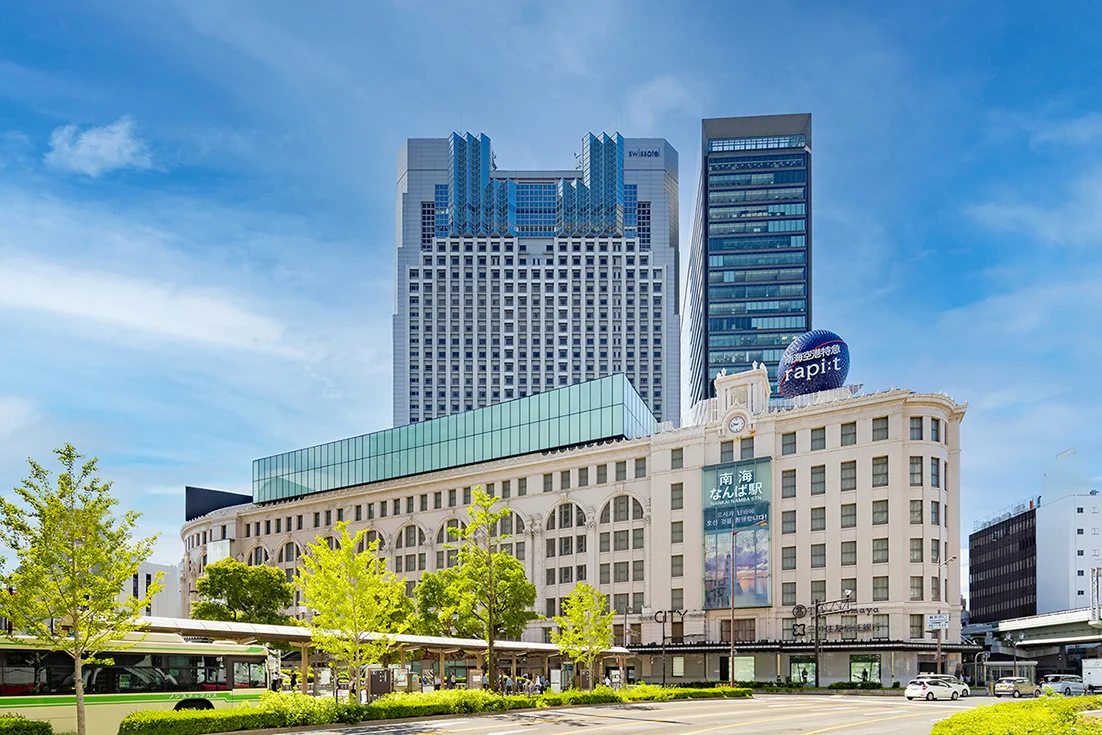
Swissôtel Nankai Osaka is the clearest high-comfort example because the hotel sits above Nankai Namba Station. Its extra value is a short, predictable last walk to the platform, not the idea that every early flight needs a luxury room. A couple with large luggage or a traveller who values fewer before-dawn navigation steps may use that location; a party whose target time is earlier than the first rail arrival will not. The Swissôtel Nankai room and airport-access comparison addresses the room premium separately from the train schedule.
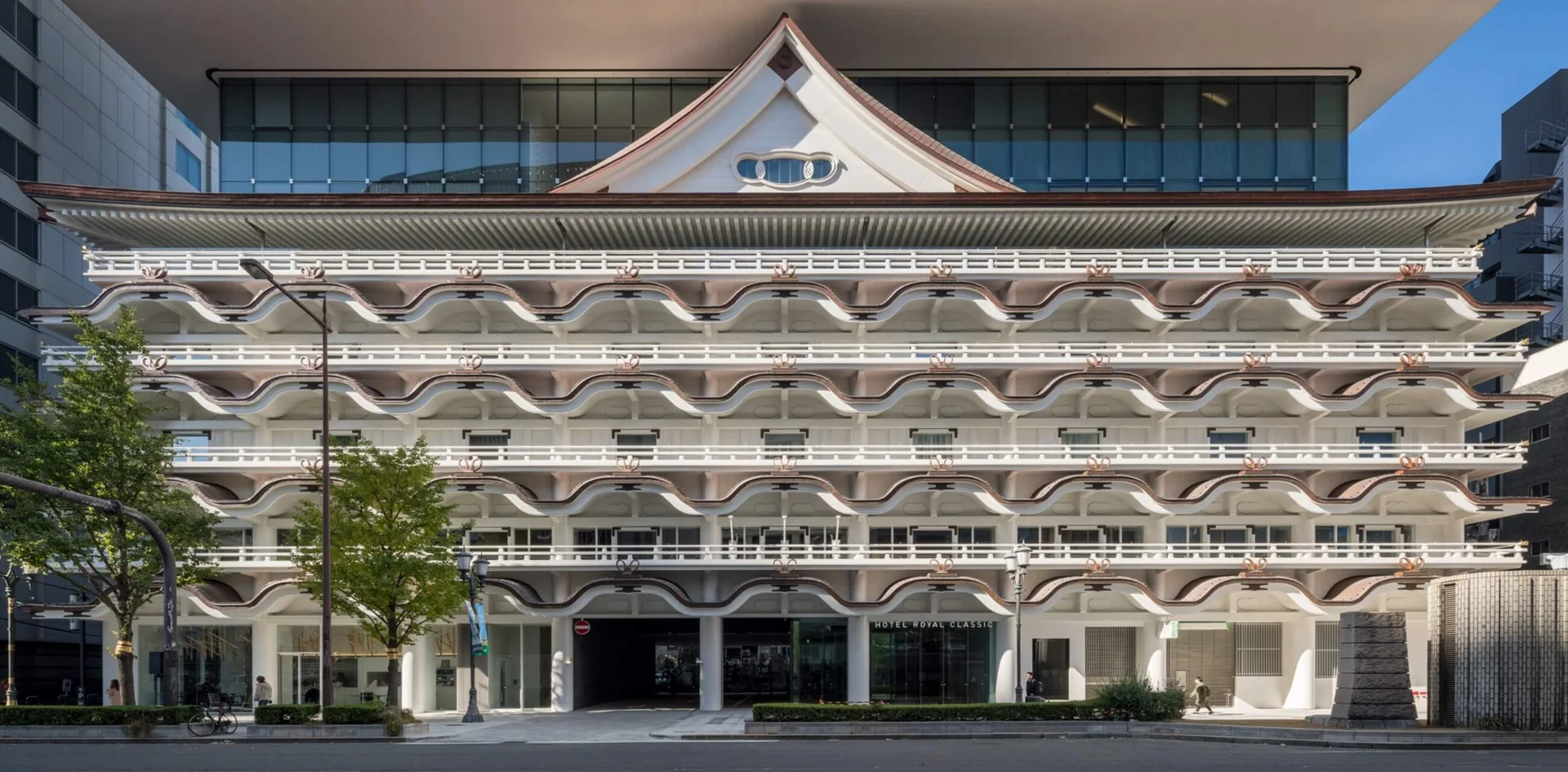
A more ordinary Namba location can still work. Hotel Royal Classic Osaka has a useful Metro connection and a few more minutes of walking to Nankai, which may be a fair trade when Namba is also your city base. Compare the hotel-to-platform route with cases, not merely the station name on the listing. Saving a platform walk matters less if you then lose an afternoon to moving hotels for no gain in the flight buffer.
Rinku Town moves the first practical departure earlier
Rinku Town is more than a lower-priced airport area. KIX’s current early-access information lists a bus leaving Rinku Town at 03:30 and reaching Terminal 1 at 03:41. Another leaves at 04:35, reaching Terminal 1 at 04:46 and Terminal 2 at 04:55. These are different operating possibilities from a first 05:15 train out of central Namba. They can solve a flight whose airline target cannot be reached comfortably from the city.
The tradeoff is real: the final Osaka evening becomes an airport-side night, and you still need the short morning bus. Check the bus stop, the exact hotel-to-stop walk, terminal served and service for the travel date. If the flight leaves later and the Namba train has room to spare, moving to Rinku just to be geographically closer spends time on packing and check-in without buying useful certainty.
The airport island is the shortest departure chain
Hotel Nikko Kansai Airport stands within Aeroplaza, with pedestrian access to Terminal 1 and Kansai Airport Station. That removes city rail, road traffic and the first morning interchange. For a flight requiring an unusually early airport arrival, a group with heavy bags or a very short sleep, the simplicity can justify using the last night on the island. The airport hotel does not erase the Terminal 2 shuttle, however. T2 travellers still need the Aeroplaza bus plus a sensible wait and terminal walk.
This is less attractive when the flight leaves with plenty of time for a normal Namba or Umeda journey and the final Osaka evening has value. The correct comparison is the extra hotel cost and lost city time against the reduction in missed-connection risk. The Osaka last-night Shinkansen comparison applies the same idea to a rail departure rather than KIX.
Late landing: Namba train or Umeda bus?
For the inbound traveller, Nankai’s current final Airport Express is listed at 23:55 from KIX for Namba, reaching the city around 00:39. That is useful if you are already landside, holding your bags and close enough to the platform to board without running. It is not a planning guarantee based on a 22:45 scheduled touchdown. Aircraft taxiing, immigration, customs and a delayed suitcase can spend the apparent hour.
The Umeda route is different. KIX lists a bus introduced on 29 March 2026 leaving Terminal 2 at 00:02 and Terminal 1 at 00:15, arriving at Hankyu Sanbangai near Osaka Station at 01:13. For a genuine Umeda hotel, that direct ride may avoid Namba and a second late city transfer. Terminal 2 passengers can board its bus without first using the inter-terminal shuttle to reach rail. But a flight that leaves you landside only moments before departure still has no comfortable bus margin.
Choose the endpoint that matches the hotel you intend to keep. Comfortable 23:55 train and a Namba stay: finish the transfer in Namba. Comfortable Umeda bus and an Osaka Station hotel: continue directly there. Neither service reasonably reachable: book on the airport side and move the next day. The suspended Namba late-night limousine bus should not be used as a back-up in this calculation.
Children, older parents and cases change the cost of each interchange
A route diagram treats a transfer as a dot; a family experiences an elevator search, bags off one service, a platform change and everyone reassembled. Count the checkout walk, any Metro or JR movement to Nankai, the airport train or bus, the connection from KIX Station to the correct terminal and the T2 shuttle if needed. A solo traveller with a small backpack may find two interchanges routine. Four people with two sleepy children and four cases may value a last-night hotel that removes one of them.
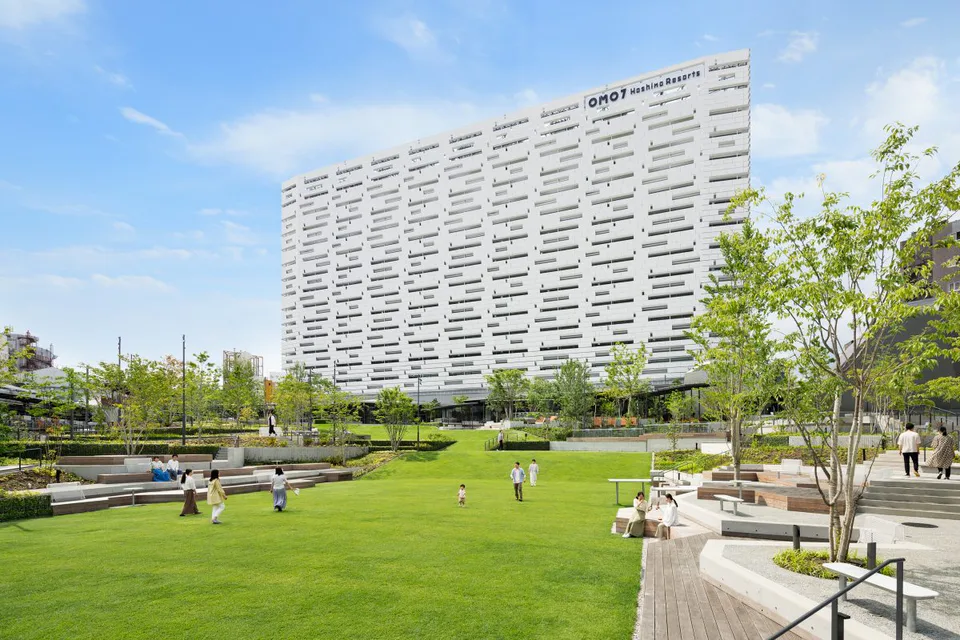
Shin-Imamiya lies on the Nankai airport corridor and OMO7 Osaka faces the station. It can be a middle-city answer when the district also suits the stay. Its Miya-green space, public areas and bath add value only if there is time to use them. An arrival near midnight followed by a pre-dawn checkout turns any such property largely into a bed beside the line. Compare the actual room price with simpler station hotels, Rinku and the airport island rather than assuming the facilities will be enjoyed.
Shin-Imamiya does not replace Rinku when the first useful city train is itself too late. Similarly, a direct platform connection at Namba cannot repair an airline check-in time that precedes the rail arrival. Move to the earliest boundary your flight actually needs, then stop. The KIX access hotel guide for an Osaka base is a useful broader check when airport convenience begins to override several regular sightseeing days.
Five situations that lead to different hotels
For a 10:30 Terminal 1 international flight after four nights in Namba, keep the room if the airline target and first practical service leave a comfortable margin. A Rinku move solves nothing. For a very early Terminal 2 flight, add the shuttle and its wait to the rail calculation; if Namba’s 05:15 departure is too late, compare Rinku with the island rather than merely changing an Umeda booking to Namba.
For a late arrival followed by five nights in Namba, take the final 23:55 train only when bags and walking time make it a calm boarding. If that window closes, an airport-side first night is cleaner than a rushed improvised transfer. For a late arrival to a five-night Umeda base, the 00:02 or 00:15 direct bus can preserve the one-hotel plan if it has sufficient margin. The last-train calculation for Namba is irrelevant when a reliable bus goes to the neighbourhood you actually chose.
A family using Umeda for repeated Kyoto and Kobe outings should not move its whole stay to Namba for one moderately early KIX departure. Keep Umeda if the flight journey works. If the pre-dawn city connection is too complex with cases and children, move only the last night to a district that removes a real hand-off. The hotel change itself has a cost in packing, storage, check-in and lost sightseeing time, so the move should solve more than a few minutes of travel.
Make the final booking against the flight, not the map
Keep the ordinary Osaka hotel when it reaches the specified terminal by the airline target. Use Namba or Shin-Imamiya when a direct Nankai start matters and the train is early enough. Rinku makes sense when its early road service creates the margin that Namba rail cannot. The KIX island is for the shortest pre-flight chain, while still allowing for Terminal 2. For inbound travel, compare the last useful Namba train with the Umeda bus after you are landside, not with the aircraft’s scheduled landing time.
Before paying, note the travel date and weekday, the airline terminal, counter or bag-drop target, first or last usable service and the walk from the chosen hotel to its actual stop. A good last-night decision reduces a concrete missed-connection risk or removes an awkward transfer. It does not require the geographically closest hotel when the existing base already works.
Compare KIX-area stays after identifying whether Rinku or the airport island supplies the buffer you need. Namba accommodation is the city-side comparison when a direct train is sufficient.
Other useful comparisons
When another destination shapes the arrival or final night, compare Namba vs Umeda: Which Osaka, Where to Stay in Osaka, Swissôtel Nankai Osaka Airport-Access Guide.
When another destination shapes the arrival or final night, compare Early Shinkansen from Osaka: Should, Fukuoka Late-Arrival Hotels: Make the, Tokyo Honeymoon Hotels: Don’t Pay, Hakata or Tenjin for an.
When another destination shapes the arrival or final night, compare Late Arrival or Early Flight, Osaka Hotels for Kyoto and, Fukuoka Long-Stay Hotels: What Starts, Osaka Shopping Hotels: Why the.
When another destination shapes the arrival or final night, compare Osaka Hotels for 4–6 Friends, Sapporo vs Chitose for the.
When another destination shapes the arrival or final night, compare Okinawa Guys’ Trip Hotels: The, Sapporo Hotels for Couples: Choose, Ryukyu Hotel & Resort Nashiro, Osaka Kuromon Market Food Tour.
When another destination shapes the arrival or final night, compare Fukuoka or Yufuin: Where Should.
Transport details: Nankai airport railway timetables, KIX Terminal 2 shuttle, late and early KIX access, terminal rail connection and Hotel Nikko Kansai access.