
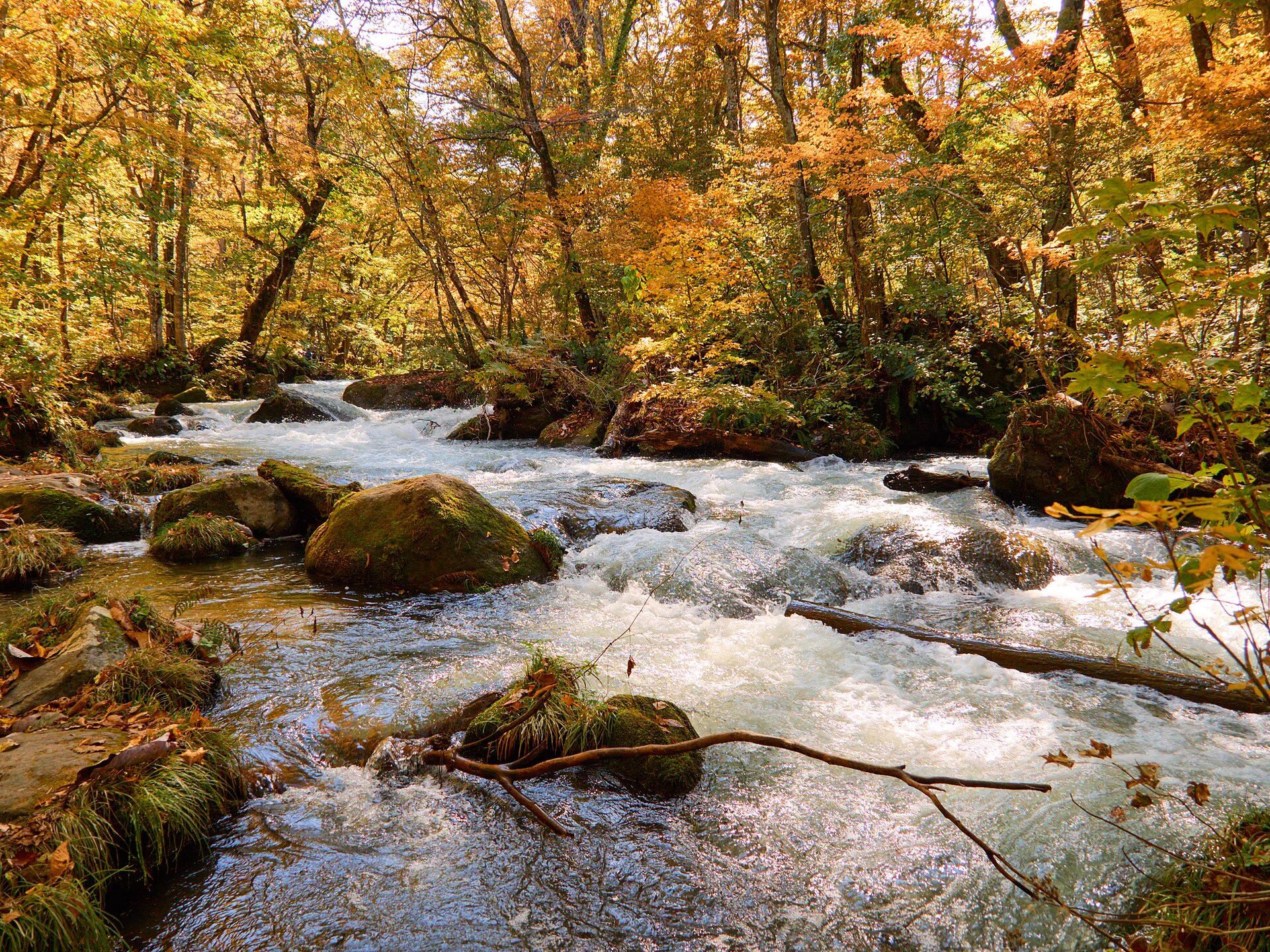
The transport choice at Oirase begins with your last streamside stop, not your arrival city. A bus can drop you at Ishigedo and collect you farther along the gorge, which suits a one-way walk. A rental car makes the broader Aomori–Towada region easier to join up, but the car must still be retrieved or parked while you walk. For one or two visitors seeking the stream itself, public transport often removes more friction than it adds. A group linking a lake hotel, onsen and several distant stops may get more useful flexibility from a car. A two-day Lake Towada and Oirase route shows how the choice plays out across the whole stay.
This article uses the timetable active on 24 October 2026. The seasonal JR Bus schedule has different service end dates, so a journey after 11 November needs a fresh route check. The 2026 Oirase Open-Air Museum driving restrictions ran from 7 to 13 September and have ended; they should not be presented as an upcoming October closure. Normal autumn congestion, limited parking and the possibility of a separate weather-related disruption still matter. Towada–Oirase hotel-area choices are as important as the vehicle decision.
↔ Scroll table left or right
Trip priority | Transport that usually fits | Constraint to settle |
One-way stream walk by one or two people | JR Bus | Name the exit stop and two usable buses |
Airport, city, lake hotel and several brief stops | Rental car or mixed plan | Park once for a walk; avoid repeated roadside stops |
Family group splitting vehicle cost | Price both | Luggage and driver energy may matter more than fare |
Unconfident mountain driver or possible cold-weather road | Bus or hired transfer | Do not rely on a rental as a rescue plan |
Autumn peak or restricted-traffic event | Use current road and bus notices | A car is useful only where it can legally enter and stop |
Late-October Tohoku foliage timing helps set the Oirase travel date before choosing a bus or rental. Mountain colour can change earlier than city leaves, so a generic October booking is a weak substitute for the actual week.
The autumn bus timetable is not one unchanging route
JR Bus Tohoku links Aomori and Shin-Aomori, Hachinohe, the Oirase stops and Lake Towada. Its current seasonal timetable includes services from 18 September, but individual runs end on 11, 16 or 17 November. The Aomori–Lake Towada line began its 2026 season on 1 April; the Hachinohe Oirase-go began on 11 April. For late autumn, use the date column on the current service, not a generic route map. Winter Hakkoda services replace part of the network from 12 November and do not recreate every summer gorge stop.
Two Hachinohe departures are special: the 10:00 and 13:30 from Hachinohe Station West Exit toward the gorge and lake require an online reservation when you board at that origin. The operator reservation notice and the booking partner conditions say sales open at 10:00 three months ahead and close 60 minutes before the first stop departs. The seat booking costs ¥300 per person beyond the bus fare. Pass holders on those departures still need a seat booking. Other intermediate boarding stops on that route are handled by available space, while Aomori-origin and Lake Towada-origin services in the seasonal schedule generally operate without advance reservation. An unreserved bus can still fill, so build room for an earlier service in the leaf season.
Payment is normally made when leaving with cash or an accepted transport IC card. Top up before going into the mountain rather than assuming a driver can recharge a card in a queue. Eligible Japan Rail Pass and JR EAST PASS products cover the local JR Bus fare under their terms, but they do not erase the Hachinohe origin booking rule. JR pass value on a Tohoku route is a broader calculation; it should not replace the actual bus timetable and last-return plan.
Start with the exit bus. If the walk ends at Kumoi-no-Taki, a lake-bound bus is useful only if it takes you toward the booked hotel or the next connection. If the city return is the aim, check the opposite direction and the departure date. Write down two services that work, including the earlier one, because a full bus or a longer-than-planned walk can make a single last bus a fragile plan. Japan bus boarding rules is useful for first-time riders, but the gorge requires its own stop-by-stop schedule.
A car helps between bases, then becomes something to manage
Driving is most useful when the day links Aomori Airport, Towada City, Yasumiya, an onsen or an outlying hotel. Inside the central stream corridor, the road and walking path run near each other, and pulling over repeatedly can be difficult or inappropriate. Plan to park at a practical base such as Oirase Field Museum, Nenokuchi, Yasumiya or your hotel, then use a bus for the walking section and return. This gives the car a role in the regional route without forcing it into every part of the gorge.
The 2026 Oirase traffic programme restricted general vehicles on the designated stretch between 7 and 13 September. Weekday controls ran 10:00–16:00; the weekend used 09:00–16:00, with a broader restriction on large vehicles on the final Sunday. That programme is over as of this October article. A visitor should still check current road conditions and parking arrangements close to departure; last year’s October dates would be a poor substitute because this year’s event was moved forward. If another control is active, an outer parking area and shuttle or public bus replace the idea of driving to every waterfall.
A rental also carries obligations beyond the headline price. The driver needs documents that satisfy Japanese rules and the rental company, every additional driver must be covered, and the route must be comfortable in left-side traffic. Fog, wet leaves, narrow bends and possible early snow change the drive. An inexperienced mountain driver should not be pressed into a car because a bus schedule looks inconvenient. Hokkaido winter-road preparation covers more severe conditions, while Aomori and Hachinohe as autumn bases helps reduce unnecessary rental miles.
The true price comparison includes insurance, fuel, tolls if relevant, parking, an extra driver, winter equipment when required, vehicle collection and the rental-office return deadline. On the bus side, include city-to-mountain fares, any reservation administration, transfers, and a taxi contingency if a last service is missed. A car can win for a group and still give less nature time if a solo driver spends the afternoon fetching it. For a same-day city return, usable daylight beside the stream matters more than a narrow fare saving.
A wider north-Aomori route could also include Hakkoda ropeway and Sukayu access, but that adds another weather-dependent mountain leg. Give the gorge its own walking time first.
Two sections suit a one-way walk
Ishigedo toward Kumoi-no-Taki gives a first visit concentrated water, boulders and waterfalls, with possible earlier exits around Mamon-iwa or Kumoi-no-Nagare if time or weather shifts. The bus stop sequence on the current JR Bus route table makes it possible to choose a shorter finish without returning to the starting point. Confirm direction before stepping on the bus: several stops share similar English names and the vehicle can be lake-bound or city-bound. A two-day gorge itinerary gives a longer time frame if you want more than the first cluster.
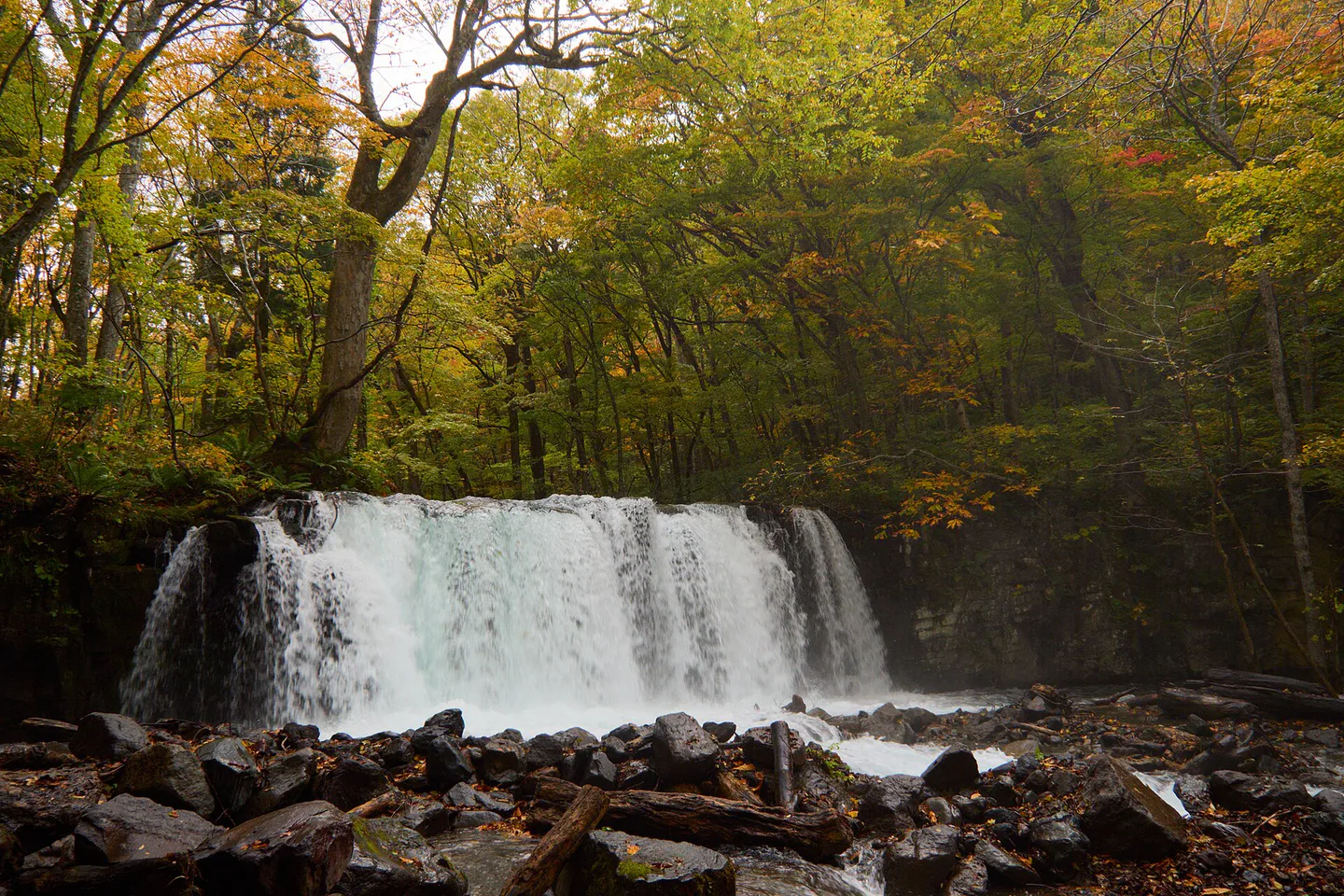
Nenokuchi toward Choshi Otaki is a compact option when Lake Towada or a cruise is already part of the day. It uses the lake end of the stream and demands less walking than the full corridor. Do not mistake a short waterfall outing for having covered every stretch of Oirase; that is acceptable if the lake, transport or another activity is the main priority. For someone staying at Yasumiya, the route can fit around a morning transfer better than an ambitious Ishigedo start.
The whole gorge walk is around 14 kilometres and deserves a hiking day, stable weather, adequate footwear and enough daylight. It is much easier to fit if the itinerary has at least two mountain-area nights. A city day trip with a late arrival and last bus pressure is a poor setting for attempting all fourteen kilometres. One versus two nights at Oirase Keiryu Hotel explains what extra time buys at the hotel end; a north Tohoku autumn route helps set the seasonal pace.
Base and bag choices change the transport answer
Aomori or Hachinohe works for a short highlight visit by bus. Hachinohe has the Shinkansen and those reserved West Exit departures; Aomori connects to airport and city hotels. Yasumiya puts Lake Towada and its cruise close to the night’s room. A gorge-side property can make an early guided activity or first-light stream walk easier. Where to sleep for Oirase leaves compares these bases before you buy a vehicle plan.
Hoshino Resorts Oirase Keiryu Hotel suits someone planning substantial stream time, hotel transport and an early activity, subject to what is included in the exact stay. Towada Hotel and Hotel Towadaso put the lake ahead of the gorge. JR-East Hotel Mets Hachinohe keeps the station-side rail and bus start simple; Daiwa Roynet Hotel Aomori aligns more with city and airport movements. These are different logistics choices, not a claim that one hotel is best for every party. Whether the Oirase Keiryu Hotel rate earns its place tests that separate hotel decision.
Forward a main suitcase between city hotels if delivery timing works, and take one small overnight bag holding medication, documents, rain gear, charger and a change of clothes. This makes buses and limited hotel transfers far easier. A group with several large cases may value a car more, but a car does not solve the need to keep valuables and weather gear with you on the trail. Japan luggage forwarding choices and Aomori city versus remote lodging provide the wider routing context.
A mixed approach often works best: drive from the airport or city to a hotel, leave the car there, and use a bus for the one-way gorge section. Another workable sequence is bus from Hachinohe to an Oirase or lake stay, then rent a vehicle after returning to a city for the next region. Both plans preserve the stream walk while putting the car only where it saves real transfers. Aomori-area resort comparison can help when a hotel shuttle changes the transport equation.
If the forecast deteriorates for several northern days, a seven-day autumn route across regions offers ways to move the colour priority instead of using a rental booking as a reason to force a risky stream walk.
When weather or a missed bus changes the day
If the intended bus is full, shorten the walk to an earlier stop or remain near the current base. A prearranged taxi or hotel transfer can be a contingency if actually available, but walking onward to a more distant stop in hope of an empty bus may make the problem larger. If parking is full or a road control operates, use the designated outer parking and appropriate shuttle. Heavy rain, high water, fog or early cold can remove a walking section entirely; a lakeside café, museum or a shorter safe path may be the better use of the day.
Avoid putting a flight or non-changeable long-distance train immediately after a mountain exit. Return to Aomori or Hachinohe the previous evening when the onward connection is expensive to miss. On a normal autumn day, public transport does not mean zero planning: the exact last useful bus, the hotel dinner cutoff and the seasonal operating date all belong on the same page of notes. A seven-day Tohoku autumn circuit shows where that buffer can sit in a longer trip.
For one or two walkers without a mountain-driving appetite, use buses and a deliberate one-way section. For a larger party connecting several regional bases, price a rental or hired transfer, then park once for the gorge itself. A traveller who wants both the lake and a substantial stream walk in one day will usually have to give up a long cruise or a second walking segment; two days are kinder if all three matter. The practical question is how much unhurried time you get beside the water after transport, not which option sounds more independent.
If the trip includes a night near the gorge or lake, compare lodging around Lake Towada and Oirase against the first and last bus you need. For a city-based day trip, compare Hachinohe station-area rooms if the reserved West Exit departure is your start. Check the current service date before locking a room to a bus that stops running in November.
Other regional journeys
public transport · JR EAST PASS · Heavy rain · Japan autumn leaves · How to ride · Japan rainy-day itinerary · JR Bus Tohoku · 2026 autumn extra · Oirase one-way rental · Confirmed 2026 Oirase · Kyushu Autumn Leaves · 5-Day Hokkaido Autumn · Do You Need · Kamikochi Autumn Leaves: · Sapporo Solo Hotels: · Niseko Ski Trip · Mount Fuji Yoshida · Nokogiriyama Ropeway: Round · Okinawa 5-Day Itinerary: · Tohoku Summer Festival · Hachimantai Autumn Leaves · Shakotan Peninsula Summer · Ginsendai Autumn Leaves.