
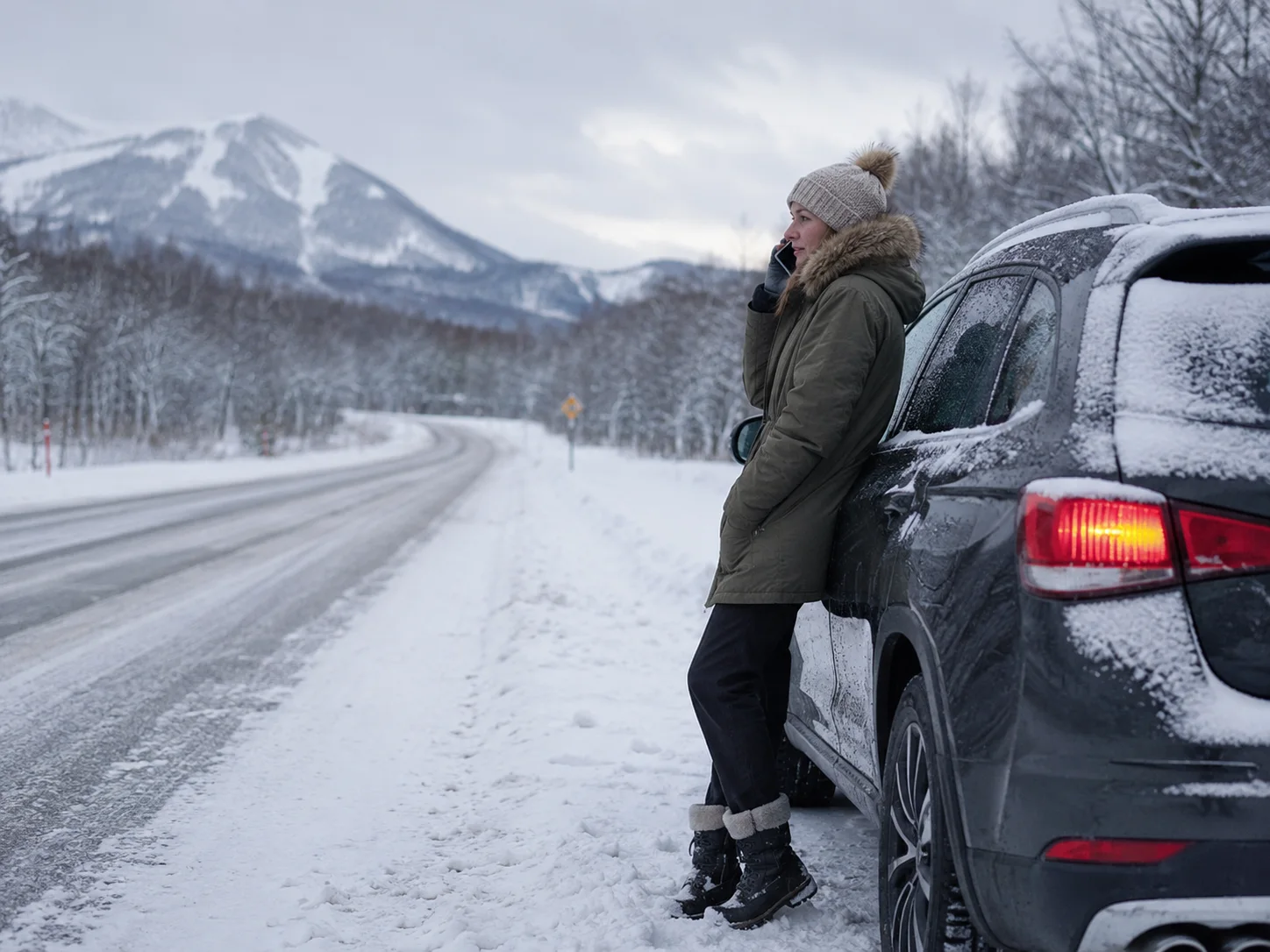
A Hokkaido rental car can open rural and ski routes, but the decision to drive has to remain reversible each morning. A driver who has never controlled a car on snow and ice should use rail, bus or a transfer for this trip. An experienced winter driver still needs a daylight route, maintained roads, winter tyres, a current weather-and-closure check and permission in the itinerary to wait out a storm. A prepaid car does not make a blizzard or a closed road passable.
Begin by asking what the car will actually do. If it spends four ski days buried beside a hotel, airport and resort transfers may remove road exposure without taking useful freedom away. If one rural leg needs a car, renting for that leg can be more sensible than collecting keys at New Chitose after a late flight. The full-trip versus partial-rental comparison helps after the driver passes the basic winter-safety test; it is not a workaround for missing snow-driving experience.
| Condition on the day | Decision | What it means for the itinerary |
|---|---|---|
| No real snow-and-ice driving experience | Use another mode | An unfamiliar left-side road and rental vehicle add tasks while traction changes under you. |
| Experienced driver, daylight and maintained open roads in ordinary conditions | Conditional drive | Keep a shorter route and a real stopping option. |
| Heavy snow, blizzard or poor visibility forecast | Delay or cancel the driving leg | Rail, bus, another hotel night or a missed activity can be safer than pressing onward. |
| Road or expressway closure on the planned route | Do not use that route | A navigation app's minor-road detour does not supersede the closure. |
| Late flight followed by a long Niseko, Furano or Tomamu transfer | Sleep or transfer first | Rental pickup is another shuttle-and-paperwork step before driving in darkness. |
| Single resort base with the car mostly parked | Compare bus or private transfer | Parking, snow clearing and winter-road risk may buy little extra mobility. |
The morning decision has five gates
First, can the named driver already manage braking, steering and recovery on snow and ice? If not, stop the rental plan. Second, check the forecast for the whole route, not only the temperature outside the hotel. Third, confirm the roads and expressways you intend to use are open and maintained. Fourth, leave enough daylight for the difficult part with a rested driver. Fifth, name the recovery option: a safe place to stop, an extra night, public transport or a day trip you are willing to abandon.
The Hokkaido Government winter safety page advises checking weather and road information, avoiding nonessential travel in bad conditions, and considering a change of departure or public transport. That is a useful tourist decision rule. It is not enough that the sky looks clear at breakfast. An afternoon mountain section can face different visibility and a closure that did not exist when the itinerary was saved.
Use the Japan Meteorological Agency weather and warning service, national road information, NEXCO East expressway conditions and JARTIC traffic reporting close to departure. A forecast may make the whole drive a poor choice before a specific road closes. A closure means stop using that road; it is not an invitation to ask a navigation app for an unploughed lane. A Hokkaido route built by region and season leaves more room for this kind of change than a daily cross-island transfer.
Winter tyres are essential; four-wheel drive has limits
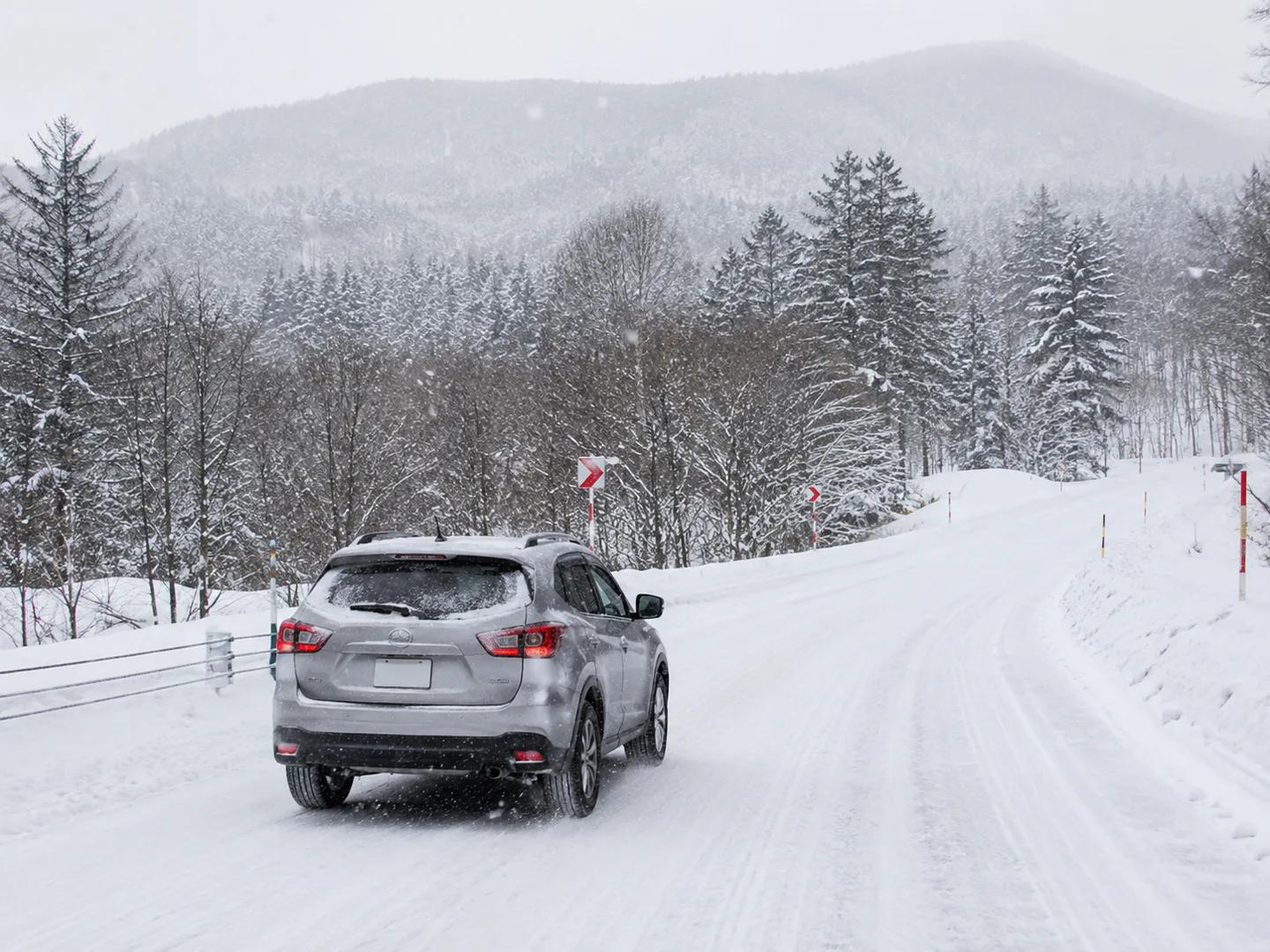
Confirm winter tyres for the exact rental vehicle and season dates, and confirm whether the booked class is two-wheel drive or four-wheel drive. Check both on the booking and at collection. Hokkaido's winter-driving guidance warns that a dark-looking road in early winter may already be frozen and recommends changing tyres early. It also names chains, a shovel, traction aids, jumper cables and a tow rope as preparations for severe conditions. A rental agency may supply some items but not every item by default, so ask what is physically in the car.
Four-wheel drive may help a car set off or climb on slippery surfaces. It does not give tyres magical grip while braking on ice. The safety decision must therefore be made before interpreting the badge on the tailgate. Hokkaido's guidance describes icy roads as approximately ten times as slippery as dry summer pavement and recommends more than three times the ordinary summer following distance. These comparisons convey the size of the margin, not a numerical guarantee that a particular speed or gap will stop a loaded rental car.
Black ice may resemble wet, black asphalt. The prefectural page and JAF's snowy-road guidance both warn about deceptive surfaces; bridges, shaded stretches, tunnel approaches, intersections and crossings deserve particular caution. Change speed smoothly and early, keep greater space, and avoid sudden acceleration, braking or steering. If the road repeatedly surprises the driver, reduce the day rather than treating each skid as a lesson.
A road that is merely wet outside a Sapporo hotel does not describe the next hundred kilometres. Wind, shade, elevation and refreezing change the surface along the drive. Nor does a vehicle with good tyres make an unplanned long drive after a late flight acceptable. The five-, seven- and ten-day winter route comparison can help remove a transfer day before a car becomes the only way to preserve an overloaded schedule.
When the road disappears in a whiteout
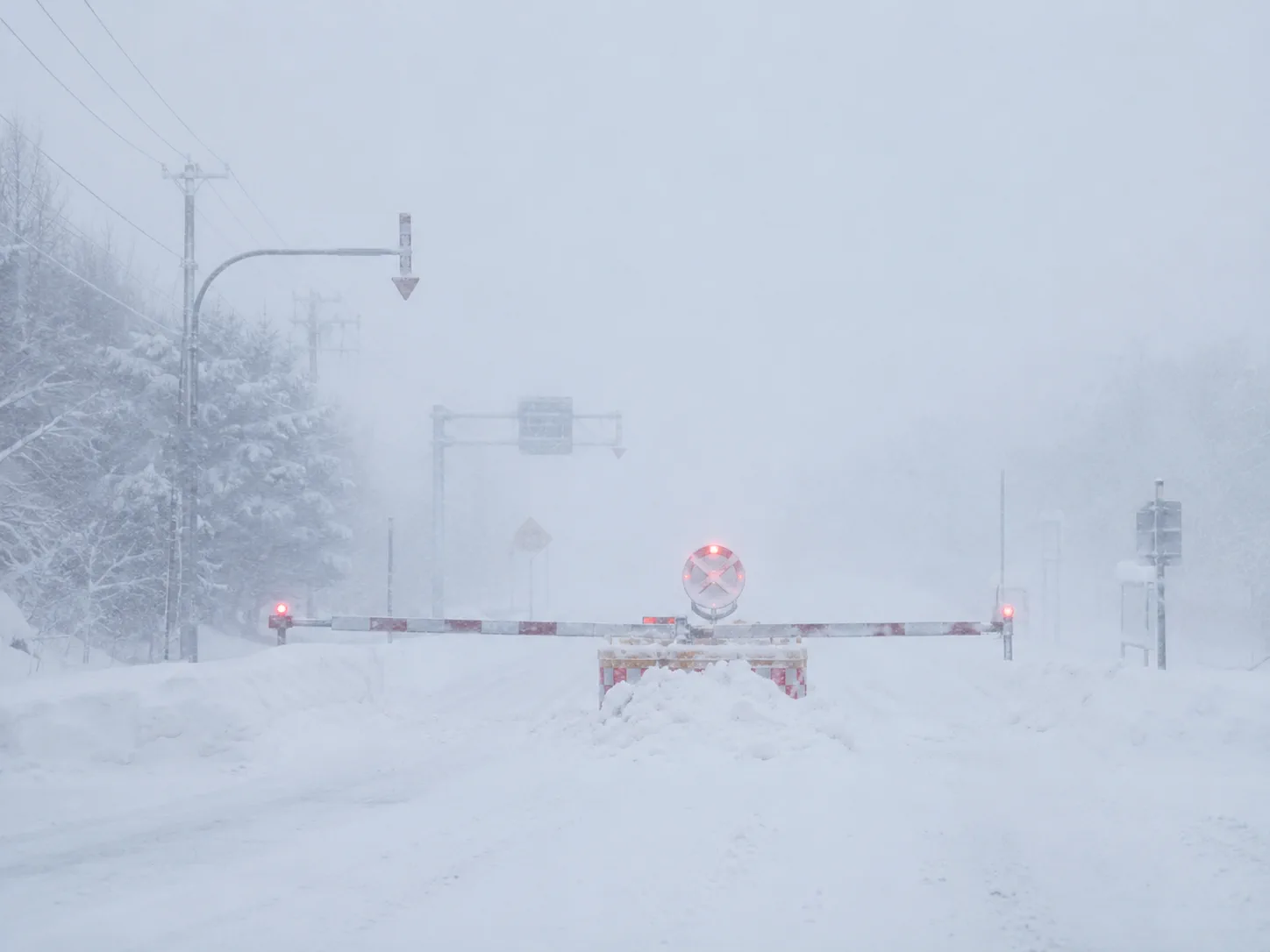
Visibility can fail before the driver has time to judge whether the surface is icy. A whiteout erases the distinction between road, shoulder and sky; continuing slowly toward an uncertain edge is not a workable sightseeing plan. JAF says to use hazard lamps and stop at a safe place when whiteout or heavy snow prevents progress. Do not brake abruptly in a live lane if a safer place can still be reached. Nor should you follow a passenger vehicle onto an unfamiliar side road around a closure without knowing where it leads.
Keep the group away from a second collision where possible and seek appropriate emergency help if the situation requires it. A cancelled lesson, hotel penalty or restaurant booking cannot determine the safe driving threshold. This is why a winter itinerary needs an extra hotel night or a bus option available in principle before the storm arrives. Niseko base selection and the Niseko ski transport guide can reduce the need to move between resorts in bad weather.
New Chitose pickup consumes part of the arrival day
New Chitose Airport's rental information explains that vehicles are supplied from company branches in Chitose City, reached by company shuttle rather than handed over directly in the terminal forecourt. Baggage, counter directions, the shuttle, contract, inspection and winter setup all sit between flight landing and the first kilometre. A 17:00 arrival does not imply departure in a rental at 17:15.
For a long first leg to Niseko, Furano or Tomamu in December or January, the handoff can push the most difficult part into darkness. A Chitose or Sapporo overnight can put the first winter driving task in daylight; a bus or private transfer can avoid the rental altogether. The New Chitose–Niseko comparison lays out the airport sequence. If the trip remains in Sapporo for two nights, the city-base versus resort-base guide can show whether a car has any use before the ski stay starts.
A shorter rental may work for a genuinely experienced driver who wants one daylight rural region. Rail or transfer can handle the airport and city while the car handles roads where scheduled transport really constrains the day. It still needs the same weather gates. The fact that exposure is shorter does not make a first snow drive safe. A car-free seven-day Hokkaido route gives a complete alternative for groups who should not drive.
Route density and parking multiply work
A single-driver itinerary that changes town every day has little time to wait for a weather window. Two consecutive long intercity transfers, a mountain road after sunset, or a fixed activity booking that makes the group unwilling to delay should all count against the rental plan. A two-night base with one optional excursion can absorb a cancelled drive more easily. The rental-duration analysis deals with this distinction in cost as well as time.
A Niseko ski week rarely needs a daily self-drive merely to reach snow, especially when the chosen hotel already connects to the intended lifts. Sapporo versus Niseko as an overnight base and Niseko versus Rusutsu can decide whether resort accommodation solves the transport problem before a car is priced. A Furano skiing holiday has a different geography; the Furano ski-stay plan separates a few resort days from a wider driving circuit. A traveller who mainly wants city food and one snow activity can often sleep in Sapporo and buy one transfer rather than rent for a week.
Remote experiences deserve even more deliberate fallback. A Shiretoko drift-ice walk, for example, has its own equipment, season and local access conditions; the drift-ice transport guide is a better planning starting point than drawing a direct line across a winter map. A group that wants ice fishing or dog sledding without skiing can compare winter activities and their access before assuming every isolated attraction requires a private vehicle. A booked pickup can be a legitimate alternative, subject to its actual meeting point, cancellation policy and weather operation.
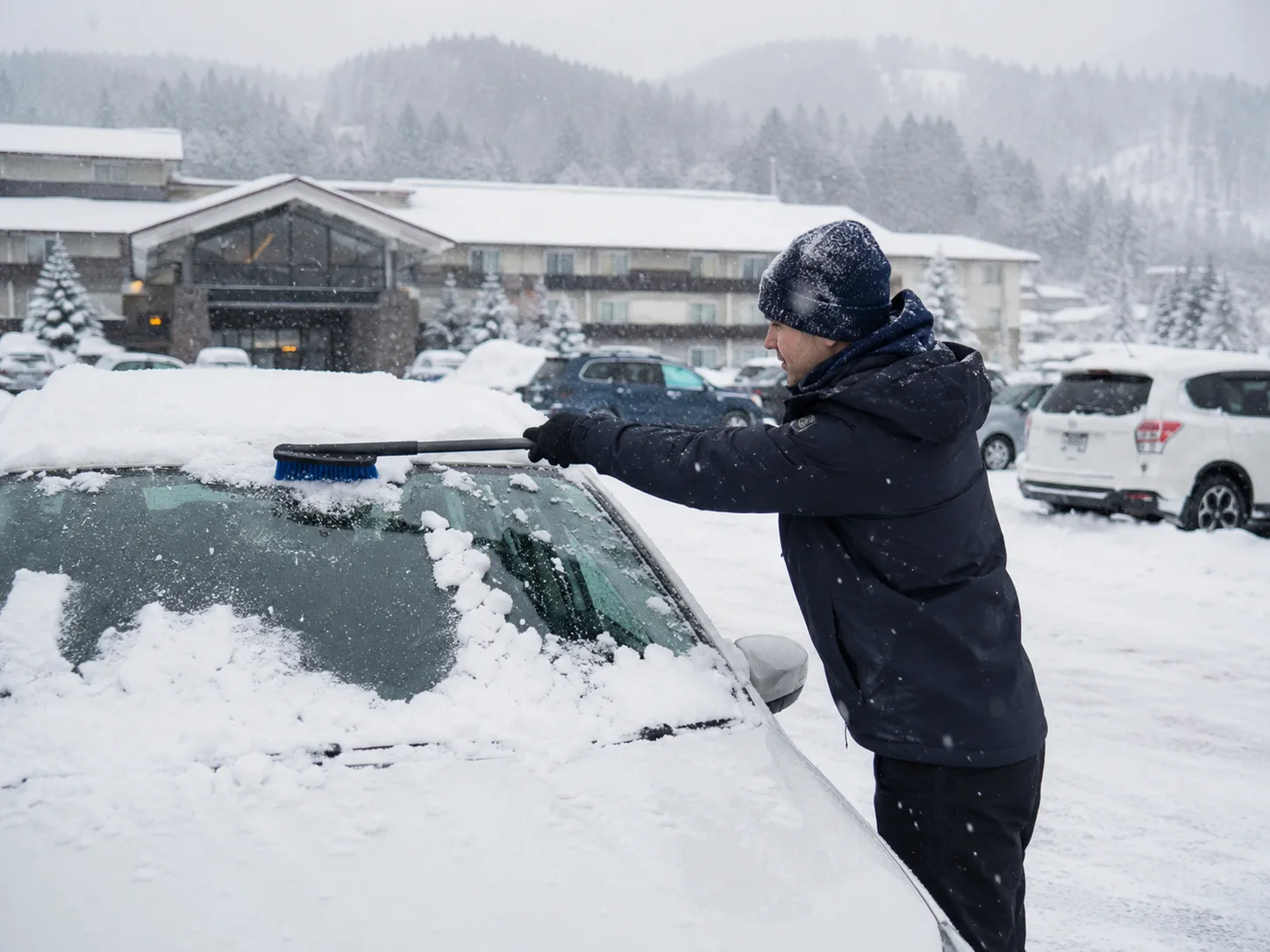
Parking deserves specific questions at accommodation: is the space covered or outdoors, guaranteed or reservation-only, and is there a height limit? How is a vehicle moved or cleared after heavy overnight snow? A listing that says only “parking available” does not settle these points. Before leaving, remove snow from roof, windows, mirrors, lights, number plate and sensors. Roof snow can slide across the windscreen when braking or blow back toward following vehicles. Check that the exhaust outlet is clear before running the engine around a snowbank.
Vehicle size matters as much as the drive system. Five seats do not mean five people plus ski bags, boots and large suitcases fit. Ask for cargo dimensions or a vehicle class that takes the actual equipment without blocking visibility. The Niseko booking timeline helps compare a full rental budget with transfers and ski costs, while Sapporo hotel choices shows why a cheap city room with difficult winter access can raise daily friction.
For a family with older parents, the cost of crossing a snow-covered lot twice a day may exceed the usefulness of having a car parked nearby. The Sapporo hotel access comparison asks whether the route to transport is usable with luggage and icy pavements. The same door-to-car check belongs on a rental itinerary: the car needs to be physically reachable after a snowfall, the passenger needs to board safely, and the driver needs space to clear the vehicle without standing in traffic. A parking icon on a booking page captures none of these details.
Insurance wording matters after the waiver headline
“Collision damage waiver included” does not reveal every amount payable after a winter incident. Read the contract for the deductible that remains, any Non-Operation Charge while the vehicle is out of service, towing and roadside assistance limits, and any separate treatment of snow recovery, tyres, glass or underbody damage. Confirm who must be called and when a police report is required. A more expensive protection option may reduce a loss the group could not comfortably absorb, but it cannot make an excluded road or a breach of the agreement safe or covered.
Ask whether every driver is registered. Some agreements can deny protection if the vehicle is driven by an unnamed person or taken through a closed route. A roadside rescue service may also have a distance or cost cap. The safest plan is to understand the financial consequences before pickup, then keep the car on routes that remain permitted. The Hokkaido mobile-data guide is relevant here because reliable connectivity helps with live road information and contacting the rental branch; it does not replace a safe stopping point or an emergency plan.
Buried vehicles require an exhaust check
JAF warns that snow blocking the exhaust outlet can allow carbon monoxide to enter a stationary vehicle. If a car becomes trapped, clear enough snow for the exhaust to vent while help is arranged, and turn off the engine as much as practical during heavy snowfall. Warm clothing, blankets and a shovel matter because a rescue may take time. Do not leave a vehicle to walk a long distance through a whiteout or attempt an unfamiliar tow beside moving traffic.
Move people clear of a secondary collision when it is safe to do so. In Japan, 119 handles urgent injury, fire and medical help; 110 is for police accident assistance. Notify the rental company and use the rescue provider required by the rental agreement. The National Police Agency traffic information explains the broader reporting context, while JAF gives snow-specific stuck-car guidance. Keep these contacts accessible offline before travelling into a rural region.
The vehicle's emergency kit and passengers' clothing are linked. A party dressed only for a heated hotel lobby may not be ready to wait outside a stranded car while traffic is controlled. The February clothing guide helps separate Hokkaido cold from milder Japan city conditions. If the trip is for powder skiing, Niseko snow conditions explain the attraction, but a heavy-snow forecast is also a reason to reassess road travel. A great day on the mountain is not proof that the approach road is safe at the intended time.
Winter driving is a day-by-day decision, including for a driver who was comfortable yesterday. Weather, daylight, road status and fatigue may change the answer. If the trip is mainly ski resort time, compare a transfer and a resort hotel before paying for several parked rental days; check accommodation around New Chitose Airport if an arrival night lets the group start rested in daylight. Keep any rural car leg optional enough to abandon when the road says no.