
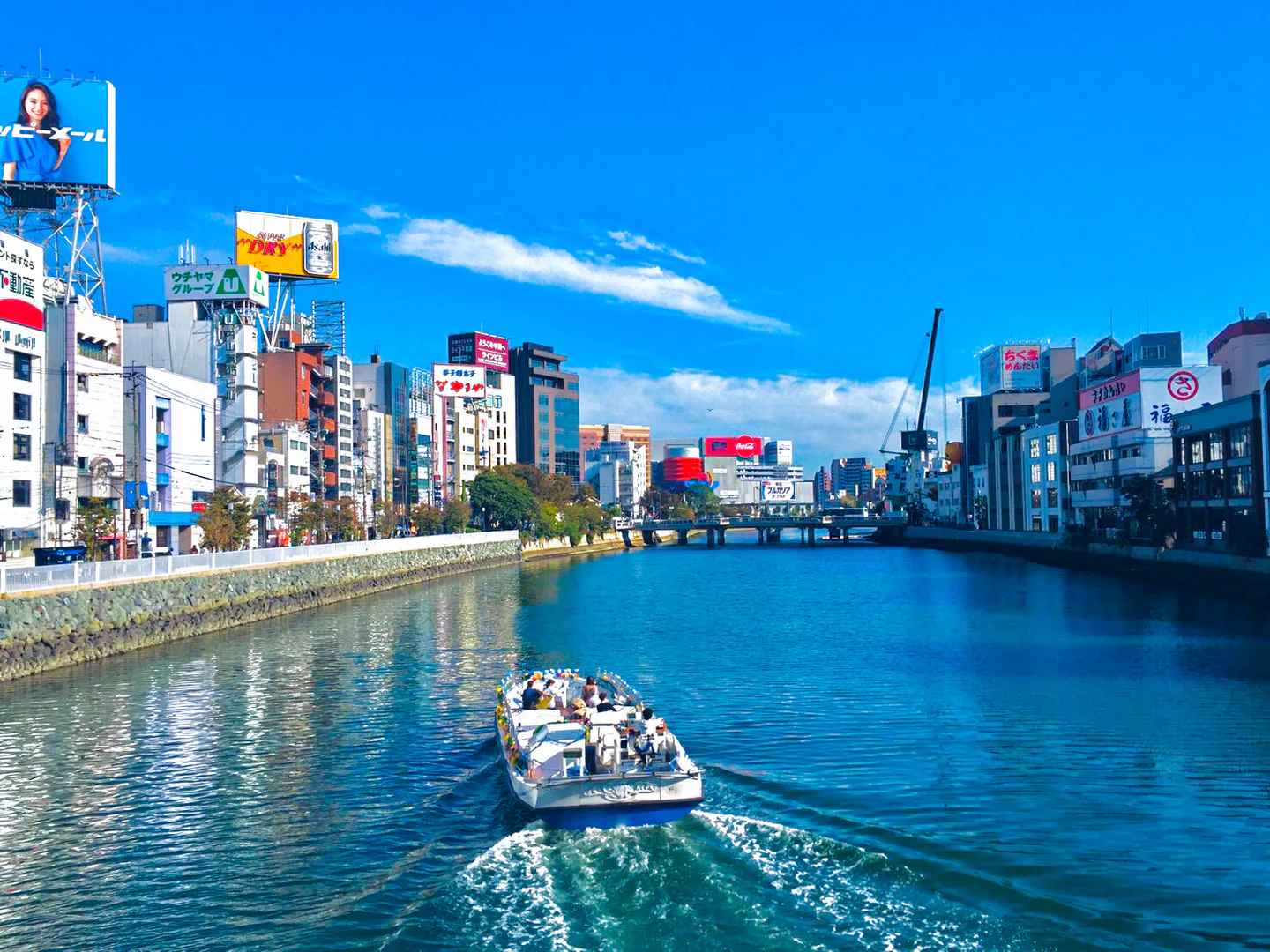
The Nakasu boat is easiest to enjoy when it occupies a gap in an evening you already planned around Tenjin, Kawabata or the riverside. The ride lasts about 30 minutes, but the operator asks you to reach Fukuhaku Deai Bridge 15 minutes before departure. Add the walk from your previous stop and the trip to dinner, and the decision is about an evening route rather than a half-hour attraction.
The 45-minute Hakata Bay course is a different outing. Its wider water and skyline views make more sense if sunset, Fukuoka Tower or the dome area is what you want to see. An extra ¥500 is not enough reason by itself to buy the longer course. If a cruise would make you leave a more important sight early or arrive late for a fixed dinner reservation, walk the Nakasu banks for free and skip the boat.
Where the two routes spend your time
↔ Scroll table left or right
Evening you already have | Better decision | What you gain | Main constraint |
Tenjin or Kawabata afternoon, then dinner near Nakasu | 30-minute Nakasu route | A river-level view without another cross-city transfer | Check-in, free seating and the walk still take time |
Bridges, neon and yatai atmosphere | 30-minute evening departure | The central riverfront is the subject | Your preferred camera side is not reserved |
Sunset, open water and a broad waterfront skyline | 45-minute Hakata Bay route | Views beyond the compact central river | Fewer standing departures and a longer evening block |
One Fukuoka day with major sights unfinished | Skip | Keep time for what brought you to the city | Riverbank views cost nothing |
Timed restaurant seating immediately afterward | Cruise only with a buffer | Boat can lead into dinner without dictating it | Weather, tide and disembarkation can disrupt a tight sequence |
Both routes leave from the Fukuhaku Deai Bridge boarding area in Nishinakasu. The Fukuoka cruise overview places the pier at the boundary between the old Fukuoka and Hakata sides of the city. The access directions put it about a 15-minute walk from Tenjin Station and about 10 minutes from Nakasu-Kawabata Station. That geography is the short course's strongest advantage: you can reach the pier while moving between central Fukuoka districts rather than make a dedicated waterfront trip. A three-day Fukuoka route can absorb the boat as a small evening addition; a single-day stop may have better uses for that hour.
The ¥500 difference buys a different view
The standing fare table lists ¥1,500 adult and ¥800 child for the 30-minute Nakasu course, compared with ¥2,000 adult and ¥1,000 child for the 45-minute Hakata Bay course. That is a ¥500 adult difference, or ¥200 for a child fare. Use yen rather than a dated dollar conversion when comparing a date-specific purchase. Eligibility for a child fare and any special departure terms should be checked on the actual booking screen.
The difference becomes more noticeable across a group. Two adults would pay ¥3,000 on the river or ¥4,000 on the bay; two adults and one child fare would pay ¥3,800 or ¥5,000. That extra ¥1,200 for the three-person group is reasonable if the bay scenery is the purpose of going out, but it buys little for a family whose evening is already centred on Nakasu food. Budget the boat alongside the meal and any ride back to the hotel. The cheapest ticket is not the cheaper evening if it sends everyone across Fukuoka twice.
On the Nakasu route, the waterway passes the central city around Nakasu, Canal City and the riverfront yatai, running toward the Hakata Port side before returning. It is most distinctive after the lights come on. In daylight, buildings and the city layout are clearer; at dusk there can still be colour behind the illuminated signs; after dark the reflections and neon dominate. The departure schedule cannot promise a perfect sunset minute, and a 30-minute ride is too short to redesign a whole dinner plan around that moment.
The Hakata Bay route broadens the frame toward Bayside Place, the tower and the dome area. It is not simply the Nakasu experience with fifteen bonus minutes. Choose it when that broader skyline is the point, even if you need to leave more of the evening open. For a land-based view of one of those areas, compare the Fukuoka Tower detour before paying for a bay sailing solely to see the tower from a distance.
↔ Scroll table left or right
Planning factor | Nakasu 30-minute practical judgment | What would change the judgment |
Money cost | Lower cash commitment than the longer route at ¥1,500 adult | The price of a separate transfer or lost ticket elsewhere exceeds the boat fare |
Time cost | Short on board, but at least 15 minutes early plus walking | Pier is far from the evening route or dinner is fixed |
Booking risk | Several standing departures offer some choice | A specific popular night sailing fills or the live schedule changes |
Weather risk | Exposed to weather, tide and waves | Poor conditions can alter the route or stop service |
Crowd risk | Free seats make a precise photograph uncertain | You arrive early enough for more choice, without a guarantee |
Route fit | Very good between Tenjin, Kawabata, Nakasu and a nearby meal | You must cross the city just for the boat |
Uniqueness | A river perspective on familiar central streets | A riverbank walk may satisfy someone seeking only one neon photograph |
The short route is a modest addition when central Fukuoka is already the evening destination. Conditions outside your control and the fact that some of the nightscape is visible from shore are its principal drawbacks.
Departure times are only half of the calendar block
The standing Nakasu timetable lists 11:00, 12:00, 13:00, 14:00, 15:00, 16:00, 18:00, 20:00 and 21:00. Hakata Bay lists 14:00, 17:00 and 19:00. Extra services and date-specific changes can occur, so use the operating page and the departure offered for your chosen date when making a reservation. The operator asks Nakasu passengers to arrive at least 15 minutes early. Seats are unassigned, which means a reservation protects a place on the sailing, not a particular side of the boat.
The timetable also changes what you are buying. A river departure in the middle of the day is a quick look at the city from water level; the later sailings shift attention to signs, lit buildings and reflections. The 18:00 slot can be a twilight ride in one season and fully dark in another, so treat the time on the ticket as a departure time rather than a promise of sunset. The bay has fewer regular choices: missing a 17:00 departure is more disruptive if 19:00 would collide with dinner or a train. Decide which view matters first, then see whether a workable sailing exists on your actual date.
Suppose you walk from Tenjin to the pier, arrive at the minimum requested lead time, take the 30-minute course and then walk to a restaurant. The whole sequence is roughly an hour or longer before considering waiting or a change in service. That is still efficient if it replaces an otherwise empty gap between districts. It is not safe to put a hard restaurant booking exactly 30 minutes after the scheduled departure. For a coveted table, protect the meal and take a different boat slot if necessary.
If photography is the main goal, reaching the pier earlier may improve seat choice on a busy evening, though it cannot guarantee it. A person with only a casual interest in photos can use the normal arrival rule and accept the view available. The central Fukuoka coffee and dessert walk offers a flexible afternoon lead-in, while the Fukuoka yatai guide helps decide where dinner should actually happen after disembarking.
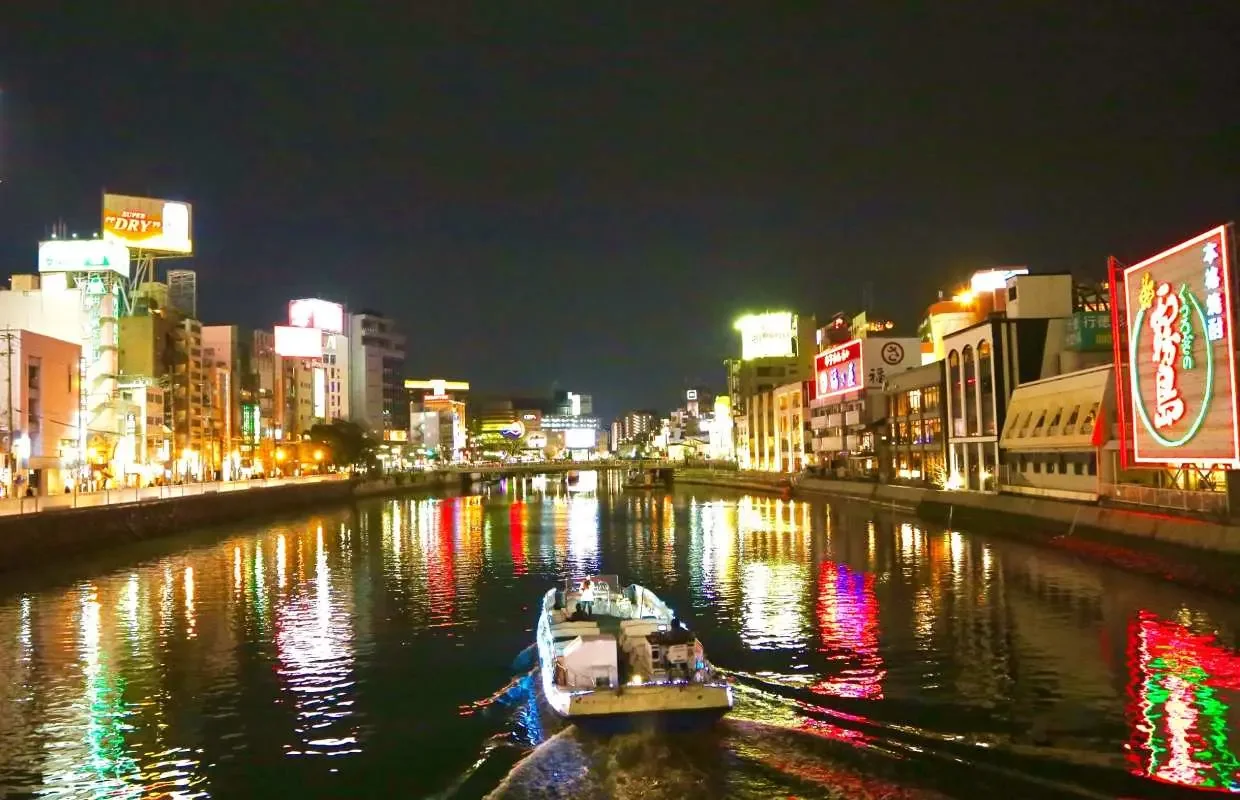
Tide and weather make it a removable plan
The route can change or stop because of weather, tide or waves. Bridge clearance and water conditions are practical operating limits, not merely an issue of whether you will get wet. The short cruise therefore makes a poor rain backup. Put an indoor alternative in reserve if the forecast is unstable; the Fukuoka rainy-day route is a better response than making a boat the only reason for travelling to Nakasu.
That flexibility also changes when to reserve. A visitor who can take any suitable departure may prefer to decide after seeing the day's weather and actual time in Tenjin. A particular evening departure linking sightseeing to a timed meal is more vulnerable to filling; reserving that slot can protect the sequence, though it cannot control the water. If the boat is cancelled, the Nakasu riverbanks, shops and dining are still there. The Fukuoka transport pass guide can keep a fallback district change from turning into an unnecessary pass purchase.
Build the evening from the pier outward
One clean route is an afternoon in Tenjin, Kawabata or Canal City, the Nakasu boat, then dinner or yatai nearby and a return to the hotel. It works because the bridge sits between the earlier activity and the meal. If the hotel is already in Nakasu, the final walk is short. If the hotel is in Hakata Station or farther out, include the last train or taxi in the evening decision. The Tenjin versus Nakasu hotel comparison tackles the room-side trade-off; THE LIVELY's Nakasu-Kawabata location and HOTEL RESOL TRINITY HAKATA are two specific central-room decisions.
Accommodation near the river is useful for a repeated Nakasu evening, not inherently necessary for one cruise. Compare rooms around Nakasu-Kawabata if dinner and the final walk will also be there. For a shopping-heavy stay, the Fukuoka bag-drop hotel guide may point you elsewhere. A traveller arriving late should solve the first-night airport-to-hotel route before arranging a cruise.
The wider city offers other ways to spend the same block. Fukuoka's breakfast choices and the food-trip hotel route are more relevant if meals are the trip's anchor. If the group wants an outdoor coastal setting rather than a short central river view, Dazaifu versus Itoshima or the Fukuoka/Itoshima island route asks for a much larger day allocation. They are alternatives, not quick additions after the boat.
Reasons to leave the boat out
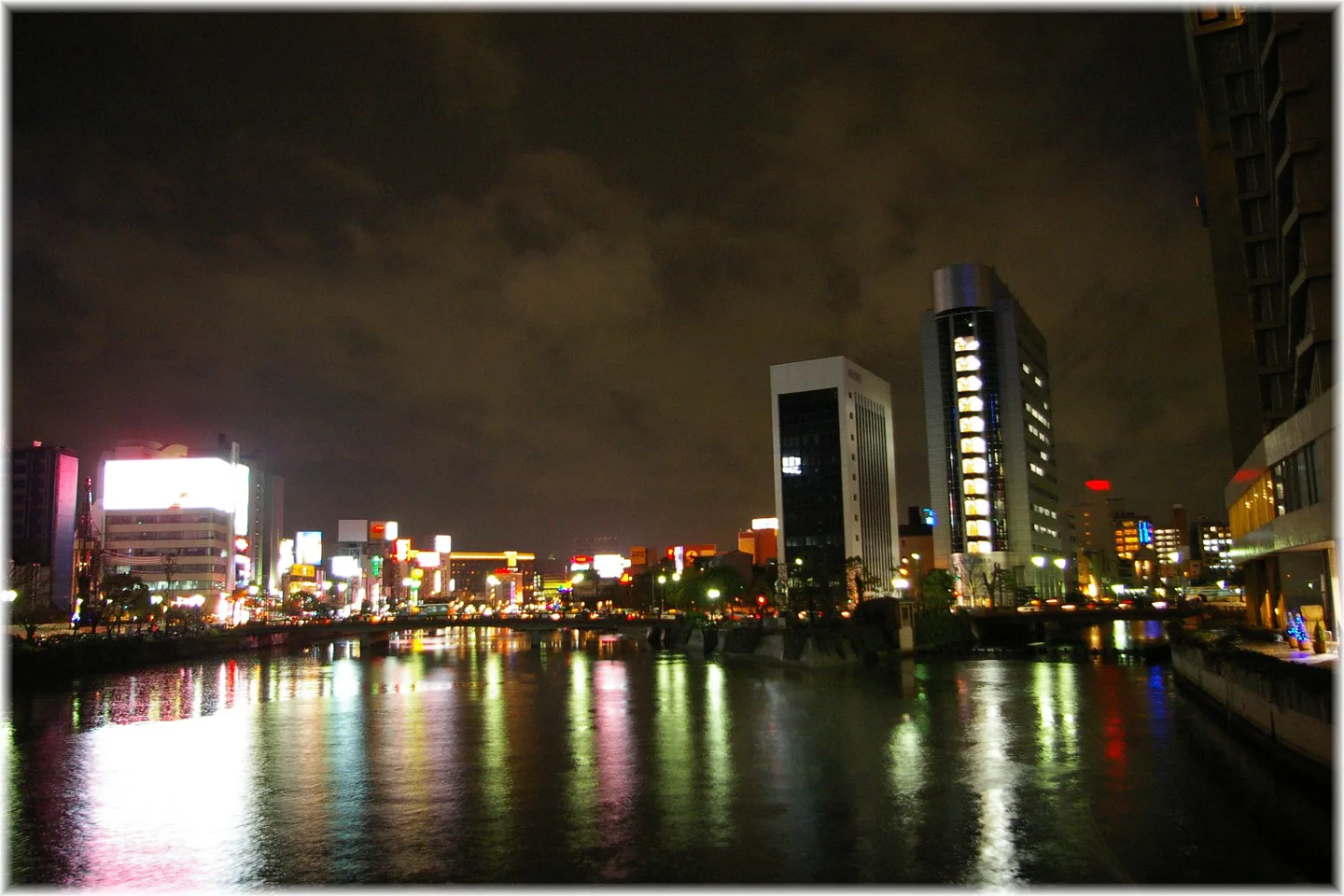
Skip it on a one-day Fukuoka stop if important city sights remain. Walk the bridge and riverbank for free if all you want is one illuminated photograph. Do not buy it for a guaranteed English-language history lesson: the product's dependable feature is the view. If bad conditions make the service uncertain and no other part of your plan takes you to Nakasu, keep the evening elsewhere. A faraway hotel can also erase the short ride's route advantage when you must cross the city solely for boarding.
For a group that wants late food and bars, the Fukuoka guys-trip room guide may be a better first decision than the boat. For two people choosing where the night ends, Fukuoka couples' hotel bases frames a similar choice. The cruise is strongest when it fits those existing plans, rather than becoming the reason to move them.
Choose Nakasu's 30 minutes for a central river-and-dinner evening. Choose Hakata Bay's 45 minutes for open water and a wider skyline. In either case, count the walk to Fukuhaku Deai Bridge, the required lead time, weather uncertainty and the trip after landing. The boat is a pleasant addition when those pieces already fit; the Nakasu riverbank is a perfectly good evening when they do not.