
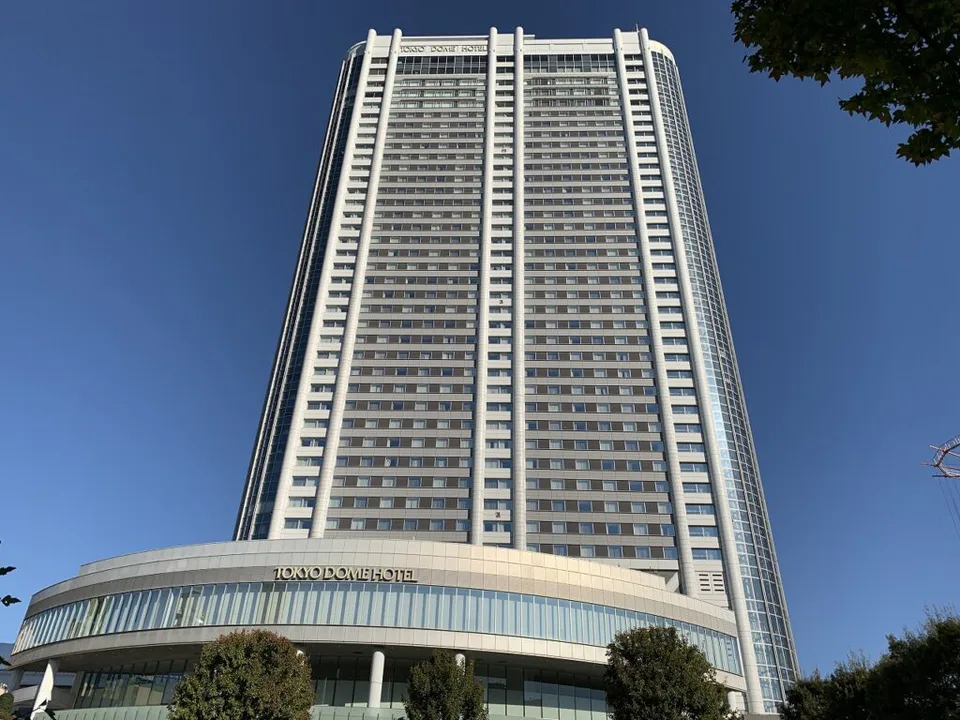
At the end of a Tokyo Dome concert, the useful feature of Tokyo Dome Hotel is that you can leave the crowd and walk to your room without joining a train queue. That can justify one expensive night with children, heavy merchandise or a late finish. It does not automatically justify keeping the same hotel for a week of Shinjuku and Shibuya plans. Price the event night separately from the rest of Tokyo, then decide whether moving once creates more trouble than the nightly premium saves.
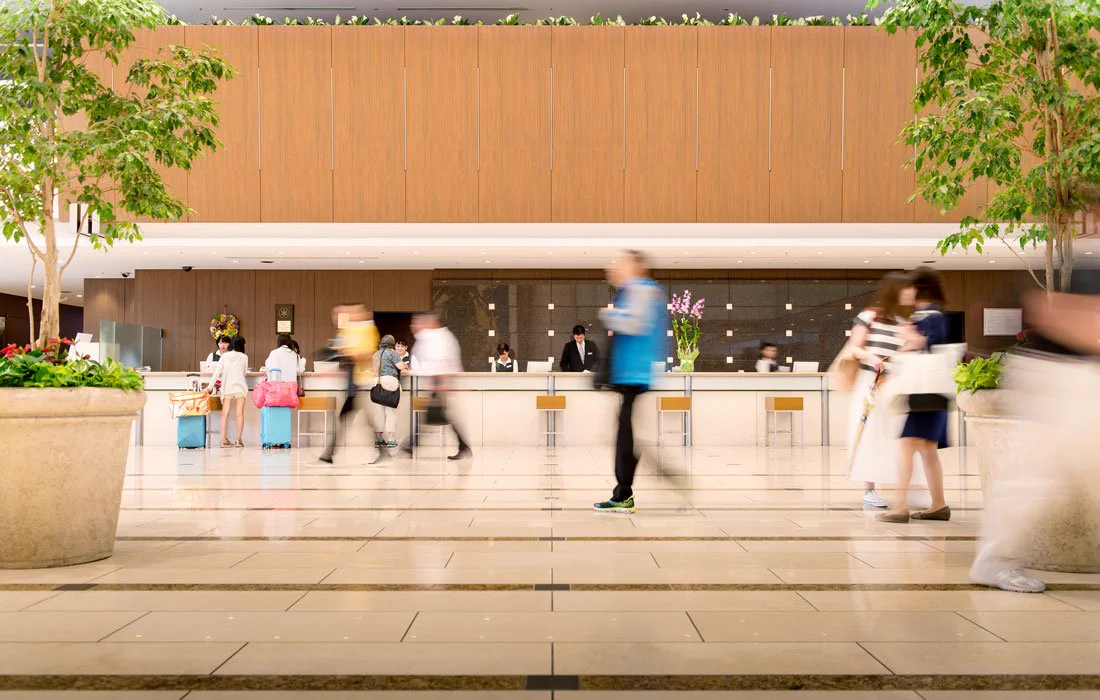
There is an earlier problem to solve as well. For event dates in October and November 2026, check-in between roughly 14:00 and 18:00 can take up to 90–120 minutes at the busiest times. The hotel can remove the post-show journey but still consume a pre-show afternoon if you reach the lobby at peak time. I would settle the luggage and check-in plan before paying for the room. The Tokyo concert-hotel comparison is a useful starting point when the venue or next morning is still uncertain.
One event night or your whole Tokyo stay?
| Trip pattern | First option to price | What could change it |
|---|---|---|
| Late Dome show, one night, large merchandise bags | Tokyo Dome Hotel on event night | A much lower nearby rate or an easy post-show journey. |
| One Dome show in five west-Tokyo days | One Dome night plus a Shinjuku or Shibuya base | The luggage move costs more effort than repeated journeys. |
| Several Dome-area events or Korakuen plans | Keep the hotel for the full local segment | Other days shift to a different district. |
| No event, sightseeing all over Tokyo | Choose the general base first | A specific room view or work commitment near the Dome. |
The post-show advantage is strongest at the worst hour to travel: when thousands leave together. Hotel access from JR Suidobashi East Exit is about two minutes and from Toei Mita Line Suidobashi A2 about one minute, but an event guest can skip those stations altogether after the show. A rail-based hotel still requires moving through the crowd, reaching the correct platform, riding to another district and completing a final walk. This is a structural saving, not a prediction of an exact queue time. A daytime baseball game followed by dinner elsewhere makes the same hotel position less valuable.
For a five-night visit, count where the other four days end. If they repeatedly finish near Shinjuku, the cost of returning to Suidobashi recurs long after the concert is over. A split stay can keep the no-train event night while placing later nights near the repeated activities. Compare Hotel Century Southern Tower or Tokyu Stay Shinjuku Eastside for that west-side portion; the Tokyo base guide helps when the itinerary is still broad.
What are you paying to avoid after the show?
Do not compare the hotel premium only with a short JR fare. The saving is the entire late task: leaving the venue, deciding which station entrance to use, standing on a platform, travelling with goods or children, and finding the second hotel's exit at the other end. A solo traveller who knows the route may tolerate it easily. A family whose child is already asleep at show end may value removing it far more.
Use two actual cancellable room totals for the same date and bed type. Subtract the alternative from Tokyo Dome Hotel, then divide the difference among the people who benefit. If the Dome room is ¥18,000 more for two adults, the question becomes whether each person values the walk-back at ¥9,000 on that night. It is a decision aid, not a fixed fair-price threshold. Event rates, artist dates, cancellation terms and room categories move too much for a permanent cutoff. Keep the arithmetic in yen; a converted currency figure can obscure a changing exchange rate. The Dome-area hotel comparison lets you put that one-night premium against nearby alternatives.
| After the event | At Tokyo Dome Hotel | At a different district hotel |
|---|---|---|
| Venue exit | Walk towards the hotel | Move towards a station with other departing guests |
| Train gate, platform and ride | None for the return to the room | At least one rail journey, depending on location |
| Final district navigation | A short familiar hotel approach | Another station exit and walk |
| Next morning | Good if another Dome-area task follows | Potentially better if the next day begins elsewhere |
The last row is often omitted. A perfect event-night room can still be a poor position for an early Shinkansen or an airport-bound morning. Tokyo Station versus Shinjuku and the Tokyo Station hotel check can keep the following day from being decided by the previous evening alone.
Event-day check-in needs its own plan
The current October–November event notice warns that check-in procedures from about 14:00 to 18:00 can take 1.5–2 hours at peak times. The listed late-October date includes 29 October; November lists several concert and baseball-event dates. Weekends can be busy even without a Dome event. These are warning windows, not a guarantee that every guest will wait two hours. They are enough reason not to plan “arrive at 15:00, shower at 15:30, leave at 16:30” for a 17:00 performance.
The lobby distributes numbered tickets, and their QR codes show queue progress away from the front desk. Pre-check-in luggage storage is available. Self check-in and smartphone pre-check-in exist, but eligibility depends on the reservation and payment conditions; a special plan may still require a counter. Before travel, identify the method attached to the actual booking and save the reservation details where they work offline. If arriving with merchandise plans, ask whether bags can be stored before room access, then collect them without letting a lobby queue swallow the show window. The Tokyo luggage-storage guide helps when the current hotel and the concert hotel are different buildings.
| Arrival window | Practical plan | Why |
|---|---|---|
| Morning or before room access | Confirm bag storage and keep ticket, medicine and show essentials with you. | Luggage storage does not mean the room is ready. |
| Roughly 14:00–18:00 on a listed event date | Allow for a queue; use the numbered-ticket status or eligible pre-check-in option. | The published peak wait can reach 90–120 minutes. |
| Shortly before doors open | Do not rely on a fresh check-in for a shower or outfit change. | The room-access delay can consume the show buffer. |
| After the event | Walk back and retrieve stored goods as arranged. | This is the hotel's main advantage on the event night. |
A split stay adds a second operational question: when and how will the suitcase move? If you can drop it at the Dome hotel before the event, the split is easier. If the group must check out in Shinjuku, carry several bags through crowded trains, queue to check in and then get to a show, the theoretical post-show saving may be wiped out before the music begins. Luggage forwarding may help on a broader itinerary, but a same-city one-night move deserves a simple door-to-door plan first.
Room upgrades: floor, bed width and view are separate purchases
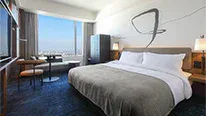
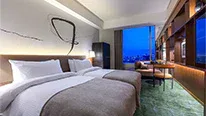
Three twin categories often compared for event stays all list 33 m². Standard Twin B is on floors 9–22 with two beds around 1,110–1,130 mm wide; Standard Twin A is on floors 23–34 with 1,200 mm beds. Premium Twin occupies floors 35–38, lists 1,220 mm beds and is offered in Park-side or Palace-side orientations. Paying for Premium does not buy more published floor area than either of those standard twins. It buys a different floor, bed and room-service package, and potentially a particular direction.
| Category | Published area and bed | Upgrade question |
|---|---|---|
| Standard Twin B | 33 m²; two approximately 1,110–1,130 mm beds | Does the lower rate already solve the event night? |
| Standard Twin A | 33 m²; two 1,200 mm beds | Are the wider beds and higher standard floors useful? |
| Premium Twin | 33 m²; two 1,220 mm beds | Will you use the floor benefits and the exact Park/Palace orientation? |
If you want to see the Dome or the park from the room, choose by the named direction, not merely a high-floor label. The Premium Twin categories distinguish Park-side and Palace-side. A higher floor facing elsewhere is still a high floor, but it is not the view you intended to buy. For two large cases, 33 m² is useful information but says little about where bags will remain open; inspect the booked room layout. The night-view value also depends on how much time you plan to spend in the room after the show.
The seventh-floor self-laundry is a different kind of upgrade. It has five guest washer-dryers, runs 24 hours and lists ¥700 for wash-and-dry, ¥500 for wash only, or ¥200 for 30 minutes of drying; detergent is dispensed by the machine. Those laundry terms matter over several humid summer nights. I would give them almost no weight for a one-night concert stay, when a late return and next-day checkout leave little reason to do a load.
| Potential room upgrade | What it buys | When I would skip it |
|---|---|---|
| Standard Twin B to A | Wider published beds and higher standard floors, with the same 33 m² area. | The base twin already meets the sleep plan. |
| Standard to Premium Twin | Higher floor, slightly wider beds and specified Park/Palace orientation. | Most time will be at the event and the room view will barely be used. |
| Longer stay for laundry | Access to five 24-hour machines on floor seven. | A single event night has no realistic laundry need. |
Our seven Tokyo Dome Hotel ratings for an event night
These are our hotel marks for one or two nights built around a Dome event. The same room is less useful when most days begin or end across west Tokyo.
| Dimension | Our rating | The booking consequence |
|---|---|---|
| Location | The post-show walk is the principal gain; JR Suidobashi and several subway stations serve the next day. | |
| Room | The named 33 m² twins give useful space, but bed widths differ between Twin A and B. | |
| Cleanliness | Recent room and shared-area assessments are consistently strong. | |
| Service | Staff assessment is strong, while concert-day arrival queues can impose a serious wait. | |
| Facilities | The on-site laundry helps a longer stay; room view still depends on the booked category. | |
| Food | Breakfast performs well in current stay assessments, but compare the supplement with the event schedule. | |
| Value | Pay the Dome premium for a difficult late return, not for a generic Tokyo sightseeing week. |
Our overall event-night read is 8.4/10. The advance check-in plan matters: a long concert-day queue can erase much of the convenience before the show.
The hotel's access routes include JR Suidobashi, Mita Line Suidobashi, Korakuen and Kasuga, giving more than one way to enter Tokyo. That flexibility is useful but does not make every part of the city equally close. A trip that repeatedly returns from Shibuya has a different nightly pattern from one spent around Tokyo Station, Ueno and the Dome. The seven-day Tokyo route helps locate the concert night within the wider week; the parents' hotel guide weighs transfers and late returns differently.
When I would stay somewhere else
For a solo guest travelling light after a show that ends early, a room around Suidobashi or another easy one-train stop may give enough return convenience at a lower total. I would compare Hotel Niwa Tokyo and the three-property Dome-area comparison rather than assuming the tower is the only practical concert hotel. The hotel beside the venue is a stronger answer when the walk-back itself is the main purchase.
For a trip led by Shinjuku and Shibuya dinners, I would avoid turning one Dome ticket into a five-night Suidobashi booking. Shinjuku versus Shibuya is the more relevant base decision for the other evenings. For Narita departure and east-side sightseeing, NOHGA Hotel Ueno may have a better next-morning route; check the actual airport journey from the chosen door. If four people are sharing, the Tokyo family-room comparison matters before paying a premium for a twin that only meets a two-person bed plan.
I would also pause before buying a room for a promised view based only on a photograph in a listing. Save the room name and direction, check whether the price includes breakfast, and compare like cancellation terms. A traveller who returns at 23:00 and checks out after breakfast will have very little time to enjoy an upgraded panorama. The same view might be a sensible purchase on a second night spent relaxing in the hotel. The event night and a sightseeing night can therefore warrant different room categories within the same property.
Book the event night only when it actually helps
I would pay a reasonable one-night premium for a late Dome concert if the guests can walk straight back and the pre-show check-in is handled. I would consider moving hotels after that night when several later days are Shinjuku- or Shibuya-led. I would keep Tokyo Dome Hotel longer when multiple events, nearby work or east-Tokyo days repeat its advantage. If there is no Dome event, the room should win on its own location, price and view; the concert argument no longer applies.
Check the event date against the current lobby-congestion notice, then compare the exact twin category, cancellation deadline and total price. Compare Tokyo Dome Hotel rooms for your event night. If that night is much more expensive than the rest of the trip, price nearby walk-back and one-train alternatives before paying for a five-night booking built around a single show.