
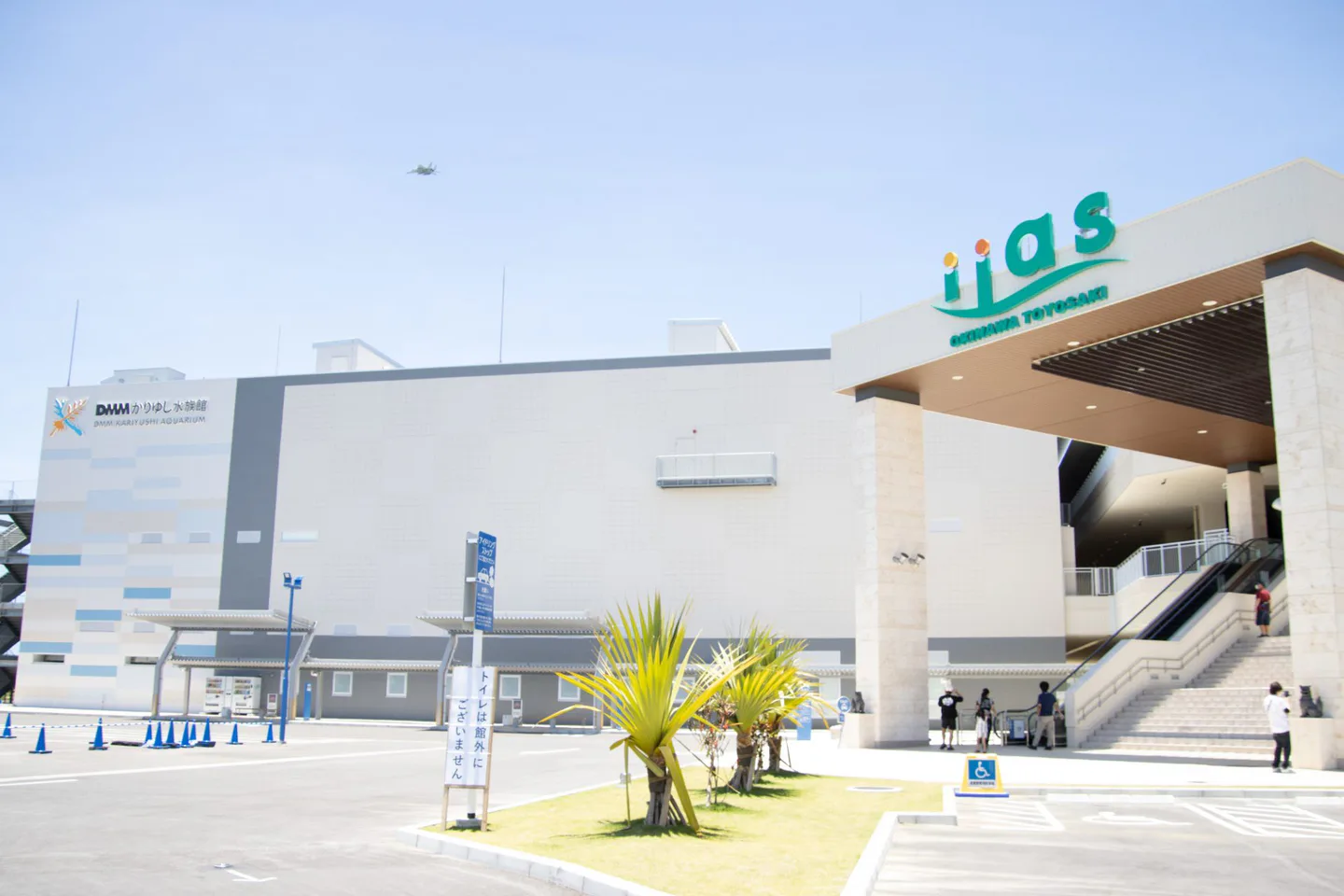
DMM Kariyushi Aquarium is useful when Okinawa leaves you with a short, awkward window near Naha Airport. It is indoors at iias Okinawa Toyosaki, around a 20-minute drive from the airport in ordinary traffic. That estimate can lengthen; it is not permission to reduce a flight buffer. Churaumi Aquarium serves a much bigger northern-Okinawa outing. A visitor wanting that scale should plan Motobu rather than asking this compact Toyosaki stop to imitate it. The Churaumi timing guide helps decide whether the northbound day fits at all.
Allow roughly 90 minutes inside if the schedule permits. A brisk hour can cover the main route without paid animal encounters; families, photographers or visitors using tetote may prefer two hours. The ticket makes most sense when it fills a rainy afternoon or arrival-day gap without a long detour. If you have only 40–45 minutes after parking and ticket entry, the convenience becomes expensive. The first-time Okinawa route should settle Naha, Onna and Motobu before this extra stop is inserted. A four-day route with two regional priorities shows how easily an extra attraction can crowd out the main day.
↔ Scroll table left or right
| Trip window | Where the aquarium helps | Reason to skip or delay |
|---|---|---|
| Rainy Naha-area afternoon | Indoor 1–2 hour block without a northbound drive. | Good weather would be lost from a rare beach or outdoor day. |
| Arrival day | Uses spare time near the airport before heading on. | Flight, baggage or car-pickup delays erase the window. |
| Departure day | Possible last stop when airport margin remains generous. | Fuel, car return, traffic and flight check-in already consume the buffer. |
| After 17:00 | A 30% admission offer can reduce the ticket cost. | The date's closing time leaves too little visit time. |
| Full aquarium day | The compact site is not designed for the same scale as Churaumi. | Travel north if a destination aquarium is the actual goal. |
The ticket changed on 15 October 2026
The current three-tier admission replaced the earlier 2026 prices on 15 October. Adults aged 18 or over now pay ¥3,100 on Value dates, ¥3,250 Regular or ¥3,500 Peak. For ages 13–17, the three rates are ¥2,500, ¥2,650 and ¥2,900; ages 4–12 pay ¥2,000, ¥2,150 and ¥2,400. Children three and under enter free with a guardian. The operating calendar assigns each date its tier, so a generic “adult ticket” price is not enough for a family budget. The old ¥2,800–¥3,200 adult range in earlier planning notes is no longer the live rate.
↔ Scroll table left or right
| Admission, current schedule | Value | Regular | Peak |
|---|---|---|---|
| Adult 18+ | ¥3,100 | ¥3,250 | ¥3,500 |
| Age 13–17 | ¥2,500 | ¥2,650 | ¥2,900 |
| Age 4–12 | ¥2,000 | ¥2,150 | ¥2,400 |
| Age 3 or younger | Free with guardian | Free with guardian | Free with guardian |
The venue's booking page advertises an advance-purchase offer of up to 10% for purchase by 23:59 the day before, currently listed for visits through 28 February 2027. A separate after-17:00 ticket advertises 30% off for the same current booking window. These are product terms, not stackable savings: compare the chosen date, time, cancellation terms and actual checkout price. A Regular adult example on the current late ticket page is ¥3,250 reduced to ¥2,275. Do not apply the old Peak example of ¥3,200 → ¥2,240 to the new tariff. For a family, the five-day Okinawa cost guide helps compare a full set of admissions with transport and hotel spending.
Normal hours are 09:00–19:00, with last admission 60 minutes before closing. Specific dates may have different hours. A 17:00 entry on a 19:00 closing day can leave a useful two-hour window; a shorter operating day changes the value entirely. In a departure-day plan, keep the flight and rental-car return margin intact before accepting any discount. Onna versus Naha for the final night and the Naha Airport hotel guide resolve the overnight geography first.
What a family actually pays
For two adults and one child aged 4–12, the published admission tiers produce a base total of ¥8,200 on a Value day, ¥8,650 on a Regular day or ¥9,400 on a Peak day. That calculation excludes feeding, photographs, transport and food. It also assumes that the child qualifies for the 4–12 bracket; a teenager falls into a different rate, while a child aged three or younger enters free with a guardian. Check the calendar against the day you intend to go rather than treating the lowest total as a normal daily price. A family planning more than one paid Okinawa attraction should compare the whole activity budget before allocating a scarce clear-weather afternoon here.
The late ticket can look especially attractive on a family bill, but the useful question is how many minutes of the exhibition are left after the group arrives. If an animal encounter is a priority, its separate capacity and tetote's 17:30 final entry make a late admission a poor substitute for an earlier visit. A child who wants photographs at each display may need longer than a solo adult following the route once. The apparent saving disappears in practical value if the party pays for admission only to rush toward closing.
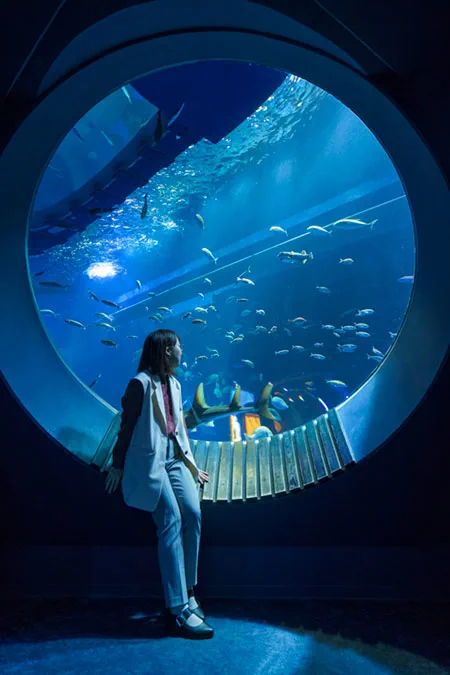
The circular window frames the fish tank as a moving scene. It gives a sense of the compact, designed presentation rather than the scale of Churaumi's northern-Okinawa complex.
What fills the 90 minutes
The circular tank window, a glass-floor section with marine life below, and the darker jellyfish display are the main visual reasons to visit. Lighting and sound make the jellyfish room a distinct stop rather than a miniature version of a large conventional tank hall. A rainy block fits especially well because the site is largely indoors; a serious weather disruption still requires a wider plan. The Okinawa rain and typhoon guide covers what one aquarium cannot solve, and the wider attractions comparison puts this small stop among longer day choices.
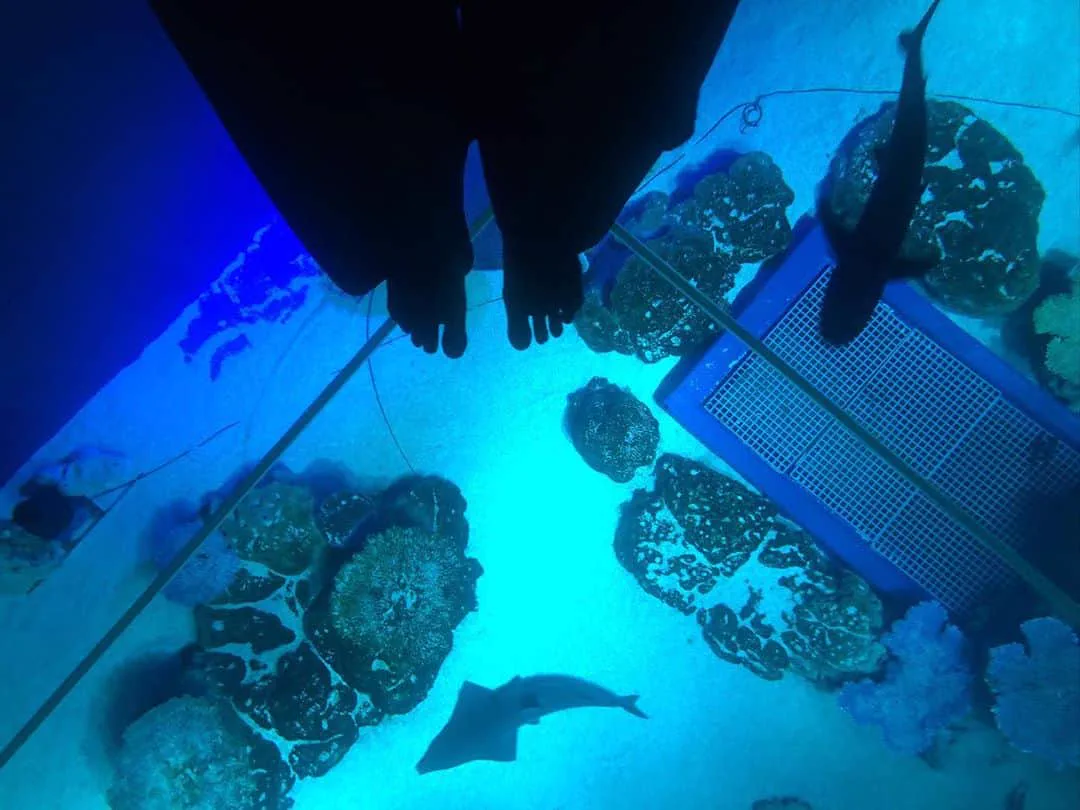
The glass-floor photograph looks down into the water beneath visitors' feet. If someone in the group dislikes transparent floors, this is one display to pass by, not a reason to abandon the whole route.
One hour is possible without extras, but a family who stops for photographs, food or animal interaction should budget closer to two. Ninety minutes is a useful midpoint for planning; it is an editorial time allowance, not an admission rule. Do not keep circling the aquarium to force a half-day out of the ticket. If more time needs filling, a meal or the surrounding iias Toyosaki complex supplies a separate activity rather than pretending the exhibits are larger. The child-seat and nap-window guide may reveal that the family's real limit is the drive around the visit.
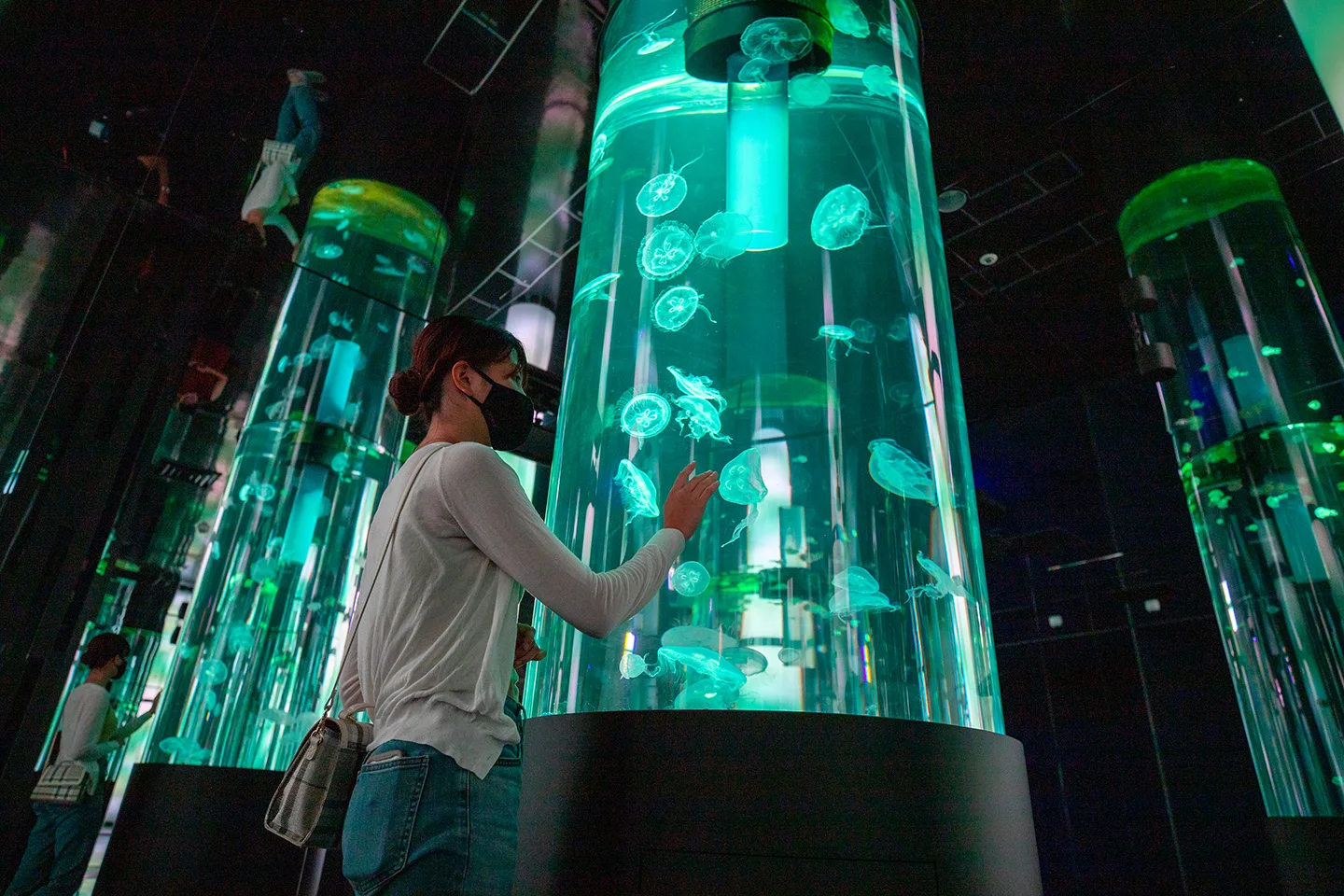
The illuminated cylindrical tanks in this image show how the jellyfish display depends on the room's lighting. A future visit's exact colours or animal presentation may differ.
Animal encounters cannot be guaranteed by admission
Feeding and photo experiences are add-ons sold from opening on a first-come, first-served basis until their capacity is reached. Current examples include otter and sloth feeding at ¥1,000 each, and certain photo-plus-feeding experiences at ¥1,500. The programme can change with animal condition. If one encounter is the primary reason for a visit, arriving late without an available slot is a meaningful risk even if admission tickets remain on sale.
The tetote contact area usually opens 10:00–18:00, with final entry at 17:30. It has a separate conduct policy. Open-toe shoes are permitted with care, but a visitor who entered or returned to Japan less than a week earlier may be refused entry for biosecurity reasons. Carrying meat-containing food or having contact with pigs during the preceding two days is also disqualifying under the current policy. Those restrictions concern tetote, not entry to every aquarium exhibit. That distinction is crucial for an arrival-day visit by an overseas traveller. The area gained an outdoor section in October 2026, but its animal roster can change.
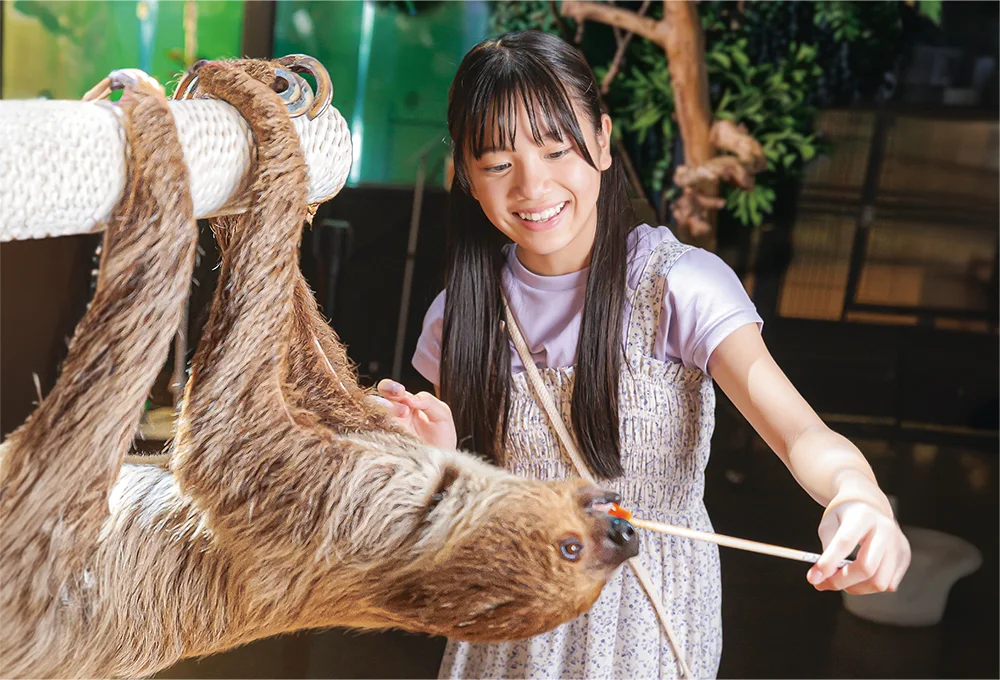
A child feeding a sloth appears in the final photo. The scene illustrates an add-on encounter, not an activity included automatically with the main ticket.
Arrival and departure days have opposite risks
On arrival, the airport proximity can rescue a short afternoon before driving toward an Onna or Motobu hotel. Leave room for immigration, baggage collection and rental-car pickup before prepaying an entry time. A five-day no-car-first-day route shows when even a nearby stop may be easier on another day. The rental-car pickup comparison is relevant because collection time can erase a seemingly open afternoon.
On departure, count backwards from check-in at Naha Airport. Add traffic, fuel, car return, luggage and the airport transfer; the venue's roughly 20-minute drive is a normal-condition access estimate, not a safety margin. If the aquarium sits inside that buffer, skip it. An early flight makes a Naha-side hotel decision more consequential than squeezing in one last attraction. The Okinawa car-versus-transit guide helps identify a less pressured Toyosaki day if one exists. A Naha final-night hotel review examines the preceding overnight decision.
A car-free traveller should calculate the full journey from the hotel and then onward to the airport, not borrow the airport-to-venue driving estimate. The shopping-centre setting makes a meal and indoor waiting possible, but it does not remove the time needed to collect bags or reach a departure gate. On an arrival day, the uncertainty runs in the other direction: immigration and luggage delays may leave too little time to enjoy the rooms, even when the aquarium itself is open. Where a fixed-entry ticket would create pressure, keep the aquarium as a weather-dependent option and commit once the usable afternoon is clear.
For admission, compare the venue's live date-tier calendar and direct late or advance offers against the complete checkout terms of third-party ticket listings. Cancellation, validity and whether an exchange is needed can matter more than a small first-screen price difference. The two existing ticket listings remain available below for that comparison; neither removes the need to confirm the visit date and remaining opening hours.
Choose DMM for a protected 90-minute indoor window near Naha, a rainy-day replacement or a generous pre-flight gap. Choose Churaumi for a northern day built around a larger aquarium. The same ¥3,500 Peak adult ticket can be reasonable when it saves route friction and poor value when it buys a hurried 40-minute lap. Kyoto Aquarium's time-value question is another example of why a compact attraction should be judged in its actual itinerary, not by tank count alone. If rain leaves more than two hours to fill, a five-day car-free Okinawa plan can help find another nearby activity without a long transfer.
For a late arrival or early departure that puts the aquarium near your airport leg, compare rooms around Naha Airport with baggage and rental-car timing rather than treating the aquarium as a reason to cross the island.
Okinawa planning and ticket links
Okinawa guide for first-time visitors · Okinawa rainy-day and typhoon guide · Okinawa rainy-day and typhoon guide · Compare the exact DMM Kariyushi ticket options · Compare the exact DMM Kariyushi ticket on · DMM Kariyushi Aquarium site|Current admission, hours, access · DMM Kariyushi Aquarium|tetote operating information and code · Okinawa Itinerary: 5-Day Self-Drive Route from Naha · Mt Fuji Private Car Charter from Tokyo: · Best Airport for Japan Autumn Leaves: Choose · Best eSIM for Okinawa: Coverage for Naha, · Sakura Castle: The Stamp Is Open 24/7 · Osaka Aquarium Kaiyukan 2026: Timed Entry, No · Koenji Awa Odori 2026: Use the Daytime · Narita Late Arrival: Stay Near the Airport · Best Dates for USJ Halloween 2026: Crowds, · Okinawa Honeymoon Hotels: Don’t Upgrade All Four · Best Japan eSIM for Tokyo, Osaka and · Kerama Discovery Diving: Seasickness, SEASIR Naha and