
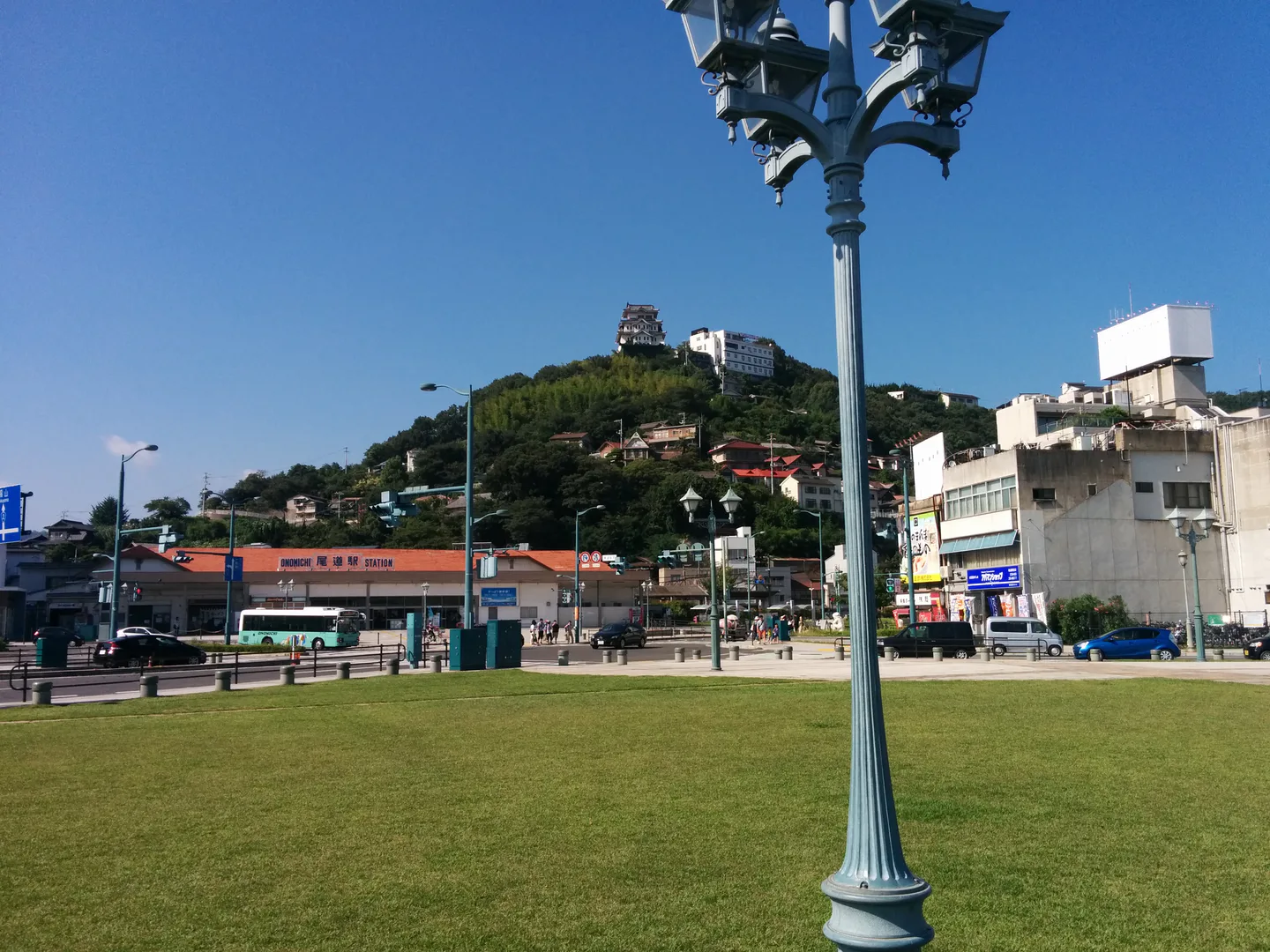
A Shimanami Kaido ride begins before the first pedal stroke. If the next morning is a full crossing to Imabari, sleeping in Onomichi puts the public bicycle terminal, bag handoff and Mukaishima ferry in one compact sequence. Fukuyama earns its place when the previous evening is harder: a late Sanyo Shinkansen, tired children or a missed local connection can make an extra rail leg unappealing. The choice is therefore about which part of the trip needs protection. A normal evening arrival favours Onomichi; a genuinely fragile arrival may justify Fukuyama and a later start.
The current Onomichi Station rental terminal is about 130 metres from the station’s south exit and opens at 08:00. A local train from Fukuyama takes around 20 minutes before you reach that pickup point. Those 20 minutes are minor on an open sightseeing day and valuable on a roughly 70 km one-day ride. The Onomichi day-trip comparison helps if your group is not yet sure whether it wants to cycle at all; a harbour-town visit can stand on its own.
The morning starts in Onomichi even if the Shinkansen stops elsewhere
| Actual plan | Better starting base | Why |
|---|---|---|
| Full Onomichi-to-Imabari day and 08:00 rental pickup | Onomichi | Go from room to cycle terminal without an early positioning train |
| Late long-distance arrival with an uncertain onward train | Fukuyama | End the previous travel day at the Shinkansen hub |
| One-way ride with a checked bag | Onomichi if the bag handoff works | Bike and eligible same-day baggage services can align near the start |
| One traveller rides, another needs long-distance rail | Fukuyama may fit the non-rider | The non-rider can continue from a major rail interchange |
| One traveller rides, another wants a local day | Onomichi | The non-rider has waterfront and hillside time without leaving town |
| Two-day partial ride and a very late arrival | Either | The first cycling day has less early-start pressure |
Onomichi Station should not be confused with Shin-Onomichi Shinkansen Station. From Shin-Onomichi the waterfront station is about ten minutes by taxi or fifteen minutes by bus. That can be a reasonable late-night connection if deliberately planned, but sleeping near Shin-Onomichi does not place a cyclist at the rental counter and ferry. Fukuyama is the simpler interchange for many through Shinkansen services; not every train stops at Fukuyama or Shin-Onomichi. The Hiroshima station-area lodging guide matters if the journey begins with sightseeing in Hiroshima rather than arriving solely for the ride. If Hiroshima is still optional in the wider route, the first-trip Hiroshima decision belongs before either hotel booking.
The station-side cycle terminal changes the value of the previous night
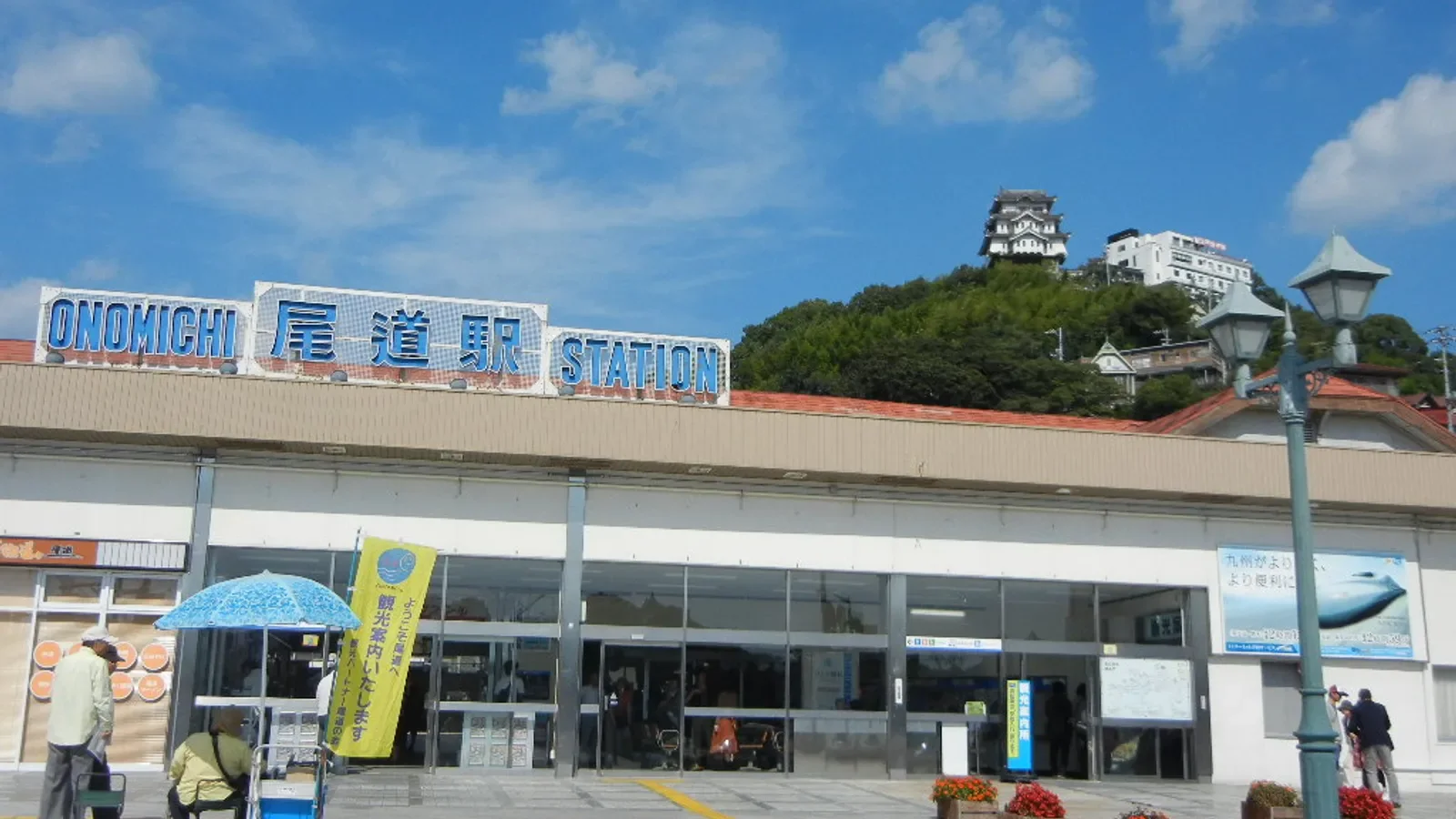
The main public cycle terminal moved into the Onomichi Station area in 2025. It now stands by the south exit rather than requiring a separate morning trip to a remote pickup point. From March through November its published hours are 08:00–19:00; from December through February they are 08:00–18:00. There are ten rental or return terminals along the route. An Onomichi hotel lets a rider check out, deal with a bag, pick up a bicycle and reach the harbour without first riding a local train from Fukuyama. The opening time is especially relevant when the route’s full Blue Line is the goal.
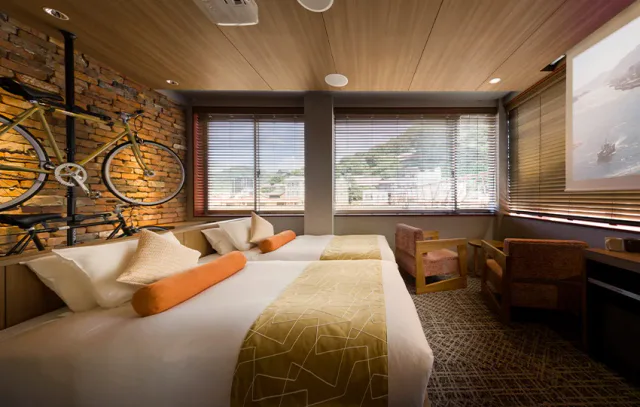
The advantage is not that every Onomichi hotel is identical. A room beside the station has a more direct departure than one high on the hillside; a luggage-heavy group should examine the final walk. HOTEL BEACON ONOMICHI is a station-area example shown below, with a bicycle-themed room in the source imagery. The image establishes the room’s appearance, not a promise that every room can take a bicycle. If the group instead wants two unhurried town days, the Hiroshima-to-Onomichi day plan puts the hill, waterfront and cycling start in a broader order.
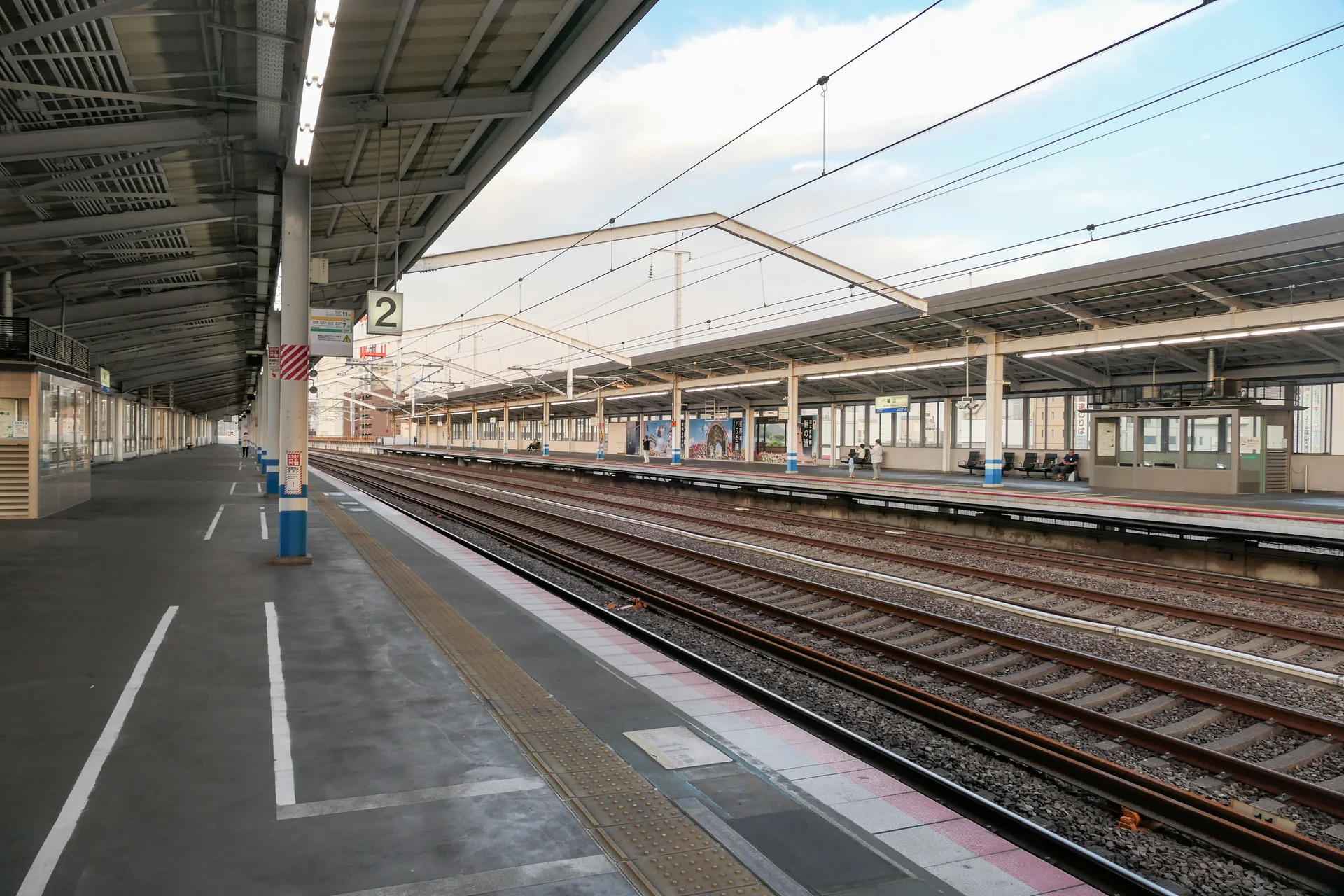
From Fukuyama, the local train itself is short; the hidden cost is reaching the platform, waiting, exiting Onomichi Station and beginning the rental process after the first daylight block has passed. A normal arrival at Fukuyama the night before makes that an avoidable morning task. A late Shinkansen that leaves only a rushed or uncertain onward connection changes the answer. Take the good night of sleep in Fukuyama rather than treating an Onomichi address as a goal at any cost. The Hiroshima airport and city-base comparison illustrates the same need to place the final transfer on the right day when flying into the region.
Seven factors sit behind the two base ratings
Morning route fit carries the most weight for a cycling-first trip. Arrival resilience matters next, because a late incoming train can undo the value of an early bike pickup. Luggage handling, weather flexibility, a non-rider’s day, accommodation cost and the number of separate steps complete the comparison. These are the seven original decision dimensions; the weights below describe how the four example itineraries were judged, not a universal hotel score. A traveller with a mobility constraint or a fixed onward train may reasonably give one dimension more weight than the table does.
| Decision dimension | Weight in the comparison | What changes between the bases |
|---|---|---|
| Morning route fit | 25% | Onomichi removes the Fukuyama-to-Onomichi positioning train |
| Late-arrival resilience | 20% | Fukuyama can end a tiring Shinkansen evening sooner |
| Luggage friction | 15% | Onomichi pickup and eligible bag handoff can be placed together |
| Weather flexibility | 15% | Fukuyama helps an early cancellation; Onomichi helps a late go/no-go decision |
| Non-rider flexibility | 10% | Fukuyama has through rail; Onomichi has an independent town day |
| Cost efficiency | 10% | Compare real room rates plus transfers and bag charges |
| Operational simplicity | 5% | Count how many things must go right before the ride starts |
| Scenario | Onomichi | Fukuyama | Reason for the relative rating |
|---|---|---|---|
| Normal evening arrival, full one-day crossing | The positioning train is removed from the cycling morning | ||
| Very late Shinkansen arrival and two large bags | Fukuyama protects the preceding night’s arrival | ||
| One-way ride with suitable luggage forwarding | Bike and bag can point toward Imabari without backtracking | ||
| Uncertain weather and non-rider needing through rail | A rail-centred change of plan is easier from Fukuyama | ||
| Two-day ride after a normal arrival | Less time pressure, though Onomichi still avoids a transfer |
The numerical difference is most useful when it prompts a concrete question. Is the inbound Shinkansen late enough that another 20-minute train becomes a risk? Can the bag be delivered to an actual receiving hotel? Is the non-rider catching a train or spending the day among Onomichi’s lanes and viewpoints? A Hiroshima and Miyajima two-day plan may also determine whether the cycling night should be placed before or after a separate island visit.
Luggage can travel separately, but the handoff has conditions
A one-way Onomichi-to-Imabari ride is easier without a suitcase. Shimanami Japan lists ten bicycle terminals and permits eligible bikes to be returned at another one, while a separate same-day bag service moves luggage between participating facilities. The current Sagawa service charges ¥2,200 per piece up to 160 cm in combined dimensions and 30 kg, with morning drop-off and evening collection windows that vary by facility. It is not an automatic delivery to any room a traveller happens to book. Confirm the departure and receiving property before paying for a non-refundable one-way hotel plan.
For a traveller returning to Onomichi, ordinary station-area storage can be simpler than shipping a bag to Imabari. The older guide cited more than 100 lockers and a ¥400–¥1,000 size range, but a particular size and open unit cannot be guaranteed on your travel date. Ask the hotel about holding luggage or use an available locker that fits the case. The Japan luggage-forwarding guide explains when same-day service, overnight domestic shipment and station storage solve different problems. The Naoshima and Shodoshima base guide is relevant if the ride continues into another Setouchi island leg with its own bag transfer. The Naoshima day-trip timing guide shows why an art-island ferry day needs a separate time budget.
Onomichi’s rental office can accept a bag under the listed Cycling Without Baggage facility schedule, but that still does not make every hotel a recipient. A hotel that is not participating may require a different handoff. Important medication, documents and valuables stay with the rider. A group whose bag must be opened that evening should plan around the facility’s pickup time, not just the time the last cyclist crosses a bridge. That makes the practical base choice a property-level decision rather than merely a city-level one.
Bike type affects cost and whether a second riding day is possible
The public rental rates currently list cross and city bikes at ¥3,000 adult per calendar day, electric-assist bicycles at ¥4,000, and E-bikes at ¥8,000. Cross and city bikes can be rented for multiple days and returned at eligible terminals; the electric-assist option also allows multi-day use. E-bikes must be returned on the same day within business hours. A ¥4,000 assist bike is not interchangeable with the ¥8,000 E-bike on price or logistics. Reserve the style and size that suit the route rather than assuming an early arrival guarantees stock, particularly during busy spring and autumn periods.
| Adult bicycle | Rental per calendar day | Rental plus first ¥110 ferry | Relevant condition |
|---|---|---|---|
| Cross or city bike | ¥3,000 | ¥3,110 | Can be kept multiple days and dropped at eligible terminals |
| Electric-assist bike | ¥4,000 | ¥4,110 | Multi-day option; pickup locations are more limited |
| E-bike | ¥8,000 | ¥8,110 | Same-day return required within terminal hours |
Those totals add the usual first ferry only; they exclude a hotel, food, luggage service and later route costs. The Onomichi-to-Mukaishima boat is ¥100 per person plus ¥10 per bicycle, so its ¥110 combined price is not the reason to choose one hotel city over another. The meaningful cost of a Fukuyama room is the extra morning transfer and any lost flexibility. If a rider is considering a shorter art-island cycle instead of the full crossing, the Naoshima e-bike route is a different way to spend a Setouchi day, with different rental and ferry constraints.
The first ferry is a step in the morning, not a hotel price lever
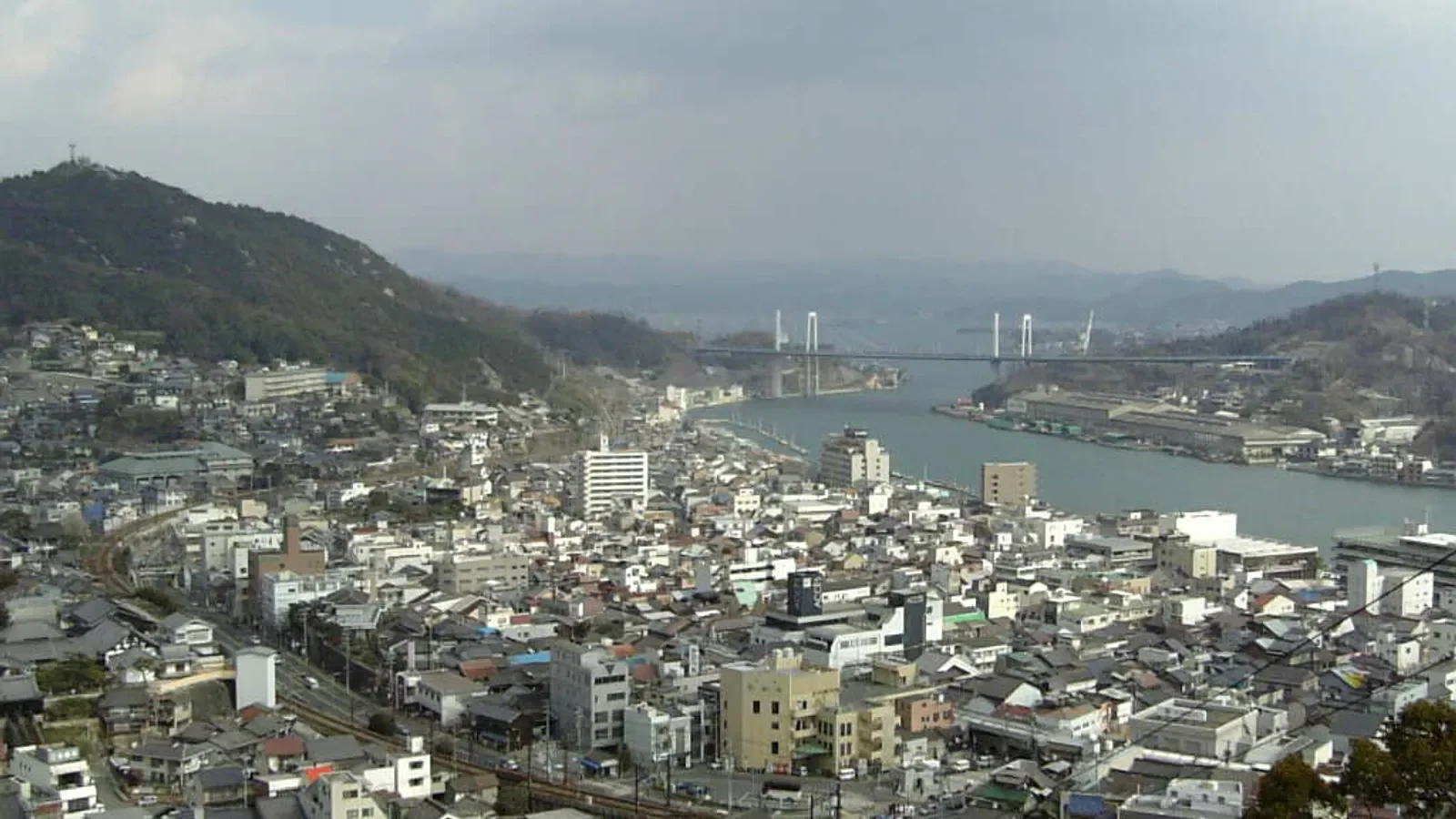
From Onomichi’s waterfront the visitor-friendly ferry to Mukaishima takes roughly ten minutes. A rider sleeping near the station can collect the bike, roll toward the harbour and start the island sequence. A Fukuyama sleeper first has to get to Onomichi. That difference is small if the day covers only the first island, and more consequential for the whole approximately 70 km Blue Line to Imabari. The route guide recommends an early start because viewpoints, cafés and bridge approaches can use much more time than the distance alone suggests. The Hiroshima-to-Onomichi day-trip guide helps a group that may stop at the town instead of riding onward.
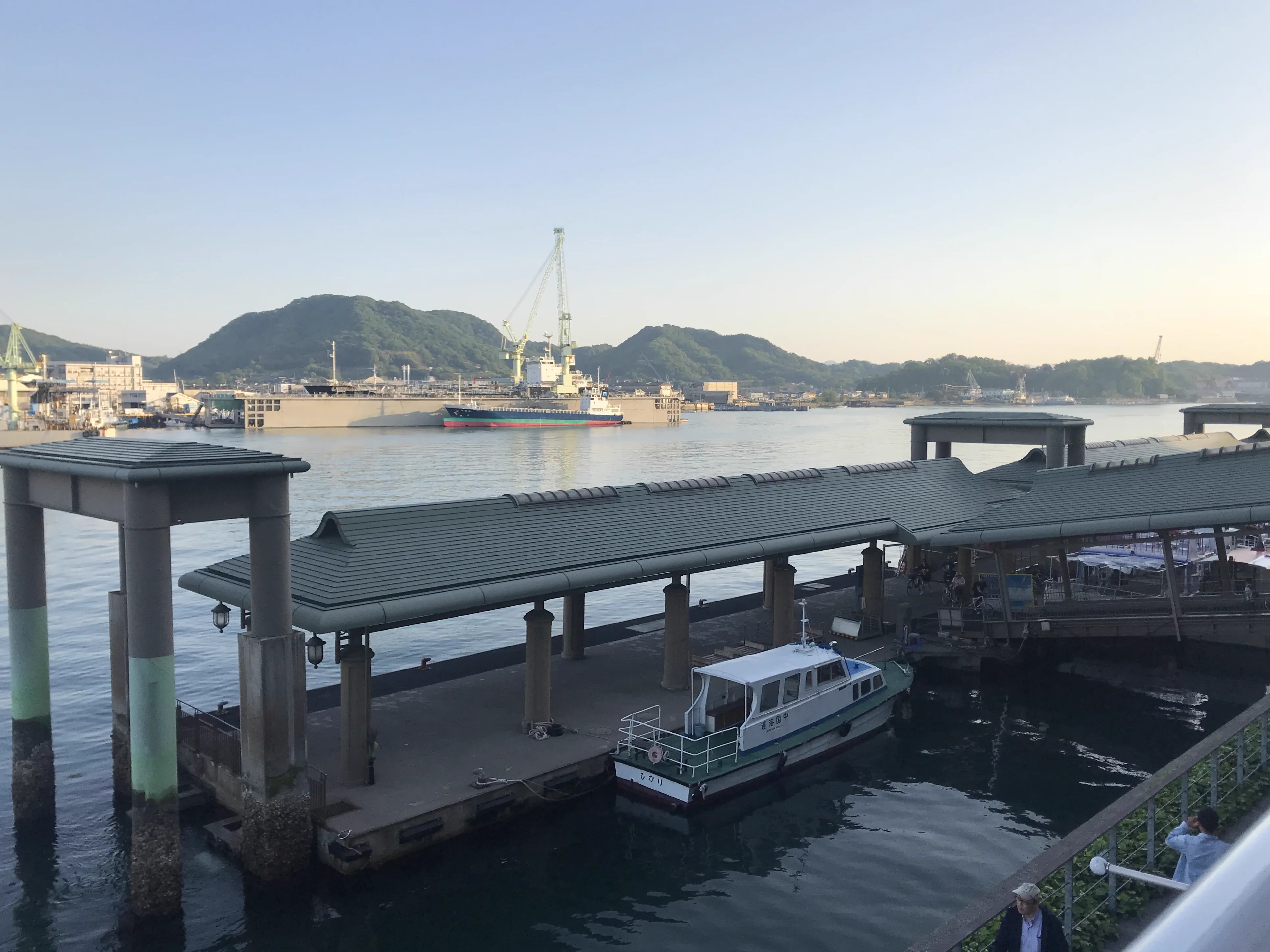
Onomichi also works well for a two-night stay when only a partial ride is planned. One hotel removes repacking, gives the non-rider a stable base and leaves time for the old streets, cafés and Senkoji hillside. The Hiroshima one-day route can occupy a separate day before or after Onomichi without forcing both into the cycling day. A Hiroshima or Miyajima overnight comparison is useful when deciding which nearby place deserves the other hotel night.
The weather forecast changes which city gives the safer backup
If a severe forecast has already made cycling unlikely, Fukuyama’s rail position is valuable: a group can redirect its next day without first returning from Onomichi. If the forecast is merely uncertain and everyone still wants to attempt the ride, Onomichi lets the final decision be made nearer the rental office and ferry. A clear interval can be used promptly; a delayed start from Fukuyama reduces that margin. Unsafe wind or rain is a reason to change plans, even if a bike reservation or hotel was bought around the crossing. The rain-day itinerary choices help sort a shorter outing from a full cancellation.
A non-rider may decide the city more strongly than weather does. Someone catching a long-distance train the next morning benefits from Fukuyama’s Shinkansen connection. Someone waiting for the cycling party may prefer Onomichi’s waterfront and Senkoji viewpoint. The ropeway is a way to reach the hill without doing every stair, though its operation must be checked for the chosen date. The Onomichi sightseeing day gives that person an independent plan. The Hiroshima food guide is useful only if the non-rider is actually continuing to Hiroshima; a distant city dinner should not be presented as an Onomichi activity.
Three arrivals illustrate the useful distinction
After a normal evening Shinkansen from Tokyo or Kyoto, take the local connection onward and sleep in Onomichi if check-in and your energy permit. An 08:00 rental pickup, bag handoff and first ferry then belong to the cycling morning rather than a commuter morning. With a very late arrival, two large cases and tired children, stop in Fukuyama and accept the later start. The room near the through-rail station protects sleep when the last local connection would make arrival brittle. If planning a Hiroshima and Miyajima two-day stay, place that sightseeing on another date instead of stealing the bike morning.
For a mixed group in unsettled weather, begin with the non-rider’s plan. If they will take a Shinkansen while the cyclist heads toward Imabari, Fukuyama is plausible. If they want an unhurried harbour-town day, Onomichi usually serves both people better. For a two- or three-day island crossing, the first day need not start as aggressively as a 70 km one-day ride, so a late Fukuyama arrival carries a smaller penalty. The four-day Shikoku route may change where the post-ride night goes if Imabari is part of a longer Shikoku journey.
Two actual room examples, with different jobs
A station-side Onomichi room is primarily buying a clean next morning. The BEACON photo shows a cycle-themed twin room; the article does not assume every room has the same layout or any special bicycle-storage permission. A Fukuyama station hotel is buying an easier end to a late rail day. The New Castle twin image below shows the alternative room type, but a photograph is not evidence of a particular rate, check-in rule or luggage service. Compare the exact room, cancellation terms and station approach for the date you will arrive.
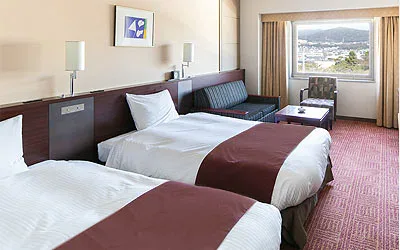
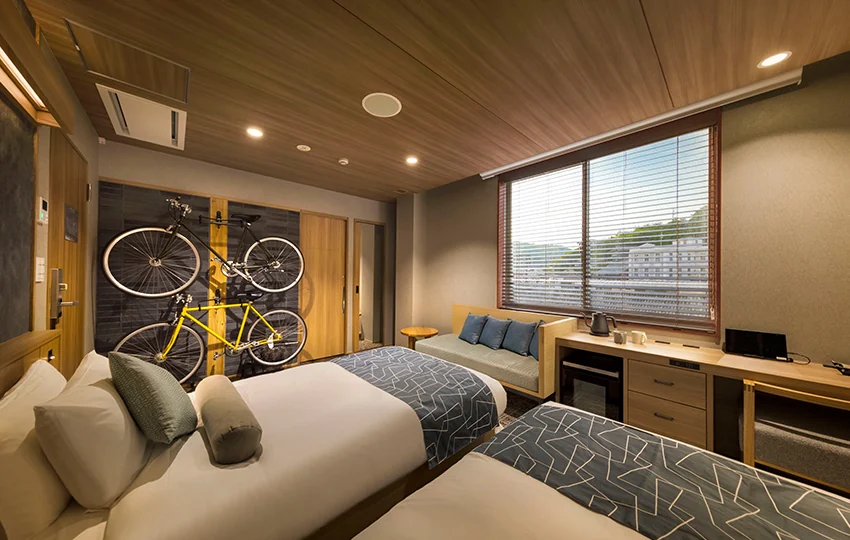
HOTEL BEACON ONOMICHI belongs in a bike-first shortlist because of its station setting, while Fukuyama New Castle Hotel illustrates the rail-first choice. The right room may still be elsewhere if these sell out or do not fit your party. A Hiroshima station hotel comparison is a useful alternative only when the cycling day is embedded in a wider Hiroshima visit rather than a direct early start. For a cross-island itinerary, do not book the second hotel until the bicycle return terminal and luggage recipient are both clear.
The hotel decision in one sentence
Choose Onomichi when you can reach it comfortably the evening before a committed ride. Choose Fukuyama when reaching Onomichi that night would be the riskier move, or when a non-rider needs through rail the next day. Shin-Onomichi is a separate Shinkansen stop with a taxi or bus transfer to the actual rental and harbour area. Price the live room, bike type, bag handoff and next morning’s transit as one chain; a cheap room that pushes four tasks into an early 70 km riding day may be the more expensive choice in time.
For an Onomichi departure, compare rooms by Onomichi Station. For a late rail stop, compare rooms by Fukuyama Station. These searches are useful after the first-night route is fixed. If the trip will continue through art islands, the Naoshima and Shodoshima base comparison answers a different overnight question that should not be conflated with the Shimanami start.
Other journeys to compare
More reading: Where to Stay, Hakone Loop Before, Sapporo vs Chitose, Where to Stay, Where to Stay.
More reading: Tokyu Stay Okinawa, Where to Stay, Where to Stay, Sapporo Shopping Hotels:, Where to Stay.
More reading: Where to Stay, Where to Stay, Tokyo Disney Split, Beppu vs Yufuin:.
Route details: access from Fukuyama and Shin-Onomichi, Onomichi and other rental terminal hours, bike prices and return conditions, rental and baggage information, one-day Blue Line and Mukaishima ferry and same-day participating-facility bag delivery.