
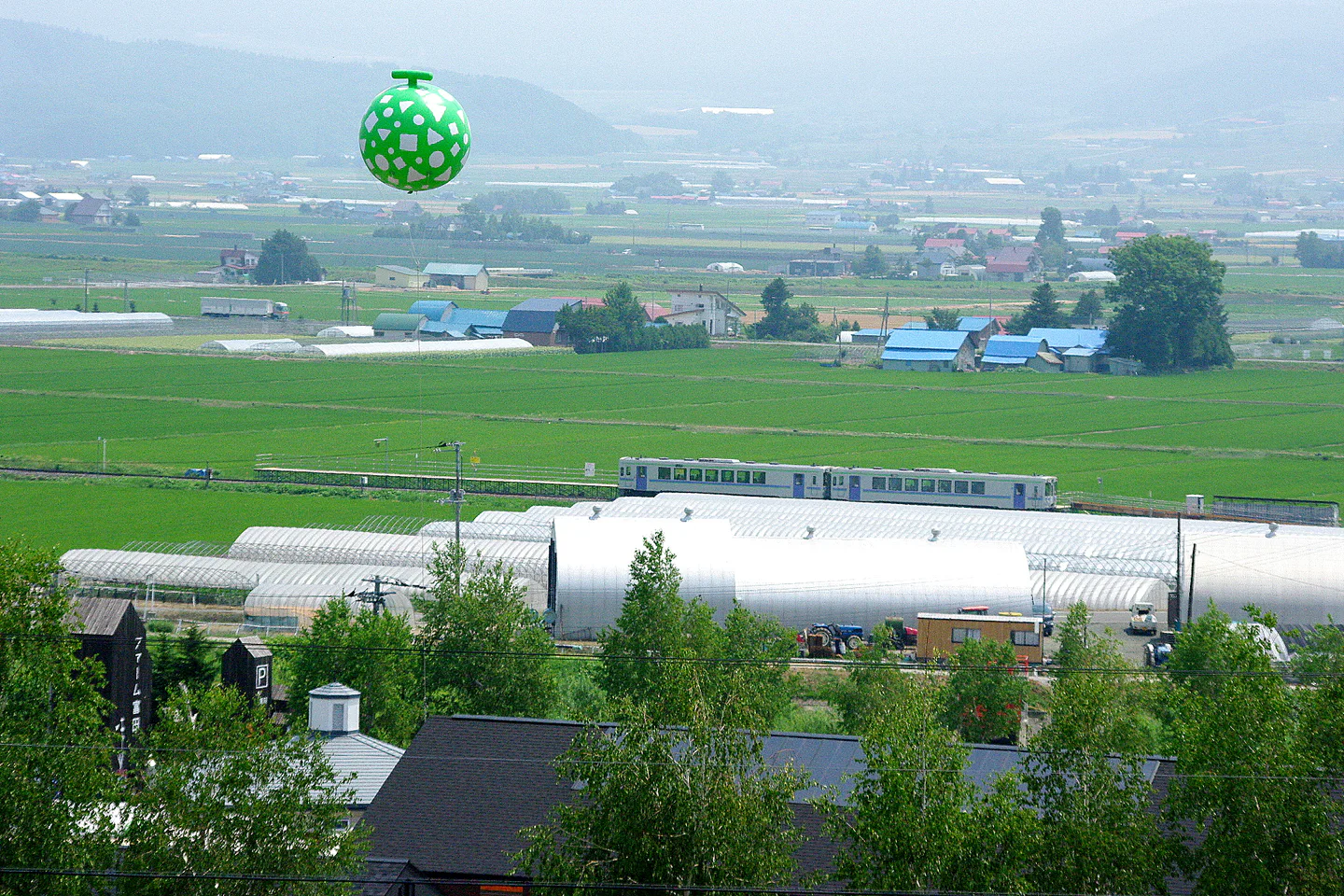
A slice of Furano melon eaten during the visit is the simplest way to enjoy the fruit. A whole melon makes sense when its intended eating day is clear and the rest of the journey will keep it cool and uncrushed. If the gift is going to someone in Japan, ask the seller about domestic delivery; if it is going overseas, check the destination's fresh-fruit import rules before buying.
Furano is a summer stop for many Hokkaido routes, but a melon purchase should follow the route. Compare Furano and Biei as overnight bases first. If the larger route remains undecided, the Hokkaido regional itinerary can help place Furano without another unnecessary hotel move.
Whole melon, cut fruit or a tasting stop
↔ Scroll table left or right
Your plan | What to buy | What to settle first |
Eat during the farm visit | A prepared slice | Check the day's availability and café hours |
Eat in one to three days in Japan | A whole melon chosen for that date | Ask when to chill and cut it; protect it during transfers |
Send a gift within Japan | Domestic delivery, if the seller offers it | Confirm the recipient, arrival estimate and eating window |
Take fruit abroad | Check import rules before purchasing | Packaging and a shop receipt do not waive quarantine restrictions |
This choice is more consequential than the pattern on the rind. A large fruit that looks impressive at the stall can be a poor purchase for a traveler changing hotels the next morning. A cut portion removes storage, ripening and border questions entirely. For two people who merely want a taste, sharing one portion before deciding whether to order another is a sensible first move.
What the published season tells you
Farm Tomita lists its cut Furano melon for early June through late September. That is a seasonal menu window, not a promise that a particular cultivar, size or quantity will be waiting on every visit. Its posted price begins at ¥520 per plate and varies with the season; the two-plate option begins at ¥980. These are posted starting prices, so check the current counter menu when you arrive.
The melon calendar does not match the lavender calendar exactly. If the fields are a major reason for this stop, plan them separately with the Furano lavender guide. Lavender East had already finished its 2026 season before the late-August melon window ended. Later summer can still be useful for melon even when a particular lavender field has passed its best display. A flower visit outside the listed fresh-melon period should not be built around the expectation of buying a slice.
At the counter, give the eating date
For a whole fruit, the useful opening question is: “We will eat it on this date—what is ready for that?” Tell the seller whether it will be cut tonight, after a hotel transfer, or when a Japanese recipient receives it. Ask about room-temperature ripening, refrigeration and signs that it is ready. The answer depends on the individual fruit and the time between sale and serving; a generic rule copied from another melon is less useful than the seller's instructions for the fruit in your hands.
Travel plans can make even a suitable melon awkward. A rail transfer with several bags, a hot car or a hotel that cannot store it safely changes the calculation. Give a whole melon a protected place in luggage, and do not treat its presentation box as impact protection. If the next stop is a flight, an overnight train or several city changes, eat a slice here and leave the whole fruit behind.
Where Farm Tomita fits
At Farm Tomita, the advantage of cut melon is immediate: buy it, eat it and continue through the fields without carrying produce for the rest of the day. The farm lists the serving locations as Sakiwai Trail and Flower House. Flower House's food hours can finish before the overall farm day, so leave time for that counter; hours also vary by season and venue. Melon juice and other seasonal products may have different sales periods and stock limits; they are alternatives to fresh slices rather than evidence that slices are available outside their own stated season.
There is a name detail that can affect a purchase. Farm Tomita says the neighboring Tomita Melon House is a separate, unaffiliated business. Compare the actual seller's price, shipping conditions and receipt instead of assuming a policy advertised by one shop applies to the other. If your visit revolves around the fields, check the farm's map for the café you want, then decide whether a separate melon shop is worth another stop.
Furano Marche works better for a station-side finish
A day ending near JR Furano Station calls for a different shopping stop than a day still centered on Farm Tomita in Nakafurano. Furano Marche gives station-side travelers a chance to browse local food and packaged gifts without backtracking to the farm. The practical test is whether the purchase fits the train departure and the next hotel, not whether the fruit is the largest in the display. If the onward route still leaves the overnight base open, revisit the Furano–Biei stay comparison before making shopping the reason for an extra hotel change.
If Sapporo follows, settle which Sapporo district suits the next nights and how long to stay there before moving accommodation simply to accommodate shopping. Packaged foods are often easier gifts for an onward rail journey. A fresh whole fruit is reasonable when it has a planned meal and a protected journey to that meal.
Domestic delivery still needs someone at the other end
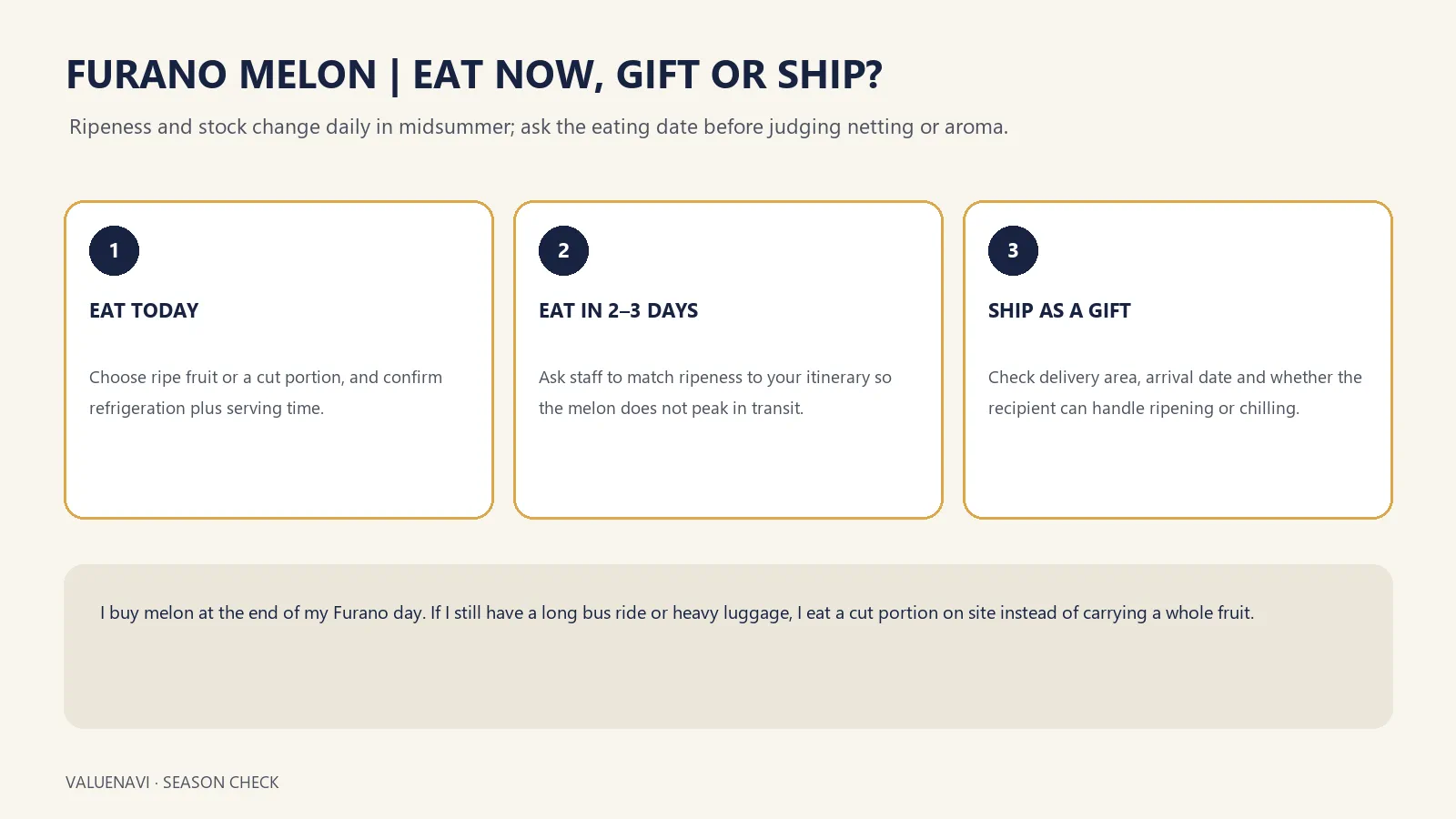
Farm Tomita publishes a domestic delivery option for Furano melons. Before paying, check whether the destination is served, what arrival window the shop expects, who will receive the parcel and how long that person should wait before cutting it. Delivery removes the weight from your own suitcase, but it does not remove the fruit's ripening schedule. It is most useful for a recipient in Japan who can receive and eat it within the seller's recommended period.
International carriage is a separate issue. Fresh fruit can be restricted or require declaration and inspection at the destination. The rules depend on the country of entry, so a shop's domestic shipping service or sturdy box is no basis for assuming the melon can cross the border. If your Hokkaido leg already ends with a tight airport connection, resolve the New Chitose Airport overnight plan before adding a perishable item to it.
Make the stop fit the weather and baggage
Rain may shorten a field visit without making the café stop pointless. Allow the weather to change how much time you spend outdoors rather than buying a whole melon just because the sightseeing plan has collapsed. The rainy-day itinerary guide can help decide whether to keep Furano on the day at all. If luggage is the immediate difficulty, review luggage forwarding for the broader trip, while checking separately whether any courier will accept this specific fresh-fruit shipment.
On a first Japan trip, Furano may be one stop among many. The 10-, 12- and 14-day route comparison helps keep a food stop proportionate to travel time. A dedicated melon purchase is enjoyable when it falls naturally into the Furano day; it is harder to justify if it forces an extra overnight move or a rushed connection.
A whole fruit needs a plan after the farm
Work through the next two days before buying a boxed melon. Is there a direct ride to the hotel, or will the box travel through a station, bus transfer and crowded train? Will anyone be able to keep it from being crushed by luggage? Does the intended eater know the date they should cut it? The seller can help choose a fruit for that date, but the buyer still controls the journey. A box makes it easier to carry a gift; it does not cancel heat exposure, bruising or the time the fruit needs before eating.
For a recipient elsewhere in Japan, put the shipping address and a working contact number in hand before visiting the counter. Ask whether the seller ships to that destination, how delivery dates are selected and whether somebody must be present. The recipient should receive the ripening instructions too; sending only the fruit can leave them guessing when to refrigerate or serve it. If the delivery window conflicts with the recipient's travel, a prepared slice for yourself and a packaged non-perishable gift may fit the trip better. Domestic delivery is a practical service, not a guarantee that the fruit reaches its best condition on any arbitrary date.
For an overseas journey, decide the import question at the border of the destination country before paying. Rules for fresh produce can differ from rules for packaged food; a receipt, shop label or elegant box does not establish that the melon may enter. A traveller with several flights can enjoy the taste at Farm Tomita and leave the customs and storage problems behind. This is especially sensible when the Hokkaido leg is followed by days in hotter Japanese cities before the international departure.
The same route logic distinguishes a farm stop from a station-side purchase. At Farm Tomita, a plate eaten during the field visit requires no extra luggage space. Near Furano Station, Furano Marche may be better for an evening browse and gifts before the train, but a whole melon still needs the same ripeness and carriage plan. Neither location is inherently the better seller for every traveller. Use where the route already takes you, then choose the form of melon that can be eaten or delivered without reshaping the rest of the holiday.
The decision at checkout
Order a slice when you want to taste the harvest during the visit. Choose a whole melon only after giving the seller its intended eating date and checking where it will sit through every remaining transfer. Use domestic delivery for a recipient in Japan who can accept it near the recommended eating window. If the fruit would spend the next several days in a suitcase, enjoy it in Furano instead.
If melon tasting is part of an overnight Furano stop, compare Furano rooms near the farm or station before carrying a whole fruit onto the next leg.
Farm Tomita details
Related guides: Yame Tea Experience: Hoshino, Tea Fields or a Factory Tour? · Karuizawa Autumn Leaves 2026: Kumoba Pond, Shiraito, Cycling and Trains · Nezu Museum 2026: The Garden Isn’t Free — and That Changes Whether ¥1,400 Is Worth It · Tokyo Game Show 2026: Fast Ticket, First-Hall Trap and Family Cost · Aichi-Nagoya Asian Games 2026: Tickets, Venues, Hotels and Transport · Avoid Kyoto Autumn Crowds in 2026: Rail Corridors, Early Starts and Hotel Bases · Kyoto Kibune Kawadoko 2026: Prices, Rain, Bus 33 and Shrine Plan · Edogawa Fireworks 2026: The Best Free Side to Watch, When to Arrive and How to Get Out · USJ Halloween Horror Nights All Night 2026: Tickets and Plan · Mt Fuji Paragliding 2026: Tandem Flight, Pickup Package or Full-Day Tour?
USJ Halloween 2026 Costume Rules: Masks, Makeup, Props and Changing
Tohoku Summer Festival One-Week Itinerary 2026: Morioka, Aomori, Akita and Sendai
Naruko Gorge 2 Day Itinerary: 2026 Trains, Trails, Onsen and Hotels
Takachiho Gorge Autumn Leaves 2026: Boat Booking, Kagura and Overnight Strategy
Toba Aquarium 2026: Is the Sea Otter and Dugong Detour Worth It?