
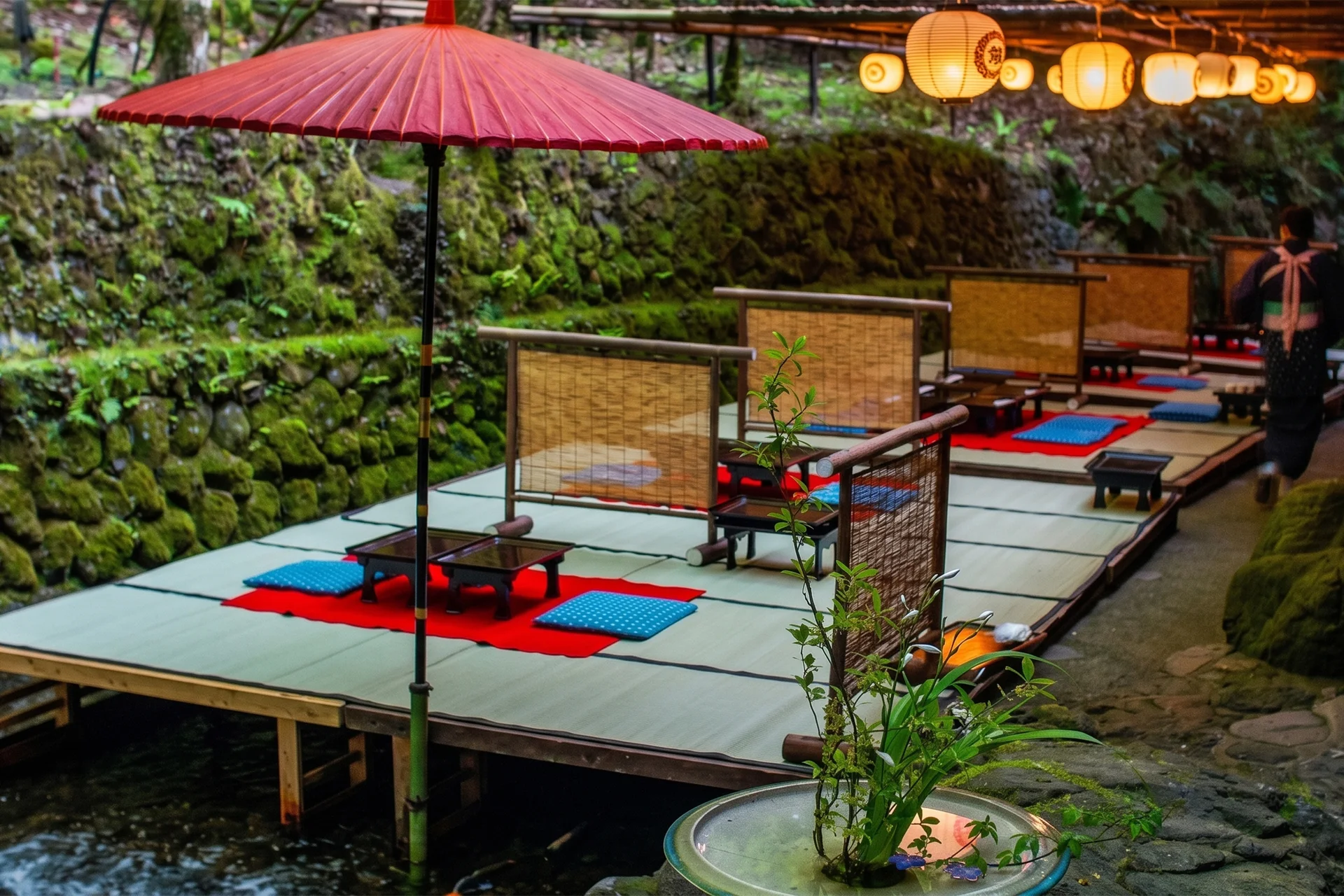
Kibune’s river platforms make a good summer outing when you want the meal and the mountain village together. It is a half-day commitment: take the Eizan train out of Kyoto, make a bus transfer, dine beside the water, and leave time for Kifune Shrine. The 2026 kawadoko season ran from May 1 to September 30, so those dates have now passed. Use this guide to understand the route and the cost before planning a later season; check each restaurant’s next announced dates when bookings reopen.
Keep your Kyoto room for a lunch trip. The train and bus journey works well as an excursion, while moving a suitcase into the valley adds an avoidable transfer. The Where to Stay for Kyoto Summer Events guide is useful if you are deciding whether an overnight stay in Kibune belongs in a wider summer itinerary.
The extra travel is the point of the outing for some visitors. The train moves away from the dense city, while the final bus follows the mountain road to a village whose restaurants sit close to the stream. If you have only one free meal in Kyoto and already have a crowded sightseeing day, that same journey may feel like a poor use of time. Leave room for the valley rather than squeezing it between unrelated reservations.
Prices should be compared as complete meals. A course quoted at ¥7,500 plus a ¥1,100 deck fee is not equivalent to a ¥7,500 city lunch, and the bus journey also takes time. Conversely, judging kawadoko only by the food misses why people travel here: the platform, water, shade and walk to the shrine are part of the outing. Neither preference is wrong, but knowing which one is yours makes the booking much easier.
A riverside meal takes more planning than a shrine visit
↔ Scroll table left or right
If this sounds like your day | Plan around it this way |
The river setting and a seasonal course are the occasion | Reserve a kawadoko meal and leave the afternoon for Kifune Shrine |
You want an inexpensive lunch between sightseeing stops | Eat in the city; the return journey and course price will dominate this outing |
You would be disappointed by an indoor table | Choose a flexible booking, or wait for a forecast closer to your visit |
You have a timed event back in Kyoto | Choose the earliest suitable sitting and identify your return buses before you book |
The 2026 season has ended. If you are booking a future summer, do not assume a 2026 menu or bus schedule is still in force. Restaurant pages can change their courses and seating fees, and the transport timetable should be checked for the exact weekday or holiday of your trip. The figures below are a useful scale for budgeting, with their season attached.
Before paying a deposit, separate the course price from the cost of sitting on the deck. Fujiya’s 2026 example comes to ¥8,600 per diner before transport or extra drinks: ¥7,500 for the Haikazen lunch and ¥1,100 for riverside seating. A pair would have paid ¥17,200 for those two stated components; four diners would have paid ¥34,400. These are calculations from one ended season, not current offers. A different restaurant may package its seat differently, so compare the whole party’s final bill and ask what happens to the seating charge if weather moves lunch indoors.
What a kawadoko lunch cost in the 2026 season
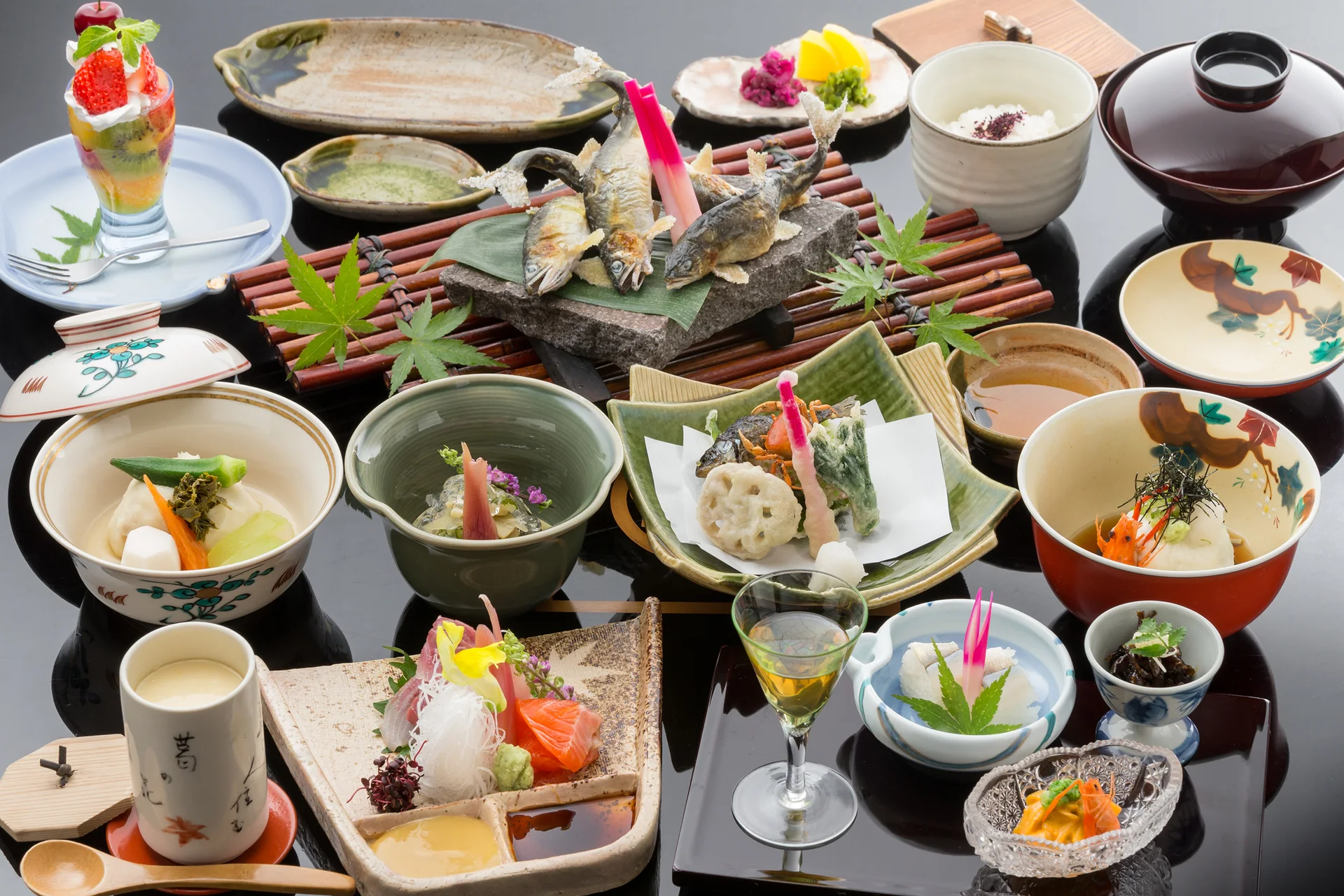
Kyoto’s tourism listing gives May 1–September 30 for the 2026 Kibune kawadoko season, with a reminder that individual restaurants can set different dates. Fujiya’s published menu gives a concrete budget example: the lunch-only Haikazen was ¥7,500 including tax and service, and the summer deck seat carried another ¥1,100 per person. That made ¥8,600 before any extras. The larger kaiseki courses cost more. Fujiya listed dining from 11:00 a.m. to 8:00 p.m., with the last entry at 7:00 p.m. These are one restaurant’s terms, not a price list for the whole village; ask your chosen place what the course includes and whether the deck charge applies if weather moves you indoors.
A riverside reservation is usually made for a specific sitting. Allow for the train-to-bus connection when choosing that time; arriving at Kibuneguchi just before lunch does not mean you will reach the restaurant just before lunch. Some restaurants offer their own shuttle arrangements, but those are venue-specific and should only be built into the day after the restaurant confirms them.
Work backwards from the restaurant’s requested arrival time. The Eizan train timetable gives only the rail leg; Bus 33 and the walk from the stop still stand between the station and the table. Build in a missed-connection margin instead of selecting a train that reaches Kibuneguchi at the meal time. Anyone who cannot stand through a crowded transfer should allow more time and ask the restaurant how far its entrance is from the stop. A confirmed venue shuttle, where offered, changes that calculation, but it belongs to the particular reservation rather than the whole Kibune route.
The bus transfer shapes the day more than the train ride
The usual public-transport route is the Eizan Railway to Kibuneguchi, followed by Kyoto Bus 33 towards Kibune. The rail station is down the valley from the restaurant area, so do not read “Kibuneguchi” as “arrived at lunch.” Extra summer service, temporary changes and mid-August holiday timetables can alter the buses; look up your date in both directions rather than relying on a saved screenshot. Leave Large luggage at your hotel or a suitable station facility. Narrow roads, a bus transfer and busy platforms are an awkward place for a full-size case.
Work out the return before you lose mobile service or get absorbed in the meal. Note at least two suitable departures rather than relying on the last convenient bus. Crowds and traffic can make a tight connection unpleasant even if the printed timetable looks workable. If an evening commitment matters, choose a lunch sitting that still leaves a generous margin after the shrine visit.
Rain can change where you eat
Fujiya says kawadoko guests eat inside when it rains. Kibunesou also cites rain, post-rain high water, strong wind or typhoon conditions as reasons for closing its outdoor deck. A clear forecast in central Kyoto does not guarantee dry or safe conditions beside the river. Before committing to a prepaid course, read the cancellation deadline and ask whether the restaurant decides on indoor seating before arrival or at service time. The food can still be enjoyable indoors, but the place you expected to sit is a substantial part of the purchase.
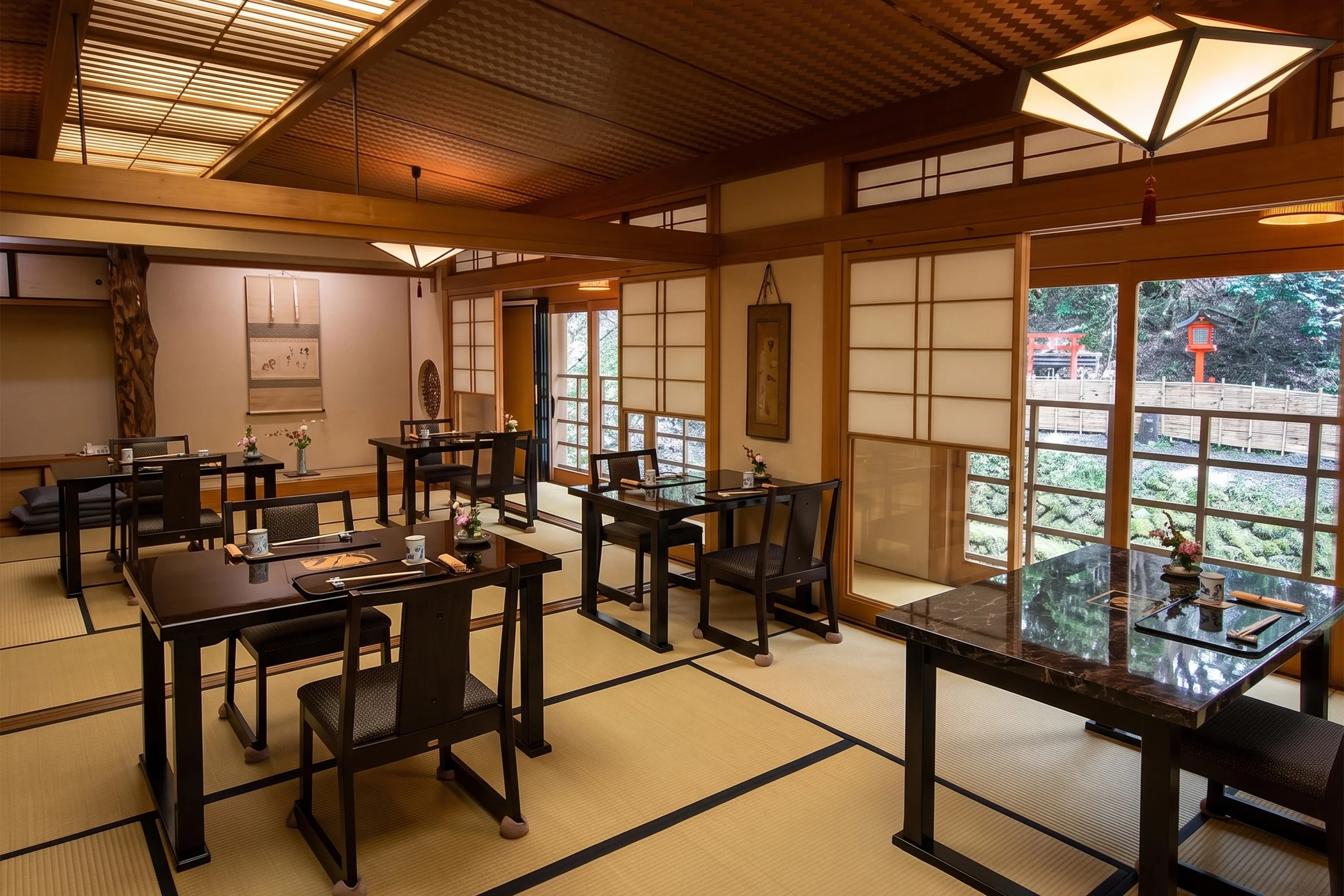
The weather rule is more than a small-print exception. Kawadoko platforms sit directly over or beside a mountain stream, and restaurants must judge whether conditions are safe. A flexible traveller can treat an indoor meal as a different version of the same day. Someone booking specifically for a riverside table should ask the restaurant about refunds and rescheduling before paying, because those terms may differ between venues.
Decide in advance which part of the outing you are purchasing. If the seasonal course is the main reason, an indoor table during rain may still fit the day. If sitting above the water is indispensable, the restaurant’s change and cancellation conditions matter as much as its menu. Avoid treating a dry Kyoto city forecast as a guarantee for the valley. The restaurant controls deck safety, and a guest cannot require it to serve beside the stream when water, wind or rain has made that setting unsuitable.
Make the shrine walk fit the bus home
Kifune Shrine comprises the Main Shrine, the Inner Shrine and Yui-no-yashiro. You can follow the full three-site route if the group has time and energy after lunch, or visit the Main Shrine and turn back. For May 1–November 30, the Main Shrine lists opening hours of 6:00 a.m.–8:00 p.m.; its amulet and seal counter lists 9:00 a.m.–5:00 p.m. The shrine notes many stone steps, which matter if someone in the group has limited mobility or uses a stroller. Decide how far to continue while you still have a comfortable return-bus margin.
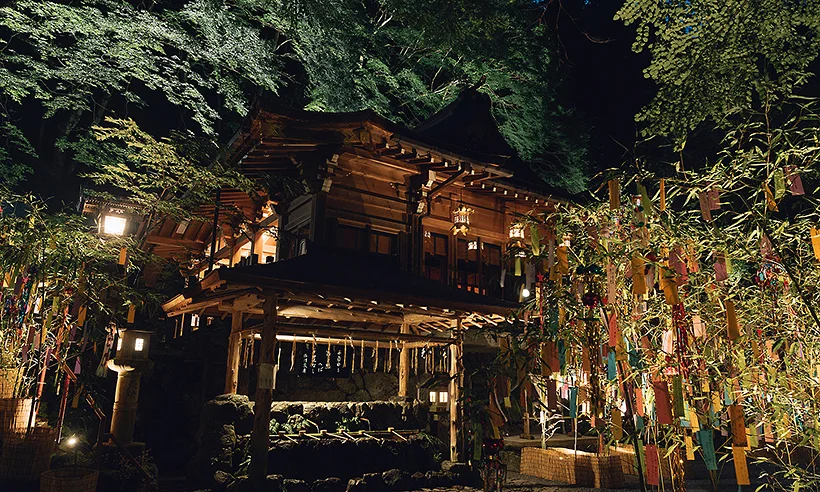
If your evening also includes Kyoto Gozan Okuribi 2026, put its start time and your route back into the same plan. A leisurely shrine walk can be shortened; a missed bus before a timed event is harder to recover.
The Main Shrine is the natural first stop after lunch. Continue to the other two sites if the walk remains comfortable and your return is secure. The full route should not be treated as mandatory: the point is to spend the time you actually have in the valley, without turning the afternoon into a race back to the bus stop.
A workable half-day in Kibune
Keep a Kyoto city base, travel out in the morning, and book an early lunch if you want unhurried shrine time. After eating, choose the Main Shrine or the full three-site walk based on weather and available buses. You do not need to stay overnight for this plan. An overnight is easier to justify when the village itself is the focus and you want a slower evening, not simply because lunch lies outside central Kyoto. If river seating is the only reason for travelling, protect the booking with a cancellation policy you can accept.
Kawadoko, bus and shrine websites
Kibune Fujiya — current kawadoko menus, prices, deck charge, hours and rain policy
Kyoto Bus — Eiden Kibuneguchi Station timetable and Route 33 seasonal service
Related guides: Nara Prison Museum: How to Plan Tickets, the Direct Bus and a Half-Day Visit · Sendai Tanabata Festival 2026: Fireworks, Three-Day Plan and Where to Stay · Avoid Kyoto Autumn Crowds in 2026: Rail Corridors, Early Starts and Hotel Bases · Best Dates for USJ Halloween 2026: Crowds, Prices and Hotels · Kishiwada Danjiri October 2026: Districts, Transport and How to Plan the Day · Miraikan Grand Antarctica Exhibition 2026: Tickets, Highlights and Odaiba Plan · Kyoto Autumn Illumination 2026: Temples, Tickets, Transport and Hotels · USJ Halloween with Kids 2026: Day Plan, Safe Routes and Age Limits · Kochi Yosakoi Accessibility 2026: Wheelchair Seats and Low-Walking Plan · USJ Halloween Horror Nights All Night 2026: Tickets and Plan
The Eizan Railway approach makes Demachiyanagi a practical base for an early Kibune departure. If dinner ends late, check rooms near Demachiyanagi alongside the last return connection instead of assuming you can linger indefinitely.