
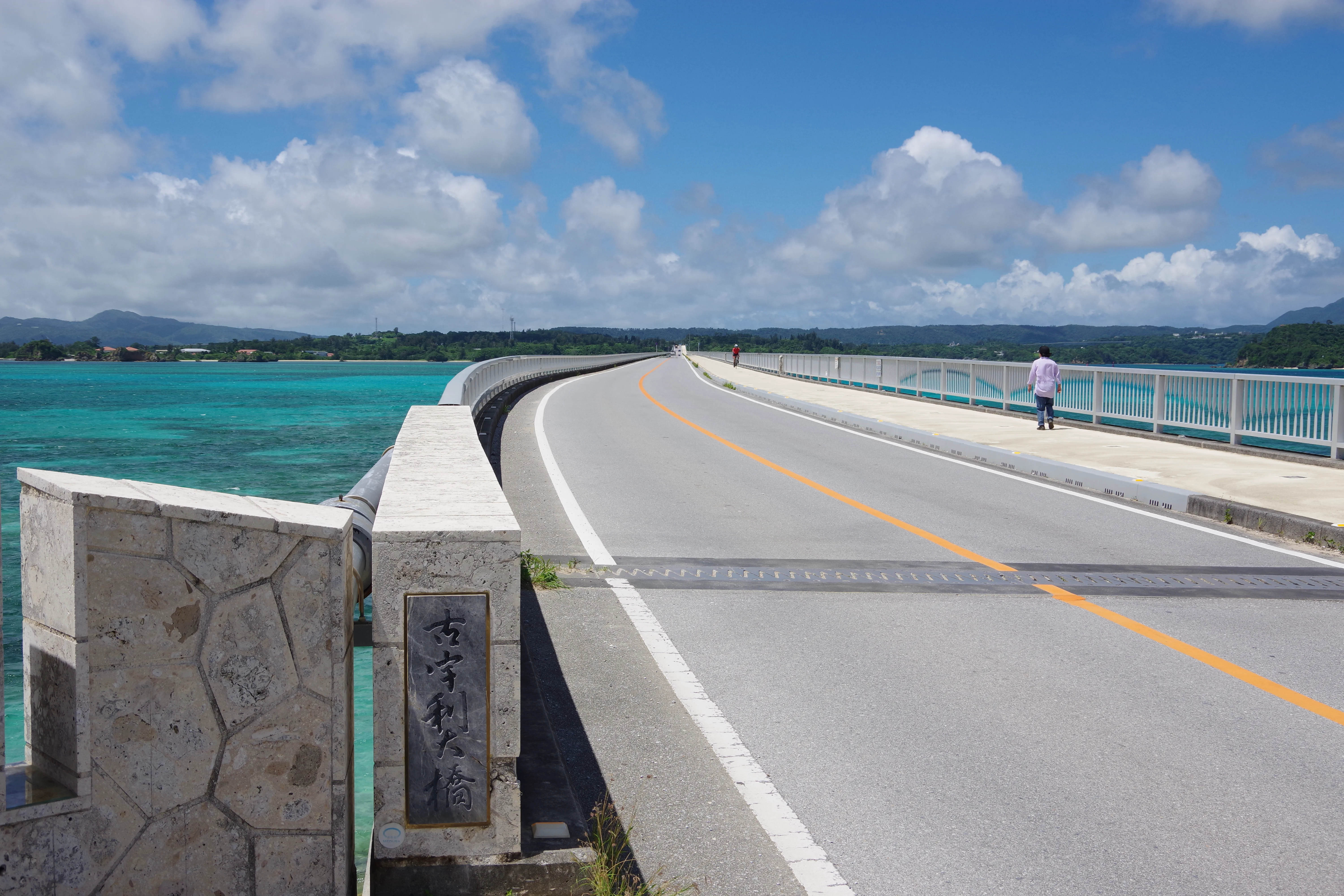
Toyota, OTS and ORIX can each put you on the Okinawa road, yet their airport handovers are materially different. Toyota’s main Naha Airport shop lists a roughly five-minute shuttle and an 08:00–20:00 day. OTS Toyosaki lists about 15 minutes and 08:00–19:00; ORIX’s main airport site lists about 20 minutes and 09:00–19:00. Those are shuttle estimates, not the time from aircraft door to car keys. Match the branch to your landing, destination and return flight before ranking rental rates.
For an early arrival headed straight to Onna, Toyota is a sensible first quote. A city-based first night changes the question: taking the monorail or a taxi into Naha and collecting a car tomorrow may remove a barely used rental day and overnight parking. Families should compare the booked car’s actual luggage space and child-seat fit; drivers worried about damage should put deductible waiver and non-operation charge coverage on the same footing across all three quotes. A cheap headline rate can conceal a different pickup location or weaker protection. The broader decision is mapped in Okinawa car versus public transport.
↔ Scroll table left or right
Trip need | Compare first | What works | Confirm before paying |
Daylight landing and immediate drive north | Toyota Naha Airport | Around five minutes by free shuttle; listed 08:00–20:00 | A delayed arrival after closing shifts collection to the next business day |
Local office service and protection choice | OTS Toyosaki | Okinawa branches, Safety Pack tiers and ¥1,100 child seats | About 15 minutes from the airport; Toyosaki closes at 19:00 and off-hour service is suspended |
City collection or useful one-way pairing | ORIX branch network | Main airport, Annex and city options can shorten the paid rental | Main airport shuttle is around 20 minutes; Annex will not take a one-way return |
Easy deductible and NOC comparison | Toyota Double Protection | Ordinary-class ¥1,650/24h combines waiver and NOC relief | Exclusions and a new rental contract after serious damage remain possible |
Two seats for small children | Check OTS add-ons | ¥1,100 per seat versus Toyota and ORIX infant/child options at ¥1,650 | Stock, restraint category and usable luggage room decide the booking |
The airport handover depends on the branch and the clock
Toyota directs Naha Airport customers to rental shuttle stop 11-A and gives about five minutes for the ride to its main airport shop. Its listed opening window is 08:00–20:00 every day. Add baggage reclaim, reaching the stop, waiting for the next vehicle, paperwork and the car check before planning the first drive. Flight information belongs in the reservation because the shop needs to know which arrival it is serving.
The five-minute figure is most useful for a midday arrival, when a delay is unlikely to cross closing time. On an evening arrival, distinguish the scheduled landing from the moment you can actually present yourself at the counter. Toyota’s reservation terms say that a flight arriving after the shop has closed leads to pickup during business hours the following day. A booking does not extend the working day.
OTS’s Toyosaki main office is farther away by its stated transfer estimate, about 15 minutes, and lists 08:00–19:00. ORIX’s main Naha Airport Rental Site gives about 20 minutes by shuttle with 09:00–19:00 service. ORIX also has a separate Naha Airport Annex at Akamine, open 08:00–20:00 and about eight minutes on foot from Akamine Station; it is not the same shuttle-and-return product as the main airport site. Check the exact shop name on any comparison listing.
An arrival scheduled around 17:30–18:00 leaves little room for a delay at a 19:00 shop, especially with checked bags. Treat that as a planning warning rather than a universal cutoff: only the rental branch can confirm its handover terms for your flight and date. OTS currently states that its off-hour service is suspended, despite older passages on the same site describing an after-hours collection option. Do not build an evening itinerary around that older option. For a missed evening pickup, consider a Naha Airport-area hotel.
A Naha first night can make the airport pickup unnecessary
If tonight’s bed is in Naha and the first outing is also in the city, paying for a car immediately has a weak case. Yui Rail or a taxi handles the airport leg, and a later collection near your hotel starts the rental when you actually need road access. This also avoids a left-side drive after a flight and the parking decision on the first night. The car-free alternative is a two-day Naha route by rail and on foot.
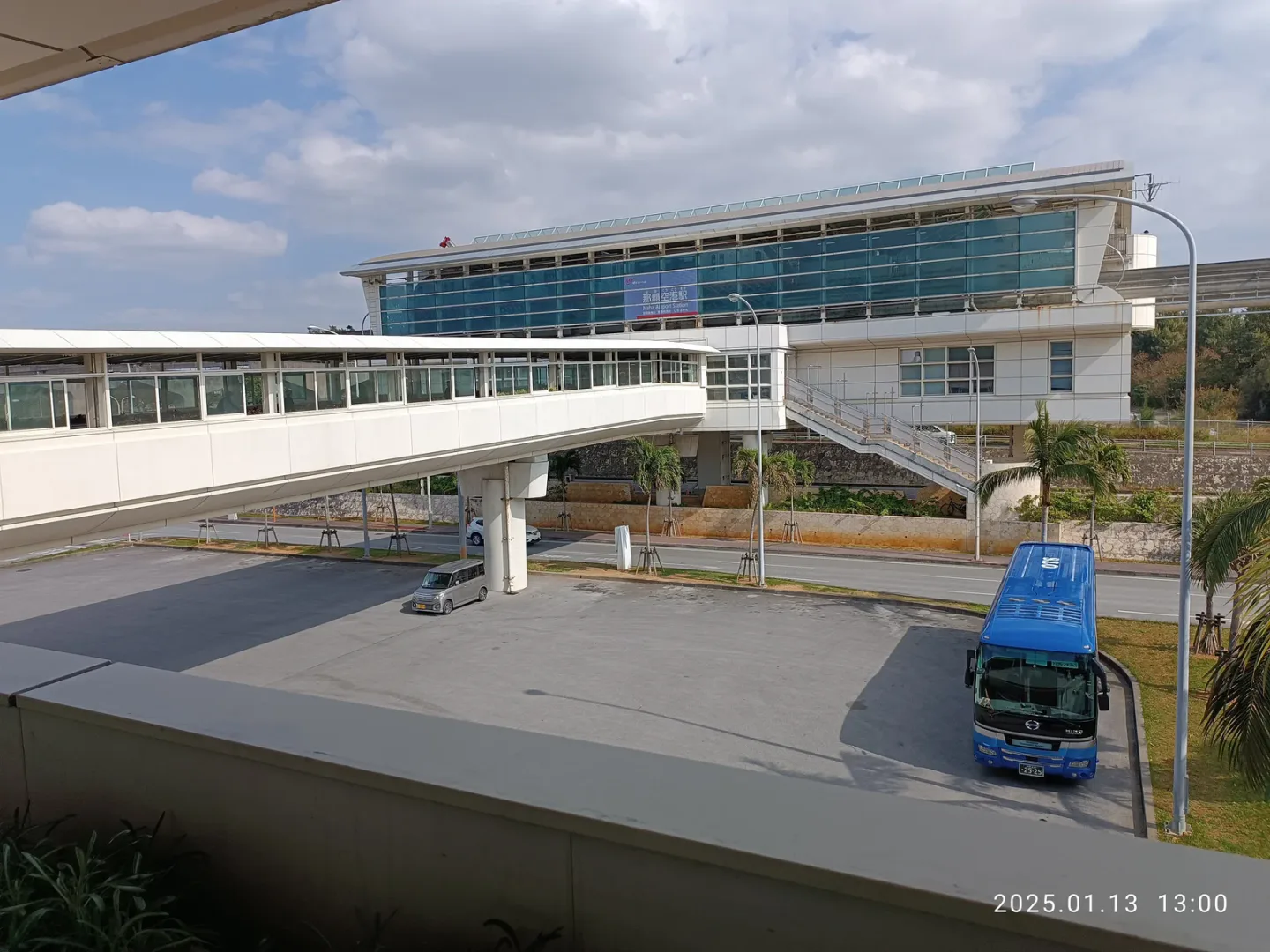
Check the total rather than only the day rate: an airport rental may add the shuttle handover, a car day with no sightseeing use, and hotel parking. A shorter city pickup may cost more per day yet less for the trip. Toyota, OTS and ORIX all offer Okinawa branches beyond their primary airport desks, so compare the location, hours and one-way rule for the specific shop you would use. One itinerary that makes this split work is five days through Naha, Onna and Churaumi.
If you are sleeping in Onna, Nago or Motobu on arrival night, the answer often flips. The car replaces a northbound bus or private transfer right away and is useful when the hotel is away from a convenient stop. The choice of rental duration should follow the hotel sequence, not a default assumption that every Okinawa day needs driving. The final-night trade-off is explored in Onna versus Naha.
Compare what damage protection actually removes
The package names are different enough to obscure the bill. Translate each quote into three questions: what deductible remains after a collision, whether a non-operation charge is waived, and what happens to a punctured tire or a vehicle that cannot continue. Check the exclusions too; a package called “full” is still bound by the rental agreement and the steps required after an accident.
Deductible: the part of an insured property or vehicle claim you can owe until an optional waiver removes it.
Non-operation charge (NOC): a separate business-interruption bill while a damaged or soiled car cannot be rented.
Roadside and tire terms: towing distance, punctures, replacement tires, wheels, keys and later accidents can each have different limits.
Toyota’s ordinary passenger-car deductible waiver is listed at ¥1,100 for each 24 hours. Add ¥550 per 24 hours for its Double Protection Package, making ¥1,650 at that class level. The package combines deductible and NOC relief and covers specified tire and hubcap costs. It does not pay for every loss: prohibited use, failure to report an accident or a new rental contract after an unusable car can still create costs.
ORIX divides these functions between CDW and its Rental Car Assistance Pack. For many ordinary classes the current rates are ¥1,100 and ¥660 per 24 hours respectively; larger classes have higher rates. CDW addresses the property and vehicle deductibles. RAP removes the NOC in covered cases and lists tire help, up to one extra return hour within business hours with advance contact, and a more generous early-return refund, subject to the stated conditions.
OTS’s Okinawa Safety Pack has Basic at ¥660, Premium at ¥1,210 and VIP Premium at ¥2,310 per 24 hours on its current schedule. The tiers differ on tire replacement, towing, a second accident and the cost of a replacement rental after damage. Its online FAQ also says the displayed reservation estimate is conditional on deductible-waiver coverage. Read the final booking breakdown before comparing an OTS total with Toyota DPP or ORIX CDW plus RAP.
Compare one vehicle class and one risk level at a time. If one offer is ¥500 less per day but leaves a ¥20,000 or ¥50,000 NOC exposure that the other waives, the headline saving is describing a different purchase. The right choice depends on the final price, contract exclusions and how much financial risk you are prepared to retain.
Two child seats change the cabin as well as the bill
Children younger than six need a suitable restraint under Japanese rules. Reserve the correct baby, child or junior seat when booking; an operator may refuse handover if a child who needs a seat has none. Check the child’s size against the company’s seat categories, then fit the luggage calculation around the installed seats rather than the vehicle’s nominal passenger number.
OTS lists ¥1,100 for each child safety seat. Toyota lists ¥1,650 per rental for baby or child seats and ¥1,100 for junior seats. ORIX lists ¥1,650 for baby and infant categories and ¥1,100 for its older-child category. These are current published add-ons, not proof that the needed seat is available at the branch on your dates. Reserve early and confirm the category.
Two infant seats create a ¥1,100 published add-on advantage for OTS over two ¥1,650 seats. That saving disappears quickly if the vehicle class is too small and a costly upgrade is needed. Toyota explicitly cautions that a child seat uses more room than one seat position might suggest; the family’s last-day load is the better sizing test. The family packing problem gets its own treatment in the car-seat, boot and nap-window road trip.
Picture all passengers and their largest bags inside the car at once. Four adults, two installed child seats, a stroller and four large suitcases may not fit a “seven-seater” once its rear row is in use. Ask for class-level baggage guidance, measure the stroller when folded and allow for the items you collect during the trip. A model substitution can change boot geometry even within a booked class.
ETC has three separate parts: reader, card and toll
OTS says its cars have ETC readers and offers card rental. Toyota fits readers to ordinary passenger classes with some model or area exceptions and currently lists an ETC card at ¥550 per rental. ORIX lists the card at ¥550 at participating shops. Confirm card stock at your exact branch, especially if a third-party booking page bundles or omits accessories.
The in-car reader does not pay the expressway bill. A rented ETC card records use, and the actual tolls are settled separately at return. It is valuable when you repeatedly take the Okinawa Expressway toward Onna, Nago or the north; a mostly urban Naha stay may not justify much driving at all. Ask how the card is returned and how toll charges appear on the final receipt. Put those add-ons beside the five-day Okinawa budget.
A partial rental is often a branch problem, not a price problem
A five-night stay can contain only three car days. If the first two days are in Naha, a city collection later may be less tiring and cheaper overall than holding an airport car while walking or riding the monorail. Work from the itinerary to the branch network: pickup and return points can create or remove a long, empty transfer. The alternative is a five-day route without a rental car.
Toyota lists shops at Naha Airport, Naha Airport Seaside, Omoromachi, Chatan and Nago among its main-island locations. OTS lists Toyosaki, Omoromachi and additional regional offices. ORIX has its main airport site, the Akamine Annex and other Naha-area, Chatan and Onna options. A branch name on a rate comparison is not interchangeable with another branch from the same company; hours, shuttle access and drop-off permission can differ. Hotel geography can be checked with the Okinawa area guide.
ORIX’s Annex illustrates the difference. It currently accepts one-way departures on Okinawa’s main island but does not accept one-way returns. Its main Naha Airport site permits both departure and return within the main island under its published rule. Before paying for a city-to-airport or airport-to-resort combination, make sure the booking path offers the exact pair of branches you intend to use. Parking becomes clearer in the self-drive hotel comparison.
A passenger number is not a luggage measurement
ORIX publishes class-level luggage estimates; its ordinary five-seat class, for example, gives room for roughly two or three guideline-size cases. Those figures are estimates and actual models can differ. Use such guidance to reject a clearly undersized class, then ask the operator about a named model or dimensions if your load is close to the limit. The northern mileage is illustrated by the Churaumi timing and hotel-base decision.
Five seats do not mean five adults and five full-size cases will travel comfortably. A minivan can gain passenger places by sacrificing boot volume when the third row is raised; an SUV label does not promise a square, usable cargo bay. Have every traveller count their largest case, carry-on, stroller or bulky sports bag before picking the class.
With two adults and two large 28–29 inch suitcases, compare a class above the smallest economy car unless you know the precise model and boot space. Four adults with four large cases often need a wagon or minivan comparison, and even that deserves an operator check. Paying for a little more cargo room prevents bags spilling into the passenger cabin and the daily struggle to repack the boot. It can cost less than solving an unusable car at the counter or booking a second taxi for luggage.
An evening flight can erase a cheap airport booking
Toyota’s Naha Airport listing states the operational consequence plainly: when flight delay pushes arrival beyond business hours, the vehicle becomes available in the next business-day window. Its 20:00 closing is later than the two other main airport offices discussed here, but it is still a closing time. Use the actual landing time and likely airport exit, not the timetable alone.
OTS Toyosaki and the main ORIX airport site close at 19:00 on their current pages. OTS’s page contains old text about late-flight pickup alongside a notice suspending off-hour service until further notice; the suspension governs a cautious plan. ORIX’s Annex has a later 20:00 service window, though its location and one-way restrictions are different. Ask the exact branch how it handles your flight number and delays. Families with older travellers can also use the walking-friction hotel test.
If the pickup would collapse after a modest delay, book a Naha night and start the rental tomorrow, or arrange a northbound transfer that does not depend on an evening handover. Include the hotel, taxi and a shorter rental period in the comparison. This may cost more than a best-case airport quote but avoids an unplanned overnight stranded between airport and resort.
Return time should be worked back from check-in
Begin with the airline’s bag-drop or check-in target. Before that come the rental shuttle, vehicle inspection, refuelling, reaching the branch and a traffic allowance. A contract return time is not an airport arrival time. Put each step on a real timeline, especially when the last hotel is in Onna or farther north.
Toyota’s approximate five-minute transfer, OTS’s 15-minute transfer and ORIX main site’s 20-minute transfer are different starting points, and none includes shuttle waiting or unexpected traffic. OTS Premium lists a one-hour late-return allowance within business hours; ORIX RAP has its own advance-contact and business-hours conditions. Those terms can soften a small delay but are not a reason to plan a tight flight connection.
A final-morning boat, dive or long northern outing adds another variable. Weather, road conditions or a delayed activity could consume the branch-return buffer. If a flight is fixed, protect that departure first; move the marine activity to an earlier day or spend the last night close enough to make the return predictable. Before booking a sea activity, compare Blue Cave boat and shore departures. Kerama outings have their own departure and activity choices.
Which company fits the trip you are actually booking?
Toyota: a clear daytime airport start
Price Toyota first when an ordinary daytime landing is followed by a direct drive north. The main Naha Airport branch combines the shortest published shuttle of these three main sites with an 08:00–20:00 window. Its ¥1,650 ordinary-class Double Protection comparison is easy to understand. Confirm the specific vehicle class and note the next-day consequence if a delayed flight misses closing.
OTS: Okinawa branches, seat costs and protection tiers
OTS is a strong alternative when its local office network, tourist-oriented service or Safety Pack options fit your route. Its published child-seat fee is lower than the other two infant/child-seat rates used here, and Premium adds more than a deductible waiver. At Toyosaki, the roughly 15-minute transfer and 19:00 closing matter. Do not count on after-hours collection while the operator says that service is suspended.
ORIX: use the branch map to shape a partial rental
ORIX deserves particular attention when an Annex or city pickup, a one-way pattern, or an available class improves the itinerary. Its main airport site and Akamine Annex have different service windows and drop-off permissions. CDW and RAP are priced separately, making a like-for-like risk comparison possible. The main airport shuttle is the longest of the three stated estimates, so include that in arrival and departure timing.
Four sample itineraries expose different winners
Arrive at 13:00 and drive to Onna: price Toyota first for its short listed airport shuttle, then compare OTS and ORIX at the same class and coverage. A shorter trip has different route pressure in the four-day itinerary.
Land at 18:30 with checked baggage: calculate the actual shop arrival after the airport exit and shuttle. A Naha hotel and next-day pickup may survive a flight delay better than any 19:00 closing branch.
Travel with two infant seats: OTS currently saves ¥1,100 on two seat add-ons versus two ¥1,650 options, provided its available car can carry the children, adults and luggage.
Spend two days in Naha before a three-day road trip: compare city pickup rather than paying for an airport car that sits parked while you use Yui Rail.
Compare the same class, pickup shop, return shop and protection level before booking. A rental aggregator can help expose the total, but open the supplier’s branch terms when arrival is late, one-way return is needed or two seats must be fitted. The cheapest filter result may be solving a different transport problem. Compare rental prices for matching dates and vehicle classes.
The booking check that matters most
For a normal daytime airport collection followed by a northbound drive, Toyota is a useful first price check. OTS becomes more compelling when its seats, Okinawa office network or Safety Pack fit the party. ORIX can win when the chosen branch and one-way arrangement save an otherwise wasted rental day. None wins solely because its logo appears at Naha Airport; the actual shop determines the handover. The wider sequence appears in the first-time Okinawa itinerary.
Before payment, write down five contract details: branch pair and opening windows, collection and return times, vehicle and real cargo needs, seats and ETC, and the exact deductible/NOC/tire coverage. Compare final prices only after those match. If a flight lands near closing, confirm the branch’s delayed-arrival rule or move the collection to the following morning. That single decision can matter more than a small daily-rate difference. The lodging fallback is mapped in the airport-area hotel guide.
Okinawa routes and family-car planning
Do You Need a Car in Okinawa? · Okinawa 5-Day Self-Drive Itinerary · Naha 2-Day No-Car Itinerary · Okinawa Family Road Trip With Kids
Branch rules and protection details
The details above are published in the OTS Rent-a-car offices; OTS Safety Pack Series; OTS child seats; Toyota’s Toyota Rent a Car Naha Airport shops; Toyota insurance and Double Protection Package; ORIX Naha Airport Rental Site; ORIX insurance, CDW and RAP. Confirm the selected shop and rate at booking, as branch schedules and optional fees can change.
Related guides: Okinawa Blue Cave Snorkeling: Boat vs Shore Entry — Which Should You Book? · Best MiraCosta Room: Which View, Balcony or Terrace Should You Book? · Niseko Lift Passes, Ski Rentals and Lessons: What Should You Book? · Hachinohe Sansha Taisai 2026: Aug 1, 2 or 3? Which Main Festival Day Should You Choose? · Dazaifu vs Itoshima: Which Fukuoka Day Trip Should You Choose? · Fukushima Waraji Festival 2026: Aug 7, 8 or 9? Which Day Should You Choose? · Fujiya Hotel Hakone: Which Building and Room Should You Choose? · teamLab Borderless vs Planets: Which Tokyo Museum Should You Choose? · Niseko vs Furano vs Rusutsu: Which Hokkaido Ski Resort Should You Choose? · Aomori Nebuta vs Hirosaki Neputa After 2026: Which Festival Should You Choose Next Time?
A late pickup or early return can make the first or last hotel night more important than a small rental-price difference. Check rooms around Naha Airport against the branch hours and the drive you have planned.