
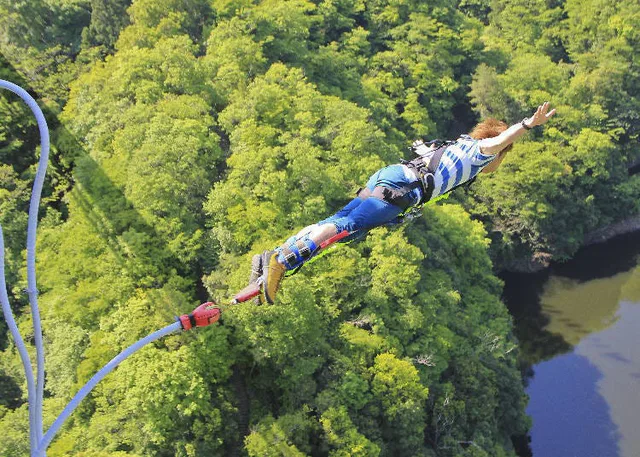
Ryujin Bungy is a serious use of a Tokyo day, even though the jump itself lasts only moments. The bridge in Ibaraki has a 100-metre drop, and Bungy Japan currently charges ¥19,000 for a first jump, including GoPro rental and its data. Getting there and back is the larger planning task. A driver can book the jump and build an independent day. A traveller who does not want to coordinate sparse rural buses may pay more for a Tokyo tour that handles transport. Decide whether the leap matters enough to justify the full excursion before comparing those ways of reaching it.
The jump booking and the journey carry separate risks. Bungy Japan may stop operations for unsafe weather or river conditions; when it does, the jump cancellation fee is waived, but the company does not reimburse travel, hotel or rental-car expenses. A tour may have its own cancellation policy. Build the day so that an Ibaraki outing still has some value if the jump cannot go ahead, and avoid attaching another non-refundable commitment to the expected return to Tokyo.
↔ Scroll table left or right
Travel constraint | Useful arrangement | Consequence |
The bridge jump is the reason to leave Tokyo | Secure a Ryujin slot before choosing transport | The check-in time controls the rest of the route |
A confident driver wants only the activity | Direct booking with a hire car | Stops and travel pace remain under your control |
No driver and the Hitachiota connection is awkward | Compare a Tokyo departure tour | Its vehicle can remove the fragile local transfer |
Any Japanese bungy would satisfy the trip | Compare sites and travel geography | Gifu has a higher 215-metre drop but needs a different journey |
Only a few full sightseeing days in Tokyo | Rank the leap against a city day | The excursion occupies far more time than the jump |
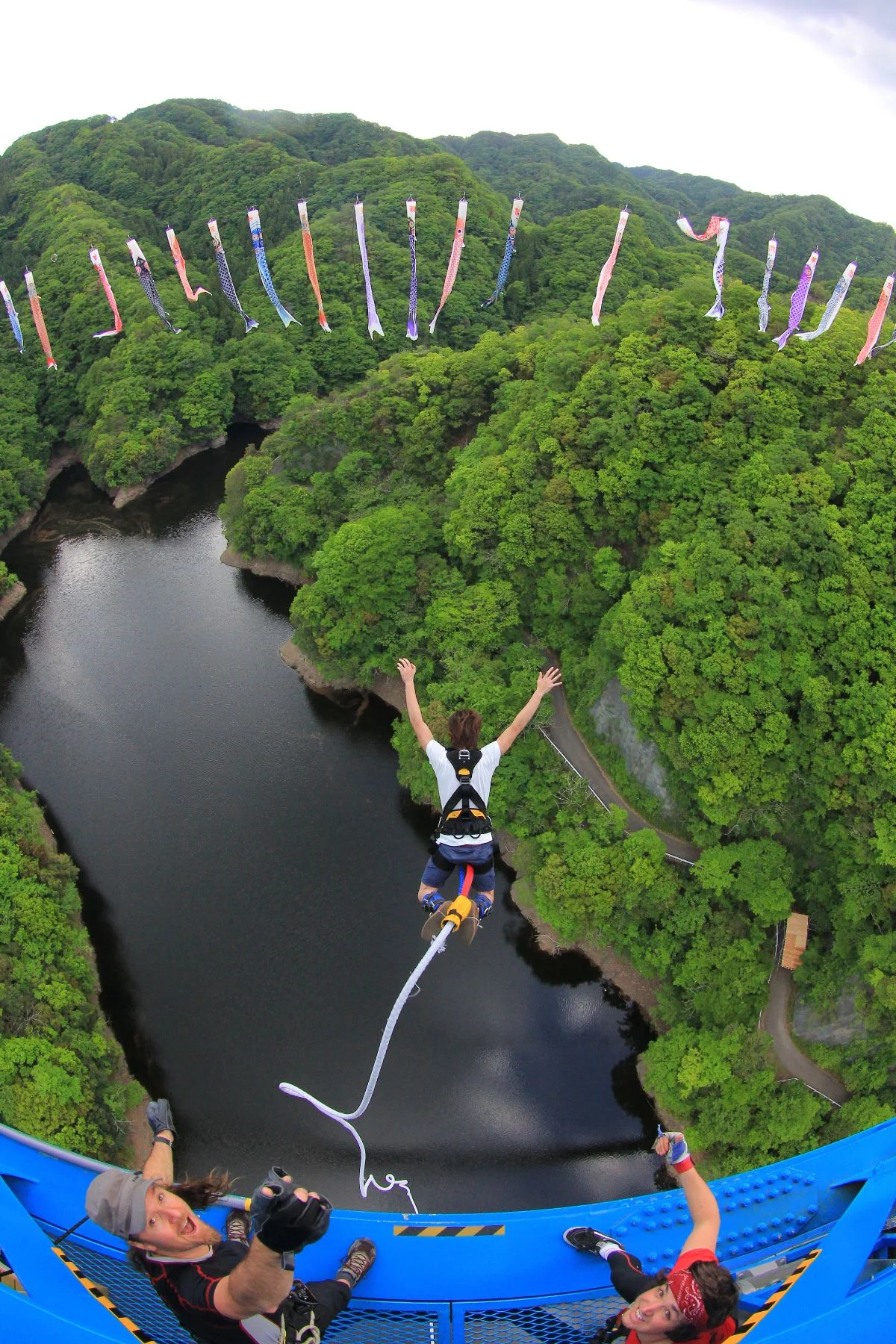
The ¥19,000 jump and what comes with it
Bungy Japan lists ¥19,000 for a first Ryujin jump. A second jump on the same day is ¥8,000, while a later repeat jump is ¥11,000 under the operator's repeat-jumper conditions. GoPro rental and data are included in the current Ryujin offer. These figures are for the activity itself; they do not cover a train, bus, hire car or Tokyo-departure tour unless a seller explicitly bundles those items. Check the selected date and package before paying for transport around the reservation.
The included camera changes the price comparison. There is no reason to add an assumed photo fee to a standard first jump while the operator lists GoPro and data as part of it. A tour's higher price might buy a vehicle, a guide, extra stops or convenience, rather than a better jump. Read what its stated price includes. If the jump fee is payable separately on arrival, the booking summary should make that clear and you need the cash ready.
A second jump is mainly relevant once you are already there and know you want another. Its lower same-day price does not justify travelling to Ibaraki twice or booking a long tour solely to maximise jumps. The first decision is whether the 100-metre bridge experience is worth this particular day; the repeat option is a choice after you have completed the first one and the operator can accommodate you.
Bring yen for the on-site payment
The Ryujin page currently states that payment on site is cash only; it does not have credit-card facilities. Two first-time jumpers therefore need ¥38,000 for the jumps alone, while four need ¥76,000, before food, transport or any spectator fee. Do not assume that an online reservation means the activity has been fully charged to a card. Confirm the payment terms of any tour as well: a prepaid vehicle may still leave the bungy fee to be settled at the bridge.
Arrange the cash before leaving Tokyo, especially if the group will travel by bus and arrive close to its booking slot. An ATM detour in a rural area is a poor use of a narrow arrival window. Keep some funds aside for the return journey and meals instead of treating the first-jump total as the entire day's spending. If the operator changes its payment methods, rely on the terms attached to your own booking.
Participation rules can settle the decision immediately
Ryujin requires participants to be at least fifteen years old and between 40 and 105 kilograms. Anyone under eighteen must have the specified parent or guardian permission, either through accompaniment or a signed waiver arranged in advance. Pregnant visitors cannot jump. The operator lists health conditions that require discussion before booking; if one applies, contact its team rather than trying to judge eligibility from a travel article. These rules should be resolved before buying a remote transport layer.
Bungy Japan also bars anyone who has consumed alcohol on the day of the jump. Keep a drinking lunch or brewery stop after the activity, not before it. The rule is about the day, so a small drink is not a useful exception to assume. If the group plans a meal in Ibaraki, choose a food stop that does not jeopardise anyone's booked jump.
The operator's written decision is the one that matters for a medical condition, recent injury or accessibility need. Tell the team what is relevant before reserving a tour or car. A long journey to the bridge cannot make an ineligible jumper eligible, and a tour seller's generic activity description may not contain every site-specific condition.
Rail and bus work, but the last connection is sparse
Bungy Japan identifies Hitachiota on the JR Suigun Line as the nearest station. From there, an Ibaraki Kotsu bus serves the Ryujin Otsuribashi stop, roughly a minute's walk from reception. The operator warns that only three or four buses a day reach the bridge; a taxi from Hitachiota is its alternative when the bus does not fit. That is the fragile part of a Tokyo public-transport day. Plan the outward and return legs against the jump slot before choosing this route.
A Tokyo-departure tour reduces the number of changes you manage yourself. It can be worthwhile for a non-driver who would otherwise coordinate intercity rail, the Suigun Line, a sparse local bus and a fixed reception time. The tour does not make the jump safer or guarantee that weather will permit it; it changes the transport workload. Compare its meeting point, arrival margin, return time and any extra stops against the cost of a direct booking plus independent travel.
If trains in Japan are comfortable for you, the main unresolved part may be the local bus rather than the whole journey. Calculate the fare and time of a taxi from Hitachiota as a backup. An expensive day tour may be sensible, but it should solve a concrete timing or driving problem for your group. Do not pay for it simply because the train map contains unfamiliar station names.
Driving controls the final approach, not the entire day
A car removes the local-bus wait and lets you set the rest of the Ibaraki route. The approach still needs a buffer for expressway traffic, navigation and busy parking near the bridge, especially in foliage season. Bungy Japan notes that the top parking areas can fill in peak periods and asks guests to arrive fifteen minutes before the reserved slot. Work backward from that reception time rather than aiming to park at the jump hour. If the group is new to driving in Japan or dislikes a long return after an intense activity, transport convenience should be weighed against that effort.
Count tolls, fuel, rental time and parking movement in the full cost. After the jump, leave space for food or rest before a long drive back toward Tokyo. A car can also preserve the day if weather stops the activity, allowing another Ibaraki stop without waiting for a rare bus. That flexibility is useful only if the group actually wants to drive and the additional places are open at the time.
Two cancellations have different consequences
A traveller withdrawing from a booked jump faces different terms from an operator stopping the site for safety. Read both sections of the reservation conditions, especially if the group includes several jumpers or a tour company controls the transport. The expected total loss can include items outside the bungy ticket.
For a participant cancellation, Bungy Japan currently charges half the normal fee when the jump is cancelled the preceding day and the full fee on the day. Partial group cancellations are covered too. A discounted reservation may be assessed against the standard price. The separate tour or hire-car booking may impose another fee, so do not assume one cancellation policy governs every part of the outing.
If the operator cannot provide a safe jump because of severe weather, a sudden river rise, maintenance or inspection, it says no bungy cancellation fee applies. Ordinary rain alone does not necessarily stop operations. Travel to Ryujin, accommodation and a rental car are not reimbursed by Bungy Japan, even when the decision occurs after arrival. That is why a long-distance jumper should leave the rest of the day flexible and read any tour operator's refund terms separately.
Fukuroda Falls or another Ibaraki attraction can make a cancelled jump day less empty, but only if the group genuinely wants to visit it and can still reach it. Do not invent a fallback just to rationalise the long journey. A flexible meal and a scenic stop may be enough. The right buffer is practical: a day that can absorb the site's decision without also sacrificing a flight, important dinner or other fixed Tokyo plan.
A wet forecast does not settle the jump
The operator says it jumps in ordinary rain and may stop when conditions make recovery or the site unsafe, including a typhoon warning or sudden river change. You cannot reliably infer the decision from a generic weather icon several days ahead. Check the booking communications and current site status, and keep a phone number the operator can reach if it calls off the session. Bring clothing suited to the forecast while leaving the safety decision to the team on site.
Do not put a non-refundable evening immediately after the estimated return from Ibaraki. Traffic, public transport and the operator's decision can all alter the timing. A later dinner in Tokyo is easier to keep than a timed show. If the jump is cancelled, let the group choose between a short Ibaraki visit and an earlier return rather than forcing every backup into the original schedule.
When a Tokyo tour earns its premium
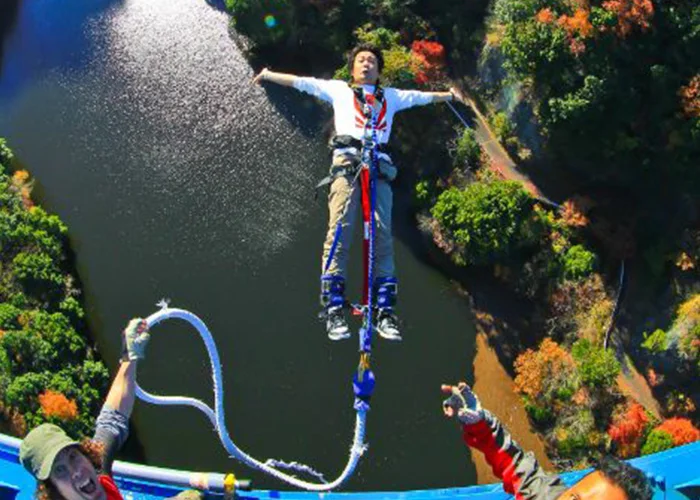
A day tour makes most sense for a traveller who will not drive, wants the 100-metre jump badly enough to give it the day, and does not want to manage the Hitachiota connection. The vehicle and timing coordination become the thing you purchase beyond the bungy. Compare the tour's total from hotel or meeting point to return, not just the advertised activity time. Confirm whether the ¥19,000 jump is included or payable separately.
The premium is harder to justify when you want only the jump and the package inserts stops you would skip. It also loses convenience if you must cross Tokyo very early to reach the tour's meeting point. A direct operator booking with a car or a carefully timed train may fit better. If you do take a tour, inspect the arrival buffer and its response to a safety cancellation; transport can still be provided even when the jump cannot proceed.
For your Tokyo hotel, judge the full itinerary rather than moving rooms for a single tour departure. Our Tokyo Station and Shinjuku comparison weighs two practical bases; the broader Tokyo neighbourhood guide covers other areas. A convenient meeting point is useful, but it should not dictate every night of the stay.
Ryujin is not Japan's tallest bungy
The Ryujin drop is 100 metres. Bungy Japan currently lists Gifu Bungy at 215 metres, so an old superlative about Ryujin's height would be misleading. That comparison does not make the Ibaraki jump small; it changes the question. A Tokyo-based traveller may find the 100-metre bridge easier to include than a separate Gifu journey, while someone planning a dedicated highest-jump trip should compare the two locations and their eligibility rules directly.
Height alone does not determine the right day. Consider the route from the rest of your Japan itinerary, the cost of reaching each bridge and whether you want the particular setting. If the decision is whether Ryujin deserves one Tokyo day, the distant Gifu site may not be a practical substitute. If the decision is which single bungy to plan a whole trip around, the difference in drop and travel geography matters more.
When to leave Ryujin off the plan
The trip has too few Tokyo days to spare and the jump ranks below places you already want to see.
An age, weight, health or alcohol rule prevents a participant from joining the jump.
Losing the cost of transport after a safety cancellation would make the excursion unacceptable.
A full rural outing sounds tiring when the group wants only a brief activity.
The booking rests on the mistaken idea that 100 metres is Japan's current height record.
Give the jump a full day only if it ranks above the Tokyo time it replaces. Book the activity directly when your group can handle the Ibaraki journey, whether by car or a carefully timed rail-and-bus plan. Pay for a Tokyo tour when its transport coordination removes a problem you would otherwise struggle with. In every version, check eligibility, cash payment and the operator's weather decision before building the rest of the day around a fixed jump time.
The current first-jump offer includes GoPro data for ¥19,000, but that does not make the whole excursion a ¥19,000 purchase. Add the route, food and any tour or car cost; leave room for a cancellation that refunds the jump but not your travel. If that total feels disproportionate to the importance of the 100-metre leap, choose a Tokyo day you want more instead.
For a short Tokyo stay, Ryujin is a deliberate trade: a 100-metre jump in exchange for most of an Ibaraki day. The activity price is clear, yet the transport and cancellation exposure depend on the route you build. Put those pieces together before deciding whether to reserve a place on the bridge.
An overnight is useful only if you have another reason to remain in Ibaraki after the jump. In that case, compare stays around Hitachiota before committing to a long return to Tokyo.
Booking details and conditions
Ryujin prices, access and participation rules · Jump conditions and cancellation terms · Booking and arrival questions.
If you travel independently, allow enough time to reach reception before the booked slot and to leave after the jump. A late arrival can affect participation, and the last bus should never be assumed to wait. Confirm the conditions attached to your reservation and keep the return route accessible on your phone even if the outbound journey runs smoothly.
Related guides: A Mount Fuji Day Trip from Tokyo Can Buy You Transport — Not the View · Okutama Rafting 2026: Tokyo Full-Day Tour vs Local Half-Day — You're Paying for Transport · FUTURE OF LIFE+ at Takanawa: What Changed from Expo 2025 and How the 45-Minute Tokyo Experience Works · Early Shinkansen from Osaka: Should You Stay in Shin-Osaka or Move Only for the Last Night? · Kamakura Day Trip from Tokyo: Is It Worth Adding to 4 Days? · Tokyo National Museum 2026: Which Ticket Should You Buy? · Tokyo Disney Tickets 2026: Choose Disneyland or DisneySea Before You Buy 2 Days · Before You Buy a 2-Day Huis Ten Bosch Ticket, Check Your Hotel—Day Two May Already Be Included · Kansai Airport to Osaka: The Fastest Train Can Still Leave You Farther From Your Hotel · Tokyo Honeymoon Hotels: Don’t Pay for the View Until You Pick the Night You’ll Stay In
Tokyo Itinerary 2026: 4, 5 or 7 Days — What Changes When You Add Disney or a Day Trip?
Tokyo Luggage Storage: Don’t Pick the Biggest Station — Pick Where You’ll Need the Bag Next
Warner Bros. Studio Tour Tokyo Tickets 2026: Buy the Time Slot Before the Upgrades
Kishiwada Danjiri October 2026: Districts, Transport and How to Plan the Day
Tokyo Attractions Map: Which Areas Actually Belong on the Same Day?