
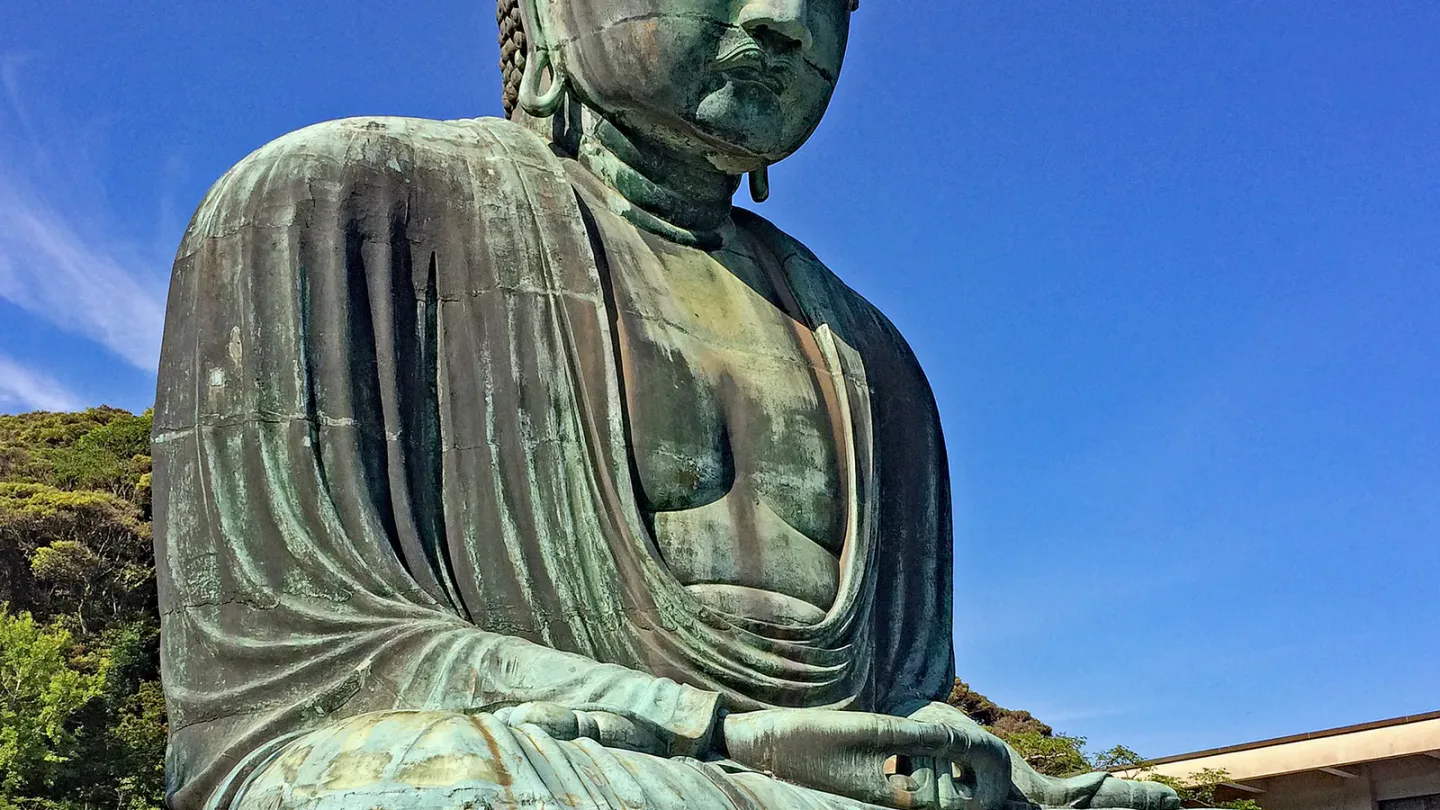
Kamakura can be reached from Tokyo without changing hotels, but the short train journey is a poor measure of the day it takes. Hase, the Great Buddha, central Kamakura and the coast are not all beside one station. On a four-day first visit, you may have only two full sightseeing days after arrival and before departure. Giving one to Kamakura then means giving up a substantial part of Tokyo, not squeezing in an extra attraction. If temples and a change of setting are already priorities, the trade can be worthwhile. If you still want broad time in Tokyo's neighbourhoods, save Kamakura for another visit.
The fair comparison is a whole Kamakura day against the particular Tokyo day it would replace. If the Tokyo day holds the museums, districts or food you most want, the coastal excursion should wait. If an older capital and a change of pace were central to the trip from the start, make the exchange deliberately and let Kamakura have enough time.
What a Kamakura day would replace
↔ Scroll table left or right
Four-day trip | Kamakura choice | What the choice means |
First Tokyo visit with two full days | Usually keep both days in Tokyo | One excursion would use half the main sightseeing time |
Return visit | A full Kamakura day can fit | A familiar Tokyo district can give way to temples and coast |
Temples and Shonan are the trip's aim | Plan Kamakura deliberately | The exchange matches the trip's purpose |
| Great Buddha plus one central Kamakura area | A focused day works | The route stays coherent without adding Enoshima |
Disney day already fixed | Be selective | Another excursion leaves little time for Tokyo |
| Kamakura temples and Enoshima both matter | Allow at least a full Shonan day | Protect coast time rather than treating it as a quick extra stop |
A useful comparison has no single score
The main cost is a full day of time. You keep the Tokyo hotel, which avoids a luggage move, but travel between Hase, central Kamakura and possibly Enoshima uses hours after the intercity train arrives. The excursion is flexible enough to swap with another day if the weather changes. Decide whether the temples, old streets and coastal landscape are worth replacing a Tokyo day you would otherwise enjoy.
↔ Scroll table left or right
Planning factor | What makes Kamakura workable | What makes it harder |
Hotel logistics | Return to the same Tokyo room | Full outward and return journeys still use time |
Local route | Hase and central Kamakura form a coherent pair | Adding Enoshima extends the day west |
Weather | Temple areas can work in light rain | Coastal walking and views are more exposed |
Trip priorities | A repeat visit may have spare city time | A first visit may lose a major Tokyo day |
Flexibility | No hotel move for a day trip | Fixed reservations elsewhere reduce room to adapt |
Group pace | Two nearby zones can be comfortable | Five dispersed stops create long walks |
Return to Tokyo | A planned final train gives a clear end | Late additions can crowd out dinner or rest |
The table makes the trade visible without a number. A repeat visitor who has already spent time in central Tokyo may welcome Kamakura's slower scale. A first visitor with only two complete days is choosing between quite different experiences. The right answer depends on which Tokyo sights would be omitted, whether a Disney day is already fixed, and how much of Kamakura you want to see once there.
The station arrival is only the start of the local route
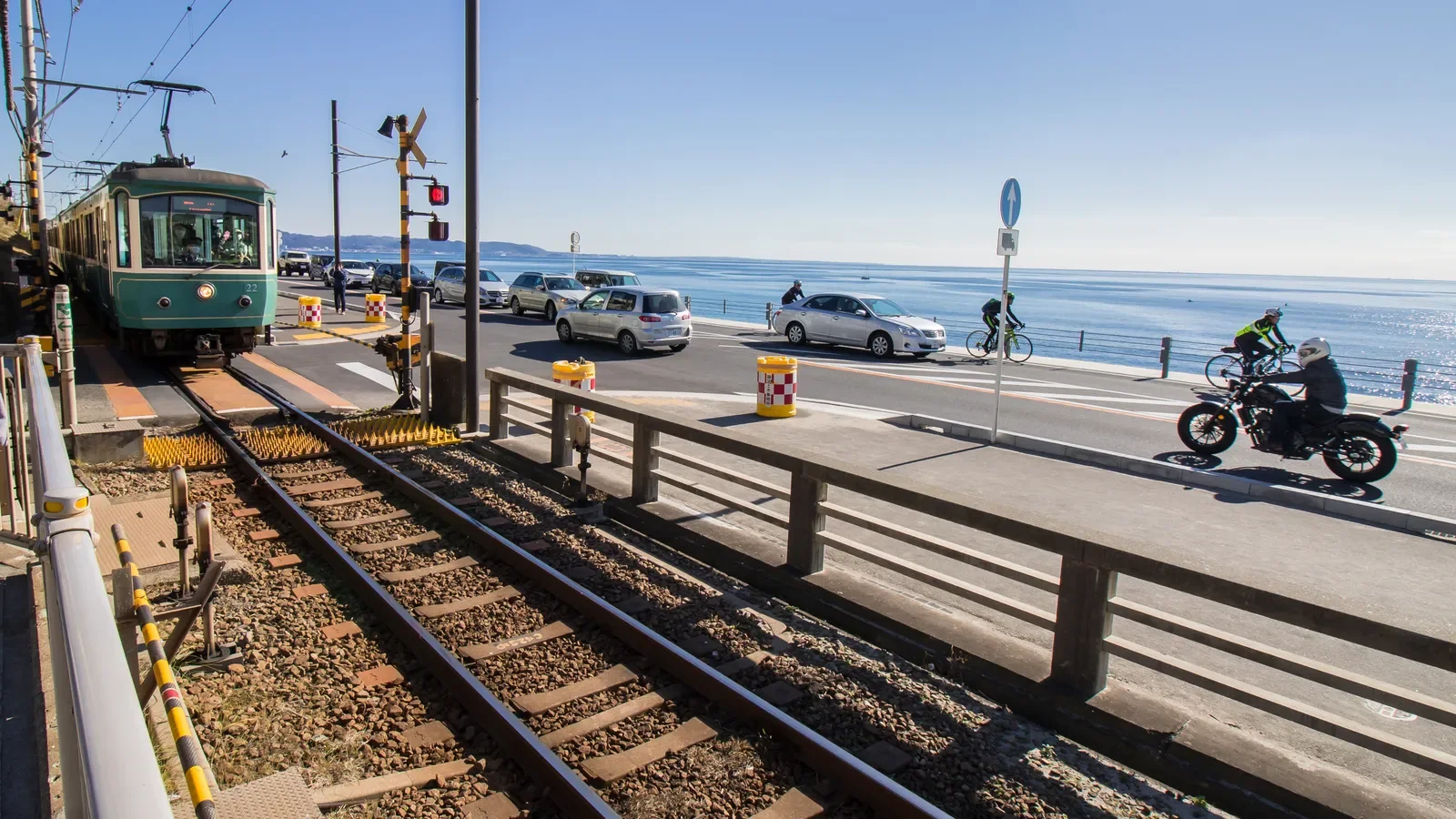
Kamakura Station serves the central streets, including the approach toward Tsurugaoka Hachimangu and Komachi-dori. For Kotoku-in's Great Buddha and Hasedera, continue toward Hase. The Enoden runs between Kamakura and Fujisawa through the coastal side of the city, so Enoshima adds another leg rather than sitting beside the Great Buddha. Enoden describes the full railway as about ten kilometres long. A plan that mentions all these places should account for the stops and walking between them.
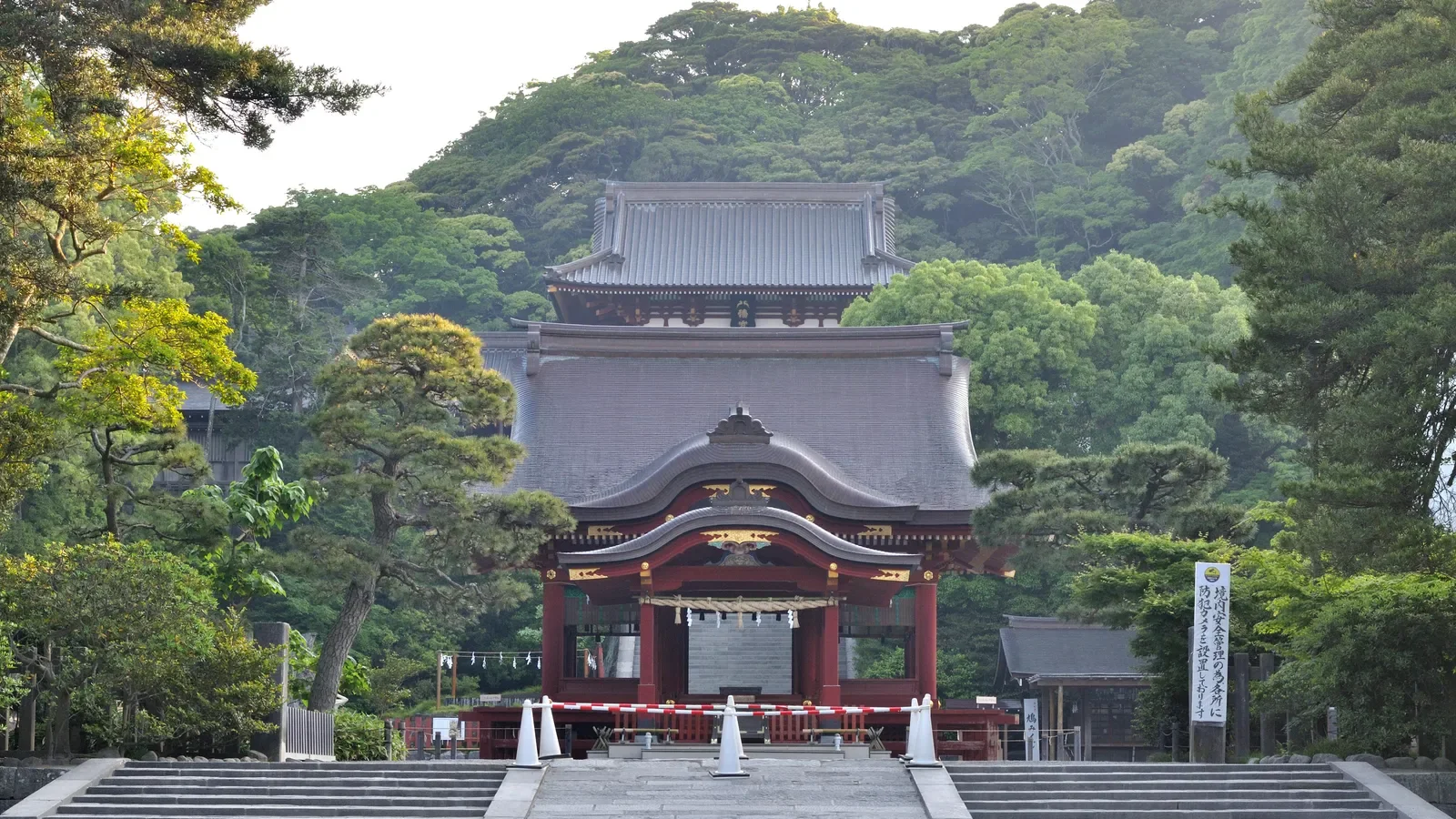
Time the journey from your Tokyo hotel to the first sight and from the last sight back to the room. Add station access, waiting for the next service, walking in temple grounds, meals and a possible queue. The headline rail time between Tokyo and Kamakura cannot tell you whether the day fits a four-day trip. If you have a fixed dinner or another attraction back in Tokyo, work backward from that commitment rather than hoping the coastal portion will somehow stay short.
Keep a first visit in two Kamakura areas
Begin around Hase if the Great Buddha is the main reason for coming. Add Hasedera or a short look at the shoreline only if it interests you, then return toward central Kamakura for Tsurugaoka Hachimangu and Komachi-dori. This gives the day a clear western and central half. It leaves room to enter places rather than collecting their names on a route map. You can reverse the order if a particular opening time or event requires it, but avoid crossing the same ground repeatedly.
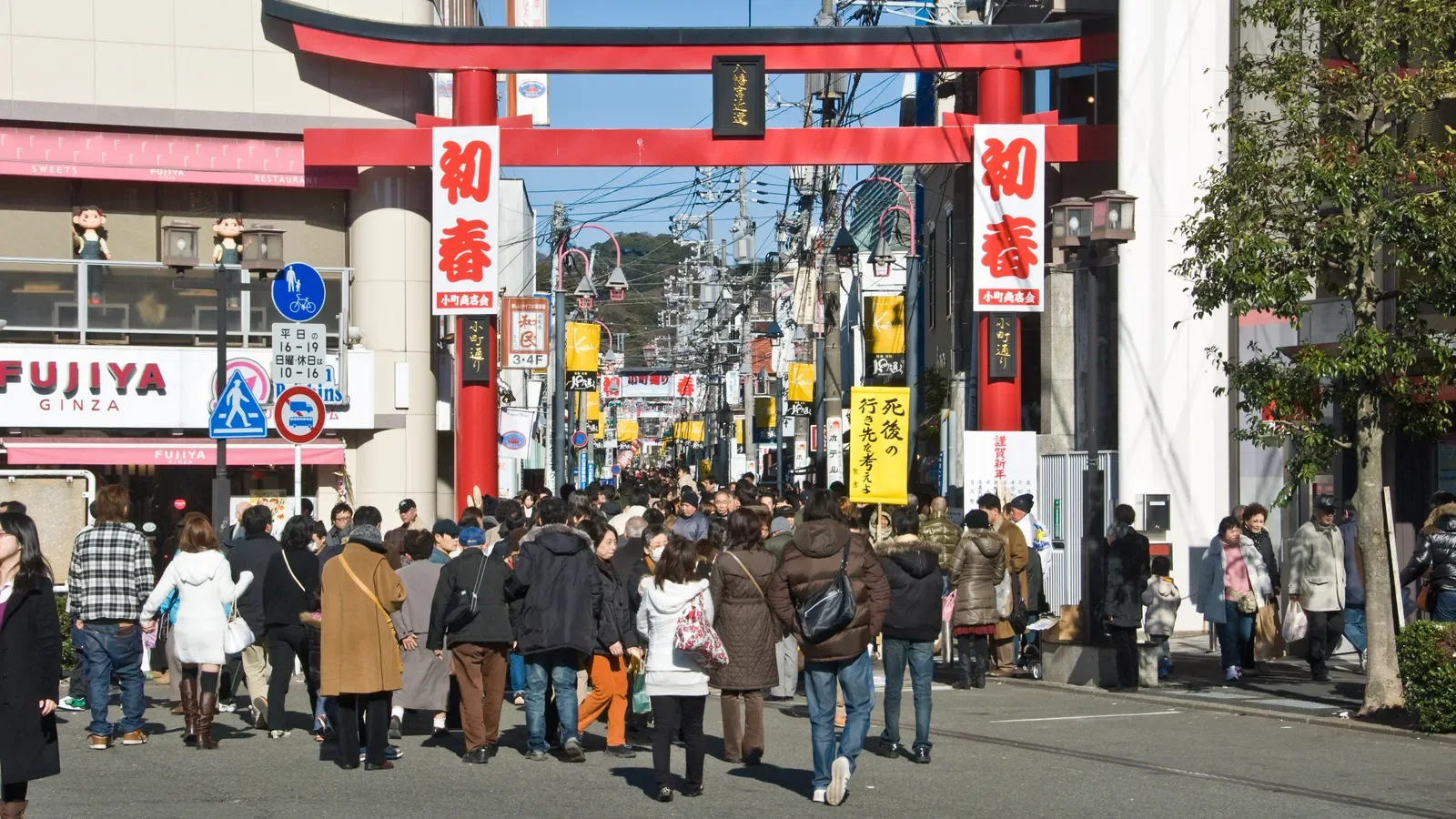
Komachi-dori is convenient near the end because it leads back toward Kamakura Station. If you shop there at midday, travel out to Hase, then return to the station, you add an unnecessary backtrack. Lunch choices and crowds may alter the sequence, so treat the route as a direction rather than a timetable. With limited daylight, decide early whether the coast deserves time; it is easier to omit one optional stop than to rush two temple visits and a train home.
Enoshima changes the scale of the outing
Enoshima deserves more than a hurried add-on if you want to walk on the island, eat there or spend time by the water. Combining it with the Great Buddha and central Kamakura makes a long day with several distinct travel legs. Choose the coast as a main theme and reduce the central Kamakura stops, or keep the temple route and leave Enoshima for another day. Trying to complete every named place often produces more time in transit than at the sights that prompted the excursion.
Rail and walking offer more flexibility than a car
For a simple first visit, use the rail network and walk between nearby sights. The Enoden links Kamakura, Hase and the coast, while local buses can fill gaps when needed. Kamakura's road network can be congested around popular areas, and driving adds parking decisions to a day that is already spread across several zones. Public transport allows you to shorten the plan after Hase or central Kamakura without returning to a parked car. Check current service and accessibility for the exact stops if mobility is a concern.
A group with children or older relatives should be especially selective. One central area and one Hase area can be satisfying without adding Kita-Kamakura, the coast and Enoshima. Build in a meal and a place to sit, and do not assume every short line on a map is an easy walk in heat, rain or crowds. If a stroller or reduced mobility shapes the outing, inspect station and site access individually before settling on the route.
Rain affects the coastal part first
Light rain need not cancel a temple-focused day, though wet paths and crowded covered areas may slow you. Sea views and an extended Enoshima walk lose more appeal when visibility is poor or the wind is strong. If Kamakura is optional, keep one Tokyo day flexible and choose the excursion when the forecast is favourable. If it is a high priority regardless of weather, shorten the coast and spend longer around sheltered streets and sites, observing any local closure notices.
Why a repeat Tokyo visit changes the answer
The destination stays the same; the day you give up changes. Someone who has already explored Asakusa, Ueno, Shibuya and other Tokyo areas may find Kamakura's temples, local rail and coast a welcome contrast. On a first visit, the same excursion could remove the only full day available for those neighbourhoods. Do not use 'easy day trip' to mean 'free extra day'. Write down the Tokyo plan you would replace and compare it honestly with the Kamakura route you would actually follow.
Is a Kamakura overnight justified?
For a single sightseeing day, keep the Tokyo room and leave the main luggage there. An overnight becomes more interesting when you want quiet time after the day visitors leave, an early coastal walk, or a second day for Enoshima, Hayama or another Shonan area. That turns Kamakura into a separate part of the itinerary, with a hotel change and luggage plan to match. Do not move hotels only to avoid the ordinary return train after one compact temple day.
If you decide to stay, compare Kamakura Station, Fujisawa and Enoshima as bases before reserving. A Kamakura Station room suits central sights and the train back toward Tokyo; a Fujisawa or Enoshima base changes the emphasis toward the coast. Choose for the second day you will actually spend there, not merely because the first day's train ride was long.
Three ways to use a four-day trip
Tokyo first: spend the arrival period near your hotel, use the two complete days in different city areas, and keep the departure day light. Kamakura can wait. This suits a first visit when the Tokyo list is already longer than the time available.
One excursion: give one complete day to Hase and central Kamakura, then protect the other complete day for Tokyo. Start early enough to enjoy the sights, but avoid forcing Enoshima into the same route unless the coast is the day's main purpose.
Shonan focus: let Kamakura and the coast take the full excursion day, accepting that fewer central temples will fit. If Disney, Nikko or another major outing is also fixed, add a night to the trip or remove one excursion rather than pretending there are three full days between arrival and departure.
Give Kamakura a day only when it wins that day
For a first four-day Tokyo visit with two complete days, keep both in the city unless Kamakura's temples or coast clearly outrank the Tokyo areas you would miss. A repeat visitor can make the exchange more easily. If you do go, select two areas and use the train home as a real boundary; the day will feel fuller than the one-hour access description suggests. The aim is to spend time where your interest lies, not to prove that the journey is technically possible.
If an early seaside morning is the reason to stay beyond a Tokyo day trip, see lodging around Kamakura Station and check the morning journey to the sites you chose.