
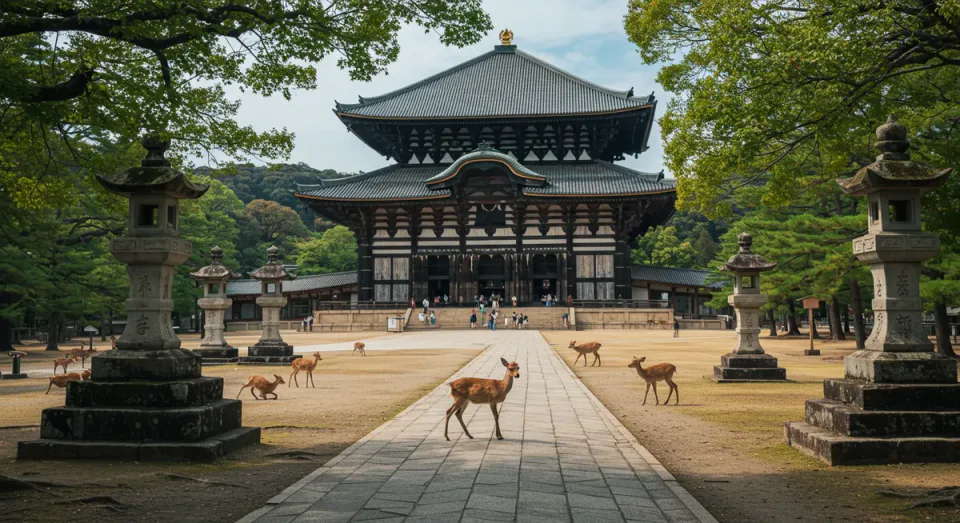
Kyoto and Osaka both make easy Nara day-trip bases. The decision usually comes down to your actual hotel street, not the city name on the booking. A room beside Osaka-Namba puts you on a direct Kintetsu train to the station closest to the classic park route. A room beside JR Osaka makes a direct JR journey attractive, even though JR Nara leaves a longer walk. Kyoto has a similar split between hotels near Kyoto Station and those closer to the Keihan line in Gion-Shijo.
The Osaka-Namba comparison is often misstated. A Kintetsu Express example takes about 39 minutes and costs ¥680. A Limited Express example takes about 34 minutes at ¥1,300 total, including a ¥620 seat surcharge. Both are direct. The premium buys a reservation and only a modest time saving on that example, so the ordinary Express is a strong default for a typical day trip.
↔ Scroll table left or right
Hotel neighbourhood | Likely first route | Why it fits | When to look again |
Kyoto Station | Kintetsu towards Kintetsu-Nara | Arrival is close to the usual park approach | JR already suits the hotel, pass or onward journey |
Gion-Shijo and nearby Keihan stops | Keihan to Tambabashi, then Kintetsu | May save a detour through Kyoto Station | Reaching Keihan from the actual hotel is awkward |
Osaka-Namba | Kintetsu Express | Direct ride to the park-side station | The hotel is much nearer a JR or other Osaka station |
Umeda near JR Osaka | JR towards Nara | Starts close to the room with no Namba detour | You already need to finish the day in Namba |
Kyoto to Osaka with Nara en route | Kintetsu chain through Nara | Keeps travel moving in one direction | Large bags have no confirmed storage or delivery |
Kintetsu Nara Station changes the day-trip arithmetic
A route planner can show a fast train while hiding the subway ride to its origin or the walk after arrival. Draw the entire journey once, especially if you have a stroller, a slower walker or a timed booking in Nara. The useful sequence is:
hotel → correct departure station → train → Nara station → first park-side sight → route back to the hotel or evening plans.
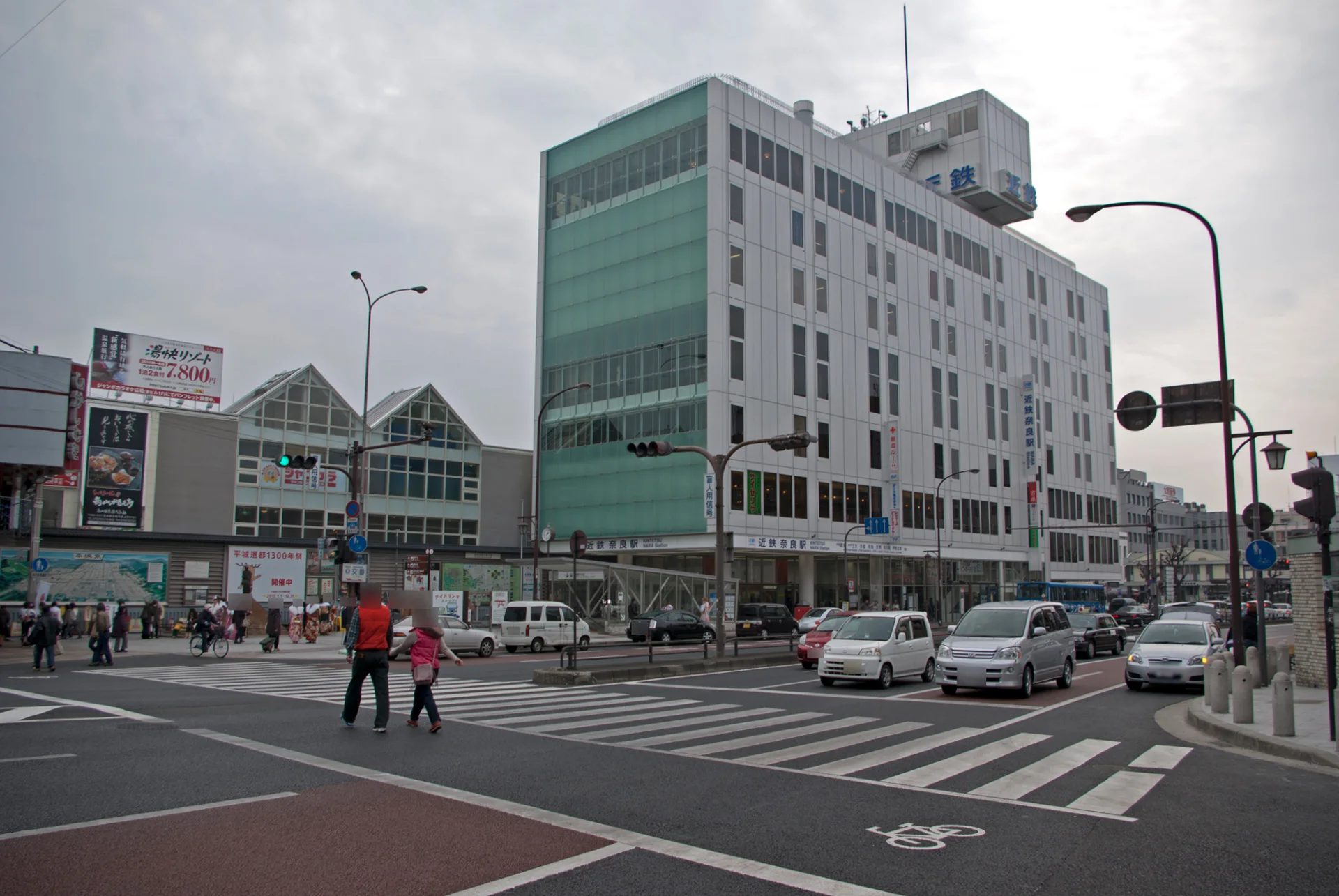
Kintetsu-Nara is a short walk west of Nara Park. From JR Nara, the Nara tourism guide describes a roughly 20-minute walk along Sanjo-dori to the park, with city buses as another option. The park is extensive, so any single walking time changes with your precise destination. For a first route towards Kofukuji, Todaiji and Kasuga Taisha, the Kintetsu arrival usually saves some effort at the Nara end.
That last stretch matters most after a day already full of walking. It matters less if reaching Kintetsu means an awkward transfer before the trip begins. Compare the total chain for your own address rather than treating one arrival station as a universal winner.
You can use the same test for the evening return. The group may be tired after Todaiji and Kasuga Taisha, and the most convenient train at that point may matter more than a five-minute theoretical saving in the morning. Note the station nearest dinner as well as the station nearest the hotel.
Osaka-Namba: take the ordinary train unless the seat is worth paying for
The Kintetsu route search shows a direct Express example from Osaka-Namba to Kintetsu-Nara at ¥680 and about 39 minutes. A Limited Express example covers the same endpoints in about 34 minutes for ¥1,300, because the ¥620 reserved-seat charge is added to the base fare. Specific trains and fares should be checked for your travel date, but the comparison is clear: this is primarily a comfort purchase.
For two adults travelling at a relaxed time, the Express normally does the job. A guaranteed seat may be more valuable for an older family member, for someone who finds standing difficult, or on a tired return after several hours on foot. If the group does not need that certainty, spending the surcharge to save roughly five minutes is a weak trade.
The stronger reason to choose Namba is the direct, park-side railway connection. That advantage exists without a Limited Express ticket and without moving hotels merely to make this one outing faster.
For a longer Osaka stay, compare Namba vs Umeda using all the trips you intend to make. One efficient Nara train should not outweigh several inconvenient Kyoto, Kobe or Himeji days.
Umeda: use the railway beside your room
A hotel near JR Osaka Station gives you a simple starting point for a JR journey to Nara. You will have farther to walk after reaching JR Nara, or you can use a city bus. Crossing Osaka to Namba first adds another urban leg and station navigation. The closer Kintetsu arrival may not repay that detour, particularly when you are beginning near the JR platforms.
Umeda can still be the better Kansai base if your other days involve Shin-Osaka, Kobe, Himeji or frequent JR trips. Accepting one longer Nara walk may be preferable to making several other departures more complicated.
Kyoto Station: decide whether the reserved seat has a job
From Kyoto Station, Kintetsu is a natural first option for a park-centred day because it ends at Kintetsu-Nara. Ordinary trains avoid the Limited Express surcharge; a reserved service can shorten the ride and make seating predictable. JR makes sense when your room is on the JR side, your onward rail plans already use it, or an easy ticket decision is more useful than a shorter walk at the far end.
There is no need to declare one Kyoto railway best for everyone. Compare the amount you would pay above the ordinary fare with the value of a guaranteed seat, arrival time and Nara-side walking distance. A family moving slowly through the park may value the closer arrival more than a traveller who enjoys a long approach along Sanjo-dori.
Gion-Shijo: consider Tambabashi before crossing Kyoto
If the hotel is genuinely close to Gion-Shijo or another convenient Keihan stop, the Keihan train to Tambabashi can connect with the Kintetsu Kyoto Line. That may avoid travelling west to Kyoto Station only to head back towards Nara. The interchange is a normal rail connection, not a special tour route.
The name “Gion” covers a wide area. A hotel towards Kiyomizu can still need a long walk, bus or taxi to Keihan, reducing the Tambabashi advantage. Choose between Kyoto Station vs Gion from the whole Kyoto visit, then let Nara break a genuine tie.
A route comparison without invented scores
Rather than assigning points to each inconvenience, look for the part of the trip your group will notice most. Extra transfers, a long walk to the first station, a longer Nara-side approach and large bags affect travellers differently. The table below keeps those costs visible without pretending they add up to a universal number.
↔ Scroll table left or right
Route feature | Effect on the day | Who may notice it most |
Transfer before the intercity train | Adds station navigation before Nara | Families, older travellers and people with bags |
Long walk from hotel to first platform | Makes a fast rail time misleading | Anyone leaving in heat or rain |
Arrival at JR Nara for a park visit | Longer walk or a local bus to the first sights | Visitors aiming straight for Kofukuji and Todaiji |
Full-size luggage on sightseeing day | Changes a relaxed walk into a storage problem | Travellers moving between Kyoto and Osaka |
A Namba hotel can make the direct Kintetsu trip feel effortless. A Umeda hotel can make a JR trip simpler despite the longer walk in Nara. Both statements can be true because the origin side changes the result. The right route is the one with fewer difficult hand-offs for your group.
A route with a clean railway diagram can still feel awkward on foot. The Nara Park area covers a broad sweep of paths and temple grounds, so the final distance depends on which sights you choose. Keep the most walking-intensive day free of unnecessary bags or extra city transfers.
Kyoto → Nara → Osaka is a luggage question
A transfer-day stop looks elegant on a map: leave Kyoto, see Nara, then continue to Osaka-Namba. Kintetsu helps with that geometry. But temple approaches and deer-filled paths are a poor place to drag a large case, and searching for storage can use the time you hoped to save.
Use the one-way sightseeing day only after the main bags have a confirmed place to go. Forward them to a staffed Osaka hotel that accepts early parcels, or arrange storage you know will fit the cases and opening hours. If neither works, return to the same hotel after Nara and move the next day. The extra train leg may be more comfortable than sightseeing with luggage.
Where will you spend the evening?
A Namba-based traveller can return directly for dinner around Dotonbori. Someone staying in Kyoto may prefer to preserve an early Kyoto start the next morning. The Nara outing is not complete at the park gate; include the return to the neighbourhood where you will actually eat and sleep.
The route for each base
Near Kyoto Station, compare Kintetsu first for a conventional Nara Park day, with JR still sensible for a JR-side hotel or pass. Around Gion-Shijo, test the Keihan–Tambabashi connection. From Osaka-Namba, an ordinary Kintetsu Express gives a direct trip for about ¥680 in the example above. From Umeda, begin with JR Osaka rather than crossing the city just to reach Namba. These are starting points for addresses, not instructions to change accommodation.
If your remaining Kansai itinerary is genuinely tied between two bases, a nearby Kintetsu station gives a modest edge for a first Nara visit. The advantage of a closer station at Nara Park is not enough, by itself, to move a hotel booking.
If the goal is dawn light, a second Nara district or a slower evening, read Nara Day Trip or Overnight. Staying in Nara for a night changes the question more than fine-tuning the departure city does.
More Kansai routes
Nara Ikimono Museum Is Great With Kids — But It Can Hijack a First-Time Nara Day Trip
Izu Oshima Day Trip or Overnight? Jetfoil vs Night Ferry From Tokyo
Onomichi Day Trip from Hiroshima: Is It Worth Adding in 3 Days?
If the return trains make either day trip feel rushed, sleeping in Nara is another route choice. Check rooms around Nara Station and compare their location with your chosen railway and first stop.