
For two days in Hiroshima, the hotel decision changes with the second day's route. Hotel Granvia Hiroshima connects to the Shinkansen side of Hiroshima Station. Hilton Hiroshima is in Fujimicho, in the city rather than at the rail terminal. A traveller arriving late by train and leaving for Miyajima early can use Granvia's position twice. Someone spending both afternoons around the Peace Memorial area may get more from Hilton's larger entry-level rooms and city location. The right comparison is the time and room you will actually use, not which name sounds more luxurious.
JapanLayer hotel assessment by dimension
↔ Scroll table left or right
| Hotel | Access | Space | Comfort | Cleanliness | Neighbourhood | Service | Value |
|---|---|---|---|---|---|---|---|
| Hotel Granvia Hiroshima | 8.9/10 | 8.0/10 | 9.8/10 | 7.7/10 | 9.2/10 | 9.3/10 | Insufficient evidence |
| Hilton Hiroshima | 8.6/10 | 8.5/10 | 8.8/10 | 8.1/10 | 8.6/10 | 8.5/10 | Insufficient evidence |
What each base saves on a two-day route
↔ Scroll table left or right
| Trip detail | Granvia Hiroshima | Hilton Hiroshima |
|---|---|---|
| Arrival and departure | Connected to station north Shinkansen exit | Separate city transfer to and from station |
| Miyajima morning | Start at Hiroshima Station rail corridor | Travel back toward the rail or ferry connection |
| City afternoon | Return to station-side room after sightseeing | Fujimicho base for a longer city-focused stay |
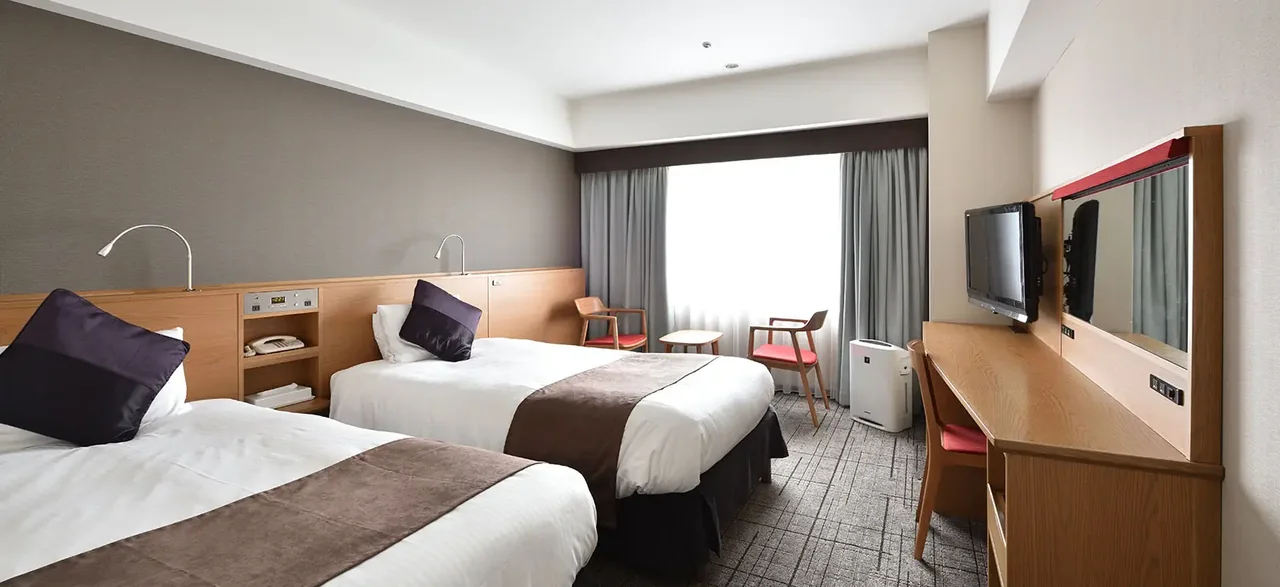
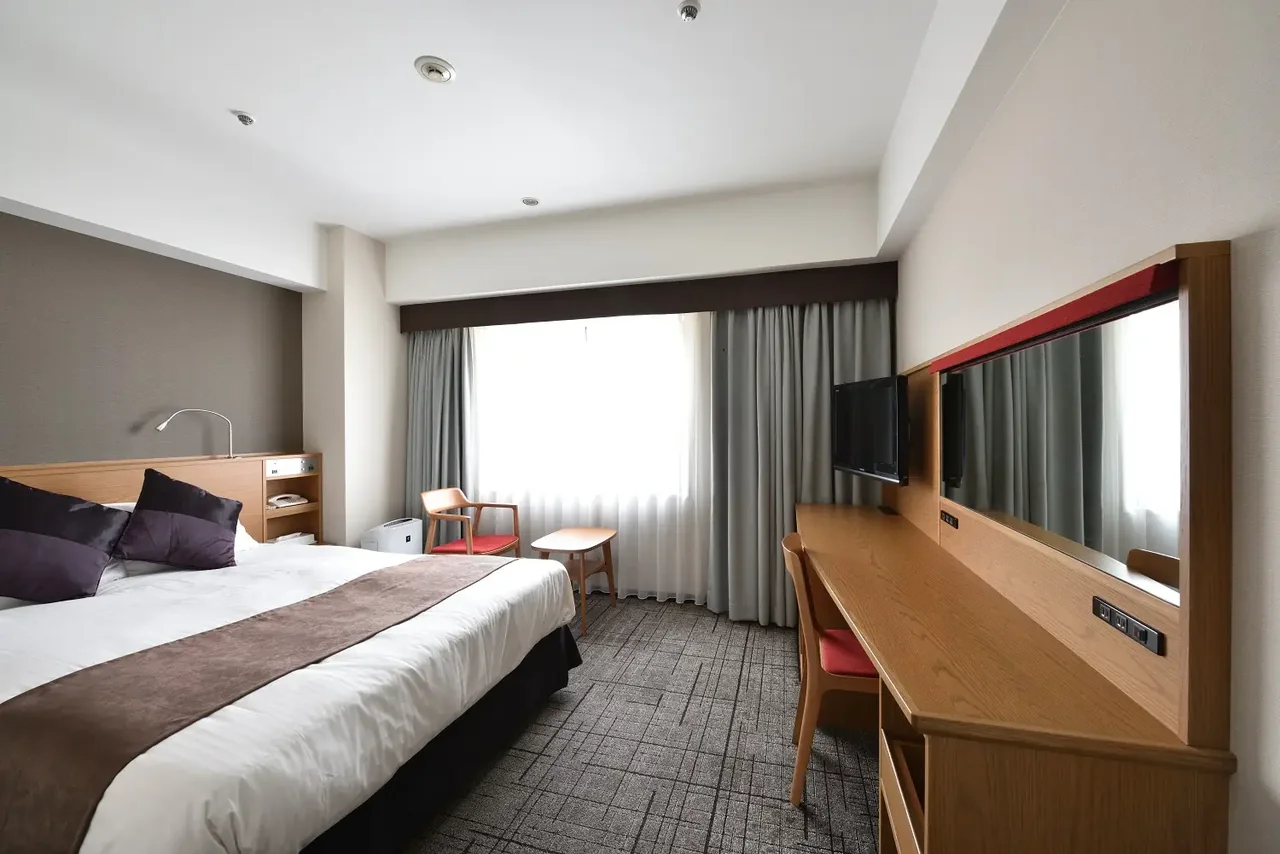
| Room baseline | Standard Twin about 26 m²; larger named categories available | Guest rooms start around 35 m²; verify named category |
| Facilities | Selected rooms include Granvia Lounge | Indoor pool and fitness facility; check access rules |
Swipe to compare the hotels
Draw the two days before comparing rooms
Put your arrival, the Peace Memorial Museum, any castle or garden visit, Miyajima and your onward train on a map. A common two-day plan arrives by Shinkansen, visits the memorial area on the first day, then makes a Miyajima excursion before leaving. That produces four different journeys: station to hotel, hotel to the memorial area, hotel to Miyajimaguchi, and hotel back to the station. Granvia is particularly strong on the first and last legs. Hilton can be convenient for a city evening, but a Miyajima morning begins with a trip back toward the rail corridor. The Hiroshima and Miyajima two-day itinerary helps determine whether the island belongs on the first or second day.
If Miyajima is an overnight stop rather than a day trip, the arithmetic changes. You may check out of your city hotel before the ferry and carry or store luggage while changing properties. An expensive second city night then does less work. The Hiroshima or Miyajima overnight comparison explains when the island evening merits a move. If the visit is only one day in Hiroshima with no island trip, use the one-day Hiroshima route to see whether a station hotel is mostly a luggage solution.
Neither property is at the entrance to every attraction. Granvia's station connection does not place Peace Memorial Park next door. Hilton's city address does not turn the ferry into a walkable excursion. A route that begins at the museum, continues to Hondori and ends with dinner downtown favours a different base from a route that begins on an early JR train. The station versus Peace Park area guide gives the broader neighbourhood comparison before the choice narrows to these two hotels.
Granvia's northern station entrance saves the awkward minutes
Hotel Granvia Hiroshima connects to Hiroshima Station's Shinkansen Exit on the north side. That is useful when you arrive with a suitcase after a long rail day: you can get to the room without finding a city bus or negotiating another hotel transfer. It is also useful when your departure train is early or luggage must be collected between sightseeing and checkout. The hotel is part of the station environment, but the lobby is still a walk from a platform; allow time to get through the station and lift. The Hiroshima station food guide can help if dinner needs to be close to the room after a late arrival.
There are now two properties whose names include Hotel Granvia Hiroshima. The original Hotel Granvia Hiroshima in this comparison is on the north, Shinkansen Exit side. Hotel Granvia Hiroshima South Gate is a separate hotel on the south side. Check the full property name and address on the booking page, especially if a map result or a room photograph looks different from the hotel you researched. A cheaper rate at the South Gate property is not necessarily a rate for the same building. This distinction matters with luggage, a meeting point and a prebooked taxi.
For a Miyajima day, Granvia's rail access removes the initial cross-city ride. You still need a train toward Miyajimaguchi and a ferry to the island; the hotel's entrance does not eliminate either step. Check the ferry operator and the specific train you intend to take rather than treating a quoted journey time as a guarantee. On the return, the room is near the station if you are staying another night. If you are leaving Hiroshima after Miyajima, ask about luggage storage before assuming you can return after checkout. The Miyajima Momijidani Park guide helps judge how much walking and time the island day needs.
Granvia also works when Hiroshima is one stop on a longer rail itinerary. An onward journey to Fukuoka, Osaka or Tokyo can start without another hotel-to-station transfer. If you are deciding how many nights to devote to western Japan, the Hiroshima versus Fukuoka extra-night comparison helps test whether a short Hiroshima stop is realistic. Saving a hotel transfer is less valuable when your next destination is reached by car or when most of your stay is within the city.
Hilton gives the city stay a different centre of gravity
Hilton Hiroshima sits at 11-12 Fujimicho in Naka Ward. It is a city property, not connected to Hiroshima Station. The hotel describes the station as a short drive away, but a drive estimate should not be read as walking time or a guaranteed bus journey. If you arrive by Shinkansen, price the taxi or plan the public transport leg with luggage. If you plan to visit the Peace Memorial Museum and spend the evening in the centre, the trade may be sensible over two nights. The Hiroshima night food route gives an idea of what an evening based in town could include.
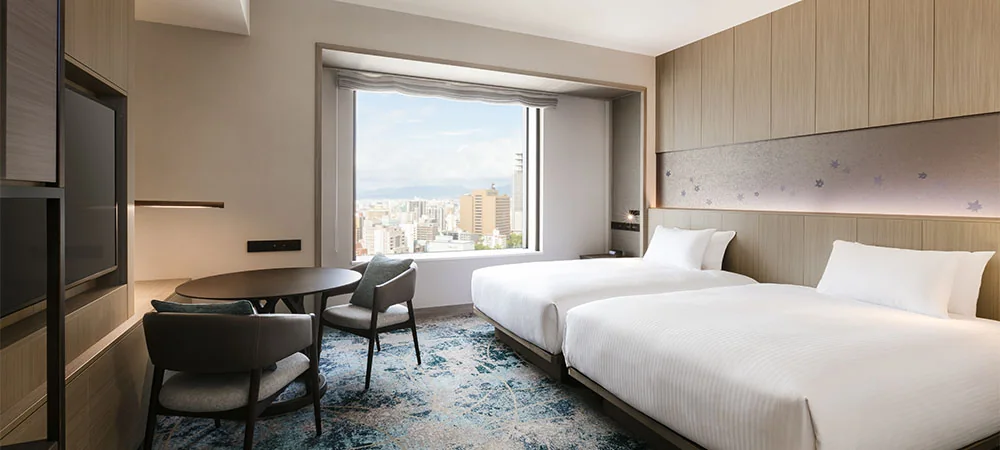
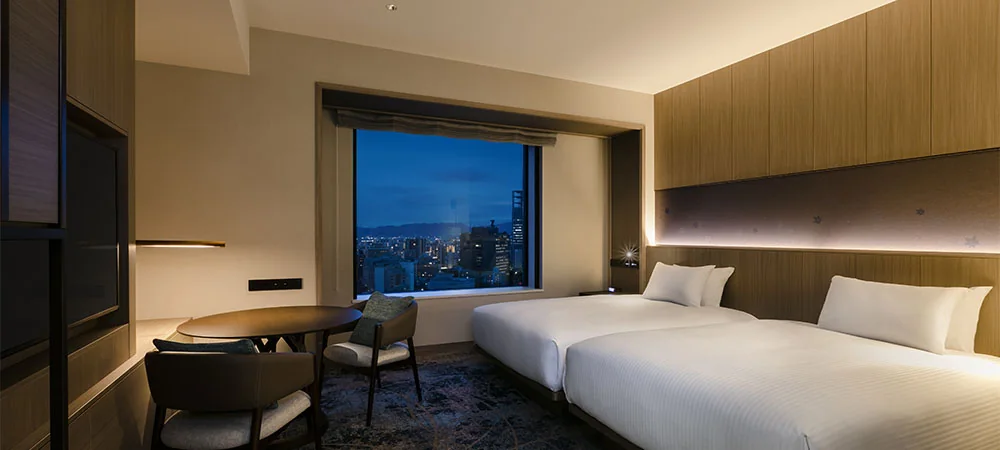
The Hilton's basic room proposition is stronger on space: the hotel's rooms start at about 35 square metres. Its Deluxe floor includes twin and king choices, while higher categories add other views and lounge privileges. A 35-square-metre room can matter when two adults are unpacking for several nights, a child needs floor space, or the group wants to return for a rest between museum and dinner. It is not proof that every room has the same bed count, bathroom plan or view. Compare the named room category you can actually book. The Hiroshima three-day itinerary helps decide whether a longer city stay would use that extra room space.
Hilton has an indoor pool and fitness facilities. Those are relevant if your two-day plan leaves time to use them; a full Miyajima day followed by an early train may not. Check opening hours and any child or access rules with the reservation. Breakfast and lounge access also depend on rate and room category. The useful question is whether a specific extra feature is available to your party on the booked dates, then whether you will use it. A base rate that excludes breakfast should be compared with a Granvia rate on the same meal basis.
After a visit to the Peace Memorial Museum, some travellers want an unhurried break before dinner. Hilton's larger room and city position can support that rhythm. Others prefer to spend the whole day out, return once, and leave early the next morning; they may get less value from the added room area. The is Hiroshima worth visiting on a first trip guide can help set the time you want to give the city itself rather than treating Hiroshima only as a ferry connection.
Room choice can reverse a location decision
Granvia has several floors and named room types. A Standard Twin is around 26 square metres; the Granvia Twin is 29 square metres; a Granvia Deluxe Twin is 37 square metres. These are materially different rooms. A two-person search that shows only the lowest double price does not tell you what a twin with open suitcases will cost. The hotel's selected higher-floor rooms have access to its Granvia Lounge, but do not assume every room in the building includes it. Confirm the floor, bed arrangement and lounge inclusion on the exact offer before attaching value to that feature.
Hilton's Deluxe rooms are spacious by this comparison, but do not assume the first photo shown for the property represents the least expensive room. Its Premium, Executive and Suite categories have different views and inclusions. The Hiroshima station area guide is useful if Hilton's room premium becomes large enough that a third property in the city makes more sense. The choice is not restricted to these two names simply because they are both familiar.
For three travellers, capacity matters more than floor area alone. Granvia lists some twin categories for up to three, while larger categories may support four; the third bed may be an added bed rather than a permanent one. At Hilton, ask for the exact third-person setup and price, and include the extra breakfast if needed. A family should compare total occupancy and sleep arrangement, not the rate for two adults. If the city stay follows a long family rail journey, a real bed for each person may save more stress than a short station walk.
For a child, Hilton's age rules should be checked against the booked rate: children aged seven or older are treated as adults, while younger children may share existing beds under the property's rules. Extra beds and meals can change the final price. Granvia's room capacities vary, so the same party may be eligible for one category and not another. Enter every guest's age before comparing a room price. A beautiful room photograph says nothing about whether that exact configuration is available on the travel dates.
The museum day and the island day are not interchangeable
The Peace Memorial Museum deserves enough time and attention that it should not be squeezed between a ferry return and a departure train. If it is your main purpose in Hiroshima, choose a hotel that supports the time of day you want to visit and the break you may want afterwards. Both hotels can serve that visit with local transport or walking as appropriate, but their return routes differ. The Hiroshima one-day itinerary offers a city sequence that can be adapted without pretending the museum is a quick photo stop.
Miyajima requires several transitions. From a city hotel, reach the rail line or other suitable crossing, travel to the ferry, cross to the island, then walk among the sites. A plan for Itsukushima Shrine, food street, Momijidani Park and Mount Misen cannot be compressed into a single room-to-room travel estimate. The Miyajima shopping and food guide and Momijidani Park guide help decide whether the island deserves most of a day. If it does, Granvia's station location has repeat value.
An island activity booking can make the timetable less flexible. Sea kayaking or a guided route around Misen is a different day from a short shrine-and-food visit; allow time for the activity's meeting point and return ferry. The Miyajima kayak and Misen guide is useful before you select a hotel based on an imagined early return. A late island finish may make a quiet dinner near the station more attractive than a second cross-city ride.
Weather and daylight also affect the two-day split. A rainy island morning may prompt a switch to city attractions; a clear day may be best used for ferry and walking. A two-night booking gives some flexibility, but only if the hotel plan lets you change the order without an awkward luggage move. The Hiroshima and Miyajima food guide can help place meals around the route instead of forcing a return to one neighbourhood for dinner.
If the day extends to Onomichi, the city stay is no longer simply a Hiroshima-and-Miyajima pair. Another rail outing increases the value of station proximity, particularly when it follows an early start. Yet three full days also make a larger room more useful. The three-day Hiroshima route with Onomichi can clarify which of those two effects matters in your own schedule.
Sera's flower farms are another possible excursion, but they require a different transport plan and can consume most of a day. Do not add one to a two-day stay that already includes both the museum and Miyajima just because it appears near Hiroshima in a search result. The Sera Flower Farm guide helps test travel time and season before a longer hotel booking.
Price the stay as a complete route
Compare the two hotels for the same dates, number of travellers, room type, breakfast and cancellation terms. Then add the transport you expect to use. For Granvia, that may include trips into the city on both days. For Hilton, include the station transfer on arrival and departure, plus access to the Miyajima rail or ferry route. A slightly cheaper room can lose its advantage if the group needs taxis twice, but there is no universal winner because dates and fares change. The Hiroshima versus Fukuoka extra-night guide is useful if the more consequential cost is adding or removing a night altogether.
Check-in and checkout create another real cost. Granvia lists a 2 p.m. check-in and noon checkout; Hilton lists 3 p.m. and noon. If you arrive in the morning, neither room should be assumed ready. Ask about luggage storage and build the first afternoon without a guaranteed room. If your train leaves late on checkout day, plan where the bags will sit after noon. A station hotel can simplify collection before a Shinkansen, but luggage rules and availability still need confirming for the specific stay.
Be wary of apparent room upgrades that serve no actual part of the trip. An executive lounge may have little value if you leave early for the island and eat dinner in town. A pool is meaningful only when the group's timetable and age rules allow it. Likewise, station access is worth paying for when it saves repeated transfers, not merely because a map pin is close to tracks. The Hiroshima airport versus Iwakuni airport guide matters if your arrival is by air rather than Shinkansen; that can change the first transfer entirely.
My default for an arrival by Shinkansen, a full Miyajima day and an onward train is Hotel Granvia Hiroshima, provided the booked room has the beds and space required. For a two-night city visit centred on the memorial area, long dinners and time in the room, Hilton Hiroshima can justify its separate station transfer. If the price gap is large, calculate the actual transport and room value rather than treating either location as automatically superior. The Hiroshima hotel area comparison is the last check before committing to one of the two.
Updated 4 October 2026. Room categories, rates, transport and hotel services may change by date.