
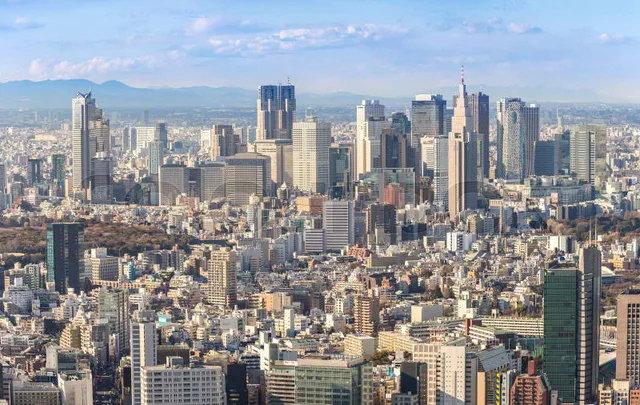
A flight sold as a “Tokyo night helicopter tour” may put you above Tokyo without letting you board anywhere near your Tokyo hotel. That distinction determines the journey before takeoff, the price of getting home and whether the excursion can fit around dinner. Start with the heliport address. Only then compare a 23-minute skyline circuit, a 30-minute two-tower flight and a 55-minute Tokyo–Yokohama route.
There is another easily missed number: the fare is usually for the aircraft. A couple and a group of three can pay the same charter price but face very different costs per person. This guide works through both clocks—the minutes in the air and the hours consumed on the ground—using routes and conditions checked on 24 October 2026. If you have not yet settled the wider trip, decide whether three, four or five Tokyo days leave an evening for a flight at all.
Choose a departure point before comparing flight lengths
Chiba Bay Coast Heliport sits in Mihama Ward, Chiba City, by the Inage waterfront. Funabashi is another Chiba-side departure. Tokyo Heliport is in Shinkiba, Koto City; Saitama Misato and Yokohama Minami appear among other regional bases. These places are not interchangeable simply because the flight description says Tokyo. The operator's route pages show which airport or heliport belongs to each product, and the exact meeting point belongs in your booking check.
For someone staying by Shinjuku, Chiba Bay Coast demands a cross-city journey before a short flight, followed by the same problem in reverse. A traveller based around Maihama or the eastern bayside may find that journey less awkward. The conclusion can reverse when the hotel changes. Work out Tokyo Station versus Shinjuku, Shinjuku versus Shibuya, or Disney area versus central Tokyo before treating the flight as an isolated purchase.
Tokyo Heliport is still not a city-centre rooftop. Its listed address is 4-chome-7-25 Shinkiba, with Shinkiba Station on the JR Keiyo, Tokyo Metro Yurakucho and Rinkai lines. The route page describes about five minutes by taxi or bus from the station and says further access details follow confirmation. That is easier to combine with some Tokyo itineraries than Chiba Bay Coast, but you must still reserve time for the station transfer, check-in and return. Do not assume the aircraft lifts off as soon as you reach Shinkiba.
What the three Chiba Bay Coast routes actually buy
| Route | Listed flight time | Current fare per flight | Reason to choose it |
|---|---|---|---|
| Tokyo–Chiba coast and Skytree | 23 minutes | ¥127,000–150,000 | A first aerial view with Skytree as the main landmark |
| W Tower night circuit | 30 minutes | ¥165,000–200,000 | Tokyo Tower and Skytree in one route |
| Tokyo and Yokohama | 55 minutes | ¥303,000–360,000 | Tokyo landmarks plus the Minato Mirai side of Yokohama |
These are the displayed ranges on the Chiba Bay Coast night-route listing checked on 24 October 2026. They can change with date or aircraft availability, so use the selected product's final screen for the amount you actually pay. All three listed products take up to three passengers. “Thirty minutes” does not mean the 23-minute route with an extra seven minutes circling the same point. It buys a different landmark pairing. The 55-minute choice extends the geographic reach to Yokohama; it is hard to justify solely because its duration looks more substantial.
If Skytree is already on your ground itinerary, consider what you want from the aerial perspective. A visit to Skytree's observation decks gives you a fixed, elevated view. The aircraft trades that fixed position for movement across the coastline and city. The same comparison applies if you have planned an Odaiba waterfront stop: the helicopter is a distinct experience, but another Tokyo Bay panorama may add less than a different evening activity.
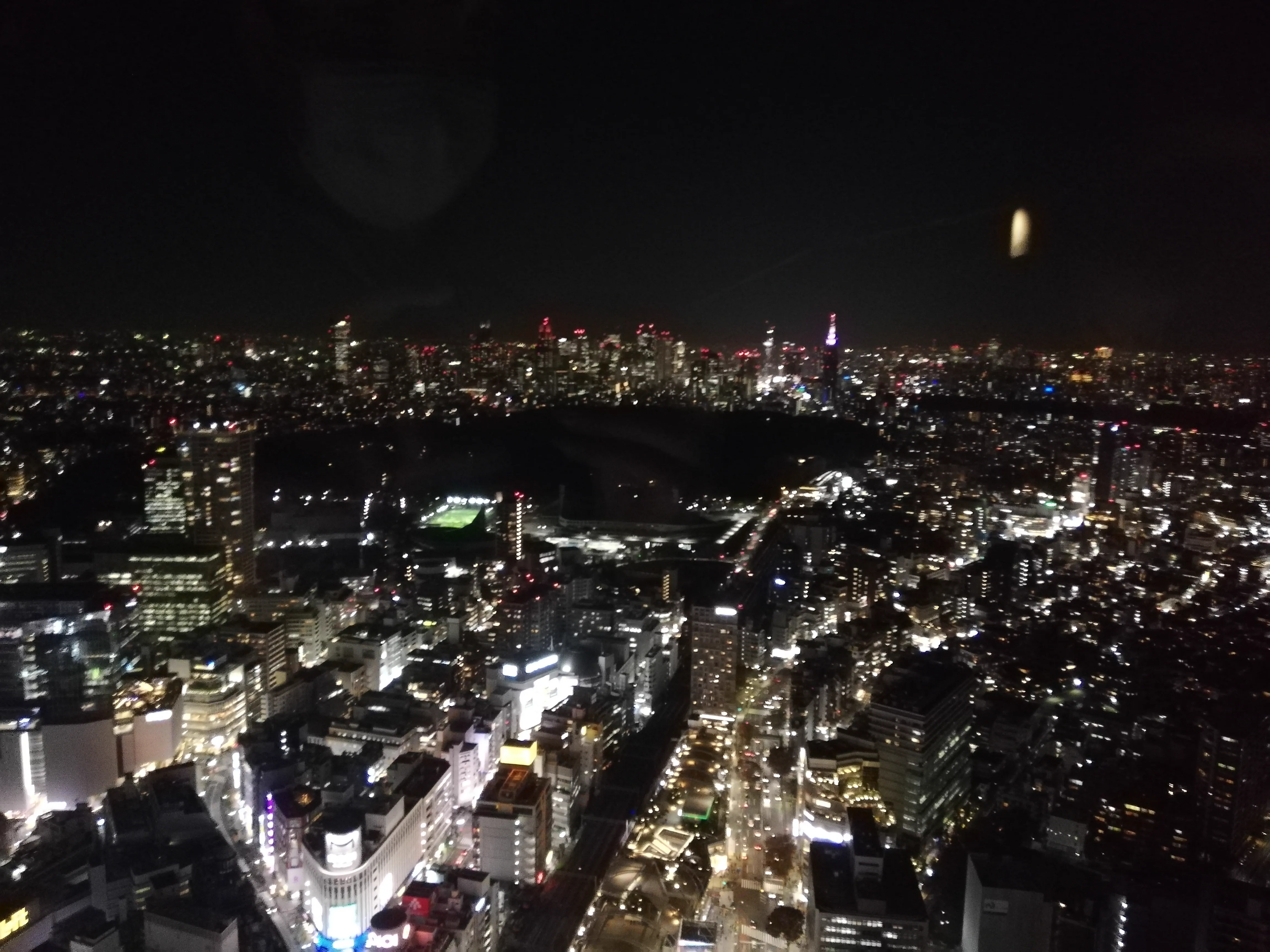
The night skyline above is a fixed-deck view, not a photograph from one of these helicopter routes. It illustrates the baseline view you can buy without taking a weather-dependent flight. If that already satisfies the reason you wanted to fly, compare Tokyo's observation decks before booking an aircraft.
When the Tokyo Heliport charter makes financial sense
The Tokyo Heliport sunset-to-night route is a separate five-seat, 30-minute charter offered by request. Its page currently shows ¥346,500–410,000 per flight, with the ¥346,500 base fare illustrated in the operator's passenger table. The mapped highlights span Rainbow Bridge, Tokyo Tower, Tokyo Station, the Imperial Palace area, Shinjuku, Shibuya, Skytree and Asakusa. This is a different aircraft capacity, departure point and central-city route from the Chiba Bay Coast W Tower plan. Comparing only “30 minutes” hides all three differences.
| People sharing the ¥346,500 base fare | Approximate cost each | What the number means |
|---|---|---|
| Two | ¥173,250 | A couple pays the full charter between them |
| Three | ¥115,500 | Compare against a three-seat Chiba flight |
| Four | ¥86,625 | Tokyo Heliport's extra seats change the arithmetic |
| Five | ¥69,300 | Lowest split only if all five actually fly |
The operator rounds some displayed per-seat illustrations differently; the figures above are simple divisions of ¥346,500. They exclude transport to the heliport and anything added to the booking. Do not recruit extra passengers merely to make a comparison table look better. The party must fit the selected aircraft and its weight restrictions. For a group of four or five, however, dismissing Tokyo Heliport as “the expensive 30-minute option” before dividing the charter fare can misread the choice.
The request-only booking method matters. A request is not a confirmed flight slot; availability has to be checked. If the flight is meant to sit between an anniversary dinner and another fixed booking, keep those plans flexible until the reservation is accepted. A honeymoon or celebration itinerary can also be built around which Tokyo hotel night you choose, rather than paying for a central departure that still forces a long transfer from the hotel.
The booking page shows three different kinds of time
First is the meeting time. You need to arrive for identification, the safety briefing and boarding. Second is the flight duration printed in the route name. The operator says that number is time in the air; boarding and disembarking are separate. Third is the door-to-door period between leaving the hotel and returning to it. A sales page that describes an overall activity lasting roughly 50–90 minutes is not promising a 50–90-minute flight. For a 23-minute plan, add the journey to the heliport twice before deciding what the evening costs.
A simple diary calculation is more useful than a generic transit estimate. Put your actual hotel address and the actual heliport into a route planner for your chosen evening, then add check-in buffer and the journey back. If the result occupies the only evening available for Shibuya, Shinjuku or the waterfront, the opportunity cost is real. A flight near Tokyo Bay may fit naturally after a bayside hotel night; it can feel like a detour from a west-Tokyo dinner.
Do not attach a flight directly to an international arrival. A late Haneda landing or a delayed Narita transfer creates a separate risk: your airline's delay does not make you on time for the helicopter operator. The operator states that a late passenger may receive a shorter flight or lose the slot without a refund or fare difference. Leave a different evening available if the flight is a priority.
Weather changes the value of a timed photograph
A clear-looking street does not guarantee a safe flight. Wind, cloud base and air-traffic conditions all affect the departure decision. A sunset route is especially vulnerable if the sole purpose is to catch a specific tower at a particular minute. On some W Tower departures before 19:00, wind or traffic restrictions can remove the Tokyo Tower area from the route; later departure descriptions follow the mapped course, subject to ordinary operational changes. The flight path can also change because of Haneda airspace. Treat a mapped line as a planned route, not an exact photographic guarantee.
For evening meeting times after 16:30, the operator normally makes the go/no-go decision at around 15:00 on the flight day. Earlier meeting times have different decision windows. Bad-weather cancellations generally allow a change of date or refund without a weather cancellation charge, although some plans and reservations are exceptions. Read the cancellation language attached to your exact product; do not replace it with a general rule you saw on another route. Your own voluntary cancellation follows a separate fee scale, while a late arrival is treated differently again.
This is why a rigid restaurant reservation immediately after the published flight time is a bad pairing. Build a meal that tolerates a changed departure or move the flight to a night with slack. If a route is cancelled, you still need an evening plan; a fixed observation deck is an obvious substitute, although its own tickets and weather limitations require checking.
Capacity, weight and the Disney airspace surprise
For the operator's sightseeing charters, the advertised price generally covers the aircraft; some specifically labelled shared flights work differently. Check which kind is in your cart. The general weight guidance is up to 120 kg per seat, a combined 210 kg on many three-seat aircraft and 330 kg on many five-seat aircraft. Longer routes and particular aircraft can have exceptions. A third passenger is not simply another person to divide the cost with: the whole party must pass the selected plan's weight rules. The exact product page governs, especially if you book through an activity marketplace with its own listed conditions.
A Chiba departure also does not imply a Disney flyover. The operator says its flights cannot enter the airspace around Tokyo Disney because of the surrounding air-traffic controls. If your purpose is to see Disneyland or DisneySea from above, this route will not provide it. Allocate park days using the one- versus two-day Disney comparison and treat the helicopter as a separate Tokyo skyline purchase.
Which route fits a real trip?
For a first flight, the 23-minute Chiba Bay Coast circuit makes sense when the thrill of flying and a Skytree-area view are enough and your ground journey is manageable. The seven-minute increase to the 30-minute W Tower route pays for a more recognisable two-landmark route. If both towers are the reason you searched for a night flight, buy that route deliberately rather than treating it as a generic upgrade. For a group already travelling to Yokohama, the 55-minute route offers a coherent Tokyo-plus-Minato-Mirai flight; otherwise its larger fare needs a stronger reason than “more minutes.”
A couple staying near Tokyo Station or in west Tokyo may reasonably value a Shinkiba departure and central route, but two people splitting the five-seat Tokyo Heliport fare face a much higher per-person amount than a group of five. Compare that premium against the time saved on the ground. A group of three should check both Chiba and Tokyo options because its per-person arithmetic remains very different across the two aircraft sizes. A group of four or five must first confirm the specific flight's capacity; the three-seat Chiba routes cannot be made into five-seat products by selecting a larger party at checkout.
If flying itself is incidental and the aim is simply “a good night view,” choose one observation deck. If you want the aircraft, moving perspective and changing coastline, compare helicopter routes against each other. The nearby short daytime-flight comparison helps if a night departure is not essential.
A final check that prevents most misbookings
| Check the selected flight | Why it changes the decision |
|---|---|
| Exact heliport and return transport | “Tokyo” can describe the view rather than your boarding point |
| Flight minutes versus total activity duration | The briefing, boarding and hotel transfers are additional time |
| Route landmarks and airspace notes | Skytree-only, W Tower and Yokohama are distinct products |
| Aircraft fare and passenger capacity | The displayed charter price changes meaning with group size |
| Per-seat and total passenger weight | The party must fit the selected aircraft's rules |
| Weather and voluntary cancellation terms | An operator cancellation and your late arrival have different outcomes |
Once those entries are filled in, the choice is usually apparent. Do the exercise on the date you will fly, not weeks earlier with a saved starting price. Leave enough time to reach the actual heliport, and keep the hours after landing loose. If your Tokyo hotel is still undecided, choose the base before assigning a flight night. For a stay around Tokyo Bay, Maihama or the east side, the shorter Chiba plan may suit the trip; for a west-side hotel, a Tokyo-side departure may earn its premium through time rather than flight duration.
Still arranging the rest of the route? Compare a four-, five- or seven-day Tokyo itinerary, check whether moving hotels during a five- to seven-night stay helps, and look at where to leave bags on the departure day. Those decisions affect how much time a short flight can realistically take from the trip.
Compare Tokyo hotel locations for your flight night