

One full Tokyo Disney day is a reasonable place to start on a first Japan trip. Give it to either Disneyland or DisneySea, whichever holds more of the experiences you would regret missing. Two full days make sense when each park has a real must-do list and you are happy to exchange another Tokyo or Japan day for a second opening morning. The choice is about the wider itinerary as much as the two admission prices.
As of 24 October 2026, the limited one-day Park Hopper is no longer available. Its July–September period has ended, and Tokyo Disney Resort says guests who want to enter both parks on one date currently need separate tickets for Disneyland and DisneySea. Do not plan an autumn or winter visit around the old ¥13,700 Hopper starting price or its 11:00 switching rule. Those explain how the summer 2026 product worked; they are not a current booking route.
A standard adult 1-Day Passport still starts from ¥8,900, with the amount changing by date. Two separate days therefore start at ¥17,800 in ticket cost, before any Disney Premier Access, transport, food or hotel choice. For comparison, the October 2026 calendar displays many dates above the lowest rate. Check the exact dates you would visit and count the full day that the second park takes away from the rest of the trip.
The purchase and the day it displaces
↔ Scroll table left or right
Plan | Adult ticket basis | Opening mornings | Gain | Cost to acknowledge |
One full park day | 1-Day Passport from ¥8,900 | One | A complete Disneyland or DisneySea visit | The other park is genuinely omitted |
Two separate full days | Two 1-Day Passports, from ¥17,800 together | Two | Each park gets a morning, evening and room for delays | Another complete Japan day leaves the itinerary |
Historical summer 2026 Hopper | From ¥13,700 when it was sold | One | Selected experiences in both parks on one date | Not currently available; second park began after 11:00 and required a transfer |
These are starting prices, not a promise for a particular October, December or future date. The ordinary 1-Day Passport designates both the date and park. During the old Hopper window, a higher one-day price bought breadth rather than a second full day. Without that product, trying to reproduce a two-park day by buying two separate park tickets is a different and potentially dearer choice. The useful current comparison is one chosen park versus one full day in each.
On a four-day Tokyo stay, two Disney days absorb half the available city days. That can be right when Disney is central to the trip. It can also crowd out Shibuya, Asakusa, Shinjuku, museums or a day excursion you cared about more. Write down the non-Disney day that disappears before buying the second ticket. The decision is less abstract when you put the deleted day on the same page as the park list.
↔ Scroll table left or right
Usable Tokyo sightseeing days | Share used by one Disney day | Share used by two | Starting view |
Three | 33% | 67% | Usually give Disney one park day |
Four | 25% | 50% | Two days need a strong Disney priority |
Five | 20% | 40% | Both parks become easier to accommodate |
Seven | 14% | 29% | The opportunity cost is less restrictive |
The percentages do not decide for you. They expose a trade-off that a ticket price alone cannot show. Someone spending three days in Tokyo with Disney as the reason for the journey may gladly use two; someone using Tokyo as the gateway to Kyoto and Osaka may prefer one. The broader Tokyo day-allocation guide helps when several city interests compete for the same calendar.
It can help to write two versions of the trip before choosing tickets. In the one-day version, list the single park and what the freed Tokyo day becomes. In the two-day version, write Disneyland and DisneySea on separate dates and cross out the city day they replace. If the crossed-out day contains a neighbourhood, museum or other excursion you would miss more than the second park, the ticket saving is only part of the reason to stop at one day. If the omitted day is low priority, the extra morning at Disney is easier to justify.
Give day two a job that day one cannot do
Start with the other park's specific attractions, shows or nighttime experiences. A vague wish to “see both” is weaker than naming several things you would regret missing. Next ask whether those priorities need their own morning. Queues build, some shows and paid or free access products are limited, and a late arrival can leave an important plan unavailable. Finally, decide whether the extra day is worth losing from the rest of Tokyo or Japan. Two days become compelling when all three answers are clear.
The second opening window is the structural gain. Each park receives a fresh start, a full evening and its own margin for queues, lunch, weather or a tired child. If Disneyland runs slowly, DisneySea's following morning is still intact. The same separation helps when Disney Premier Access for an eligible ride or show sells out on a particular day: a second park day gives a different plan, though it never guarantees stock.
Two days should not automatically become two opening-to-close endurance tests. The extra calendar space can let a family take a midday break or choose fewer attractions per park. A couple might protect a harbour evening at DisneySea and a parade or castle-area evening at Disneyland. The value lies in independent days rather than an obligation to extract every operating hour from both tickets.
The two days need not be consecutive if the broader route allows a rest day between them. That can help a group for whom a second full theme-park day immediately after the first would feel like an endurance test. The cost is returning to the resort area twice, particularly from a central Tokyo hotel. Compare that extra train journey with the energy gained by separating the visits. A nearby Disney hotel has more value when the park days are consecutive; a central Tokyo base may suit a split schedule better.
One park, chosen on purpose
Tokyo Disneyland is the direct choice if the classic castle setting, Beauty and the Beast, Pooh, parades and familiar Disney atmosphere sit at the top of the list. Tokyo DisneySea is the better single-day choice if Fantasy Springs, the harbour environment and DisneySea-specific attractions are the reasons you are going. Neither park is the automatic winner for all first visitors. The Land-versus-Sea comparison is the next decision if your priorities remain split.
Count non-negotiable experiences rather than every attraction on the park map. Five must-dos in one park and one pleasant possibility in the other is a one-park pattern. Several deeply wanted experiences in each park point toward two days. Even an attraction list needs the date's operation calendar beside it: a suspended ride or early closing can change which park deserves the scarce day.
With only one day, leave capacity for the parts that make a Disney visit more than ride accounting. A meal, show, character encounter or evening setting can be the memorable piece for your group. A visitor focused on atmosphere may be better served by staying in one park until dark than by imagining the unused park is a loss. Accepting the one-park choice is what makes the day coherent.
What the 2026 Hopper taught, and what has expired
From 1 July through 14 September 2026, the limited 1-Day Park Hopper let buyers designate a starting park and switch between Disneyland and DisneySea after 11:00. The adult starting price was ¥13,700, compared with a standard 1-Day Passport starting from ¥8,900. It was a useful middle option for a short must-do list in each park, but it did not provide two opening mornings. That period has closed; the resort's current ticket guidance says the Hopper is not on sale.
When that ticket existed, the second park began with a transfer rather than at its own opening. The Resort Line has a roughly 13-minute full loop and trains may run every 4–13 minutes, but those figures never meant a 13-minute attraction-to-attraction move. Walking out of the first park, reaching the station, possibly waiting on the platform, entering the next park and finding the first target all added time. Adult Resort Line tickets were ¥300 for a single ride and ¥700 for a one-day pass. The fare was small relative to the lost usable park time.
The table below keeps the transfer layers because they remain relevant to anyone contemplating two parks in one date, even though the limited Hopper is unavailable. It is a planning explanation, not a recommendation to buy an expired product. If a future Hopper is announced, its dates, price, switch time and availability must be read afresh rather than inferred from summer 2026.
↔ Scroll table left or right
Transfer layer | Published transport figure | Time beyond that figure |
Leave the first park | None | Walk from the last attraction, exit and reach the station |
Disney Resort Line | Full four-station loop about 13 minutes; trains every 4–13 minutes | Your boarding and alighting stations are not necessarily a full loop; allow a platform wait |
Enter the second park | None | Admission flow and the walk to a first ride, show or meal |
Make the second park useful | None | Remaining operating hours and attraction availability limit what fits |
Summer 2026 Hopper inventory was limited and could sell out while other tickets remained. Sales opened two months ahead for the corresponding admission date; the starting park had to be selected. It was not a dependable last-minute rescue for someone unwilling to choose one park. Those are historical rules now. The enduring lesson is to make the one-day decision without assuming that a two-park add-on will appear later.
The current ordinary park-ticket sales schedule still matters: dated tickets generally go on sale at 14:00 for the corresponding date two months later, and particular ticket types or dates can reach their sales limit. The resort shows a calendar for prices and operating hours. When comparing one versus two days, check both candidate dates rather than multiplying the cheapest advertised price by two. You may discover that one proposed park day has shorter hours or a higher fare, which can change the best order or the value of adding it. Keep the admission calendar beside any hotel booking or train reservation that would be difficult to move.

Opening hours can reverse the preferred order
During the old Hopper window, the best starting park depended on which must-dos suffered most from missing the morning. A published 28 August 2026 calendar, for example, put Disneyland's closing at 18:30 while DisneySea stayed open later, so a blanket “start in DisneySea” rule could have been costly for someone prioritising Disneyland. That date is past, but the method survives: inspect both parks' hours and ride suspensions for the day you will actually visit.
The historical 11:00 switch time was particularly easy to overinterpret in Tokyo's hot summer. It was the first time a transfer could begin, not an appointment at the next ride. Exiting, riding the Resort Line and rebuilding the plan in the second park use energy as well as minutes. For families, older visitors and heat-sensitive travellers, two separate park days could be gentler than trying to salvage every attraction from a one-day hop.
Even without a Hopper now, this matters if you consider buying separate tickets for both parks on one date. You would still face the transfer and ticket cost while obtaining only one opening morning. Unless a very particular short list supports that plan, one complete park day or two separate full days is easier to defend.
Families, solo travellers and evenings
For younger children, a second day can purchase recovery time rather than a higher ride total. Meals, stroller parking, toilets, naps, character meetings and an early departure can be central to a successful day even when none is counted as a ride. If both parks matter, lower daily targets may make two days more comfortable. The exception is a family whose children are unlikely to enjoy consecutive theme-park days; in that case, another ticket may simply shift the tiredness into day two.
Solo visitors can often move, eat and replan quickly, so a focused list in one park may go further than expected. Couples may put more value on dinner, shows, a nighttime view or moving slowly together. In either case, ask how much of the evening you want. A hurried fragment of the other park can be worth less than a complete single-park evening, even when it adds more attraction names to the diary.
Paid Disney Premier Access and the free 40th Anniversary Priority Pass, where offered, affect individual attractions and quantities. Neither changes the fundamental ticket choice by guaranteeing every must-do. If access to one experience is crucial, understand that park's current app rules and its eligible attractions before treating the second day as insurance. The ticket-versus-Premier-Access guide addresses that separate layer.
Hotels and onward travel can decide the second day
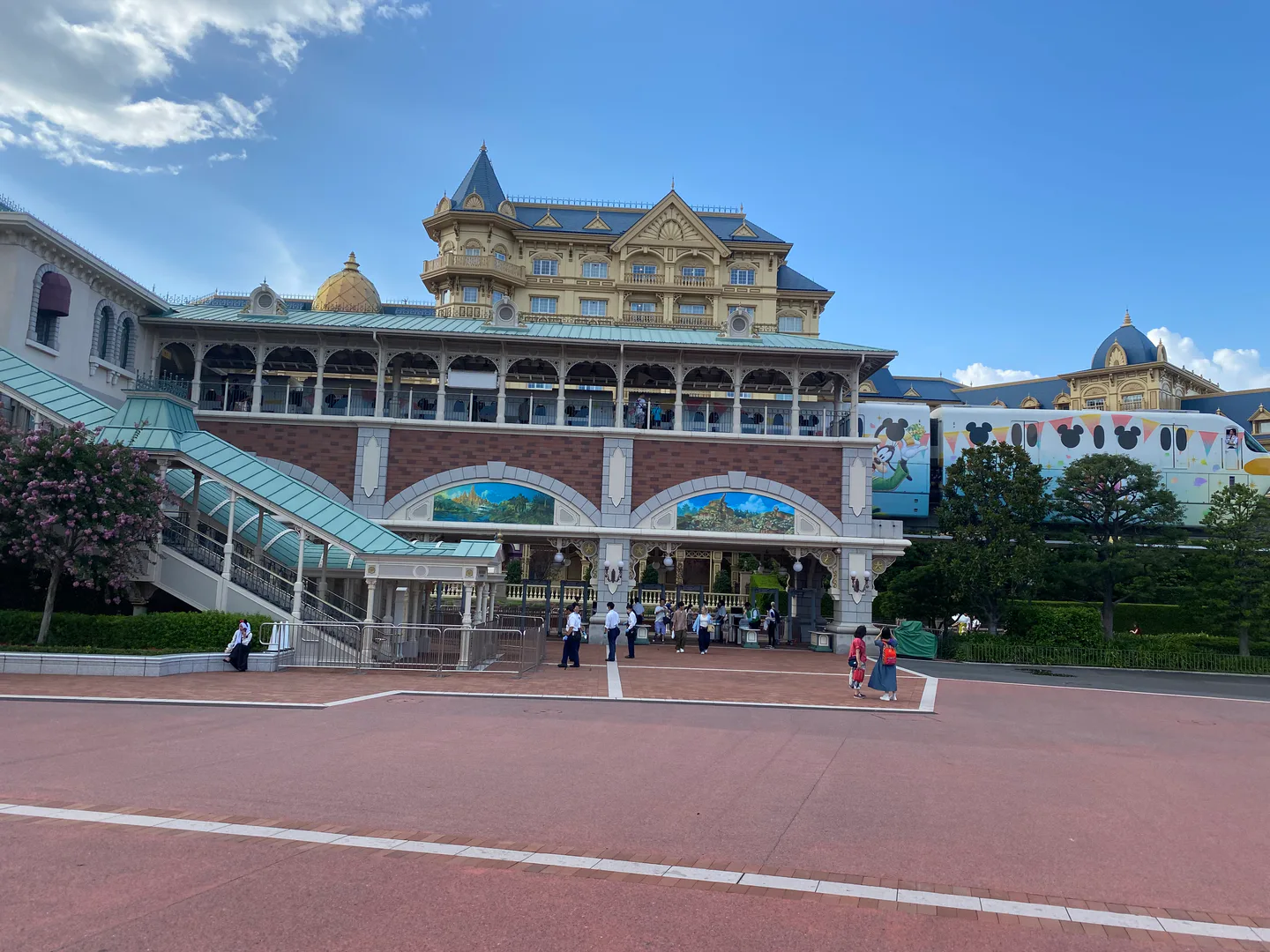
For one park day, keeping an existing well-placed Tokyo hotel often beats packing, transferring and checking in near the resort for a single night. Two consecutive days give a nearby hotel two chances to save effort: the late return after day one and the early start on day two. Those advantages have to be compared with its room premium and any lost convenience for the rest of Tokyo. The resort-versus-Tokyo base and hotel-type comparison help make that calculation.
If the second day triggers a hotel decision, work through the part you would actually buy: room-only versus package booking timing, package value, and which night to move are different questions. Happy Entry matters only if the added minutes serve your morning priorities. For a longer resort stay, compare three-day package order; for a hotel premium, the Disneyland Hotel versus Toy Story Hotel choice is separate again.
Day two should not be credited as a full Disney day if you must leave early for a Shinkansen, airport or difficult hotel transfer. A few hours in DisneySea before a long onward journey can incur the second ticket and baggage work without delivering another evening. A complete first day may be better than one full day plus a hurried fragment. If an early onward departure is unavoidable, a partial visit only makes sense with a deliberately tiny list and generous travel margin.
If luggage is the obstacle rather than park time, solve it separately. The Japan luggage-forwarding guide may keep a transfer day workable without forcing a suitcase and Disney morning into the same narrow schedule. A hotel move should be chosen for its time savings over the full stay, not because it sounds inherently more Disney-themed.
For two park days with an early start and late finish, compare rooms around Maihama for your park dates against the cost and travel time of returning to your Tokyo hotel.
Which plan survives a specific itinerary?
↔ Scroll table left or right
Trip pattern | Current starting choice | Reason | When to reconsider |
First Japan trip with many other Tokyo interests | One complete park day | Protects the remaining city itinerary | Both parks hold several true must-dos |
Disney is a main reason for travelling | Two full days | Independent mornings and evenings | The second day removes an equally important Japan experience |
One date fixed, short lists in both parks | Choose one park under current tickets | The limited Hopper is unavailable | A future valid Hopper or a justified two-ticket plan changes the choice |
Young children and strong interest in both parks | Usually two days | Each day's intensity can be lower | Back-to-back park fatigue outweighs the gain |
Day two is also a major transfer day | One complete day | A rushed fragment has weak value | Late, nearby onward travel leaves safe room |
Choose one day when you can honestly leave one park for another trip and want the rest of Japan to keep its space. Choose two when Disneyland and DisneySea each contain several experiences that justify a separate morning and you can name the day you are giving up elsewhere. If a limited Hopper returns, judge its live dates and rules as a third option; the July–September 2026 one should remain a historical comparison, not a ticket in today's shopping basket.
Resort ticket and transport details
Tokyo Disney Resort — August 2026 Park Tickets and date-based 1-Day Passport prices
Tokyo Disney Resort — August 2026 Park Operation Calendar
Tokyo Disney Resort — Disney Resort Line fares
Tokyo Disney Resort — Disney Resort Line operating hours and service frequency
Tokyo Disney Resort — Disney Premier Access availability, eligible experiences and prices
Related guides: Tokyo Disney Tickets 2026: Choose Disneyland or DisneySea Before You Buy 2 Days · Tokyo Attractions: Stop Counting Sights and Start Assigning Whole Days · 10 Days in Japan: Tokyo, Kyoto and Osaka Without Turning the Trip Into a Transfer Marathon · 3, 4 or 5 Days in Tokyo? How Long First-Time Visitors Need · Tokyo Itinerary 2026: 4, 5 or 7 Days — What Changes When You Add Disney or a Day Trip? · FUTURE OF LIFE+ at Takanawa: What Changed from Expo 2025 and How the 45-Minute Tokyo Experience Works · Best Japan eSIM for Tokyo, Osaka and Kyoto: Data and Hotspots · Tokyo, Kawaguchiko and Hakone: 3-Day Itinerary · Things to Do in Tokyo When It Rains: The Best Plan Depends on How Hard It’s Raining · Tokyo Split Stays: For 5–7 Nights, I’d Only Move Hotels in These Three Cases