
On 24 October 2026, the two Sera gardens offer a particularly clear choice: Flower Village Hanayume no Sato has finished its Kochia & Cosmos Hill season, while Sera Kogen Farm still lists its dahlia and garden-mum event through 3 November. The operator described the dahlias as being at their best on 23 October. A late-October visitor seeking a flower field should therefore start with the Farm and check that day’s bloom and opening notice. The answer changes in spring, summer and next autumn; these are distinct venues with different crops, gates and admissions.
A photograph labelled “Sera” is insufficient for planning. The organisation runs four gardens in the district, and the specific event may be at Sera Kogen Farm, Flower Village Hanayume no Sato, Hana no Mori or Wisteria Garden. A moss-phlox image does not lead to the sunflower field. Write down the event name and its garden address before setting off from Hiroshima. For a first-time trip, also weigh the drive against a Hiroshima city day and a separate Miyajima day; Sera is a deliberate rural outing rather than a spare-hour stop.
↔ Scroll table left or right
| Flower or travel constraint | Garden or decision | Reason to check again |
| Spring tulip or summer sunflower; autumn dahlia and mum | Sera Kogen Farm | Those crops belong to different events, not one continuous field |
| Pink moss phlox, blue nemophila, hydrangea or kochia hill | Flower Village Hanayume no Sato | It has its own road entrance; its 2026 kochia season has already closed |
| Time for a single rural stop | The garden with the strongest current display | A second gate brings more driving and another admission |
| Two genuinely appealing events on one date | Use a car and allow a full rural day | The venues are separate and each deserves walking time |
| No rental car | Confirm a garden-specific Flower Tour Ticket | Direct service is sold only on selected event dates |
| Only two days for Hiroshima and Miyajima | Keep the city and island days | A flower trip would replace substantial sightseeing |
Four gardens, two names often confused
Sera Kogen Farm is the site associated with large tulip, sunflower, dahlia and garden-mum displays. Flower Village Hanayume no Sato, also named Kamunonosato in the English listings, hosts spring moss phlox and nemophila, hydrangeas, and the kochia-and-cosmos hill. The same operator also runs Hana no Mori for roses and Sera Wisteria Garden for wisteria. Those other two are relevant when the flower you want belongs there; they should not be mistaken for either venue in this comparison.
Search images often flatten all four locations into a single “Sera flower farm.” That can cause a real route error: a visitor who wants a low pink carpet can arrive at the Farm during a tall sunflower display. The venues are separated by rural roads rather than connected by a walkway. Give a driver or navigation app the garden name and address attached to the current event. A Hiroshima or Miyajima overnight decision will also affect how early a car day can begin.
For each possible garden, confirm these details together:
- The event and its dates for your travel day
- The garden name and precise road address
- The current bloom condition and any closure
Event dates alone establish when a gate may open. They do not tell you whether this week’s flowers look like the photograph that drew you there. Bloom strength, weather and your access method decide whether the detour earns its place in the itinerary. The Furano lavender timing guide uses the same date-specific discipline in a different flower region.
What grows at Sera Kogen Farm
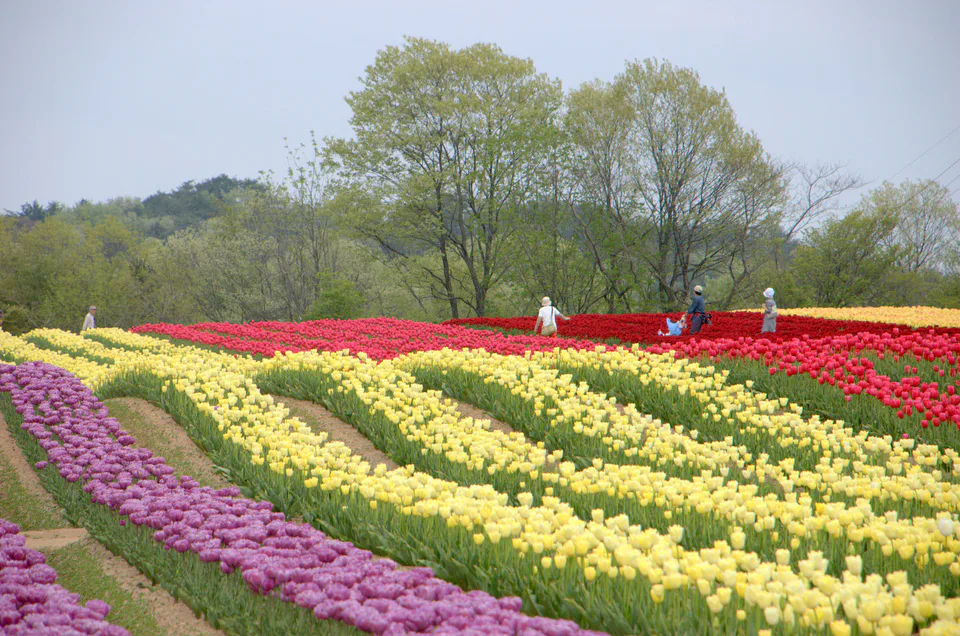
Tulips draw spring visits to the Farm, sunflowers dominate its summer field, and dahlias with garden mums make an autumn trip quite different. Treat the name as a location, not a promise that all three displays overlap. The farm’s event pages show separate periods, and flowering can change within an open period. If your itinerary already includes another flower destination, compare the actual plant and display style; a first-time Japan route of ten to fourteen days may have room for one regional flower day, but rarely every appealing field.
The summer 2026 sunflower event illustrates the gap between a scheduled end and the condition in the field. Sera Town reported strong viewing around 21–23 August and the farm extended the season through 30 August. That extension is now history; it is not a date to reuse for a future summer. A traveller planning next year should open the new sunflower event and bloom update before choosing transport. If summer in Hiroshima is already packed, the Hiroshima versus Fukuoka extra-nights comparison can help decide whether a Sera day fits at all.
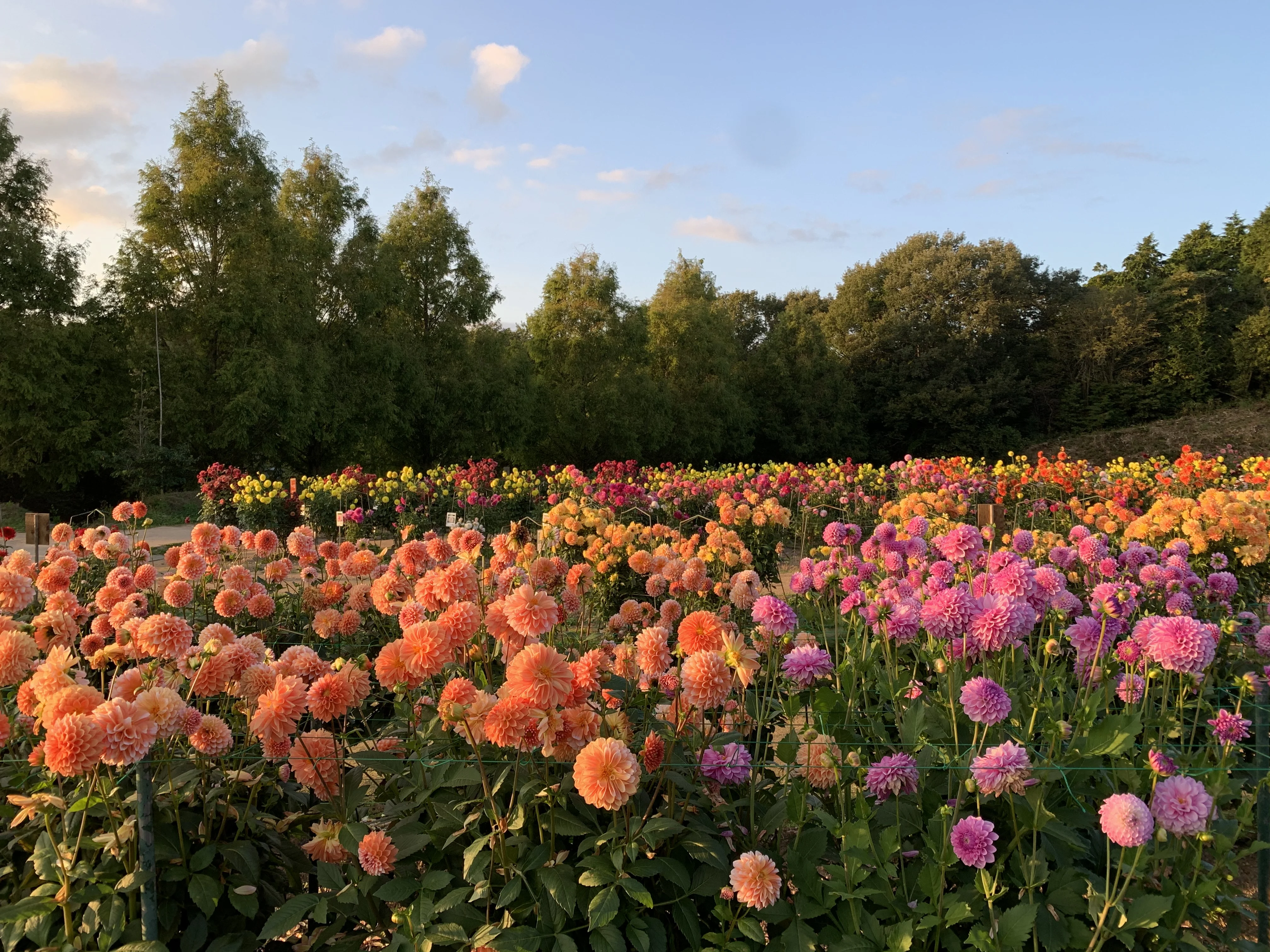
In late October 2026, the live decision has moved to the dahlia and garden-mum event. The current Farm listing gives 12 September to 3 November and reported best dahlia viewing on 23 October. That is a stronger reason to drive there now than an old sunflower photograph. The display may change after rain or near closing, so inspect the event page on the day you go. The Miyajima autumn foliage route is a different seasonal choice and needs its own weather and timing calculation.
Hanayume’s appeal is the broad hillside, when it is in flower
Hanayume no Sato’s low spring flowers spread colour across a larger-looking landscape: moss phlox and nemophila make a different photograph from rows of tulips. Hydrangeas later alter the texture and scale. In the kochia season, the rounded plants and cosmos share the hill, with green kochia early and warmer colour later. This is why the venue can be the stronger choice for a landscape photograph even when the Farm has a more famous name. The flower and week still need to match.
For 2026 the Kochia & Cosmos Hill ran 22 August to 18 October, with a maintenance closure on 28–30 September. Its event page now says the season has ended. It would mislead a late-October traveller to send them there for red kochia as though the gate remained open. Keep those dates as a record of this year’s season, not as a standing timetable. Next autumn’s opening, closure interval and colour progression have to come from the new event listing. A Japan autumn photography guide helps with the wider trip, but flower-field dates remain garden-specific.
An open event and a photogenic peak are two separate facts. Green kochia in late August is not the red hill shown in an October image, and a season’s final week may look different again. Match the plant, colour and date before paying for a rural journey.
A seasonal calendar is more useful than a favourite-garden ranking
Spring social photographs routinely appear in searches for autumn Sera. Start with the month of your trip and the operator’s current event list, then compare only gardens with an active event. Tulips and moss phlox can both matter in spring, while roses or wisteria may make either garden in this article the wrong destination. This approach prevents a pretty April image from deciding a September drive.
The broad sequence is useful for narrowing the event search:
- Spring: compare tulips, moss phlox, nemophila and wisteria on their own event calendars.
- Early summer: check hydrangeas, hollyhocks and rose displays at the relevant gardens.
- High summer: follow the sunflower event and its live field condition rather than an old peak date.
- Autumn: compare the Farm’s dahlias and mums with Hanayume’s kochia and cosmos while both are open.
These are seasonal tendencies, not a guarantee of a particular bloom week. Look at event dates first, then the fresh flower condition for the exact venue. If the calendar shows weak conditions in Sera, spending longer in Hiroshima can be the better choice: the Peace Park, castle and Shukkeien itinerary does not depend on a field reaching peak colour.
Two admissions and a rural transfer change the day
The Farm’s access page places it about 18 minutes by car from Sera IC; Hanayume’s access information puts that garden around 25 minutes from the interchange. They are separate trips from the road, not two gates beside one another. Driving between them also costs time and a second entry fee. If both have strong but genuinely different displays, a car makes a two-garden day possible. If one has the clear peak, use the extra time there instead of collecting entrances.
Adding a second venue means accounting for all of these:
- A separate ticket at the second gate
- The road transfer between distinct rural sites
- Another parking, entrance and walking cycle
- Less daylight at whichever display is strongest
A two-garden plan is easiest to justify when two distinct flowers are at strong viewing condition and the group already controls its own car. Someone relying on a dated bus product should normally commit to the garden it actually serves. Avoid calculating the day from driving minutes alone; parking, walking the field and stopping for food take longer than the map transfer. The Onomichi day-trip comparison offers another use for an extra Hiroshima day if the second flower garden is marginal.
Admission reflects the bloom, and each event has its own gate
The operator varies admission with flowering conditions and charges entry separately for each event. Its current fee schedule lists the 2026 dahlia event at ¥600–1,200 for adults and ¥300–600 for children; the 2026 kochia event was ¥500–1,000 for adults and ¥200–500 for children. Those are event-specific ranges, not a universal price for every Sera garden or a promise for next year. General hours are listed as 9:00–17:00 with last entry at 16:30, subject to event changes.
A lower fee at the beginning or end of a flowering period can indicate a less complete display. It is a useful clue about conditions, but it does not tell you whether your desired section of a large field is attractive. Conversely, the upper price does not reserve sunshine or empty paths. Read the current bloom notice before treating a cheaper ticket as the same visual experience at a discount.
Budget for each garden you actually enter, and check whether a tour product includes one admission or more. A family choosing two fields can spend far more than the headline single-ticket amount. If the trip already includes paid experiences around Hiroshima, such as a night food tour, compare what the flower detour adds rather than simply counting activities.
A car protects the plan when conditions change
From central Hiroshima, the Farm’s access page estimates a drive of about one hour and twenty minutes; traffic and the starting point affect the real time. Peak bloom weekends and holidays can bring congestion near the destination. A driver can inspect the morning bloom notice, choose the stronger garden and begin earlier than a fixed tour departure. A car also helps carry water, layers and any purchases. It is a practical advantage, not permission to assume the roads will be quiet.
Self-driving is especially useful when you may need to:
- Switch to a better-performing garden after reading the morning update.
- Arrive before the densest peak-bloom traffic.
- Carry water, rain gear and purchases without a fixed bus limit.
- Add a second venue only if time and bloom conditions warrant it.
The driver must be comfortable on rural roads and remain fit to drive after a long outdoor visit. Allow for parking queues and the return journey to Hiroshima. A second garden should be an option after the first visit, not an obligation that forces everyone to rush through the stronger field. Travellers without a car should first test the bus dates rather than assume an ordinary regional transit route reaches whichever flower garden they choose.
The direct bus only exists on named tour dates
The Farm describes a Flower Tour Ticket from Hiroshima Bus Center that combines a direct bus and admission on selected weekends and holidays during specified periods. Its access page says there is no direct bus outside those periods or on ordinary weekdays. It is not a year-round route. The English access examples still show 2025 dates, so they cannot establish 2026 service. Use the current ticket listing for the garden and date you need; otherwise plan a car, an appropriately priced taxi, or a different outing.
A bus that reaches one Sera garden may not serve the other event that appears in your search results. Confirm the exact destination, departure point, return time, included admission and advance-purchase rule before building the whole Hiroshima day around it. If no product is published for your date, do not substitute an old screenshot. The Hiroshima Airport versus Iwakuni Airport comparison is useful for wider arrival logistics but does not solve the final rural transfer.
- The exact calendar date
- The garden at which the bus stops
- The Hiroshima Bus Center departure and return times
- What admission is included
- The reservation deadline and purchase method
Where the transport chain is uncertain, move Sera to a car day or leave it out. A speculative direct bus can strand the main purpose of the outing. If you remain in Hiroshima city, the station restaurant guide provides a more flexible meal plan after sightseeing.
How much Hiroshima time does a flower field cost?
On a first visit with two full days, Hiroshima city and Miyajima usually deserve those two blocks. Sera sits inland and depends heavily on bloom quality. Moving it into a two-day schedule means giving up a substantial city or island experience. The Hiroshima and Miyajima two-day plan shows how much is already in that time; Sera works better as an extra day when flowers are a main purpose of the trip.
A third day for Sera makes sense when several conditions line up:
- Flower photography is a principal reason for the trip.
- The current bloom report shows a display you genuinely want.
- A car or a confirmed dated direct bus makes the venue reachable.
- You can give the rural outing its own substantial daylight block.
Use the live display to decide whether the flower day outranks alternatives. Someone mainly interested in history, food and coastal scenery may prefer more time in the city, a Hiroshima food route or Onomichi. For a flower photographer arriving during a strong dahlia week, the ranking may reverse. Neither preference can be determined from the word “Hiroshima” in an itinerary.
Miyajima and Sera compete for the same daylight
Miyajima already requires ferry travel, walking and perhaps Mt. Misen. A late-afternoon return from the island leaves too little time for a rural farm that generally closes at 17:00. Joining both on one day shortens the best part of each. The Momijidani and Mt. Misen autumn choice may itself add several hours. Keep Sera on another date unless the island visit is intentionally brief and the drive has been mapped in detail.
With three days, the order can remain simple:
- Day one: Hiroshima city and its main sites.
- Day two: Miyajima, with an island return that is not rushed.
- Day three: Sera, only if the flower and weather reports justify the journey.
If only two days are available, put Sera into the plan only if the live flower display matters more to you than one of the city or island days. This is not an attempt to squeeze a farm into a gap after Peace Park. A Hiroshima city accommodation base can reduce some departure friction, but it cannot create an extra half-day of farm opening hours.
Choose the field shape before packing lenses
The Farm’s tall sunflower stands, tulip rows and individual dahlias invite different frames from Hanayume’s lower moss-phlox or nemophila carpets. Kochia creates rounded masses across a hill, and its colour changes through the event. Select the venue by the photograph you want to make on your actual date. A wide scene of continuous ground colour will not appear merely because you brought a wide lens to the wrong crop.
Match a composition to the living display:
- Low carpets and broad colour: Hanayume’s moss phlox or nemophila season.
- Tall rhythm across a field: the Farm’s tulips or sunflowers.
- Individual flower detail: the Farm’s dahlia and garden-mum display.
- Rounded autumn colour: Hanayume’s kochia-and-cosmos event while open.
For tripods, professional or commercial work, cosplay and bridal sessions, read the garden’s current photography and facility-use rules. Ordinary visitor photography may be permitted under conditions that do not extend to commercial setup or blocked paths. Those conditions can vary with the event. A handheld camera and a flexible hour are often more valuable than an elaborate kit when the flowers, crowd and light decide the scene.
Weather can outweigh a strong bloom report
A peak sunflower field at 14:00 in August can be physically taxing in sun and heat. Arrive earlier, take water and sun protection, and decide how long the group can safely stay outdoors. A cloudy day may soften portrait light even if it removes the deep-blue background people expect from summer promotional photographs. Photography value and comfort need separate judgments.
Spring and autumn rain can leave grassy paths and slopes muddy. Shoes suitable for the ground matter more than a photo outfit that cannot handle the walk. If a downpour makes the rural visit mostly wet travel, preserve another part of the Hiroshima itinerary rather than treating “peak bloom” as an order to go. The rainy-day itinerary decisions offer a way to choose between keeping, shortening and rescheduling a field visit.
Do not confuse a bloom update with a weather guarantee. Check the forecast and the event notice close to departure, then allow the itinerary to change. The Hiroshima versus Fukuoka longer-stay comparison can help if bad weather shifts a whole regional plan, while a single wet farm day may only require swapping the order of city and rural activities.
The late-October 2026 choice
As of 24 October, Hanayume’s 2026 Kochia & Cosmos Hill has ended. That removes it as a current red-kochia alternative even if photographs from earlier in the month still circulate. The Farm’s dahlia event is listed until 3 November and the 23 October report placed the dahlias at best viewing. For a flower-led visit in the coming days, start by checking the Farm’s present opening and field conditions.
The summer comparison has also expired: the Farm’s sunflower extension ended on 30 August. Its success this year does not establish a rule for next summer. Likewise, Hanayume’s maintenance closure on 28–30 September belonged to its 2026 kochia season. Keep those dated facts out of a future itinerary unless the new event pages repeat them.
For later travel, use the same decision process with new dates: identify the plant you want, locate its specific garden, inspect the current bloom and admission, then check a viable journey back to Hiroshima. That sequence is more durable than any ranking between two gardens. The Hokkaido summer five-day route offers another flower-region comparison if the national itinerary is still flexible.
A workable decision for the day you visit
Sera Kogen Farm has the stronger current case in late October 2026 because the Hanayume kochia event has closed and the Farm still lists dahlia viewing. In spring, Hanayume can be the better choice for broad low-growing colour; in summer, the Farm’s sunflower field may be the draw. These are decisions about an active display, not a permanent winner between venues.
A car gives the most flexibility for a Sera day from Hiroshima. A direct Flower Tour Ticket is useful only on a published date serving the desired venue; otherwise its apparent convenience is imaginary. Visit two gardens only if their current flowers differ enough to repay another admission and transfer. For most travellers, one strong field and a relaxed return is a better use of the day. If accommodation location matters, compare Hiroshima Station and Peace Park bases before committing to an early rural departure.
If the flower day requires another night, compare Hiroshima-area rooms before choosing a car pickup and return point.
Related Hiroshima decisions
Two days for Hiroshima and Miyajima · First-visit case for Hiroshima · Hiroshima hotel location
Garden pages and seasonal notices
Four Sera gardens and current displays · Admission ranges and opening hours · Sera Kogen Farm road and bus access · Hanayume no Sato access · 2026 Kochia & Cosmos Hill dates and closure · August 2026 sunflower bloom report · 2026 dahlia and garden-mum event. Flower dates and admission should be checked for the actual visit day.
Related guides: Lavender timing in Furano · One-night base: city or island · Hiroshima evening food tour · Onomichi with three Hiroshima days · Meals in Hiroshima and Miyajima · Eating near Hiroshima Station · A day through central Hiroshima · Which airport reaches your destination · Extra nights in Hiroshima or Fukuoka · Asahidake and Kurodake in autumn