
Mito is usually the easier hotel base for an Ibaraki visit without a car. The Kashima Rinkai Railway links it with Oarai in about 15 minutes, so the train is a small part of the decision. Oarai’s aquarium, Isosaki shrine, fish-market area, shore and ferry terminal are spread beyond its station. Staying on the coast makes sense when it opens an evening and a morning that would be awkward as a Mito day trip.
Keep a Mito room when the Oarai plan is a daylight outing and your next journey uses JR. Sleep in Oarai if you can identify two coast-side windows you will use, such as an evening walk plus sunrise at Kamiiso, or sunrise followed by a relaxed aquarium morning. A ferry ticket alone is not proof: October 2026 schedules still show direct buses from Mito Station to the port. See Ibaraki rail passes and regional planning.
↔ Scroll table left or right
Trip pattern | Better starting base | Why | When the other base wins |
One night, Kairakuen and a daylight Oarai visit | Mito | One room, JR onward access and a short rail day trip | Sunrise by the water is the central aim |
Coastal evening and Kamiiso sunrise | Oarai | Two extra hours-of-day windows without pre-dawn transit | Bad wind or rain removes their value |
Aquarium, market and shrine during daylight | Usually Mito | The local bus or taxi is needed either way | You also want an Oarai evening or early morning |
Two nights with one full coast day | Two nights in Mito | Avoid a second check-in for a 15-minute train ride | The itinerary ends and begins on the coast |
Boarding the 19:45 Sunflower ferry | Mito can work | Current direct bus leaves Mito at 17:06 and reaches port at 17:45 | Earlier travel is fragile or a coast stay has another purpose |
Large bags, a family or older companions | Lean toward Mito | Leave the main case at the rail hub | A carefully located coast hotel removes more local transfers |
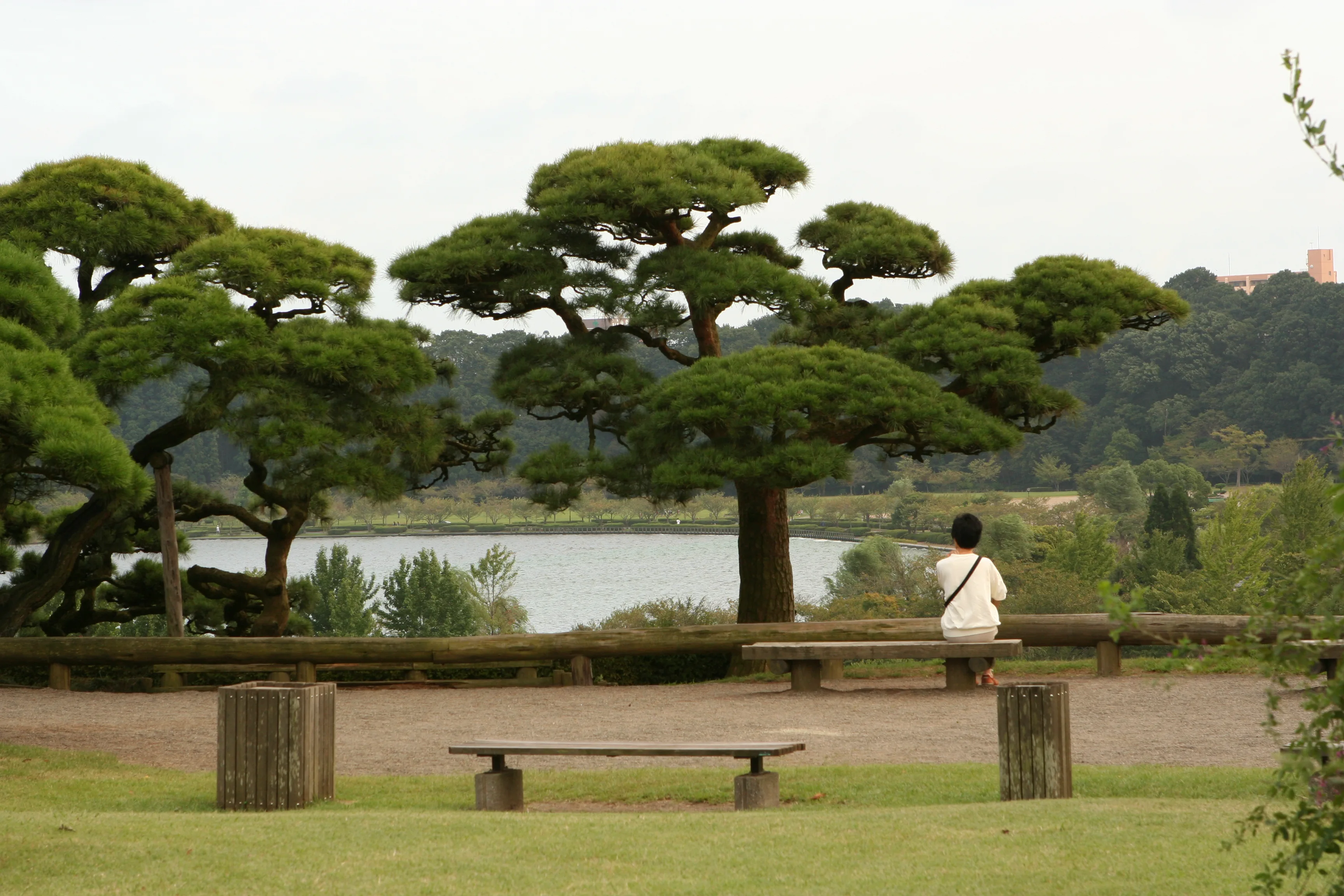
Kairakuen’s trees and garden paths offer a Mito stop before or after a coast excursion. Photograph by Lukas / Wikimedia Commons, CC BY 2.0.
The short railway hides the last-mile work
The rail operator describes the Mito–Oarai ride as roughly a quarter of an hour, and its March 2026 timetable has many departures around 14–18 minutes. A hotel change cannot save enough train time by itself to justify packing and checking in again. See Kashima Rinkai Railway — 2026 timetable.
The spread of Oarai attractions is the real constraint. Aqua World sits about 4.5 km from the station by the rail operator’s map, with the sightseeing bus taking roughly 15 minutes. The ferry terminal is in a different direction, roughly a 20-minute walk from the station or reachable by a separate route 50 bus. The shrine, market and coast add further legs. Draw these points on the map before choosing an Oarai hotel. See Kashima Rinkai Railway — Oarai Station access. See another coastal hotel decision.
Compare complete journeys, including the local connection:
Mito room → local rail → Oarai Station → bus, taxi or walk → attraction.
An Oarai room removes the first rail leg, but it does not remove every local transfer:
Oarai room → its nearest stop or taxi → aquarium, shrine, market or port.
A hotel near Oarai Station may still be far from the sunrise shore; a shore hotel may still need a bus for Aqua World. The town name alone tells you little about the actual morning route. See car-free station base comparisons.
The local bus changed in October 2026
Oarai replaced Kaiyu-Go with the reorganised Umimachi Line on October 1, 2026. Its adult fare is now ¥200 per ride and the adult day ticket is ¥500; children aged elementary-school age pay ¥100 per ride or ¥250 for the day ticket. The sightseeing route serves the beach, port-side sights and Aqua World, while other routes have different operating-day limits. Older ¥100/¥200 Kaiyu-Go fare advice is obsolete. See Oarai Tourism Association — local access and Kaiyu-Go. See the revised Umimachi Line route and fares.
The Umimachi Line day pass does not work on Ibaraki Kotsu route 50, which also began calling at Oarai Station on October 1. Route 50 is the service to use for the ferry terminal, with the correct Aqua World/Nakaminato direction after 17:00. A modest fare does not help when the next useful departure is too late. Check the dated route map and departure, then decide whether a short taxi fills a gap better than a long wait.
A family with bags should count changes of vehicle and time waiting outside as well as fare. Two cheap rides can still be a poor plan if a child is asleep or the hotel is awkward for the stops that matter most. See a family transfer comparison.
What an Oarai night can add
The local tourism association’s overnight example puts a coastal walk around 20:00, sunrise at Kamiiso around 06:00 and Aqua World around 09:30. Those are illustrative times, not a timetable to copy. The point is that a coast hotel gives access to hours on either side of the normal Mito day-trip window. See Oarai Tourism Association — overnight model itinerary. See a Fuji sunrise overnight comparison.
Look for at least two genuine benefits from sleeping in Oarai:
A shore walk or dinner after the regular day-trip window.
Kamiiso sunrise without a pre-dawn transfer from Mito.
Breakfast or shrine time on the coast before the day crowds.
An early aquarium start or another coast-side anchor.
A port journey that is materially safer from the chosen hotel.
An afternoon aquarium visit alone rarely needs a second hotel. You still have to solve the aquarium-to-station journey, and a Mito room can hold the main bags while you explore with a smaller pack. See Kanto day-trip choices.
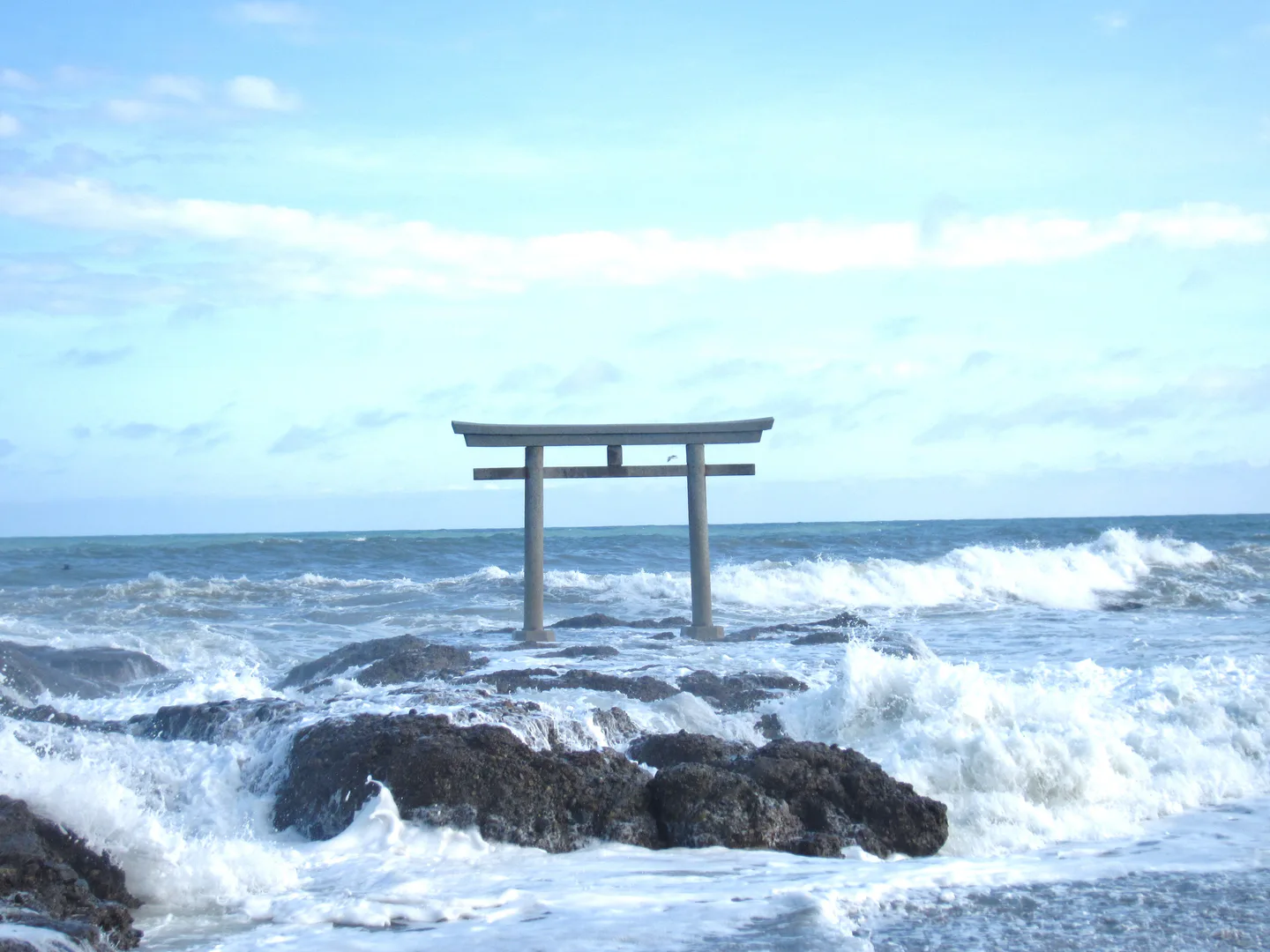
The torii stands among rocks at Kamiiso on the Oarai shore. Public-domain photograph by Saigen Jiro.
The Hokkaido ferry does not settle the hotel choice
For October–December 2026, MOL Sunflower lists an evening Oarai–Tomakomai sailing at 19:45 and a night sailing at 01:45. Those are very different travel days; neither automatically requires sleeping in Oarai. Check the departure date and boarding cutoff, which is a separate constraint from the published sailing time. See MOL Sunflower — current ferry timetable.
The ferry operator’s October 2026 port page lists a direct Mito Station North Exit bus at 17:06, reaching the terminal at 17:45. The 18:01 departures reach it at 18:37 on weekends and holidays or 18:40 on weekdays; a 21:15 bus arrives at 21:43 for the night ferry. The listed adult fare is ¥650. These are current examples, not a reason to take the latest possible bus without checking boarding rules and traffic. See MOL Sunflower — Oarai Port access.
If the ferry is your only Oarai objective, a station-side Mito hotel can keep JR access easy and still connect to the port directly. Oarai becomes more persuasive when you also want a coastal evening or sunrise, or when the inbound journey to Mito is too uncertain for a same-day port transfer. See a car-free Hokkaido itinerary.
An arrival from Tomakomai poses another problem. Disembarkation and onward departures can make an Oarai or Mito night useful, especially on the later ferry. Choose it from the arrival timetable and your next connection, not by reversing the outbound bus example. See ferry night and port logistics elsewhere.
For one night, keep one base unless the shore is the trip
A Mito room is a practical default: leave the main case, visit Kairakuen or another Mito sight, take a day bag to Oarai, then return to the JR hub for dinner and onward travel. The railway is short enough for a daylight aquarium, shrine or market excursion. See Mito Station-area rooms.
A sunrise goal changes the answer. Sleeping in Mito only to arrange a pre-dawn transfer to Kamiiso wastes the main advantage of the overnight. An Oarai room also helps if you plan to be by the sea after dinner and again before breakfast. See Oarai coast rooms.
Arrival time by itself is a weak rule. Reaching Ibaraki at 18:00 with no sunrise plan can still favour Mito. Arriving at 15:00 with sunset, dinner and dawn by the water can already justify the coast. Look at the next twelve hours of activities, not just the check-in clock. See Nikko hotel-night reasoning.
Two nights rarely need two check-ins
Moving between Mito and Oarai trades a roughly 15-minute rail ride for packing, checkout, bag storage and a second check-in. The distance between towns does not make the hotel move frictionless.
Split the nights when the Oarai room earns at least two time windows unavailable from Mito: evening coast and sunrise, or sunset plus port positioning and an early coastal morning. One dawn photograph may be less valuable if the move consumes the preceding afternoon. See another coast stay calculation.
Two nights in Mito suit a plan of Kairakuen and a full daylight Oarai excursion with one stable luggage base. A Mito night followed by an Oarai night works when the route naturally ends on the shore and starts there again next morning.
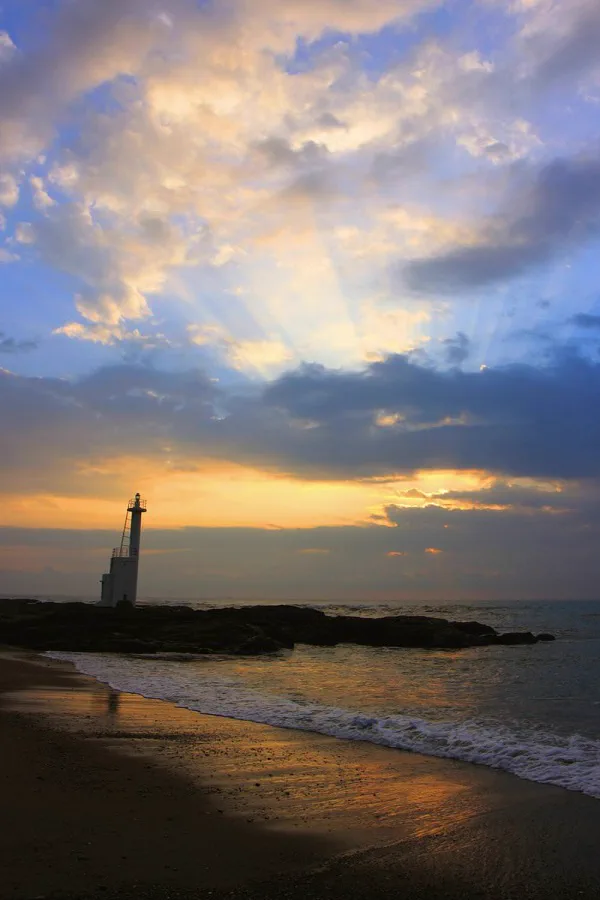
The Oarai shoreline changes with weather and light; an overnight earns most when both the evening and dawn are usable. Photo: Ibaraki Tourism Photo Library.
Weather changes the value of a coastal room
Wind, heavy rain or a poor dawn forecast can erase the exact hours bought by an Oarai hotel. Mito still supplies rail access, restaurants and a way to postpone or shorten the coast excursion. The room choice is therefore more sensitive to weather when the night is booked specifically for sunrise.
Check the cancellation deadline against the forecast. If the Oarai stay no longer supplies two useful coast windows, consolidating in Mito may protect the trip. A prepaid coast room can still make sense for other reasons, but do not preserve a second check-in simply because it was once the plan.
Luggage and mobility can outweigh the rail minutes
A Mito hotel lets a family travel to Oarai with day bags. Splitting hotels puts the main luggage onto the local train and adds the Oarai last mile. With children or older companions, that extra hand-off may dominate the small rail saving.
Inspect an Oarai property’s position against the station, shrine, aquarium and port. A shore room can be excellent for sunrise while requiring a taxi elsewhere. Compare all vehicle changes and waits, including any step-free route your group needs. See a car-free ryokan base comparison.
Forwarding a case can rescue an otherwise strong split, but it does not create a reason to move. If luggage is the only obstacle, check delivery timing and the receiving hotel before paying for two bases. See Japan luggage-forwarding guide. See Izu Oshima Day Trip or Overnight?. See Japan Rainy-Day Backup Guide. See another luggage-forwarding example.
Mito protects connections; Oarai protects coastal hours
For a normal one- or two-night car-free trip, Mito remains the more flexible base. Oarai is close by rail, while JR onward connections and leaving bags at one hotel make the daylight visit easier to manage.
Choose Oarai when the stay itself changes what you can see: a shoreline evening and Kamiiso sunrise, or a calm early morning before the aquarium. Daylight-only aquarium, market and shrine stops do not by themselves demand an Oarai hotel. See Otaru overnight timing.
A Sunflower sailing is not enough evidence for an Oarai room. Mito-to-terminal buses remain listed in the current October 2026 access information; confirm the sailing date, bus operating day and required boarding margin before deciding.
If removing the coast room would not remove two experiences you care about, keep the Mito room and use the short railway. If it would erase both evening and dawn at the water, the local hotel is doing a real job. See a car-free Kagoshima base choice.