A free hotel car park saves one charge. It does not save a second drive to dinner after everyone has already come back from the beach. For an Okinawa road trip, mark how many times the car will leave and return to each proposed hotel on an ordinary day. A paid space in Chatan can serve the trip better than free parking at a remote room if dinner and an evening walk are possible after the key is put away.
One outward-and-back circuit is usually easy to live with. A second circuit means getting the party, bags and child seats moving again; three on successive days suggest that the hotel is between the wrong destinations. Fuel may be the smallest part of that repetition. The driver must find the vehicle, navigate again and park again, often when everyone is tired. See Okinawa car-rental timing.
Count returns to the hotel before comparing parking fees
↔ Scroll table left or right
Daily driving pattern | What it means | Hotel feature that matters |
Leave after breakfast, return at night | Low repeat effort | Dependable parking and a clear road exit |
Return at 16:00, leave again for dinner | Second start is costly | Walkable evening food or on-site dining |
Two room stops before bedtime | The room is serving as a relay | Reconsider the base and day grouping |
Drive by day, park once in Chatan, walk in the evening | The car can rest after its main job | Paid parking may still be a good choice |
Several short Naha city trips | A rental car may add work | Walking access and Yui Rail may beat a garage |
If the car itself is still undecided, the rental-versus-public-transport guide tackles that earlier choice. Here the vehicle is already booked, and the question is which address lets it do useful work. See Do You Need a Car in Okinawa?. See the rental-car decision.
A useful measure: full car circuits per day
Count a circuit only when the group leaves the hotel by car and later comes back to it.
Hotel to one or several places and back to the room counts as one complete circuit.
Driving out again after a shower or rest creates a second circuit. Each restart brings a fairly fixed amount of effort even when the next restaurant is nearby.
The group may need to reach the lift, fetch keys, strap in children, repack beach gear, set a route, clear the garage and agree to leave again. With four adults, small children or older parents, coordinating those steps can be harder than the short drive. See driving Okinawa with children.
What the parking price misses
Treat the published parking charge and the time cost of using that space as separate quantities.
The time cost can include a walk or shuttle to the car, uncertainty about an available bay, height limits, a re-entry procedure, gathering the party and a temptation to drive again simply because the car is there.
Even ¥0 parking can be poorer value than a ¥500 nightly charge when the latter location eliminates a repeated evening excursion by car. Compare the yen amounts as yen; an old US-dollar conversion is too dependent on the booking date to help the hotel choice.
Seragaki: the car can be farther away than the room
The parking arrangement at a resort matters little when you depart after breakfast and return for the night. It matters much more if a 16:00 swim and shower are followed by another drive for a 19:00 dinner. See a short Okinawa itinerary.
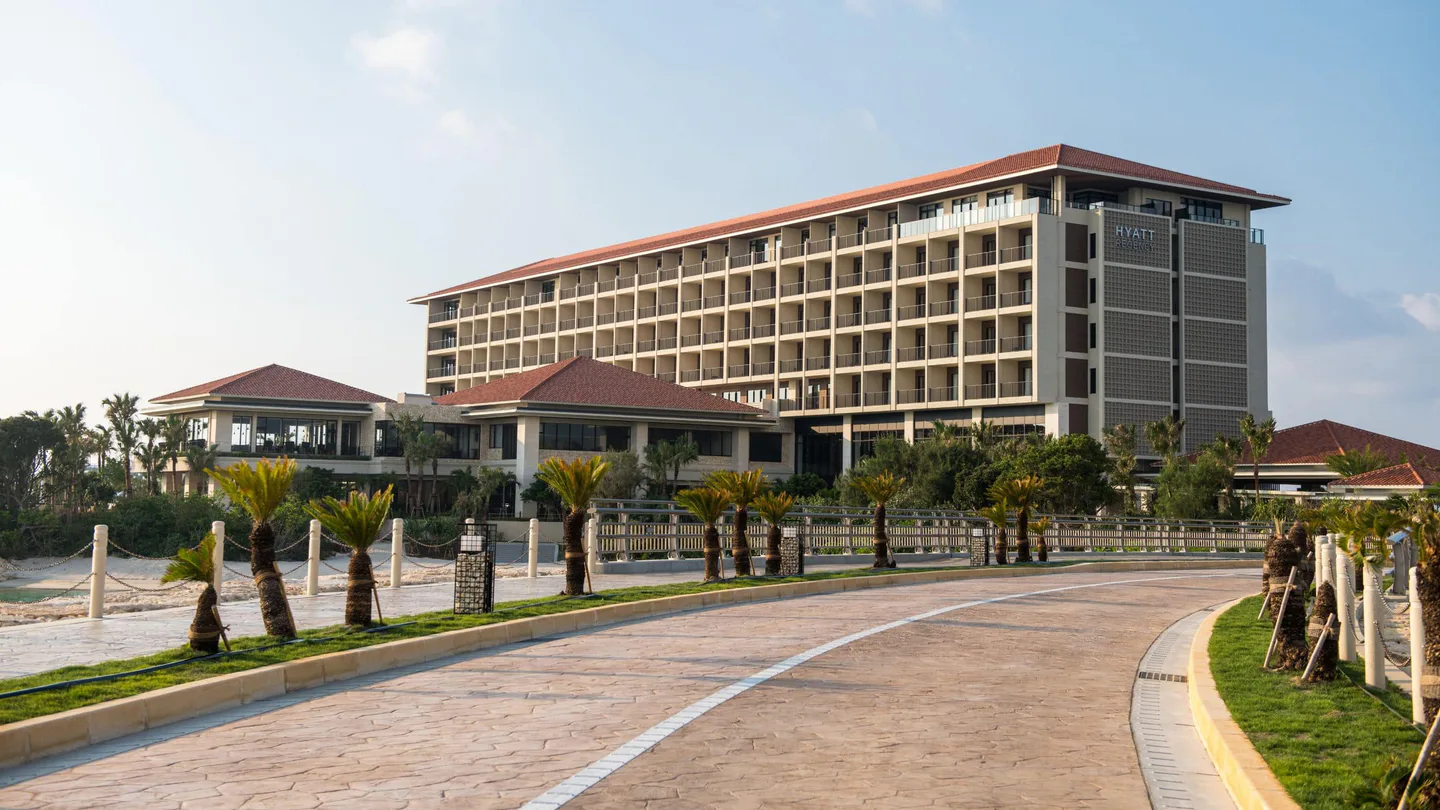
Hyatt Regency Seragaki Island Okinawa places self-parking on the mainland side rather than at every island room. Luggage can be dropped near the island entrance; the Beach House shuttle or roughly five-minute walk back to the vehicle adds a distinct step. Shuttle hours can change with the season, so the precise evening journey needs checking when the room is booked. See the Seragaki resort routine.
For one daily drive, the extra walk can be a small part of a resort stay. If the group returns in late afternoon and starts a separate dinner outing every night, that same access step is paid twice each day.
Ask how much effort separates “we are back in our room” from “we have all got into the car again.” A high restart cost is acceptable if the resort restaurant, shore and evening activities are the reason for sleeping there.
Chatan can make a ¥500 parking space useful
A fee may buy an easier evening if the vehicle can remain parked while everyone eats and explores on foot. See Chatan or Naha for evening shopping.
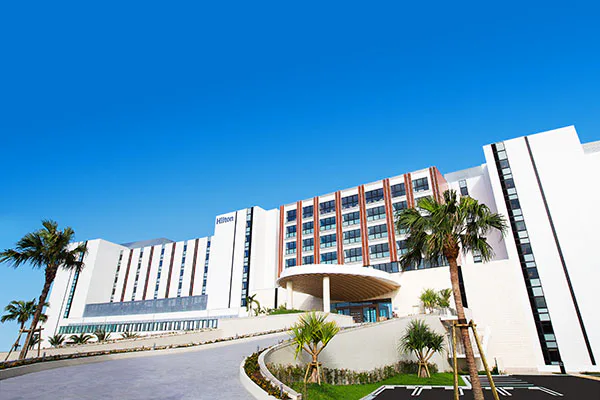
Hilton Okinawa Chatan Resort lists on-site self-parking at ¥500 per day with in/out privileges. It sits next to Mihama American Village, so the driver can finish the daytime road circuit and join the rest of the party for dinner or shopping without another vehicle trip. See Hilton’s parking details.
That is the useful comparison with a free suburban bay: one payment versus repeated starts. The Hilton charge is not a promise that every Chatan hotel has the same arrangement; compare the actual property and its walking route.
The Chatan hotel comparison looks beyond the price of the bay to what remains accessible once you leave the car. See the Chatan hotel comparison. See three Chatan hotels.
Can one afternoon or evening have no driving?
On the daily plan, mark a block when the vehicle is intentionally idle. If no hotel on the shortlist allows one, ask whether the location is forcing too much car use.
A genuine zero-drive block means you can stay in or walk out without needing another vehicle retrieval. See an Okinawa without-car alternative.
It might look like any of these:
An Onna afternoon at the resort followed by dinner there.
An American Village evening in Chatan after the daytime car is parked.
Kokusai-dori and central Naha on foot once the road-trip portion has ended.
A parked car is not wasted merely because the trip is described as self-drive. Time without it can make the rest of the route easier to sustain.
Naha needs a different test from the north coast
A hotel that works for northern drives may not be the right address for the urban end of the trip. Short map distances in Naha still involve city traffic and another search for parking.
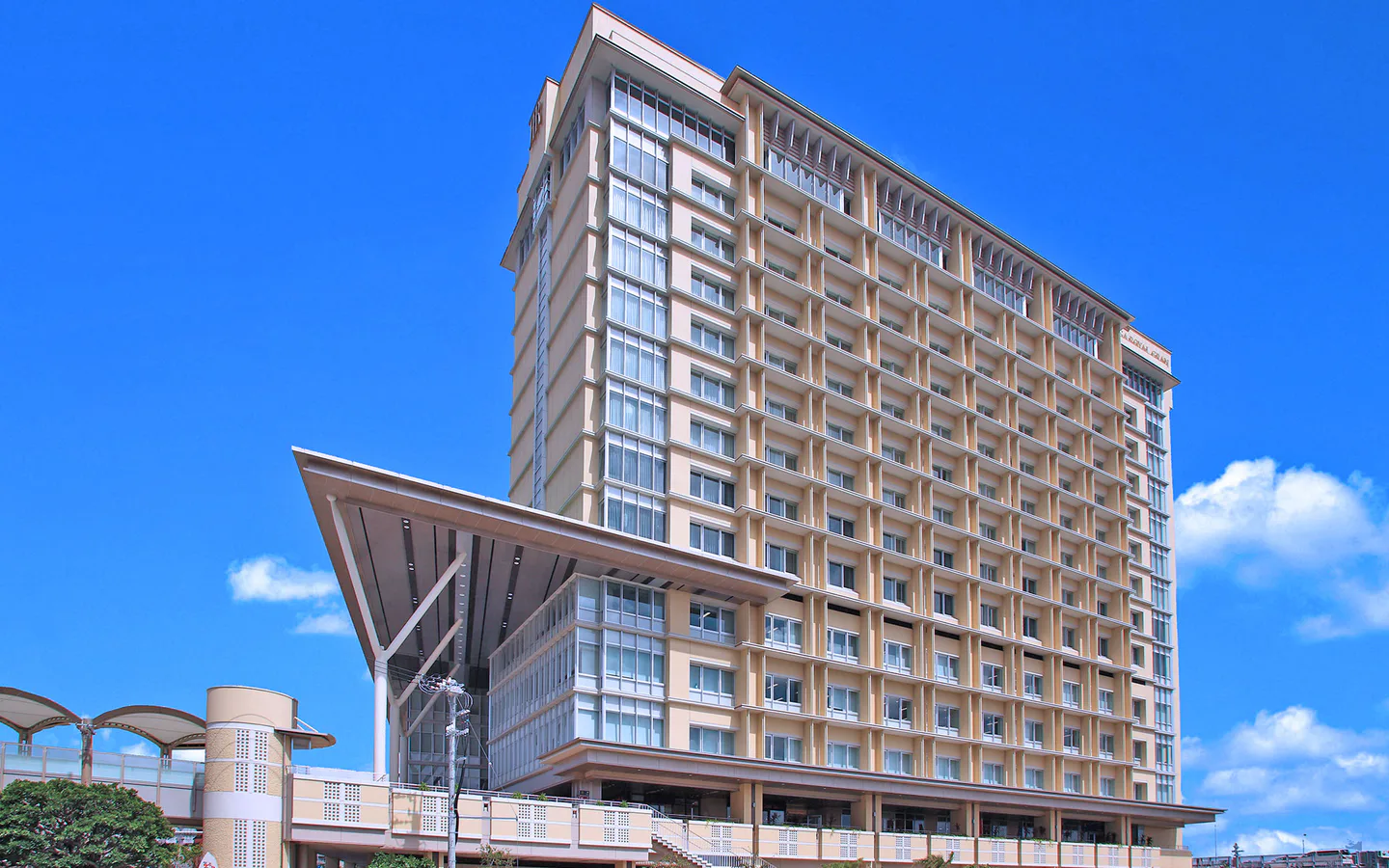
Hyatt Regency Naha’s tower garage is first-come-first-served. A large vehicle or a full facility can send a guest to nearby paid parking. Parts of Kokusai-dori are normally pedestrian-only on Sundays from noon to 18:00, subject to local operation, so the route through central Naha changes at that time. See the Kokusai-dori pedestrian access map. See walking Naha for two days.
When the remaining plan is a market walk, dinner and a flight the next day, the value of keeping the rental car can fall sharply. Naha itself is not off limits to cars; the question is whether each additional trip serves a purpose.
A northern or Onna resort and a final Naha night do different jobs. The last-night comparison explains when moving south protects the rental return and airport morning. See Onna vs Naha for the last night. See Onna or Naha for the last night.
With one circuit, make parking dependable and move on
If the vehicle leaves once after breakfast and comes back after dinner, inspect the practical garage conditions:
Is a guest space available, and can it be reserved?
Will the vehicle fit the height and size rules?
What is the charge for each night?
Can you leave and re-enter without another fee or procedure?
Is the garage beside the lobby or somewhere reached by shuttle or a long walk?
Once those are acceptable, spend more attention on whether the hotel lies along tomorrow’s route. A perfect garage on the wrong side of the island does not repair the drive. See a five-day drive from Naha to Churaumi.
With two circuits, the evening is the part to redesign
The common pattern is a full sightseeing outing, a return to wash or rest, and a second drive solely to eat.
Sightseeing → hotel → shower or rest → dinner by car → hotel creates two separate vehicle starts.
Because the second trip often serves dinner, groceries or an evening stroll rather than a major sight, it is often removable.
Three ways to eliminate that restart are: See Okinawa food stops.
Sleep within a practical walk of the dinners you want.
Choose a resort with an evening meal and grounds the group really plans to use.
Eat before the first return to the hotel.
Remove one dinner drive on each of three nights and the benefit recurs three times. A small daily parking saving rarely offsets the repeated regrouping.
Three daily circuits point to a poor base
A morning drive north, a hotel stop, an evening drive south and then another errand have turned the room into a relay station. A cheaper garage will not solve the geography.
Three complete circuits on two consecutive days are a useful warning threshold. Put the destinations on a map and see whether they should be grouped on the same day or served from another hotel area. See a five-day hotel and car budget.
Families pay the restart cost in child seats, beach gear, shopping bags, toilet breaks and negotiations with tired travellers. A short added distance can feel long when those steps recur.
Daytime and evening pull can point to different places
A daytime attraction map alone misses where the party wants to spend its hours after the car is parked.
The daytime pull is the direction of the substantial road trips that begin after breakfast.
The evening pull is the cluster of dinner, walks, shopping or quiet resort time after those trips end. See where to sleep in Okinawa. See rooms around Chatan.
↔ Scroll table left or right
Daytime pull versus evening pull | Reading | Possible response |
Both are to the north | One base serves both periods | Use an Onna or northern stay for several nights |
North by day, Chatan by night | Repeated southbound dinner driving | Consider Chatan or eat before hotel return |
Road trip complete, evenings in Naha | The vehicle has less remaining work | Naha final night or earlier rental return |
Both change mid-trip | One base has two incompatible jobs | Test whether one hotel move saves several drives |
One hotel move can beat several needless drives
Changing rooms has a cost: packing, checkout, luggage storage or transport and a later check-in. Split the stay only when the move removes a repeated, substantial driving pattern. See when to split an Okinawa stay.
A simple comparison is:
One transfer and check-in burden versus the sum of the extra drives and parking steps it removes on the remaining days.
After several Onna nights, sleeping in Naha before an early flight may eliminate a dawn road leg, uncertain rental return and one more round of group coordination. That can justify a single hotel change even for someone who generally dislikes moving. See a final Naha hotel with young children. See rooms around Naha.
Three ways “free parking” can mislead
An isolated room wins only on free parking but every dinner requires another drive.
The free bay is off-site or shuttle-dependent while the itinerary calls for two or more circuits.
A northern resort is kept for flight eve solely because its garage is easy, despite a difficult airport and rental return the next morning.
A no-charge bay is a real benefit. It loses its value when the same avoidable drive or awkward retrieval repeats through the stay.
Run the test on these trip patterns
Couple in Onna, one long outing and dinner at the resort
One daily circuit leaves little parking friction. Dependable access is enough; paying extra merely to put the vehicle a few metres nearer the lobby does little for this plan. See an Onna versus Naha overnight comparison.
Family returning in the afternoon, dining out nightly
A room within walking distance of dinner, such as an appropriate Chatan base, can remove the second start. Staying at a resort where the family actually wants its evenings can achieve the same result. See family rooms in Okinawa.
Last road-trip night before an early flight
Test the airport and rental-return chain from the final room. Comfortable northern parking is a weak reason to preserve a long flight-morning drive. See airport-day return timing.
A quick planning score, with its limits
Daily vehicle pattern | Planning score for usefulness | Parking effort | Warning |
|---|---|---|---|
One circuit | Low | Green | |
Two circuits | Medium to high | Amber; redesign the evening | |
Three circuits | High | Red when repeated | |
One circuit plus a car-free evening | Very low | Strong balance |
The numbers above are editorial comparisons of how often the vehicle remains useful. They are not hotel ratings or measured transport reliability. A different group can reasonably weight driving effort differently.
When repeated driving is acceptable
Someone who enjoys the driving, carries little gear and has unusually easy hotel parking may not mind a second trip that reaches a place they cannot reasonably walk to. See Okinawa travel without rental car.
Young children, older parents, heavy beach equipment, midday room breaks and a tired driver move the decision the other way. The more effort each departure takes, the more an evening on foot is worth.
Choose the base by the starts it removes
One circuit a day calls for dependable parking. At two, test whether dinner or the evening can be handled without the car. At three on repeated days, reconsider the geography of the hotel itself.
Put one expected number beside every candidate room: one, two or three complete car circuits on a typical day. It reveals more about a road trip than a “free parking” badge does.
More Okinawa driving and hotel guides
Four Adults in Okinawa? “Sleeps 4” Is Not the Same as Four Real Beds
Hokkaido Private Car Charter 2026: 10 Hours Is Not 10 Hours of Sightseeing
Okinawa Travel Guide: First-Time Itinerary, Hotels and Transport
Okinawa Shopping Hotels: Chatan or Naha for Your Final Two Nights?