
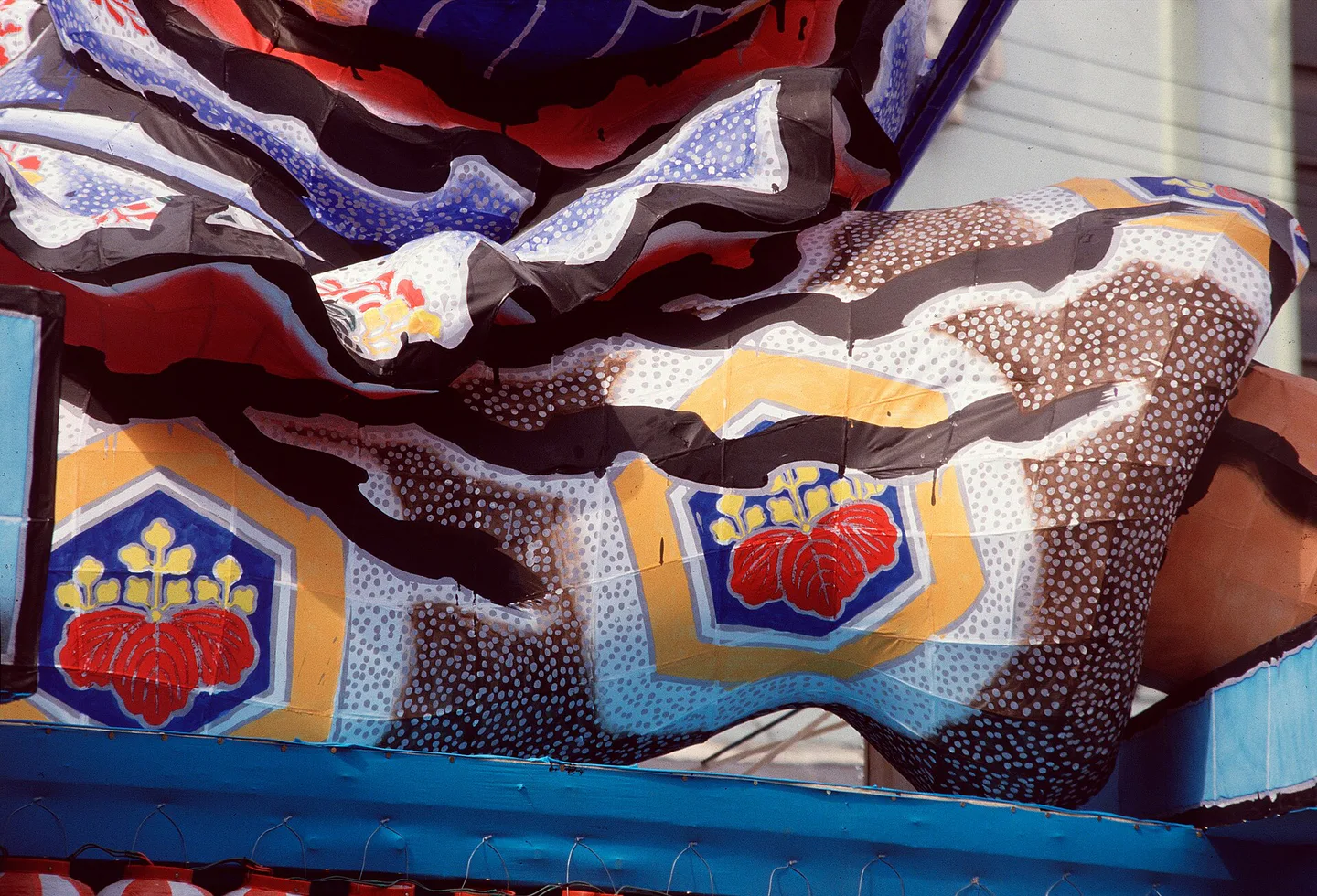
Aomori Nebuta is the stronger single-night pick if you want enormous sculptural floats, a dense city procession and the option to join as a Haneto dancer. Hirosaki Neputa makes a different night: illuminated fan art moves through a castle town, and the choice of street course changes the feel of the visit. The completed 2026 editions show why you should decide by the exact date available before booking a hotel. They do not give you a 2027 route, seat price or sales calendar.
In 2026 Hirosaki ran August 1–7 and Aomori August 2–7. Aomori's first two evenings started at 19:00 with children's floats alongside about 15 large Nebuta; August 4–6 began at 18:45 and emphasised roughly 20 large floats. Hirosaki used the central Dotemachi course August 1–4 and the station-side course August 5–6. On August 7, both changed to daytime processions and distinct evening finales. For a future summer, repeat this comparison only after the new daily programmes appear. A one-week Tohoku festival route shows how date-specific city changes affect the whole journey.
One festival night: float scale or the town around it?
↔ Scroll table left or right
| Your priority | 2026 reference choice | What it offered | Condition to check next time |
|---|---|---|---|
| Large three-dimensional floats and movement | Aomori, especially August 4–6 | About 20 large Nebuta on the later regular nights | The next edition's daily float and start-time programme |
| Joining the procession | Aomori | Haneto could join in prescribed clothing without advance registration | Costume availability and current participation rules |
| Fan-shaped float painting against older streets | Hirosaki August 1–4 | Dotemachi course and castle-town setting | Future course and hotel-to-street walk |
| Easier station-side finish | Hirosaki August 5–6 | Course close to JR Hirosaki Station | Future route, last train and exit direction |
| Finale evening | Choose one city | Aomori marine procession/fireworks or Hirosaki's river ritual | Next edition's ceremony and transport details |
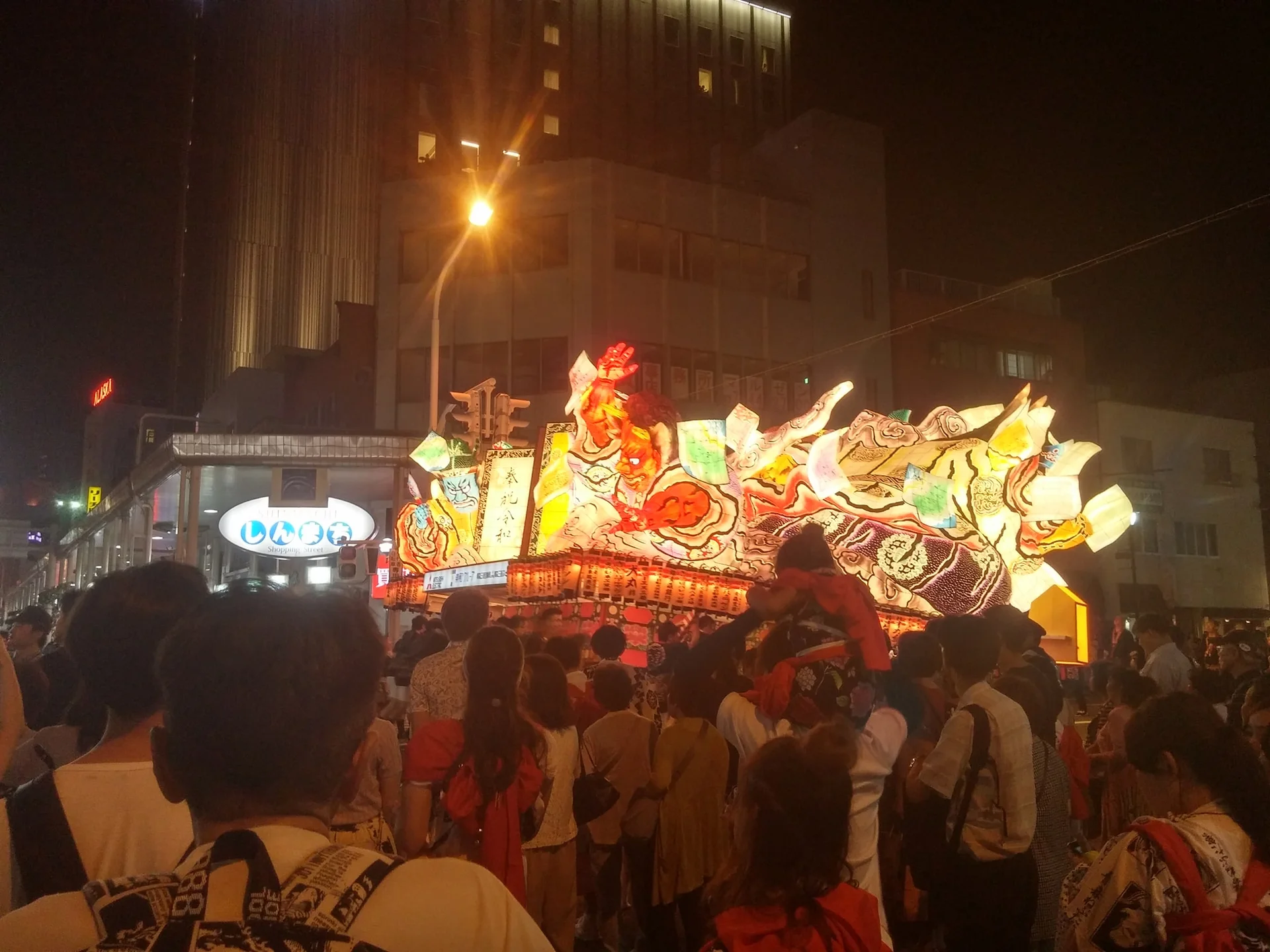
This night photograph shows a bright three-dimensional Aomori float above a crowd. It is a stronger illustration of the Aomori spectacle than a close crop of painted surface. It does not prove which floats will run on any future date. The viewing-seat comparison helps decide whether an unobstructed place to stand matters more than a reserved chair.
For a first trip with one ordinary evening and no strong preference for Hirosaki, Aomori usually gives the larger contrast with other city sightseeing. Music, full-depth figures and Haneto movement all contribute. That recommendation changes when Hirosaki Park, Tsugaru culture or apple-country travel is part of the next day. One Hirosaki hotel can then serve the procession and morning rather than sending you on a late transfer after Aomori's bigger floats. Hirosaki's course-by-date guide is the closer planning tool for that trip; the castle's changing grounds explain one reason to remain in town the following day.
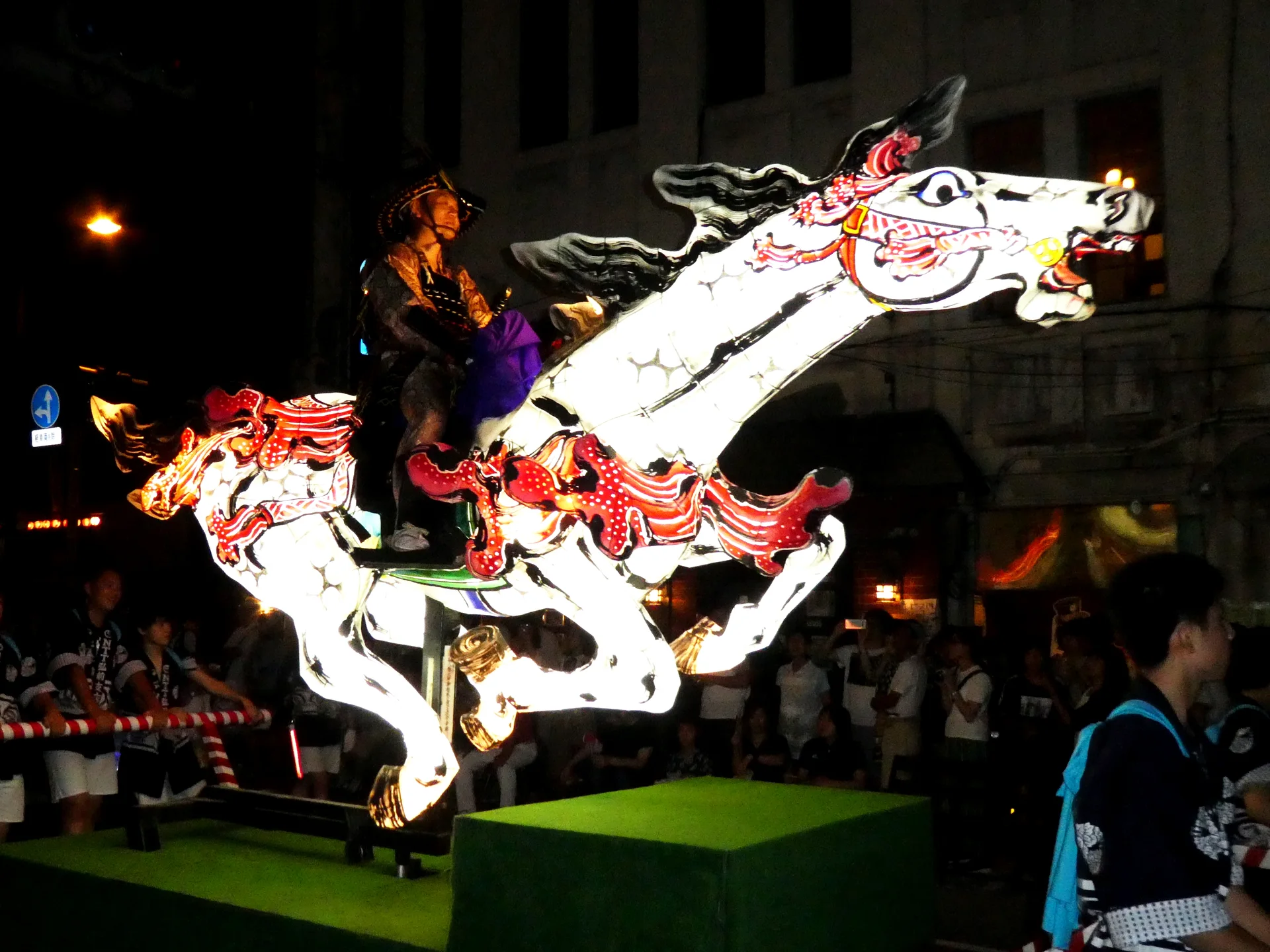
The Hirosaki photograph shows an illuminated horse-shaped float with a performer, rather than a broad view of a fan float. The city also parades painted fan-shaped Neputa; the point of choosing Hirosaki is the art and procession within its particular streets, not the false claim that every float has one shape. If photography of entire floats is the priority, watch from a stable position instead of joining Aomori's moving Haneto crowd.
Haneto is free to enter, but the costume is a real cost
Aomori's Haneto system lets visitors join a waiting Nebuta group at its starting point in proper attire without registering with a team first. Arrive before that group departs and follow the current joining rules; entering in the middle of a moving procession is not the intended route. A 2026 costume hire reference was about ¥4,000, with tabi socks, zori sandals and the flowered hanagasa hat priced separately. Booking the rental ahead can matter in peak week. Thus “no registration fee” does not mean a complete participation outfit costs nothing, nor that the approximate rental headline includes every piece. The Haneto decision guide is useful when your choice is dancing versus seeing full floats.
If you would rather photograph the parade, the participation option adds little to Aomori's case; you may be better positioned at the roadside. For children, a 19:00 start, toilets, heat, rain protection and the walk back to the room are more decisive than calling one city “family-friendly.” A daytime finale can avoid bedtime conflict, but it also adds sun exposure and a long wait if the evening ceremony remains on the plan. The Aomori-with-kids comparison separates these schedules.
Hirosaki's course can decide the hotel before the festival does
Hirosaki's 2026 Dotemachi nights began at 19:00 on August 1–4. The August 5–6 course moved to the Station Area, also at 19:00. The former offered the stronger old-street setting; the latter reduced the final walk for someone arriving by rail or sleeping close to JR Hirosaki Station. A recommendation to “stay near the station” is only useful when that station supports both the day's course and tomorrow's departure. Future course maps must be checked before paying for a room. Tohoku base choices are seasonally different, but the same lesson about hotel-to-platform travel applies.
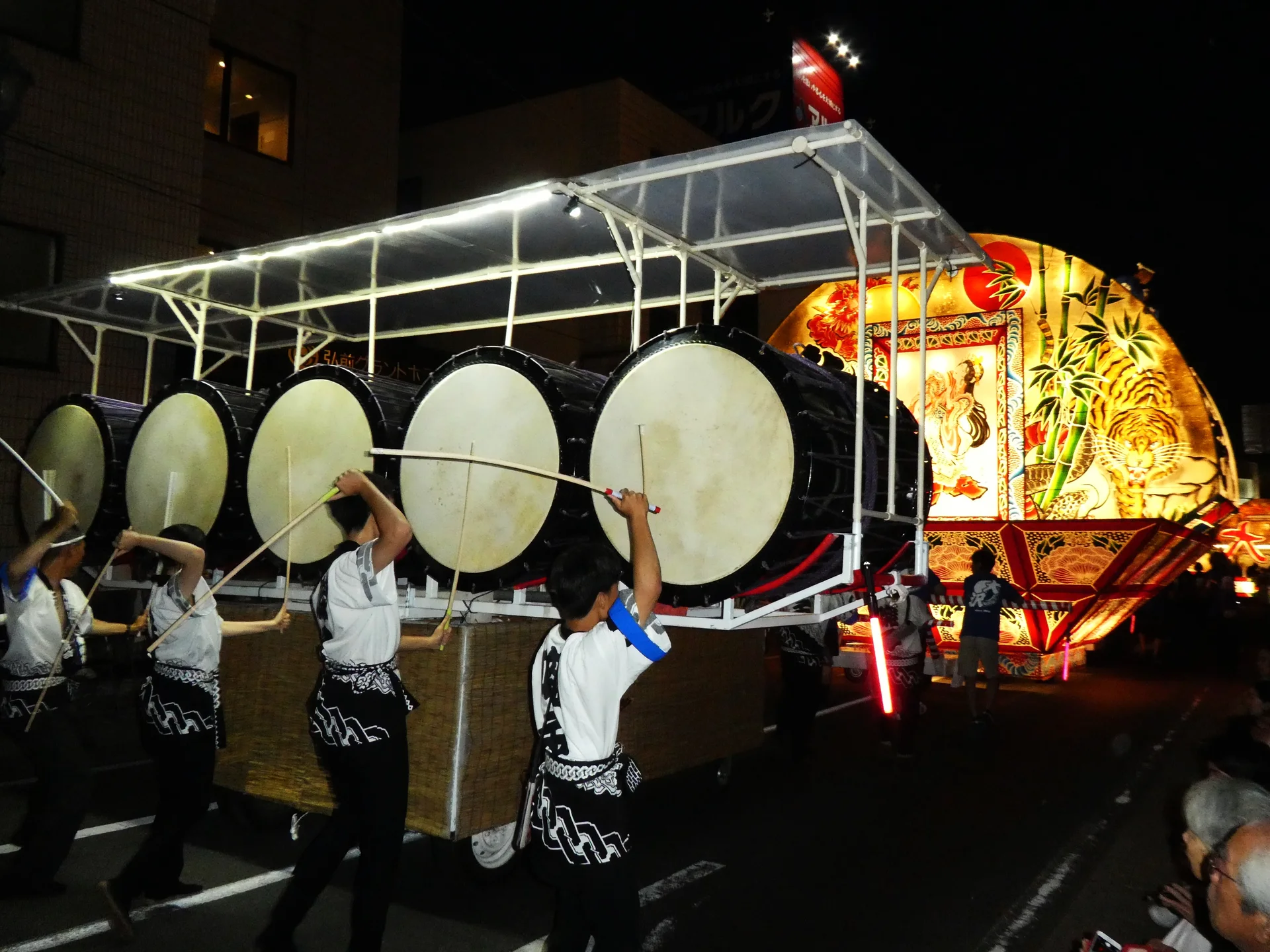
The picture places a row of drummers in the foreground and a brightly painted fan float behind them. It shows the sound and street scale that a seated ticket alone cannot convey. A visitor intent on hearing and following the procession may accept a standing spot; someone who needs a guaranteed chair should compare the exact viewing block, not only the festival name.
The 2026 seat maths is useful; the prices are historical
In 2026 an ordinary Aomori individual seat was ¥4,000. The overseas sales channel added ¥1,000 per ticket plus ¥950 per order and required ticket pickup at a 7-Eleven in Japan. One seat bought through that channel came to ¥5,950 in those listed charges; two seats in one order totalled ¥10,950. That was a channel checkout calculation, not a permanent festival price. The Aomori free-viewing comparison weighs that cost against flexibility and the full route.
Hirosaki's 2026 standard chair cost ¥3,000 for each adult or child needing a seat. A group table cost ¥20,000 for up to six. Six ordinary chairs would therefore have cost ¥18,000 before platform charges, so the full table carried a ¥2,000 premium for keeping the party together. It was not a group discount. For next year, compare the entire checkout, what the seats include, the block location and whether your group actually needs a single table. A party of fewer than six should calculate the table's cost per occupied chair before assuming it solves a seating problem. The 2026 individual Hirosaki ticket sales began June 22; group reservations opened earlier, but future release dates are not established by that history. A seat purchase also fixes the viewing location; anyone hoping to follow the floats along the street may prefer a flexible standing plan.
August 7 was two different finales, not two parades to collect
The 2026 Aomori large-float procession moved to 13:00, followed by a marine Nebuta procession and fireworks around 19:15. Hirosaki's Nanukabi Dotemachi parade began at 10:00 and its separate river ceremony occupied the evening. A map may tempt you to sprint between the daytime parades. Crowd exits, station walks, train intervals and the overlap of evening finales make that a fragile success measure. If a later edition repeats this structure, choose the ceremony you most want to see and build the hotel around it. Hachinohe Sansha Taisai is another date-specific Aomori festival, not a filler between two finale ceremonies.
Rain rules also need the day's notice. Aomori's 2026 seat information said the event normally operated in rain and warned that viewing chairs were uncovered. Hirosaki's English overview and seat section used inconsistent rain wording, while the Japanese festival page said parades normally run in rain but severe weather triggers a decision around 17:00. A person with a paid seat should carry suitable rainwear; an umbrella may be disallowed within seating. Do not switch towns on an assumed rain rule when both events can change operation for severe weather.
One base or two when you want both cities
Two full festival nights can justify two hotel rooms if the transfer between them happens in daylight and removes a post-parade intercity train. One base can still be better when luggage is heavy, one hotel is considerably cheaper, or the departure next morning clearly favours the same city. Compare the time from viewing position to the train and onward room, not just the rail journey between Aomori and Hirosaki. The wider Aomori base comparison separates city hotels from outlying resorts. For an Aomori procession night, compare stays near Aomori Station; for a Hirosaki night, compare Hirosaki-area rooms against the relevant future course. The hotel address matters even more when a child is tired or the parade ends in rain.
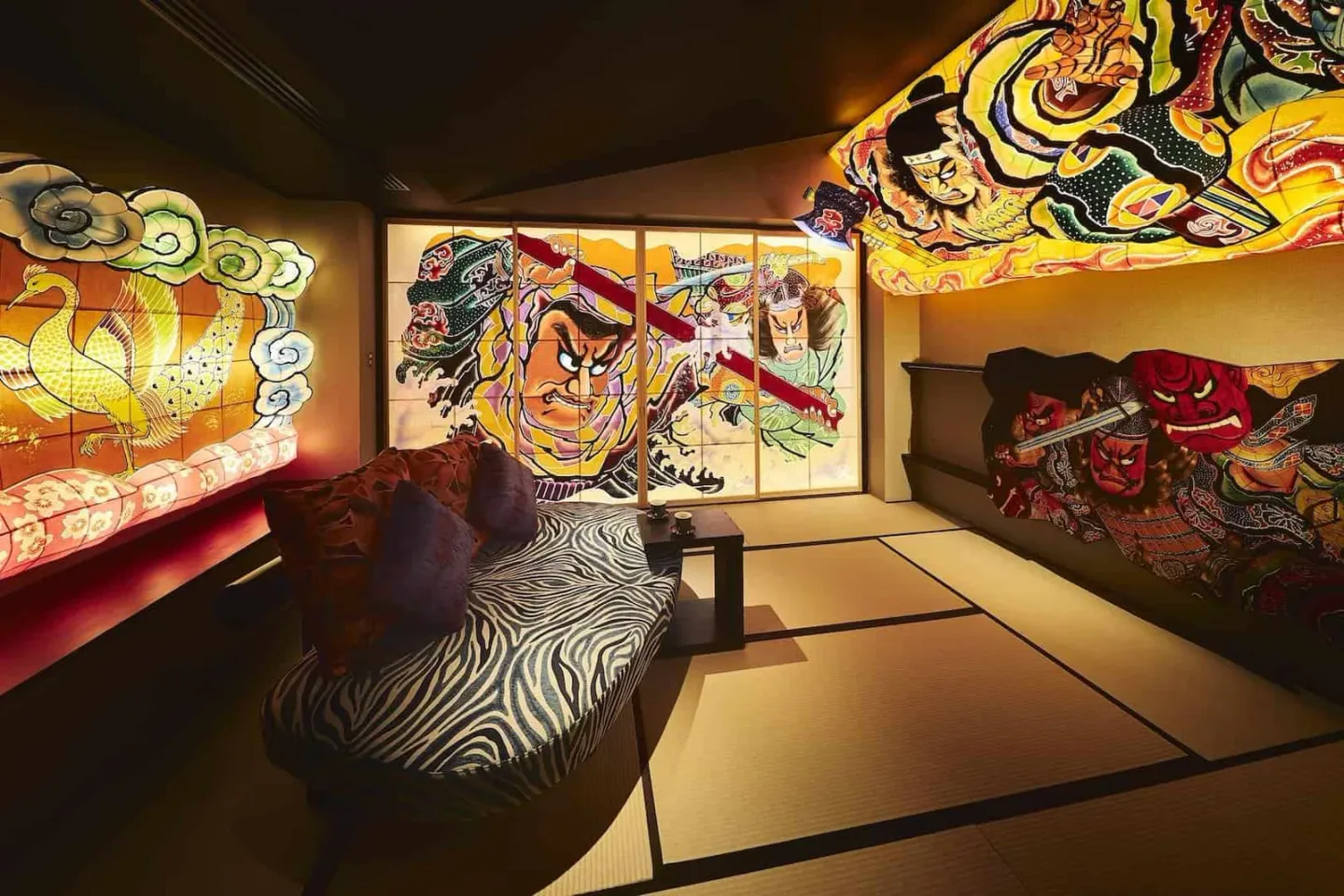
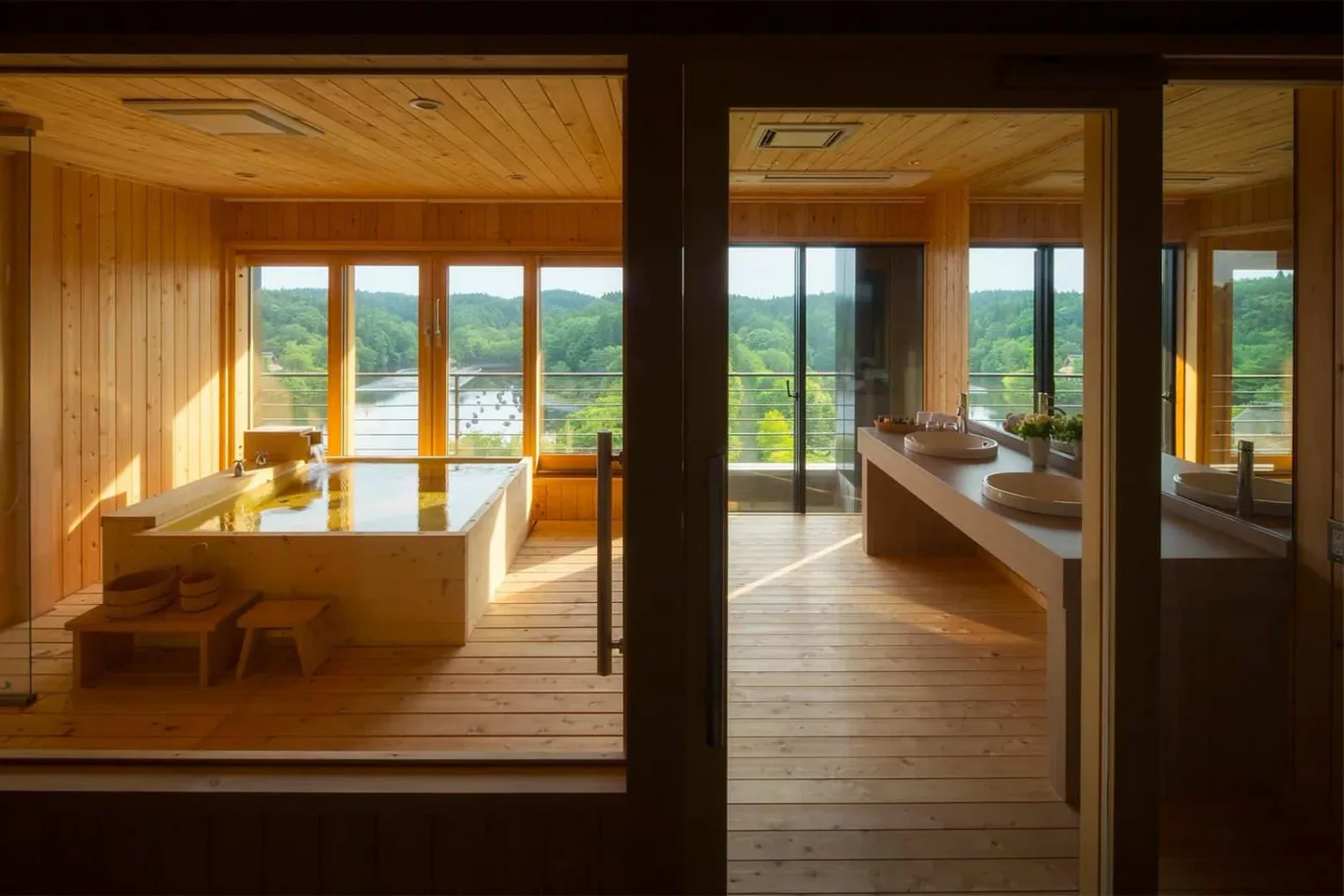
These two photographs show a decorated Aomoriya guest room and a separate wood-panelled bath overlooking trees. They are resort-room images, not city-centre festival hotels or views from either parade course. An overnight built around a resort must still account for getting to and from the event; the Aomori resort comparison and the Aomoriya stay analysis address different decisions from walking home after Nebuta.
When the contrast itself is the purpose—Aomori's three-dimensional scale and possible Haneto participation versus Hirosaki's fan art and castle-town route—two nights can earn their space. Skip a second procession if it merely collects a neighbouring city while taking time from Oirase, Lake Towada, Akita Kanto or a recovery morning. The Lake Towada and Oirase route requires its own daylight; Akita Kanto's viewing choices belong to another city night. Kochi Yosakoi, Nishimonai Bon Odori and Fukushima Waraji make sense only when their dates and travel corridor fit a real route.
For the next edition, Aomori remains the first comparison for spectacle or Haneto, while Hirosaki wins when its fan floats and city context are the trip's core. Use 2026 only to understand how the answer changed within one week: early versus late regular nights, Dotemachi versus Station Area, then two incompatible finales. A new year's schedule, seats and weather rules must fill in the actual booking decision.
More festival decisions
Aomori Nebuta — schedule · Aomori overseas reserved-seat fees · Aomori Haneto rental pricing caveat · Hirosaki Neputa — English routes and ordinary seats · Hirosaki 2026 group-seat pricing · Hakone Open-Air Museum 2026: 4:30 Is Last Entry, Not the Time You Should Arrive · Niseko vs Furano vs Rusutsu: Which Hokkaido Ski Resort Should You Choose? · teamLab Borderless vs Planets: Which Tokyo Museum Should You Choose? · Dazaifu vs Itoshima: Which Fukuoka Day Trip Should You Choose? · Fujiya Hotel Hakone: Which Building and Room Should You Choose? · Nada Fighting Festival 2026: October 14 or 15 — How Much of the Festival Should You Actually See? · Tokyo National Museum 2026: Which Ticket Should You Buy? · Okinawa Blue Cave Snorkeling: Boat vs Shore Entry — Which Should You Book? · Aizu Festival 2026: If You Only Have One Day, Make It September 20