
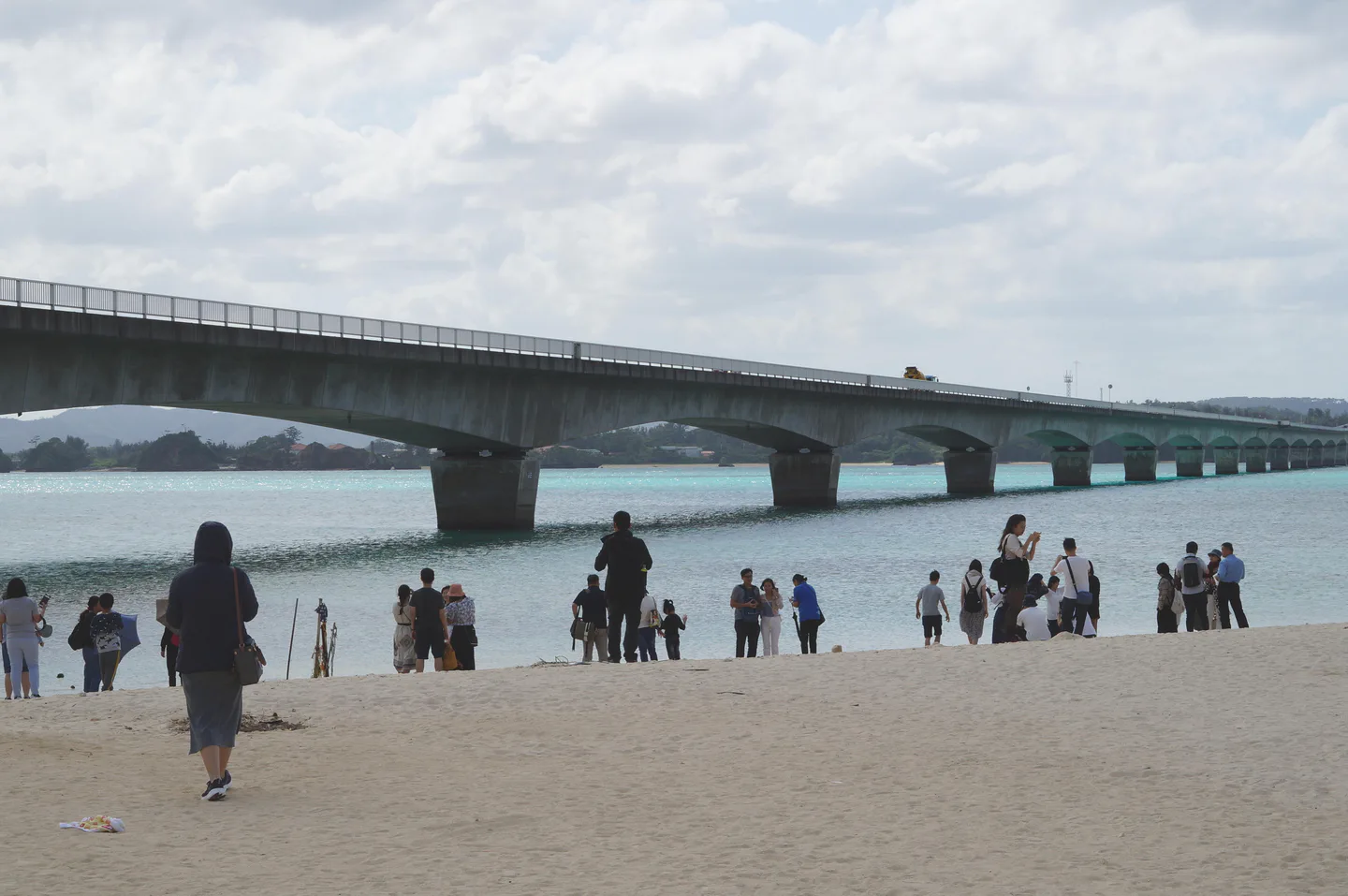
An Okinawa hotel can look ideal at lunchtime and be in the wrong place by dinner. The main island runs more than 100 kilometres north to south, so a booking should follow where your days repeatedly finish and how often you must return to the room. Naha is the strongest first base for many travellers without a full-time car. Chatan becomes more useful when evenings around American Village repeat. Onna earns resort rates when the hotel receives daylight, while Motobu or Nago becomes a credible second base only when northern days cluster. A single Churaumi Aquarium visit does not automatically require a northern checkout. Okinawa first-trip route gives a wider itinerary before the hotel choice.
Five questions expose a bad area before individual hotel photos do. Where does dinner or the last activity end each night? Will anyone return at midday for a nap, bags or a change of clothes? How often will a rental car need to move again after sightseeing? Would a hotel move remove more than the packing and check-in it adds? What does the final airport morning require? Write those answers next to the itinerary. A room that is cheaper but turns every meal into a drive may cost more useful time than a better located one. Do you need a car in Okinawa? is the transport decision that should accompany this page.
↔ Scroll table left or right
Question | Decision it changes | Warning sign |
Where does each day finish? | Area for repeat evenings | One daytime attraction dictates all hotel nights |
Will you return to the room? | Need for a central nap, bag or clothing stop | Hotel is only reached after midnight |
How often must the car move after parking? | Dinner and shopping convenience | Car becomes a private shuttle every evening |
Does a second hotel repay its move? | One base or two | Packing for one aquarium visit |
What happens before the flight? | Final-night location | Northern departure relies on every transfer going perfectly |
The final activity often points to the right base
To make the first question concrete, give two planning points to the district where each night’s last meal or activity naturally ends. Add one when a realistic midday hotel return is planned, and one if sleeping nearby avoids a difficult late transfer for children, older parents or a traveller without a car. For the final night, add two Naha points when an early flight or rental-car return makes a northern start materially riskier. This is an optional worksheet, not a fixed score for any town. Its value is exposing repeated movement; a tiny points margin should never override a difficult hotel approach or a much better room.
Consider three Naha evenings without a car and only one Churaumi day tour: Naha remains the logical single base. Two American Village evenings give Chatan an argument that one daytime visit cannot. Two Onna nights with a protected resort afternoon can justify the coastal premium. Churaumi and Bise on one day, followed by Kouri and Nago on the next, make a northern base worth comparing. A northern last night ahead of an 08:30 flight gives Naha a different kind of value: a buffer against the airport morning. Okinawa four-day route choices can reveal whether those clusters are real.
If two areas remain close, compare six dimensions for the actual trip: the district where nights finish, dependence on a car or public transport, usefulness of room returns, baggage and hotel-change effort, flight-day resilience, and alternatives when weather changes. One possible worksheet weights those factors 30%, 20%, 15%, 15%, 10% and 10% respectively. You supply the 0–10 assessment for each area from your own schedule; the same town has no permanent score. The older page’s sample ratings for Naha, Chatan, Onna and Motobu are not live quality ratings and should not decide a booking.
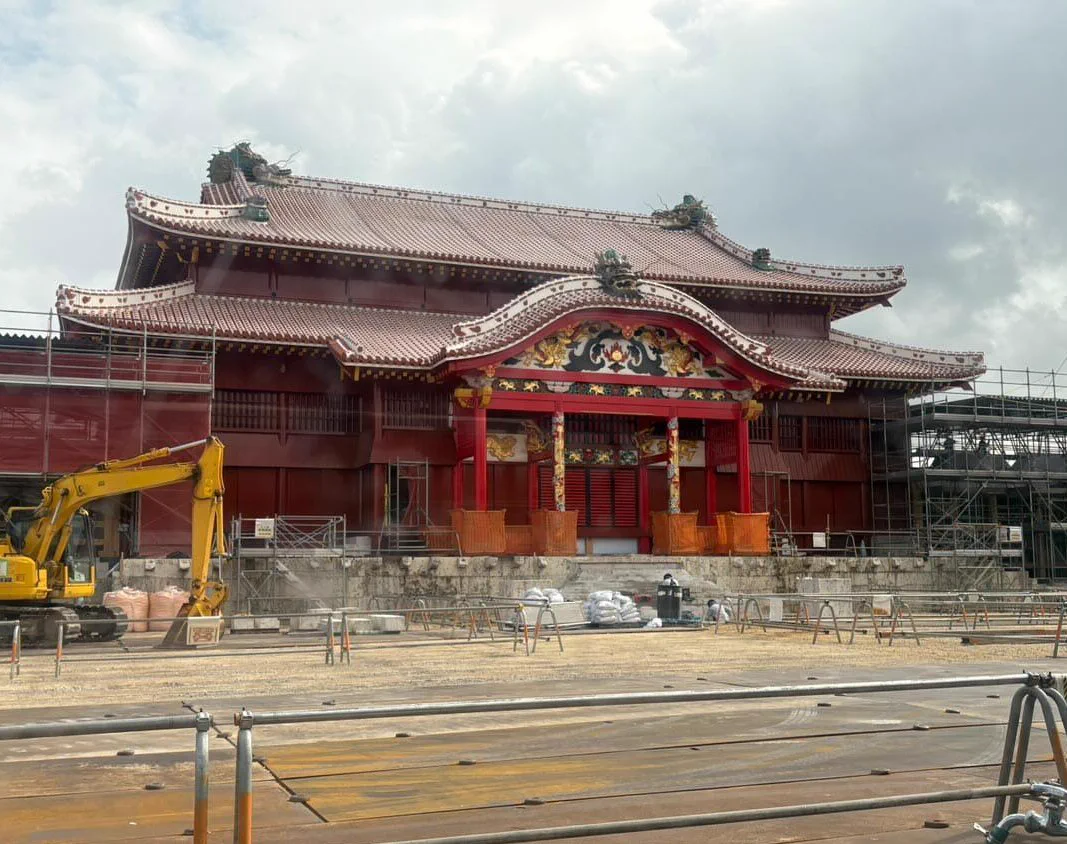
A hotel change must remove a repeated journey
A move is not free just because no train ticket is involved. It requires packing, checkout, a period with luggage but no room, another check-in and unpacking. Compare those blocks with the backtracks a second base removes. A conservative rule is to change areas only when the move eliminates at least two meaningful long returns, or solves two substantial constraints together. Two consecutive northern sightseeing days may pass. Returning to Naha to return a rental car and protect an early flight may also pass. A single aquarium visit usually does not.
The test becomes clearer if you trace each full day on a map. Naha to Churaumi and back once can be long but remains one travel day. Moving north afterward adds a luggage day. Naha to Churaumi and Bise, then Kouri, Nago and a second northern evening creates two north–south repetitions if you keep sleeping south. A Motobu or Nago hotel can remove those. Wanting several different hotels is a personal preference; it does not create a transport saving. Okinawa split-stay trade-off works through that cost.
↔ Scroll table left or right
Itinerary shape | One base or two? | Why |
One Churaumi day from a Naha city trip | Usually one Naha base | A hotel move adds packing for one northern excursion |
Two consecutive northern days | Test Nago or Motobu as second base | Repeated long approaches can disappear |
Two Onna nights with protected resort afternoon | Resort base can earn its price | Beach and hotel time are part of the plan |
Very early flight after northern sightseeing | Consider Naha final night | Car return and airport risk can be solved together |
No car and several urban evenings | Naha first | Rail and walkable services reduce dependence on buses |
Naha buys options when plans change
Yui Rail runs through 19 stations from Naha Airport to Tedako-Uranishi; its published end-to-end journey is about 37 minutes. That is an urban rail network, not an island-wide substitute for a rental car. It does, however, let a first-time or no-car visitor reach meals, shopping and the airport without driving for every movement. Naha is particularly useful when evenings are urban, the trip still has flexible days, weather may shift activities, or the first and final nights need airport access. The two-day Naha no-car route illustrates that narrower geography.
Naha loses its advantage when almost every day is far north and you repeatedly make the same long drive to Onna, Motobu or Yanbaru. Keeping a Naha room for one city dinner while spending three full days elsewhere creates its own inefficiency. Once Naha is the right base, compare hotels by the journeys you repeat. The RIHGA Royal Gran versus JR Kyushu Hotel Blossom Naha separates airport-side ease from Kokusai-dori and city walking. A late-flight night needs a different test from three full urban days.
Chatan starts earning value after the car is parked
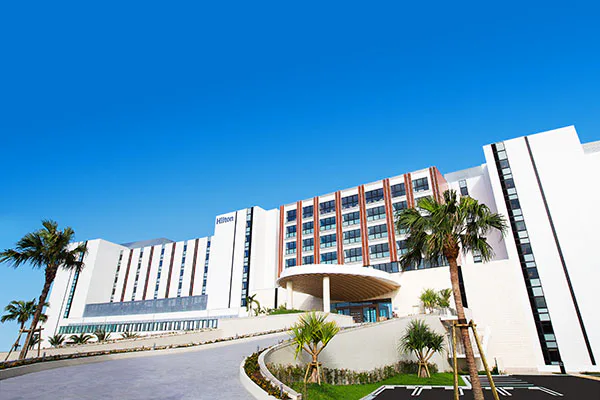
Chatan combines seafront dining, shopping, beach time and sunset viewing around American Village. Broad airport travel estimates put it about 40 minutes by car or around 60 minutes by bus from Naha Airport; traffic and the exact stop change the real trip. The deciding advantage is not its position in the middle of the map. It is the ability to park once, walk to dinner, let someone return with shopping bags and allow others to stay out without reorganising a car journey. Chatan hotel comparison shows how that district-level benefit plays out at property level.
One American Village dinner is usually not enough to move hotels. Two or more evenings, especially with a central-Okinawa day between them, make Chatan a serious base. It is less compelling when every evening ends at an Onna resort or in Naha. If you have chosen Chatan, the Chatan hotel comparison distinguishes a resort-led stay, a practical walkable one and a bath-led option. On a final shopping stretch, Chatan versus Naha hotels brings the airport back into the calculation.
Onna needs a beach or hotel block in daylight
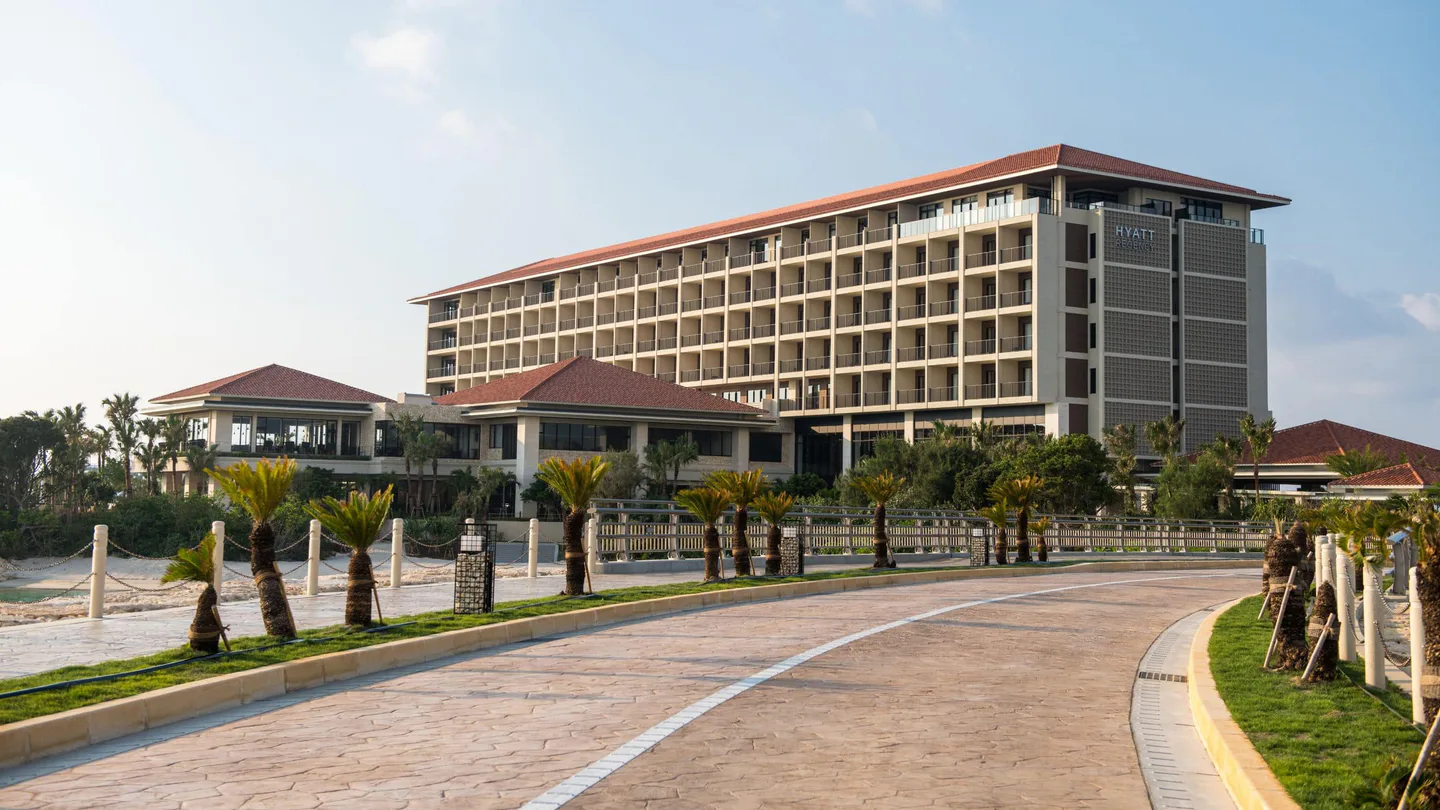
The Onna Coast has a concentration of beaches, leisure facilities and resort hotels along Route 58. Broad airport travel estimates put it around one hour by car or 75 minutes by bus from Naha Airport. An Onna premium makes sense when the resort is part of the day, not merely a large room reached after dinner. Across two nights, protect at least one meaningful afternoon or an equivalent multi-hour beach, pool or hotel period before paying heavily for the resort category. Onna resort hours is the next check before selecting a named property.
If both days run from 08:00 to 20:00 with driving and activities, the attractive resort is largely a sleeping base. A less expensive or better located property may fit that trip more closely. If one day includes a slow hotel breakfast, beach afternoon and unhurried evening, the same room category can become a reasonable purchase. Weather matters too: a resort with useful indoor facilities can retain some value in ordinary rain, while one chosen only for a single beach can lose much of its purpose. Okinawa hotel pools by season identifies the seasonal facility question.
Motobu and Nago solve different northern trips

The north includes Churaumi Aquarium, Ocean Expo Park, Bise, Nakijin, Sesoko, Kouri, Nago and Yanbaru, but those places do not all point to the same hotel door. Choose Motobu when days cluster around Churaumi, Bise, Sesoko and nearby coastal stops. A drive from Naha to the Motobu Peninsula is broadly around 90 minutes. Avoiding that approach on two consecutive mornings can make a northern hotel move worthwhile. Orion Hotel Motobu versus Ala Mahaina is a room-level comparison once Motobu wins.
Nago acts more like a hub when one day branches toward Kouri or Nakijin and another toward Yanbaru or the eastern or northern side. Supermarkets and city services can help in the evening. Yet a Nago city hotel and a coastal resort near Nago serve different routines; plot the actual property against the route. Okinawa route and hotel choices can help distinguish a concentrated aquarium stay from a branching road trip.
Without a car, Motobu needs more caution. Bus service around the peninsula is infrequent, even though Naha has services toward Nago and routes can reach Ocean Expo Park. A spontaneous late meal or detour becomes timetable-shaped. A northern resort can still work for a deliberate stay-in plan, but do not infer urban flexibility from the fact that the aquarium is reachable by bus. The Churaumi day versus hotel move separates arrival timing from hotel necessity.

The car, the family routine and the room return
A rental car widens the map without making every hotel equally convenient. After the sightseeing drive, ask whether the car must leave its space again for dinner, shopping or collecting someone. A good base lets it remain parked. Chatan can do that around American Village; Naha can do it near walkable streets and Yui Rail; an Onna resort can do it when dinner and evening facilities are at the property. The car should make distant sights reachable, not become compulsory for each meal. Okinawa rental-car comparison addresses the separate vehicle choice.
Families and older travellers feel repeated small distances more sharply. A ten-minute walk may occur after breakfast, with a stroller, after shopping, in rain and again while carrying luggage. Toddlers can make midday naps, laundry, early baths and bag drops part of the daytime plan. Older parents may value one fewer transfer more than an extra attraction. Give the actual room-return need a place in the base decision rather than booking an attractive room that is unreachable when it matters. Okinawa hotels with toddlers and Okinawa with parents make those constraints more specific.
Four adult friends create another pattern: four cases, bathroom contention and potentially different nights out. A cheap large room in a car-dependent area can require everyone to leave and return together. A walkable evening district allows one person to go back while others stay for a drink or shopping. Verify formal beds before area amenities; “sleeps four” can mean a sofa or shared beds rather than four equivalent sleeping positions. Then check bathroom flow and whether the party can split after dinner. Four adults in Okinawa covers that room test.
Build the final airport morning backward
The last night has a different task from the middle nights. Start at the required airport reporting time and work backward through packing, fuel, rental-car inspection and return, any shuttle or Yui Rail transfer, traffic and a disruption buffer. A late-afternoon flight may leave enough margin from Onna. A 07:00 flight may make a Naha or Oroku final night much safer. If a northern departure works only when every leg is perfect, the hotel change is buying flight resilience rather than another sightseeing district. Onna versus Naha last night treats that as its own decision.
Five common traps follow from the same logic: moving north for one aquarium day; booking Onna with no protected resort time; choosing Chatan merely because it looks central although no night ends there; cycling through three or four hotels in five or six nights; and locking a non-refundable room before the base is settled. Each can make an attractive rate expensive in time or flexibility. Resolve route direction before a promotional hotel price becomes the itinerary. Okinawa cancellation terms is relevant when plans remain unsettled.
↔ Scroll table left or right
Booking signal | What it usually reveals | Better test |
One aquarium day triggers a northern move | A single long day has become a packing day | Keep one base unless another northern day follows |
Onna resort has no free afternoon | Premium facilities will sit unused | Protect actual beach or hotel time first |
Chatan selected only for central map position | No repeated American Village evening | Count where dinner really ends |
Three or four hotels in five or six nights | Move costs multiply faster than route savings | Ask which long backtrack each move removes |
Non-refundable hotel booked before the route | Changing the area later becomes expensive | Settle the base before locking the rate |
↔ Scroll table left or right
Pattern | Base shape to test | Change it when |
Four nights, balanced self-drive | Naha first → Chatan or Onna for two → Naha final | Late flight allows a comfortable resort finish |
Four nights, north-heavy family trip | Naha or Chatan first → Nago or Motobu for two → Naha final | Airport margin remains comfortable from north |
Four nights without car | Naha main base; optional one coastal night | Confirmed luggage and onward transport support the move |
Five to seven nights, southern then northern days | Hotel change follows daily route centre | Adjacent Chatan and Onna stops add little saving |
Early flight after Onna | Naha or Oroku final night | Current transfer and car return have ample buffer |
A four-night first visit seldom needs more than two hotel areas. The exact pattern depends on the return flight. With a late departure, moving to Naha for the final night may add packing for little benefit; with an early flight it may remove two constraints at once. A no-car itinerary usually keeps Naha as the main base and adds one Chatan or resort night only after confirming luggage transport and the next morning’s transfer. The five-day Okinawa drive shows how each full day can move mainly in one direction.
Five to seven nights allow a split more easily if Days 1–2 are southern, Days 3–5 are around Onna or the north, and the last day returns to the airport. The hotel changes with the geographic centre. Naha → Chatan → Onna → Nago → Motobu merely because each place has a separate name adds repeated move costs. Chatan and Onna may be close enough to share one base; the same can be true of Nago and Motobu if the route is mixed. Count long backtracks removed, not municipality boundaries.
Weather tests whether the base has a useful fallback
A sunny-day route is fragile if the only reason for a remote hotel is one beach. Ordinary rain may still leave an Onna property valuable when it has indoor facilities, while Naha and Chatan usually offer more alternative food, shopping and indoor stops nearby. Motobu can work in wet weather when Churaumi and Ocean Expo Park anchor the day, but a Yanbaru nature plan is more exposed. During typhoon disruption, roads, buses and flights can change rapidly. Recheck the current operators and airline rather than assuming yesterday’s transfer plan still works. Okinawa rainy-day and typhoon planning helps decide what to move.
The resulting booking order is straightforward: identify repeated evening districts, room returns and the airport edge; decide whether a second base removes a real repeated burden; then compare hotels inside the area that survives. For no-car first visits, Naha usually starts the search. Give Chatan a serious look for at least two American Village evenings, Onna for protected resort daylight, and Motobu or Nago for two northern days. A third base needs an unusually strong route reason. Once the area is clear, compare Naha rooms, Chatan rooms, Onna resorts or Motobu stays for the actual dates and cancellation terms.
Related Okinawa plans
Hilton vs Vessel Campana vs · Okinawa rainy-day and typhoon guide · Hilton vs Vessel Campana vs · Okinawa Urban Monorail — Yui · VISIT OKINAWA JAPAN — Chatan · VISIT OKINAWA JAPAN — Onna · VISIT OKINAWA JAPAN — Northern · Fukuoka Hotel Selector: Answer 8 · Lotte Hotel Busan vs Arban · Okinawa Honeymoon Hotels: Don’t Upgrade · Okinawa Family Hotels: The Winner · Okinawa Guys’ Trip Hotels: The · Fukuoka Late-Arrival Hotels: Make the · Sapporo Hotels for Couples: Choose · Kanayama Castle: The Stamp Is · Tokyo Honeymoon Hotels: Don’t Pay · Fukuoka Hotels: Stop Ranking Properties—Choose · mipig cafe Fukuoka: Check Your · Ghibli Park Tickets 2026: Before · Okinawa Hotels With Washer-Dryers: On.