
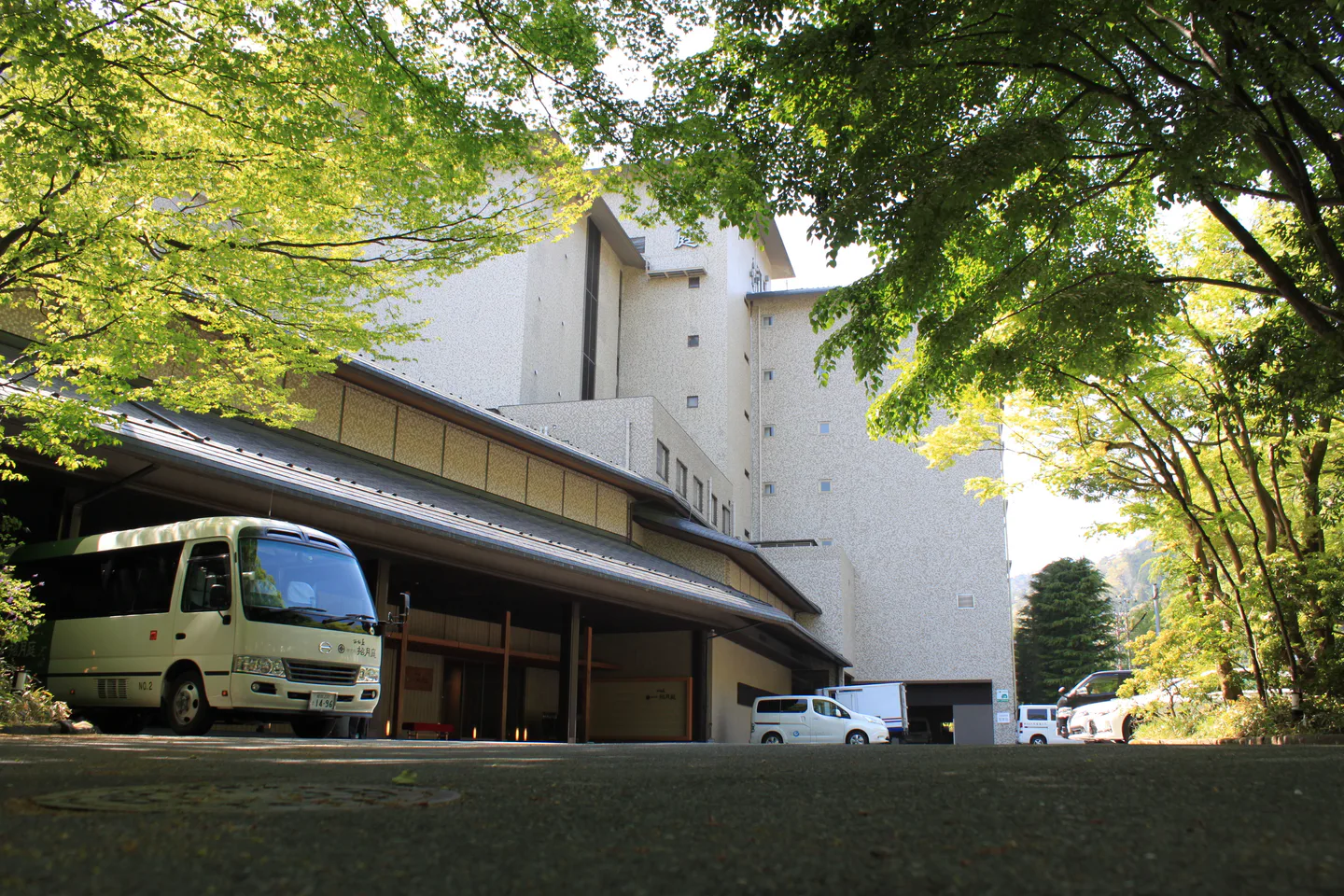
A Kinosaki ryokan dinner is also an appointment. If the train gets you to town comfortably before the meal starts, dinner and breakfast can turn a single overnight into an unhurried stay. If you may arrive late, have a particular restaurant in mind, or need to control the menu, that appointment can become the wrong constraint. Compare the food you will actually receive with the freedom you give up, not simply the headline price of a room.
Keep the town’s public-bath pass out of the dinner calculation. Kinosaki accommodation can provide Yumepa to guests on room-only and breakfast plans as well as on half-board. Paying for two meals does not create additional bathhouse access. The useful comparison is the difference in room rate, the actual dinner and breakfast, the meal hours, and how those hours fit the trains you have booked.
As of October 24, 2026, Satono-yu remains closed for renovation and Kono-yu is scheduled to remain closed until October 30. Each operating bathhouse also has its own weekly closing day. That reduces how many stops a bath-hopping evening can include, but it does not change which meal plan carries a Yumepa pass. Treat the bath calendar and dinner booking as separate decisions.
↔ Scroll table left or right
Your night | Meal choice | What it gives you | Main condition |
First Kinosaki night, early arrival | Dinner and breakfast | A settled ryokan evening and morning | Protect the dinner check-in time |
Arrival may be late | Breakfast only or room-only | Avoid paying for a missed dinner | Confirm a suitable outside meal |
A named restaurant is part of the trip | Room-only or breakfast-only | Keep that dinner reservation | Check opening and last order |
Two nights, one special course wanted | Mix the plans if the ryokan allows | One kaiseki night and one free evening | Ask whether consecutive rates can be combined |
Crab or strict dietary goal | Choose by the written menu | Pay for the food you actually need | Verify course and restrictions before booking |
Price the room, food and public baths separately
A ryokan can make bedding, a seasonal meal and access to Kinosaki’s bathhouses feel like a single purchase. The booking page may, however, offer several combinations for the same room. Keep three columns in mind while comparing:
Room: the specified room category, bedding, bathing facilities, location and check-in rules.
Food: whether breakfast and dinner are included, the menu, dining place and latest arrival for the meal.
Public baths: Yumepa access under the lodging plan and the separate opening calendar of each bathhouse.
Tsukimotoya’s listed plans illustrate the separation: dinner with breakfast, breakfast alone and a room without meals are distinct rates, and its room-only plan still advertises the public-bath pass. Tsuchiya likewise lists meal plans alongside accommodation-only options. These are examples of how a particular property sells stays, not a town-wide promise that every ryokan offers each package on every date.
Subtract the room-only price from the meal-inclusive price for the same room and date. Ask whether you would pay that difference for the stated dinner, breakfast and convenience if the bath pass were identical. Check taxes, child meals and cancellation terms before calling the difference the food price; a booking platform can also bundle room categories differently.
The short stay makes dinner convenient—and unforgiving
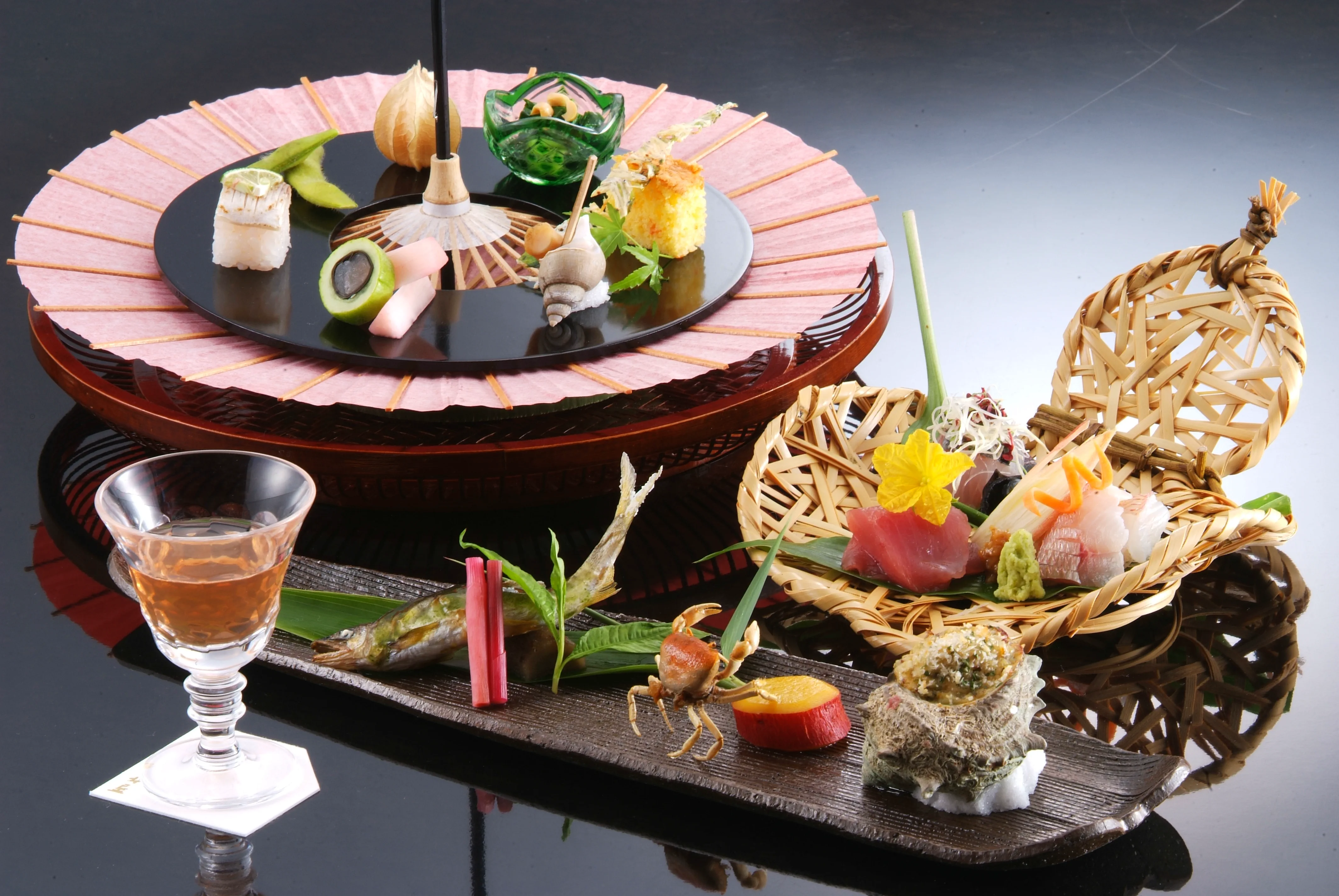
On a single night you have limited time between arrival and the next departure. A meal at the ryokan gives the evening a clear centre: leave the bag, change, bathe, eat, then go out again if the open baths and your energy allow. You do not need to search for a restaurant after a train journey or coordinate a reservation with an unfamiliar part of town. That convenience can be worth paying for when the afternoon is protected.
The other side of that convenience is a fixed start. Tsuchiya’s published meal plans include dinner sittings around 17:15–18:00 and warn that a guest arriving after 18:00 may lose dinner. A late train, slow transfer or detour to a bathhouse can therefore cost more than an hour of sightseeing. Your own ryokan may use different times; ask for the latest arrival that still protects the meal before choosing a non-refundable plan.
A premium course is a poor buy if your rail arrival leaves no margin for it. Put the train, station-to-ryokan transfer and check-in ahead of a bath circuit in the schedule, then reserve dinner only when those pieces fit. If the train is likely to reach Kinosaki in the evening, a lighter plan can protect the visit from becoming a race to the dining room.
If the stay length is still unclear, use Kinosaki Onsen: 1 Night or 2 Nights? before choosing how many dinners to buy. The second night can support a very different food plan from the first.
Room-only buys control of the evening
An accommodation-only booking is useful when arrival is uncertain, when a particular town restaurant is part of the reason for visiting, or when a set ryokan course would be too much food. It can also help a traveller with a difficult diet, provided a suitable alternative has been arranged. It is not automatically the cheapest total once a separate dinner and breakfast are added.
Kinosaki has places to eat outside the inns, and some room-only properties can suggest them. That does not mean a late arrival will find a suitable table on demand. Opening days, the last order, reservations and the walk back to the ryokan all matter. A room-only night works when you know where and when you will eat, not when “we will find something” is the only dinner plan.
If a restaurant is the attraction, reserve or verify that restaurant before paying for the room-only rate. Check its menu against the group’s needs, calculate the walk from your accommodation and allow for an after-dinner bath only if the operating hours still fit. This order preserves the flexibility you bought rather than replacing a fixed ryokan meal with an uncertain outside one.
Breakfast-only can solve a late arrival
Breakfast included, dinner free, can be the useful middle arrangement. You can arrive after the traditional dinner window without paying for a meal you might miss, then begin the next day with breakfast at the inn. That is particularly valuable when your first night follows a long transfer and the next morning includes one last bath or an onward train.
Ichidaya and Tsukimotoya have published breakfast-only products as well as other meal plans. Check what the breakfast actually includes and where it is served; at some properties a café across the street is part of the arrangement. The term “breakfast included” tells you less about the morning than the stated serving hours and venue.
On a two-night stay, you need not repeat the same dinner automatically. One night could be the ryokan course and the other an outside meal, with breakfast included on one or both mornings. The booking system may sell nights as a single package, so ask the property whether mixed meal plans are possible for consecutive dates and what happens to the room assignment.
Bath closures affect the evening route, not the room rate logic
The familiar seven-bath description counts the town’s historic public bathhouses, not seven guaranteed open doors on a particular date. Satono-yu has been closed for renovation since April 2024. Kono-yu’s published 2026 closure runs May 11 through October 30. An autumn guest should use the current list of operating baths rather than a seven-stop itinerary copied from an older brochure.
With fewer baths available, guests may concentrate at the remaining ones and a long meal can leave less room for hopping. Choose one or two baths whose hours suit your arrival and dinner, perhaps another the next morning. The reduction in bath choices is a reason to keep the evening realistic, not a reason to buy a more expensive dining package.
Yumepa comes with eligible accommodation plans independently of the dinner package. Half-board cannot make a closed bath open or extend an individual bathhouse’s hours. Compare meals on their own merits and confirm the pass validity with the ryokan. If a particular bath matters, check its closure date and weekly rest day first.
Even an operating bath can be shut on its weekly day off. A single overnight may place one closure on the arrival evening and another on the departure morning. Look at the actual days, not just the number of nights, before promising yourself a circuit of several baths.
Winter crab turns the menu into the main purchase
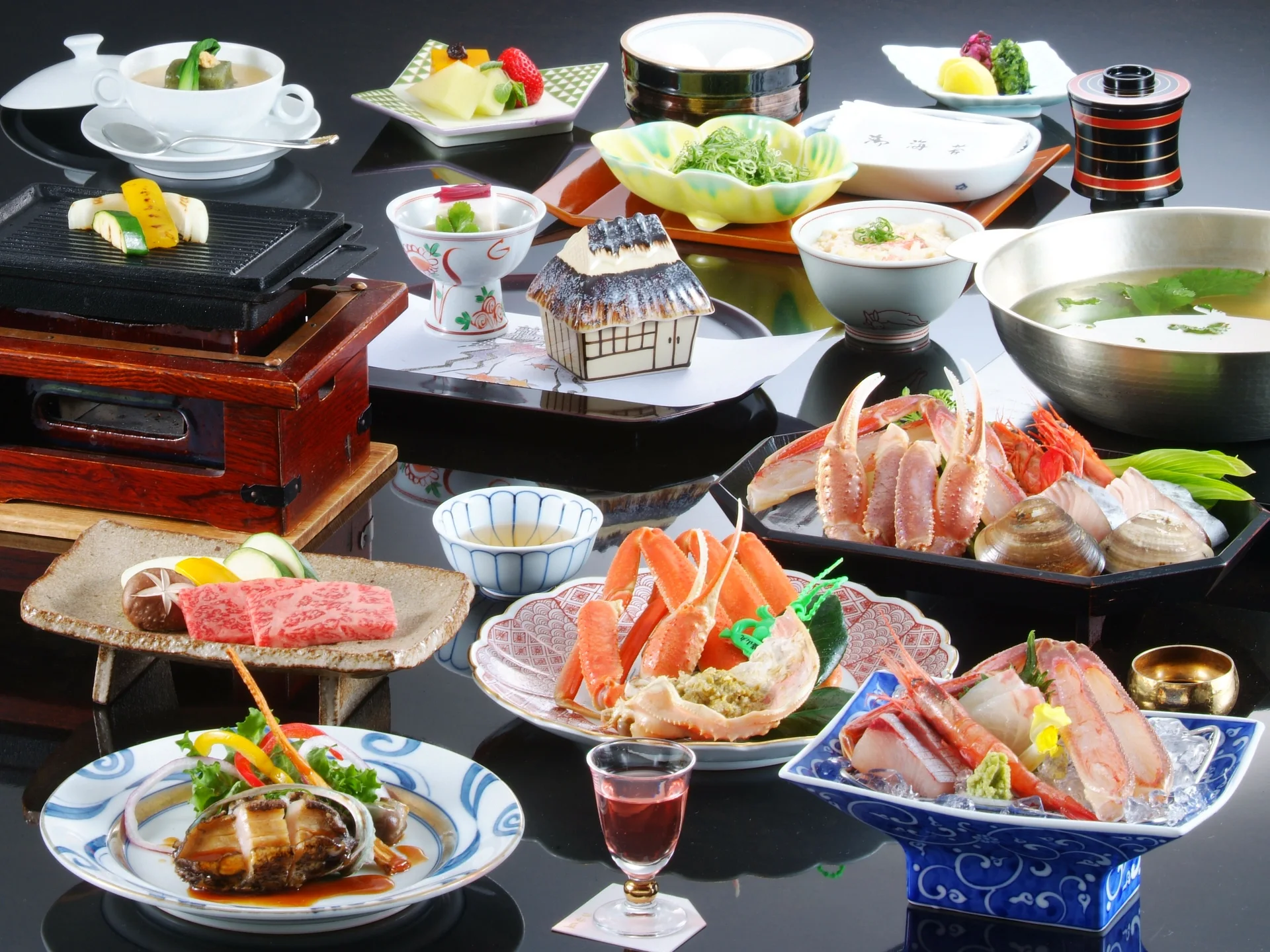
Matsuba crab season is associated with the fishing season opening in early November. Winter ryokan plans may include crab, but the word “dinner” alone does not tell you the quantity or whether the course centres on it. Tsuchiya currently lists several distinct crab combinations, while other inns sell seasonal courses at different price levels. Read the plan available for your date rather than transferring a summer meal assumption to winter.
If crab is why you are paying for the inn, find out whether the course includes one crab per guest, a shared crab, a half portion, or dishes alongside other ingredients. Check whether it is Matsuba crab, another crab type, Tajima beef, or a general kaiseki. The expensive room category and the expensive meal are not necessarily the same product; compare the written course for the exact number of diners.
Outside crab season, a traveller seeking Tajima beef should look for it in the course description rather than treating “dinner included” as a guarantee. Check cooking style, portion and dietary substitutions where those details matter to the purchase. It is the menu, not the fact that dinner is bundled, that decides whether the premium matches your goal.
Dietary needs should be settled before the rate
Traditional set meals can involve ingredients and preparation that a kitchen cannot change at check-in. Some Kinosaki accommodation pages warn that particular allergies or restrictions cannot be accommodated. Do not infer flexibility from a general “special requests” box on a booking site. A serious allergy, vegan diet, religious rule or child who needs a limited menu requires a specific answer from the property.
Use this order when food is a constraint:
Send the exact allergy, ingredient or dietary requirement to the ryokan before payment.
Get a clear response for the course and the guests who will eat it, including children.
If the ryokan cannot accommodate the need, identify a specific restaurant that can and confirm its opening time.
Only then choose the meal plan and accommodation that fit the answer.
Room-only does not solve a dietary requirement by itself. It only lets you move the meal to a restaurant whose menu and preparation you have verified. If neither the ryokan nor a nearby restaurant can meet the need, the sensible answer may be a different accommodation or a different meal stop, not a hopeful booking note.
A child rate can hide a different dinner
A family booking may supply a children’s plate, a simplified course, an adult-style meal or no meal for a very young child, depending on the age and rate. Bedding can be priced separately as well. Before comparing a family half-board rate with room-only, ask what each child will be served and whether breakfast is included for them.
A child who will eat little of a long course may be happier with a restaurant selected around familiar food. Another family may value everyone dining on site, particularly after baths and a long train day. Compare the food actually consumed and the evening work saved; neither family result follows automatically from the label “half-board.”
A private bath and dinner solve different needs
Do not buy a premium meal and an in-room or reserved private bath as though one completes the other. Kinosaki’s public bath circuit can supply the bathing experience for many guests without that upgrade, while a ryokan dinner changes how the one-night evening is spent. Put each add-on beside the need it serves and price it separately.
Privacy can still be decisive. A couple hoping to bathe together, a guest with mobility constraints, or a family needing a controlled bathing space may value a private facility even with public baths nearby. The Kinosaki private bath vs public onsen guide separates those cases. A meal upgrade is not a substitute for accessible or private bathing, and a private bath is not a reason to accept a dinner you cannot eat.
Choose the meal contract that fits arrival
For a first one-night visit with a reliable afternoon arrival, dinner and breakfast are a strong choice: the meal anchors the ryokan evening, avoids a restaurant search and still leaves room for baths if you keep the schedule light. Check the dinner deadline, meal contents and child or dietary rules before paying. The best rate is the one you can use fully.
Room-only or breakfast-only becomes stronger with a late train, a specific restaurant, dietary control, a lighter evening or a second night that you want to spend differently. Plan the outside food rather than assuming availability. The bath pass should not tip the comparison because it is generally supplied with the lodging, not purchased through dinner.
Compare bookable locations for the night: Kinosaki ryokan rooms
Meal plans and bath access
Ryokan arrival, luggage and Yumepa · Tsukimotoya meal plans · Tsuchiya meal plans · Kono-yu renovation · Satono-yu renovation
Related guides: MiraCosta Terrace Room vs Balcony Room: Which Outdoor Room Is Worth It? · MiraCosta Harbor Room: Harbor View vs Piazza View — Which Is Worth It? · Tokyo Disney Room-Only vs Vacation Package: Which Opens First? · KAZENO KURAYOSHI Review: Which Heritage Room Is Worth Booking? · Osaka Shinsekai Food Tour 2026: Which Guided Dinner Is Actually Worth It? · How to Choose a Japanese Ryokan: Half Board, Private Baths, Tattoos and In-Room Onsen · Mercure Tokyu Stay Osaka Namba: Which Room Actually Has a Washer-Dryer? · lyf Tenjin Fukuoka Review: Is a 12m² Room Worth the Shared Kitchen and 24-Hour Lounge? · ARK Hills Spicy Grand Prix 2026: Which Dish Is Worth a Detour? · lyf Shibuya Tokyo: Is the PARCO Location Worth a 12m² Room?