
The Magome–Tsumago walk is often planned as an eight-to-nine-kilometre day between two preserved post towns. Sleeping in either village lets you see its streets after most day visitors leave, but the room choice also decides where your luggage sits, which direction you walk, and whether dinner is already arranged. Magome Chaya is a simple guesthouse in Magome with shared bathing and futon rooms. Matsushiroya is a small historic ryokan in the centre of Tsumago, with meal plans and stricter booking arrangements for visitors from abroad. Those differences matter more than a vague preference for the prettier village.
JapanLayer hotel assessment by dimension
↔ Scroll table left or right
| Hotel | Access | Space | Comfort | Cleanliness | Neighbourhood | Service | Value |
|---|---|---|---|---|---|---|---|
| Magome Chaya | 9.2/10 | Insufficient evidence | Insufficient evidence | 8.8/10 | Insufficient evidence | 9.0/10 | Insufficient evidence |
| Matsushiroya | Insufficient evidence | Insufficient evidence | Insufficient evidence | Insufficient evidence | Insufficient evidence | Insufficient evidence | Insufficient evidence |
The booking choice along the trail
↔ Scroll table left or right
| Decision | Magome Chaya | Matsushiroya |
|---|---|---|
| Best walking sequence | Sleep in Magome, hike toward Tsumago next morning | Hike from Magome, sleep in Tsumago after arrival |
| Room and bath | Tatami/futon rooms; bathrooms and toilets shared | Historic rooms divided mainly by sliding doors; limited acoustic privacy |
| Meal detail | Dinner at fixed early sitting; breakfast stopped in 2026 | Choose meal plan; dietary restrictions and arrival deadline matter |
| Booking route | Check named room and dinner arrangement | Overseas guests arrange through indicated local booking channel |
| Luggage | Plan transport beyond the inn after hiking | Confirm trail-day transfer and collection before inn check-in |
Swipe to compare the hotels
Choose the overnight end of the walk first
If you sleep in Magome before walking, you can start the trail early and finish at Tsumago with the afternoon still available. That makes Magome Chaya useful for a traveller arriving via Nakatsugawa and wanting the hike as the main activity next morning. But after reaching Tsumago, you still need a bus or taxi toward Nagiso, or a further walk, if your next hotel is elsewhere. The Kiso Valley two-night base guide helps decide whether the trail is one day within a longer Kiso stay.
If you sleep in Tsumago after walking, your hiking day ends in the village and can be followed by a fixed ryokan dinner. Matsushiroya offers that pattern. It also means the morning after is spent on the Nagiso side of the valley, which may suit a northbound rail journey. The final climb, trail conditions and bus timing still matter; a booked dinner is a deadline. A relaxed walker with frequent photo stops should leave Magome early enough to arrive, check in and wash before the meal. The Atera Valley Kiso guide is useful if the following day continues into the valley rather than returning to Nagoya.
The same two inns can serve the reverse walk, but the transport calculation changes. Tsumago to Magome is often described as the harder direction because of the climb toward Magome Pass. Direction is not a moral choice; it depends on the group's fitness, the season and where the next train is. A guest at Matsushiroya can begin early in Tsumago and finish at Magome Chaya, but that involves booking both ends or arranging luggage transfer. The autumn itinerary without hotel changes is a useful counterexample if you prefer to hike without moving accommodation at all.
Do not book a room before you establish the bus that connects it to the rail network. Magome is commonly reached from Nakatsugawa Station; Tsumago is linked with Nagiso Station. Local services are not a subway frequency, and seasonal schedules can vary. If you expect to arrive late from another city, a missed final bus can turn a cheap room into an expensive taxi plan. Build the hotel reservation around an actual arrival service and the inn's check-in window, then use the Japan autumn route calendar to see how this Kiso stop fits the whole trip.
What Magome Chaya actually provides
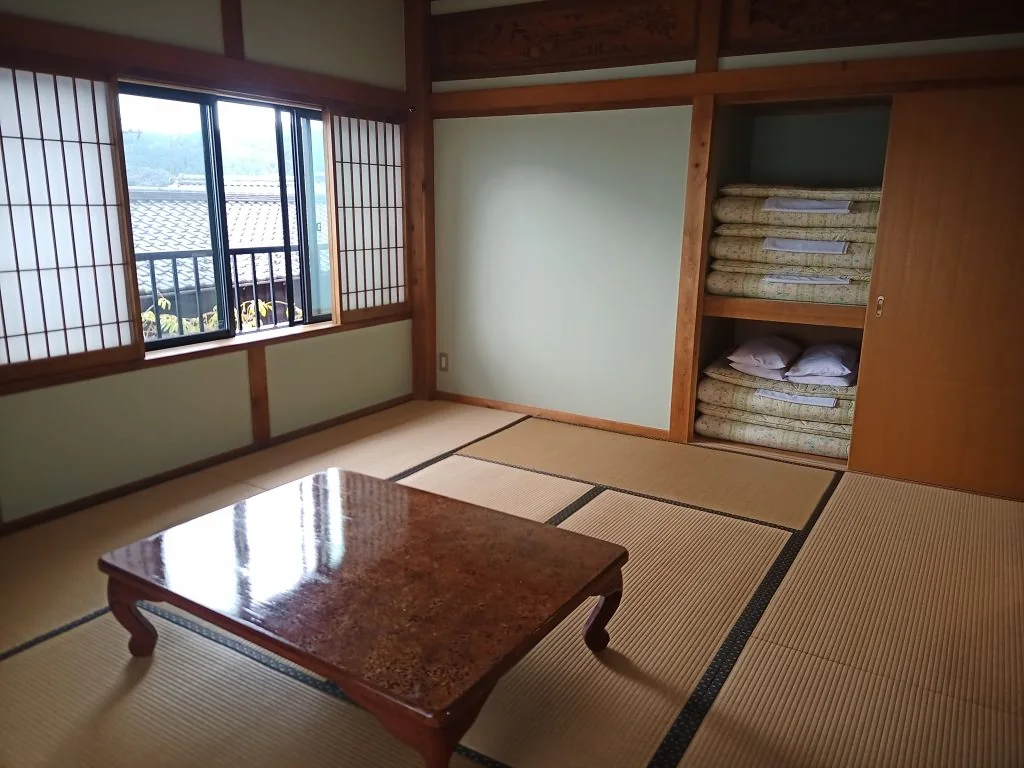
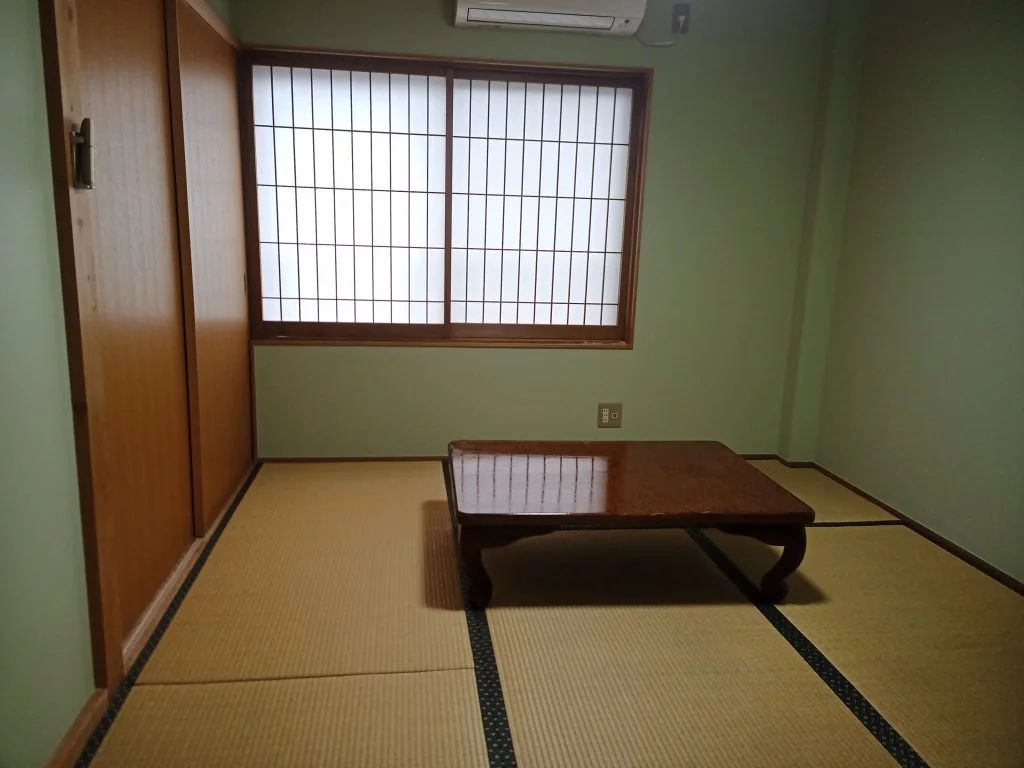
Magome Chaya is at Magome 4296, in the post-town area. It has 13 rooms: six-tatami rooms for one or two people, eight-tatami rooms for up to four and ten-tatami rooms for up to five under the property's arrangements. The bedding is futon on tatami, and guests lay out their own futons. A family who needs separate mattresses should choose the room size and guest count carefully; “sleeps four” is not a promise of four western beds. The autumn trip with seniors guide can help if sleeping close to the floor is a concern after a walking day.
Toilets and bathrooms are shared, not private inside each room. The property has separate communal facilities for men and women, plus a small guest kitchen and laundry machines. A couple expecting a city-hotel ensuite should know this before booking. Magome Chaya's own description also says the building is not uniformly heated outside guest rooms in cold weather, and the rooms are not soundproof. That can matter on a late-autumn morning. The what to wear for autumn leaves guide is relevant here because an inn corridor and mountain trail can feel different from an urban hotel.
Dinner is served across the street from the main guesthouse at a fixed early-evening sitting. It has to be arranged as part of the stay or ahead of time; a room-only booking should not be treated as including it. Magome Chaya announced that it stopped serving breakfast from 2026. Older listings may still describe breakfast, so check the current reservation plan rather than counting on an obsolete meal. Arrange a morning café or provisions if you need an early start. The Japan autumn hotel reservation guide is a reminder that a booking confirmation's inclusions matter more than a cached description.
Magome Chaya is a strong choice when you want a simple base before the walk and can accept communal facilities. It is less suitable if the group needs a private bathroom, flexible late dinner or a substantial breakfast before leaving. The lower-friction option for those needs might be a larger hotel around Nakatsugawa rather than an inn in Magome itself. The Kiso Valley stay guide helps make that third option visible rather than forcing a comparison between only two village rooms.
Matsushiroya asks more of the guest and gives a different night
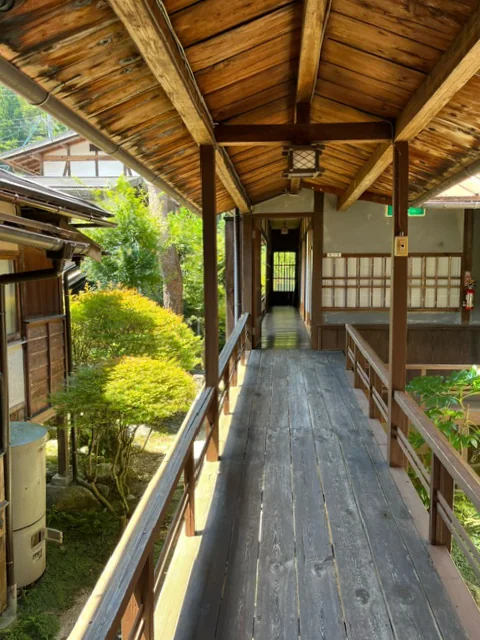
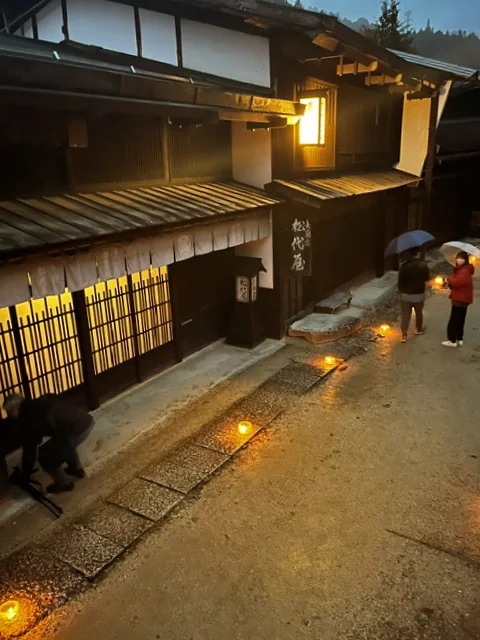
Matsushiroya is in the centre of Tsumago, at Azuma Terashita 807 in Nagiso. It is a small traditional building rather than a standard hotel. Rooms are divided mainly by sliding paper doors, and the property says it deliberately omits televisions and clocks. That is a particular kind of stay: quiet town atmosphere and a historic interior, with less acoustic privacy than a modern enclosed room. A light sleeper should think carefully before choosing it solely from an exterior photo. The best month for autumn leaves guide helps set expectations for the season, but not for a specific night's temperature inside an old building.
The inn has meal-plan choices including two meals, dinner only, breakfast only and room only. Its current published rates distinguish adults and children, but the actual quote should be checked for the stay date, party and tax. As of the current booking information, an accommodation tax applies in 2026 and is paid in cash even where the stay itself can be paid by card. A traveller arriving with no yen because the room was paid online could still have a small on-site charge. Confirm dietary needs before booking: Matsushiroya says it cannot accommodate vegetarian meals or food allergies. This is material if the ryokan dinner is your main reason to stay.
Matsushiroya's check-in window is 3 to 6 p.m. and checkout is 10 a.m. Those times put a real frame around the walking day. A walker who starts Magome at noon, stops for long lunches and photographs, and expects a late check-in is taking a risk. If the weather makes the trail slower, contact the inn rather than silently arriving after the planned dinner. The autumn foliage photography guide can help you decide whether slow photo stops belong on the hiking day or the free morning after.
International booking is not as simple as clicking a direct reservation button. Matsushiroya directs overseas guests to arrange stays through the Tsumago Tourist Information Center or a listed travel arranger, rather than taking direct foreign-guest reservations. Treat that as part of the hotel decision: confirm a room, meal plan and arrival time through the stated booking channel before relying on the property in your itinerary. A map-search result or affiliate availability screen may show nearby rooms but does not replace a confirmed Matsushiroya booking. The autumn hotel booking timing guide helps when small inns have limited inventory.
Luggage is the hidden hotel cost
Walking the old road with a daypack is different from carrying a rolling suitcase over stone and forest surfaces. In 2026 a seasonal luggage service between the Magome and Tsumago tourist information points runs from 20 March to 30 November, with morning drop-off and afternoon collection windows. Its published standard charge is per bag, and outside that period a different charter arrangement is possible. Check the current rules, opening hours, weight and exact collection point before building the route around it. The Japan luggage forwarding guide explains why same-day local transport should not be confused with the normal overnight parcel service.
If you spend the night in Magome Chaya, you might leave a bag at the inn while hiking but then must return for it or arrange an onward transfer. Ask whether the inn can hold it after checkout and until what time. If you spend the night in Matsushiroya after the walk, a bag delivered to the Tsumago tourist information point still has to be taken to the inn; confirm whether an inn-specific delivery option exists for your booking. The same-day luggage between Tokyo, Kyoto and Osaka guide covers a different network, illustrating why one service's promise should not be copied to this trail.
For a two-night plan, the simplest arrangement may be to leave the main suitcase at a hotel in Nagoya or another rail hub that agrees to hold it across the side trip, and carry an overnight pack. Ask that hotel before assuming it will hold bags between separate reservations. Then the village inn can be chosen for the evening you want, not for the only possible suitcase handoff. A seven-day autumn itinerary can help decide whether the additional hotel change consumes too much of a short trip.
There is also an accessibility dimension. Magome's main street climbs steeply in places, while Tsumago's preserved streets and the trail can have uneven surfaces. An inn in the centre reduces some local transfers but cannot remove the trail's footing. If the group includes a senior traveller who wants the town experience without the full walk, choose transport and accommodation separately. The autumn travel with seniors guide helps scale the outing without treating an eight-to-nine-kilometre route as compulsory.
Autumn colour is a bonus, not a reservation guarantee
The Kiso Valley's wooded hills can look very different from the same date a year earlier. Temperature, rain and elevation affect when leaves change. Some of the appeal of this walk is the old road, farms and forest, so the trip can still work if foliage is early or late. But a traveller paying a peak-week inn premium solely for a specific colour should keep that uncertainty visible. The early-or-late autumn leaves guide and live autumn update are useful close to departure.
If the trail forecast is poor, an overnight in the valley can still open nearby alternatives. Atera Valley is another Kiso landscape, but it requires its own transport and should not be presented as a short stroll from either inn. The Atera Valley guide helps assess that option. If several Japanese autumn regions are on the itinerary, the ten-day foliage route and fourteen-day route can show whether Kiso is one of several chances at colour or the only chance.
Bad weather affects more than leaf colour. A wet stone path takes longer and may make a fixed 6 p.m. dinner difficult. Have a bus or taxi alternative and verify that it operates when you need it. A trail closure or severe weather should change the plan, not lead to a forced walk to protect a hotel choice. The autumn backup-plan guide provides a broader method for changing the day while keeping the overnight useful.
Which reservation supports your exact day?
Magome Chaya fits a walker who reaches Magome by afternoon, accepts a shared bath and futon, eats the arranged dinner, and starts toward Tsumago the next morning. Its 2026 lack of breakfast must be solved in advance. It also offers a simpler room rate if the visitor does not want a full ryokan meal experience. I would not choose it for someone who needs an ensuite or a late evening arrival.
Matsushiroya fits a walker who wants to end the trail in Tsumago, settle into a historic room and eat a confirmed dinner before the village becomes quiet. Its paper-partitioned rooms, limited privacy, dietary restrictions and 6 p.m. check-in limit need to suit the party. An overseas traveller must arrange the reservation through the property's indicated channel; do not treat an unconfirmed search listing as a booking. It can be the more memorable finish, but only if the meal and arrival work together.
For either inn, write down five details before paying: the train and bus that bring you to the starting village, the walking direction, the luggage handoff, the dinner deadline and the next morning's departure. A room in the “better” village does not solve a missed bus or a suitcase at the wrong tourist office. If the logistics feel too tight, spend two nights in one Kiso base and hike as a day trip. The Kiso Valley two-night lodging comparison explains that alternative.
Updated 4 October 2026. Inn availability, local transport, meal conditions and trail services can change.